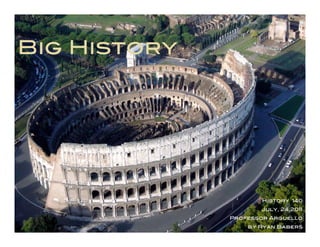
Big History


                     History 140
                     July, 24,2011
              Professor Arguello
                  by Ryan Babers
What is Big History?


•   Big History is looking at the past through all time scales
•   Evolution of ideologies and studies from the Cold War & Space Race
Coffee as an Example
   of Big History
          •   What is the origin of coffee?
          •   Origins of coffee are connected to
              many historic events:
          •   Slave trade, Sugar plantations,
              workers, factories, smuggling,
              climate change
          •   First coffee drinkers were Ethiopian
          •   Dutch East India company
          •   Planted beans where they thought it
              will grow
          •   Coffee break created to give
              workers a break
          •   Sugar important to sweetening of
              coffee
          •   Sugar comes from the sugar
              plantations which slaves were used
              to work plantations
The Day The Universe Changed


•   Humans as a whole are curious
•   “We” like to dismantle things to see how it works
•   Have changed and adapted to various situations, events
•   As a comparison, Westerners are bothered by curiosity and questions whereas
    Easterners already have the answers and don’t change but rather live in the
    past (Like Buddhism, Islam)
The Journey of Man


•   Geneticist and Anthropologist Dr. Spencer Wells traveled to Africa to look for the origins of
    man
•   Facial features of various people around the world found in San tribe
•   San tribe split from rest and traveled upland into Eurasia
•   Information comes from blood that tells about the past, people carry chapter in their in our
    genes (DNA)
•   Lucca first man to look at blood as a time machine to the past
•   “Everyone is somewhat related”
•   Family lines are traced through the blood line/type
•   The tree is like the family which it has branches that resemble the generations and
    members of that family
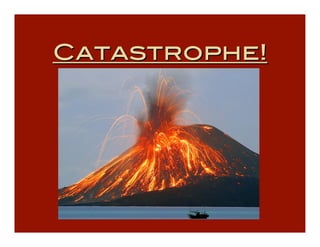
Catastrophe!
Catastrophe!
•   Krakatoa is a massive volcano near Indonesia
•   About 535A.D. volcano erupted that sent ash and dust into the air causing
    serious damage
•   Led to droughts, famine, and then floods
•   542 A.D. first record of the bubonic plague that infected rats leading to outbreak
    in humans
•   Keyes: “Outbreaks are related to climate change”
•   Climate change can alter history
•   Plague, rats driven toward cooler temperature, wet climate
•   Temps allow bacteria to flourish
•   Plague traced to African lakes where diseases are prominent
•   Ships could of brought disease to other places
•   Plague and constant siege by Avar barbarians brought Roman empire to knees
    further destabilizing the empire.
Guns, Germs, Steel
Guns, Germs, Steel
•   Out of Eden:                                        •   Conquest:

•   Local native Yali asks, “Why white people have      •   The Incas (modern Peru) only had the llama as
    so much goods but his people have little of their       their domestic animal
    own?”                                               •   Geography which was a big part of accessing
•   New Guineans have ingenuity and smarts                  resources was mostly disadvantageous to Incas
•   About the have and have nots                        •   Horses and steel were technological advantages
•   Hunter gathering takes a lot of effort to feed          to conquistadors
    everyone                                            •   Swords became a standard of Spaniard
•   Site in Jordan over 11,000 years old found mud-         conquistadors and was a sign of class & rank
    built homes with wheat and barley farms             •   Spanish missionaries tried to impose their
•   First farmers of the world                              religion on the local populations
•   Domestication                                       •   Spanish conquest led to the destruction of the
•   New Guineans been using one of the earliest             Inca, Aztec, and Mayan empires due to war,
    farming methods approx 10,000yrs                        disease, and inferior technology
•   New Guinea crops less nutritious than other
    crops
•   Europeans had plows whereas New Guineans
    do not
•   Overexploiting crops and resources forced
    migrations
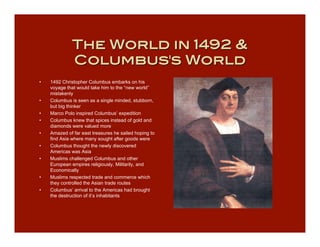
The World in 1492 &
              Columbus's World
•   1492 Christopher Columbus embarks on his
    voyage that would take him to the “new world”
    mistakenly
•   Columbus is seen as a single minded, stubborn,
    but big thinker
•   Marco Polo inspired Columbus’ expedition
•   Columbus knew that spices instead of gold and
    diamonds were valued more
•   Amazed of far east treasures he sailed hoping to
    find Asia where many sought after goods were
•   Columbus thought the newly discovered
    Americas was Asia
•   Muslims challenged Columbus and other
    European empires religiously, Militarily, and
    Economically
•   Muslims respected trade and commerce which
    they controlled the Asian trade routes
•   Columbus’ arrival to the Americas had brought
    the destruction of it’s inhabitants
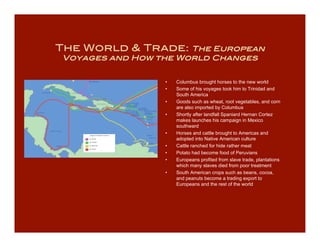
The World & Trade:    The European
Voyages and How the World Changes


                 •   Columbus brought horses to the new world
                 •   Some of his voyages took him to Trinidad and
                     South America
                 •   Goods such as wheat, root vegetables, and corn
                     are also imported by Columbus
                 •   Shortly after landfall Spaniard Hernan Cortez
                     makes launches his campaign in Mexico
                     southward
                 •   Horses and cattle brought to Americas and
                     adopted into Native American culture
                 •   Cattle ranched for hide rather meat
                 •   Potato had become food of Peruvians
                 •   Europeans profited from slave trade, plantations
                     which many slaves died from poor treatment
                 •   South American crops such as beans, cocoa,
                     and peanuts become a trading export to
                     Europeans and the rest of the world

Big History

  • 1.
    Big History History 140 July, 24,2011 Professor Arguello by Ryan Babers
  • 2.
    What is BigHistory? • Big History is looking at the past through all time scales • Evolution of ideologies and studies from the Cold War & Space Race
  • 3.
    Coffee as anExample of Big History • What is the origin of coffee? • Origins of coffee are connected to many historic events: • Slave trade, Sugar plantations, workers, factories, smuggling, climate change • First coffee drinkers were Ethiopian • Dutch East India company • Planted beans where they thought it will grow • Coffee break created to give workers a break • Sugar important to sweetening of coffee • Sugar comes from the sugar plantations which slaves were used to work plantations
  • 4.
    The Day TheUniverse Changed • Humans as a whole are curious • “We” like to dismantle things to see how it works • Have changed and adapted to various situations, events • As a comparison, Westerners are bothered by curiosity and questions whereas Easterners already have the answers and don’t change but rather live in the past (Like Buddhism, Islam)
  • 5.
    The Journey ofMan • Geneticist and Anthropologist Dr. Spencer Wells traveled to Africa to look for the origins of man • Facial features of various people around the world found in San tribe • San tribe split from rest and traveled upland into Eurasia • Information comes from blood that tells about the past, people carry chapter in their in our genes (DNA) • Lucca first man to look at blood as a time machine to the past • “Everyone is somewhat related” • Family lines are traced through the blood line/type • The tree is like the family which it has branches that resemble the generations and members of that family
  • 6.
  • 7.
    Catastrophe! • Krakatoa is a massive volcano near Indonesia • About 535A.D. volcano erupted that sent ash and dust into the air causing serious damage • Led to droughts, famine, and then floods • 542 A.D. first record of the bubonic plague that infected rats leading to outbreak in humans • Keyes: “Outbreaks are related to climate change” • Climate change can alter history • Plague, rats driven toward cooler temperature, wet climate • Temps allow bacteria to flourish • Plague traced to African lakes where diseases are prominent • Ships could of brought disease to other places • Plague and constant siege by Avar barbarians brought Roman empire to knees further destabilizing the empire.
  • 8.
  • 9.
    Guns, Germs, Steel • Out of Eden: • Conquest: • Local native Yali asks, “Why white people have • The Incas (modern Peru) only had the llama as so much goods but his people have little of their their domestic animal own?” • Geography which was a big part of accessing • New Guineans have ingenuity and smarts resources was mostly disadvantageous to Incas • About the have and have nots • Horses and steel were technological advantages • Hunter gathering takes a lot of effort to feed to conquistadors everyone • Swords became a standard of Spaniard • Site in Jordan over 11,000 years old found mud- conquistadors and was a sign of class & rank built homes with wheat and barley farms • Spanish missionaries tried to impose their • First farmers of the world religion on the local populations • Domestication • Spanish conquest led to the destruction of the • New Guineans been using one of the earliest Inca, Aztec, and Mayan empires due to war, farming methods approx 10,000yrs disease, and inferior technology • New Guinea crops less nutritious than other crops • Europeans had plows whereas New Guineans do not • Overexploiting crops and resources forced migrations
  • 10.
    The World in1492 & Columbus's World • 1492 Christopher Columbus embarks on his voyage that would take him to the “new world” mistakenly • Columbus is seen as a single minded, stubborn, but big thinker • Marco Polo inspired Columbus’ expedition • Columbus knew that spices instead of gold and diamonds were valued more • Amazed of far east treasures he sailed hoping to find Asia where many sought after goods were • Columbus thought the newly discovered Americas was Asia • Muslims challenged Columbus and other European empires religiously, Militarily, and Economically • Muslims respected trade and commerce which they controlled the Asian trade routes • Columbus’ arrival to the Americas had brought the destruction of it’s inhabitants
  • 11.
    The World &Trade: The European Voyages and How the World Changes • Columbus brought horses to the new world • Some of his voyages took him to Trinidad and South America • Goods such as wheat, root vegetables, and corn are also imported by Columbus • Shortly after landfall Spaniard Hernan Cortez makes launches his campaign in Mexico southward • Horses and cattle brought to Americas and adopted into Native American culture • Cattle ranched for hide rather meat • Potato had become food of Peruvians • Europeans profited from slave trade, plantations which many slaves died from poor treatment • South American crops such as beans, cocoa, and peanuts become a trading export to Europeans and the rest of the world