BIAS
What is “unsaid” in what you read.
BIAS: FACTS

Bias is not SIMPLY political correctness.

Bias is rooted in personal views.

Bias eschews our understanding.

Bias is REALLY hard to nail down.
BIAS: FACTS


Bias is a fact but not factual!

Bias should be avoided but not all can be!

Bias is REALLY hard to nail down.
WHY ARE WRITERS

Bias ESCHEWS the meaning.

Bias is used in persuasion

Bias is used to promote an agenda (a set
of beliefs).

Bias makes money!
WHY UNDERSTAND

To uncover, at times, the real story.

To understand false persuasion

To see agendas that are being promoted

Basically, get the real story so as to make
up your own mind
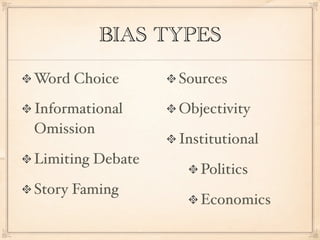
BIAS TYPES

Word Choice       Sources

Informational     Objectivity
Omission
                  Institutional
Limiting Debate
                     Politics
Story Faming
                     Economics
WORD CHOICE

Meaning is more than individual words

Word choice sets the tone of a sentence

Words are used to frame a view

Words are used to pander to an audience

Happens in Title and article
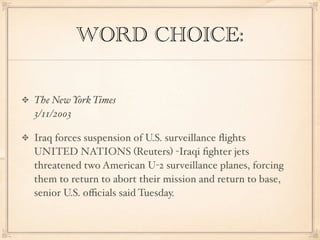
WORD CHOICE:

The New York Times
3/11/2003

Iraq forces suspension of U.S. surveillance flights
UNITED NATIONS (Reuters) -Iraqi fighter jets
threatened two American U-2 surveillance planes, forcing
them to return to abort their mission and return to base,
senior U.S. officials said Tuesday.
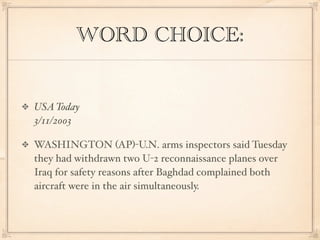
WORD CHOICE:


USA Today
3/11/2003

WASHINGTON (AP)-U.N. arms inspectors said Tuesday
they had withdrawn two U-2 reconnaissance planes over
Iraq for safety reasons after Baghdad complained both
aircraft were in the air simultaneously.
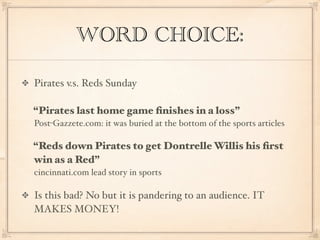
WORD CHOICE:

Pirates v.s. Reds Sunday

“Pirates last home game finishes in a loss”
Post-Gazzete.com: it was buried at the bottom of the sports articles

“Reds down Pirates to get Dontrelle Willis his first
win as a Red”
cincinnati.com lead story in sports

Is this bad? No but it is pandering to an audience. IT
MAKES MONEY!
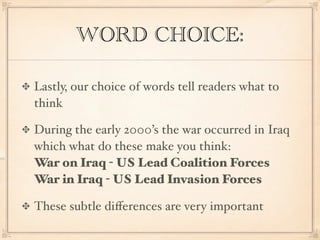
WORD CHOICE:

Lastly, our choice of words tell readers what to
think

During the early 2000’s the war occurred in Iraq
which what do these make you think:
War on Iraq - US Lead Coalition Forces
War in Iraq - US Lead Invasion Forces

These subtle differences are very important
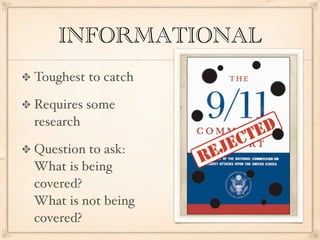
INFORMATIONAL
Toughest to catch

Requires some
research

Question to ask:
What is being
covered?
What is not being
covered?
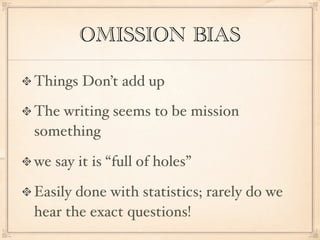
OMISSION BIAS

Things Don’t add up

The writing seems to be mission
something

we say it is “full of holes”

Easily done with statistics; rarely do we
hear the exact questions!
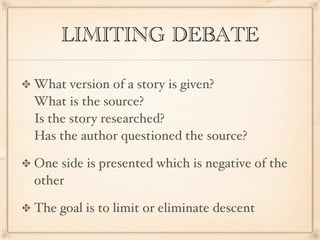
LIMITING DEBATE

What version of a story is given?
What is the source?
Is the story researched?
Has the author questioned the source?

One side is presented which is negative of the
other

The goal is to limit or eliminate descent
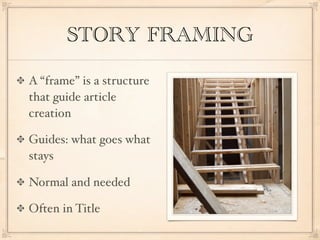
STORY FRAMING

A “frame” is a structure
that guide article
creation

Guides: what goes what
stays

Normal and needed

Often in Title
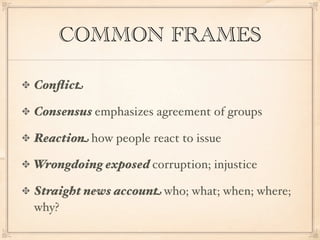
COMMON FRAMES

Conflict

Consensus emphasizes agreement of groups

Reaction how people react to issue

Wrongdoing exposed corruption; injustice

Straight news account who; what; when; where;
why?
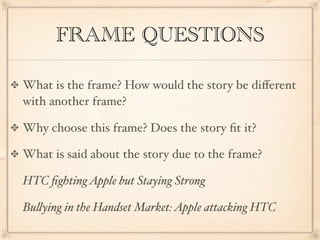
FRAME QUESTIONS

What is the frame? How would the story be different
with another frame?

Why choose this frame? Does the story fit it?

What is said about the story due to the frame?

HTC fighting Apple but Staying Strong

Bu!ying in the Handset Market: Apple attacking HTC
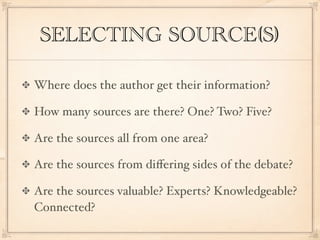
SELECTING SOURCE(S)

Where does the author get their information?

How many sources are there? One? Two? Five?

Are the sources all from one area?

Are the sources from differing sides of the debate?

Are the sources valuable? Experts? Knowledgeable?
Connected?
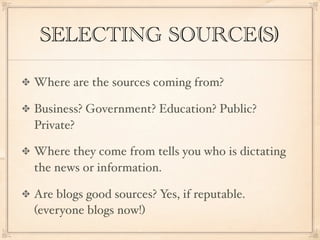
SELECTING SOURCE(S)

Where are the sources coming from?

Business? Government? Education? Public?
Private?

Where they come from tells you who is dictating
the news or information.

Are blogs good sources? Yes, if reputable.
(everyone blogs now!)
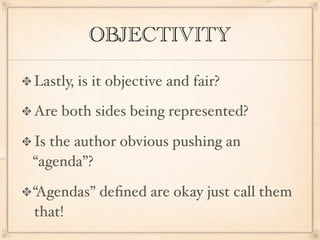
OBJECTIVITY

Lastly, is it objective and fair?

Are both sides being represented?

Is the author obvious pushing an
“agenda”?

“Agendas” defined are okay just call them
that!

Bias in business reading

  • 1.
    BIAS What is “unsaid”in what you read.
  • 2.
    BIAS: FACTS Bias isnot SIMPLY political correctness. Bias is rooted in personal views. Bias eschews our understanding. Bias is REALLY hard to nail down.
  • 3.
    BIAS: FACTS Bias isa fact but not factual! Bias should be avoided but not all can be! Bias is REALLY hard to nail down.
  • 4.
    WHY ARE WRITERS BiasESCHEWS the meaning. Bias is used in persuasion Bias is used to promote an agenda (a set of beliefs). Bias makes money!
  • 5.
    WHY UNDERSTAND To uncover,at times, the real story. To understand false persuasion To see agendas that are being promoted Basically, get the real story so as to make up your own mind
  • 6.
    BIAS TYPES Word Choice Sources Informational Objectivity Omission Institutional Limiting Debate Politics Story Faming Economics
  • 7.
    WORD CHOICE Meaning ismore than individual words Word choice sets the tone of a sentence Words are used to frame a view Words are used to pander to an audience Happens in Title and article
  • 8.
    WORD CHOICE: The NewYork Times 3/11/2003 Iraq forces suspension of U.S. surveillance flights UNITED NATIONS (Reuters) -Iraqi fighter jets threatened two American U-2 surveillance planes, forcing them to return to abort their mission and return to base, senior U.S. officials said Tuesday.
  • 9.
    WORD CHOICE: USA Today 3/11/2003 WASHINGTON(AP)-U.N. arms inspectors said Tuesday they had withdrawn two U-2 reconnaissance planes over Iraq for safety reasons after Baghdad complained both aircraft were in the air simultaneously.
  • 10.
    WORD CHOICE: Pirates v.s.Reds Sunday “Pirates last home game finishes in a loss” Post-Gazzete.com: it was buried at the bottom of the sports articles “Reds down Pirates to get Dontrelle Willis his first win as a Red” cincinnati.com lead story in sports Is this bad? No but it is pandering to an audience. IT MAKES MONEY!
  • 11.
    WORD CHOICE: Lastly, ourchoice of words tell readers what to think During the early 2000’s the war occurred in Iraq which what do these make you think: War on Iraq - US Lead Coalition Forces War in Iraq - US Lead Invasion Forces These subtle differences are very important
  • 12.
    INFORMATIONAL Toughest to catch Requiressome research Question to ask: What is being covered? What is not being covered?
  • 13.
    OMISSION BIAS Things Don’tadd up The writing seems to be mission something we say it is “full of holes” Easily done with statistics; rarely do we hear the exact questions!
  • 14.
    LIMITING DEBATE What versionof a story is given? What is the source? Is the story researched? Has the author questioned the source? One side is presented which is negative of the other The goal is to limit or eliminate descent
  • 15.
    STORY FRAMING A “frame”is a structure that guide article creation Guides: what goes what stays Normal and needed Often in Title
  • 16.
    COMMON FRAMES Conflict Consensus emphasizesagreement of groups Reaction how people react to issue Wrongdoing exposed corruption; injustice Straight news account who; what; when; where; why?
  • 17.
    FRAME QUESTIONS What isthe frame? How would the story be different with another frame? Why choose this frame? Does the story fit it? What is said about the story due to the frame? HTC fighting Apple but Staying Strong Bu!ying in the Handset Market: Apple attacking HTC
  • 18.
    SELECTING SOURCE(S) Where doesthe author get their information? How many sources are there? One? Two? Five? Are the sources all from one area? Are the sources from differing sides of the debate? Are the sources valuable? Experts? Knowledgeable? Connected?
  • 19.
    SELECTING SOURCE(S) Where arethe sources coming from? Business? Government? Education? Public? Private? Where they come from tells you who is dictating the news or information. Are blogs good sources? Yes, if reputable. (everyone blogs now!)
  • 20.
    OBJECTIVITY Lastly, is itobjective and fair? Are both sides being represented? Is the author obvious pushing an “agenda”? “Agendas” defined are okay just call them that!