by Mario Fusco
mario.fusco@gmail.com
@mariofusco
Bias Driven
Development
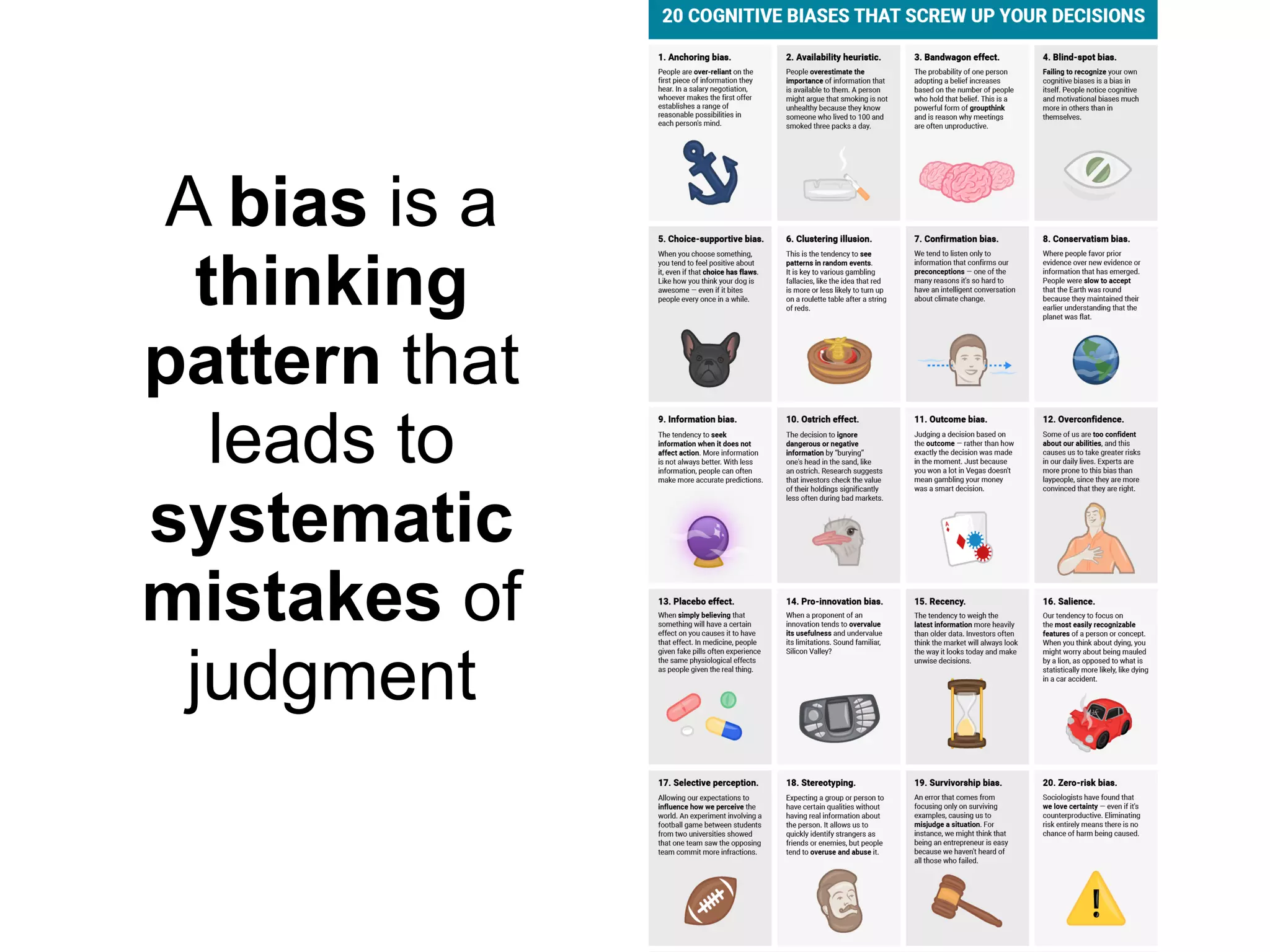
A bias is a
thinking
pattern that
leads to
systematic
mistakes of
judgment
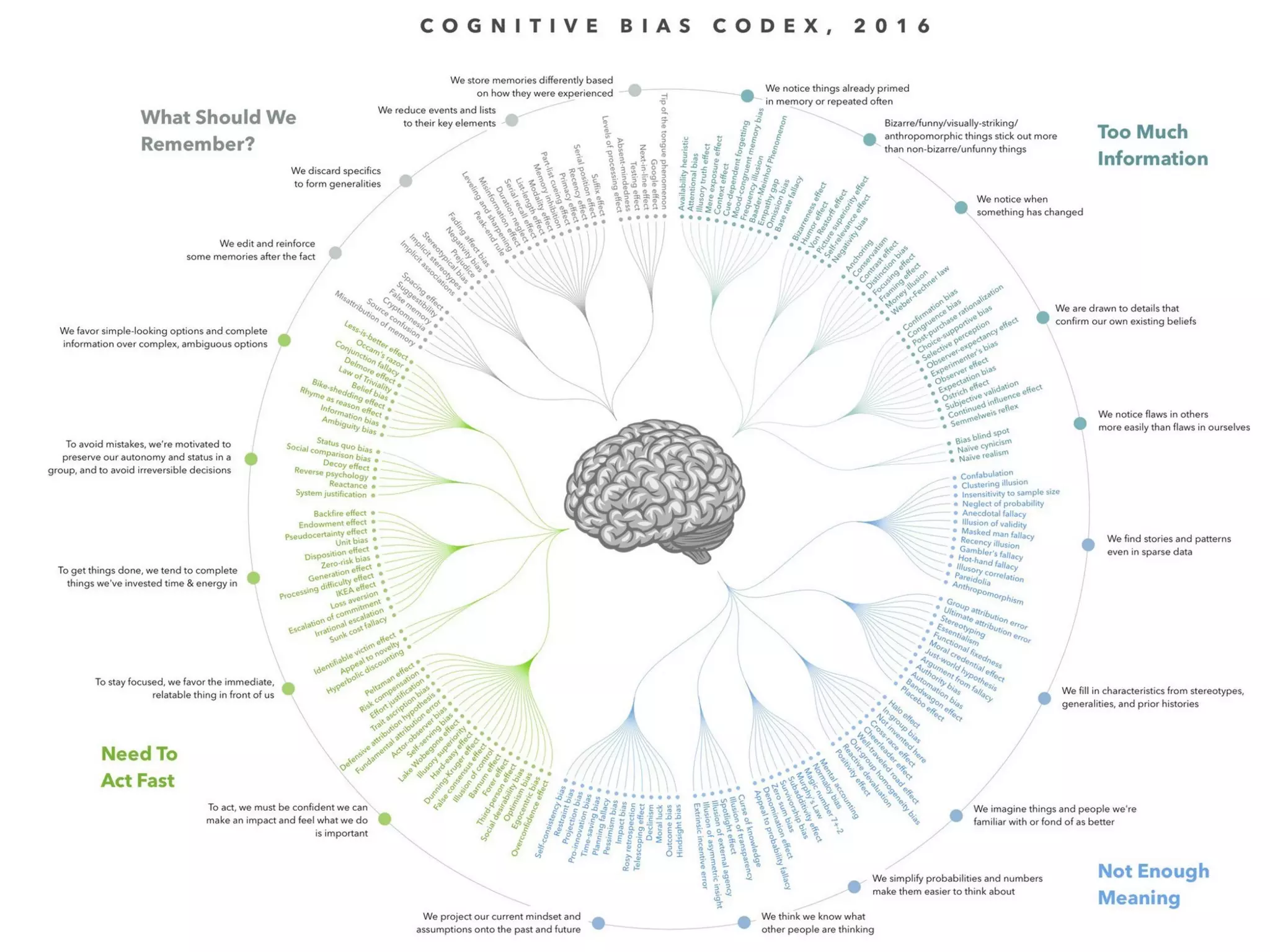
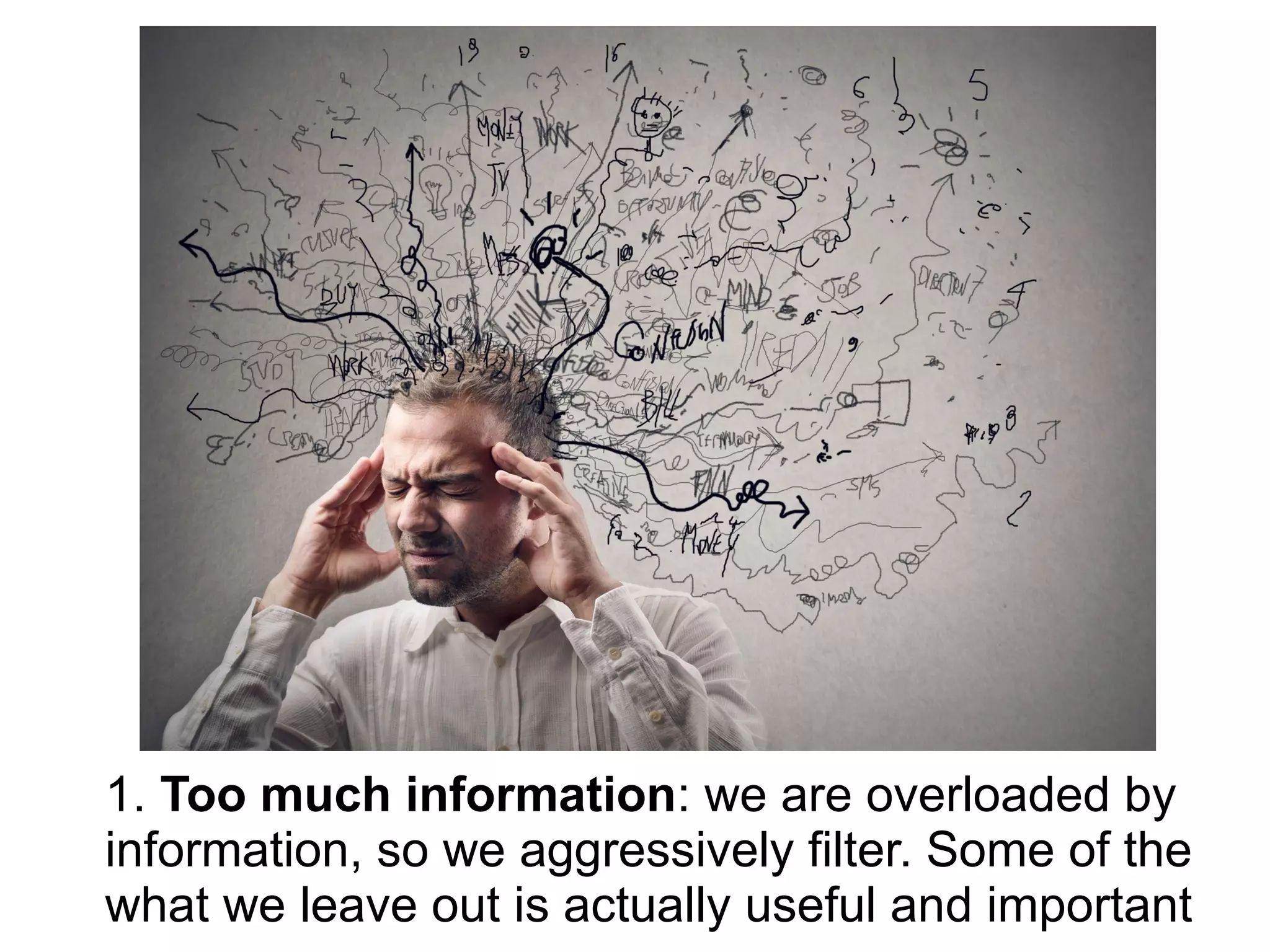
1. Too much information: we are overloaded by
information, so we aggressively filter. Some of the
what we leave out is actually useful and important
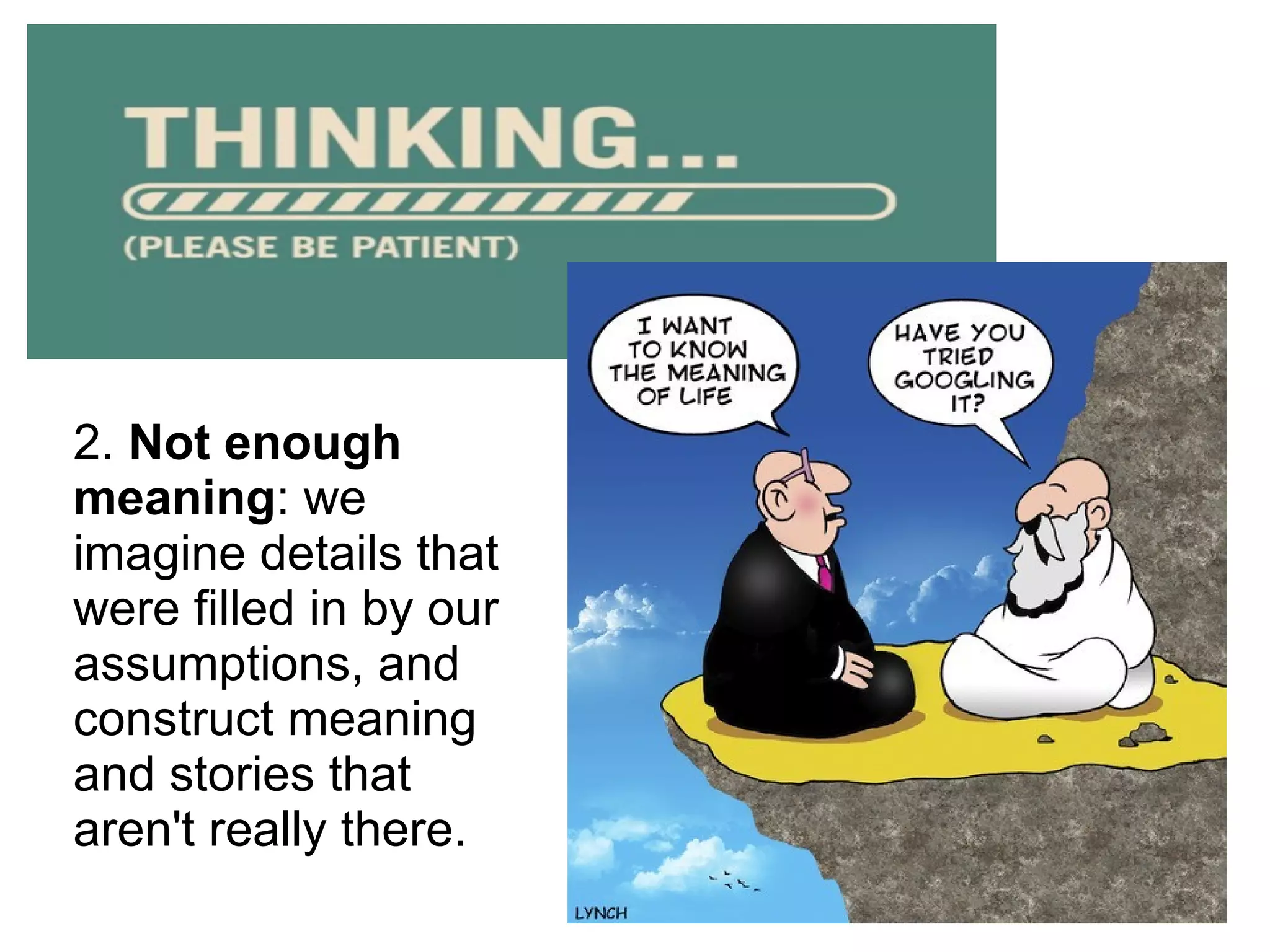
2. Not enough
meaning: we
imagine details that
were filled in by our
assumptions, and
construct meaning
and stories that
aren't really there.
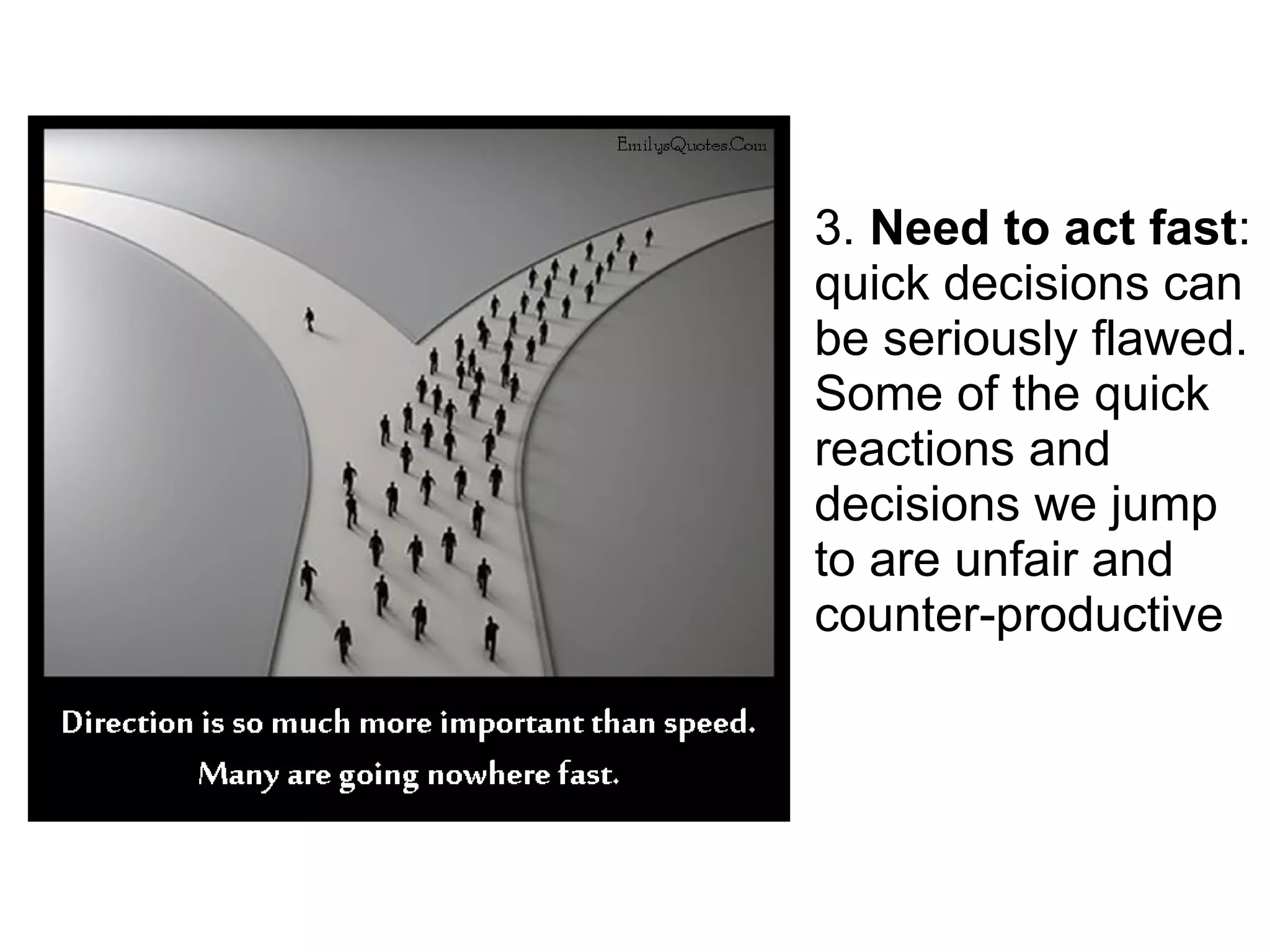
3. Need to act fast:
quick decisions can
be seriously flawed.
Some of the quick
reactions and
decisions we jump
to are unfair and
counter-productive
4. What should we remember?: our memory
reinforces errors. Some of the stuff we remember for
later just makes all of the above systems more biased
Framing effect: people react to a
particular choice in different ways
depending on how it is presented
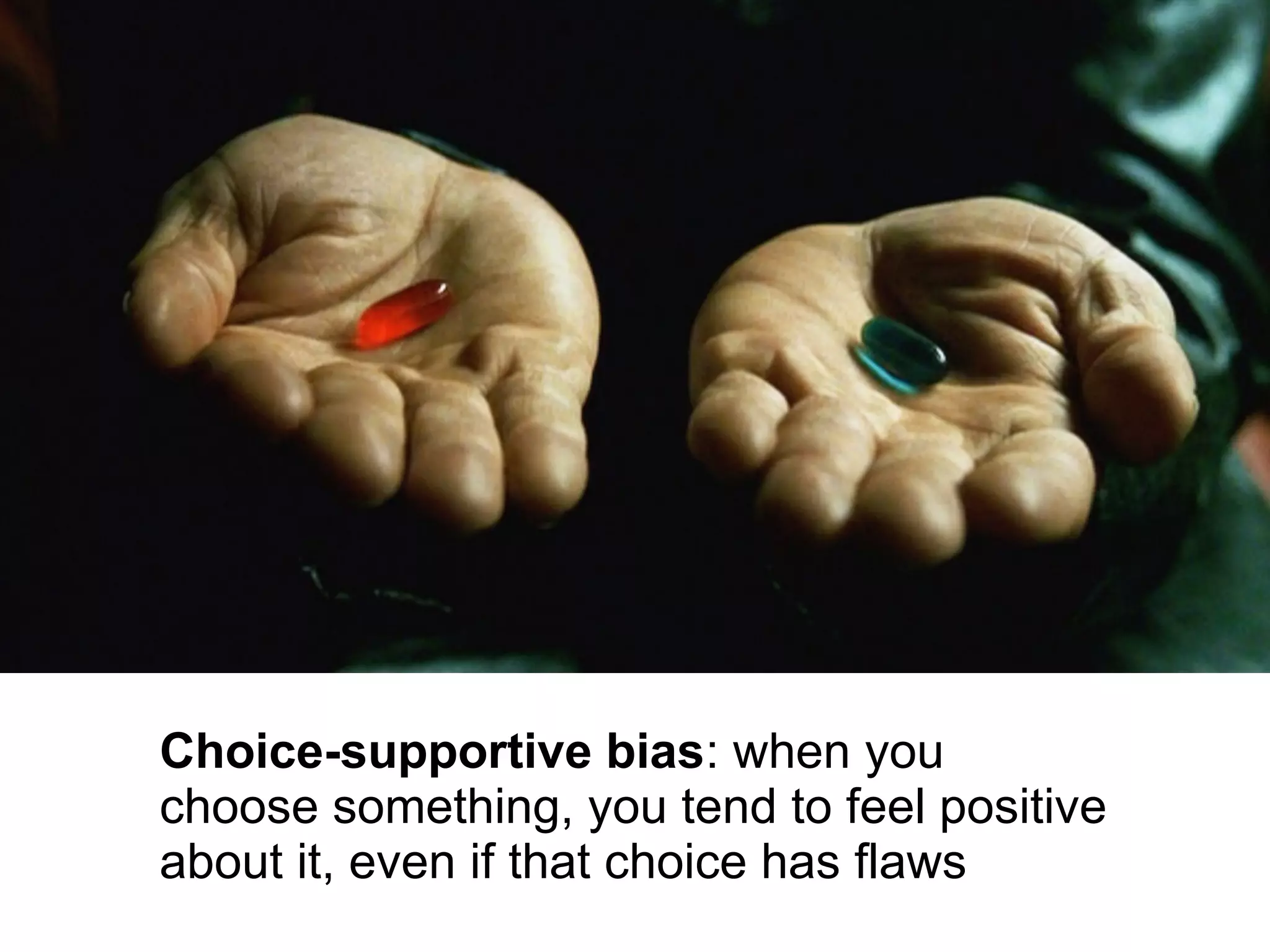
Choice-supportive bias: when you
choose something, you tend to feel positive
about it, even if that choice has flaws
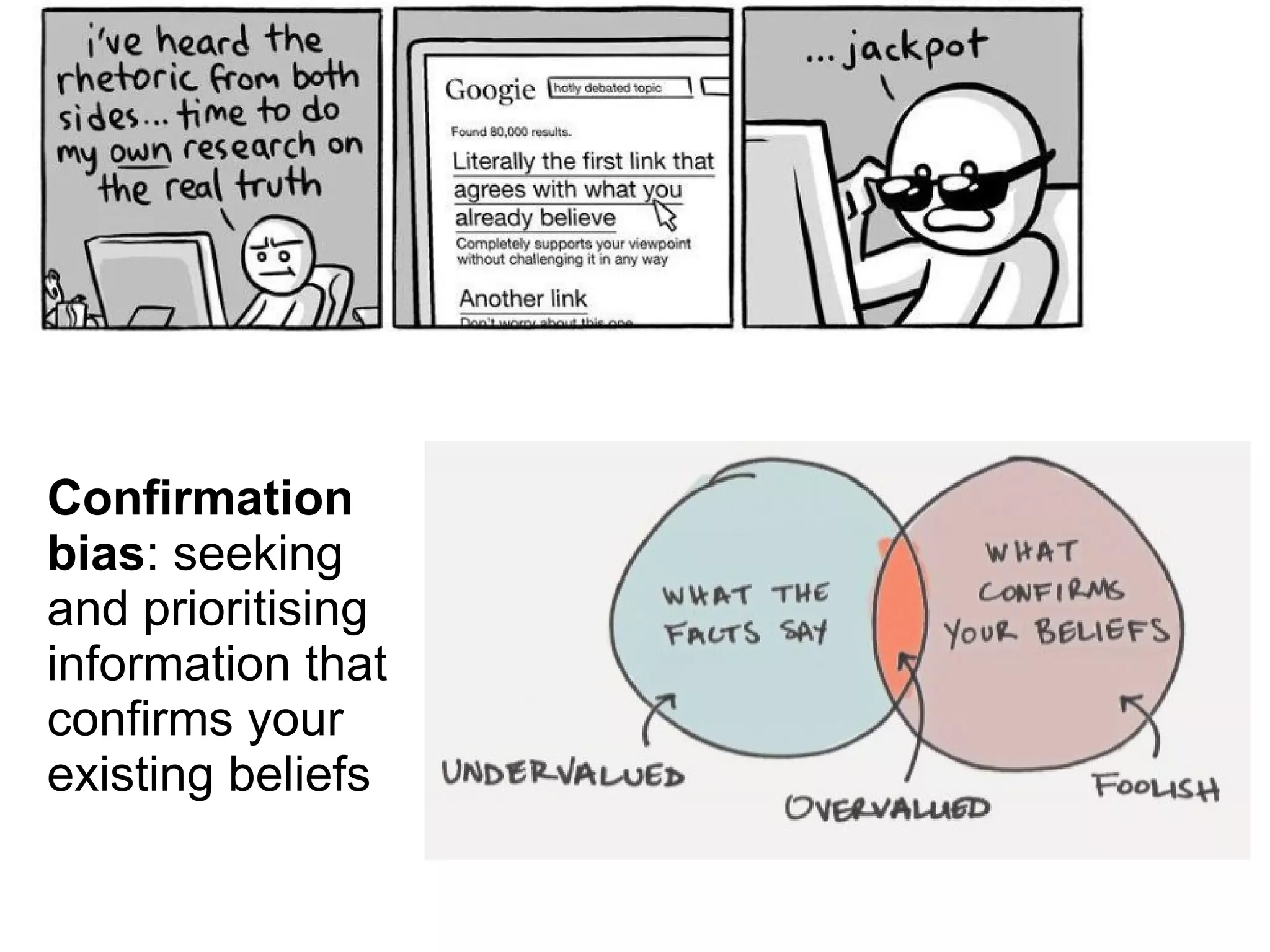
Confirmation
bias: seeking
and prioritising
information that
confirms your
existing beliefs
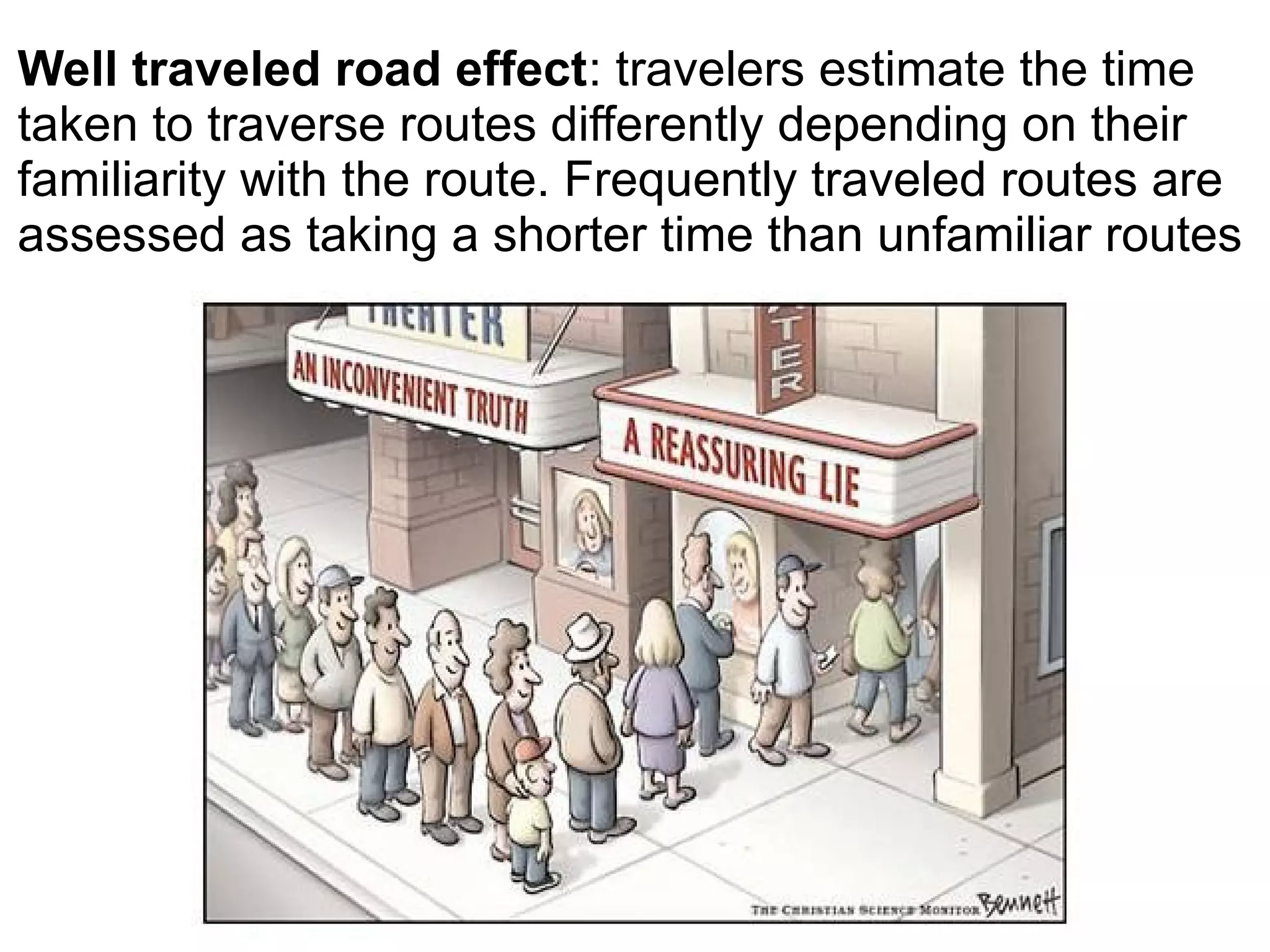
Well traveled road effect: travelers estimate the time
taken to traverse routes differently depending on their
familiarity with the route. Frequently traveled routes are
assessed as taking a shorter time than unfamiliar routes
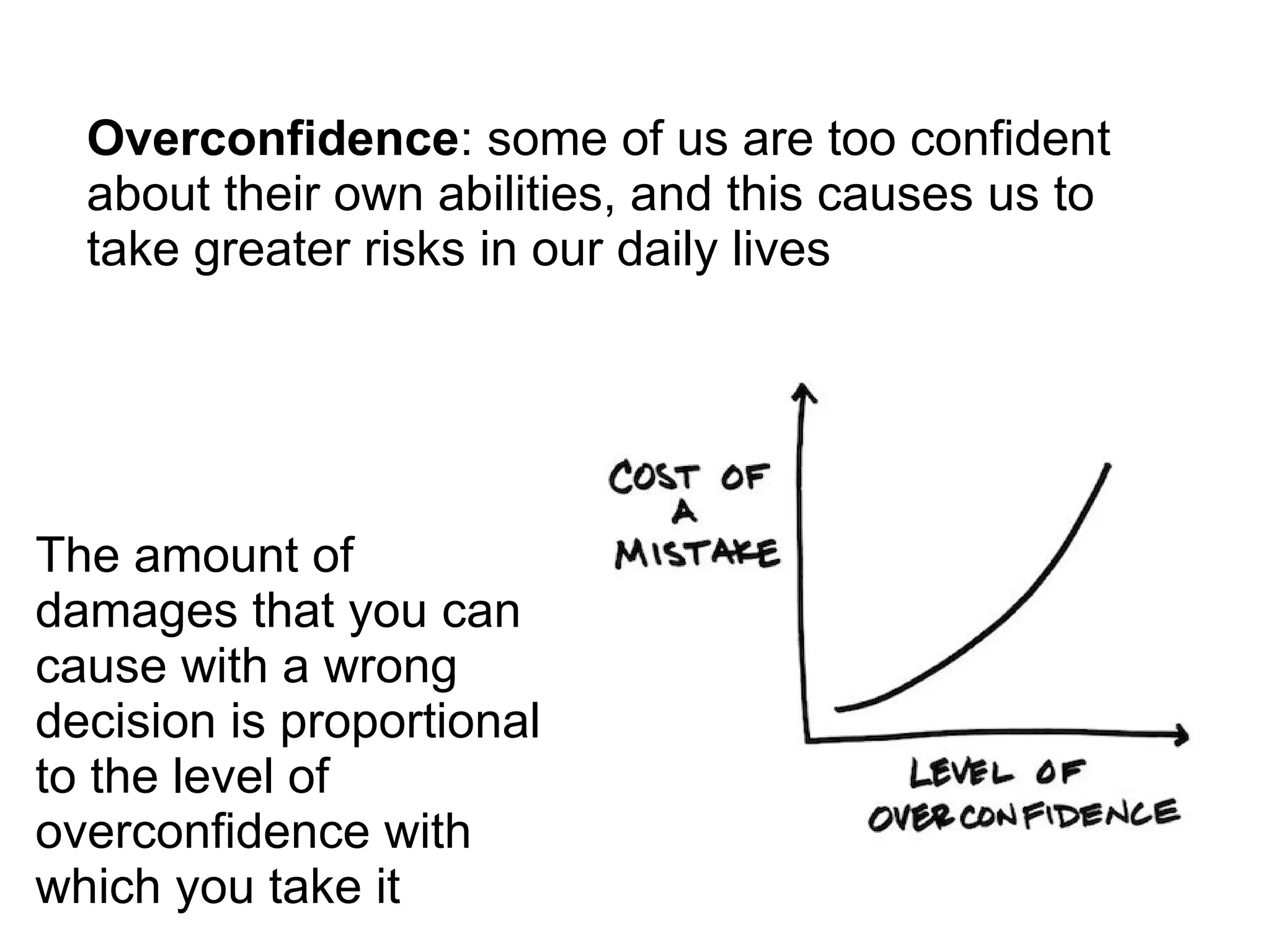
Overconfidence: some of us are too confident
about their own abilities, and this causes us to
take greater risks in our daily lives
The amount of
damages that you can
cause with a wrong
decision is proportional
to the level of
overconfidence with
which you take it
Law of triviality (or bikeshedding): giving
disproportionate weight to trivial issues
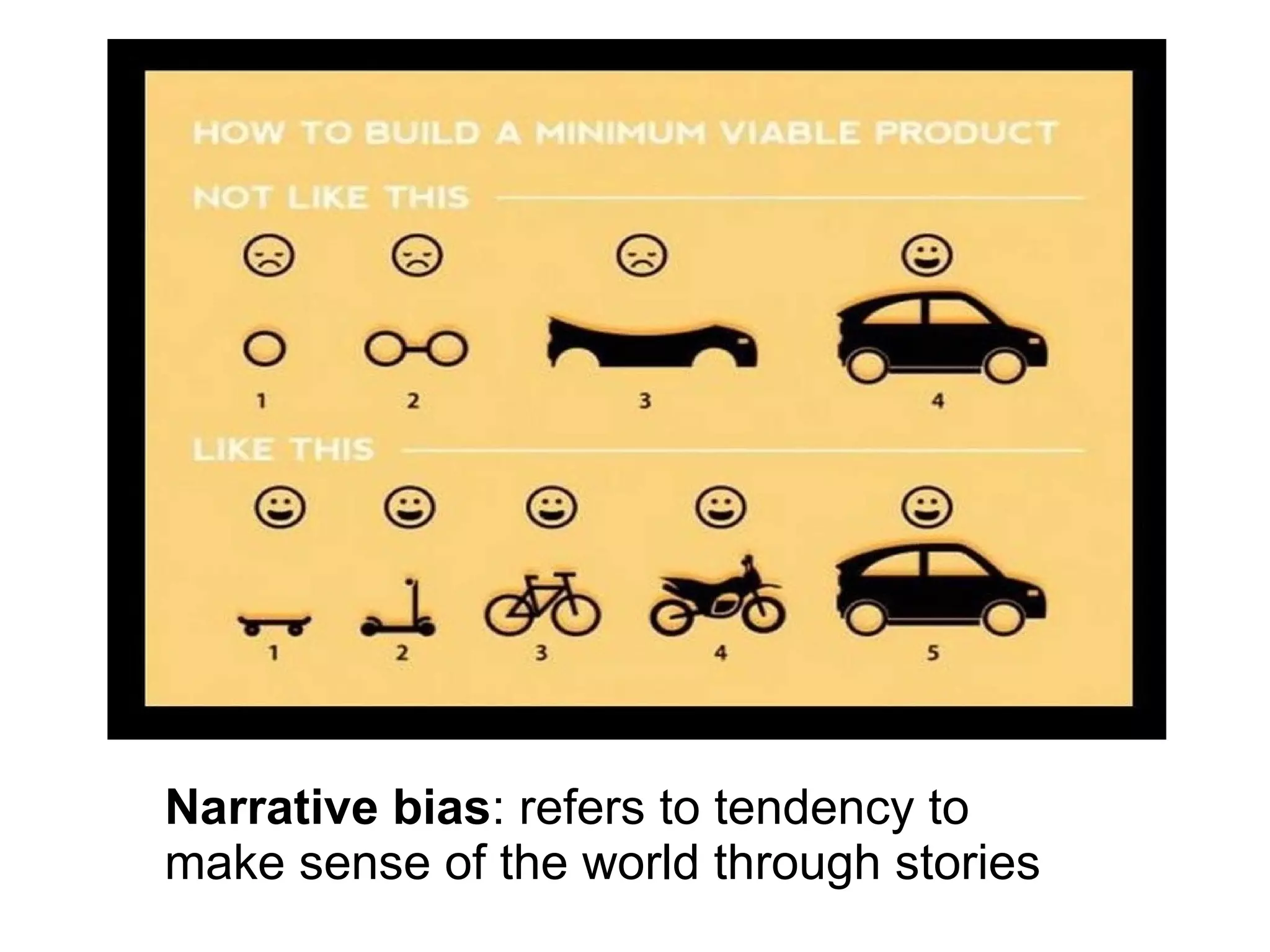
Narrative bias: refers to tendency to
make sense of the world through stories
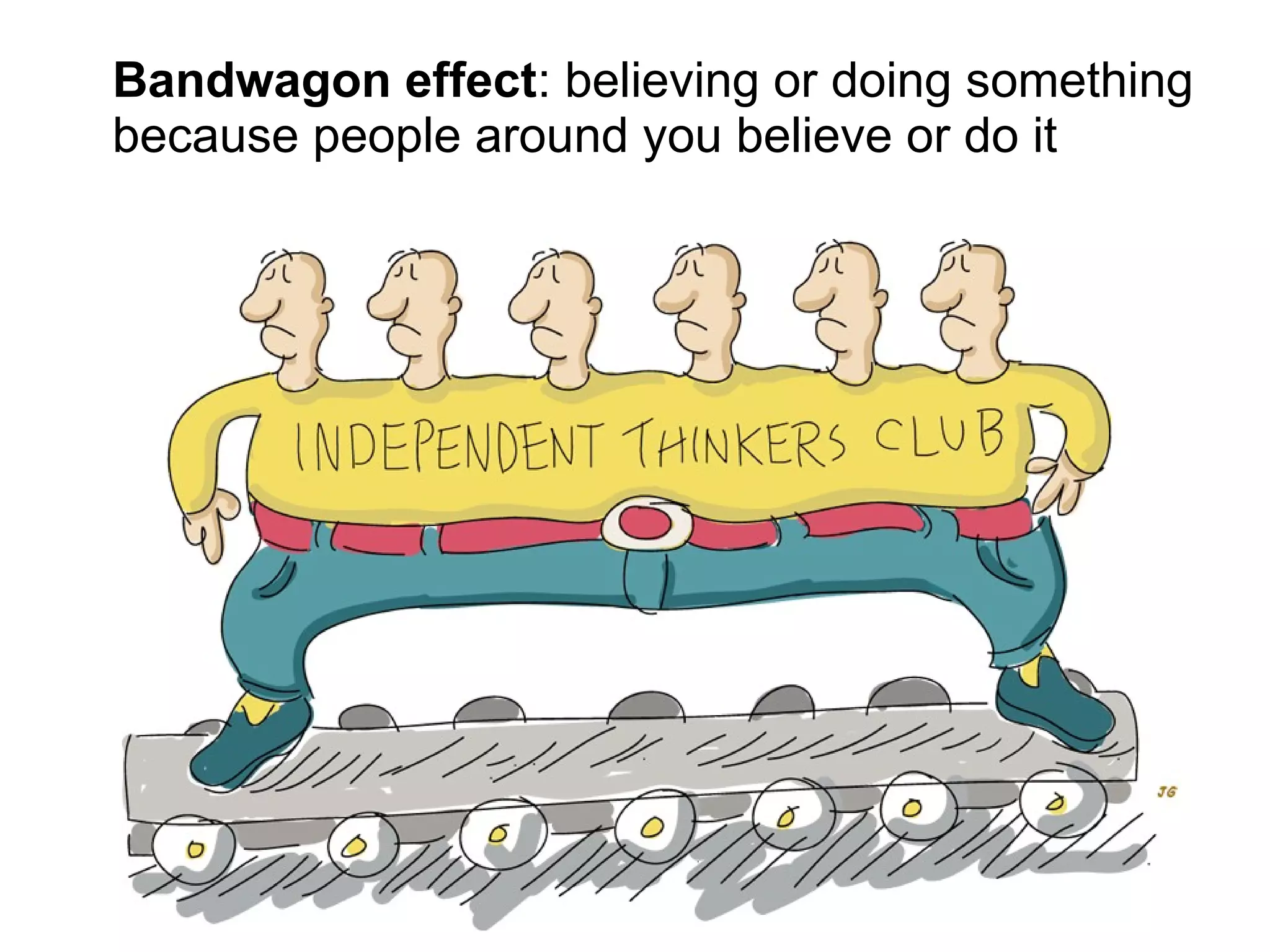
Bandwagon effect: believing or doing something
because people around you believe or do it
Placebo effect: when simply believing
that something will have a certain effect
on you causes it to have that effect
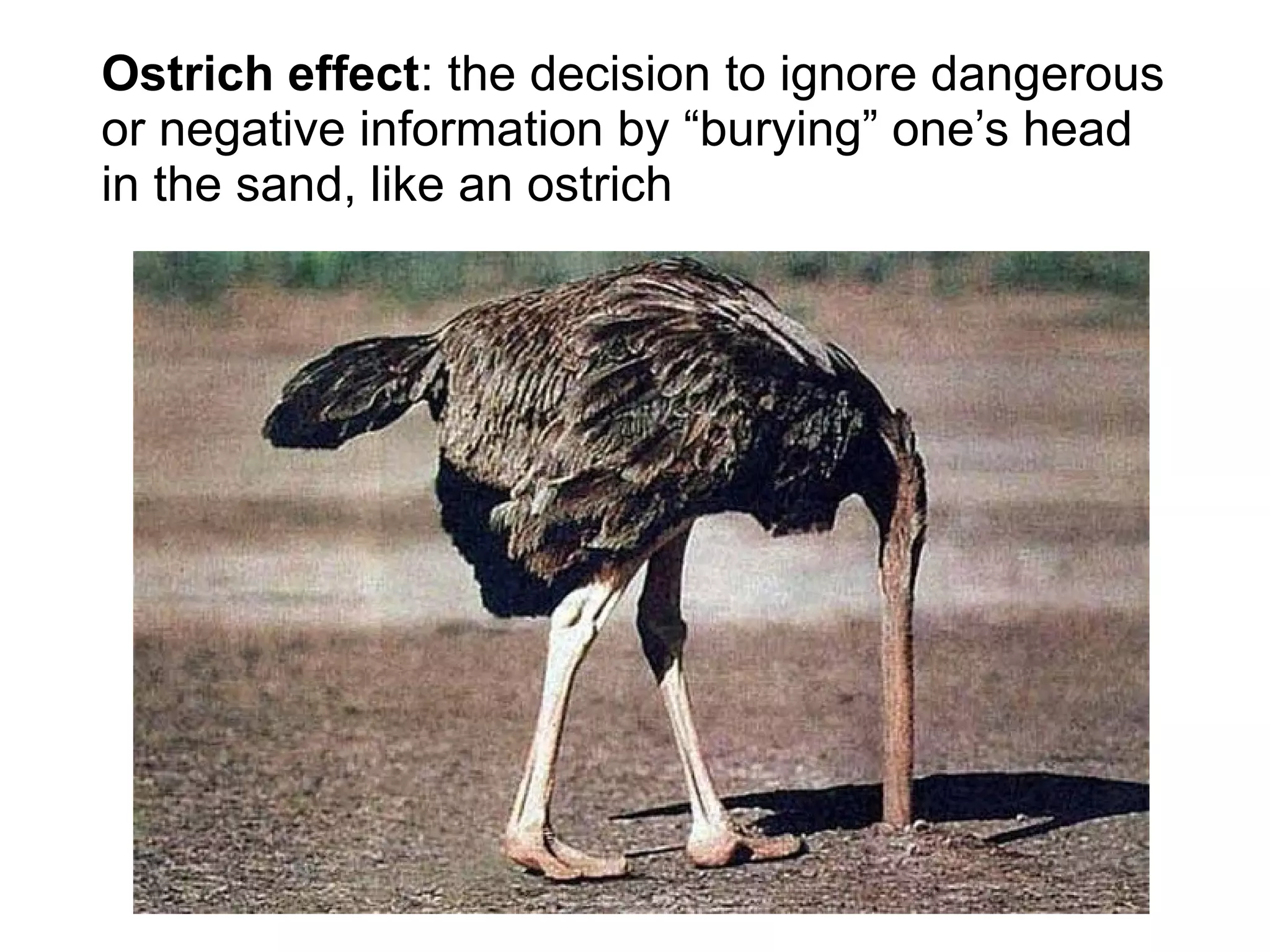
Ostrich effect: the decision to ignore dangerous
or negative information by “burying” one’s head
in the sand, like an ostrich
Not invented
here syndrome
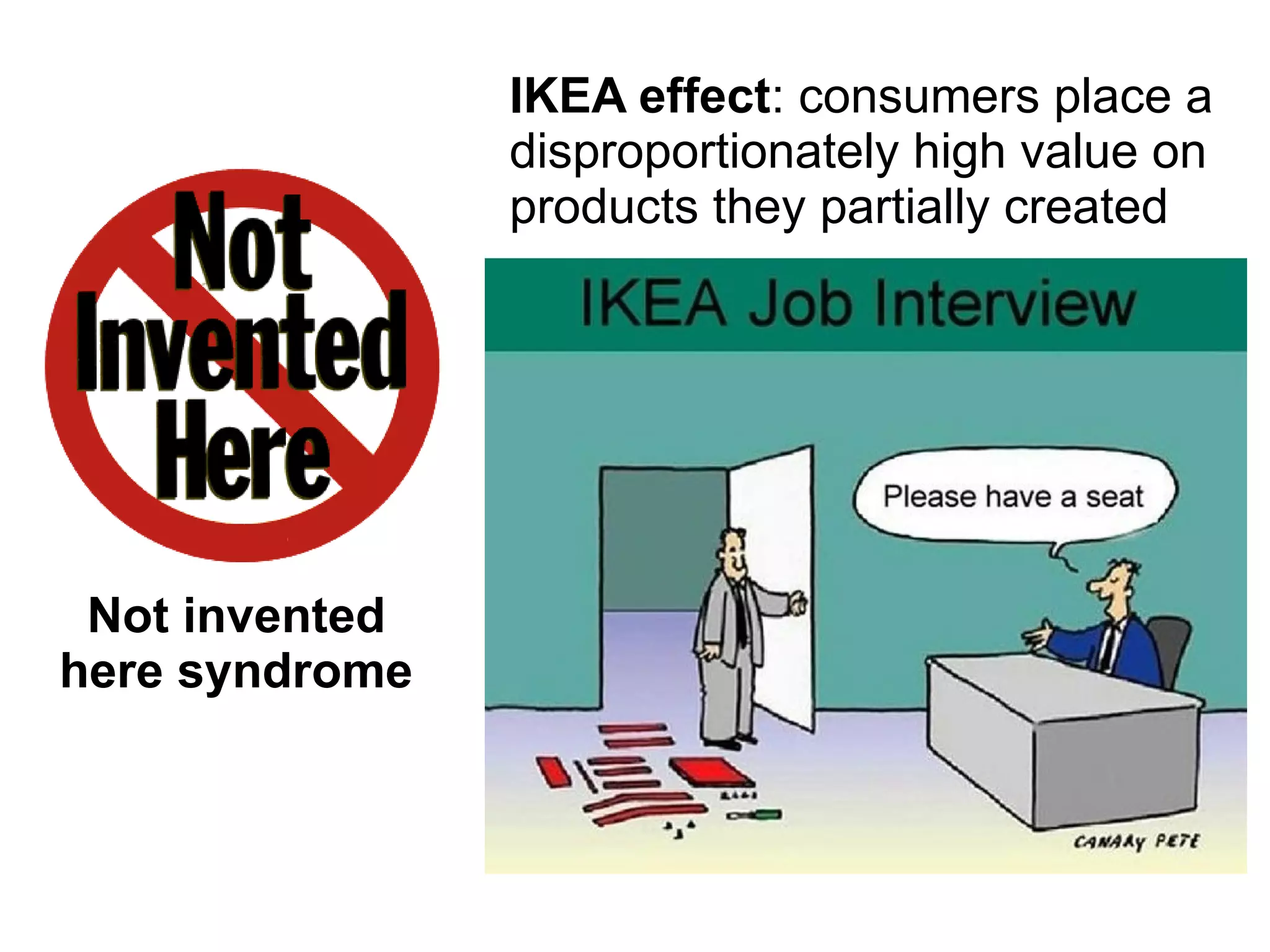
IKEA effect: consumers place a
disproportionately high value on
products they partially created
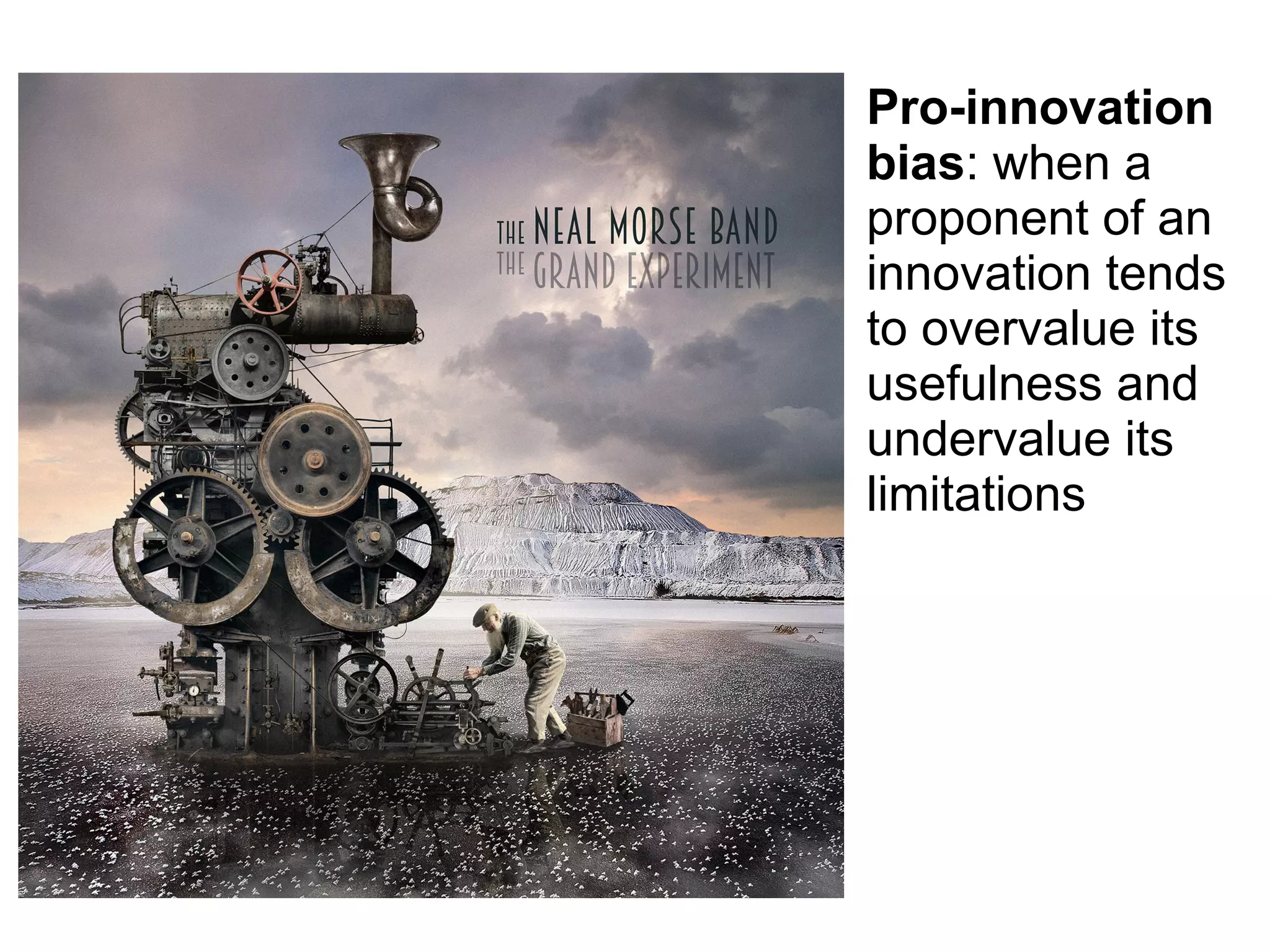
Pro-innovation
bias: when a
proponent of an
innovation tends
to overvalue its
usefulness and
undervalue its
limitations
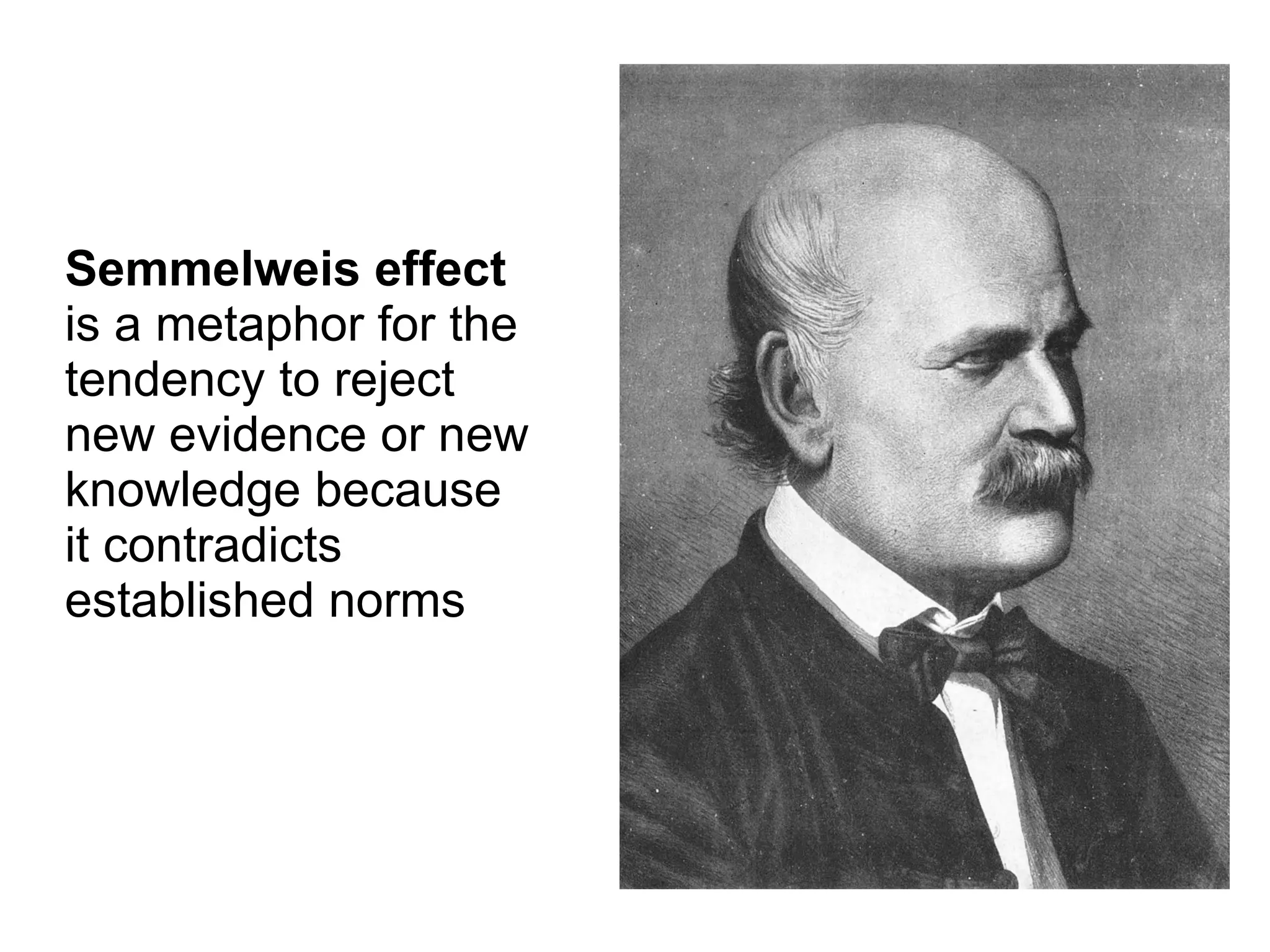
Semmelweis effect
is a metaphor for the
tendency to reject
new evidence or new
knowledge because
it contradicts
established norms
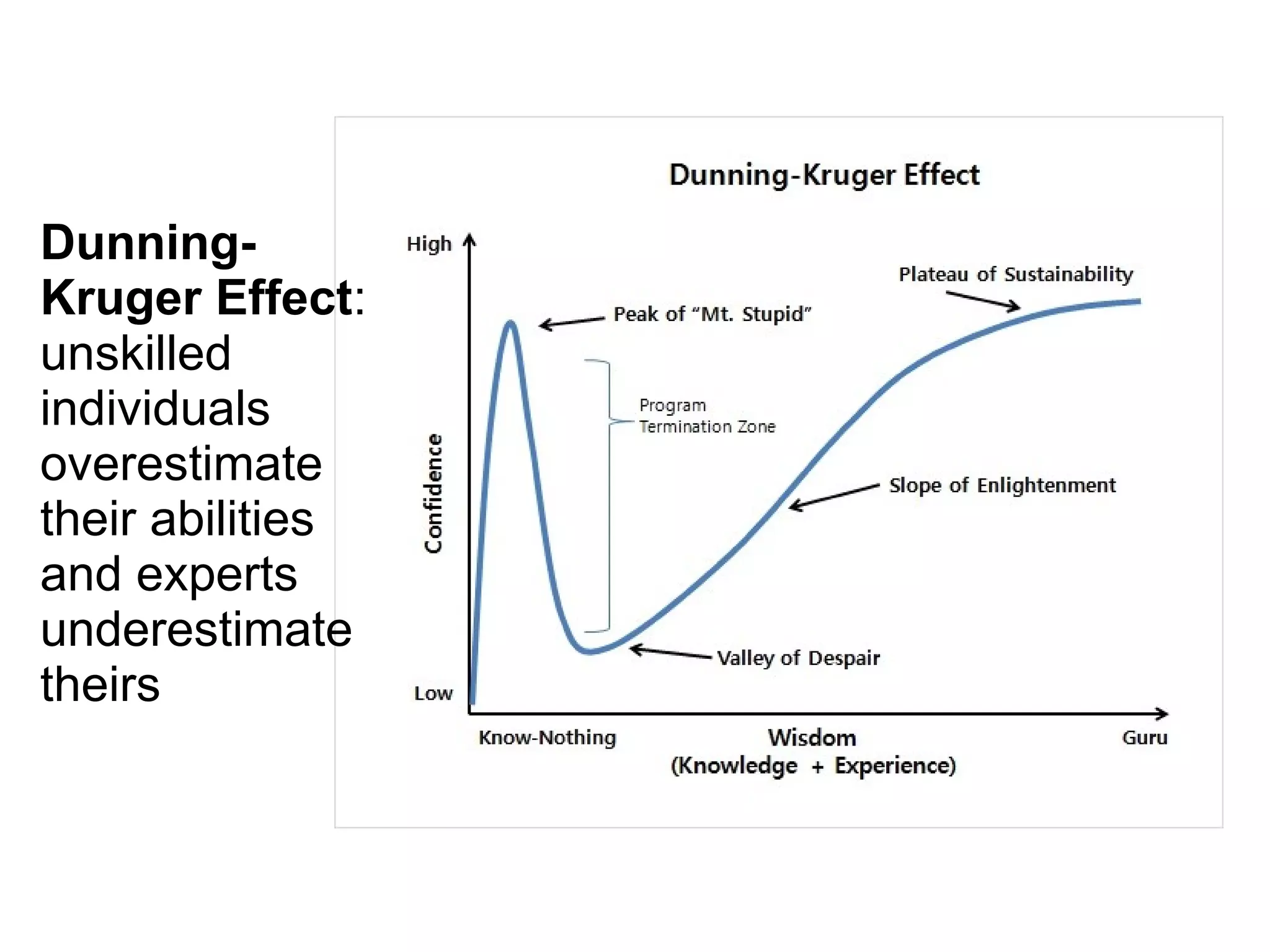
Dunning-
Kruger Effect:
unskilled
individuals
overestimate
their abilities
and experts
underestimate
theirs
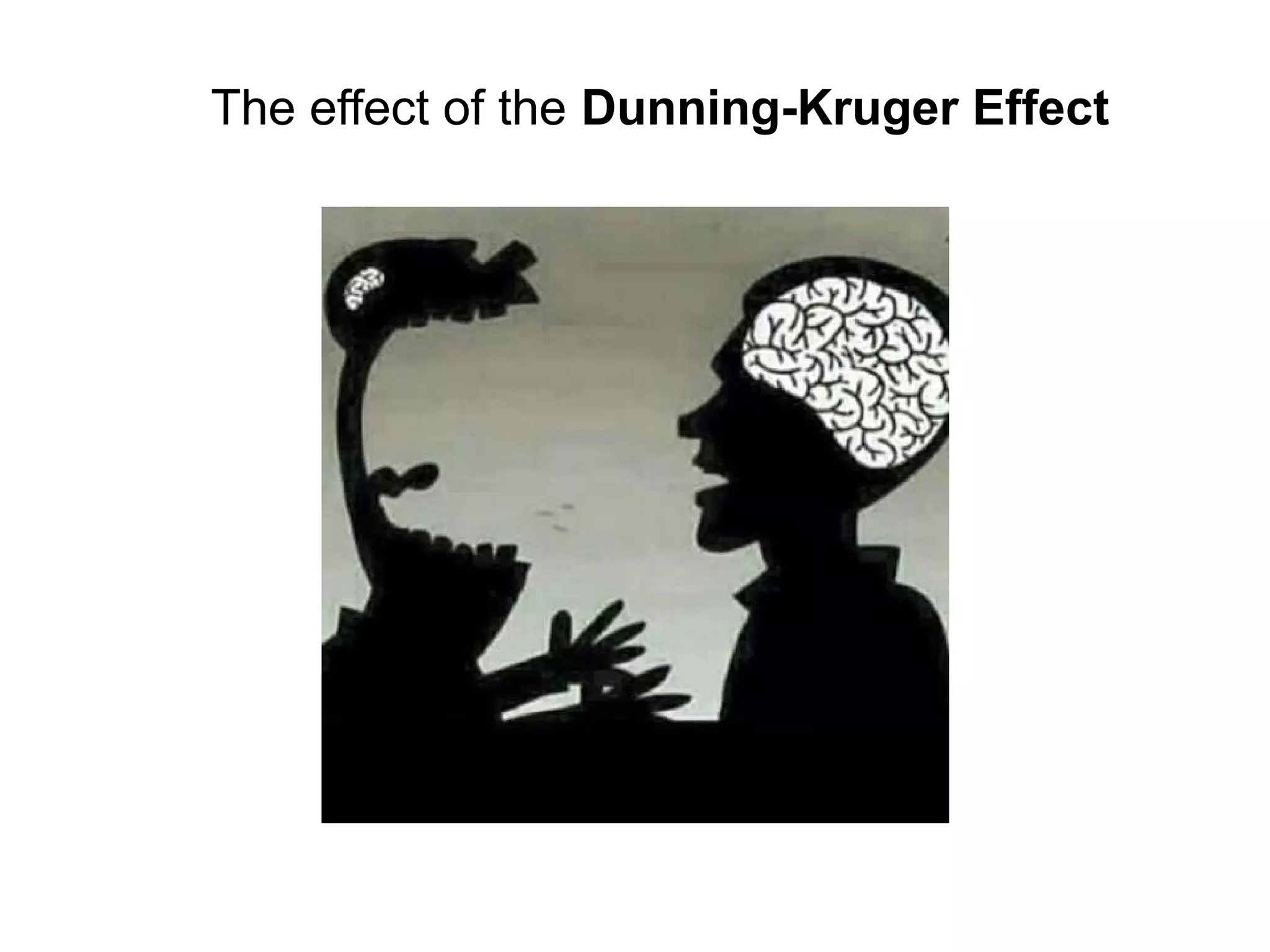
The effect of the Dunning-Kruger Effect
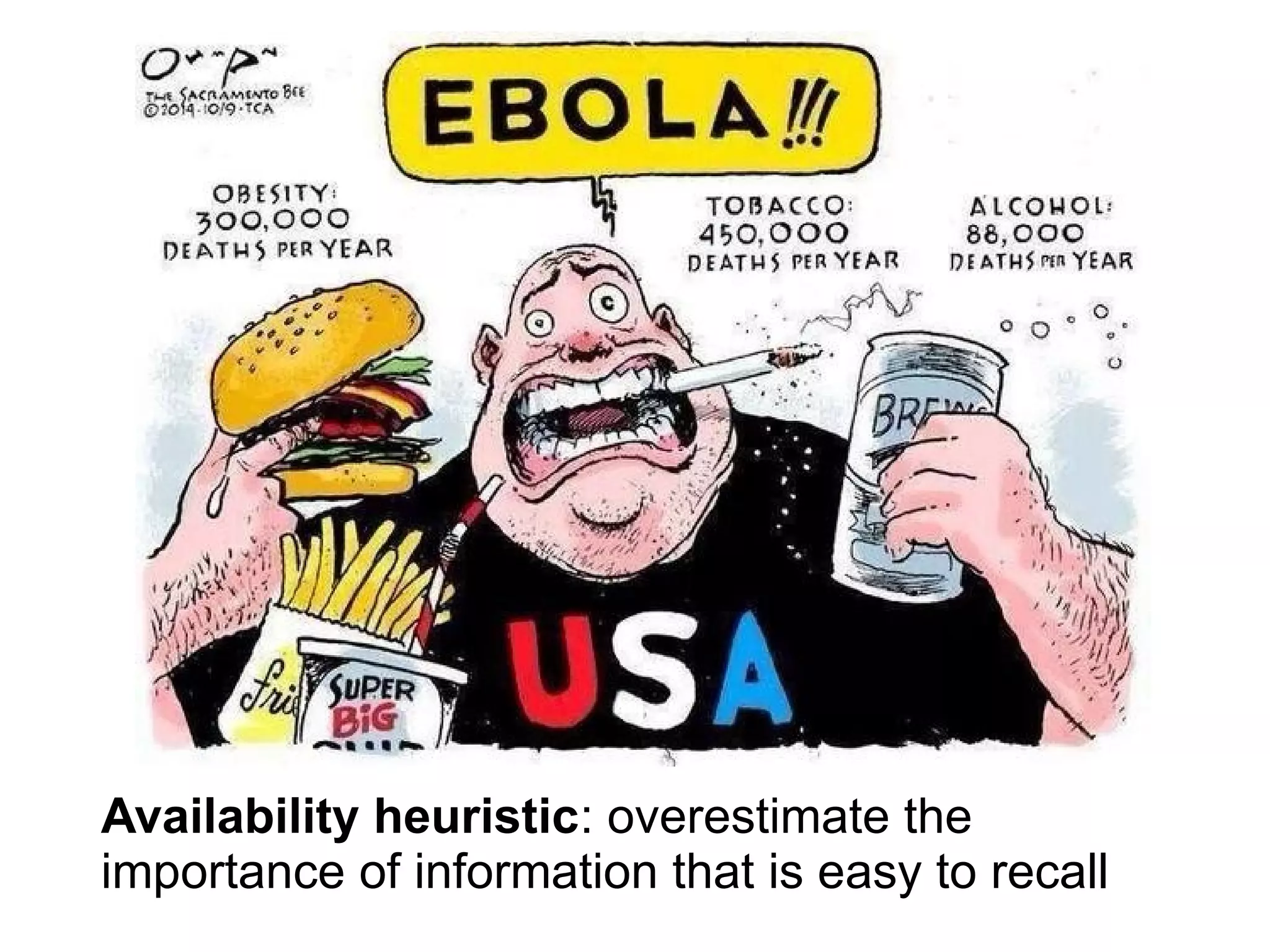
Availability heuristic: overestimate the
importance of information that is easy to recall
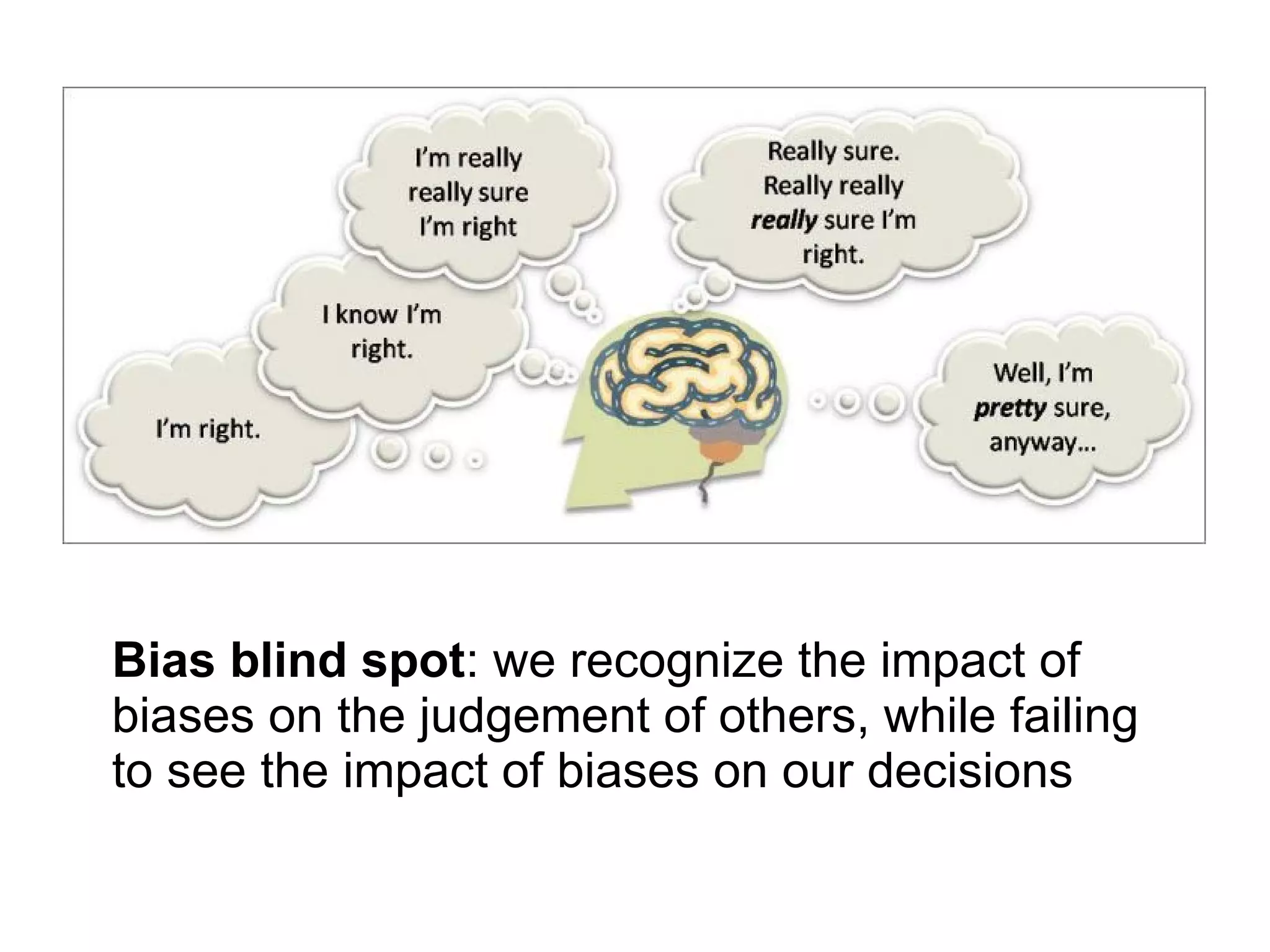
Bias blind spot: we recognize the impact of
biases on the judgement of others, while failing
to see the impact of biases on our decisions
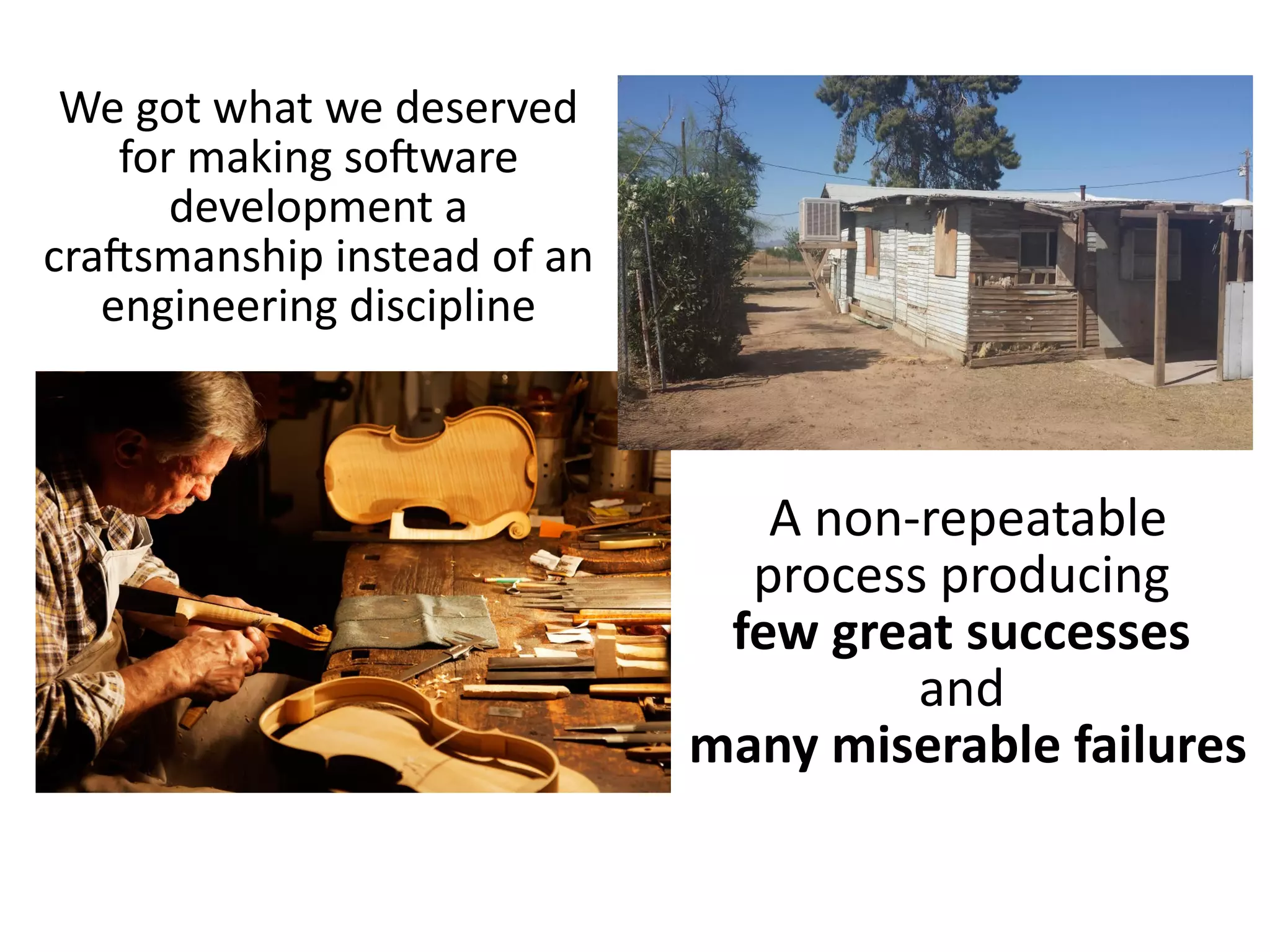
A non-repeatable
process producing
few great successes
and
many miserable failures
We got what we deserved
for making software
development a
craftsmanship instead of an
engineering discipline
We are engineers,
not craftsmen or
even worse artists
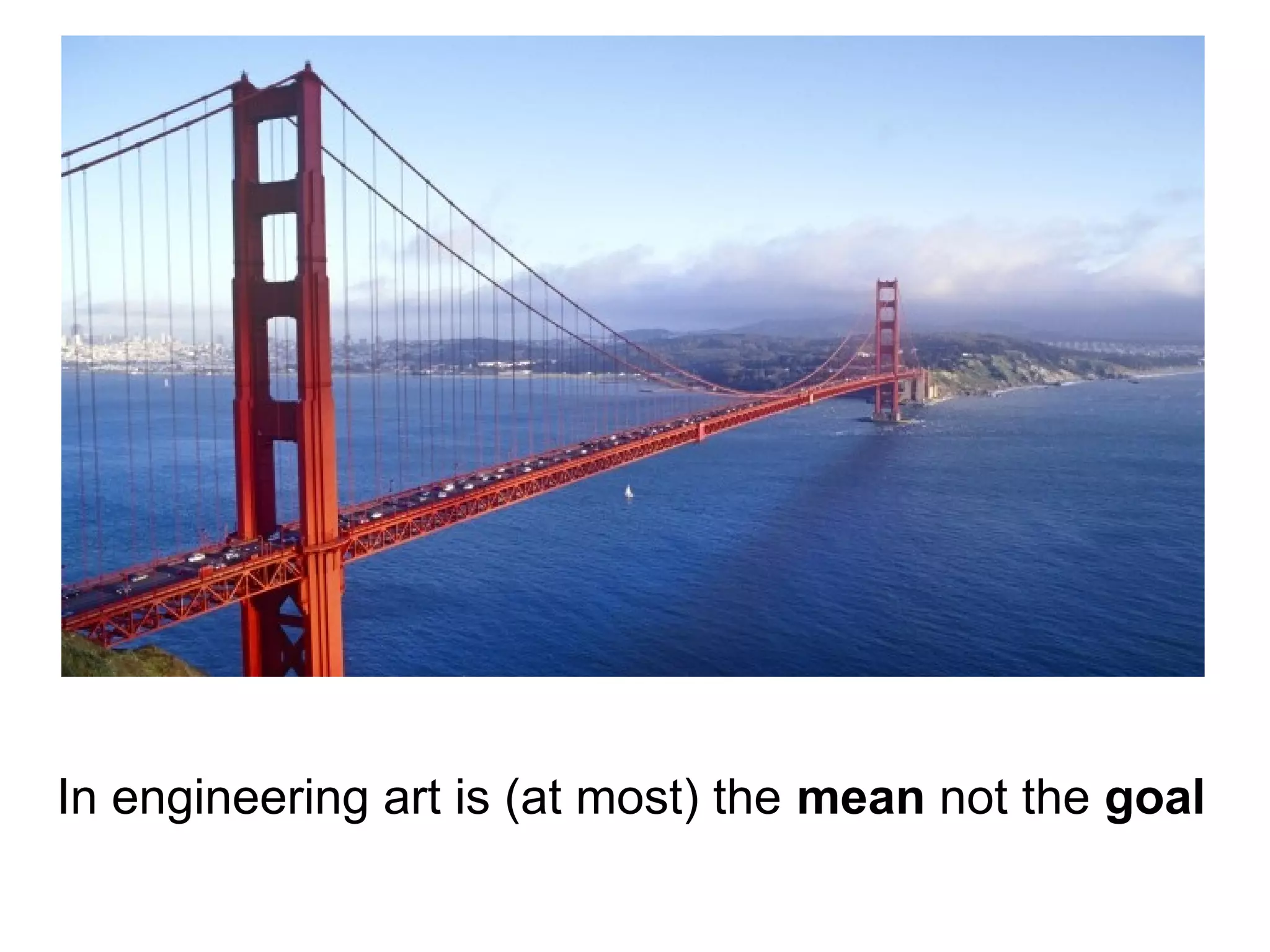
In engineering art is (at most) the mean not the goal
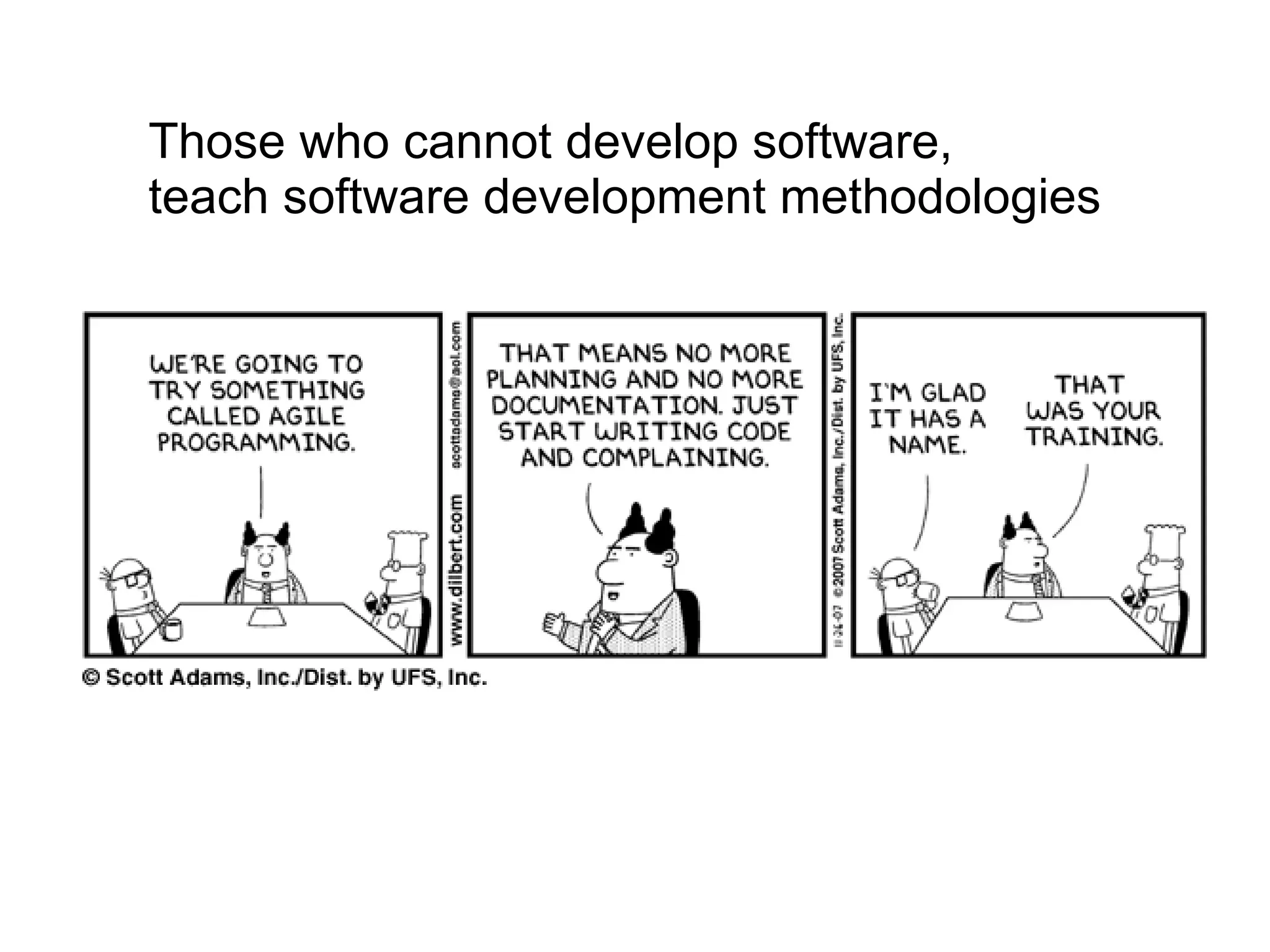
Those who cannot develop software,
teach software development methodologies
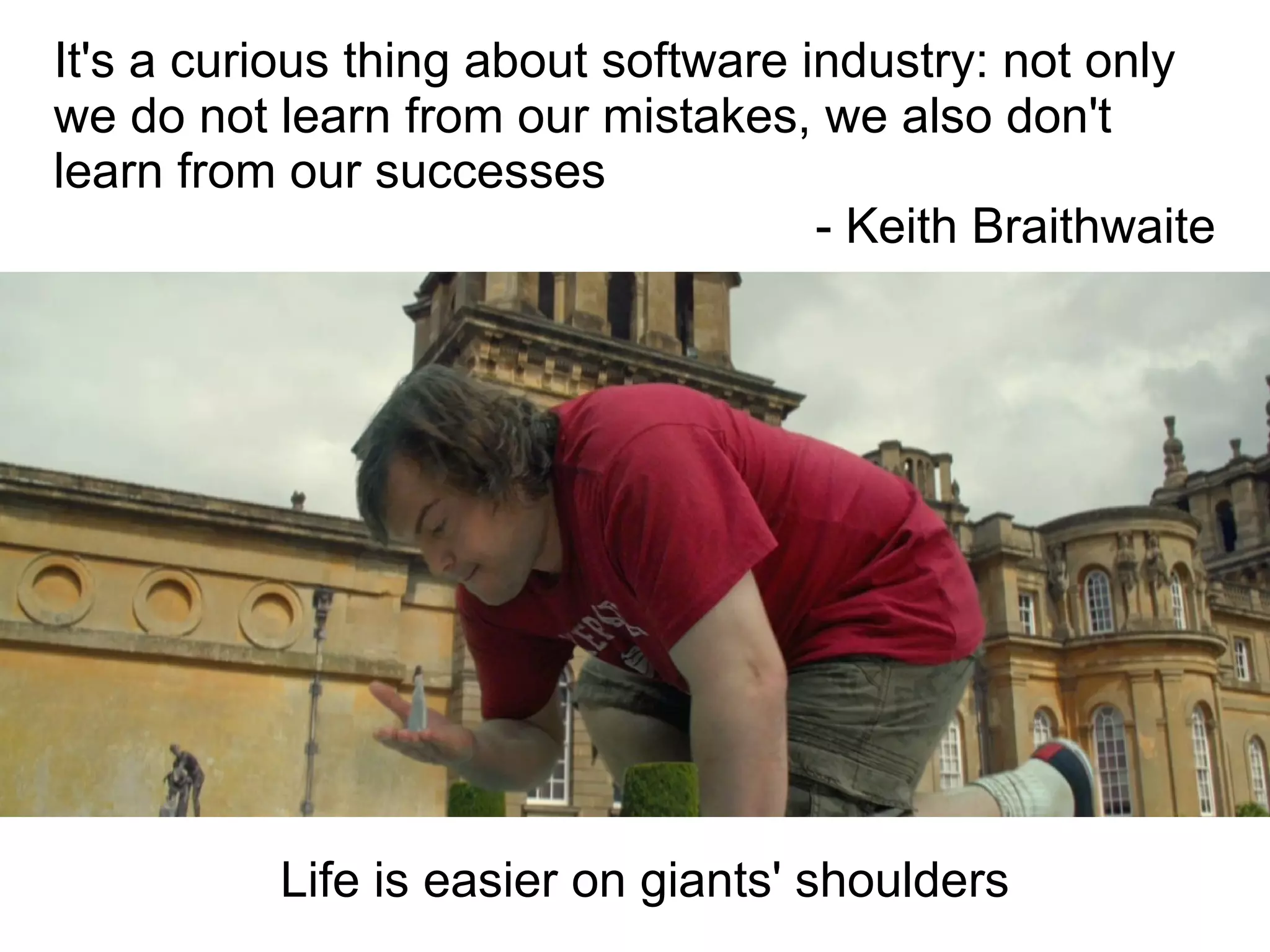
Life is easier on giants' shoulders
It's a curious thing about software industry: not only
we do not learn from our mistakes, we also don't
learn from our successes
- Keith Braithwaite
Listen to listen, not to take a pause
and think what you'll say next
Measure
Measure
Measure
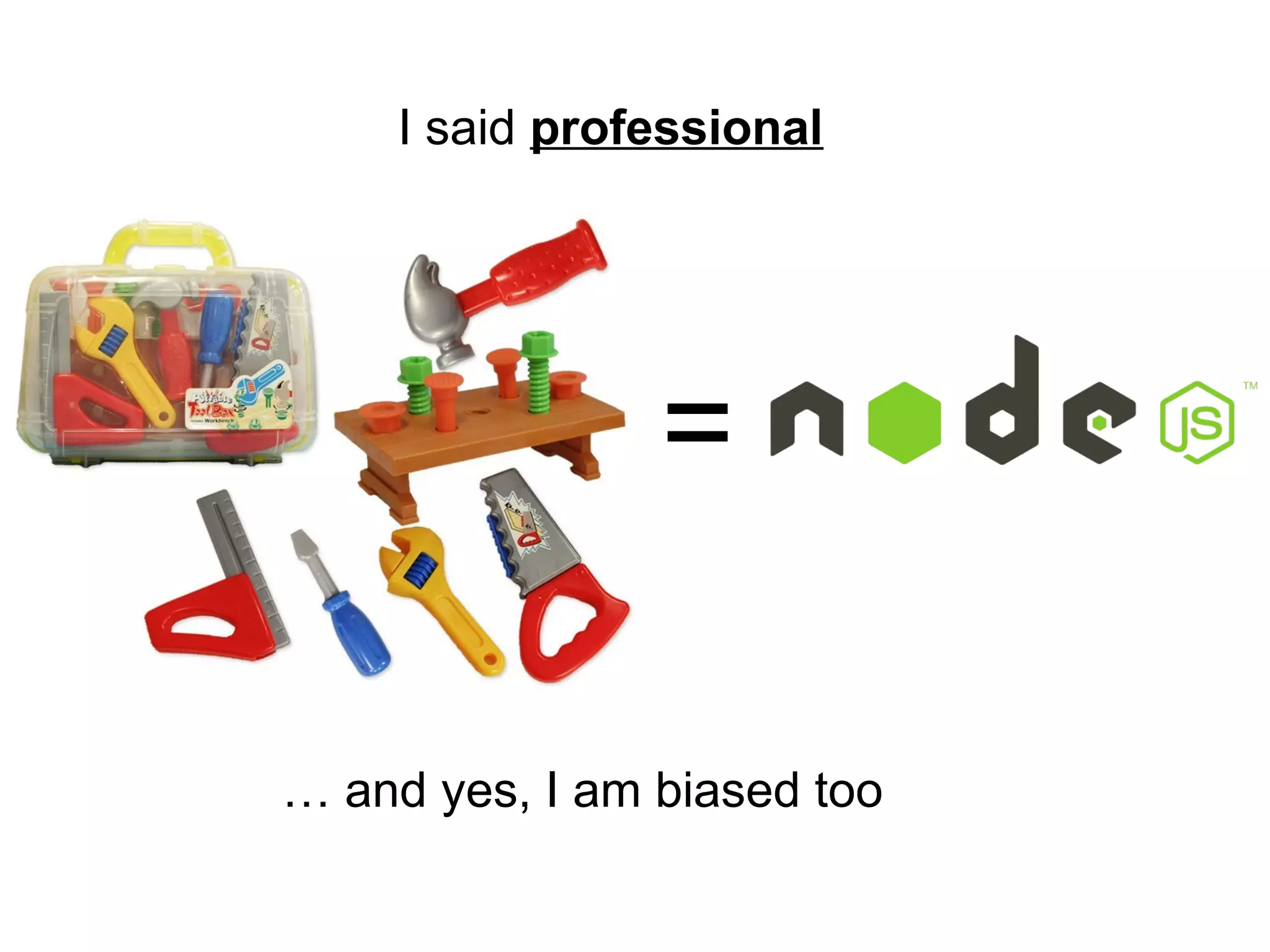
Enlarge your
professional toolbox
I said professional
=
… and yes, I am biased too
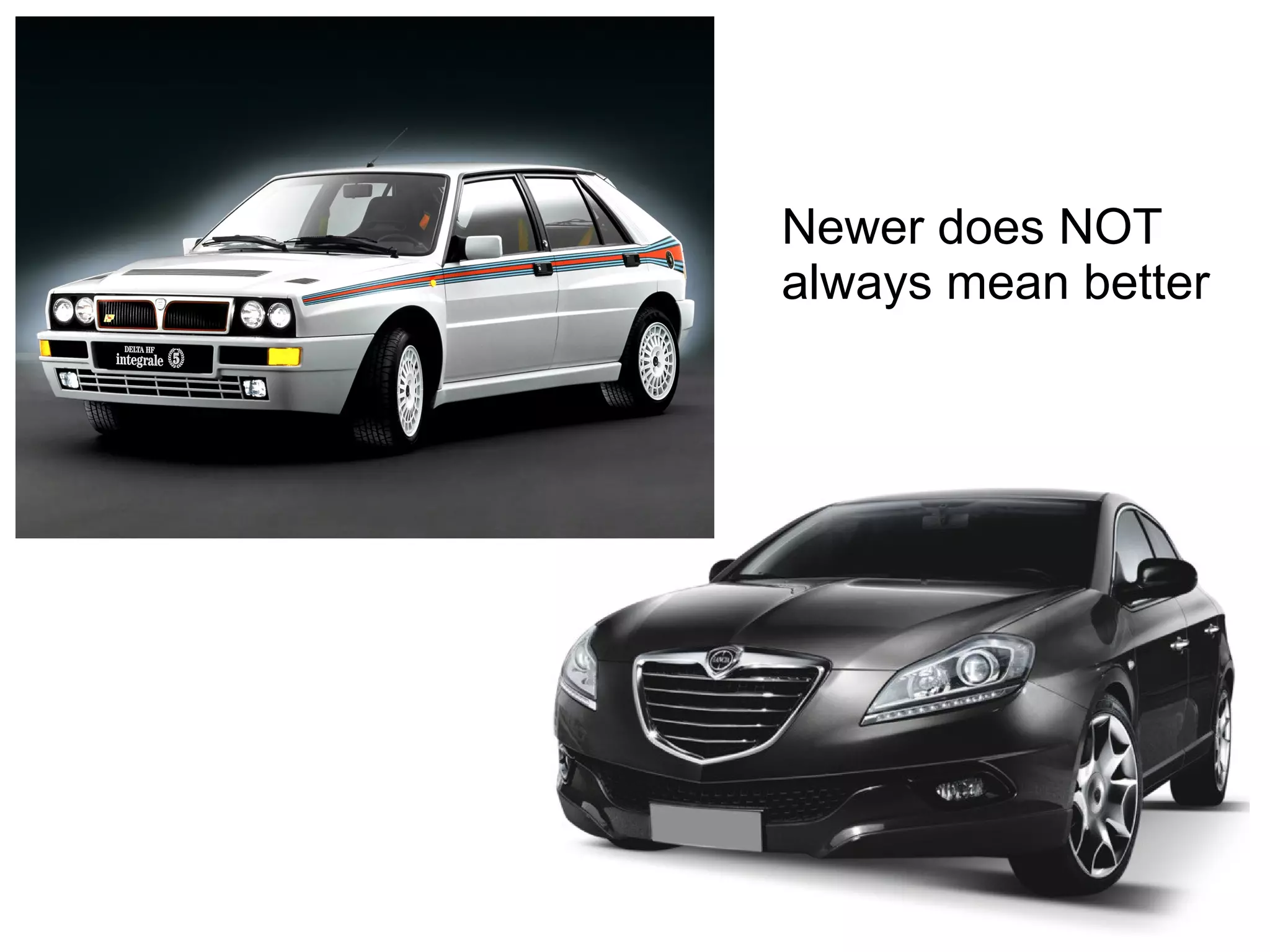
Newer does NOT
always mean better
Dubito ergo Cogito

Bias Driven Development - Mario Fusco - Codemotion Milan 2016