Beyond DIY: How to
Know if Your
Renovation Requires
Structural Changes
Essential Insights for Safe and
Effective Home Renovations
Renovations can transform your home, but knowing when structural
changes are necessary is crucial. Structural modifications require
expert knowledge and should not be approached as DIY projects.
This guide will help you understand what constitutes a structural
change, when it’s required, and how to manage these changes safely
and effectively.
Understanding
StructuralChanges
CommonScenarios
forStructural
Changes
Knocking Down Walls: Especially load-
bearing walls that support the structure
of your home.
Adding Windows or Doors: Creating new
openings in existing walls can affect the
structure.
Extending Rooms: Building outwards or
upwards requires adjustments to support
structures.
Reconfiguring Layouts: Significant
changes to your floor plan may need
structural support modifications.
Herearesome
renovationscenarios
thattypicallyrequire
structuralchanges:
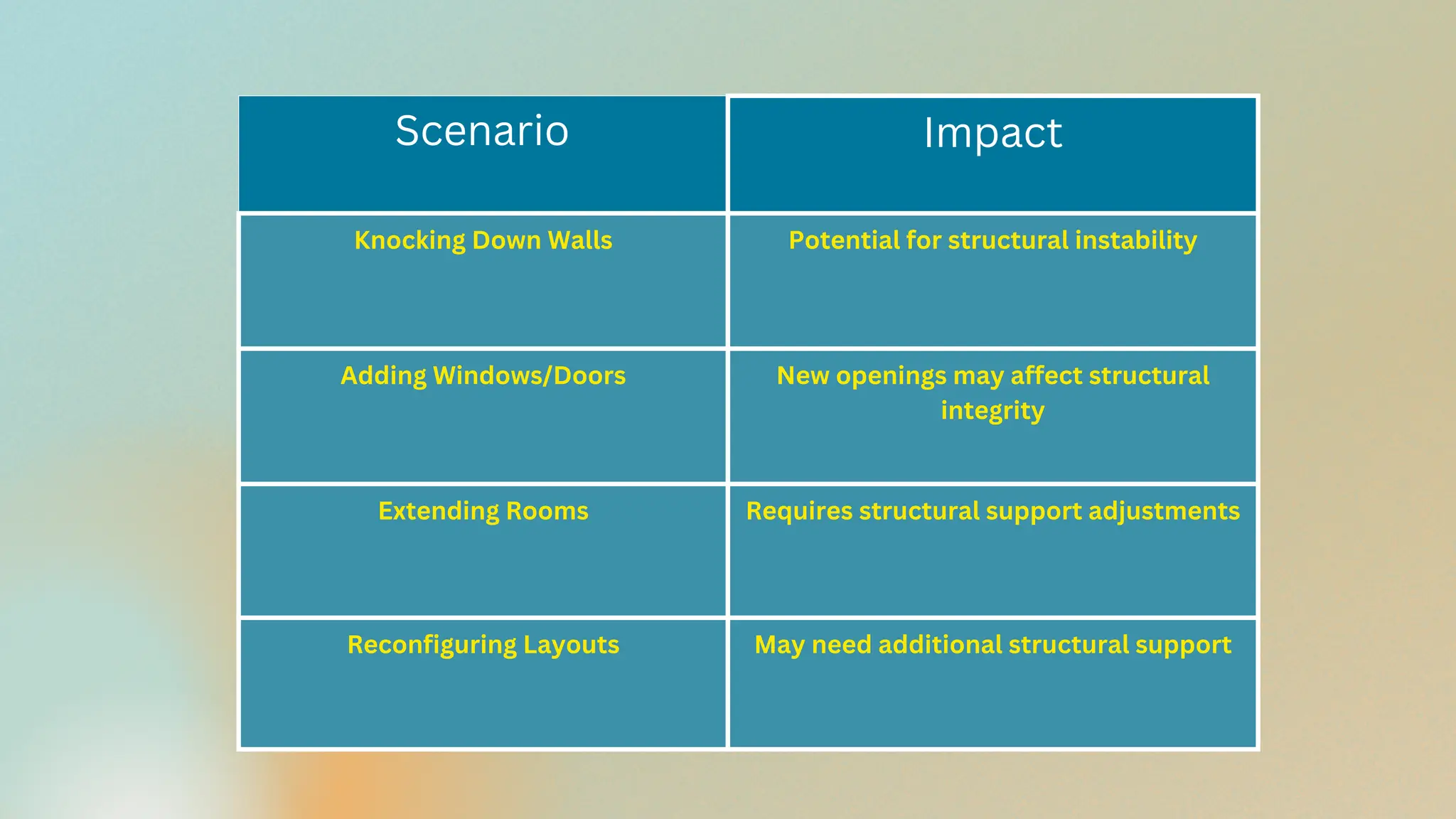
Scenario Impact
Knocking Down Walls Potential for structural instability
Adding Windows/Doors New openings may affect structural
integrity
Extending Rooms Requires structural support adjustments
Reconfiguring Layouts May need additional structural support
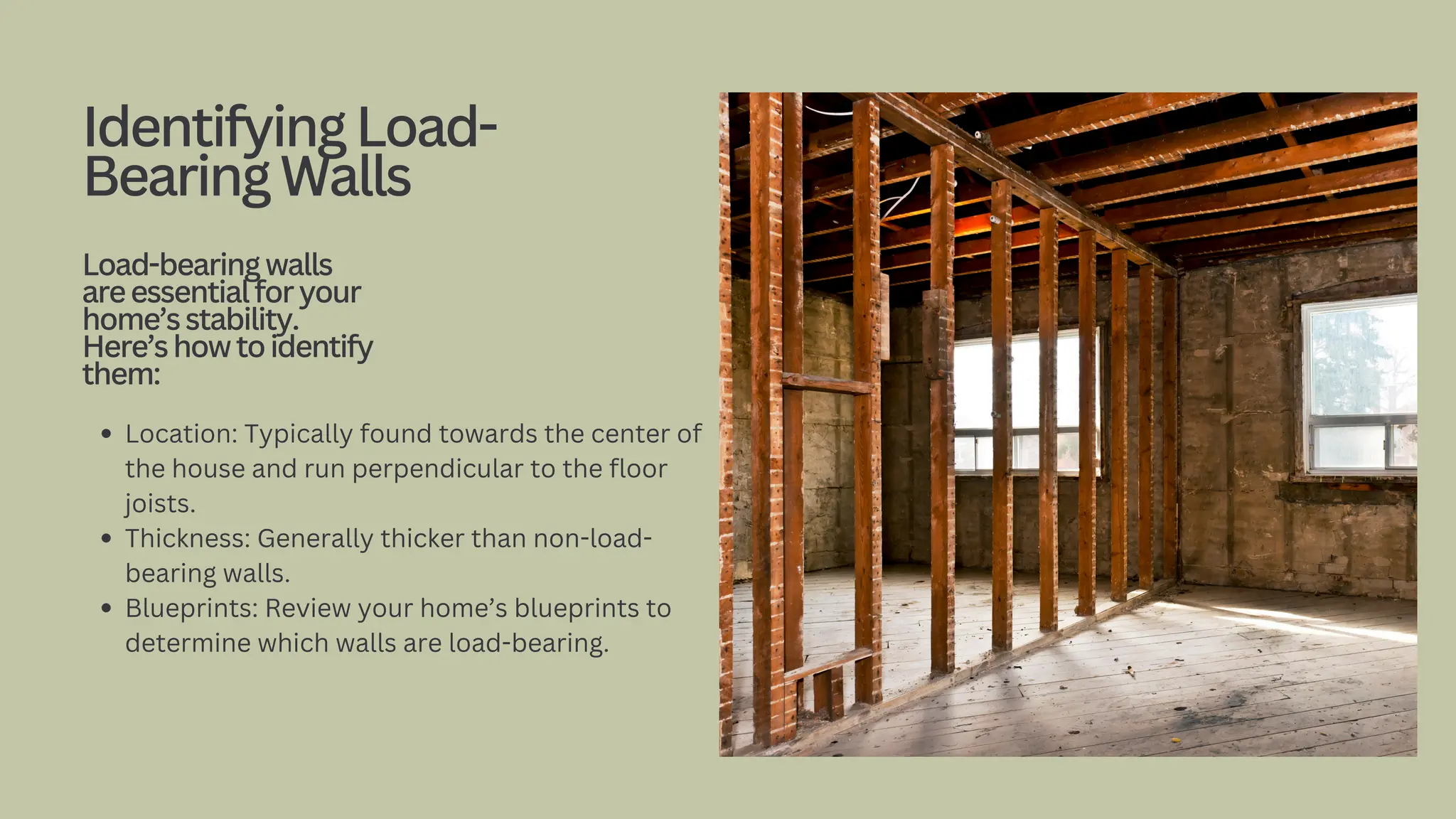
Location: Typically found towards the center of
the house and run perpendicular to the floor
joists.
Thickness: Generally thicker than non-load-
bearing walls.
Blueprints: Review your home’s blueprints to
determine which walls are load-bearing.
IdentifyingLoad-
BearingWalls
Load-bearingwalls
areessentialforyour
home’sstability.
Here’showtoidentify
them:
Safety: Ensuring the structural integrity of
your home.
Insurance: Keeping your home compliant with
insurance requirements.
Resale Value: Meeting legal standards can
enhance your property's value.
TheImportanceof
Inspections
Structuralchanges
usuallyrequirea
permitand
inspection.These
stepsarecrucialfor:
Expertise: Understanding of structural
requirements and building codes.
Safety: Ensuring work is done safely and to
code.
Efficiency: Completing the job correctly and
saving you from costly mistakes.
HiringaQualified
Contractor
Aqualifiedcontractor
isessentialfor
handlingstructural
modifications.
Professionals
provide:
Structural Failure: Potential for serious
damage or collapse.
Legal Issues: Non-compliance with building
codes and regulations.
Increased Costs: Costly repairs and potential
safety hazards.
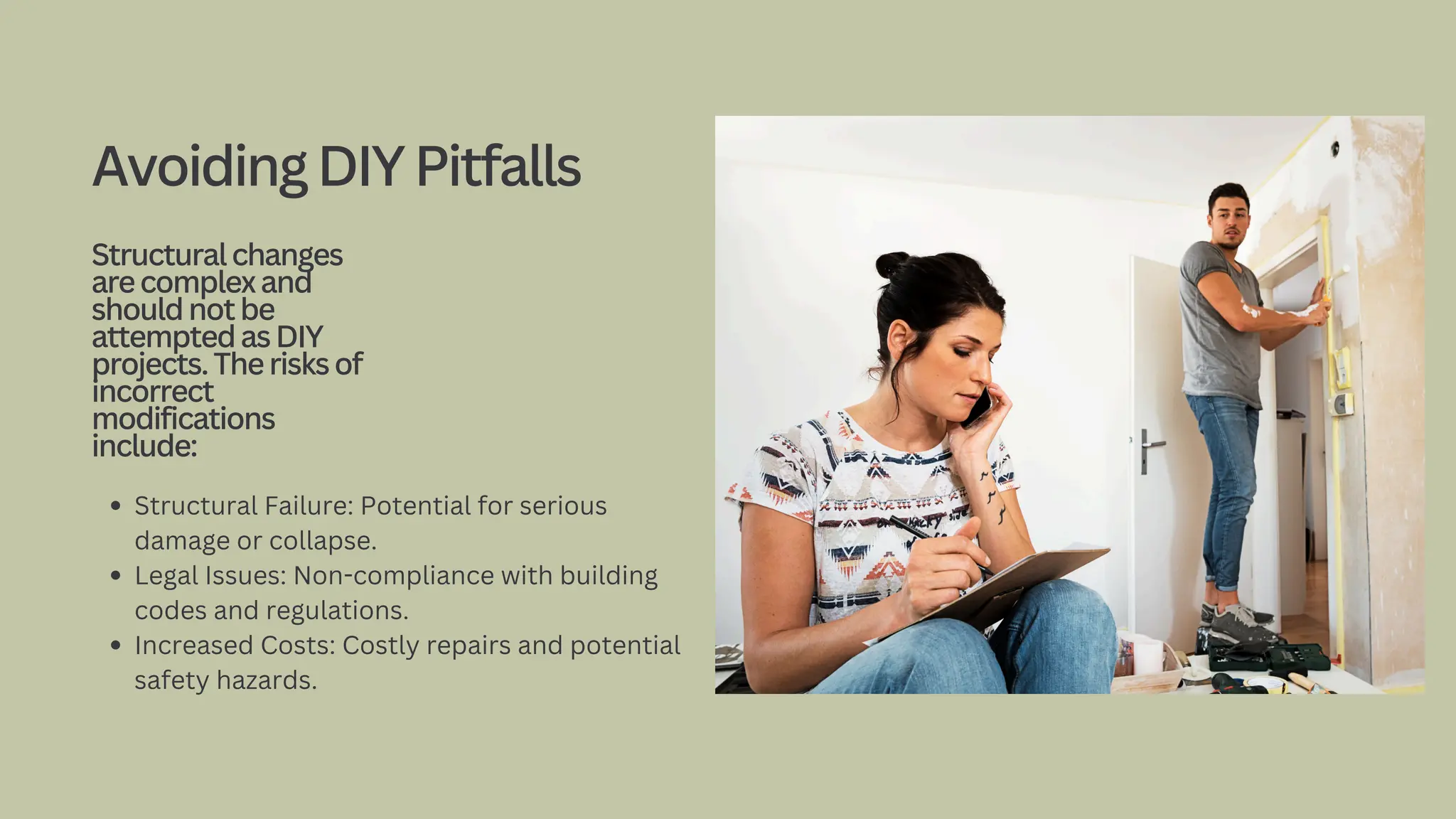
AvoidingDIYPitfalls
Structuralchanges
arecomplexand
shouldnotbe
attemptedasDIY
projects.Therisksof
incorrect
modifications
include:
For safe and effective structural
renovations, rely on the expertise of
Artisan Contracting. Our team is
equipped to handle all your structural
modification needs, ensuring
compliance and quality workmanship.
Contact us today to discuss your
renovation plans and get started on
your project with confidence.
ContactArtisan
Contracting

Beyond DIY How to Know if Your Renovation Requires Structural Changes

  • 1.
    Beyond DIY: Howto Know if Your Renovation Requires Structural Changes Essential Insights for Safe and Effective Home Renovations
  • 2.
    Renovations can transformyour home, but knowing when structural changes are necessary is crucial. Structural modifications require expert knowledge and should not be approached as DIY projects. This guide will help you understand what constitutes a structural change, when it’s required, and how to manage these changes safely and effectively. Understanding StructuralChanges
  • 3.
  • 4.
    Knocking Down Walls:Especially load- bearing walls that support the structure of your home. Adding Windows or Doors: Creating new openings in existing walls can affect the structure. Extending Rooms: Building outwards or upwards requires adjustments to support structures. Reconfiguring Layouts: Significant changes to your floor plan may need structural support modifications. Herearesome renovationscenarios thattypicallyrequire structuralchanges:
  • 5.
    Scenario Impact Knocking DownWalls Potential for structural instability Adding Windows/Doors New openings may affect structural integrity Extending Rooms Requires structural support adjustments Reconfiguring Layouts May need additional structural support
  • 6.
    Location: Typically foundtowards the center of the house and run perpendicular to the floor joists. Thickness: Generally thicker than non-load- bearing walls. Blueprints: Review your home’s blueprints to determine which walls are load-bearing. IdentifyingLoad- BearingWalls Load-bearingwalls areessentialforyour home’sstability. Here’showtoidentify them:
  • 7.
    Safety: Ensuring thestructural integrity of your home. Insurance: Keeping your home compliant with insurance requirements. Resale Value: Meeting legal standards can enhance your property's value. TheImportanceof Inspections Structuralchanges usuallyrequirea permitand inspection.These stepsarecrucialfor:
  • 8.
    Expertise: Understanding ofstructural requirements and building codes. Safety: Ensuring work is done safely and to code. Efficiency: Completing the job correctly and saving you from costly mistakes. HiringaQualified Contractor Aqualifiedcontractor isessentialfor handlingstructural modifications. Professionals provide:
  • 9.
    Structural Failure: Potentialfor serious damage or collapse. Legal Issues: Non-compliance with building codes and regulations. Increased Costs: Costly repairs and potential safety hazards. AvoidingDIYPitfalls Structuralchanges arecomplexand shouldnotbe attemptedasDIY projects.Therisksof incorrect modifications include:
  • 10.
    For safe andeffective structural renovations, rely on the expertise of Artisan Contracting. Our team is equipped to handle all your structural modification needs, ensuring compliance and quality workmanship. Contact us today to discuss your renovation plans and get started on your project with confidence. ContactArtisan Contracting