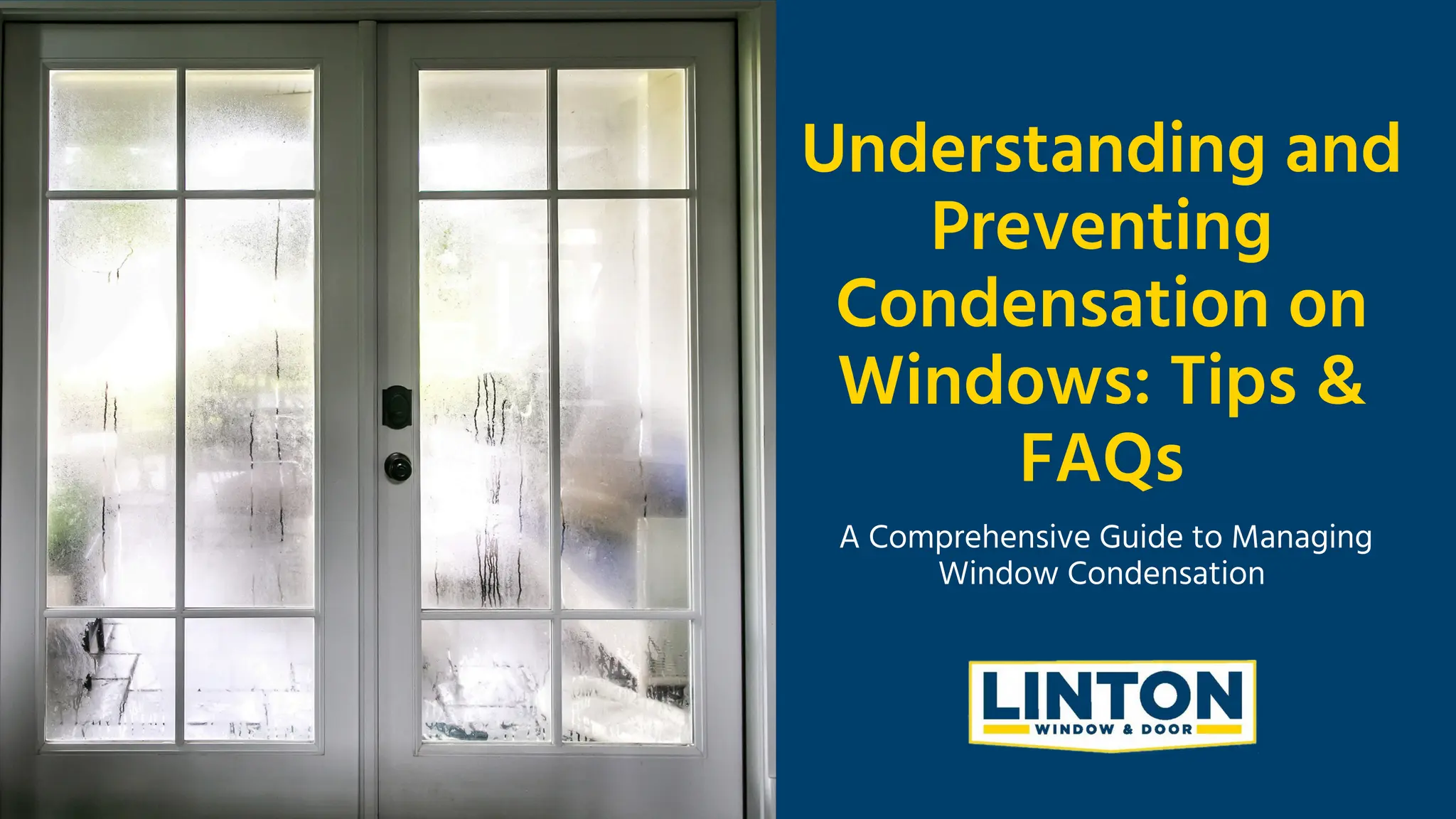
Understanding and
Preventing
Condensation on
Windows: Tips &
FAQs
A Comprehensive Guide to Managing
Window Condensation
Condensation 101:
Why Your Windows
Might Be Sweating
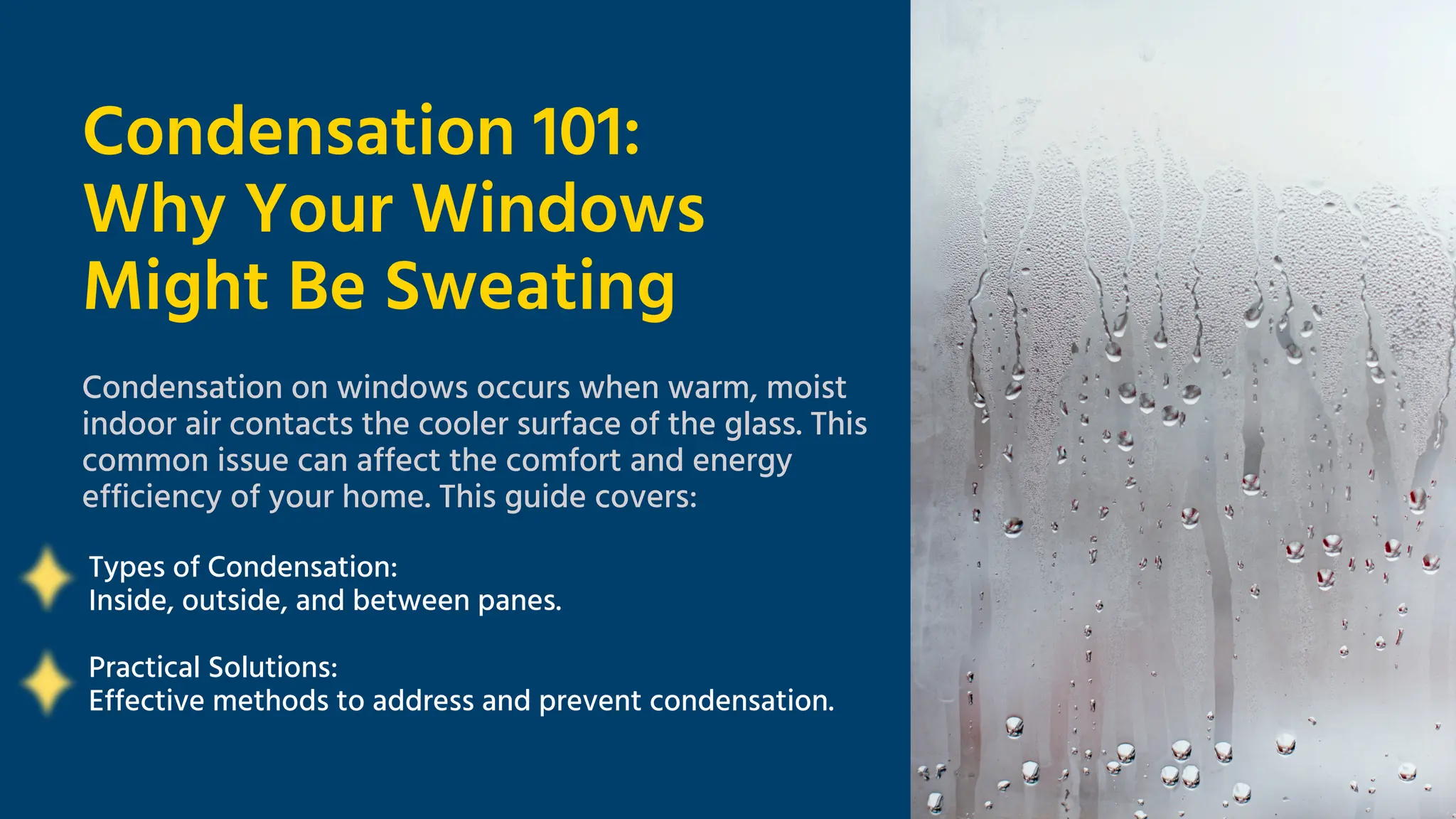
Condensation on windows occurs when warm, moist
indoor air contacts the cooler surface of the glass. This
common issue can affect the comfort and energy
efficiency of your home. This guide covers:
Types of Condensation:
Inside, outside, and between panes.
Practical Solutions:
Effective methods to address and prevent condensation.
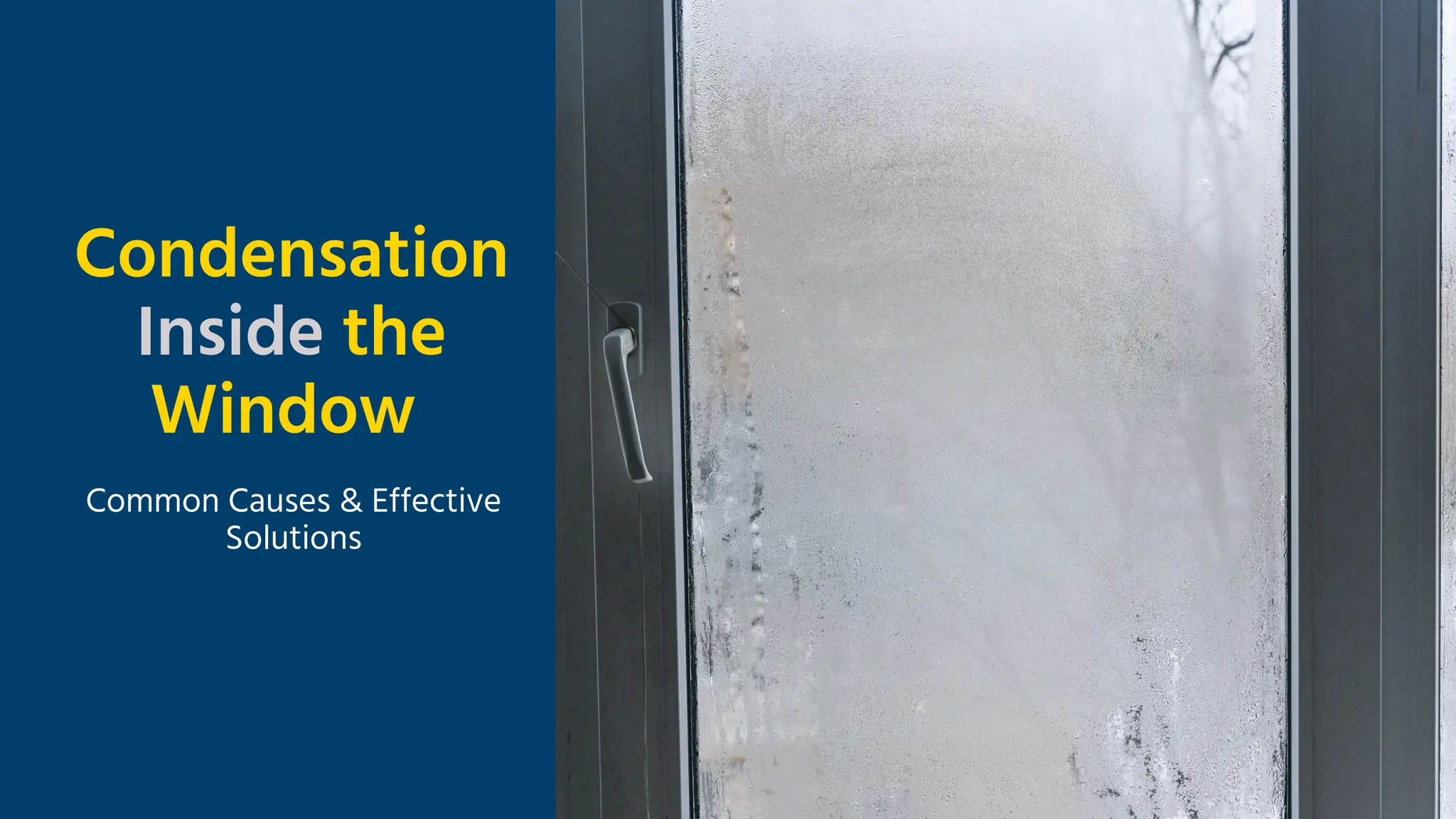
Condensation
Inside the
Window
Common Causes & Effective
Solutions
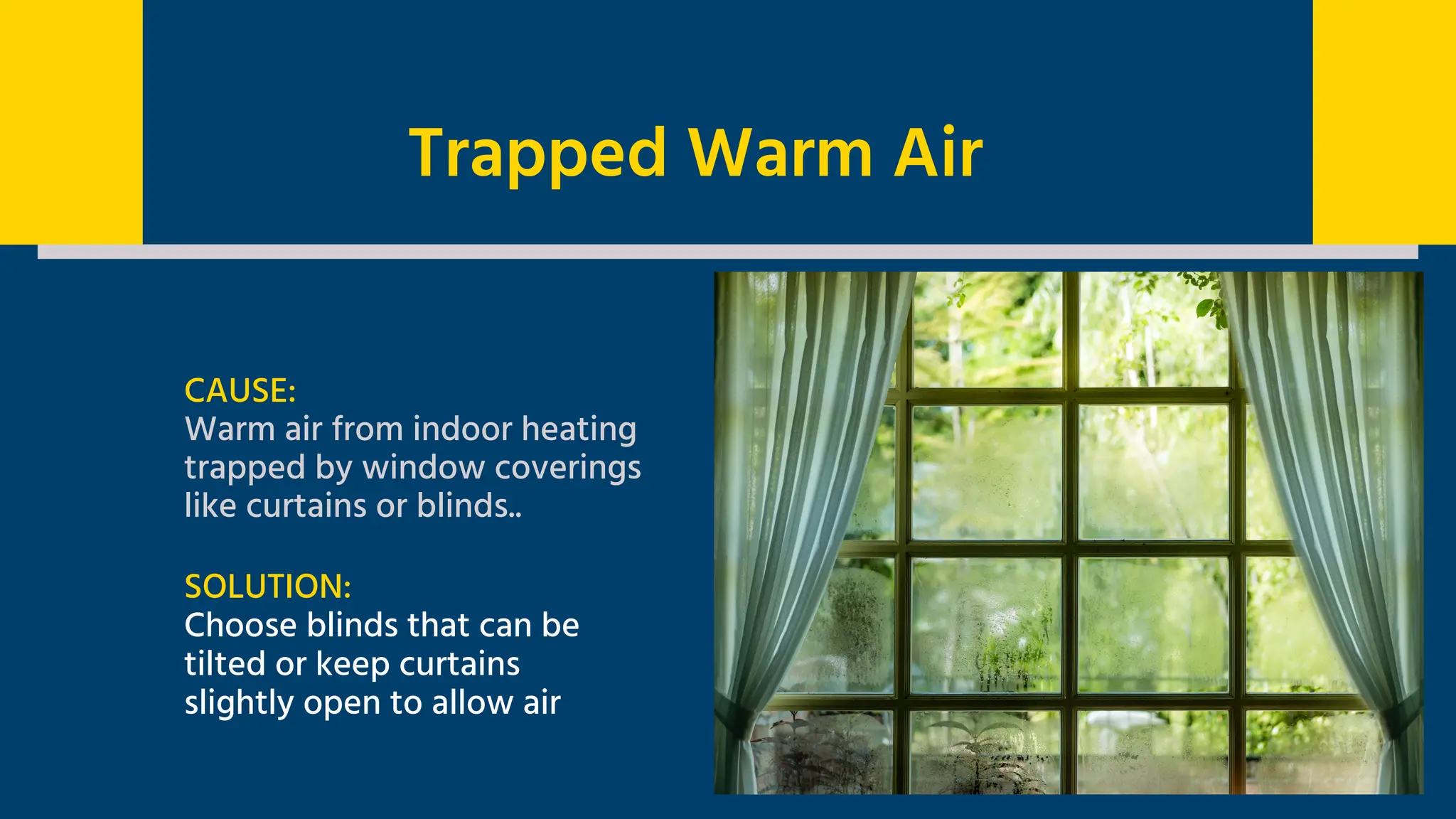
CAUSE:
Warm air from indoor heating
trapped by window coverings
like curtains or blinds..
SOLUTION:
Choose blinds that can be
tilted or keep curtains
slightly open to allow air
Trapped Warm Air
CAUSE:
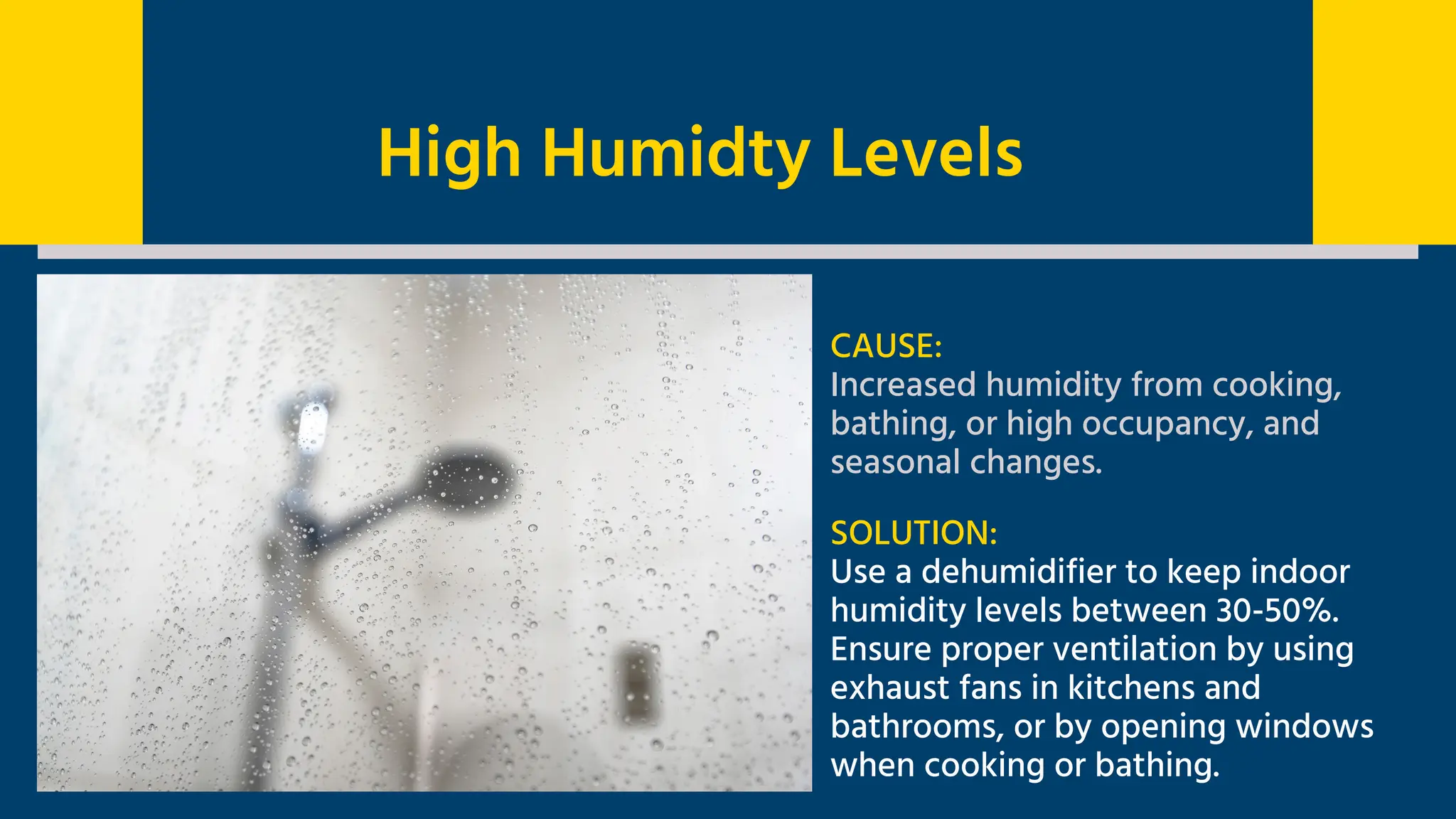
Increased humidity from cooking,
bathing, or high occupancy, and
seasonal changes.
SOLUTION:
Use a dehumidifier to keep indoor
humidity levels between 30-50%.
Ensure proper ventilation by using
exhaust fans in kitchens and
bathrooms, or by opening windows
when cooking or bathing.
High Humidty Levels
Houseplants
CAUSE:
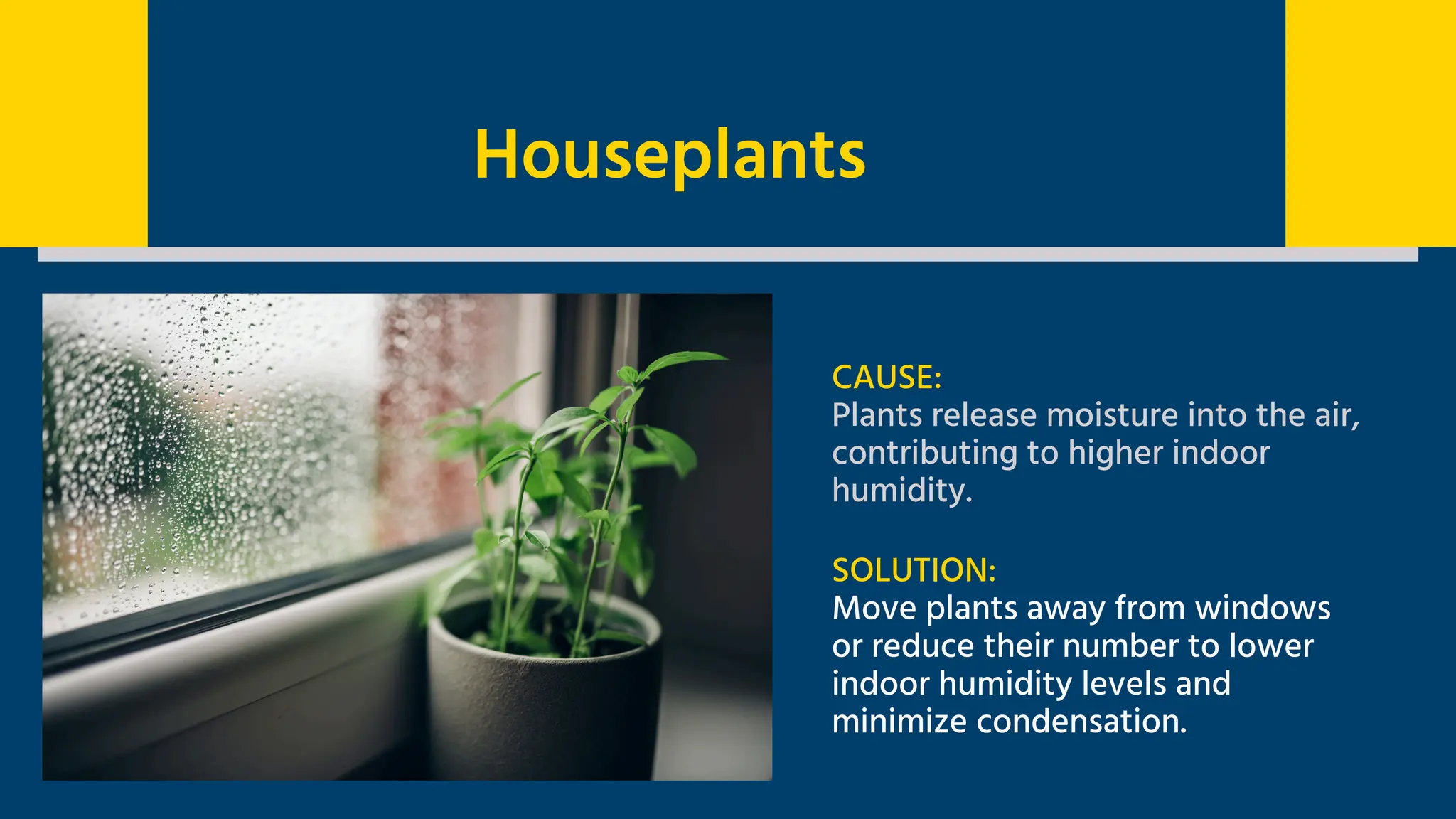
Plants release moisture into the air,
contributing to higher indoor
humidity.
SOLUTION:
Move plants away from windows
or reduce their number to lower
indoor humidity levels and
minimize condensation.
Condensation
Outside the
Window
Understanding Exterior
Condensation
Energy-Efficient Windows
CAUSE:
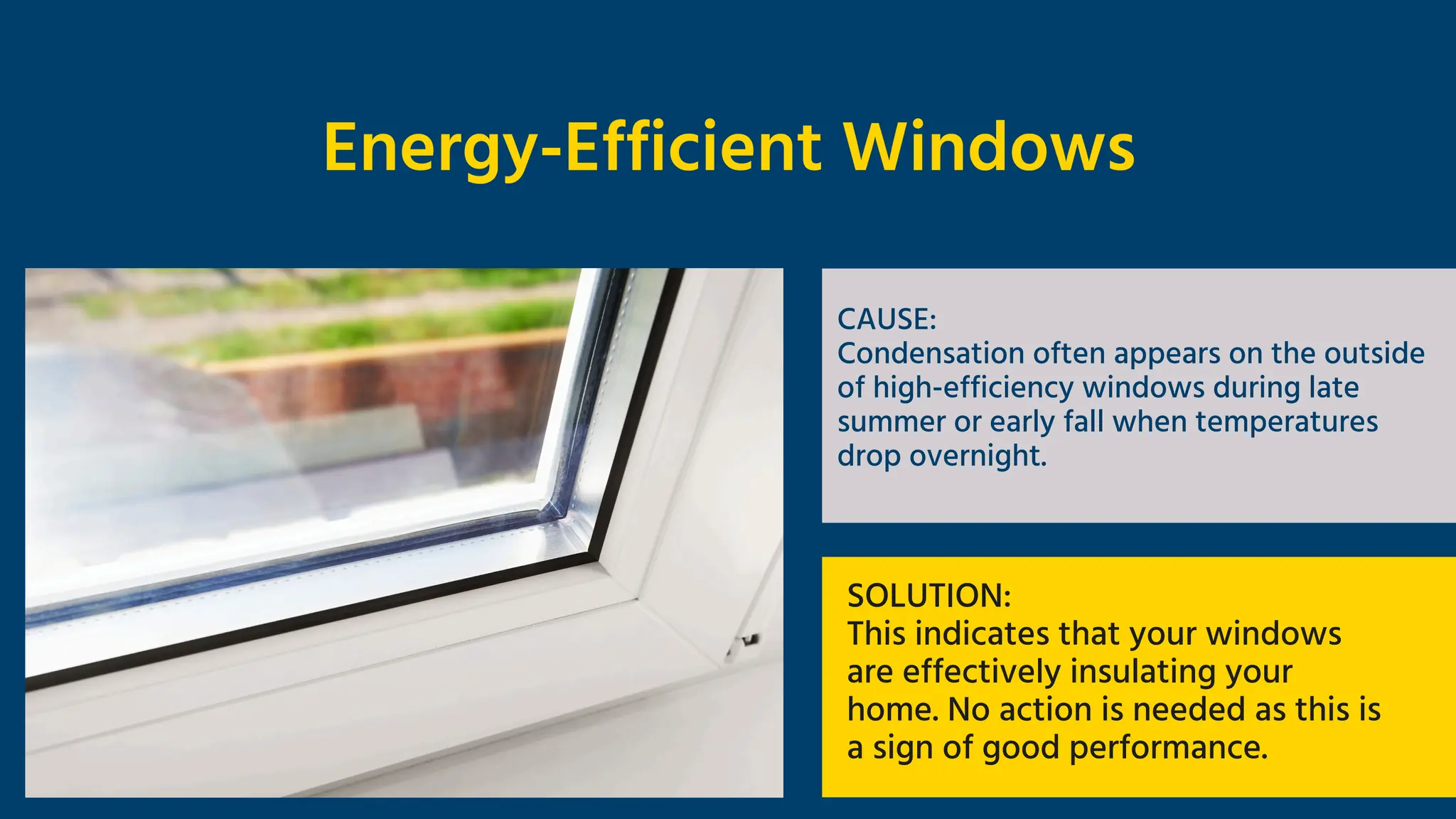
Condensation often appears on the outside
of high-efficiency windows during late
summer or early fall when temperatures
drop overnight.
SOLUTION:
This indicates that your windows
are effectively insulating your
home. No action is needed as this is
a sign of good performance.
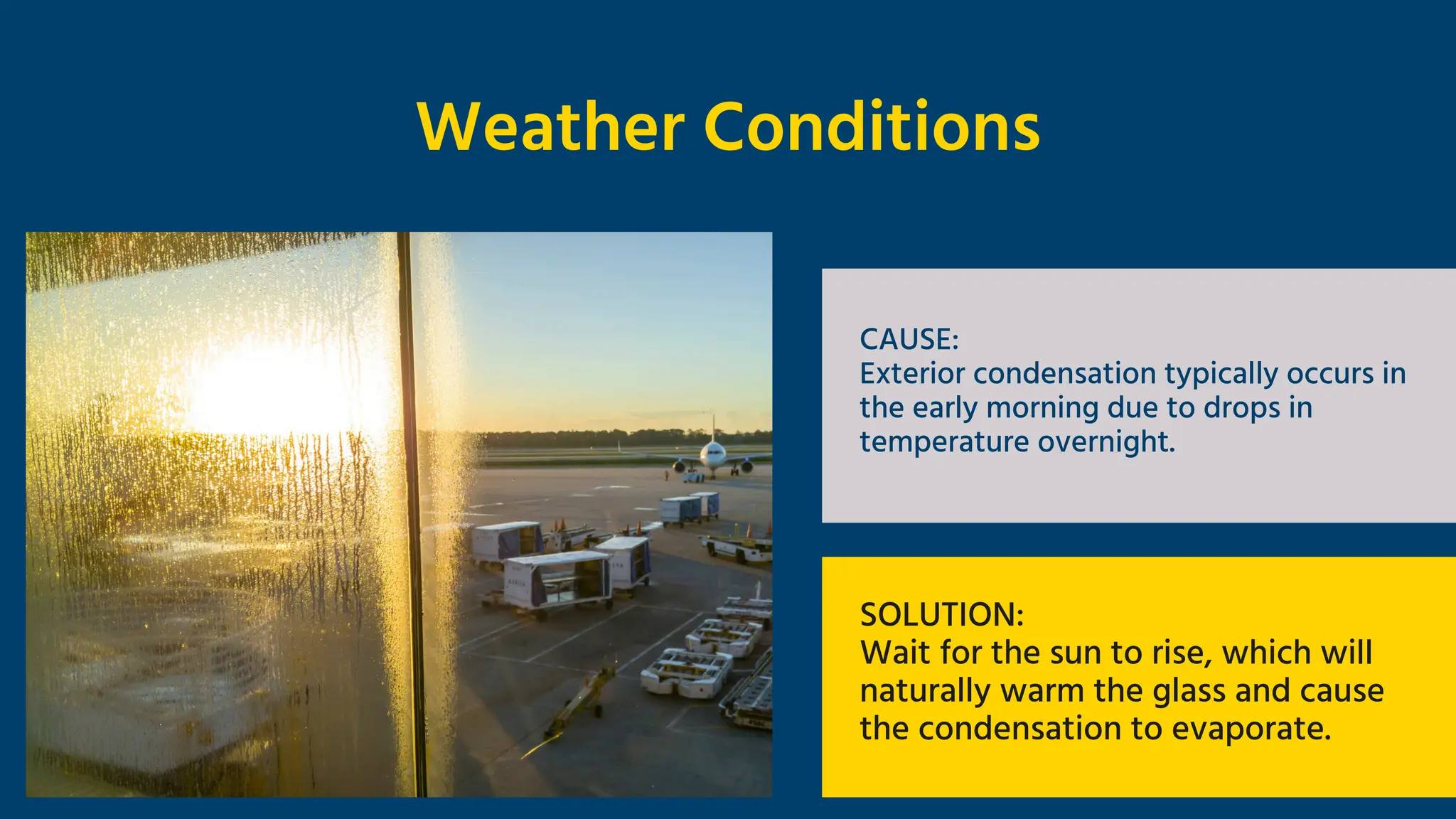
Weather Conditions
CAUSE:
Exterior condensation typically occurs in
the early morning due to drops in
temperature overnight.
SOLUTION:
Wait for the sun to rise, which will
naturally warm the glass and cause
the condensation to evaporate.
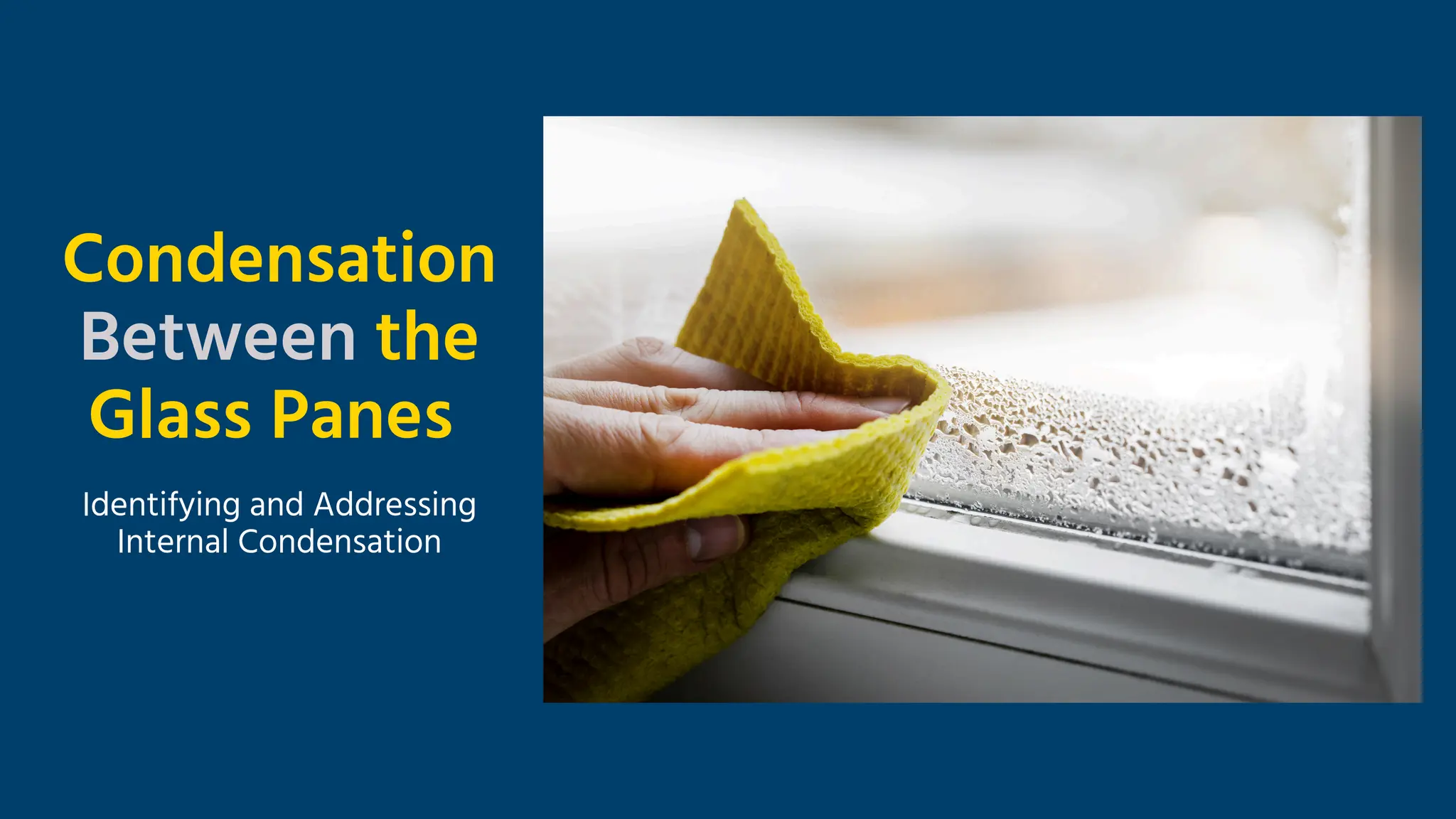
Condensation
Between the
Glass Panes
Identifying and Addressing
Internal Condensation
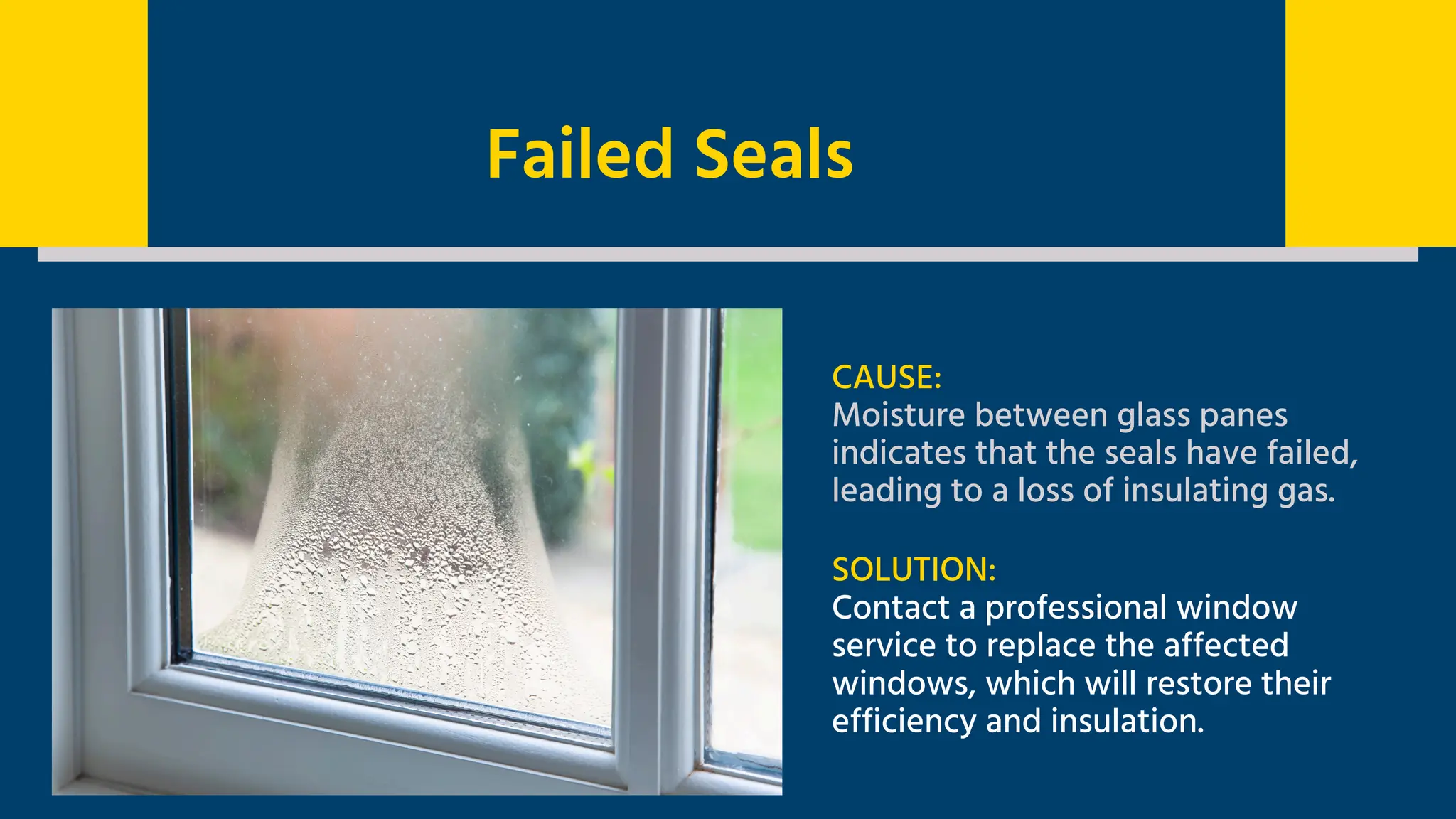
Failed Seals
CAUSE:
Moisture between glass panes
indicates that the seals have failed,
leading to a loss of insulating gas.
SOLUTION:
Contact a professional window
service to replace the affected
windows, which will restore their
efficiency and insulation.
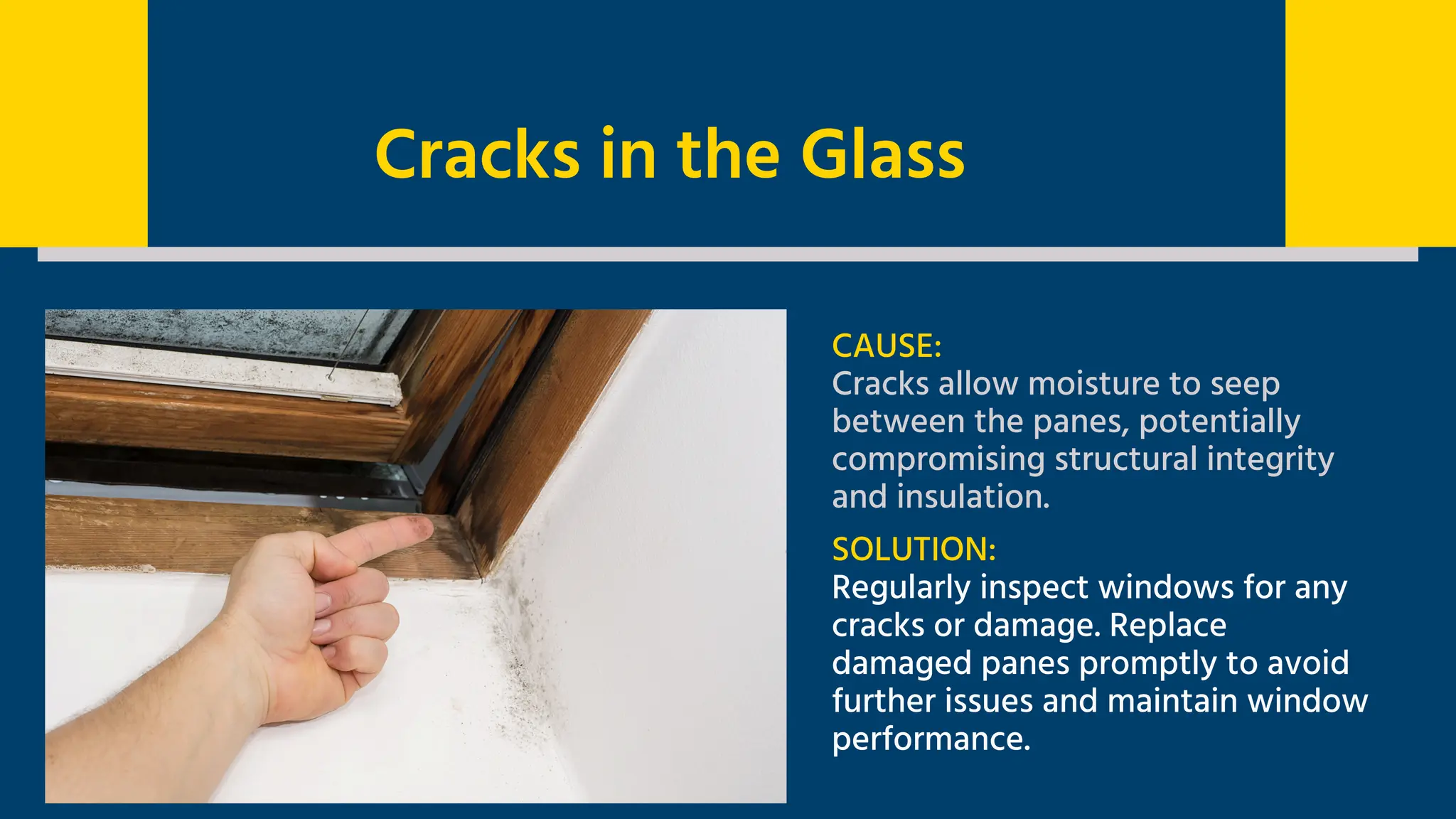
Cracks in the Glass
CAUSE:
Cracks allow moisture to seep
between the panes, potentially
compromising structural integrity
and insulation.
SOLUTION:
Regularly inspect windows for any
cracks or damage. Replace
damaged panes promptly to avoid
further issues and maintain window
performance.
FAQs
Frequently Asked Questions
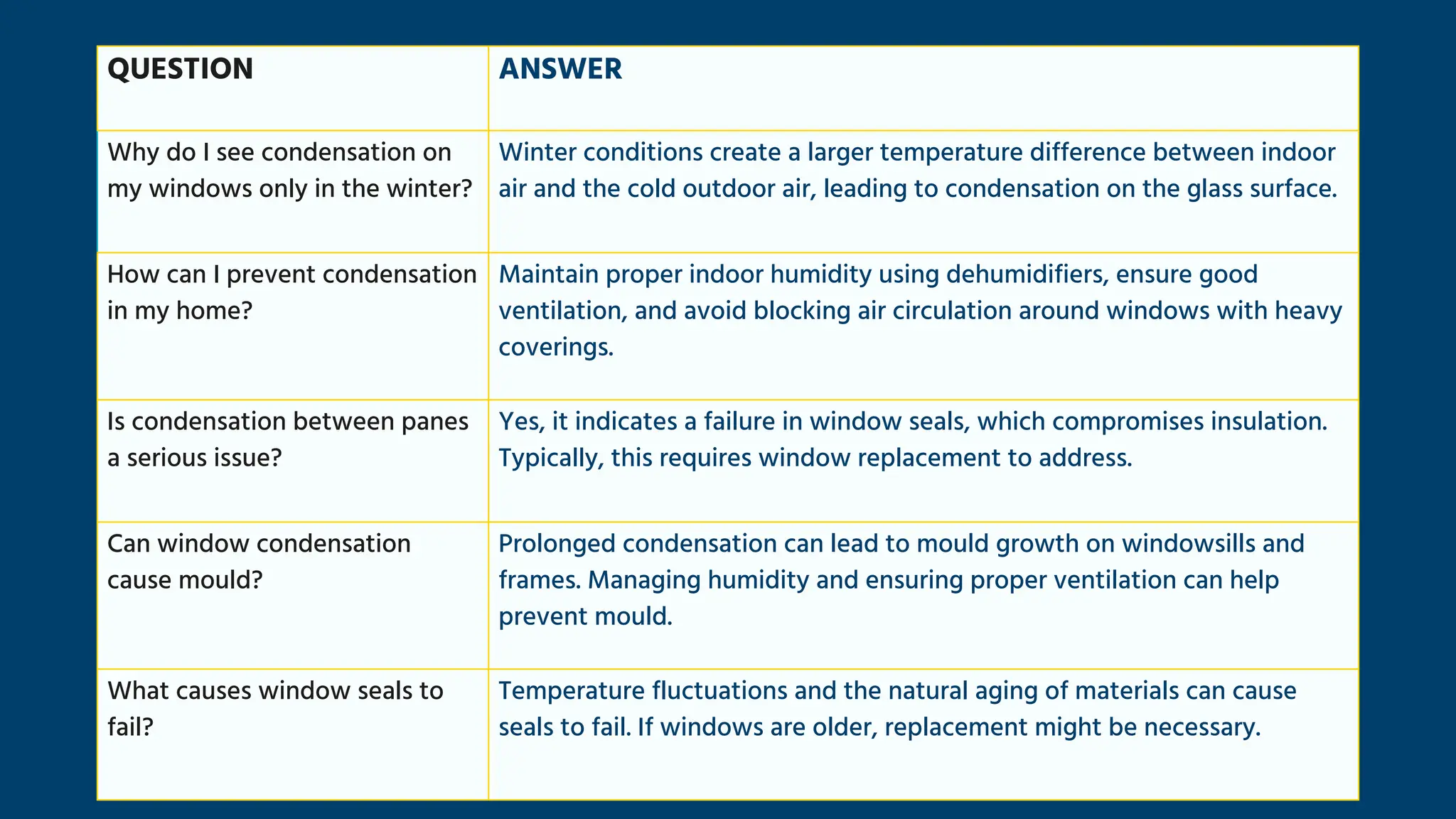
QUESTION ANSWER
Why do I see condensation on
my windows only in the winter?
Winter conditions create a larger temperature difference between indoor
air and the cold outdoor air, leading to condensation on the glass surface.
How can I prevent condensation
in my home?
Maintain proper indoor humidity using dehumidifiers, ensure good
ventilation, and avoid blocking air circulation around windows with heavy
coverings.
Is condensation between panes
a serious issue?
Yes, it indicates a failure in window seals, which compromises insulation.
Typically, this requires window replacement to address.
Can window condensation
cause mould?
Prolonged condensation can lead to mould growth on windowsills and
frames. Managing humidity and ensuring proper ventilation can help
prevent mould.
What causes window seals to
fail?
Temperature fluctuations and the natural aging of materials can cause
seals to fail. If windows are older, replacement might be necessary.
Take Action
Against
Condensation
Contact Linton Window &
Door today for expert
advice and solutions to all
your window needs.
Understanding and Preventing Condensation on Windows

Understanding and Preventing Condensation on Windows

  • 1.
    Understanding and Preventing Condensation on Windows:Tips & FAQs A Comprehensive Guide to Managing Window Condensation
  • 2.
    Condensation 101: Why YourWindows Might Be Sweating Condensation on windows occurs when warm, moist indoor air contacts the cooler surface of the glass. This common issue can affect the comfort and energy efficiency of your home. This guide covers: Types of Condensation: Inside, outside, and between panes. Practical Solutions: Effective methods to address and prevent condensation.
  • 3.
  • 4.
    CAUSE: Warm air fromindoor heating trapped by window coverings like curtains or blinds.. SOLUTION: Choose blinds that can be tilted or keep curtains slightly open to allow air Trapped Warm Air
  • 5.
    CAUSE: Increased humidity fromcooking, bathing, or high occupancy, and seasonal changes. SOLUTION: Use a dehumidifier to keep indoor humidity levels between 30-50%. Ensure proper ventilation by using exhaust fans in kitchens and bathrooms, or by opening windows when cooking or bathing. High Humidty Levels
  • 6.
    Houseplants CAUSE: Plants release moistureinto the air, contributing to higher indoor humidity. SOLUTION: Move plants away from windows or reduce their number to lower indoor humidity levels and minimize condensation.
  • 7.
  • 8.
    Energy-Efficient Windows CAUSE: Condensation oftenappears on the outside of high-efficiency windows during late summer or early fall when temperatures drop overnight. SOLUTION: This indicates that your windows are effectively insulating your home. No action is needed as this is a sign of good performance.
  • 9.
    Weather Conditions CAUSE: Exterior condensationtypically occurs in the early morning due to drops in temperature overnight. SOLUTION: Wait for the sun to rise, which will naturally warm the glass and cause the condensation to evaporate.
  • 10.
    Condensation Between the Glass Panes Identifyingand Addressing Internal Condensation
  • 11.
    Failed Seals CAUSE: Moisture betweenglass panes indicates that the seals have failed, leading to a loss of insulating gas. SOLUTION: Contact a professional window service to replace the affected windows, which will restore their efficiency and insulation.
  • 12.
    Cracks in theGlass CAUSE: Cracks allow moisture to seep between the panes, potentially compromising structural integrity and insulation. SOLUTION: Regularly inspect windows for any cracks or damage. Replace damaged panes promptly to avoid further issues and maintain window performance.
  • 13.
  • 14.
    QUESTION ANSWER Why doI see condensation on my windows only in the winter? Winter conditions create a larger temperature difference between indoor air and the cold outdoor air, leading to condensation on the glass surface. How can I prevent condensation in my home? Maintain proper indoor humidity using dehumidifiers, ensure good ventilation, and avoid blocking air circulation around windows with heavy coverings. Is condensation between panes a serious issue? Yes, it indicates a failure in window seals, which compromises insulation. Typically, this requires window replacement to address. Can window condensation cause mould? Prolonged condensation can lead to mould growth on windowsills and frames. Managing humidity and ensuring proper ventilation can help prevent mould. What causes window seals to fail? Temperature fluctuations and the natural aging of materials can cause seals to fail. If windows are older, replacement might be necessary.
  • 15.
    Take Action Against Condensation Contact LintonWindow & Door today for expert advice and solutions to all your window needs.