Best Machine Learning
Certificate
Importance of
Certifications in Data
Science
Enhancing Career Opportunities
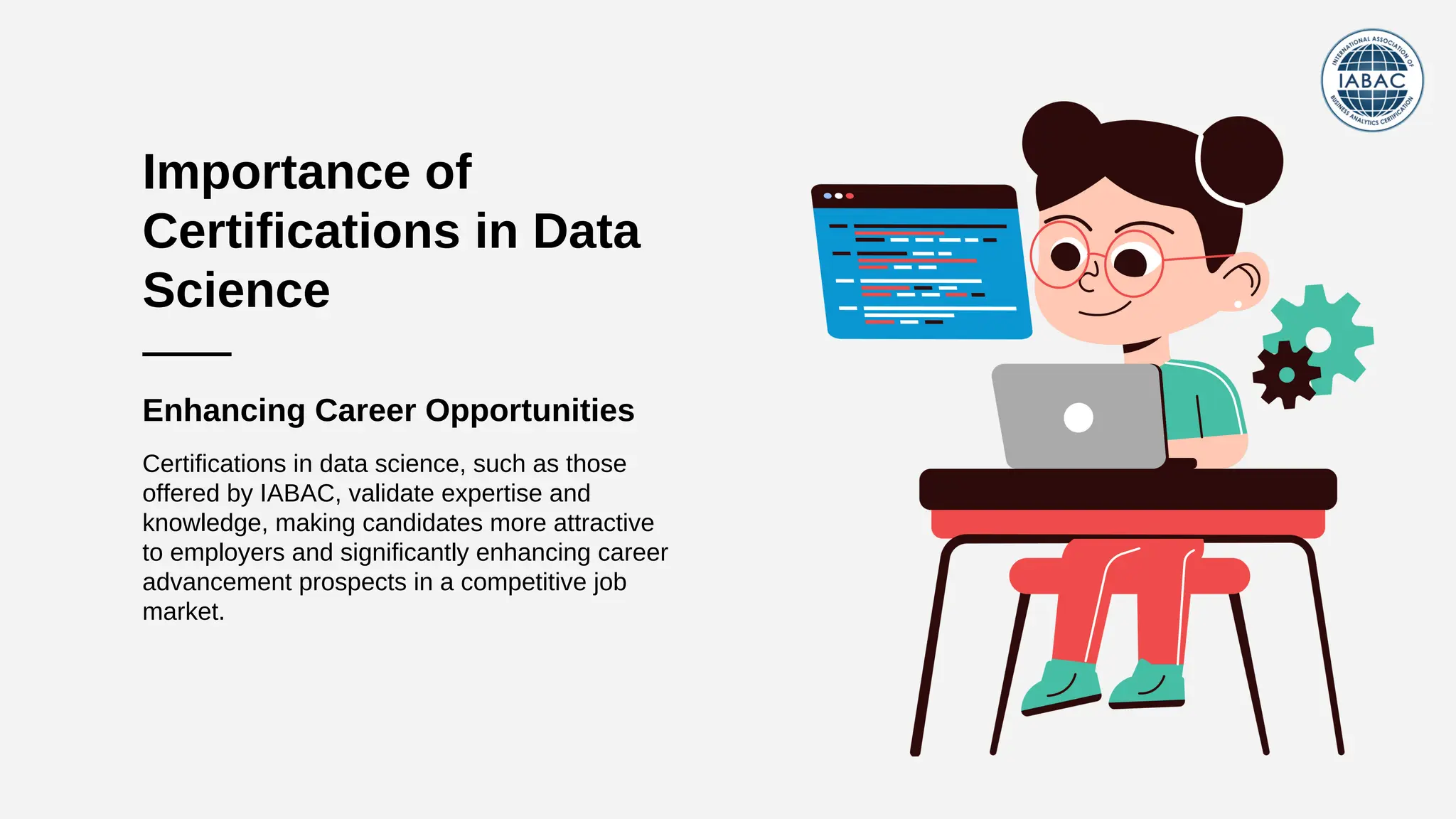
Certifications in data science, such as those
offered by IABAC, validate expertise and
knowledge, making candidates more attractive
to employers and significantly enhancing career
advancement prospects in a competitive job
market.
01 02 03
Key Skills Covered in Machine Learning
Certifications
Fundamentals of
Machine Learning
Data Preprocessing
Techniques
Model Evaluation
and Optimization
Participants gain a solid
understanding of core
concepts such as
supervised and
unsupervised learning,
enabling them to apply
appropriate techniques to
various data problems
effectively.
Skills in data cleaning,
normalization, and
transformation are
emphasized, ensuring
that learners can prepare
datasets for analysis and
model training, which is
crucial for achieving
accurate results.
Certifications cover
methods for assessing
model performance,
including metrics like
accuracy and precision,
along with techniques for
tuning hyperparameters to
enhance model
effectiveness in real-world
applications.
The Role of
Certifications in
Career Advancement
Validation of Skills and Knowledge
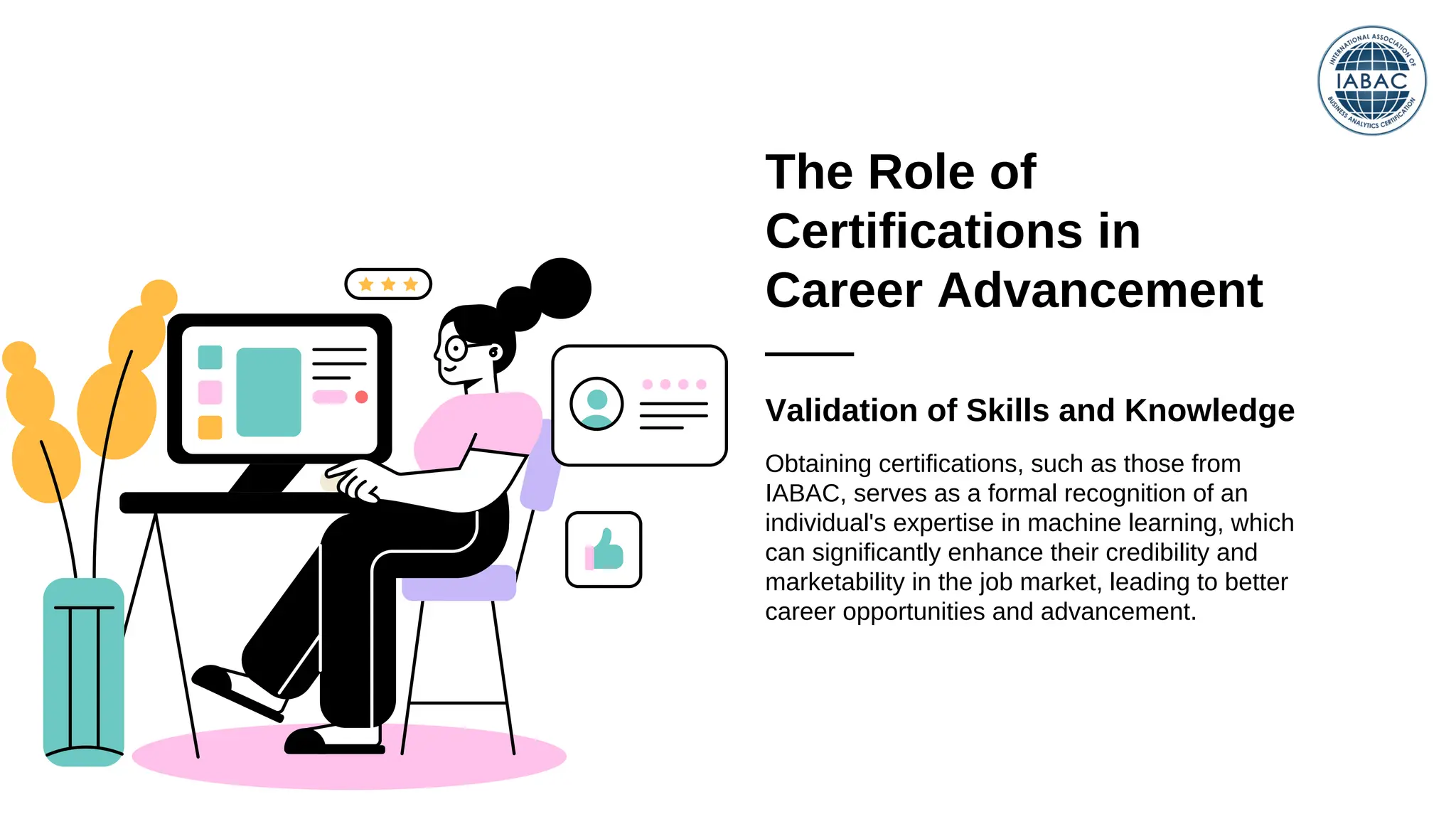
Obtaining certifications, such as those from
IABAC, serves as a formal recognition of an
individual's expertise in machine learning, which
can significantly enhance their credibility and
marketability in the job market, leading to better
career opportunities and advancement.
Introduction to IABAC Certification
Overview of IABAC Certification
Benefits of IABAC Certification
The IABAC certification is designed to equip professionals with essential machine learning skills,
focusing on practical applications and theoretical knowledge. It is recognized globally, making it a
valuable asset for those seeking to enhance their career in data science and machine learning fields.
Earning the IABAC certification not only validates your expertise but also opens doors to numerous
career opportunities. It provides a competitive edge in the job market, as employers increasingly seek
certified professionals who can demonstrate proficiency in machine learning concepts and techniques.
Comprehensive
Curriculum Overview
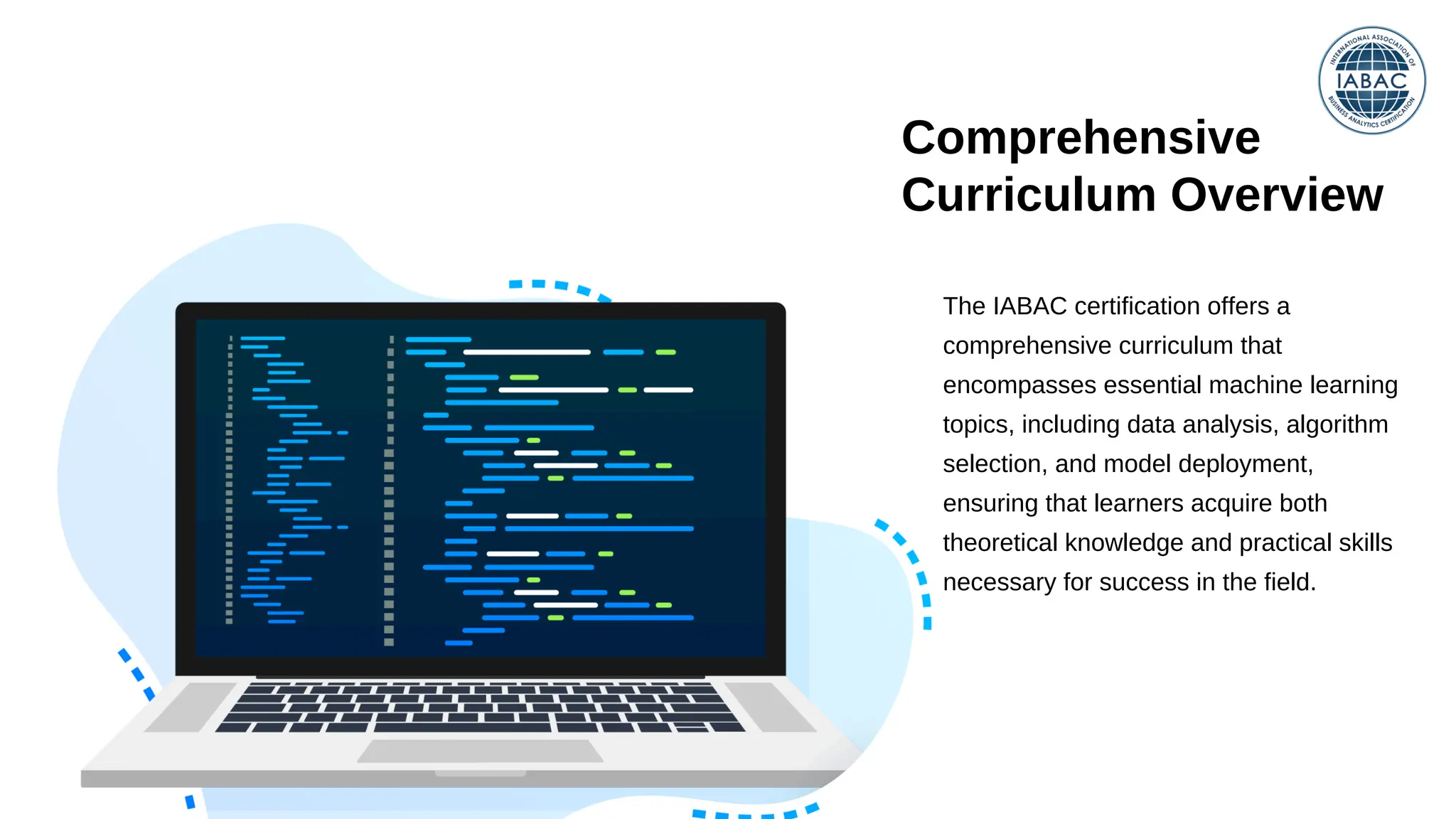
The IABAC certification offers a
comprehensive curriculum that
encompasses essential machine learning
topics, including data analysis, algorithm
selection, and model deployment,
ensuring that learners acquire both
theoretical knowledge and practical skills
necessary for success in the field.
Topics Covered in IABAC Certification
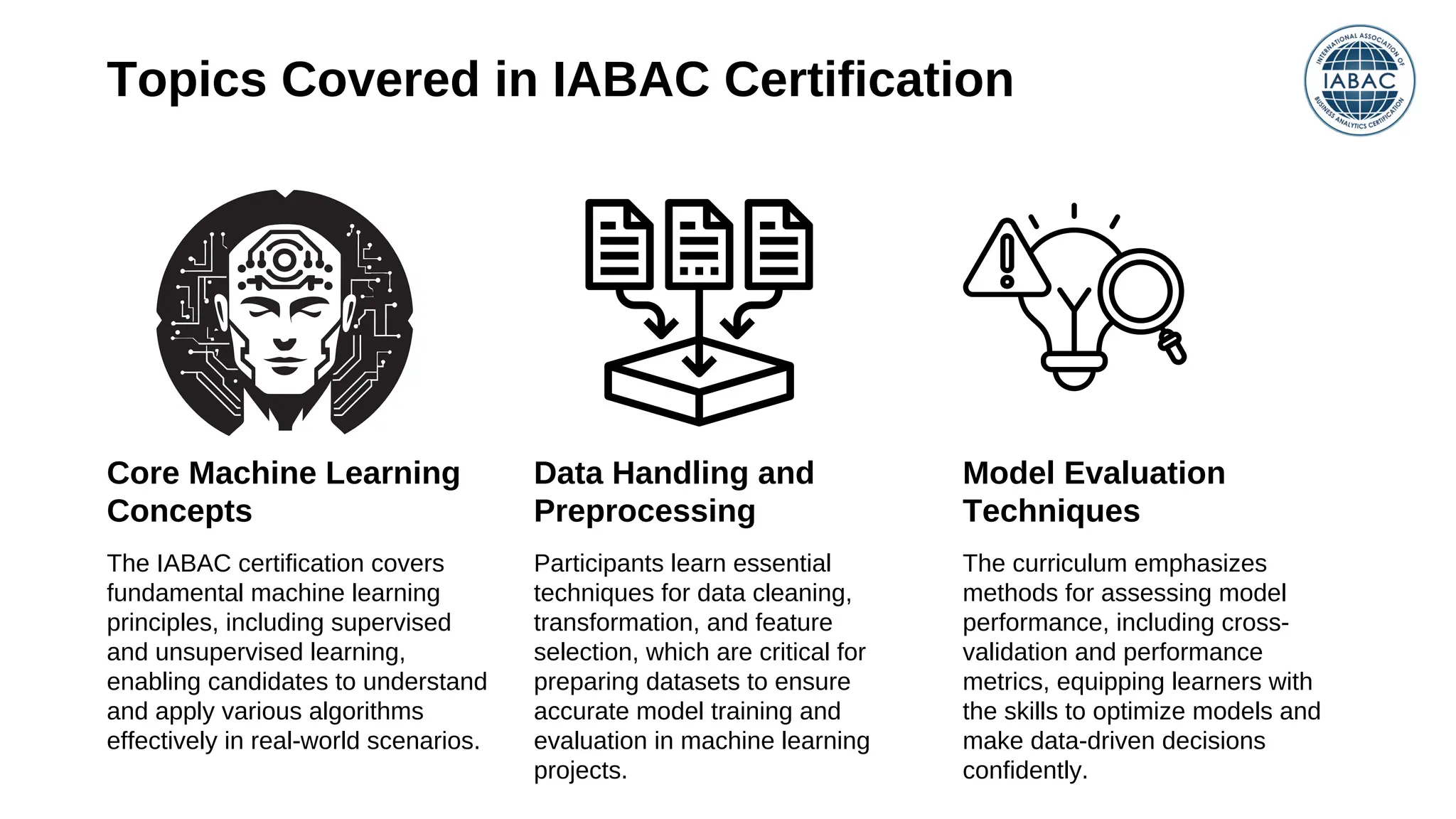
Core Machine Learning
Concepts
Data Handling and
Preprocessing
Model Evaluation
Techniques
The IABAC certification covers
fundamental machine learning
principles, including supervised
and unsupervised learning,
enabling candidates to understand
and apply various algorithms
effectively in real-world scenarios.
Participants learn essential
techniques for data cleaning,
transformation, and feature
selection, which are critical for
preparing datasets to ensure
accurate model training and
evaluation in machine learning
projects.
The curriculum emphasizes
methods for assessing model
performance, including cross-
validation and performance
metrics, equipping learners with
the skills to optimize models and
make data-driven decisions
confidently.
Thank you
www.iabac.org

Best Machine Learning Certificate | IABAC

  • 1.
  • 2.
    Importance of Certifications inData Science Enhancing Career Opportunities Certifications in data science, such as those offered by IABAC, validate expertise and knowledge, making candidates more attractive to employers and significantly enhancing career advancement prospects in a competitive job market.
  • 3.
    01 02 03 KeySkills Covered in Machine Learning Certifications Fundamentals of Machine Learning Data Preprocessing Techniques Model Evaluation and Optimization Participants gain a solid understanding of core concepts such as supervised and unsupervised learning, enabling them to apply appropriate techniques to various data problems effectively. Skills in data cleaning, normalization, and transformation are emphasized, ensuring that learners can prepare datasets for analysis and model training, which is crucial for achieving accurate results. Certifications cover methods for assessing model performance, including metrics like accuracy and precision, along with techniques for tuning hyperparameters to enhance model effectiveness in real-world applications.
  • 4.
    The Role of Certificationsin Career Advancement Validation of Skills and Knowledge Obtaining certifications, such as those from IABAC, serves as a formal recognition of an individual's expertise in machine learning, which can significantly enhance their credibility and marketability in the job market, leading to better career opportunities and advancement.
  • 5.
    Introduction to IABACCertification Overview of IABAC Certification Benefits of IABAC Certification The IABAC certification is designed to equip professionals with essential machine learning skills, focusing on practical applications and theoretical knowledge. It is recognized globally, making it a valuable asset for those seeking to enhance their career in data science and machine learning fields. Earning the IABAC certification not only validates your expertise but also opens doors to numerous career opportunities. It provides a competitive edge in the job market, as employers increasingly seek certified professionals who can demonstrate proficiency in machine learning concepts and techniques.
  • 6.
    Comprehensive Curriculum Overview The IABACcertification offers a comprehensive curriculum that encompasses essential machine learning topics, including data analysis, algorithm selection, and model deployment, ensuring that learners acquire both theoretical knowledge and practical skills necessary for success in the field.
  • 7.
    Topics Covered inIABAC Certification Core Machine Learning Concepts Data Handling and Preprocessing Model Evaluation Techniques The IABAC certification covers fundamental machine learning principles, including supervised and unsupervised learning, enabling candidates to understand and apply various algorithms effectively in real-world scenarios. Participants learn essential techniques for data cleaning, transformation, and feature selection, which are critical for preparing datasets to ensure accurate model training and evaluation in machine learning projects. The curriculum emphasizes methods for assessing model performance, including cross- validation and performance metrics, equipping learners with the skills to optimize models and make data-driven decisions confidently.
  • 8.