BASIC
PRESENTATION
AGENDA
Introduction
Building confidence
Engaging the audience
Visual aids
Final tips & takeaways
2
3
4
THE POWER OF
COMMUNICATION
OVERCOMING
NERVOUSNESS
Confidence-building strategies
ENGAGING THE AUDIENCE
• Make eye contact with your audience to create a sense of intimacy
and involvement
• Weave relatable stories into your presentation using narratives
that make your message memorable and impactful
• Encourage questions and provide thoughtful responses to enhance
audience participation
• Use live polls or surveys to gather audience opinions, promoting
engagement and making sure the audience feel involved
7
SELECTING
VISUAL AIDS
8
Enhancing your presentation
EFFECTIVE DELIVERY
TECHNIQUES
9
This is a powerful tool in
public speaking. It involves
varying pitch, tone, and
volume to convey emotion,
emphasize points, and
maintain interest.
• Pitch variation
• Tone inflection
• Volume control
Effective body language
enhances your message,
making it more impactful
and memorable.
• Meaningful eye contact
• Purposeful gestures
• Maintain good posture
• Control your expressions
NAVIGATING Q&A
SESSIONS
1. Maintaining composure
during the Q&A session
is essential for
projecting confidence
and authority. Consider
the following tips for
staying composed:
2. Stay calm
3. Actively listen
4. Pause and reflect
5. Maintain eye contact
Know your material in advance
Anticipate common questions
Rehearse your responses
10
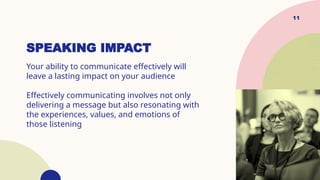
SPEAKING IMPACT
Your ability to communicate effectively will
leave a lasting impact on your audience
Effectively communicating involves not only
delivering a message but also resonating with
the experiences, values, and emotions of
those listening
11
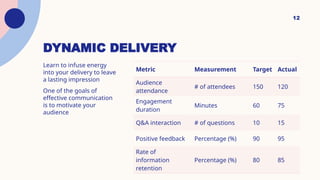
DYNAMIC DELIVERY
Learn to infuse energy
into your delivery to leave
a lasting impression
One of the goals of
effective communication
is to motivate your
audience
Metric Measurement Target Actual
Audience
attendance
# of attendees 150 120
Engagement
duration
Minutes 60 75
Q&A interaction # of questions 10 15
Positive feedback Percentage (%) 90 95
Rate of
information
retention
Percentage (%) 80 85
12
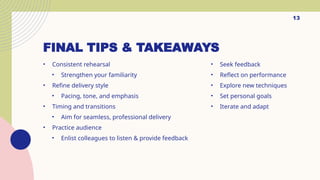
FINAL TIPS & TAKEAWAYS
• Consistent rehearsal
• Strengthen your familiarity
• Refine delivery style
• Pacing, tone, and emphasis
• Timing and transitions
• Aim for seamless, professional delivery
• Practice audience
• Enlist colleagues to listen & provide feedback
• Seek feedback
• Reflect on performance
• Explore new techniques
• Set personal goals
• Iterate and adapt
13
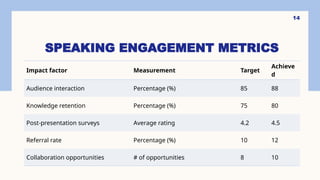
SPEAKING ENGAGEMENT METRICS
Impact factor Measurement Target
Achieve
d
Audience interaction Percentage (%) 85 88
Knowledge retention Percentage (%) 75 80
Post-presentation surveys Average rating 4.2 4.5
Referral rate Percentage (%) 10 12
Collaboration opportunities # of opportunities 8 10
14
THANK
YOU

Basic art of presentation To create an effective PowerPoint presentation

  • 1.
  • 2.
    AGENDA Introduction Building confidence Engaging theaudience Visual aids Final tips & takeaways 2
  • 3.
  • 4.
  • 5.
  • 6.
  • 7.
    ENGAGING THE AUDIENCE •Make eye contact with your audience to create a sense of intimacy and involvement • Weave relatable stories into your presentation using narratives that make your message memorable and impactful • Encourage questions and provide thoughtful responses to enhance audience participation • Use live polls or surveys to gather audience opinions, promoting engagement and making sure the audience feel involved 7
  • 8.
  • 9.
    EFFECTIVE DELIVERY TECHNIQUES 9 This isa powerful tool in public speaking. It involves varying pitch, tone, and volume to convey emotion, emphasize points, and maintain interest. • Pitch variation • Tone inflection • Volume control Effective body language enhances your message, making it more impactful and memorable. • Meaningful eye contact • Purposeful gestures • Maintain good posture • Control your expressions
  • 10.
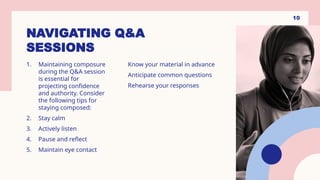
    NAVIGATING Q&A SESSIONS 1. Maintainingcomposure during the Q&A session is essential for projecting confidence and authority. Consider the following tips for staying composed: 2. Stay calm 3. Actively listen 4. Pause and reflect 5. Maintain eye contact Know your material in advance Anticipate common questions Rehearse your responses 10
  • 11.
    SPEAKING IMPACT Your abilityto communicate effectively will leave a lasting impact on your audience Effectively communicating involves not only delivering a message but also resonating with the experiences, values, and emotions of those listening 11
  • 12.
    DYNAMIC DELIVERY Learn toinfuse energy into your delivery to leave a lasting impression One of the goals of effective communication is to motivate your audience Metric Measurement Target Actual Audience attendance # of attendees 150 120 Engagement duration Minutes 60 75 Q&A interaction # of questions 10 15 Positive feedback Percentage (%) 90 95 Rate of information retention Percentage (%) 80 85 12
  • 13.
    FINAL TIPS &TAKEAWAYS • Consistent rehearsal • Strengthen your familiarity • Refine delivery style • Pacing, tone, and emphasis • Timing and transitions • Aim for seamless, professional delivery • Practice audience • Enlist colleagues to listen & provide feedback • Seek feedback • Reflect on performance • Explore new techniques • Set personal goals • Iterate and adapt 13
  • 14.
    SPEAKING ENGAGEMENT METRICS Impactfactor Measurement Target Achieve d Audience interaction Percentage (%) 85 88 Knowledge retention Percentage (%) 75 80 Post-presentation surveys Average rating 4.2 4.5 Referral rate Percentage (%) 10 12 Collaboration opportunities # of opportunities 8 10 14
  • 15.