Downloaded 1,189 times
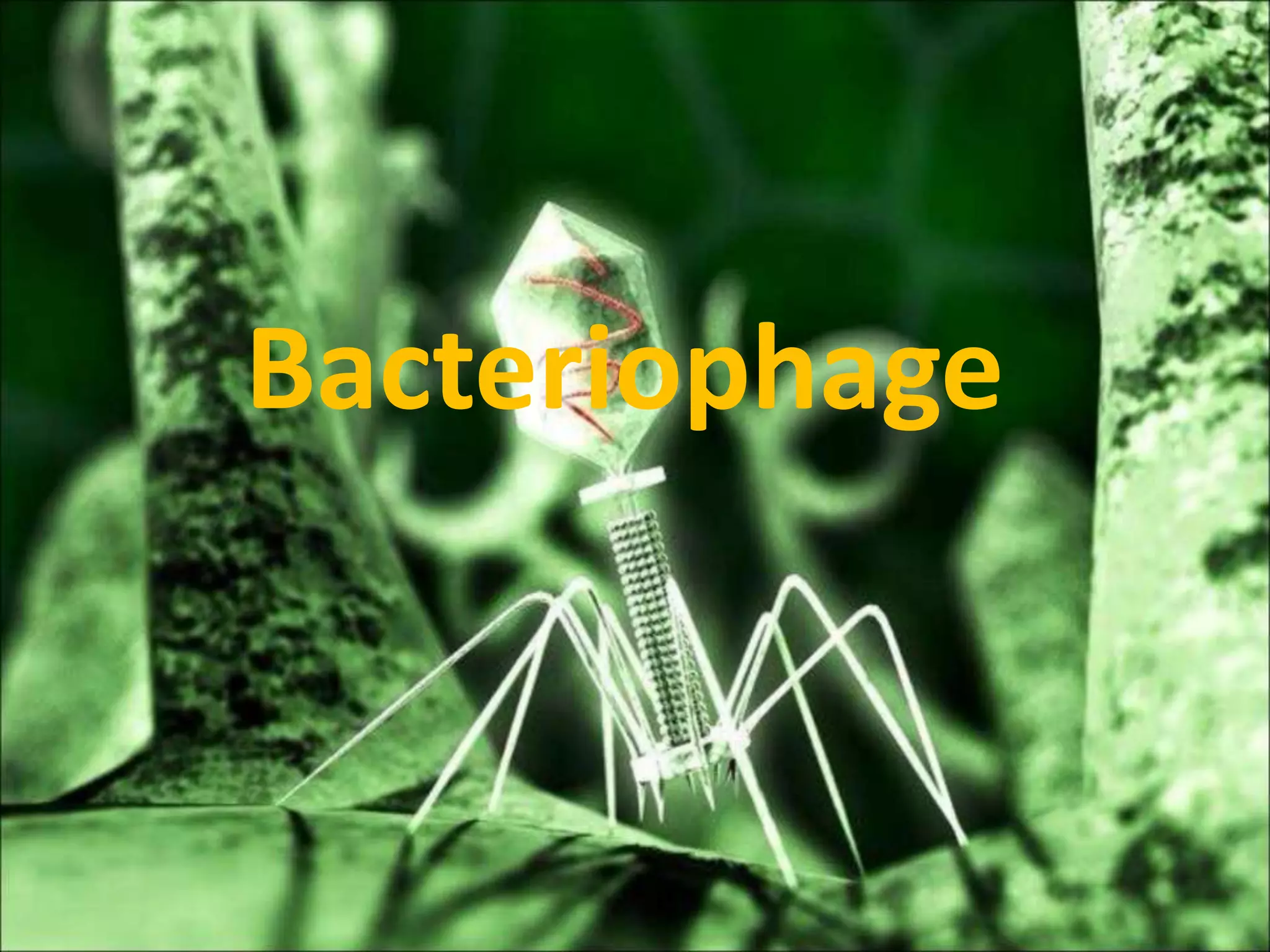

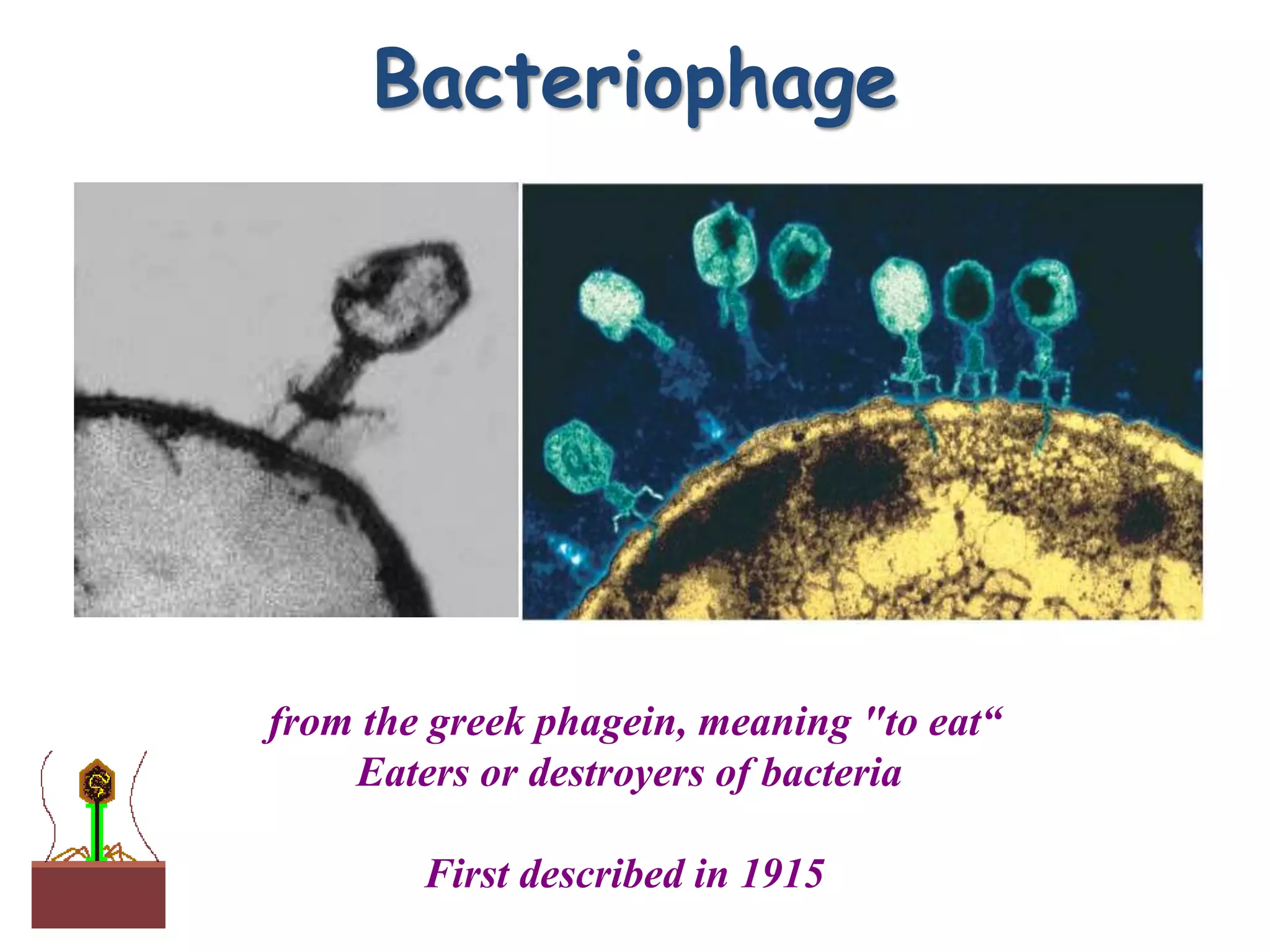
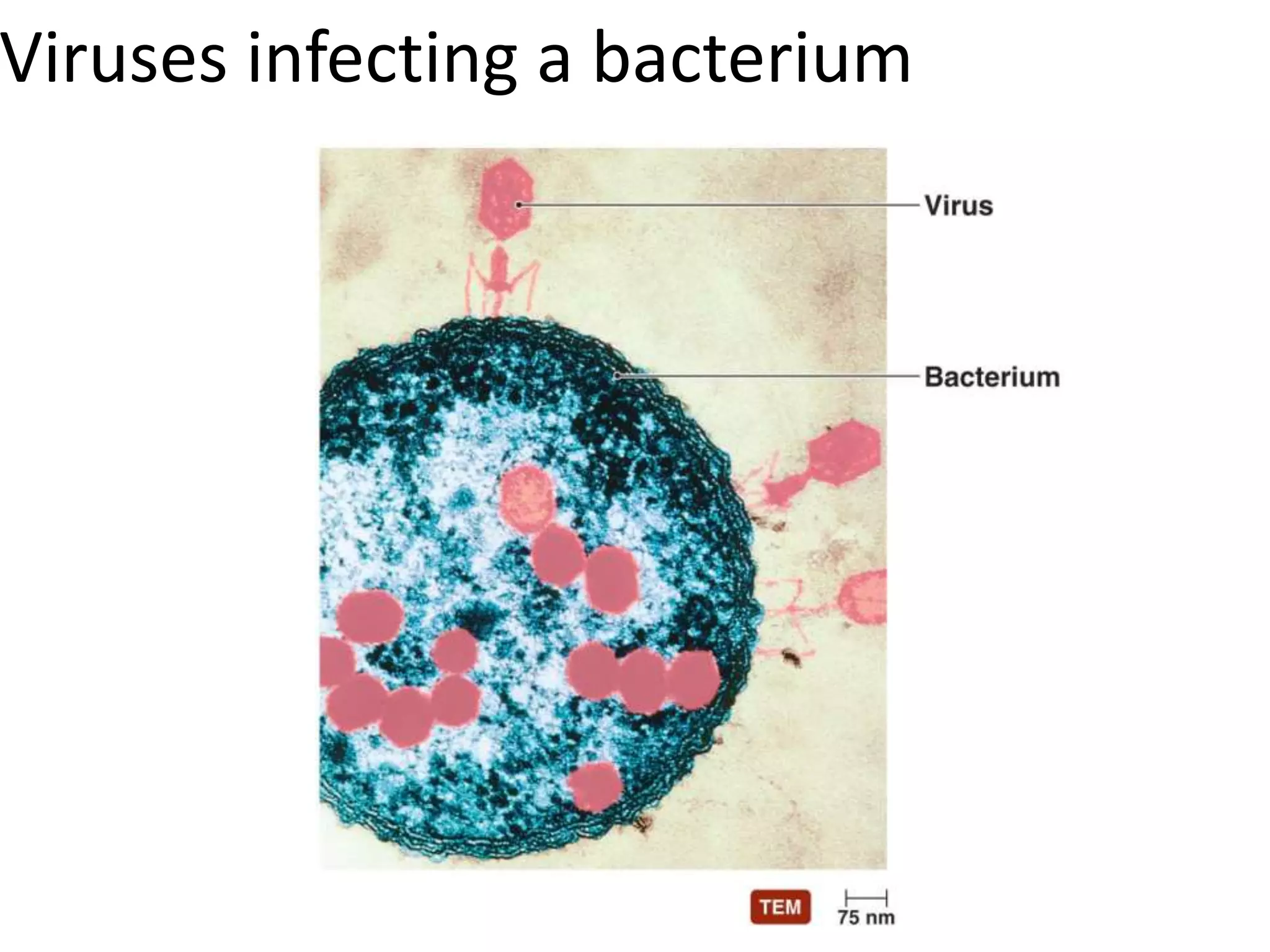
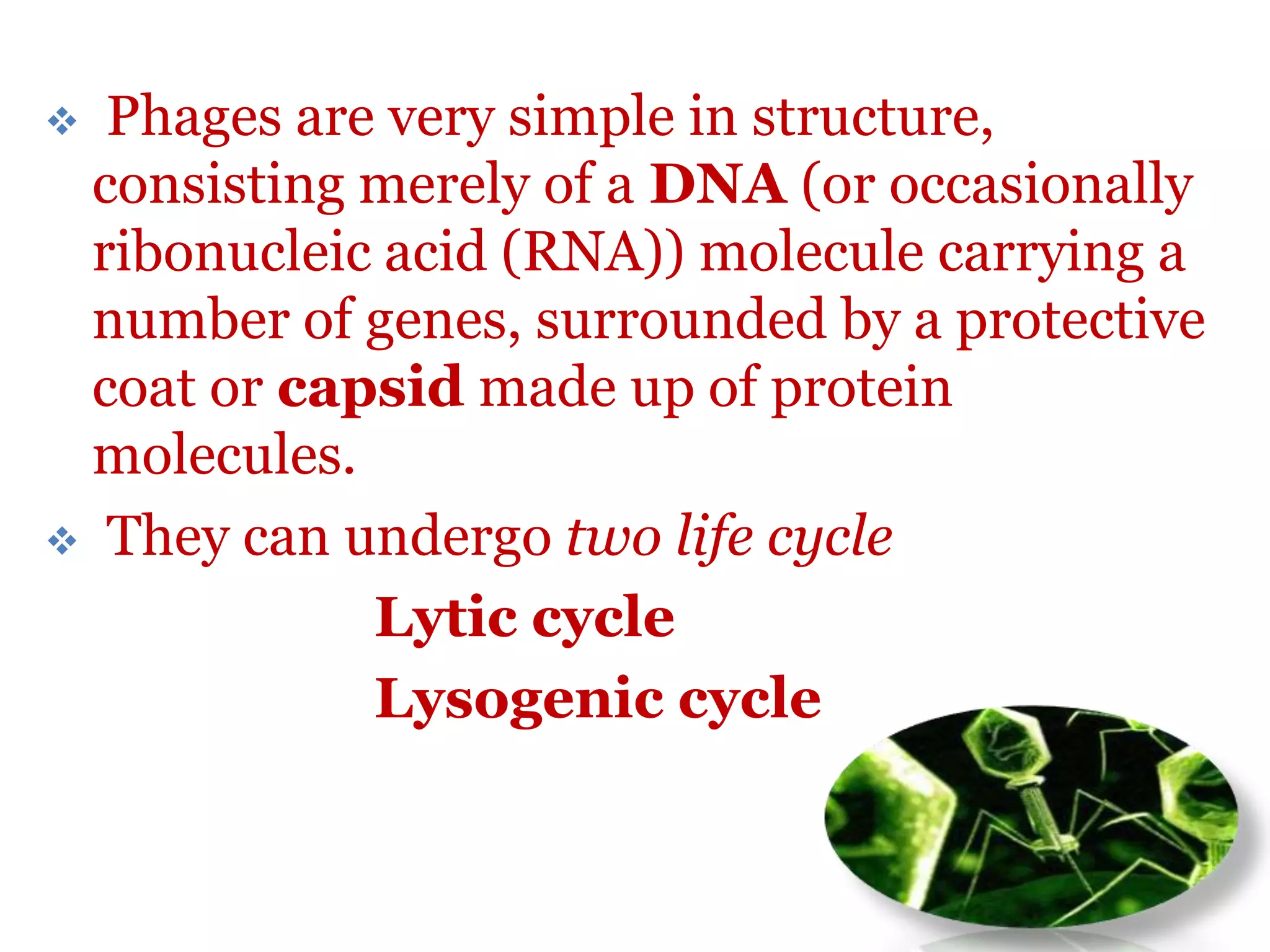
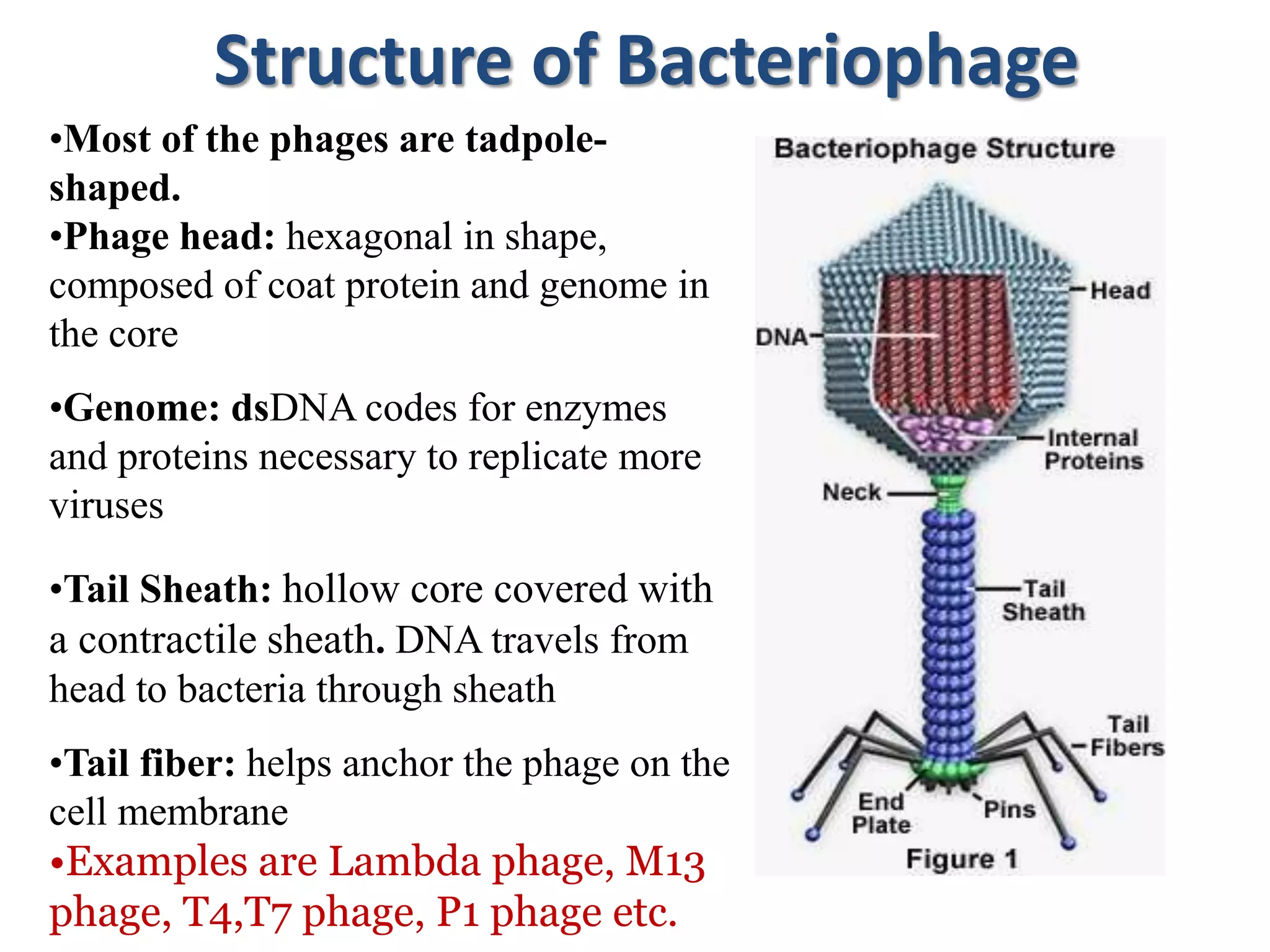

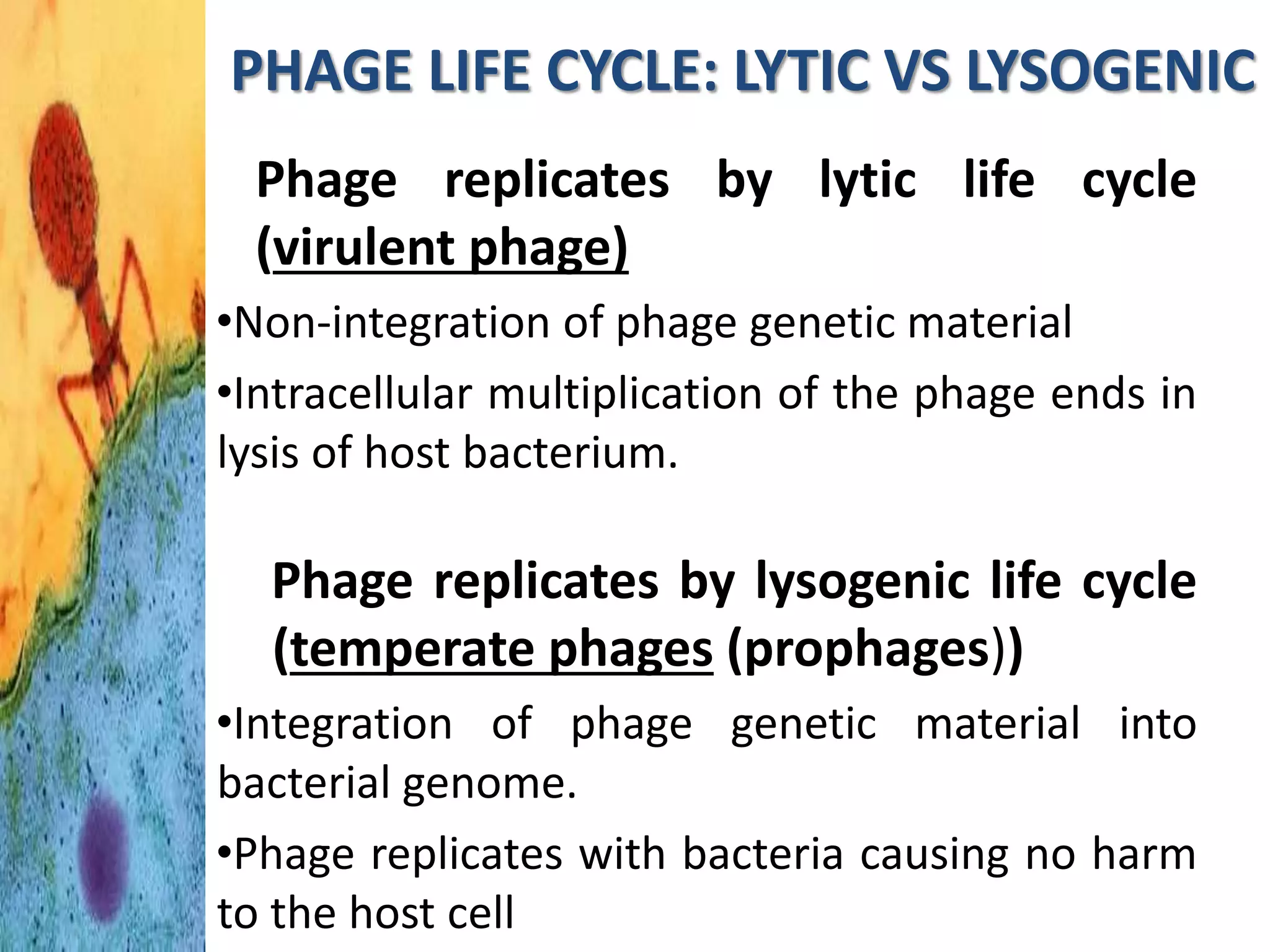


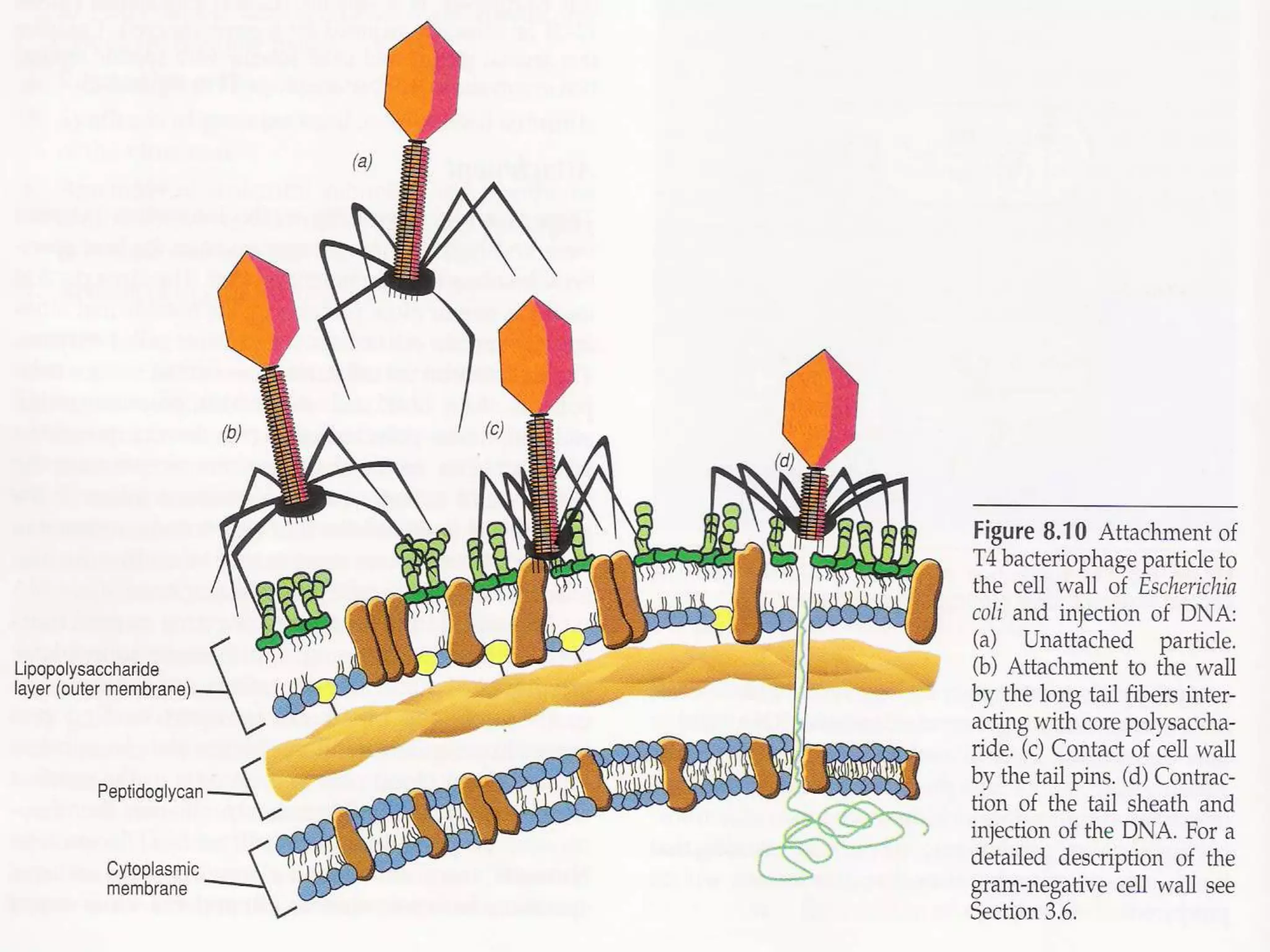
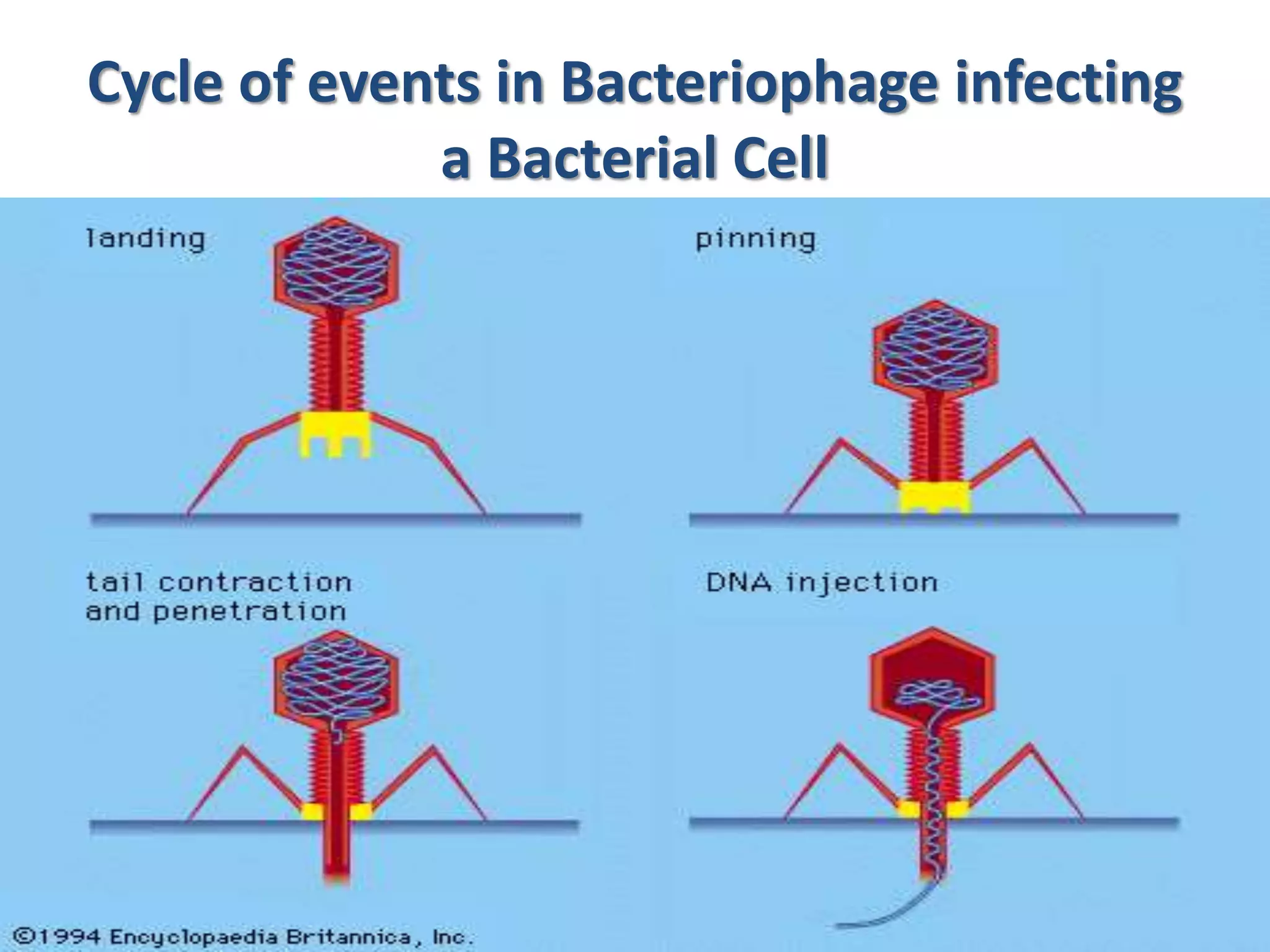
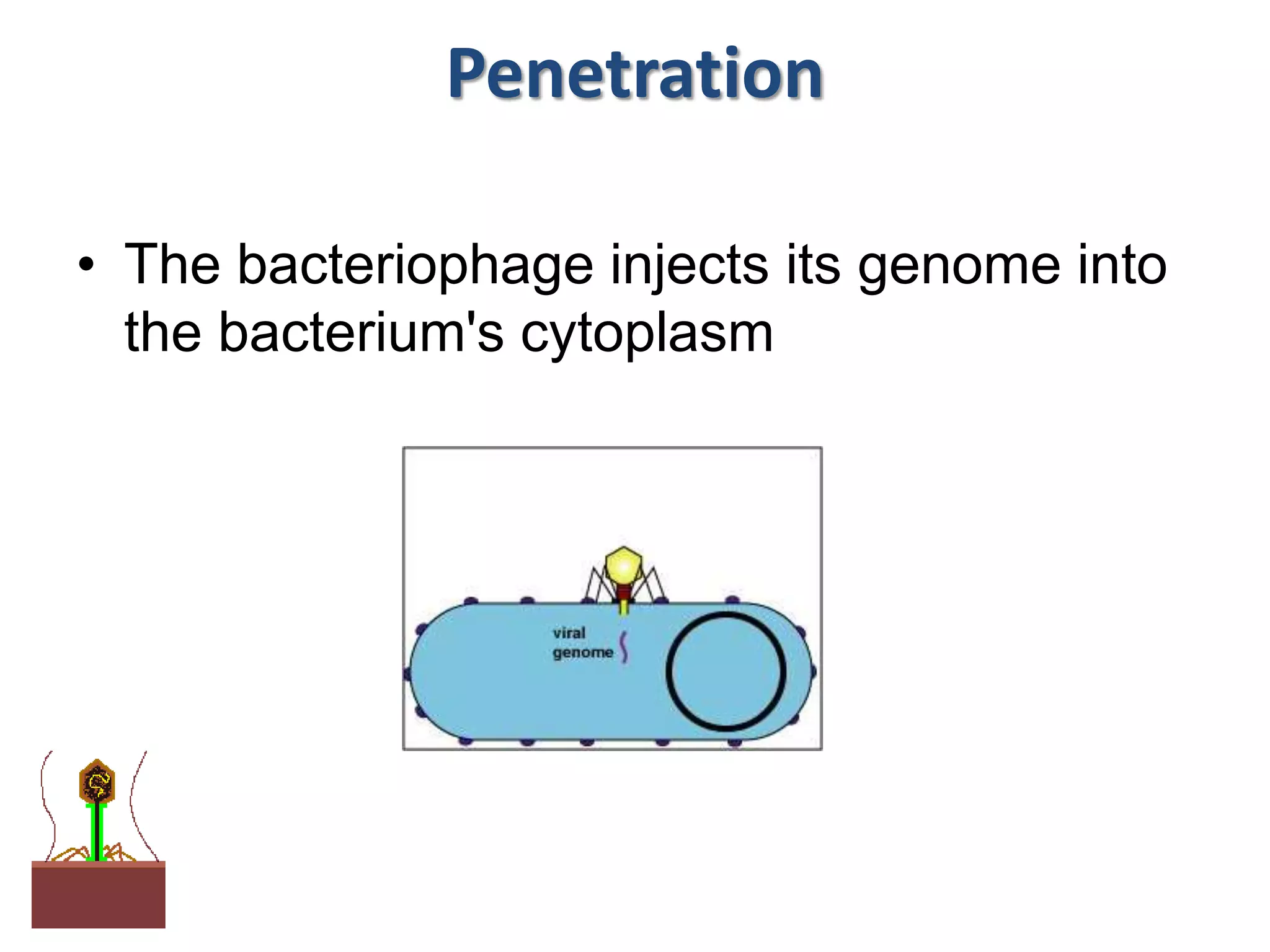
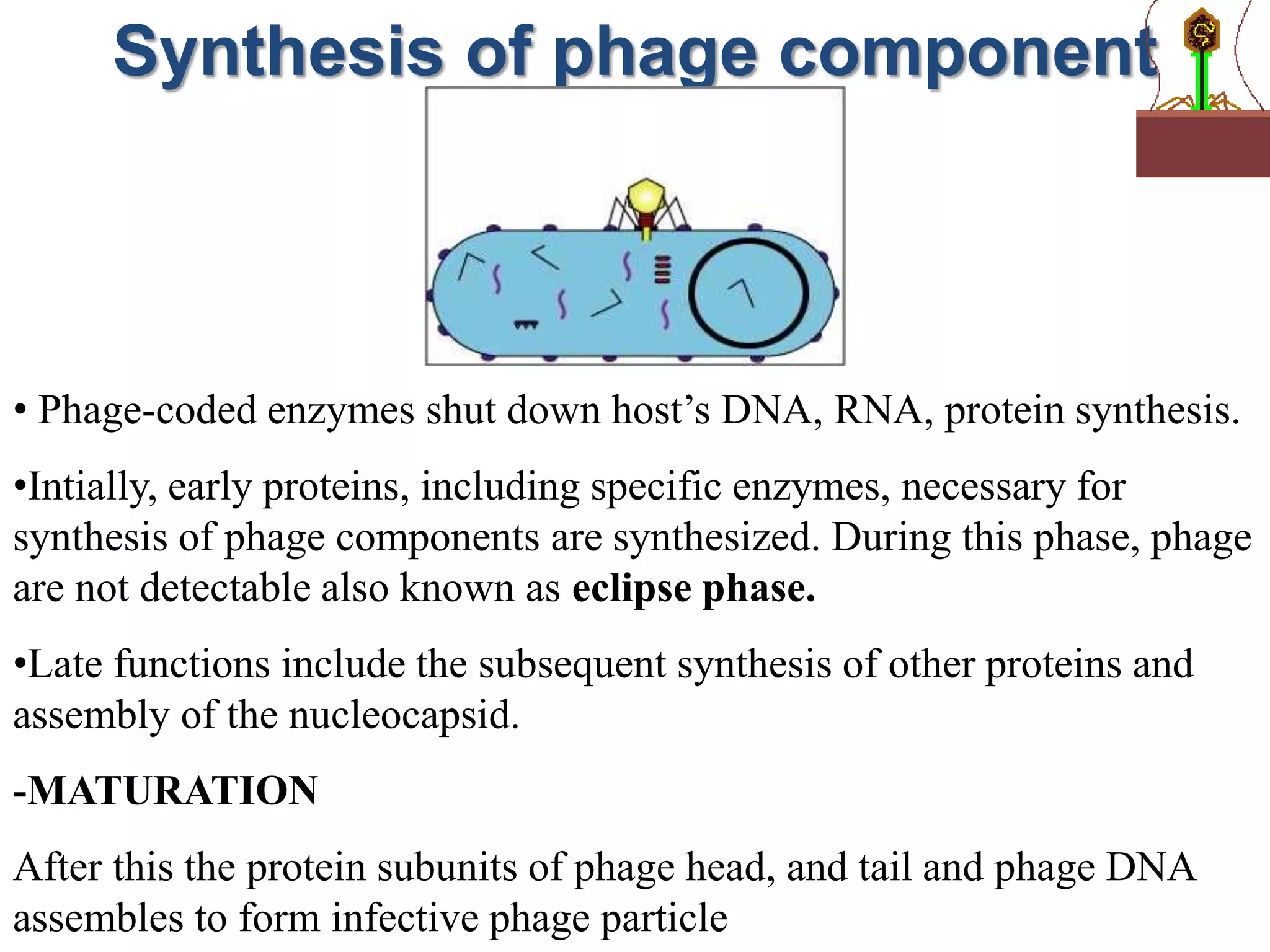
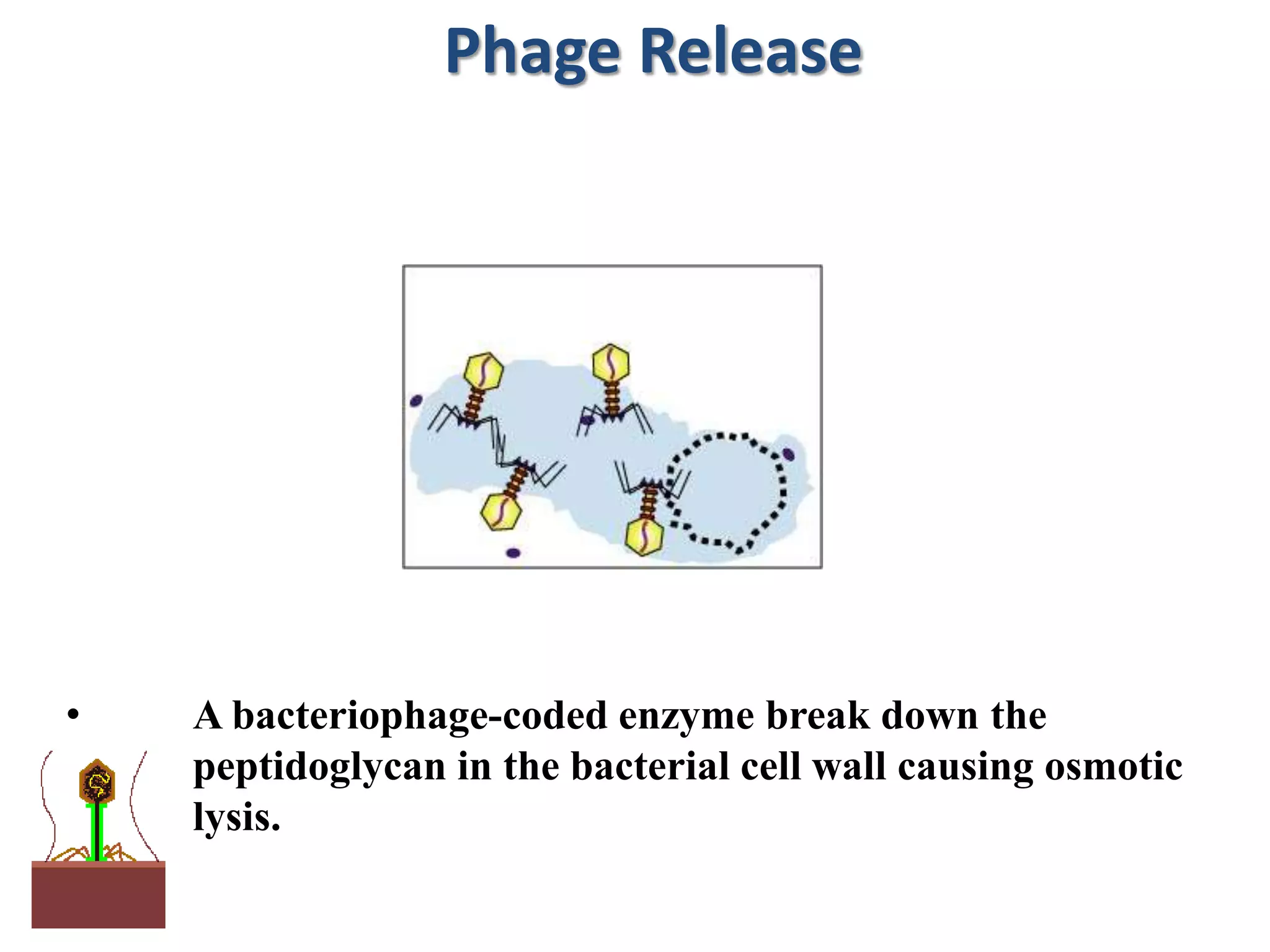

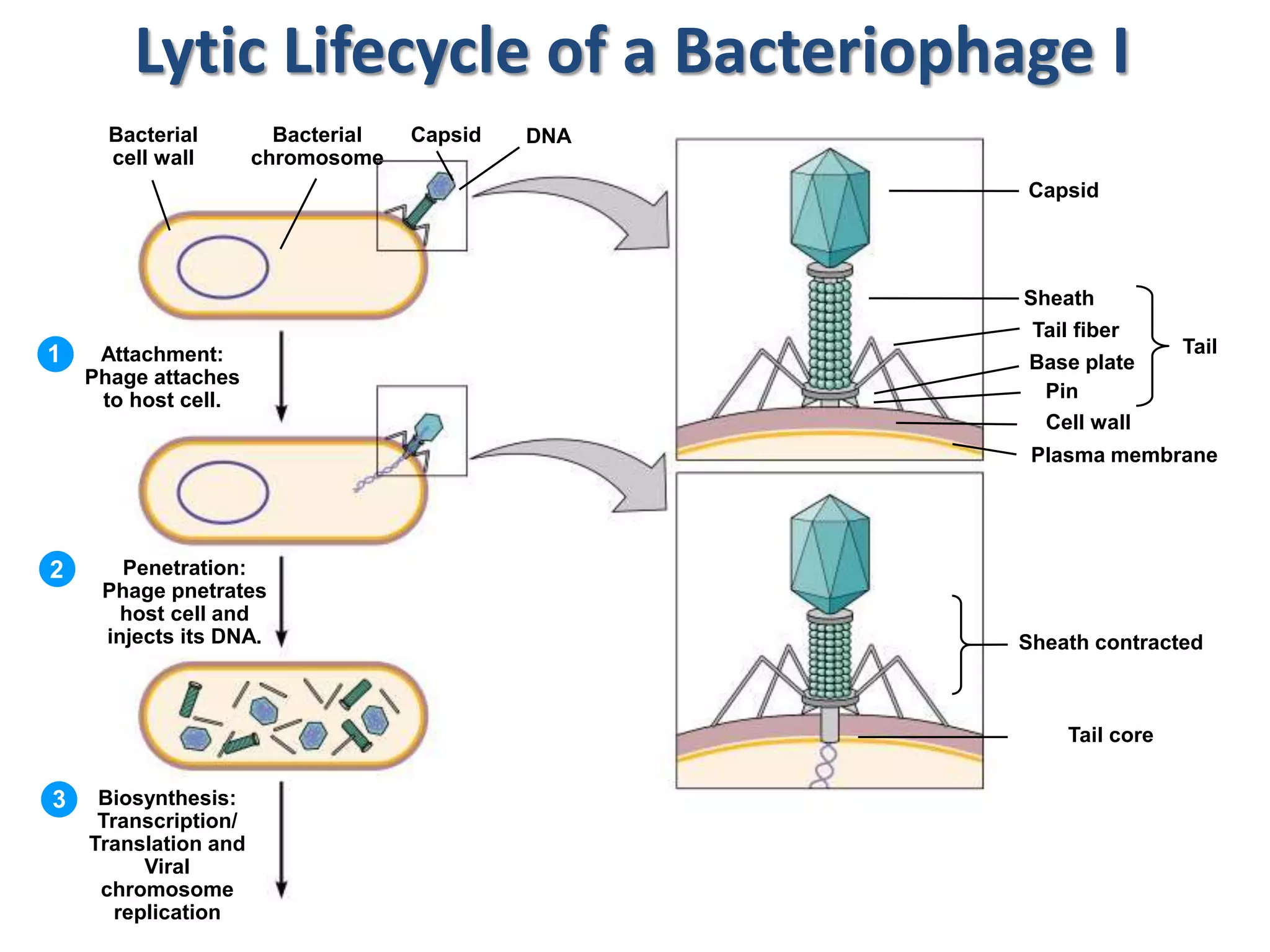

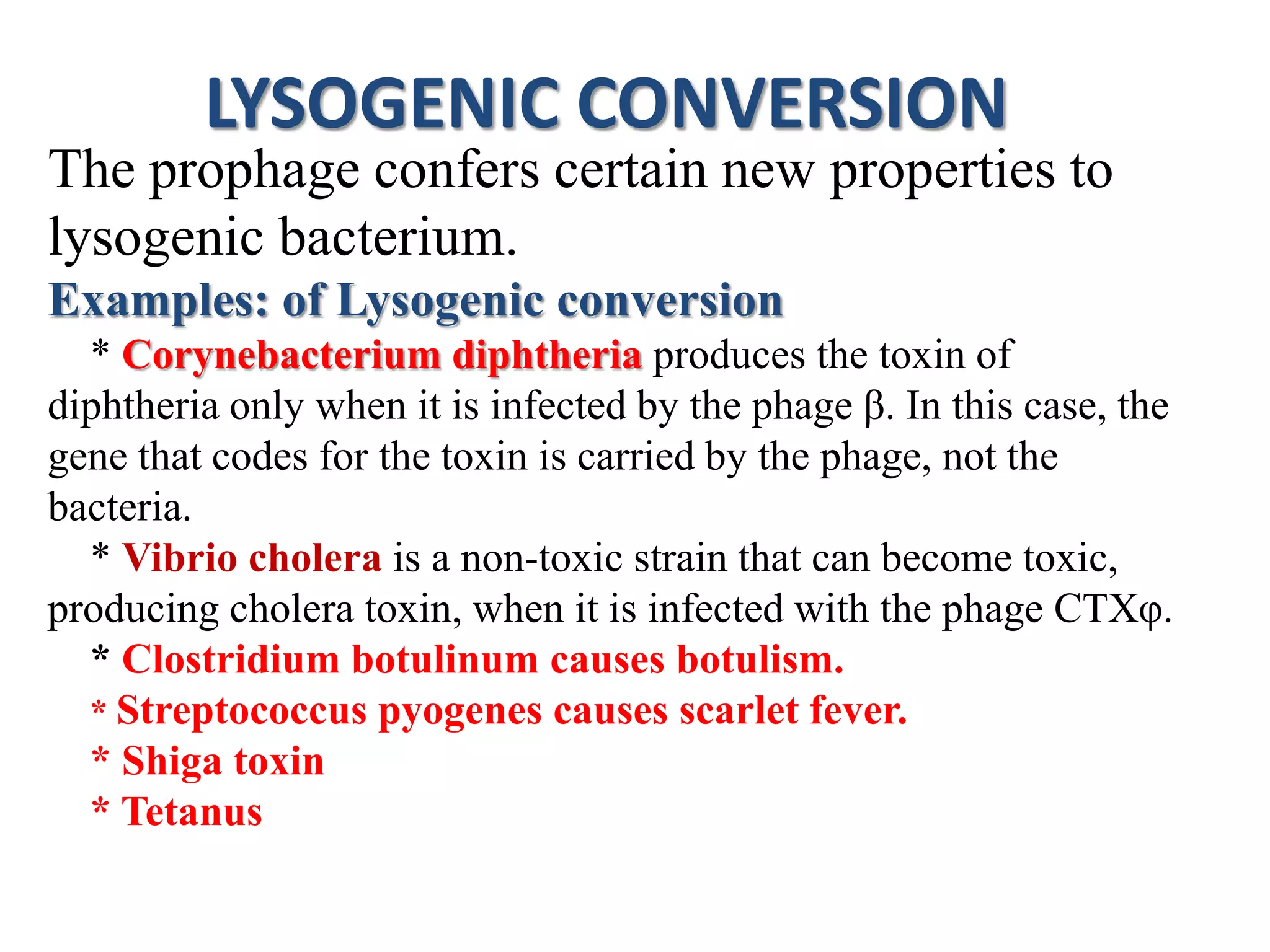
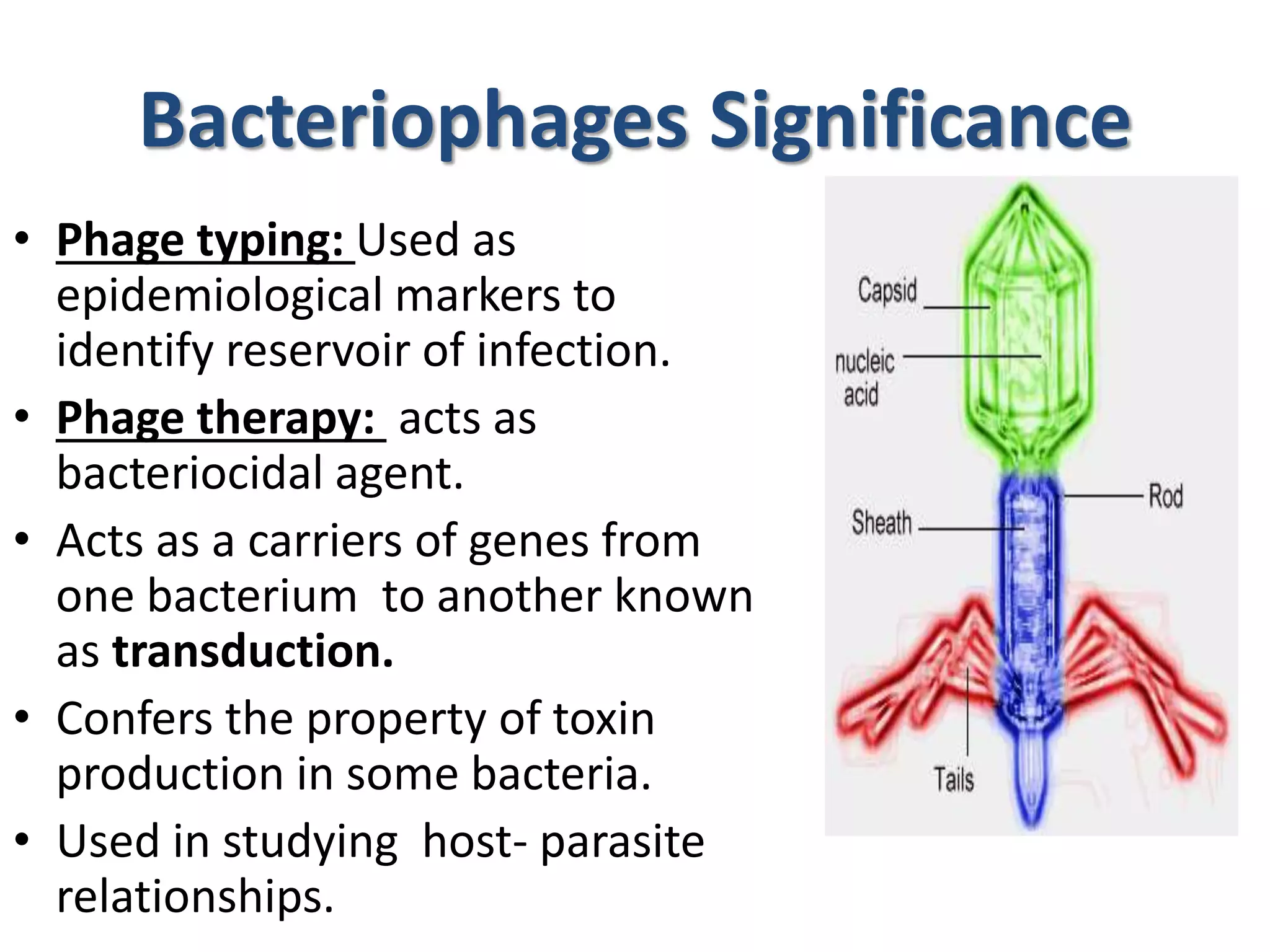

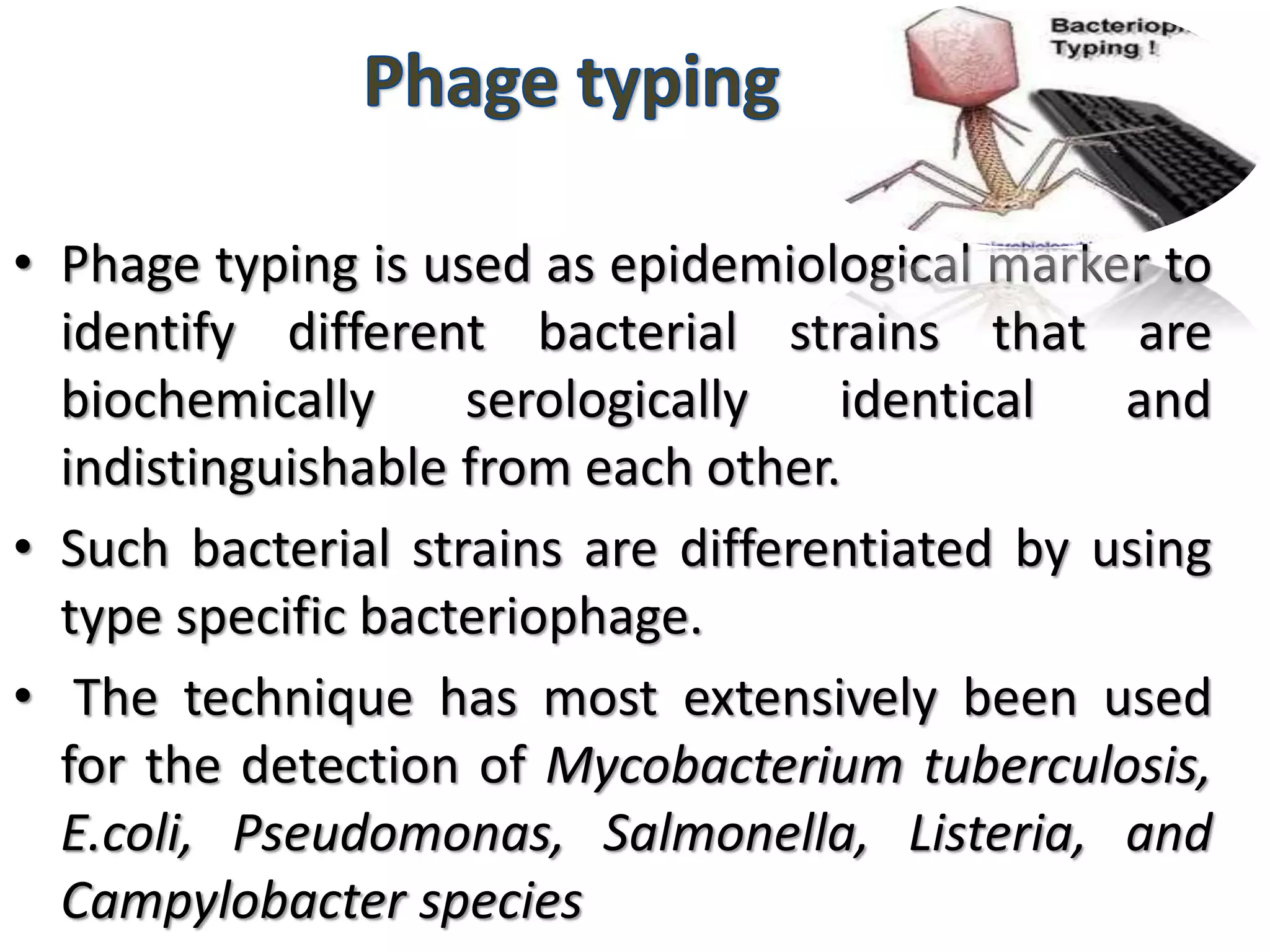
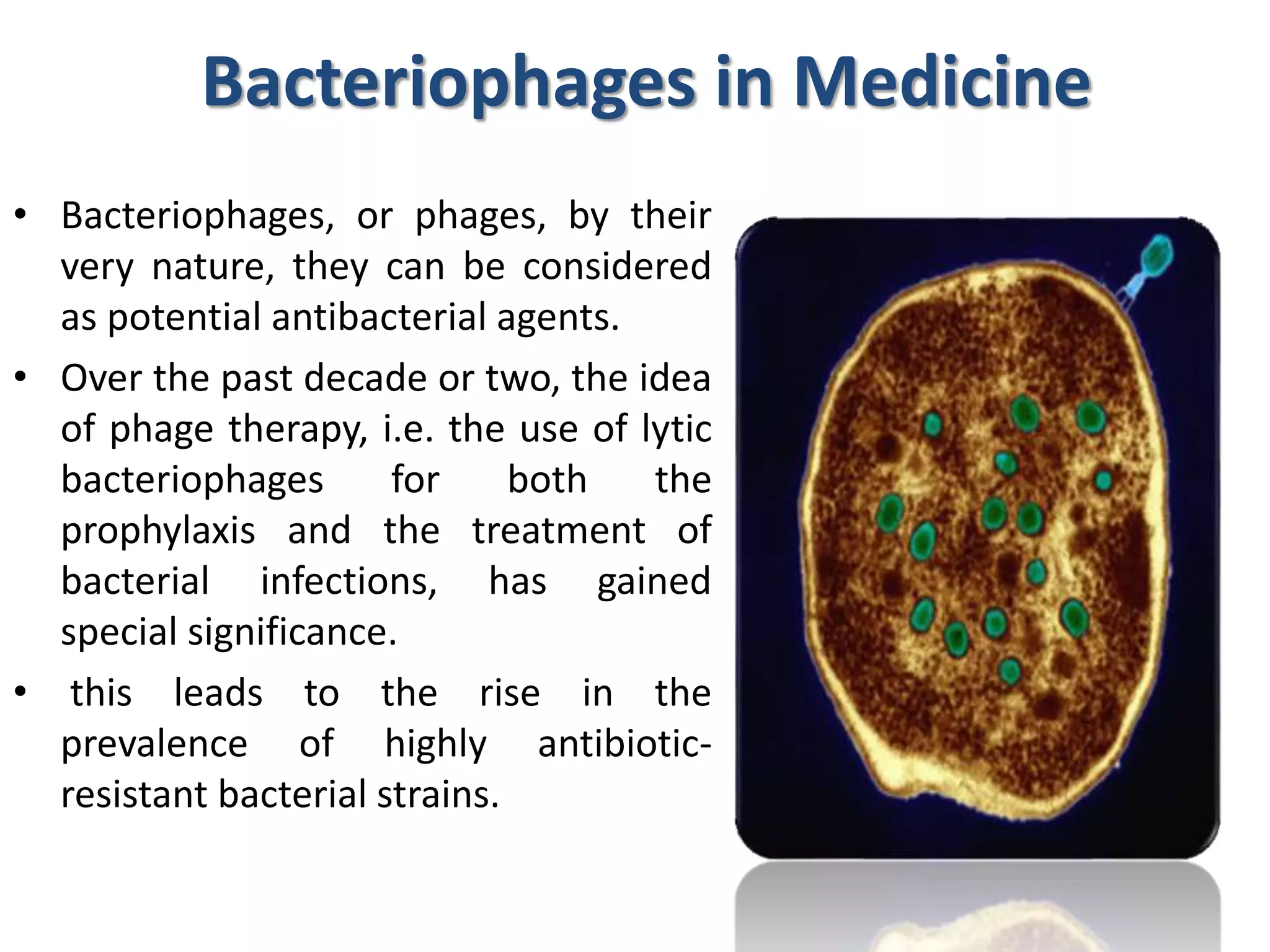

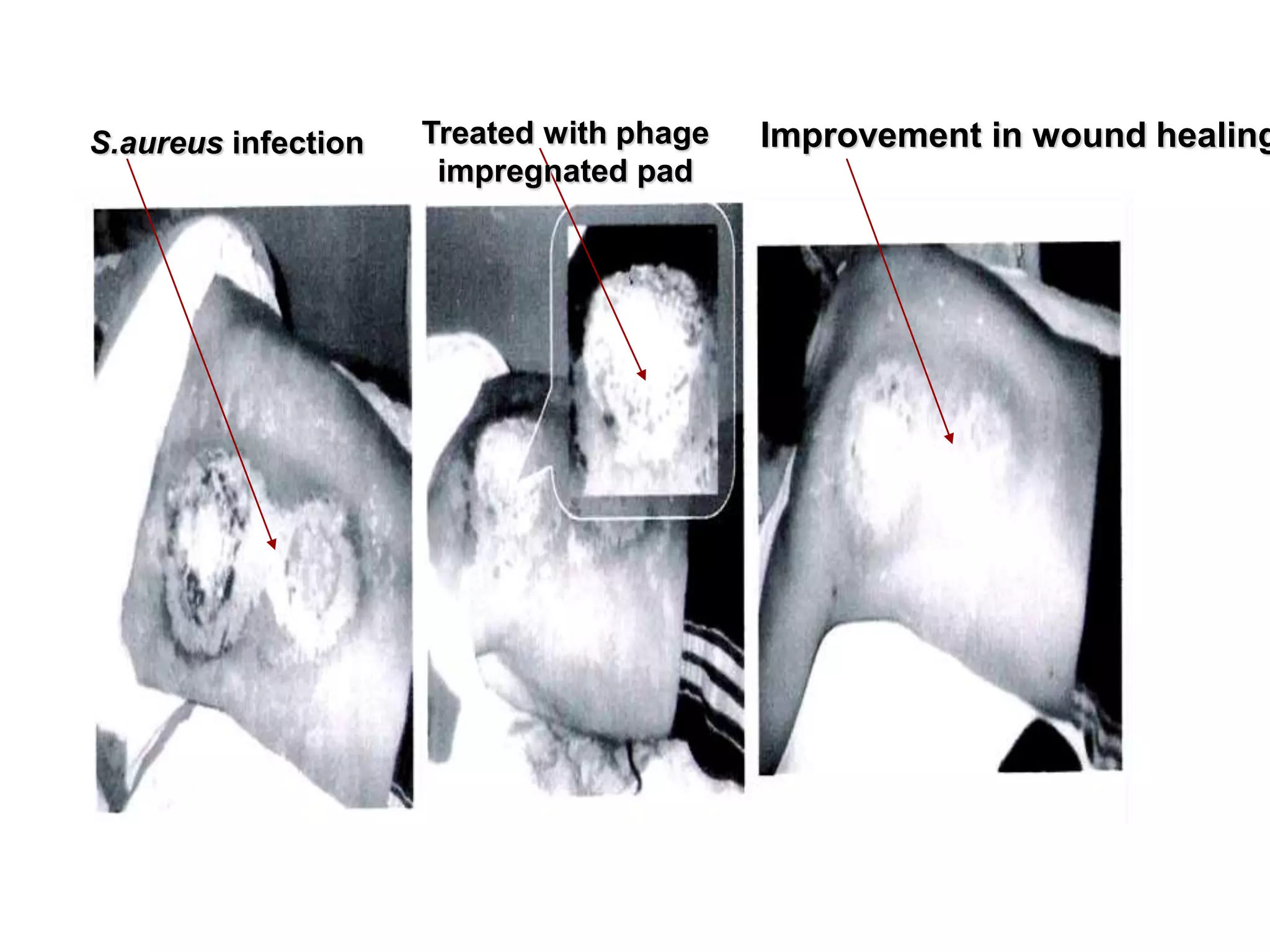



Bacteriophages are viruses that specifically infect bacteria, first described in the early 20th century with significant structural simplicity. They can replicate through two life cycles: the lytic cycle, which destroys the host bacterium, and the lysogenic cycle, which integrates their genetic material into the host's genome without causing harm. Bacteriophages hold potential in medical applications, particularly phage therapy, to combat antibiotic-resistant bacterial infections, although limitations such as the emergence of resistant bacterial strains exist.


