Human
papilloma
virus
Human papillomavirus is the
most common sexually
transmitted infection. Most
sexually active men and women
being exposed to the virus at
some point during their lifetime
Symptoms
• HPV may not cause symptoms at once, but they can appear years later. Some types can
lead to warts, while others can cause cancer.
Warts
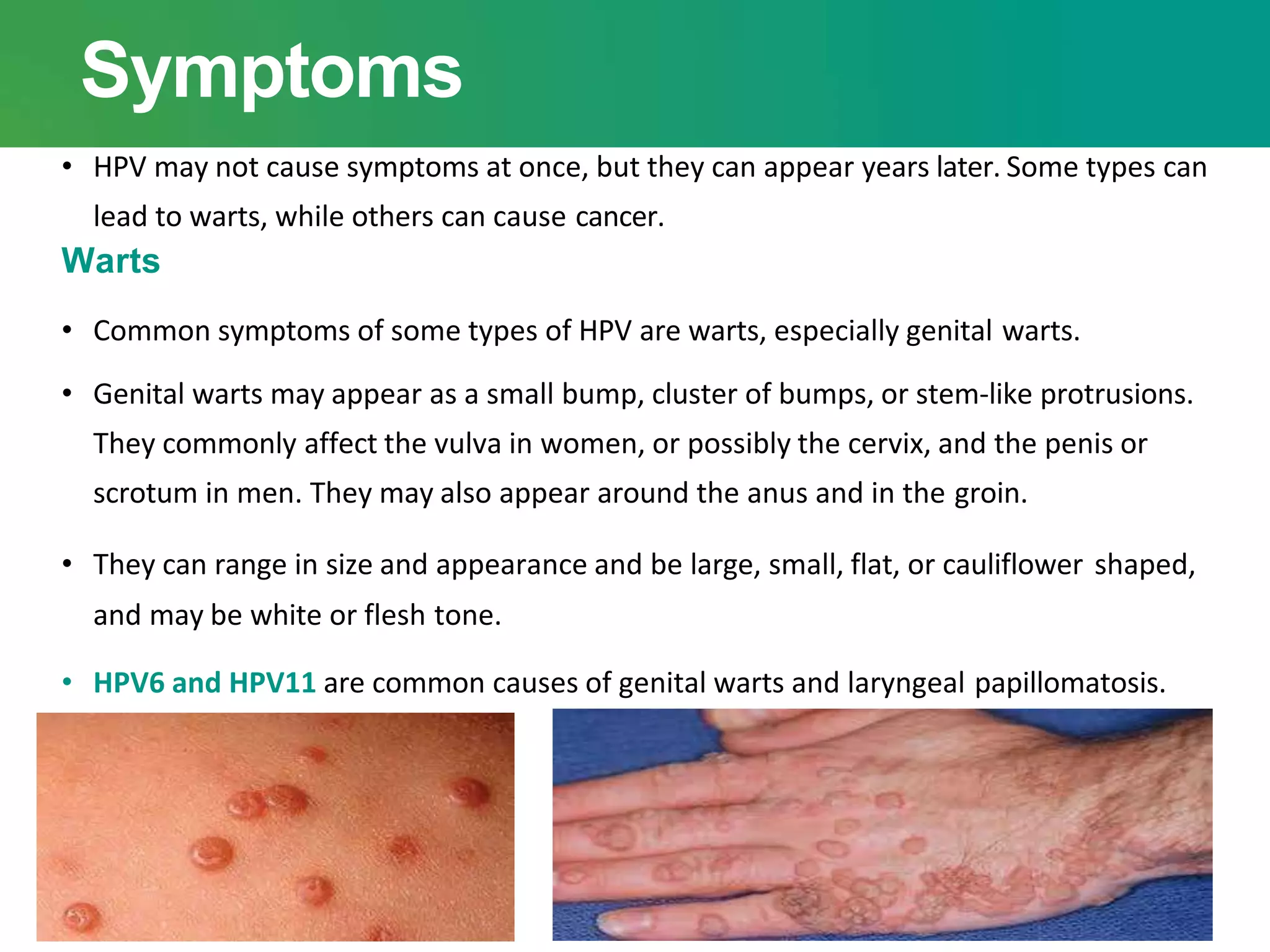
• Common symptoms of some types of HPV are warts, especially genital warts.
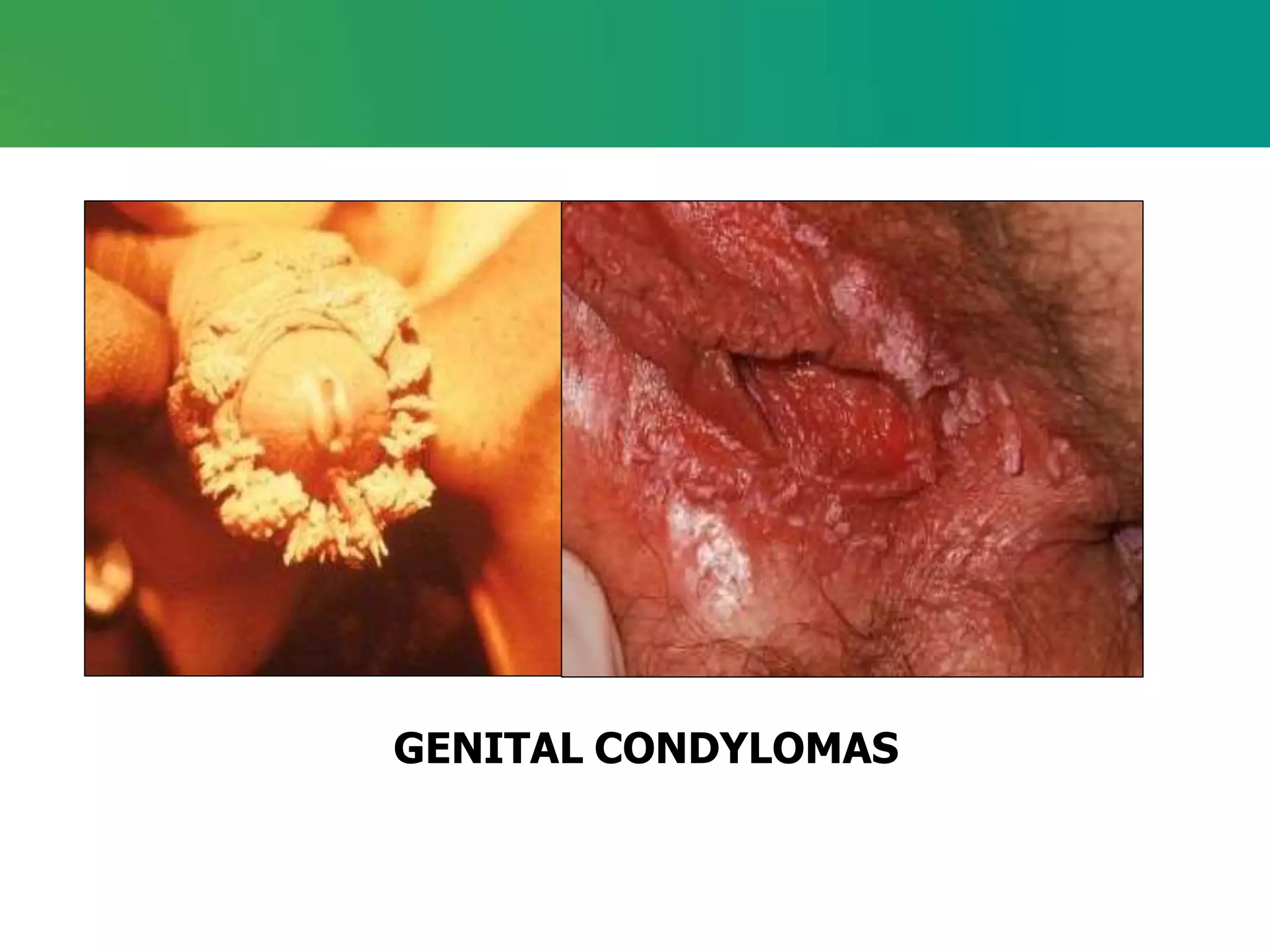
• Genital warts may appear as a small bump, cluster of bumps, or stem-like protrusions.
They commonly affect the vulva in women, or possibly the cervix, and the penis or
scrotum in men. They may also appear around the anus and in the groin.
• They can range in size and appearance and be large, small, flat, or cauliflower shaped,
and may be white or flesh tone.
• HPV6 and HPV11 are common causes of genital warts and laryngeal papillomatosis.
Symptoms
Symptoms
Other warts associated with HPV include common warts, plantar, and
flat warts.
• Common warts - rough, raised bumps most commonly found on
the hands, fingers, and elbows.
• Plantar warts - described as hard, grainy growths on the feet; they
most commonly appear on the heels or balls of the feet.
• Flat warts - generally affect children, adolescents, and young
adults; they appear as flat-topped, slightly raised lesions that are
darker than normal skin color and are most commonly found on
the face, neck, or areas that have been scratched.
Common warts on
the dorsal surface of
the hand
Planter wart
Symptoms
• Anogenital warts
• Anal dysplasia (lesions) : pre cancerous condition in anal canal
• Genital cancers
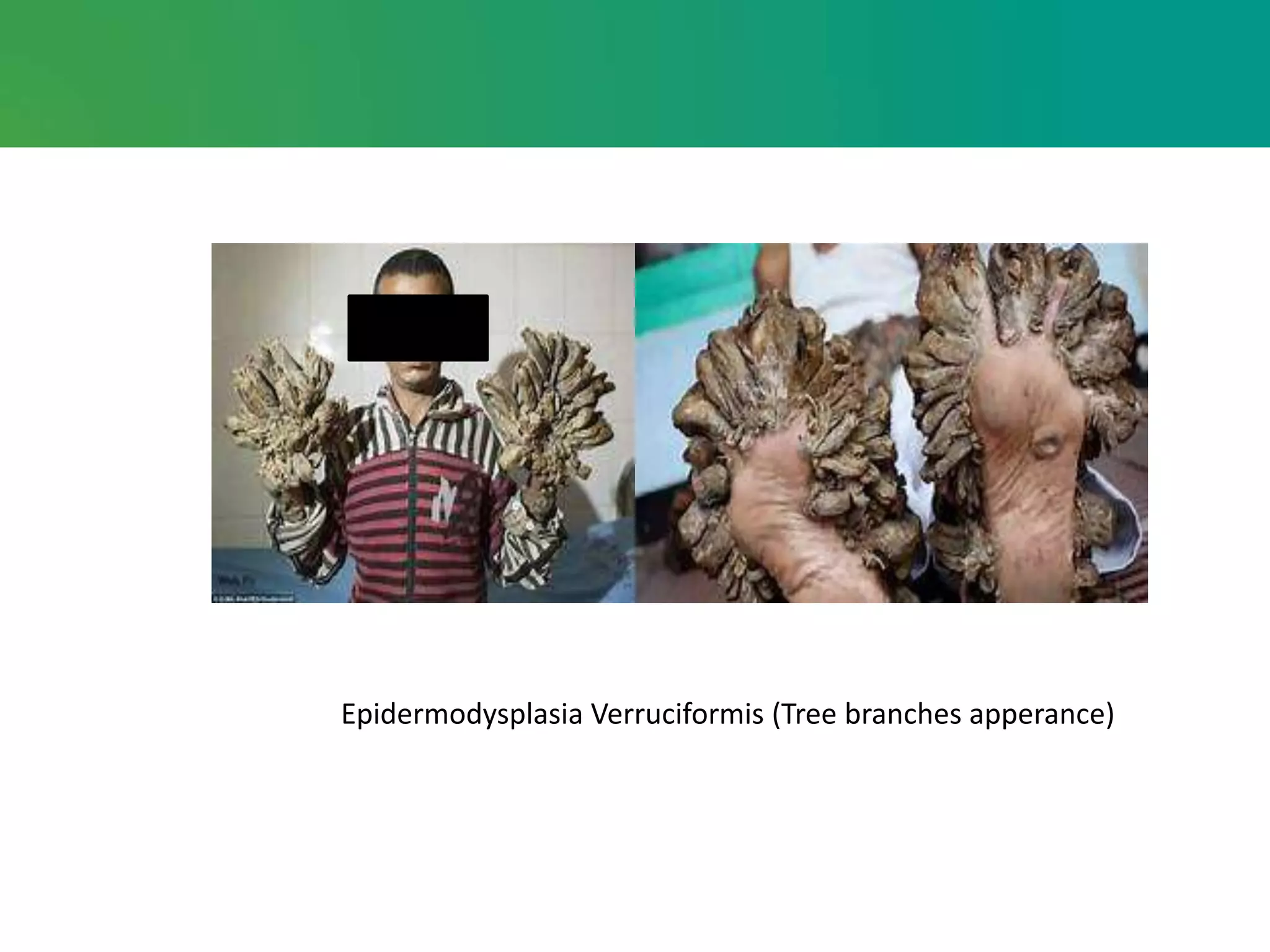
• Epidermodysplasia verruciformis (Treeman syndrome, a high risk skin cancer)
• Focal epithelial hyperplasia (benign neoplamic condition in mouth)
• Mouth papillomas (benign epithelial tumor)
• Oropharyngeal cancer
• Laryngeal papillomatosis (aerodigestive benign cancer)
Plane wart
SUPERFICIAL (Flat) WARTS
Epidermodysplasia Verruciformis (Tree branches apperance)
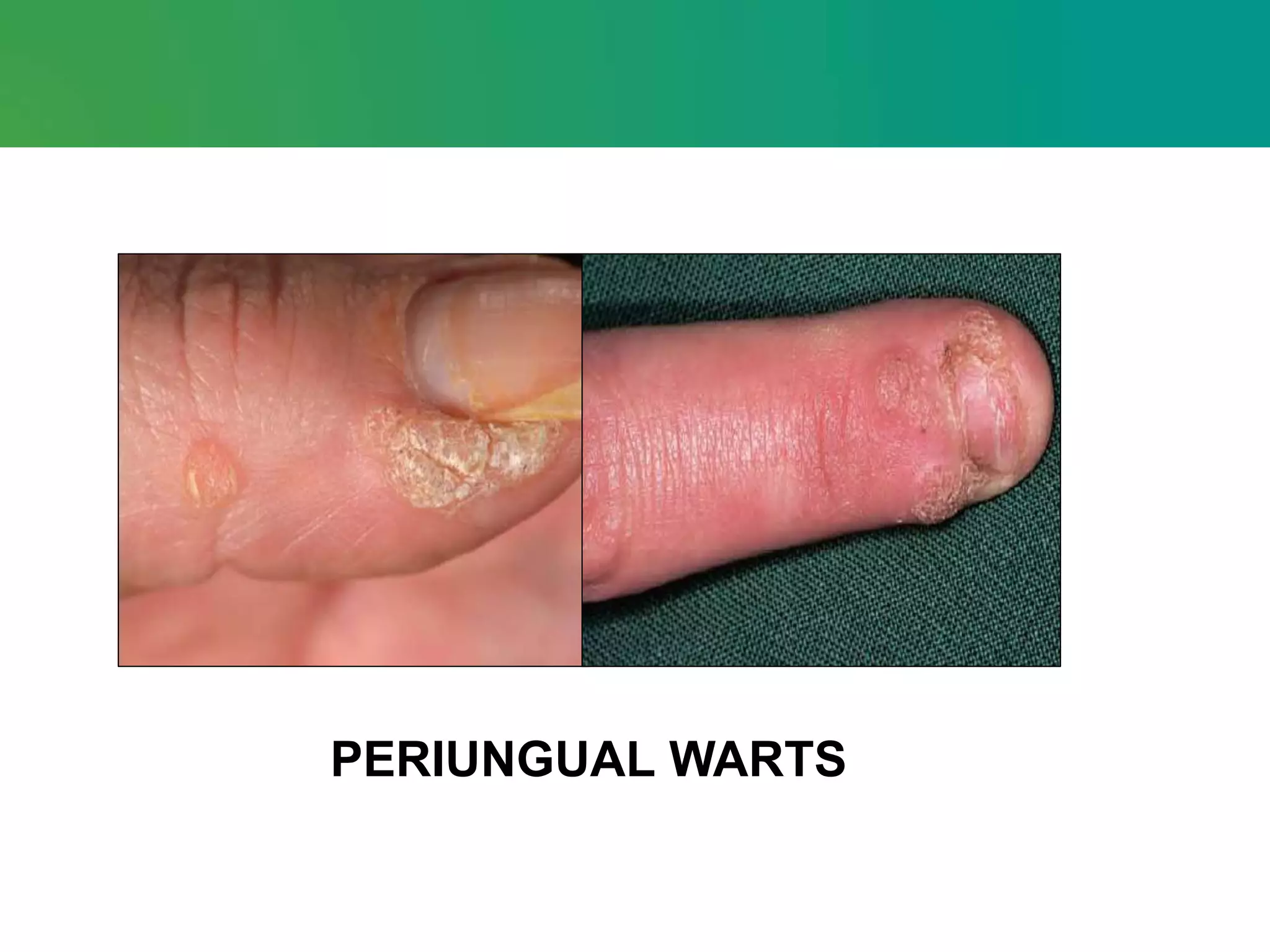
PERIUNGUAL WARTS
GENITAL CONDYLOMAS
INTERNAL WARTS
CERVICAL WARTS
HPV-THE CARCINOGEN
Cancer:
Predominant
types: Co-factors:
Skin carcinomas HPV-5, 8 U.V., genetic?
Lower genital
tract cancers
HPV-16, 18, 31,
33 ???
Malignant
transformation of
respiratory papillomas HPV-6, 11 X-rays
93% of all cervical neoplasia cases test are positive for HPV making it the leading the third leading killer
among women
These cancers include cancer of the cervix, vulva, vagina, penis, anus, and
oropharynx, or the base of the tongue and tonsils. It may take years or
decades for cancer to develop.
Cervical – HPV infection




Cervical cancer is second most
frequent cancer in women
world wide
5,00,000 cases present with
cervical cancer
Major leading cause of deaths
related to malignancy in the
Devloping world
Several cases associated
with HPV infections.
Symptoms: Cervical Cancer
As in many cancers, there may be no signs or symptoms of
cervical cancer until it has progressed to a dangerous stage.
However, if symptoms do occur they may include:
• Abnormal vaginal bleeding
• Pain in very advanced stages
• Any bleeding from the vagina other than during menstruation.
• Abnormal vaginal discharge
Transmission
• HPV is transmitted through intimate skin-to-skin contact.
• having vaginal, anal, or oral sex with someone who has the virus.
• It is most commonly spread during vaginal or anal sex.
• common that nearly all men and women get it at some point in their
lives.
• can be passed even when an infected person has no signs or symptoms.
• can develop symptoms years after being infected, making it hard to
know when you first became infected.
In most cases, HPV goes away on its own and does not cause any health problems. Butwhen
HPV does not go away, it can cause health problems like genital warts and cancer.
Diagnosis
The traditional methods of viral diagnosis such as electron
microscopy, cell culture, and certain immunological methods are
not suitable for HPV detection. HPV cannot be cultured in cell
cultures.
The important methods to diagnose HPV infection are:
• Colposcopy and acetic acid test
• Biopsy
• DNA test (PCR, Southern Blot Hybridization, In Situ Hybridization)
• Pap smear
Diagnosis
Colposcopy: a procedure that allows illuminated
stereoscopic and magnified viewing of the cervix.
PCR-based methods: HPV DNA can be amplified
selectively by a series of reactions that lead to an
exponential and reproducible increase in viral sequences
present in the biological specimen.
serological assays: ELISA or western blot analysis
Diagnosis
Biopsy: If the biopsy results show pre-cancer (dysplasia) or cancer,
then treatment is recommended. The dysplasia may be mild,
moderate, or severe.
PAP smear or PAP test: It is a screening test. Apart from
premalignant and malignant changes, viral infections like HPV
infection and Herpes can also be detected.
Acetic acid Test: A vinegar solution applied to HPV-infected genital
areas turns them white. This may help in identifying difficult-to-see
flat lesions.
Diagnosis: PAP smear test
• Early precancerous changes detected on the Pap smear
• A woman may have cervical cancer and not know it because she may
not have any symptoms.
• A Pap smear is usually part of a pelvic exam and accompanied by a
breast exam
• A sample of mucus and cells will be obtained from the cervix and
endocervix using a wooden scraper or a small cervical brush or broom.
• the sample is rinsed into a vial and sent to a lab for slide preparation
and examination.
Treatment
There is currently no specific treatment for HPV infection.
However warts can be treated.
• Salicylic acid. Over-the-counter treatments that contain salicylic acid work by removing
layers of a wart a little at a time.
• Imiquimod (Aldara, Zyclara). This prescription cream might enhance your immune
system's ability to fight HPV. Common side effects include redness and swelling at the
application site.
• Podofilox (Condylox). Another topical prescription, podofilox works by destroying
genital wart tissue. Podofilox may cause pain and itching where it's applied.
• Trichloroacetic acid. This chemical treatment burns off warts on the palms, soles and
genitals. It might cause local irritation.
Treatment
Surgical and other procedures
If medications don't work the following methods can be use
to remove warts
• Freezing with liquid nitrogen (cryotherapy)
• Burning with an electrical current (electrocautery)
• Surgical removal
• Laser surgery
"condom use may reduce the risk for genital human papillomavirus (HPV) infection"
Vaccination
Three vaccines are available to prevent infection by some HPV
types. All protect against initial infection with HPV types 16 and 18,
which cause most of the HPV-associated cancer cases.
Gardasil: protects against HPV types 6 and 11, which cause 90% of
genital warts. quadrivalent vaccine
Cervarix: bivalent, and is prepared from virus-like particles (VLP) of
The capsid protein.
Gardasil 9: nonavalent, it has the potential to prevent about 90% of
cervical, vulvar, vaginal, and anal cancers.
Prevention
• Vaccination
• Avoid skin-to-skin contact by not having sex with strangers.
• Use condoms and/or dental dams every time you have
vaginal, anal, or oral sex.
• Though condoms and dental dams are not as effective
against HPV as they are against other STDs like chlamydia
and HIV, safer sex can lower your chances of getting HPV.

Human Papilloma Virus

  • 1.
    Human papilloma virus Human papillomavirus isthe most common sexually transmitted infection. Most sexually active men and women being exposed to the virus at some point during their lifetime
  • 2.
    Symptoms • HPV maynot cause symptoms at once, but they can appear years later. Some types can lead to warts, while others can cause cancer. Warts • Common symptoms of some types of HPV are warts, especially genital warts. • Genital warts may appear as a small bump, cluster of bumps, or stem-like protrusions. They commonly affect the vulva in women, or possibly the cervix, and the penis or scrotum in men. They may also appear around the anus and in the groin. • They can range in size and appearance and be large, small, flat, or cauliflower shaped, and may be white or flesh tone. • HPV6 and HPV11 are common causes of genital warts and laryngeal papillomatosis.
  • 3.
  • 4.
    Symptoms Other warts associatedwith HPV include common warts, plantar, and flat warts. • Common warts - rough, raised bumps most commonly found on the hands, fingers, and elbows. • Plantar warts - described as hard, grainy growths on the feet; they most commonly appear on the heels or balls of the feet. • Flat warts - generally affect children, adolescents, and young adults; they appear as flat-topped, slightly raised lesions that are darker than normal skin color and are most commonly found on the face, neck, or areas that have been scratched. Common warts on the dorsal surface of the hand Planter wart
  • 5.
    Symptoms • Anogenital warts •Anal dysplasia (lesions) : pre cancerous condition in anal canal • Genital cancers • Epidermodysplasia verruciformis (Treeman syndrome, a high risk skin cancer) • Focal epithelial hyperplasia (benign neoplamic condition in mouth) • Mouth papillomas (benign epithelial tumor) • Oropharyngeal cancer • Laryngeal papillomatosis (aerodigestive benign cancer)
  • 6.
  • 7.
  • 8.
  • 9.
  • 10.
  • 11.
  • 12.
  • 13.
  • 14.
    Cancer: Predominant types: Co-factors: Skin carcinomasHPV-5, 8 U.V., genetic? Lower genital tract cancers HPV-16, 18, 31, 33 ??? Malignant transformation of respiratory papillomas HPV-6, 11 X-rays 93% of all cervical neoplasia cases test are positive for HPV making it the leading the third leading killer among women These cancers include cancer of the cervix, vulva, vagina, penis, anus, and oropharynx, or the base of the tongue and tonsils. It may take years or decades for cancer to develop.
  • 15.
    Cervical – HPVinfection     Cervical cancer is second most frequent cancer in women world wide 5,00,000 cases present with cervical cancer Major leading cause of deaths related to malignancy in the Devloping world Several cases associated with HPV infections.
  • 16.
    Symptoms: Cervical Cancer Asin many cancers, there may be no signs or symptoms of cervical cancer until it has progressed to a dangerous stage. However, if symptoms do occur they may include: • Abnormal vaginal bleeding • Pain in very advanced stages • Any bleeding from the vagina other than during menstruation. • Abnormal vaginal discharge
  • 17.
    Transmission • HPV istransmitted through intimate skin-to-skin contact. • having vaginal, anal, or oral sex with someone who has the virus. • It is most commonly spread during vaginal or anal sex. • common that nearly all men and women get it at some point in their lives. • can be passed even when an infected person has no signs or symptoms. • can develop symptoms years after being infected, making it hard to know when you first became infected. In most cases, HPV goes away on its own and does not cause any health problems. Butwhen HPV does not go away, it can cause health problems like genital warts and cancer.
  • 18.
    Diagnosis The traditional methodsof viral diagnosis such as electron microscopy, cell culture, and certain immunological methods are not suitable for HPV detection. HPV cannot be cultured in cell cultures. The important methods to diagnose HPV infection are: • Colposcopy and acetic acid test • Biopsy • DNA test (PCR, Southern Blot Hybridization, In Situ Hybridization) • Pap smear
  • 19.
    Diagnosis Colposcopy: a procedurethat allows illuminated stereoscopic and magnified viewing of the cervix. PCR-based methods: HPV DNA can be amplified selectively by a series of reactions that lead to an exponential and reproducible increase in viral sequences present in the biological specimen. serological assays: ELISA or western blot analysis
  • 20.
    Diagnosis Biopsy: If thebiopsy results show pre-cancer (dysplasia) or cancer, then treatment is recommended. The dysplasia may be mild, moderate, or severe. PAP smear or PAP test: It is a screening test. Apart from premalignant and malignant changes, viral infections like HPV infection and Herpes can also be detected. Acetic acid Test: A vinegar solution applied to HPV-infected genital areas turns them white. This may help in identifying difficult-to-see flat lesions.
  • 21.
    Diagnosis: PAP smeartest • Early precancerous changes detected on the Pap smear • A woman may have cervical cancer and not know it because she may not have any symptoms. • A Pap smear is usually part of a pelvic exam and accompanied by a breast exam • A sample of mucus and cells will be obtained from the cervix and endocervix using a wooden scraper or a small cervical brush or broom. • the sample is rinsed into a vial and sent to a lab for slide preparation and examination.
  • 22.
    Treatment There is currentlyno specific treatment for HPV infection. However warts can be treated. • Salicylic acid. Over-the-counter treatments that contain salicylic acid work by removing layers of a wart a little at a time. • Imiquimod (Aldara, Zyclara). This prescription cream might enhance your immune system's ability to fight HPV. Common side effects include redness and swelling at the application site. • Podofilox (Condylox). Another topical prescription, podofilox works by destroying genital wart tissue. Podofilox may cause pain and itching where it's applied. • Trichloroacetic acid. This chemical treatment burns off warts on the palms, soles and genitals. It might cause local irritation.
  • 23.
    Treatment Surgical and otherprocedures If medications don't work the following methods can be use to remove warts • Freezing with liquid nitrogen (cryotherapy) • Burning with an electrical current (electrocautery) • Surgical removal • Laser surgery "condom use may reduce the risk for genital human papillomavirus (HPV) infection"
  • 24.
    Vaccination Three vaccines areavailable to prevent infection by some HPV types. All protect against initial infection with HPV types 16 and 18, which cause most of the HPV-associated cancer cases. Gardasil: protects against HPV types 6 and 11, which cause 90% of genital warts. quadrivalent vaccine Cervarix: bivalent, and is prepared from virus-like particles (VLP) of The capsid protein. Gardasil 9: nonavalent, it has the potential to prevent about 90% of cervical, vulvar, vaginal, and anal cancers.
  • 25.
    Prevention • Vaccination • Avoidskin-to-skin contact by not having sex with strangers. • Use condoms and/or dental dams every time you have vaginal, anal, or oral sex. • Though condoms and dental dams are not as effective against HPV as they are against other STDs like chlamydia and HIV, safer sex can lower your chances of getting HPV.