BACTERIA
 Introduction
 Classification of bacteria
 Industrial importance of bacteria
1
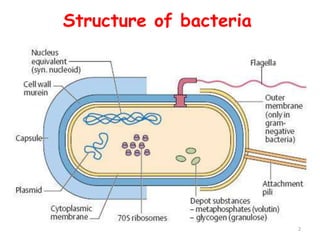
Structure of bacteria
2
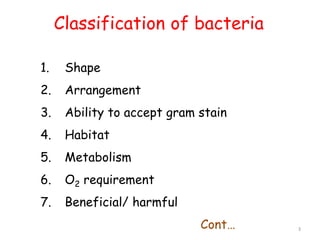
Classification of bacteria
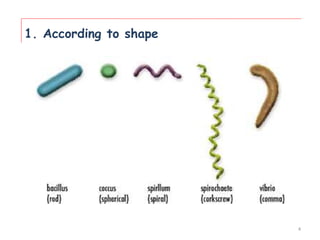
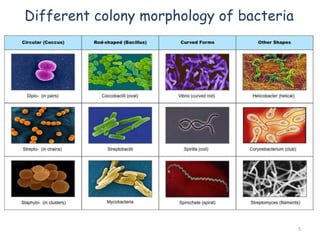
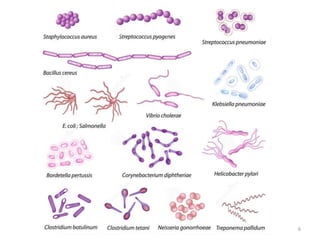
1. Shape
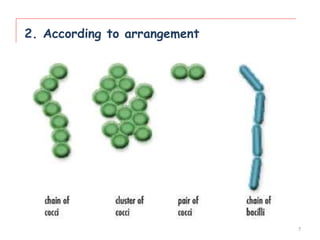
2. Arrangement
3. Ability to accept gram stain
4. Habitat
5. Metabolism
6. O2 requirement
7. Beneficial/ harmful
Cont… 3
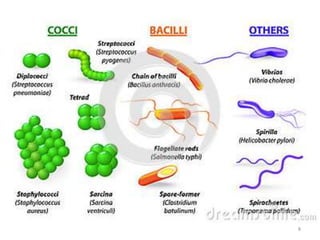
1. According to shape
4
Different colony morphology of bacteria
5
6
2. According to arrangement
7
8
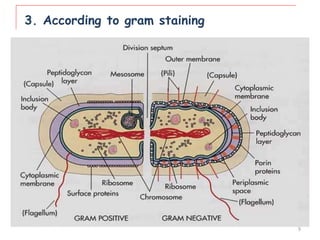
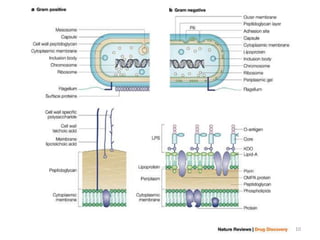
3. According to gram staining
9
10
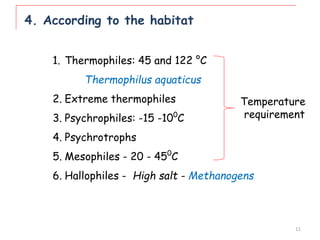
4. According to the habitat
1. Thermophiles: 45 and 122 °C
Thermophilus aquaticus
2. Extreme thermophiles
3. Psychrophiles: -15 -100
C
4. Psychrotrophs
5. Mesophiles - 20 - 450
C
6. Hallophiles - High salt - Methanogens
Temperature
requirement
11
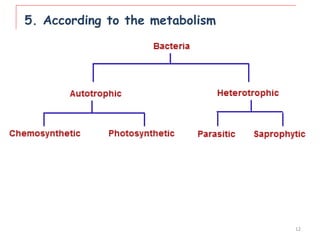
5. According to the metabolism
12
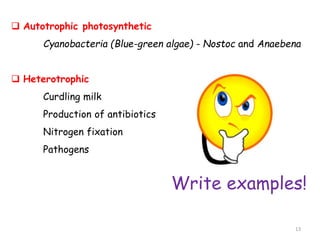
 Autotrophic photosynthetic
Cyanobacteria (Blue-green algae) - Nostoc and Anaebena
 Heterotrophic
Curdling milk
Production of antibiotics
Nitrogen fixation
Pathogens
Write examples!
13
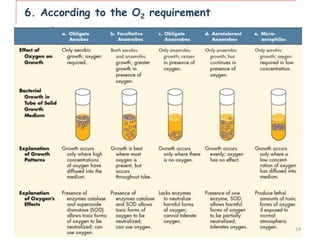
6. According to the O2 requirement
14
15
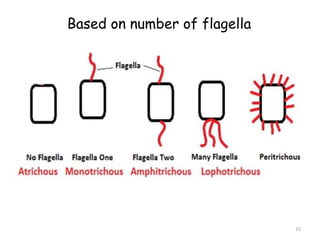
Based on number of flagella
16
Industrial Application of bacteria
1. Nitrogen fixation
2. Bioremediation (Effective micro organisms)
3. Biological control
4. Growth promotion of plants
5. Usage in Genetic engineering and Biotechnology
6. Vaccine production
7. Antibiotic production
8. Fermentation
9. Usage in Dairy industry
10. Usage in Feed formulation industry
11. Usage in Fiber industry
12. Usage against environmental pollution
Cont….
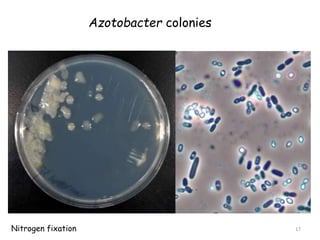
Azotobacter colonies
17
Nitrogen fixation
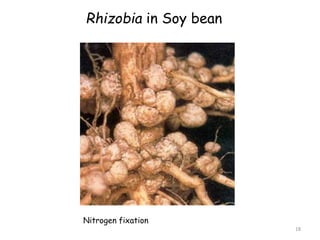
Rhizobia in Soy bean
18
Nitrogen fixation
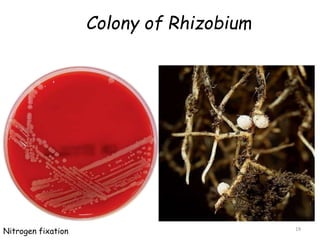
Colony of Rhizobium
19
Nitrogen fixation
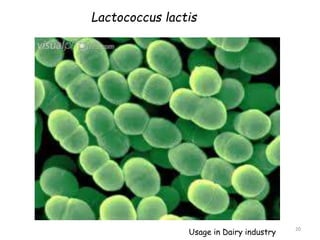
Lactococcus lactis
20
Usage in Dairy industry
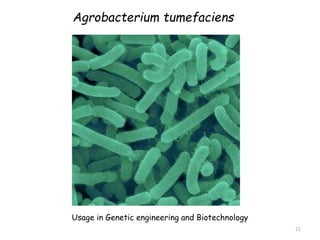
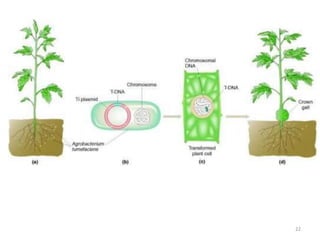
Agrobacterium tumefaciens
21
Usage in Genetic engineering and Biotechnology
22
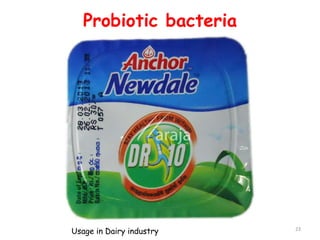
Probiotic bacteria
23
Usage in Dairy industry
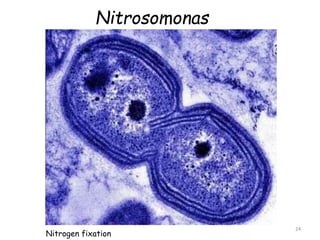
Nitrosomonas
24
Nitrogen fixation
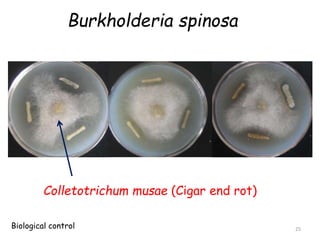
Burkholderia spinosa
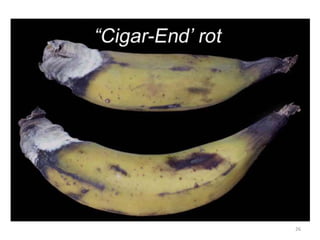
Colletotrichum musae (Cigar end rot)
25
Biological control
26
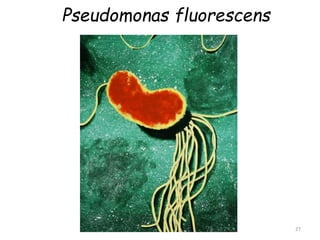
Pseudomonas fluorescens
27
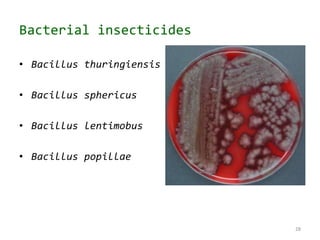
Bacterial insecticides
• Bacillus thuringiensis
• Bacillus sphericus
• Bacillus lentimobus
• Bacillus popillae
28
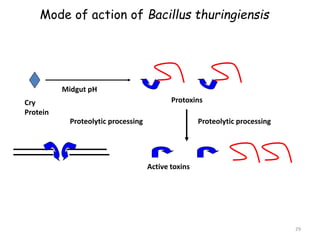
Cry
Protein
Midgut pH
Protoxins
Proteolytic processing
Active toxins
29
Mode of action of Bacillus thuringiensis
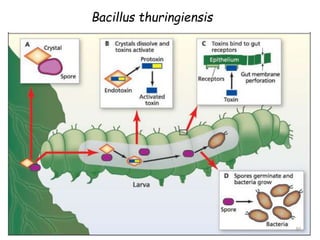
Bacillus thuringiensis
30
Tobacco curing
Crude dry tobacco leaves pass through curing and ripening
processes before they are ready for use
Bacteria are employed in both these processes and the
peculiar taste and smell in the tobacco is due to the bacterial
activity
For this purpose molasses and alcohol are added to tobacco.
31
Ammonifying bacteria
Bacillus subtilis
Bacillus mycoides
Bacillus ramosus
 Act upon the dead animal and plant tissues
 Decompose their complex organic compounds like
proteins into ammonium compounds (Humus)
 They are also known as putrefying bacteria
32
Found in the soil
Fixes the nitrogen gas of the atmosphere in the presence
of carbohydrates
This fixation of free nitrogen from the atmosphere
through ammonia into free nitrates and again their
conversion into ammonia and free nitrogen takes place by
means of nitrifying and denitrifying bacteria, along with
other organisms
33
Azotobacter
Vinegar making industry
Bacillus aceti convert the sugar solution into vinegar
34
Alcohol and acetone manufacture
Butyl alcohol and acetone are manufactured by the action of
bacteria on molasses
Tea curing
Crude tea leaves are acted upon by certain bacteria. The
process is known as curing, which is employed to impart a
peculiar taste and flavour to the leaves. For this purpose
alcohol is added to tea leaves.
Leather tanning
The hides and skins after drying, salting and clearing are
steeped in fluids containing specific bacteria. The process of
fermentation goes on for some time and then they are
transferred to tan-pits and are further allowed to be
fermented. This whole process is known as tanning and the
bacteria employed in the process are obtained from cowdung
and the excreta of dogs and poultry.
35
Fibre retting
Retting is the process of separating fibres from-the plant tissues.
Bacteria are employed in this industry, which cause decay of the
softer tissues and render fibres easily separable mechanically.
Fibres of flax, hemp, jute, coconut and other fibrous plants are
obtained by immersing the specific plant organs in stagnant pond
water where bacteria develop and cause retting.
The sewage work
In order to remove solid and semi-solid constituents of sewage it is
allowed to putrify. Putrifying bacteria are allowed to act upon
sewage under anaerobic conditions. It gets decayed and liquefied. It
is now filtered and the liquid is either drained out to the river or
used as manure in fields. For this purpose, in the soak pits the horse

dung is filled up.
36
Ensilage
It is the process of preserving green fodder in pits.
Certain bacteria help in the preservation of fodder.
Medicines
Antitoxins are the chemical substances produced in the
host tissues in response to the attack of parasitic
bacteria. Different vaccines and serums now prepared
from these antitoxins are used in the treatment of
specific ailments. The antibiotics such as streptomycin,
aureomycin and chloromycetin are obtained from certain
actinomycetous bacteria.
37
38
THE END!

Bacteria Presentation 1.pdf

  • 1.
    BACTERIA  Introduction  Classificationof bacteria  Industrial importance of bacteria 1
  • 2.
  • 3.
    Classification of bacteria 1.Shape 2. Arrangement 3. Ability to accept gram stain 4. Habitat 5. Metabolism 6. O2 requirement 7. Beneficial/ harmful Cont… 3
  • 4.
  • 5.
  • 6.
  • 7.
    2. According toarrangement 7
  • 8.
  • 9.
    3. According togram staining 9
  • 10.
  • 11.
    4. According tothe habitat 1. Thermophiles: 45 and 122 °C Thermophilus aquaticus 2. Extreme thermophiles 3. Psychrophiles: -15 -100 C 4. Psychrotrophs 5. Mesophiles - 20 - 450 C 6. Hallophiles - High salt - Methanogens Temperature requirement 11
  • 12.
    5. According tothe metabolism 12
  • 13.
     Autotrophic photosynthetic Cyanobacteria(Blue-green algae) - Nostoc and Anaebena  Heterotrophic Curdling milk Production of antibiotics Nitrogen fixation Pathogens Write examples! 13
  • 14.
    6. According tothe O2 requirement 14
  • 15.
    15 Based on numberof flagella
  • 16.
    16 Industrial Application ofbacteria 1. Nitrogen fixation 2. Bioremediation (Effective micro organisms) 3. Biological control 4. Growth promotion of plants 5. Usage in Genetic engineering and Biotechnology 6. Vaccine production 7. Antibiotic production 8. Fermentation 9. Usage in Dairy industry 10. Usage in Feed formulation industry 11. Usage in Fiber industry 12. Usage against environmental pollution Cont….
  • 17.
  • 18.
    Rhizobia in Soybean 18 Nitrogen fixation
  • 19.
  • 20.
  • 21.
    Agrobacterium tumefaciens 21 Usage inGenetic engineering and Biotechnology
  • 22.
  • 23.
  • 24.
  • 25.
    Burkholderia spinosa Colletotrichum musae(Cigar end rot) 25 Biological control
  • 26.
  • 27.
  • 28.
    Bacterial insecticides • Bacillusthuringiensis • Bacillus sphericus • Bacillus lentimobus • Bacillus popillae 28
  • 29.
    Cry Protein Midgut pH Protoxins Proteolytic processing Proteolyticprocessing Active toxins 29 Mode of action of Bacillus thuringiensis
  • 30.
  • 31.
    Tobacco curing Crude drytobacco leaves pass through curing and ripening processes before they are ready for use Bacteria are employed in both these processes and the peculiar taste and smell in the tobacco is due to the bacterial activity For this purpose molasses and alcohol are added to tobacco. 31
  • 32.
    Ammonifying bacteria Bacillus subtilis Bacillusmycoides Bacillus ramosus  Act upon the dead animal and plant tissues  Decompose their complex organic compounds like proteins into ammonium compounds (Humus)  They are also known as putrefying bacteria 32
  • 33.
    Found in thesoil Fixes the nitrogen gas of the atmosphere in the presence of carbohydrates This fixation of free nitrogen from the atmosphere through ammonia into free nitrates and again their conversion into ammonia and free nitrogen takes place by means of nitrifying and denitrifying bacteria, along with other organisms 33 Azotobacter
  • 34.
    Vinegar making industry Bacillusaceti convert the sugar solution into vinegar 34 Alcohol and acetone manufacture Butyl alcohol and acetone are manufactured by the action of bacteria on molasses
  • 35.
    Tea curing Crude tealeaves are acted upon by certain bacteria. The process is known as curing, which is employed to impart a peculiar taste and flavour to the leaves. For this purpose alcohol is added to tea leaves. Leather tanning The hides and skins after drying, salting and clearing are steeped in fluids containing specific bacteria. The process of fermentation goes on for some time and then they are transferred to tan-pits and are further allowed to be fermented. This whole process is known as tanning and the bacteria employed in the process are obtained from cowdung and the excreta of dogs and poultry. 35
  • 36.
    Fibre retting Retting isthe process of separating fibres from-the plant tissues. Bacteria are employed in this industry, which cause decay of the softer tissues and render fibres easily separable mechanically. Fibres of flax, hemp, jute, coconut and other fibrous plants are obtained by immersing the specific plant organs in stagnant pond water where bacteria develop and cause retting. The sewage work In order to remove solid and semi-solid constituents of sewage it is allowed to putrify. Putrifying bacteria are allowed to act upon sewage under anaerobic conditions. It gets decayed and liquefied. It is now filtered and the liquid is either drained out to the river or used as manure in fields. For this purpose, in the soak pits the horse dung is filled up. 36
  • 37.
    Ensilage It is theprocess of preserving green fodder in pits. Certain bacteria help in the preservation of fodder. Medicines Antitoxins are the chemical substances produced in the host tissues in response to the attack of parasitic bacteria. Different vaccines and serums now prepared from these antitoxins are used in the treatment of specific ailments. The antibiotics such as streptomycin, aureomycin and chloromycetin are obtained from certain actinomycetous bacteria. 37
  • 38.