7
David, the
Shepherd Boy
Memory Verse:
“Children, obey your parents in everything.” COLOSSIANS 3:20, NIV.
The Message:
I am part of a family.
Parents:
By the end of the month you can help your child
Know that they are part of a family.
Feel loved by their family.
Respond by being helpful and obedient.
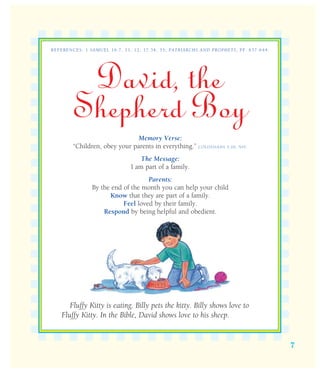
Fluffy Kitty is eating. Billy pets the kitty. Billy shows love to
Fluffy Kitty. In the Bible, David shows love to his sheep.
REFERENCES: 1 SAMUEL 16:7, 11, 12; 17:34, 35; PATRIARCHS AND PROPHETS, PP. 637-644.
7
8
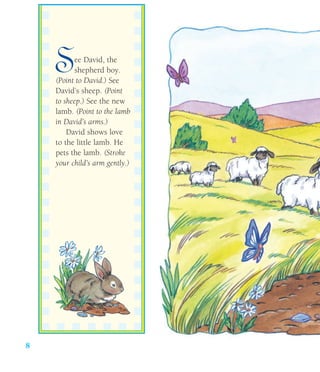
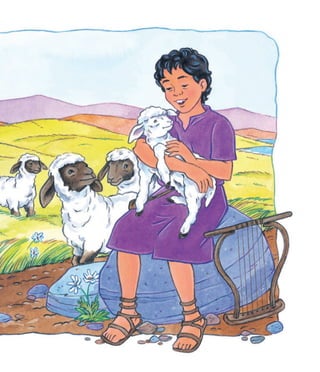
See David, the
shepherd boy.
(Point to David.) See
David’s sheep. (Point
to sheep.) See the new
lamb. (Point to the lamb
in David’s arms.)
David shows love
to the little lamb. He
pets the lamb. (Stroke
your child’s arm gently.)
11
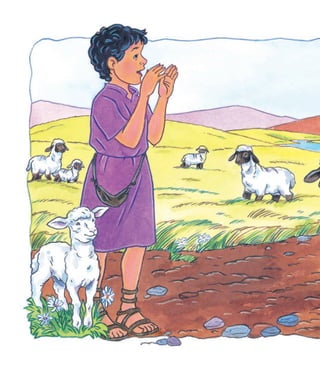
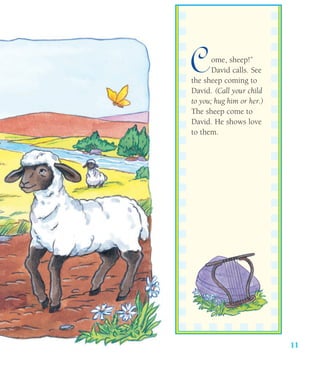
Come, sheep!”
David calls. See
the sheep coming to
David. (Call your child
to you; hug him or her.)
The sheep come to
David. He shows love
to them.
12
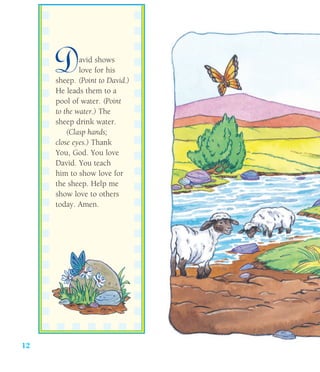
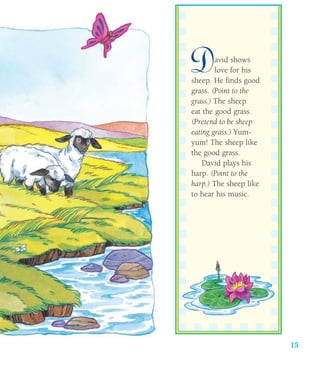
David shows
love for his
sheep. (Point to David.)
He leads them to a
pool of water. (Point
to the water.) The
sheep drink water.
(Clasp hands;
close eyes.) Thank
You, God. You love
David. You teach
him to show love for
the sheep. Help me
show love to others
today. Amen.
15
David shows
love for his
sheep. He finds good
grass. (Point to the
grass.) The sheep
eat the good grass.
(Pretend to be sheep
eating grass.) Yum-
yum! The sheep like
the good grass.
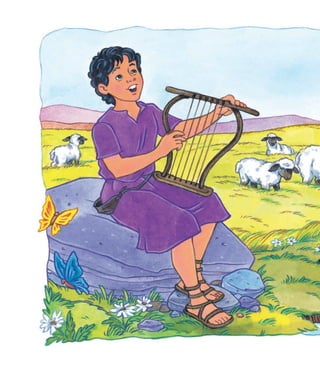
David plays his
harp. (Point to the
harp.) The sheep like
to hear his music.
16
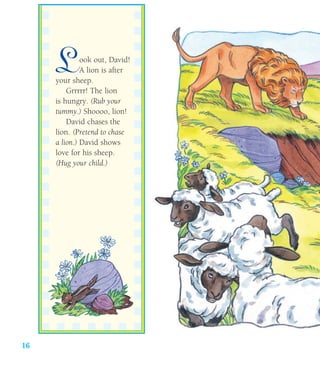
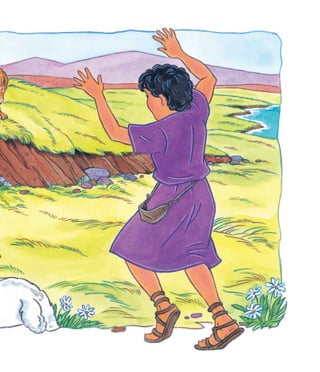
Look out, David!
A lion is after
your sheep.
Grrrrr! The lion
is hungry. (Rub your
tummy.) Shoooo, lion!
David chases the
lion. (Pretend to chase
a lion.) David shows
love for his sheep.
(Hug your child.)
19
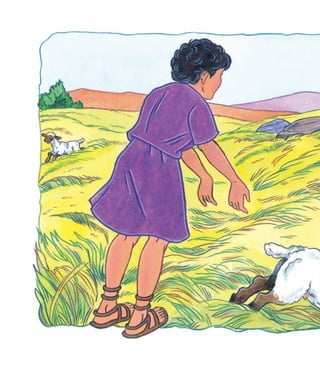
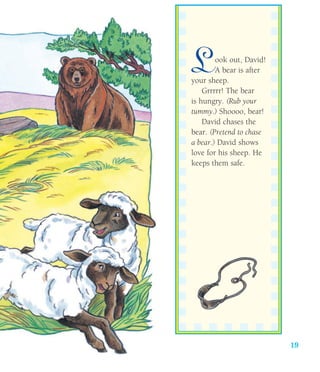
Look out, David!
A bear is after
your sheep.
Grrrrr! The bear
is hungry. (Rub your
tummy.) Shoooo, bear!
David chases the
bear. (Pretend to chase
a bear.) David shows
love for his sheep. He
keeps them safe.
20
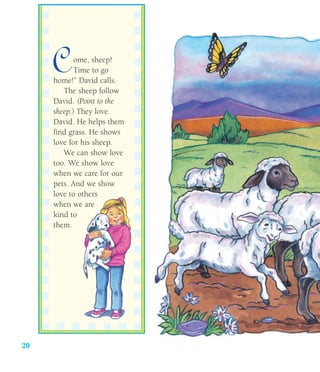
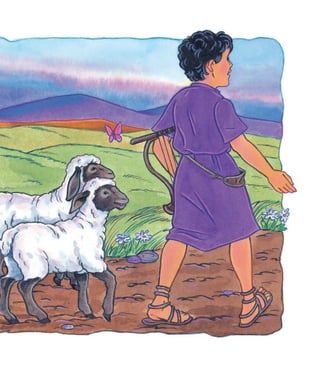
Come, sheep!
Time to go
home!” David calls.
The sheep follow
David. (Point to the
sheep.) They love
David. He helps them
find grass. He shows
love for his sheep.
We can show love
too. We show love
when we care for our
pets. And we show
love to others
when we are
kind to
them.
22
Hide a toy sheep
in the house and
help your little one
find it. Explain that
sometimes David’s
sheep would run
away, and he
would have to look
for them.
With your child,
count things in
your home that are
made from wool.
If possible, get some
unspun wool for
your child to feel,
or use soft cotton
balls. Explain that
wool comes from
sheep, and that it is
used to make many
things.
Help your child
imagine that he or
she is a shepherd.
Talk about ways
to look after their
sheep.
Let your child hide
and bleat like a
sheep until you
find them. Say:
“David often had to
look for his sheep.”
Take your child to
visit a petting farm,
or go for a walk or
ride in the country
to see some sheep
and lambs.
Study these suggestions
for something to do
each day. Select those that
are appropriate for your
child’s developmental stage
and repeat them often.
23
Make different
fierce animal noises
with your child
(bear, lion, etc.).
Talk about how
David protected
his sheep from
the wild animals.
Ask your child to
help you pick up
something, find
something, or carry
something to the
table. Thank them
for being helpful.
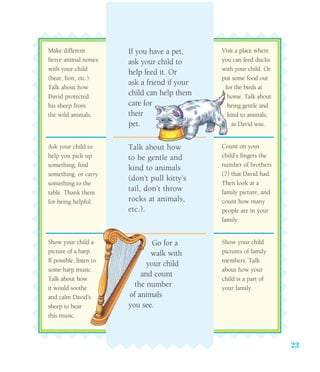
Show your child a
picture of a harp.
If possible, listen to
some harp music.
Talk about how
it would soothe
and calm David’s
sheep to hear
this music.
If you have a pet,
ask your child to
help feed it. Or
ask a friend if your
child can help them
care for
their
pet.
Talk about how
to be gentle and
kind to animals
(don’t pull kitty’s
tail, don’t throw
rocks at animals,
etc.).
Go for a
walk with
your child
and count
the number
of animals
you see.
Visit a place where
you can feed ducks
with your child. Or
put some food out
for the birds at
home. Talk about
being gentle and
kind to animals,
as David was.
Count on your
child’s fingers the
number of brothers
(7) that David had.
Then look at a
family picture, and
count how many
people are in your
family.
Show your child
pictures of family
members. Talk
about how your
child is a part of
your family.

Lesson 1 | Beginner | Sabbath School | Second Quarter 2015

  • 1.
    7 David, the Shepherd Boy MemoryVerse: “Children, obey your parents in everything.” COLOSSIANS 3:20, NIV. The Message: I am part of a family. Parents: By the end of the month you can help your child Know that they are part of a family. Feel loved by their family. Respond by being helpful and obedient. Fluffy Kitty is eating. Billy pets the kitty. Billy shows love to Fluffy Kitty. In the Bible, David shows love to his sheep. REFERENCES: 1 SAMUEL 16:7, 11, 12; 17:34, 35; PATRIARCHS AND PROPHETS, PP. 637-644. 7
  • 2.
    8 See David, the shepherdboy. (Point to David.) See David’s sheep. (Point to sheep.) See the new lamb. (Point to the lamb in David’s arms.) David shows love to the little lamb. He pets the lamb. (Stroke your child’s arm gently.)
  • 5.
    11 Come, sheep!” David calls.See the sheep coming to David. (Call your child to you; hug him or her.) The sheep come to David. He shows love to them.
  • 6.
    12 David shows love forhis sheep. (Point to David.) He leads them to a pool of water. (Point to the water.) The sheep drink water. (Clasp hands; close eyes.) Thank You, God. You love David. You teach him to show love for the sheep. Help me show love to others today. Amen.
  • 9.
    15 David shows love forhis sheep. He finds good grass. (Point to the grass.) The sheep eat the good grass. (Pretend to be sheep eating grass.) Yum- yum! The sheep like the good grass. David plays his harp. (Point to the harp.) The sheep like to hear his music.
  • 10.
    16 Look out, David! Alion is after your sheep. Grrrrr! The lion is hungry. (Rub your tummy.) Shoooo, lion! David chases the lion. (Pretend to chase a lion.) David shows love for his sheep. (Hug your child.)
  • 13.
    19 Look out, David! Abear is after your sheep. Grrrrr! The bear is hungry. (Rub your tummy.) Shoooo, bear! David chases the bear. (Pretend to chase a bear.) David shows love for his sheep. He keeps them safe.
  • 14.
    20 Come, sheep! Time togo home!” David calls. The sheep follow David. (Point to the sheep.) They love David. He helps them find grass. He shows love for his sheep. We can show love too. We show love when we care for our pets. And we show love to others when we are kind to them.
  • 16.
    22 Hide a toysheep in the house and help your little one find it. Explain that sometimes David’s sheep would run away, and he would have to look for them. With your child, count things in your home that are made from wool. If possible, get some unspun wool for your child to feel, or use soft cotton balls. Explain that wool comes from sheep, and that it is used to make many things. Help your child imagine that he or she is a shepherd. Talk about ways to look after their sheep. Let your child hide and bleat like a sheep until you find them. Say: “David often had to look for his sheep.” Take your child to visit a petting farm, or go for a walk or ride in the country to see some sheep and lambs. Study these suggestions for something to do each day. Select those that are appropriate for your child’s developmental stage and repeat them often.
  • 17.
    23 Make different fierce animalnoises with your child (bear, lion, etc.). Talk about how David protected his sheep from the wild animals. Ask your child to help you pick up something, find something, or carry something to the table. Thank them for being helpful. Show your child a picture of a harp. If possible, listen to some harp music. Talk about how it would soothe and calm David’s sheep to hear this music. If you have a pet, ask your child to help feed it. Or ask a friend if your child can help them care for their pet. Talk about how to be gentle and kind to animals (don’t pull kitty’s tail, don’t throw rocks at animals, etc.). Go for a walk with your child and count the number of animals you see. Visit a place where you can feed ducks with your child. Or put some food out for the birds at home. Talk about being gentle and kind to animals, as David was. Count on your child’s fingers the number of brothers (7) that David had. Then look at a family picture, and count how many people are in your family. Show your child pictures of family members. Talk about how your child is a part of your family.