© Copyright 2012 Oregon State University. All Rights Reserved
Drug Use Research & Management Program
Oregon State University, 500 Summer Street NE, E35
Salem, Oregon 97301-1079
Phone 503-947-5220 | Fax 503-947-2596
Author: Kathy Sentena, PharmD
Drug Class Update with New Drug Evaluation: Asthma and COPD Maintenance Medications
Date of Review: May 2019 Date of Last Review: January 2018
Dates of Literature Search: 01/01/2014- 02/25/2019
Generic Name: revefenacin Brand Name (Manufacturer): Yupelri (Mylan)
Dossier Received: yes
Current Status of PDL Class:
See Appendix 1.
Purpose for Class Update:
The purpose of this class update is to provide new comparative effectiveness and safety evidence for asthma and chronic obstructive pulmonary disease (COPD)
maintenance medications published since the last review. A new drug evaluation for revefenacin, a long-acting anticholinergic nebulization solution, which was
approved in November 2018, will be included.
Research Questions:
1. Is there new comparative evidence on the efficacy/effectiveness of maintenance treatments for asthma and COPD?
2. Is there new comparative evidence of harms associated with maintenance medications used to treat asthma and COPD?
3. Are there subgroups of patients based on demographics (age, racial groups, gender), comorbidities (drug-disease interactions), or other medications (drug-drug
interactions) for which maintenance treatments for asthma or COPD differ in efficacy/effectiveness or frequency of adverse events?
4. What is the comparative evidence for efficacy and harms for revefenacin compared to other maintenance treatments for COPD?
Conclusions:
New evidence for this review comes from three new guidelines from the National Institute for Health and Care Excellence (NICE) and Global Initiative for Chronic
Obstructive Pulmonary Disease (GOLD), five systematic reviews and meta-analyses from Cochrane Systematic Reviews and Agency for Healthcare Research and
Quality (AHRQ), and seven randomized controlled trials.
ASTHMA
Efficacy
 Guidance from NICE supports current policy for Oregon Health Plan (OHP) fee-for-service patients. Treatment recommendations are consistent with prior
recommendations with the exception of the use of a leukotriene receptor antagonist (LTRA) in children, 5 and older, and in adults as a second-line treatment
option, instead of a long-acting beta-agonists (LABA).1
Author: Sentena Date: May 2019
Exacerbations
 In patients 0-4 years of age there is moderate evidence that intermittent inhaled corticosteroid (ICS) in combination with a short-acting beta-agonist (SABA) is
more effective than SABA alone at the onset of an upper respiratory infection reduces the risk of needing oral corticosteroids, 38% and 56%, respectively.2
 In patients 12 years and older with persistent asthma:
 There is moderate strength of evidence that risk of exacerbations (composite outcome of requiring systemic corticosteroids, hospitalization or
emergency department [ED] visit) was lower with inhaled corticosteroid (ICS) + long-acting beta-agonist (LABA) as controller and quick relief
compared to ICS alone, relative risk (RR) 0.64 (95% CI [confidence interval], 0.53 to 0.78; P<0.05) (absolute risk reduction [ARR] not provided).2
This
was also true for ICS + LABA as controller and quick relief compared to ICS + LABA as a controller, RR 0.68 (95% CI, 0.58 to 0.80; P<0.05;ARR not
provided).2
 There is high strength of evidence that the risk of exacerbations requiring corticosteroids is lower with the combination of ICS and a LABA as a
controller and quick relief compared to the combination of ICS and LABA only as a controller. Evidence was of moderate strength for exacerbations
requiring ED visits for the same comparison (RR 0.74; 95% CI, 0.59 to 0.93; P<0.05/ARR not reported).2
 In patients 12 years and older with uncontrolled asthma and persistent exacerbations the risk of exacerbations requiring systemic corticosteroids was reduced
with the combination of LAMA and ICS versus ICS and placebo, 4% vs. 7% (RR 0.67; 95% CI, 48 to 0.92; P<0.05; high strength of evidence).2
 The efficacy of using ICS/LABA as controller and quick relief therapy (referred to as single maintenance and reliever therapy [SMART]) compared to ICS with or
without LABA controller therapy and SABA for relief therapy in individuals with persistent asthma was studied in a systematic review and meta-analysis. Overall
the use of SMART was associated with a lower incidence of exacerbations compared to ICS, with or without LABA, and use of SABA as reliever therapy.3
Hospitalizations
 In patients 12 years and older with persistent asthma:
 The combination of ICS and LABA as a controller and quick relief reduced the risk of hospitalizations and ED visits more than ICS and LABA as a
controller based on high strength of evidence (RR 0.69; 95% CI, 0.63 to 0.76; P<0.05/ARR not reported).2
Rescue Medication Use
 The use of rescue medication was reduced with the combination of ICS and LABA as a controller and quick relief compared to ICS with or without LABA in
patients 12 and older with persistent asthma based on moderate evidence (pooled results not available).2
Spirometry
 There is high strength of evidence that long-acting muscarinic antagonists (LAMA) in combination with ICS improves trough forced expiratory volume in one
second (FEV1) more than ICS and placebo by a mean difference (MD) of 0.13 L (95% CI, 0.10 to 0.17; P<0.05) in patients 12 years and older with uncontrolled,
persistent asthma.2
 There was a statistically significant, but most likely not clinically significant, increase in trough FEV1 with the use of ICS and LABA + LAMA compared to ICS and
LABA alone (MD 0.07 L ;95% CI, 0.00 to 0.14; P>0.05) based on moderate strength of evidence.2
Safety
 A Cochrane systematic review of 14,233 patients found moderate quality evidence of no difference in mortality between salmeterol/ICS compared to ICS (same
ICS dose in each group), 11 deaths versus 13 deaths, respectively (odds ratio [OR] 0.80; 95% CI, 0.36 to 1.78).4
This translates to 1 death per 1000 patients in
each group treated for 25 weeks.4
Recent findings have prompted the Food and Drug Administration (FDA) to remove boxed warning from LABA/ICS products
regarding the risks of mortality associated with LABA therapy.5
Author: Sentena Date: May 2019
Chronic Obstructive Pulmonary Disease
 Recent guideline updates on the management of COPD support current recommendations.6,7
Revefenacin
 Low quality evidence from two short-term, non-published trials demonstrated more trough FEV1 lowering in COPD patients using revefenacin nebulized solution
compared to placebo.8
Limited safety data suggests a similar adverse event profile as other LAMAs. There is insufficient evidence to recommend revefenacin
over preferred maintenance treatments for COPD.
Recommendations:
 No changes to the PDL are recommended based on the review of clinical efficacy.
 Recommend clerical revisions to prior authorization (PA) criteria to remove references to guideline classifications of COPD.
 Evaluate costs in executive session.
Summary of Prior Reviews and Current Policy
 Previous reviews have found low to moderate quality evidence of no within-class differences in efficacy or harms for long-acting inhaled (i.e., beta-agonists (LABAs),
muscarinic antagonists (LAMAs), or corticosteroids (ICS) and long-acting oral medications (i.e., leukotriene modifiers [LM]) for patients with asthma or COPD. There
was insufficient evidence in subgroup populations with asthma or COPD to establish meaningful conclusions on efficacy or harms.
 Preferred therapies for asthma and COPD maintenance medications are:
a. Anticholinergics: ipratropium (aerosol and solution), tiotropium and ipratropium/albuterol (nebulized solution)
b. LABA: salmeterol
c. ICS: budesonide, fluticasone propionate, beclomethasone, fluticasone (Flovent® diskus)
d. ICS/LABA: fluticasone/salmeterol (diskus and hydrofluoroalkane [HFA]), budesonide/formoterol
e. LAMA/LABA and LAMA/LABA/ICS combination inhalers: no preferred drugs
 Non-preferred therapies require a prior authorization to verify diagnosis and medical appropriateness.
 There is high utilization (greater than 70%) of preferred therapies in all classes with dedicated preferred options. Maintenance therapies for asthma and COPD
represent a substantial cost to OHP, with the LAMA, ICS and LABA/ICS representing the costliest classes.
Background:
ASTHMA
Asthma is a chronic inflammatory condition of the lungs resulting in airway obstruction, bronchial hyperresponsiveness and airway edema. Genetics and
environmental factors are thought to contribute to asthma development. A 2013 report on the Burden of Asthma in Oregon cited 3.5-4% of the OHP population
as having an asthma diagnosis.9
Total national asthma costs were projected to be over $20 billion in 2010.9
Asthma is characterized by symptoms of wheezing,
cough, dyspnea and chest tightness. Diagnosis of asthma includes assessment of physical presentation, laboratory evaluation, and confirmation with spirometry
(FEV1 > 200 mL or ≥ 12% from baseline after SABA use). The severity of asthma is differentiated as intermittent or persistent (and further divided into mild,
moderate or severe disease).10
Author: Sentena Date: May 2019
Asthma treatment can be divided into two categories, quick-relief (rescue) medication and long-term maintenance medications. The Expert Panel Report 3
(EPR3) recommends asthma treatment be approached in a stepwise manner based on the severity of asthma symptoms.10
Those patients with persistent
asthma require long-term control medications to contain the underlying inflammation associated with asthma. Inhaled corticosteroids (ICS) are the preferred
maintenance therapy for all patients with persistent asthma. If additional therapy is required to control asthma symptoms, LABAs are most commonly
recommended in combination with ICS.10
Other maintenance therapy options include LTRA, methylxanthines, and cromolyn sodium.
Outcomes used in asthma trials are spirometry (e.g., FEV1), asthma exacerbations, hospitalization, emergency room visits, and need for oral corticosteroids.
Change from baseline in FEV1 is a common surrogate endpoint used since it is highly reproducible. Minimally important values from research in COPD patients
suggest minimally important FEV1 changes range from 100-140 ml.11
COPD
COPD is a chronic respiratory disorder characterized by reduced expiratory flow due to irreversible airway inflammation. Airway narrowing, hyperinflation and
impaired gas exchange are pathological changes associated with COPD. The most common cause of COPD is airway irritation, usually from cigarette smoking. In
rare cases alpha-1 antitrypsin (AAT) deficiency has been implicated in the development of early onset COPD. It is estimated almost 6% of Oregonians were
diagnosed with COPD in 2011. Forty-one percent of these individuals were on at least one daily treatment for COPD.12
The national incidence of COPD is
estimated at 5%, contributing to substantial morbidity and mortality.13
Chronic cough or sputum production and dyspnea are common symptoms of COPD. The diagnosis and management of COPD is based on spirometry (post-
bronchodilator ratio of FEV1/FVC <0.70), symptom severity, risk of exacerbations and comorbidities.7
COPD is classified into four stages based on spirometric
measurements of FEV1/FVC; grade 1 (mild), grade 2 (moderate), grade 3 (severe), grade 4 (very severe).7
Therapeutic approaches are often based on disease
burden as well as FEV1, which classifies patients into groups A-D (low to high risk of symptoms and exacerbations).7
This type of classification system shifts the
focus from including just FEV1 measurements, as these are not always indicative of COPD status. Important outcomes to access the effectiveness of therapies
include: functional capacity, Quality of Life (QoL) (i.e., St. George’s Respiratory Questionnaire [SGRQ]), dyspnea, exacerbation rate and/or severity, mortality and
harms. FEV1 is the most common surrogate outcome used in studies to determine therapy effectiveness. Minimally important FEV1 values for COPD changes
have not been clearly defined but are suggested to range from 100-140 ml.11
Pharmacotherapy prescribed in a step-wise manner is recommended for COPD management, usually starting with monotherapy and progressing to combination
regimens. Short-acting beta-agonists are recommended for acute management and bronchodilator therapy (LABAs and LAMAs) are used as monotherapy or in
combination for maintenance treatment for chronic, stable COPD.7
Inhaled corticosteroids are reserved for patients requiring additional treatment for chronic
disease, despite LAMA and LABA therapy. Maintenance reliever therapy (MART) combines ICS and a fast-acting LABA (e.g., formoterol) in a single inhaler for use
as maintenance therapy and symptom relief.6
No treatment has been shown to alter the long-term progression and decline in lung function associated with
COPD.7
Author: Sentena Date: May 2019
Methods:
A Medline literature search for new systematic reviews and randomized controlled trials (RCTs) assessing clinically relevant outcomes to active controls, or
placebo if needed, was conducted. The Medline search strategy used for this review is available in Appendix 3, which includes dates, search terms and limits
used. The OHSU Drug Effectiveness Review Project, Agency for Healthcare Research and Quality (AHRQ), National Institute for Health and Clinical Excellence
(NICE), Department of Veterans Affairs, and the Canadian Agency for Drugs and Technologies in Health (CADTH) resources were manually searched for high
quality and relevant systematic reviews. When necessary, systematic reviews are critically appraised for quality using the AMSTAR tool and clinical practice
guidelines using the AGREE tool. The FDA website was searched for new drug approvals, indications, and pertinent safety alerts.
The primary focus of the evidence is on high quality systematic reviews and evidence-based guidelines. Randomized controlled trials will be emphasized if
evidence is lacking or insufficient from those preferred sources.
Systematic Reviews:
AHRQ – Intermittent Inhaled Corticosteroids and Long-Acting Muscarinic Antagonists for Asthma
AHRQ assessed the efficacy of using intermittent ICS in patients with asthma and to determine if adding a LAMA helps to improve outcomes in patients with
uncontrolled, persistent asthma.2
The review focused on 3 groups: patients 0 to 4 years old with recurrent wheezing, patients 5 years and older with persistent
asthma (with or without LABA) and patients 12 years and older with uncontrolled, persistent asthma for the assessment of efficacy of adding a LAMA. Three
classes of asthma controllers were included in the review: ICS, LABA and LAMA (Table 1). Fifty-six trials were included and were assessed for risk of bias and
graded for strength of evidence. Outcomes of interest where exacerbations, mortality, asthma control composite scores, spirometry, asthma-specific quality of
life and rescue medication use.2
Table 1. Drugs Eligible for Inclusion in AHRQ review2
Inhaled Corticosteroids
 beclomethasone
 budesonide
 ciclesonide
 flunisolide
 fluticasone
 mometasone
 triamcinolone
Long-acting beta-agonists
 arformoterol
 formoterol
 olodaterol
 salmeterol
 vilanterol
Long-acting muscarinic antagonists
 aclidinium
 glycopyrrolate
 tiotropium
 umeclidinium
Author: Sentena Date: May 2019
Results, including ARRs when available, for the three groups of patients and outcomes with moderate to high levels of evidence are presented in Table 2.
Evidence for patients 0-4 years of age with recurrent wheezing is limited with most outcomes designated as having low strength of evidence or insufficient
evidence to prevent conclusions. Outcomes available for analysis in patients 5 to 11 years with persistent asthma had low or insufficient evidence. For patients
12 and older with uncontrolled, persistent asthma, adding a LAMA to an ICS compared to doubling the ICS dose found no difference between treatments based
on low strength of evidence for all outcomes of asthma management. This statement was also true for adding a LAMA to ICS compared to adding a LABA to ICS.
Mortality rates were too low to draw conclusions regarding safety.
Table 2. Results for Patients with Asthma for Outcomes with Moderate or High Quality Findings2
Intervention Outcome Results Strength of
Evidence‡
Patients 0-4 Years with Recurrent Wheezing
Intermittent ICS with SABA as needed
vs.
SABA as needed*
 Reduction in the risk of exacerbation requiring
oral corticosteroids
Favors ICS + SABA
Intermittent ICS + SABA: 70 (38%)
SABA: 79 (56%)
RR 0.67 (95% CI, 0.46 to 0.98)
P<0.05
Moderate
Patients 12 Years or Older with Persistent Asthma
Intermittent ICS
vs.
ICS controller
 No difference in QOL∞, spirometry or rescue
albuterol use
Pooled results not reported Moderate to high
ICS + LABA as controller and quick relief
vs.
ICS†
 Reduction in the risk of exacerbations (composite
outcome of requiring systemic corticosteroid,
hospitalization or ED visit)
Favors ICS/LABA as controller and
quick relief
RR 0.64 (95% CI, 0.53 to 0.78)
P<0.05
Moderate
 Improvement in spirometry Favors ICS/LABA as controller and
quick relief
MD 0.10 (95% CI, 0.07 to 0.13)
P<0.05
Moderate
ICS + LABA as controller and quick relief
vs.
ICS + LABA as controller†
 Reduction in the risk of exacerbations (composite
outcome of requiring systemic corticosteroid,
hospitalization or ED visit)
Favors ICS/LABA as controller and
quick relief
RR 0.68 (95% CI, 0.58 to 0.80)
P<0.05
High
 Reduction in exacerbations requiring systemic
corticosteroids
Favors ICS/LABA as controller and
quick relief (pooled results not
available)
High
Author: Sentena Date: May 2019
 Reduction in exacerbations requiring ED visit Favors ICS/LABA as controller and
quick relief
RR 0.74 (95% CI, 0.59 to 0.93)
P<0.05
Moderate
 Reduction in hospitalization or ED visit Favors ICS/LABA as controller and
quick relief
RR 0.69 (95% CI, 0.63 to 0.76)
P<0.05
High
 Reduction in systemic corticosteroid,
hospitalization, ED visit or unscheduled visit
Favors ICS/LABA as controller and
quick relief
RR 0.79 (95% CI, 0.65 to 0.95)
P<0.05
Moderate
 Improvement in asthma control scores^ Favors ICS/LABA as controller and
quick relief
RR 1.14 (95% CI, 1.05 to 1.24)
P<0.05
Moderate
 No difference in death, mild exacerbations, or
spirometry
Not applicable Moderate
ICS + LABA as controller and quick relief
(ICS/LABA Quick)
vs.
ICS + LABA as controller at a higher ICS
dose (ICS/LABA)
 Reduction in the risk of exacerbations (composite
outcome of systemic corticosteroid,
hospitalization, or ED visit)
Favors ICS/LABA as controller and
quick relief
ICS/LABA Quick: 296 (8.8%)
ICS/LABA: 394 (12%)
RR 0.75 (95% CI, 0.59 to 0.96)
P<0.05
High
 No difference in exacerbations requiring systemic
corticosteroid, hospitalizations or ED visits, mild
exacerbations, all-cause death, quality of life
scores (ACQ-5 and AQLQ[S]), spirometry and
rescue medication used
Not applicable Moderate to high
ICS + LABA as controller and quick relief
(ICS/LABA Quick)
vs.
ICS +/- with or without LABA as a
controller (ICS)
 Reduction in the risk of exacerbations (composite
outcome of systemic corticosteroid,
hospitalization, or ER visit)
Favors ICS + LABA as controller and
quick relief
ICS/LABA Quick: 223 (6.5%)
ICS: 238 (8%)
RR 0.78 (95% CI, 64 to 0.95)
P<0.05
Moderate
 Reduction in rescue medication use Favors ICS + LABA as controller and
quick relief
Moderate
Author: Sentena Date: May 2019
Pooled results not reported
 Improvement in asthma quality scores Favors ICS + LABA as controller and
quick relief
Pooled results not reported
Moderate
Patients 12 Years or Older with Uncontrolled, Persistent Asthma
LAMA + ICS
vs.
ICS + placebo
 Reduction in risk of exacerbations requiring
systemic corticosteroids
Favors LAMA/ICS
ICS/LABA + LAMA: 86 (4%)
ICS/LABA: 74 (7%)
RR 0.67 (95% CI, 0.48 to 0.92)
P<0.05
High
 Asthma worsening Favors LAMA/ICS
ICS/LABA + LAMA: 356 (22%)
ICS/LABA: 223 (27%)
RR 0.81 (95% CI, 0.68 to 0.97)
P<0.05
High
 Improvement in spirometry Favors LAMA/ICS
FEV1 trough:
MD 0.13 L (95% CI, 0.10 to 0.17)
P<0.05
High
 No difference in QOL∞, asthma control scores^,
or reduction in medication use
Not applicable Moderate to high
LAMA + ICS
vs.
LABA + ICS
 No difference in exacerbations (asthma
worsening), asthma control scores^, spirometry
or quality of life scores
Not applicable Moderate to high
 Asthma worsening Favors addition of LAMA
ICS/LABA + LAMA: 159 (22%)
ICS/LABA: 312 (53%)
RR 0.78 (95% CI, 0.72 to 0.86)
P<0.05
High
 Improvement in asthma control scores^ Pooled results not available Moderate-high
 Improvement in spirometry FEV1 trough
MD 0.07 L (95% CI, 0.00 to 0.14)
P>0.05
Moderate
 No difference in rescue medication use,
exacerbations requiring systemic corticosteroids,
exacerbations requiring hospitalizations
Not applicable Moderate
Author: Sentena Date: May 2019
Key: * At onset of an upper respiratory infection, † Same comparative ICS dose, ‡ Strength of evidence assigned by AHRQ, ^ Asthma Control Scores – composite measure of
Asthma Control Test (ACT), Asthma Control Questionnaire (ACQ), various versions, ∞ Asthma-specific QOL scores – Asthma Quality of Life Questionnaire (AQLQ), Pediatric
Asthma Quality of Life Questionnaire (PAQLQ), Pediatric Asthma Caregiver’s Asthma Quality of Life Questionnaire (PACQLQ)
Abbreviations: ED – emergency department; FEV1 - forced expiratory volume in one second; ICS – inhaled corticosteroids; LABA – long-acting beta-agonists; LAMA – long-
acting muscarinic antagonists; MD – mean difference; OR – odds ration; QOL – quality of life; RR – relative risk
Cochrane – Inhaled Steroids with and without regular Salmeterol for Asthma: Serious Adverse Events
A 2018 Cochrane review evaluated the risk of mortality and non-fatal serious adverse events in patients with asthma taking salmeterol and ICS compared to ICS
alone (in separate or combined inhalers) for at least 12 weeks.4
The ICS dose was the same in both comparison groups. A total of 41 studies were included in the
review with a majority of subjects taking salmeterol/ICS in one combination inhaler. Main outcomes of interest were death or serious adverse events. Serious
adverse events were defined as: death or life-threatening events requiring hospitalization or prolongation of existing hospitalization, resulting in significant
disability or incapacity, or resulting in a congenital anomaly/birth defect.
 Out of a total of 14,233 patients included in the analysis, 11 adults taking salmeterol/ICS died compared to 13 taking ICS at the same dose (OR 0.80; 95% CI,
0.36 to 1.78)(moderate evidence).4
This translates to 1 death per 1000 patients treated in each group treated for 25 weeks. No deaths occurred in children
and no deaths in any group were caused by asthma.
 Moderate evidence found adults taking salmeterol/ICS was associated with 332 non-fatal severe adverse events compared to 282 adults receiving regular
ICS (OR 1.14; 95% CI 0.97 to 1.33).4
 Severe adverse events occurred in 65 children taking salmeterol/ICS compared to 62 children receiving ICS (OR 1.04; 95% CI, 0.73 to 1.48).4
 Asthma-related non-fatal severe adverse events were similar between both groups of children, 29 and 23, respectively (moderate quality evidence).
One limitation to this analysis is the absence of death due to asthma in both groups, limiting conclusions on comparative harms. Treatment durations did not
exceed 25 weeks which may underestimate adverse events associated with long-term therapy, which is used chronically in patients with asthma.
Cochrane – Umeclidinium Bromide versus Placebo for People with COPD
The focus of a 2017 Cochrane review looked the safety and efficacy of umeclidinium compared to placebo in COPD patients.14
Patients were a mean age of 60-64
years old with moderate to severe COPD, a 39-52 mean smoking pack-years and baseline FEV1 less than or equal to 70% of predicted normal. There were four
studies that met inclusion criteria which lasted 12-52 weeks.14
For the primary outcome of exacerbations requiring a short course of oral steroid or antibiotic or
both, the risk of moderate exacerbations with umeclidinium occurred 55 per 1000 patients less than placebo (OR 0.61; 95% CI, 0.46 to 0.80) (high quality
evidence).14
Therefore, for every 18 people treated with umeclidinium, one additional person was free from a moderate exacerbation (number needed to
benefit [NNTB] 18).14
Moderate quality evidence found umeclidinium to improve the quality of life (based on an improvement of 4 or more on the total score of
the SGRQ) in 429 patients per 1000 compared to 342 patients per 1000 taking placebo (OR 1.45; 95% CI, 1.16 to 1.82). Non-fatal serious adverse events were not
clinically or statistically different between groups (moderate evidence). Changes in trough FEV1 of 140 ml in umeclidinium treated patients more than placebo,
which was clinically significant (high quality of evidence).14
Limitations to the review are that all evidence came from manufactured studies lending a high degree
of publication bias and the review did not include any active treatment comparisons to provide evidence on comparative effectiveness to other COPD therapies.
Author: Sentena Date: May 2019
Sobieraj, et al – ICS/LABA as Controller and Quick Relief Therapy for Exacerbations and Symptom Control in Persistent Asthma
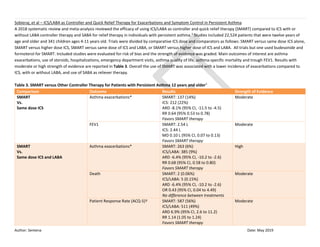
A 2018 systematic review and meta-analysis reviewed the efficacy of using ICS/LABA as controller and quick relief therapy (SMART) compared to ICS with or
without LABA controller therapy and SABA for relief therapy in individuals with persistent asthma.3
Studies included 22,524 patients that were twelve years of
age and older and 341 children ages 4-11 years old. Trials were divided by comparative ICS dose and comparators as follows: SMART versus same dose ICS alone,
SMART versus higher dose ICS, SMART versus same dose of ICS and LABA, or SMART versus higher dose of ICS and LABA. All trials but one used budesonide and
formoterol for SMART. Included studies were evaluated for risk of bias and the strength of evidence was graded. Main outcomes of interest are asthma
exacerbations, use of steroids, hospitalizations, emergency department visits, asthma quality of life, asthma-specific mortality and trough FEV1. Results with
moderate or high strength of evidence are reported in Table 3. Overall the use of SMART was associated with a lower incidence of exacerbations compared to
ICS, with or without LABA, and use of SABA as reliever therapy.
Table 3. SMART versus Other Controller Therapy for Patients with Persistent Asthma 12 years and older3
Comparison Outcome Results Strength of Evidence
SMART
Vs.
Same dose ICS
Asthma exacerbations* SMART: 137 (14%)
ICS: 212 (22%)
ARD -8.1% (95% CI, -11.5 to -4.5)
RR 0.64 (95% 0.53 to 0.78)
Favors SMART therapy
Moderate
FEV1 SMART: 2.54 L
ICS: 2.44 L
MD 0.10 L (95% CI, 0.07 to 0.13)
Favors SMART therapy
Moderate
SMART
Vs.
Same dose ICS and LABA
Asthma exacerbations* SMART: 263 (6%)
ICS/LABA: 385 (9%)
ARD -6.4% (95% CI, -10.2 to -2.6)
RR 0.68 (95% CI, 0.58 to 0.80)
Favors SMART therapy
High
Death SMART: 2 (0.06%)
ICS/LABA: 5 (0.15%)
ARD -6.4% (95% CI, -10.2 to -2.6)
OR 0.43 (95% CI, 0.04 to 4.49)
No difference between treatments
Moderate
Patient Response Rate (ACQ-5)† SMART: 587 (56%)
ICS/LABA: 511 (49%)
ARD 6.9% (95% CI, 2.6 to 11.2)
RR 1.14 (1.05 to 1.24)
Favors SMART therapy
Moderate
Author: Sentena Date: May 2019
SMART
Vs.
Higher dose ICS and LABA
Asthma exacerbations* SMART: 202 (9%)
High ICS/LABA: 394 (12%)
ARD: -2.8% (95% CI, -5.2 to -0.3)
RR: 0.77 (95% CI, 0.60 to 0.98)
Favors SMART therapy
High
Death SMART: 3 (0.13%)
High ICS/LABA: 1 (0.03%)
OR 5.19 (95% CI, 0.32 to 85.45)
No difference between treatments
Moderate
Asthma control (ACQ-5) SMART: 1.84
High ICS/LABA: 1.89
MD -0.02 (95% CI, -0.07 to 0.04)
No difference between treatments
High
FEV1 SMART: 2.69 L
High ICS/LABA: 2.66 L
MD 0.01 (-0.3 to 0.04)
No difference between treatments
Moderate
Rescue medication use (puffs/day) SMART: 0.95
High ICS/LABA: 1.01
MD: -0.04 (95% CI, -0.12 to 0.04)
High
Abbreviations: ACQ-5 = Asthma Control Questionnaire; ARD= absolute risk difference; ED = emergency department; ICS = inhaled corticosteroid; LABA = long-acting beta
agonist; MD = mean difference, OR = odds ration; RR = risk ratio; SMART = single maintenance and reliever therapy
Key: * Required use of systemic corticosteroids, hospitalizations or ED visit, † ACQ-5 responders – patient response was defined as a reduction of 0.5 points or greater
After review, 15 systematic reviews were excluded due to poor quality, wrong study design of included trials (e.g., observational), comparator (e.g., no control or
placebo-controlled), or outcome studied (e.g., non-clinical).
New Guidelines:
High Quality Guidelines:
NICE – Asthma Diagnosis, Monitoring and Chronic Asthma Management
A 2017 NICE guidance updated the management of chronic asthma in children, young people and adults.1
The pharmacological recommendations will be
presented and discussed. Patients who have asthma that is well controlled on their current regimen should not have their treatment changed despite new
guideline recommendations. In general, new guidance recommendations mirror previous statements of using SABA first line, followed by an ICS for first-line
maintenance therapy (Table 4, Table 5 and Table 6). The addition of an LTRA in children 5 and older and in adults as second-line maintenance therapy, instead of
a LABA, is one of the changes to the treatment recommendations.
Author: Sentena Date: May 2019
NICE recommends self-management and titration of ICS doses, up to quadruple the dose if maximum manufacture recommended dose is not exceeded, in adults
who use a single inhaler when their asthma symptoms escalate and control deteriorates.1
Recommendations are the same for children and young people with
the exception of limiting the days of increased dose of ICS to 7 days. Maintenance therapy should be accessed and potential decreases in therapy should be
considered after at least 3 months of asthma control. Discontinuation of ICS maintenance therapy should only be considered in patients who are symptom free
on low dose ICS monotherapy.
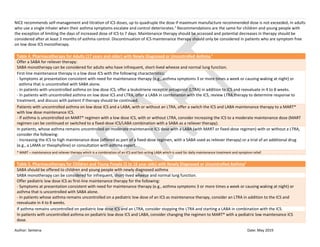
Table 4. Pharmacotherapy for Adults (17 years and older) with Newly Diagnosed or Uncontrolled Asthma 1
 Offer a SABA for reliever therapy:
 SABA monotherapy can be considered for adults who have infrequent, short-lived wheeze and normal lung function.
 First-line maintenance therapy is a low dose ICS with the following characteristics:
o - Symptoms at presentation consistent with need for maintenance therapy (e.g., asthma symptoms 3 or more times a week or causing waking at night) or
o asthma that is uncontrolled with SABA alone.
 - In patients with uncontrolled asthma on low dose ICS, offer a leukotriene receptor antagonist (LTRA) in addition to ICS and reevaluate in 4 to 8 weeks.
 - In patients with uncontrolled asthma on low dose ICS and LTRA, offer a LABA in combination with the ICS, review LTRA therapy to determine response to
treatment, and discuss with patient if therapy should be continued.
 Patients with uncontrolled asthma on low dose ICS and a LABA, with or without an LTRA, offer a switch the ICS and LABA maintenance therapy to a MART*
with low dose maintenance ICS.
 - If asthma is uncontrolled on MART* regimen with a low dose ICS, with or without LTRA, consider increasing the ICS to a moderate maintenance dose (MART
regimen can be continued or switched to a fixed-dose ICS/LABA combination with a SABA as a reliever therapy).
 In patients, whose asthma remains uncontrolled on moderate maintenance ICS dose with a LABA (with MART or fixed-dose regimen) with or without a LTRA,
consider the following:
o - Increasing the ICS to high maintenance dose (offered as part of a fixed-dose regimen, with a SABA used as reliever therapy) or a trial of an additional drug
(e.g., a LAMA or theophylline) or consultation with asthma expert.
* MART – maintenance and reliever therapy which is a combination of an ICS and fast-acting LABA which is used for daily maintenance treatment and symptom relief.
Table 5. Pharmacotherapy for Children and Young People (5 to 16 year olds) with Newly Diagnosed or Uncontrolled Asthma1
 SABA should be offered to children and young people with newly diagnosed asthma
 SABA monotherapy can be considered for infrequent, short-lived wheeze and normal lung function.
 Offer pediatric low dose ICS as first-line maintenance therapy for the following:
o - Symptoms at presentation consistent with need for maintenance therapy (e.g., asthma symptoms 3 or more times a week or causing waking at night) or
asthma that is uncontrolled with SABA alone.
- In patients whose asthma remains uncontrolled on a pediatric low dose of an ICS as maintenance therapy, consider an LTRA in addition to the ICS and
reevaluate in 4 to 8 weeks.
 If asthma remains uncontrolled on pediatric low dose ICS and an LTRA, consider stopping the LTRA and starting a LABA in combination with the ICS.
 In patients with uncontrolled asthma on pediatric low dose ICS and LABA, consider changing the regimen to MART* with a pediatric low maintenance ICS
dose.
Author: Sentena Date: May 2019
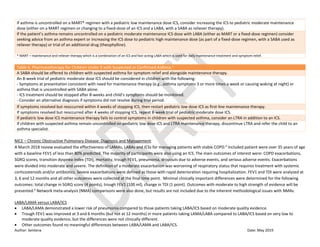
 If asthma is uncontrolled on a MART* regimen with a pediatric low maintenance dose ICS, consider increasing the ICS to pediatric moderate maintenance
dose (either on a MART regimen or changing to a fixed-dose of an ICS and a LABA, with a SABA as reliever therapy).
o If the patient’s asthma remains uncontrolled on a pediatric moderate maintenance ICS dose with LABA (either as MART or a fixed-dose regimen) consider
seeking advice from an asthma expert or increasing the ICS dose to pediatric high maintenance dose (as part of a fixed-dose regimen, with a SABA used as
reliever therapy) or trial of an additional drug (theophylline).
* MART – maintenance and reliever therapy which is a combination of an ICS and fast-acting LABA which is used for daily maintenance treatment and symptom relief.
Table 6. Pharmacotherapy for Children Under 5 with Suspected or Confirmed Asthma.1
 A SABA should be offered to children with suspected asthma for symptom relief and alongside maintenance therapy.
 An 8-week trial of pediatric moderate dose ICS should be considered in children with the following:
o - Symptoms at presentation consistent with need for maintenance therapy (e.g., asthma symptoms 3 or more times a week or causing waking at night) or
asthma that is uncontrolled with SABA alone.
 - ICS treatment should be stopped after 8-weeks and child’s symptoms should be monitored.
o - Consider an alternative diagnosis if symptoms did not resolve during trial period.
o If symptoms resolved but reoccurred within 4 weeks of stopping ICS, then restart pediatric low dose ICS as first-line maintenance therapy.
o If symptoms resolved but reoccurred after 4 weeks of stopping ICS, repeat 8-week trial of pediatric moderate dose ICS.
 If pediatric low dose ICS maintenance therapy fails to control symptoms in children with suspected asthma, consider an LTRA in addition to an ICS.
 If children with suspected asthma remain uncontrolled on pediatric low dose ICS and LTRA maintenance therapy, discontinue LTRA and refer the child to an
asthma specialist.
NICE – Chronic Obstructive Pulmonary Disease: Diagnosis and Management
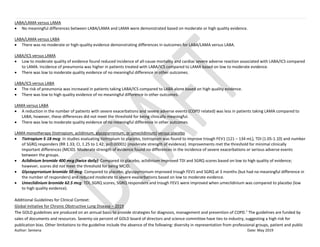
A March 2018 review evaluated the effectiveness of LAMAs, LABAs and ICSs for managing patients with stable COPD.6
Included patient were over 35 years of age
with a baseline FEV1 of less than 80% predicted. The majority of participants were also using an ICS. The main outcomes of interest were: COPD exacerbations,
SGRQ scores, transition dyspnea index (TDI), mortality, trough FEV1, pneumonia, dropouts due to adverse events, and serious adverse events. Exacerbations
were divided into moderate and severe. The definition of a moderate exacerbation was worsening of respiratory status that requires treatment with systemic
corticosteroids and/or antibiotics. Severe exacerbations were defined as those with rapid deterioration requiring hospitalization. FEV1 and TDI were analyzed at
3, 6 and 12 months and all other outcomes were collected at the final time point. Minimal clinically important differences were determined for the following
outcomes: total change in SGRQ score (4 points), trough FEV1 (100 ml), change in TDI (1 point). Outcomes with moderate to high strength of evidence will be
presented.6
Network meta-analysis (NMA) comparisons were also done, but results are not included due to the inherent methodological issues with NMAs.
LABA/LAMA versus LABA/ICS
 LABA/LAMA demonstrated a lower risk of pneumonia compared to those patients taking LABA/ICS based on moderate quality evidence.
 Trough FEV1 was improved at 3 and 6 months (but not at 12 months) in more patients taking LAMA/LABA compared to LABA/ICS based on very low to
moderate quality evidence, but the differences were not clinically different.
 Other outcomes found no meaningful differences between LABA/LAMA and LABA/ICS.
Author: Sentena Date: May 2019
LABA/LAMA versus LAMA
 No meaningful differences between LABA/LAMA and LAMA were demonstrated based on moderate or high quality evidence.
LABA/LAMA versus LABA
 There was no moderate or high-quality evidence demonstrating differences in outcomes for LABA/LAMA versus LABA.
LABA/ICS versus LAMA
 Low to moderate quality of evidence found reduced incidence of all-cause mortality and cardiac severe adverse reaction associated with LABA/ICS compared
to LAMA. Incidence of pneumonia was higher in patients treated with LABA/ICS compared to LAMA based on low to moderate evidence.
 There was low to moderate quality evidence of no meaningful difference in other outcomes.
LABA/ICS versus LABA
 The risk of pneumonia was increased in patients taking LABA/ICS compared to LABA alone based on high quality evidence.
 There was low to high quality evidence of no meaningful difference in other outcomes.
LAMA versus LABA
 A reduction in the number of patients with severe exacerbations and severe adverse events (COPD related) was less in patients taking LAMA compared to
LABA; however, these differences did not meet the threshold for being clinically meaningful.
 There was low to moderate quality evidence of no meaningful difference in other outcomes.
LAMA monotherapy (tiotropium, aclidinium, glycopyrronium, or umeclidinium) versus placebo
 Tiotropium 5-18 mcg: In studies evaluating tiotropium to placebo, tiotropium was found to improve trough FEV1 (121 – 134 mL), TDI (1.05-1.10) and number
of SGRQ responders (RR 1.33; CI, 1.25 to 1.42; p<0.00001) (moderate strength of evidence). Improvements met the threshold for minimal clinically
important differences (MCID). Moderate strength of evidence found no differences in the incidence of severe exacerbations or serious adverse events
between the groups.
 Aclidinium bromide 400 mcg (twice daily): Compared to placebo, aclidinium improved TDI and SGRQ scores based on low to high quality of evidence;
however, scores did not meet the threshold for being MCID.
 Glycopyrronium bromide 50 mcg: Compared to placebo, glycopyrronium improved trough FEV1 and SGRQ at 3 months (but had no meaningful difference in
the number of responders) and reduced moderate to severe exacerbations based on low to moderate evidence.
 Umeclidinium bromide 62.5 mcg: TDI, SGRQ scores, SGRQ responders and trough FEV1 were improved when umeclidinium was compared to placebo (low
to high quality evidence).
Additional Guidelines for Clinical Context:
Global Initiative for Chronic Obstructive Lung Disease – 2019
The GOLD guidelines are produced on an annual basis to provide strategies for diagnosis, management and prevention of COPD.7
The guidelines are funded by
sales of documents and resources. Seventy-six percent of GOLD board of directors and science committee have ties to industry, suggesting a high risk for
publication bias. Other limitations to the guideline include the absence of the following: diversity in representation from professional groups, patient and public
Author: Sentena Date: May 2019
input, external review by experts in the field, and discussion on resource implications/barriers of recommendations. Therefore, guideline recommendations for
pharmaceutical management will be provided for clinical context but not relied upon for decisions regarding the PDL.
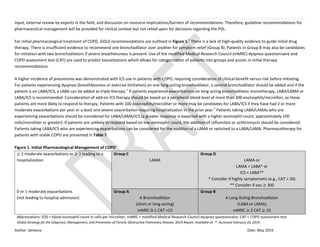
For initial pharmacological treatment of COPD, GOLD recommendations are outlined in Figure 1.7
There is a lack of high-quality evidence to guide initial drug
therapy. There is insufficient evidence to recommend one bronchodilator over another for symptom relief (Group B). Patients in Group B may also be candidates
for initiation with two bronchodilators if severe breathlessness is present. Use of the modified Medical Research Council (mMRC) dyspnea questionnaire and
COPD assessment test (CAT) are used to predict exacerbations which allows for categorization of patients into groups and assists in initial therapy
recommendations.
A higher incidence of pneumonia was demonstrated with ICS use in patients with COPD, requiring consideration of clinical benefit versus risk before initiating.
For patients experiencing dyspnea (breathlessness or exercise limitation) on one long-acting bronchodilator, a second bronchodilator should be added and if the
patient is on LABA/ICS, a LABA can be added as triple therapy.7
If patients experience exacerbations on long-acting bronchodilator monotherapy, LABA/LAMA or
LABA/ICS is recommended. Consideration of add-on ICS therapy should be based on a peripheral blood level of more than 300 eosinophils/microliter, as these
patients are more likely to respond to therapy. Patients with 100 eosinophils/microliter or more may be candidates for LABA/ICS if they have had 2 or more
moderate exacerbations per year or a least one severe exacerbation requiring hospitalization in the prior year.7
Patients taking LABA/LAMAs who are
experiencing exacerbations should be considered for LABA/LAMA/ICS (a greater response is expected with a higher eosinophil count, approximately 100
cells/microliter or greater). If patients are unlikely to respond based on low eosinophil count, the addition of roflumilast or azithromycin should be considered.
Patients taking LABA/ICS who are experiencing exacerbations can be considered for the addition of a LAMA or switched to a LABA/LAMA. Pharmacotherapy for
patients with stable COPD are presented in Table 7.
Figure 1. Initial Pharmacological Management of COPD7
≥ 2 moderate exacerbations or ≥ 1 leading to a
hospitalization
Group C
LAMA
Group D
LAMA or
LAMA + LABA* or
ICS + LABA**
* Consider if highly symptomatic (e.g., CAT > 20)
** Consider if eos ≥ 300
0 or 1 moderate exacerbations
(not leading to hospital admission)
Group A
A Bronchodilator
(short or long-acting)
Group B
A Long Acting Bronchodilator
(LABA or LAMA)
mMRC 0-1 CAT <10 mMRC ≥ 2 CAT ≥ 10
Abbreviations: EOS = blood eosinophil count in cells per microliter; mMRC = modified Medical Research Council dyspnea questionnaire; CAT = COPD assessment test
Global Strategy for the Diagnosis, Management, and Prevention of Chronic Obstructive Pulmonary Disease. 2019 Report. Available at: 14. Accessed February 20, 2019.
Author: Sentena Date: May 2019
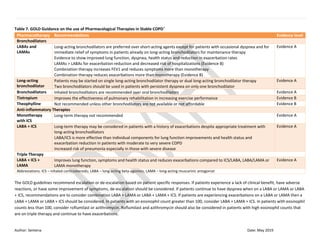
Table 7. GOLD Guidance on the use of Pharmacological Therapies in Stable COPD7
Pharmacotherapy Recommendations Evidence level
Bronchodilators
LABAs and
LAMAs
 Long-acting bronchodilators are preferred over short-acting agents except for patients with occasional dyspnea and for
immediate relief of symptoms in patients already on long-acting bronchodilators for maintenance therapy
 Evidence to show improved lung function, dyspnea, health status and reduction in exacerbation rates
 LAMAs > LABAs for exacerbation reduction and decreased risk of hospitalizations (Evidence B)
 Combination therapy increases FEV1 and reduces symptoms more than monotherapy
 Combination therapy reduces exacerbations more than monotherapy (Evidence B)
Evidence A
Long-acting
bronchodilator
 Patients may be started on single long-acting bronchodilator therapy or dual long-acting bronchodilator therapy
 Two bronchodilators should be used in patients with persistent dyspnea on only one bronchodilator
Evidence A
Bronchodilators Inhaled bronchodilators are recommended over oral bronchodilators Evidence A
Tiotropium  Improves the effectiveness of pulmonary rehabilitation in increasing exercise performance Evidence B
Theophylline  Not recommended unless other bronchodilators are not available or not affordable Evidence B
Anti-inflammatory Therapies
Monotherapy
with ICS
 Long-term therapy not recommended Evidence A
LABA + ICS  Long-term therapy may be considered in patients with a history of exacerbations despite appropriate treatment with
long-acting bronchodilators
 LABA/ICS is more effective than individual components for lung function improvements and health status and
exacerbation reduction in patients with moderate to very severe COPD
 Increased risk of pneumonia especially in those with severe disease
Evidence A
Triple Therapy
LABA + ICS +
LAMA
 Improves lung function, symptoms and health status and reduces exacerbations compared to ICS/LABA, LABA/LAMA or
LAMA monotherapy
Evidence A
Abbreviations: ICS – inhaled corticosteroids; LABA – long-acting beta-agonists, LAMA – long-acting muscarinic antagonist
The GOLD guidelines recommend escalation or de-escalation based on patient specific responses. If patients experience a lack of clinical benefit, have adverse
reactions, or have some improvement of symptoms, de-escalation should be considered. If patients continue to have dyspnea when on a LABA or LAMA or LABA
+ ICS, recommendations are to consider combination LABA + LAMA or LABA + LAMA + ICS. If patients are experiencing exacerbations on a LABA or LAMA then a
LABA + LAMA or LABA + ICS should be considered. In patients with an eosinophil count greater than 100, consider LABA + LAMA + ICS. In patients with eosinophil
counts less than 100, consider roflumilast or azithromycin. Roflumilast and azithromycin should also be considered in patients with high eosinophil counts that
are on triple therapy and continue to have exacerbations.
Author: Sentena Date: May 2019
New Formulations or Indications:
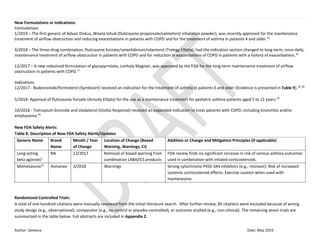
Formulations
1/2019 – The first generic of Advair Diskus, Wixela Inhub (fluticasone propionate/salmeterol inhalation powder), was recently approved for the maintenance
treatment of airflow obstruction and reducing exacerbations in patients with COPD and for the treatment of asthma in patients 4 and older.15
4/2018 – The three-drug combination, fluticasone furoate/umeclidinium/vilanterol (Trelegy Ellipta), had the indication section changed to long-term, once-daily,
maintenance treatment of airflow obstruction in patients with COPD and for reduction in exacerbations of COPD in patients with a history of exacerbations.16
12/2017 – A new nebulized formulation of glycopyrrolate, Lonhala Magnair, was approved by the FDA for the long-term maintenance treatment of airflow
obstruction in patients with COPD.17
Indications
12/2017 - Budesnonide/formoterol (Symbicort) received an indication for the treatment of asthma in patients 6 and older (Evidence is presented in Table 9).18, 28
5/2018- Approval of fluticasone furoate (Arnuity Ellipta) for the use as a maintenance treatment for pediatric asthma patients aged 5 to 11 years.19
10/2018 - Tiotropium bromide and olodaterol (Stiolto Respimat) received an expanded indication to treat patients with COPD, including bronchitis and/or
emphysema.20
New FDA Safety Alerts:
Table 8. Description of New FDA Safety Alerts/Updates
Generic Name Brand
Name
Month / Year
of Change
Location of Change (Boxed
Warning, Warnings, CI)
Addition or Change and Mitigation Principles (if applicable)
Long-acting
beta agonists5
NA 12/2017 Removal of boxed warning from
combination LABA/ICS products
FDA review finds no significant increase in risk of serious asthma outcomes
used in combination with inhaled corticosteroids.
Mometasone21
Asmanex 3/2018 Warnings Strong cytochrome P450 3A4 inhibitors (e.g., ritonavir): Risk of increased
systemic corticosteroid effects. Exercise caution when used with
mometasone.
Randomized Controlled Trials:
A total of one hundred citations were manually reviewed from the initial literature search. After further review, 85 citations were excluded because of wrong
study design (e.g., observational), comparator (e.g., no control or placebo-controlled), or outcome studied (e.g., non-clinical). The remaining seven trials are
summarized in the table below. Full abstracts are included in Appendix 2.
Author: Sentena Date: May 2019
Table 9. Description of Randomized Comparative Clinical Trials.
Study Comparison Population Primary Outcome Results
Busse, et al22
MC, PG, DB,
RCT, NI
Safety analysis of LABA/ICS vs.
ICS
26 weeks
Adolescents (10%) and
adults (90%) with
persistent asthma
n=36,010
Composite of
asthma-related
intubation or
death
LABA/ICS: 119 (0.66%)
ICS: 108 (0.60%)
RR 1.09 (95% CI, 0.83 to 1.43; P=0.55)
No difference in serious asthma-related events
Kerwin, et
al23
(GOLDEN 3)
MC, DD, DB,
RCT, phase 3
Glycopyrrolate 25 mcg nebulized
solution twice daily and
Glycopyrrolate 50 mcg nebulized
solution twice daily vs.
Placebo
12 weeks
Adult patients with
moderate to very
severe COPD
N = 653
Change from
baseline in trough
FEV1
Glycopyrrolate 25 mcg: 0.105 L
Glycopyrrolate 50 mcg: 0.126 L
Placebo: - 0.022 L
Favors glycopyrrolate
Kerwin, et
al23
(GOLDEN 4)
MC, DD, DB,
RCT, phase 3
Glycopyrrolate 25 mcg nebulized
solution twice daily and
Glycopyrrolate 50 mcg nebulized
solution twice daily vs.
Placebo
12 weeks
Adult patients with
moderate to very
severe COPD
N = 641
Change from
baseline in trough
FEV1
Glycopyrrolate 25 mcg: 0.084 L
Glycopyrrolate 50 mcg: 0.082 L
Placebo: 0.007 L
Favors glycopyrrolate
Lipson, et
al24
(IMPACT)
MC, PG, DB,
RCT, phase 3
Fluticasone furoate 100
mcg/umeclidinium 62.5
mcg/vilanterol 25 mcg (FUV) vs.
Fluticasone furoate 100
mcg/vilanterol 25 mcg (FV) vs.
Umeclidinium 62.5 mcg/vilanterol
25 mcg (UV)
52 weeks
Adult patients with
moderate (47%) to
severe COPD
N= 10,355
Annual rate of
moderate or
severe COPD
exacerbations
during treatment
FUV: 0.91/year
FV: 1.07/year
UV: 1.21/year
FUV vs. FV
RR 0.85 (95% CI, 0.80 to 0.90); P<0.001
Favors triple therapy over FV
FUV vs. UV
RR 0.75 (95% CI, 0.70 to 0.81); P<0.001
Favors triple therapy over UV
Lipson, et
al25
(FULFIL)
Fluticasone furoate 100
mcg/umeclidinium 62.5
mcg/vilanterol 25 mcg once daily
(FUV)
Vs.
Adults 40 years and
older with COPD
N= 1,810
Coprimary
endpoints change
in baseline trough
FEV1 and St.
George’s
Respiratory
Trough FEV1
FUV: 142 ml
BF: -29 ml
MD 171 ml (95% CI, 148 to 194)
P<0.001
Triple therapy is superior to combination therapy
Author: Sentena Date: May 2019
MC, DD, DB,
RCT, phase 3
Budesonide 400 mcg/ formoterol
12 mcg twice daily (BF)
24 weeks
Questionnaire
total score at
week 24
SGRQ
FUV: -6.6 units
BF: -4.4 units
MD −2.2 (95% CI, −3.5 to −1.0)
P<0.001
Triple therapy is superior to combination therapy
O’Byrne, et
al26
MC, PG, DB,
RCT, phase 3
Terbutaline 6 mcg as needed +
placebo twice daily (T) vs.
Budesonide 200 mcg/formoterol 6
mcg as needed + placebo twice
daily (BF) vs.
Budesonide 200 mcg twice daily +
terbutaline as needed (BP)
52 weeks
Patients 12 years and
older with mild asthma
N=3,849
Number of weeks
of well-controlled
asthma
T: 31.1%
BF: 34.4%
BP: 44.4%
BF vs. T
OR 1.14 (95% CI, 1.00 to 1.3)
P = 0.046
As needed budesonide/formoterol superior to terbutaline as
needed
BF vs. BP
OR 0.64 (95% CI, 0.57 to 0.73)
As needed budesonide/formoterol inferior to maintenance
budesonide
Pearlman, et
al27
MC, PG, DB,
RCT, phase 3
Budesonide/formoterol 80/4.5
mcg twice daily vs.
Budesonide/formoterol 80/2.25
mcg twice daily vs.
Budesonide 80 mcg twice daily
12 weeks
Patients 6 to up to 12
years of age with
asthma and previously
receiving a medium-
dose ICS or ICS/LABA
Change in FEV1
from baseline to 1
hour after dosing
Budesonide/formoterol 80/4.5 mcg: 0.28 L
Budesonide/formoterol 80/2.25 mcg: 0.24 L
Budesonide 80 mcg: 0.17 L
Budesonide/formoterol 80/4.5 mcg vs. budesonide 80 mcg:
TD 0.12 L (95% CI, 0.03 to 0.20); P = 0.006
Budesonide/formoterol 80/4.5 mcg was statistically and
moderately clinically superior to budesonide
Budesonide/formoterol 80/2.25 mcg vs. budesonide 80 mcg:
TD 0.08 (95% CI, 0.00 to 0.16); P=0.063
Budesonide/formoterol 80/2.25 mcg twice daily was not
clinically or statistically more effective than budesonide alone
Abbreviations: DB = double blind; DD = double dummy; CI = confidence interval; COPD = chronic obstructive pulmonary disease; FEV= forced expiratory volume; MC = multi-center;
MD = mean difference; OR = odds ratio; PG = parallel group; RCT = randomized control trial; RR = rate ratio; SGRQ = St. George’s Respiratory Questionnaire; TD = treatment
difference
Author: Sentena Date: May 2019
NEW DRUG EVALUATION: Revefenacin
See Appendix 4 for Highlights of Prescribing Information from the manufacturer, including Boxed Warnings and Risk Evaluation Mitigation Strategies (if
applicable), indications, dosage and administration, formulations, contraindications, warnings and precautions, adverse reactions, drug interactions and use in
specific populations.
Clinical Efficacy:
There are no published studies available to evaluate the safety and efficacy of revefenacin, therefore, risk of bias could not be accessed. Manufacturer dossier
and prescribing material provided evidence for the efficacy summary. Two, 12-week clinical trials were used for the FDA- approval of revefenacin nebulization
solution for the maintenance treatment of COPD.8
Revefenacin was given as a 175 microgram once-daily inhalation solution and compared to placebo in a total
of 812 patients. Revefenacin nebulized solution is delivered via a standard jet nebulizer. Both trials were randomized, double-blind, placebo-controlled, parallel-
group trials in adult patients 40 year and older (mean age of 64 years) with a history of smoking greater than or equal to 10-pack years. Patients were diagnosed
with moderate to very severe COPD, had an FEV1/FVC ratio of 0.7 or less, and 48% were current smokers. Concomitant therapy, if on a stable dose 30 days prior
to screening, was allowed and 37% of patients were taking LABA or ICS/LABA. The primary endpoint was change from baseline trough FEV1 at day 85 (mITT
population) and secondary endpoint of number of SGRQ responders (an improvement of 4 or more). Revefenacin increased FEV1 more than placebo in both
studies with a LS mean difference of 146 mL and 147 mL, in trials 1 and 2, respectively (Table 10).8,28
Changes were considered statistically and clinically
significant. FDA review suggests a greater clinical benefit in patients with very severe COPD. Changes in SGRQ scores were higher with revefenacin but
considered statistically significant in only the first study, OR 2.11 (95% CI, 1.14 to 3.92).
Table 10. Results from Trials of Revefenacin8,28,29
Study Comparators Outcome Result
Placebo-
controlled Study
Revefenacin 88mcg daily and Revefenacin 175 mcg daily
Vs.
Placebo
Trough FEV1
at day 85 Placebo adjusted change:
Revefenacin 88 mcg: 79 mL
Revefenacin 175 mcg: 146 mL
Placebo-
controlled study
Revefenacin 88mcg daily and Revefenacin 175 mcg daily
Vs.
Placebo
Trough FEV1
at day 85 Placebo adjusted change:
Revefenacin 88 mcg: 155 mL
Revefenacin 175 mcg: 142 mL
Abbreviations: FEV1
= forced expiratory flow volume; mcg = microgram; mL = milliliter
Limitations to the data include lack of published trials to be evaluated for bias; however, data from the FDA summary suggests low risk of selection and
performance bias.29
The evidence that is available is from short term, 12-week, trials in patients with previous use or current smoking history. Lack of active
treatment comparison limits ability to determine role of revefenacin in the management of COPD. Improvements in FEV1 border on clinical significance, which is
a trough FEV1 change of 100-140 mL. There is insufficient evidence for use with other LAMAs.
Author: Sentena Date: May 2019
Clinical Safety:
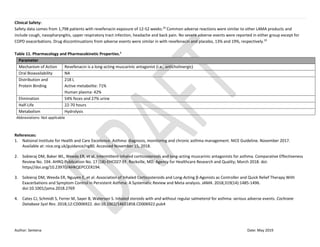
Safety data comes from 1,798 patients with revefenacin exposure of 12-52 weeks.29
Common adverse reactions were similar to other LAMA products and
include cough, nasopharyngitis, upper respiratory tract infection, headache and back pain. No severe adverse events were reported in either group except for
COPD exacerbations. Drug discontinuations from adverse events were similar in with revefenacin and placebo, 13% and 19%, respectively.29
Table 11. Pharmacology and Pharmacokinetic Properties.8
Parameter
Mechanism of Action Revefenacin is a long-acting muscarinic antagonist (i.e., anticholinergic)
Oral Bioavailability NA
Distribution and
Protein Binding
218 L
Active metabolite: 71%
Human plasma: 42%
Elimination 54% feces and 27% urine
Half-Life 22-70 hours
Metabolism Hydrolysis
Abbreviations: Not applicable
References:
1. National Institute for Health and Care Excellence. Asthma: diagnosis, monitoring and chronic asthma management. NICE Guideline. November 2017.
Available at: nice.org.uk/guidance/ng80. Accessed November 15, 2018.
2. Sobieraj DM, Baker WL, Weeda ER, et al. Intermittent inhaled corticosteroids and long-acting muscarinic antagonists for asthma. Comparative Effectiveness
Review No. 194. AHRQ Publication No. 17 (18)-EHC027-EF. Rockville, MD: Agency for Healthcare Research and Quality; March 2018. doi:
https//doi.org/10.23970/AHRQEPCCER194.
3. Sobieraj DM, Weeda ER, Nguyen E, et al. Association of Inhaled Corticosteroids and Long-Acting β-Agonists as Controller and Quick Relief Therapy With
Exacerbations and Symptom Control in Persistent Asthma: A Systematic Review and Meta-analysis. JAMA. 2018;319(14):1485-1496.
doi:10.1001/jama.2018.2769
4. Cates CJ, Schmidt S, Ferrer M, Sayer B, Waterson S. Inhaled steroids with and without regular salmeterol for asthma: serious adverse events. Cochrane
Database Syst Rev. 2018;12:CD006922. doi:10.1002/14651858.CD006922.pub4
Author: Sentena Date: May 2019
5. Food and Drug Administration. FDA review finds no significant increase in risk of serious asthma outcomes with long-acting beta agonists (LABAs) used in
combination with inhaled corticosteroids (ICS). FDA Drug Safety Communication. December 2017. Available at:
https://www.fda.gov/Drugs/DrugSafety/ucm589587.htm Accessed on November 27, 2018.
6. National Institute for Health and Care Excellence. Chronic obstructive pulmonary disease (acute exacerbation): antimicrobial prescribing. December 5, 2018.
Available at: nice.org.uk/guidance/ng114. Accessed December 13, 2018.
7. GOLD 2017 Global Strategy for the Diagnosis, Management and Prevention of COPD. Glob Initiat Chronic Obstr Lung Dis - GOLD. http://goldcopd.org/gold-
2017-global-strategy-diagnosis-management-prevention-copd/. Accessed September 15, 2017.
8. Yupelri Prescribing Information. Mylan Specialty L.P. Morgantown, WV. 2018.
9. The Oregon Asthma Program 2013. The Burden of Asthma in Oregon; 2013. Available at:
http://public.health.oregon.gov/DiseasesConditions/ChronicDisease/Asthma/Documents/burden/OR_Asthma_2013.pdf. Accessed February 15, 2019.
10. US Department of Health and Human Services, National Heart, Lung and Blood Institute. National Asthma Education and Prevention Program. Expert Panel
Report 3: Guidelines for the Diagnosis and Management of Asthma; 2007. US Department of Health and Human Services, National Heart, Lung and Blood
Institute. http://www.nhlbi.nih.gov/guidelines/asthma/asthgdln.pdf. Published 2007. Accessed May 23, 2012.
11. Cazzola M, Macknee W, Martinez F, et al. Outcomes for COPD pharmacological trials: from lung function to biomarkers. Eur Respir J. 31:416-469.
12. Center for Disease Control. Chronic obstructive pulmonary disease. COPD among adults in Oregon. Available
at:https://www.cdc.gov/copd/maps/docs/pdf/OR_COPDFactSheet.pdf. Accessed March 10, 2019.
13. Han M, Dransfield M, Martinez F. Chronic obstructive pulmonary disease: definition, clinical manifestations, diagnosis, and staging. Uptodate. May 14, 2018.
Accessed February 15, 2019.
14. Ni H, Htet A, Moe S. Umeclidinium bromide versus placebo for people with chronic obstructive pulmonary disease (COPD). Cochrane Database Syst Rev.
2017;6:CD011897. doi:10.1002/14651858.CD011897.pub2
15. Wixela Inhub Prescribing Information. Mylan Pharmaceuticals Inc. Morgantown, WV. 2019.
16. Trelegy Ellipta Prescribing Information. GlaxoSmithKline Research. Triangle Park, NC; 2017.
17. Lonhala Magnair Prescribing Information. Sunovion Pharmaceuticals Inc. Marlborough, MA 2017.
18. Symbicort Prescribing Information. AstraZeneca Pharmaceuticals LP, Wilmington, DE; 2017.
19. Arnuity Ellipta Prescribing Information. GlaxoSmithKline. Research Park, NC. 2018.
Author: Sentena Date: May 2019
20. Stiolto Respimat Prescribing Information. Boehringer Ingelheim. Reidgefield, CT. 2018.
21. Asmanex Prescribing Information. Merck and CO., Inc. Whitehouse Station, NJ. 2018.
22. Busse WW, Bateman ED, Caplan AL, et al. Combined Analysis of Asthma Safety Trials of Long-Acting β2-Agonists. N Engl J Med. 2018;378(26):2497-2505.
doi:10.1056/NEJMoa1716868
23. Kerwin EM, Tosiello R, Price B, Sanjar S, Goodin T. Effect of background long-acting beta2-agonist therapy on the efficacy and safety of a novel, nebulized
glycopyrrolate in subjects with moderate-to-very-severe COPD. Int J Chron Obstruct Pulmon Dis. 2018;13:2917-2929. doi:10.2147/COPD.S172408
24. Lipson DA, Barnhart F, Brealey N, et al. Once-Daily Single-Inhaler Triple versus Dual Therapy in Patients with COPD. N Engl J Med. 2018;378(18):1671-1680.
doi:10.1056/NEJMoa1713901
25. Lipson DA, Barnacle H, Birk R, et al. FULFIL Trial: Once-Daily Triple Therapy for Patients with Chronic Obstructive Pulmonary Disease. Am J Respir Crit Care
Med. 2017;196(4):438-446. doi:10.1164/rccm.201703-0449OC
26. O’Byrne PM, FitzGerald JM, Bateman ED, et al. Inhaled Combined Budesonide-Formoterol as Needed in Mild Asthma. N Engl J Med. 2018;378(20):1865-
1876. doi:10.1056/NEJMoa1715274
27. Pearlman DS, Eckerwall G, McLaren J, et al. Efficacy and safety of budesonide/formoterol pMDI vs budesonide pMDI in asthmatic children (6–<12 years). Ann
Allergy Asthma Immunol. 2017;118(4):489-499.e1. doi:10.1016/j.anai.2017.01.020
28. Revefenacin Dossier: an investigational product. Mylan Pharmaceuticals. October 2018.
29. Food and Drug Administration. Revefenacin Medical Summary. Center for Drug Evaluation and Research. Available at:
https://www.accessdata.fda.gov/drugsatfda_docs/nda/2018/210598Orig1s000MedR.pdf. Accessed March 11, 2019.
Author: Sentena Date: May 2019
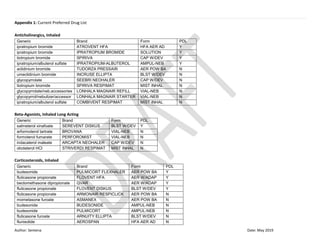
Appendix 1: Current Preferred Drug List
Anticholinergics, Inhaled
Generic Brand Form PDL
ipratropium bromide ATROVENT HFA HFA AER AD Y
ipratropium bromide IPRATROPIUM BROMIDE SOLUTION Y
tiotropium bromide SPIRIVA CAP W/DEV Y
ipratropium/albuterol sulfate IPRATROPIUM-ALBUTEROL AMPUL-NEB Y
aclidinium bromide TUDORZA PRESSAIR AER POW BA N
umeclidinium bromide INCRUSE ELLIPTA BLST W/DEV N
glycopyrrolate SEEBRI NEOHALER CAP W/DEV N
tiotropium bromide SPIRIVA RESPIMAT MIST INHAL N
glycopyrrolate/neb.accessories LONHALA MAGNAIR REFILL VIAL-NEB N
glycopyrrol/nebulizer/accessor LONHALA MAGNAIR STARTER VIAL-NEB N
ipratropium/albuterol sulfate COMBIVENT RESPIMAT MIST INHAL N
Beta-Agonists, Inhaled Long Acting
Generic Brand Form PDL
salmeterol xinafoate SEREVENT DISKUS BLST W/DEV Y
arformoterol tartrate BROVANA VIAL-NEB N
formoterol fumarate PERFOROMIST VIAL-NEB N
indacaterol maleate ARCAPTA NEOHALER CAP W/DEV N
olodaterol HCl STRIVERDI RESPIMAT MIST INHAL N
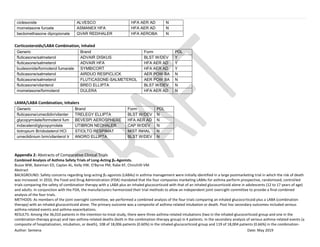
Corticosteroids, Inhaled
Generic Brand Form PDL
budesonide PULMICORT FLEXHALER AER POW BA Y
fluticasone propionate FLOVENT HFA AER W/ADAP Y
beclomethasone dipropionate QVAR AER W/ADAP Y
fluticasone propionate FLOVENT DISKUS BLST W/DEV Y
fluticasone propionate ARMONAIR RESPICLICK AER POW BA N
mometasone furoate ASMANEX AER POW BA N
budesonide BUDESONIDE AMPUL-NEB N
budesonide PULMICORT AMPUL-NEB N
fluticasone furoate ARNUITY ELLIPTA BLST W/DEV N
flunisolide AEROSPAN HFA AER AD N
Author: Sentena Date: May 2019
ciclesonide ALVESCO HFA AER AD N
mometasone furoate ASMANEX HFA HFA AER AD N
beclomethasone dipropionate QVAR REDIHALER HFA AEROBA N
Corticosteroids/LABA Combination, Inhaled
Generic Brand Form PDL
fluticasone/salmeterol ADVAIR DISKUS BLST W/DEV Y
fluticasone/salmeterol ADVAIR HFA HFA AER AD Y
budesonide/formoterol fumarate SYMBICORT HFA AER AD Y
fluticasone/salmeterol AIRDUO RESPICLICK AER POW BA N
fluticasone/salmeterol FLUTICASONE-SALMETEROL AER POW BA N
fluticasone/vilanterol BREO ELLIPTA BLST W/DEV N
mometasone/formoterol DULERA HFA AER AD N
LAMA/LABA Combination, Inhalers
Generic Brand Form PDL
fluticasone/umeclidin/vilanter TRELEGY ELLIPTA BLST W/DEV N
glycopyrrolate/formoterol fum BEVESPI AEROSPHERE HFA AER AD N
indacaterol/glycopyrrolate UTIBRON NEOHALER CAP W/DEV N
tiotropium Br/olodaterol HCl STIOLTO RESPIMAT MIST INHAL N
umeclidinium brm/vilanterol tr ANORO ELLIPTA BLST W/DEV N
Appendix 2: Abstracts of Comparative Clinical Trials
Combined Analysis of Asthma Safety Trials of Long-Acting β2-Agonists.
Busse WW, Bateman ED, Caplan AL, Kelly HW, O'Byrne PM, Rabe KF, Chinchilli VM.
Abstract
BACKGROUND: Safety concerns regarding long-acting β2-agonists (LABAs) in asthma management were initially identified in a large postmarketing trial in which the risk of death
was increased. In 2010, the Food and Drug Administration (FDA) mandated that the four companies marketing LABAs for asthma perform prospective, randomized, controlled
trials comparing the safety of combination therapy with a LABA plus an inhaled glucocorticoid with that of an inhaled glucocorticoid alone in adolescents (12 to 17 years of age)
and adults. In conjunction with the FDA, the manufacturers harmonized their trial methods to allow an independent joint oversight committee to provide a final combined
analysis of the four trials.
METHODS: As members of the joint oversight committee, we performed a combined analysis of the four trials comparing an inhaled glucocorticoid plus a LABA (combination
therapy) with an inhaled glucocorticoid alone. The primary outcome was a composite of asthma-related intubation or death. Post hoc secondary outcomes included serious
asthma-related events and asthma exacerbations.
RESULTS: Among the 36,010 patients in the intention-to-treat study, there were three asthma-related intubations (two in the inhaled-glucocorticoid group and one in the
combination-therapy group) and two asthma-related deaths (both in the combination-therapy group) in 4 patients. In the secondary analysis of serious asthma-related events (a
composite of hospitalization, intubation, or death), 108 of 18,006 patients (0.60%) in the inhaled-glucocorticoid group and 119 of 18,004 patients (0.66%) in the combination-
Author: Sentena Date: May 2019
therapy group had at least one composite event (relative risk in the combination-therapy group, 1.09; 95% confidence interval [CI], 0.83 to 1.43; P=0.55); 2100 patients in the
inhaled-glucocorticoid group (11.7%) and 1768 in the combination-therapy group (9.8%) had at least one asthma exacerbation (relative risk, 0.83; 95% CI, 0.78 to 0.89; P<0.001).
CONCLUSIONS:
Combination therapy with a LABA plus an inhaled glucocorticoid did not result in a significantly higher risk of serious asthma-related events than treatment with an inhaled
glucocorticoid alone but resulted in significantly fewer asthma exacerbations.
Effect of background long-acting beta2-agonist therapy on the efficacy and safety of a novel, nebulized glycopyrrolate in subjects with moderate-to-very-severe COPD.
Kerwin EM, Tosiello R, Price B, Sanjar S, Goodin T.
Abstract
BACKGROUND: Phase III studies demonstrated efficacy and safety of nebulized glycopyrrolate inhalation solution (GLY) in subjects with COPD. Secondary analyses were
performed to examine the effect of background long-acting beta2-agonist (LABA) use on the efficacy and safety of nebulized GLY.
METHODS :In two 12-week placebo-controlled studies (GOLDEN 3 and GOLDEN 4) and one 48-week, open-label active-controlled study (GOLDEN 5), a total of 2,379 subjects
were stratified by background LABA use (LABA-yes: n=861; LABA-no: n=1,518) and randomized to placebo vs GLY 25 or 50 µg twice daily, or GLY 50 µg twice daily vs tiotropium
(TIO) 18 µg once daily. Lung function, patient-reported outcomes, exacerbations, and safety were assessed.
RESULTS: Compared with placebo, pooled data from the 12-week studies showed significant improvements from baseline with GLY 25 and 50 µg across LABA subgroups in
trough FEV1 (LABA-yes: 0.101 and 0.110 L; LABA-no: 0.092 and 0.101 L, respectively; P<0.001) and St George's Respiratory Questionnaire total score (SGRQ; LABA-yes: -2.957 and
-3.888; LABA-no: -3.301 and -2.073, respectively; P<0.05). Incidence of treatment-emergent adverse events (TEAEs) was similar in LABA subgroups, and lower in GLY 25 µg vs
placebo. In the 48-week active-controlled study, GLY and TIO both showed improvement from baseline across LABA subgroups in FEV1 (LABA-yes: 0.106 and 0.092 L; LABA-no:
0.096 and 0.096 L, respectively) and in SGRQ total score (LABA-yes: -5.190 and -3.094; LABA-no: -4.368 and -4.821, respectively). Incidence of TEAEs was similar between GLY
and TIO, and across LABA subgroups. Exacerbation rates were similar across treatments and LABA subgroups, and cardiovascular events of special interest were more frequent
in the LABA-no subgroup. Nebulized GLY, combined with LABA, did not generate any additional safety signals.
CONCLUSION: Nebulized GLY demonstrated efficacy and was well tolerated up to 48 weeks in subjects with COPD with/without background LABA.
Once-Daily Single-Inhaler Triple versus Dual Therapy in Patients with COPD.
Lipson DA, Barnhart F, Brealey N, Brooks J, Criner GJ, Day NC, Dransfield MT, Halpin DMG, Han MK, Jones CE, Kilbride S, Lange P, Lomas DA, Martinez FJ, Singh D, Tabberer
M, Wise RA, Pascoe SJ; IMPACT Investigators.
Abstract
BACKGROUND: The benefits of triple therapy for chronic obstructive pulmonary disease (COPD) with an inhaled glucocorticoid, a long-acting muscarinic antagonist (LAMA), and
a long-acting β2-agonist (LABA), as compared with dual therapy (either inhaled glucocorticoid-LABA or LAMA-LABA), are uncertain.
METHODS: In this randomized trial involving 10,355 patients with COPD, we compared 52 weeks of a once-daily combination of fluticasone furoate (an inhaled glucocorticoid) at
a dose of 100 μg, umeclidinium (a LAMA) at a dose of 62.5 μg, and vilanterol (a LABA) at a dose of 25 μg (triple therapy) with fluticasone furoate-vilanterol (at doses of 100 μg
and 25 μg, respectively) and umeclidinium-vilanterol (at doses of 62.5 μg and 25 μg, respectively). Each regimen was administered in a single Ellipta inhaler. The primary
outcome was the annual rate of moderate or severe COPD exacerbations during treatment.
RESULTS: The rate of moderate or severe exacerbations in the triple-therapy group was 0.91 per year, as compared with 1.07 per year in the fluticasone furoate-vilanterol group
(rate ratio with triple therapy, 0.85; 95% confidence interval [CI], 0.80 to 0.90; 15% difference; P<0.001) and 1.21 per year in the umeclidinium-vilanterol group (rate ratio with
triple therapy, 0.75; 95% CI, 0.70 to 0.81; 25% difference; P<0.001). The annual rate of severe exacerbations resulting in hospitalization in the triple-therapy group was 0.13, as
compared with 0.19 in the umeclidinium-vilanterol group (rate ratio, 0.66; 95% CI, 0.56 to 0.78; 34% difference; P<0.001). There was a higher incidence of pneumonia in the
inhaled-glucocorticoid groups than in the umeclidinium-vilanterol group, and the risk of clinician-diagnosed pneumonia was significantly higher with triple therapy than with
umeclidinium-vilanterol, as assessed in a time-to-first-event analysis (hazard ratio, 1.53; 95% CI, 1.22 to 1.92; P<0.001).
CONCLUSIONS: Triple therapy with fluticasone furoate, umeclidinium, and vilanterol resulted in a lower rate of moderate or severe COPD exacerbations than fluticasone furoate-
vilanterol or umeclidinium-vilanterol in this population. Triple therapy also resulted in a lower rate of hospitalization due to COPD than umeclidinium-vilanterol. (Funded by
GlaxoSmithKline; IMPACT ClinicalTrials.gov number, NCT02164513 .).
Author: Sentena Date: May 2019
FULFIL Trial: Once-Daily Triple Therapy for Patients with Chronic Obstructive Pulmonary Disease.
Lipson DA, Barnacle H, Birk R, Brealey N, Locantore N, Lomas DA, Ludwig-Sengpiel A, Mohindra R, Tabberer M, Zhu CQ, Pascoe SJ.
Abstract
RATIONALE: Randomized data comparing triple therapy with dual inhaled corticosteroid (ICS)/long-acting β2-agonist (LABA) therapy in patients with chronic obstructive
pulmonary disease (COPD) are limited.
OBJECTIVES: We compared the effects of once-daily triple therapy on lung function and health-related quality of life with twice-daily ICS/LABA therapy in patients with COPD.
METHODS: The FULFIL (Lung Function and Quality of Life Assessment in Chronic Obstructive Pulmonary Disease with Closed Triple Therapy) trial was a randomized, double-blind,
double-dummy study comparing 24 weeks of once-daily triple therapy (fluticasone furoate/umeclidinium/vilanterol 100 μg/62.5 μg/25 μg; ELLIPTA inhaler) with twice-daily
ICS/LABA therapy (budesonide/formoterol 400 μg/12 μg; Turbuhaler). A patient subgroup remained on blinded treatment for up to 52 weeks. Co-primary endpoints were
change from baseline in trough FEV1 and in St. George's Respiratory Questionnaire (SGRQ) total score at Week 24.
MEASUREMENTS AND MAIN RESULTS: In the intent-to-treat population (n = 1,810) at Week 24 for triple therapy (n = 911) and ICS/LABA therapy (n = 899), mean changes from
baseline in FEV1 were 142 ml (95% confidence interval [CI], 126 to 158) and -29 ml (95% CI, -46 to -13), respectively, and mean changes from baseline in SGRQ scores were -6.6
units (95% CI, -7.4 to -5.7) and -4.3 units (95% CI, -5.2 to -3.4), respectively. For both endpoints, the between-group differences were statistically significant (P < 0.001). There
was a statistically significant reduction in moderate/severe exacerbation rate with triple therapy versus dual ICS/LABA therapy (35% reduction; 95% CI, 14-51; P = 0.002). The
safety profile of triple therapy reflected the known profiles of the components.
CONCLUSIONS: These results support the benefits of single-inhaler triple therapy compared with ICS/LABA therapy in patients with advanced COPD. Clinical trial registered with
www.clinicaltrials.gov (NCT02345161).
Inhaled Combined Budesonide-Formoterol as Needed in Mild Asthma.
O'Byrne PM, FitzGerald JM, Bateman ED, Barnes PJ, Zhong N, Keen C, Jorup C, Lamarca R, Ivanov S, Reddel HK.
BACKGROUND: In patients with mild asthma, as-needed use of an inhaled glucocorticoid plus a fast-acting β2-agonist may be an alternative to conventional treatment strategies.
METHODS: We conducted a 52-week, double-blind trial involving patients 12 years of age or older with mild asthma. Patients were randomly assigned to one of three regimens:
twice-daily placebo plus terbutaline (0.5 mg) used as needed (terbutaline group), twice-daily placebo plus budesonide-formoterol (200 μg of budesonide and 6 μg of formoterol)
used as needed (budesonide-formoterol group), or twice-daily budesonide (200 μg) plus terbutaline used as needed (budesonide maintenance group). The primary objective
was to investigate the superiority of as-needed budesonide-formoterol to as-needed terbutaline with regard to electronically recorded weeks with well-controlled asthma.
RESULTS: A total of 3849 patients underwent randomization, and 3836 (1277 in the terbutaline group, 1277 in the budesonide-formoterol group, and 1282 in the budesonide
maintenance group) were included in the full analysis and safety data sets. With respect to the mean percentage of weeks with well-controlled asthma per patient, budesonide-
formoterol was superior to terbutaline (34.4% vs. 31.1% of weeks; odds ratio, 1.14; 95% confidence interval [CI], 1.00 to 1.30; P=0.046) but inferior to budesonide maintenance
therapy (34.4% and 44.4%, respectively; odds ratio, 0.64; 95% CI, 0.57 to 0.73). The annual rate of severe exacerbations was 0.20 with terbutaline, 0.07 with budesonide-
formoterol, and 0.09 with budesonide maintenance therapy; the rate ratio was 0.36 (95% CI, 0.27 to 0.49) for budesonide-formoterol versus terbutaline and 0.83 (95% CI, 0.59
to 1.16) for budesonide-formoterol versus budesonide maintenance therapy. The rate of adherence in the budesonide maintenance group was 78.9%. The median metered daily
dose of inhaled glucocorticoid in the budesonide-formoterol group (57 μg) was 17% of the dose in the budesonide maintenance group (340 μg).
CONCLUSIONS: In patients with mild asthma, as-needed budesonide-formoterol provided superior asthma-symptom control to as-needed terbutaline, assessed according to
electronically recorded weeks with well-controlled asthma, but was inferior to budesonide maintenance therapy. Exacerbation rates with the two budesonide-containing
regimens were similar and were lower than the rate with terbutaline. Budesonide-formoterol used as needed resulted in substantially lower glucocorticoid exposure than
budesonide maintenance therapy. (Funded by AstraZeneca; SYGMA 1 ClinicalTrials.gov number, NCT02149199 .).
Efficacy and safety of budesonide/formoterol pMDI vs budesonide pMDI in asthmatic children (6-<12 years).
Pearlman DS, Eckerwall G, McLaren J, Lamarca R, Puu M, Gilbert I, Jorup C, Sandin K, Lanz MJ
Author: Sentena Date: May 2019
Abstract
BACKGROUND: The efficacy and safety of budesonide/formoterol pressurized metered-dose inhaler (pMDI) have been demonstrated in patients with asthma at least 12 years
old.
OBJECTIVE: To evaluate the efficacy of 2 formoterol doses added to budesonide as fixed combinations vs budesonidealone in children 6 to younger than 12 years with asthma.
METHODS: This randomized, double-blinded, parallel-group, multicenter study (NCT02091986; CHASE 3) included children 6 to younger than 12 years with asthma previously
receiving a medium-dose inhaled corticosteroid (ICS) or an ICS plus a long-acting β2-agonist. Children symptomatic during a 7-28-day run-in on low-dose ICS, 1 inhalation
of budesonide dry powder inhaler 90 μg twice daily (BID), were randomized to receive 2 inhalations of budesonide/formoterol pMDI 80/4.5 μg (160/9 μg) BID (n =
92), budesonide/formoterol pMDI 80/2.25 μg (160/4.5 μg) BID (n = 95), or budesonide pMDI 80 μg (160 μg) BID (n = 92) for 12 weeks.
RESULTS: Change in forced expiratory volume in 1 second from baseline to 1 hour after dosing (primary end point), change in forced expiratory volume in 1 second 15 minutes
after dosing, and peak expiratory flow 1 hour after dosing at week 12 were statistically significantly greater for budesonide/formoterol 160/9 μg vs budesonide (P ≤ .015 for all
comparisons), but not for budesonide/formoterol 160/4.5 μg vs budesonide. Bronchodilator effects, evident 15 minutes after the dose on day 1, were maintained at week 12.
Incidence of protocol-defined asthma exacerbations and improvements in asthma symptom-related and quality-of-life outcomes were similar across treatments. There were no
notable safety differences among treatments.
CONCLUSION: Budesonide/formoterol pMDI 160/9 μg showed statistically significant and clinically meaningful lung function improvements vs budesonide pMDI 160 μg,
demonstrating appropriateness as a therapeutic option for children 6 to younger than 12 years with asthma symptomatic on ICS alone.
Author: Sentena Date: May 2019
Appendix 3: Medline Search Strategy
Search Strategy:
# Searches Results
1 Ipratropium/ or ipratropium.mp. 2425
2 tiotropium.mp. or Tiotropium Bromide/ 1439
3 aclidinium bromide.mp. 137
4 umeclidinium.mp. 139
5 glycopyrrolate.mp. or Glycopyrrolate/ 1232
6 salmeterol.mp. or Salmeterol Xinafoate/ 2723
7 aformoterol.mp. 1
8 formoterol.mp. or Formoterol Fumarate/ 2149
9 indacterol.mp. 2
10 olodaterol.mp. 127
11 Budesonide/ or budesonide.mp. 5389
12 Fluticasone/ or fluticasone.mp. 3964
13 beclomethasone.mp. or Beclomethasone/ 3634
14 mometasone.mp. or Mometasone Furoate/ 901
15 Budesonide/ or budesonide.mp. 5389
16 flunisolide.mp. 360
17 ciclesonide.mp. 315
18 1 or 2 or 3 or 4 or 5 or 6 or 7 or 8 or 9 or 10 or 11 or 12 or 13 or 14 or 15 or 16 or 17 18754
19 limit 18 to (english language and humans) 14898
20 limit 19 to (yr="2017 -Current" and (clinical trial, phase iii or guideline or meta analysis or practice guideline or "systematic review")) 100
Author: Sentena Date: May 2019
Appendix 4: Prescribing Information Highlights
HIGHLIGHTS OF PRESCRIBING INFORMATION
These highlights do not include all the information needed to
use YUPELRI™ (revefenacin) inhalation solution safely and
effectively. See full prescribing information for YUPELRI
(revefenacin) inhalation solution.
YUPELRI (revefenacin) inhalation solution, for oral inhalation
Initial U.S. Approval: 2018
----------------------INDICATIONS AND USAGE--------------------
YUPELRI (revefenacin) inhalation solution is an anticholinergic
indicated for the maintenance treatment of patients with chronic
obstructive pulmonary disease (COPD).
-----------------DOSAGE AND ADMINISTRATION----------------
For oral inhalation use only. Do not swallow YUPELRI.
 One 175 mcg vial (3 mL) once daily. (2)
 For use with a standard jet nebulizer with a mouthpiece
connected to an air compressor. (2)
---------------DOSAGE FORMS AND STRENGTHS---------------
Inhalation solution in a unit-dose vial for nebulization. Each vial
contains 175 mcg/3 mL solution. (3)
------------------------CONTRAINDICATIONS-----------------------
YUPELRI is contraindicated in patients with hypersensitivity to
revefenacin or any component of this product. (4)
-----------------WARNINGS AND PRECAUTIONS-----------------
 Do not initiate YUPELRI in acutely deteriorating COPD or
to treat acute symptoms. (5.1)
 If paradoxical bronchospasm occurs, discontinue YUPELRI
and institute alternative therapy. (5.2)
 Worsening of narrow-angle glaucoma may occur. Use with
caution in patients with narrow-angle glaucoma and instruct
patients to contact a healthcare provider immediately if
symptoms occur. (5.3)
 Worsening of urinary retention may occur. Use with caution
in patients with prostatic hyperplasia or bladder-neck
obstruction and instruct patients to contact a healthcare
provider immediately if symptoms occur. (5.4)
 Immediate hypersensitivity reactions may occur. If such a
reaction occurs, therapy with YUPELRI should be stopped at
once and alternative treatments should be considered. (5.5)
------------------------ADVERSE REACTIONS------------------------
Most common adverse reactions (incidence greater than or equal to
2% and more common than placebo) include cough,
nasopharyngitis, upper respiratory tract infection, headache, and
back pain. (6.1)
To report SUSPECTED ADVERSE REACTIONS, contact
Mylan at 1-877-446-3679 (1-877-4-INFO-RX) or FDA at 1-800-
FDA-1088 or 24
.
-----------------------DRUG INTERACTIONS-------------------------
 Anticholinergics: May interact additively with concomitantly
used anticholinergic medications. Avoid administration of
YUPELRI with other anticholinergic-containing drugs. (7.1)
 Transporter-related drug interactions: Coadministration of
YUPELRI with OATP1B1 and OATP1B3 inhibitors (e.g.
rifampicin, cyclosporine, etc.) may lead to an increase in
exposure of the active metabolite. Therefore,
coadministration with YUPELRI is not recommended. (7.2.,
12.3)
-----------------------USE IN SPECIFIC POPULATION-----------
Hepatic impairment: Avoid use of YUPELRI in patients with
hepatic impairment. (8.6, 12.3)
See 17 for PATIENT COUNSELING INFORMATION and
FDA-approved patient labeling.
Revised: 11/20
© Copyright 2012 Oregon State University. All Rights Reserved
Drug Use Research & Management Program
Oregon State University, 500 Summer Street NE, E35
Salem, Oregon 97301-1079
Phone 503-947-5220 | Fax 503-947-1119
Author: Sentena May 2019
Appendix 5: Key Inclusion Criteria
Population Patients with asthma or COPD
Intervention Maintenance therapy with anticholinergics, LABA, ICS and/or combinations of these products
Comparator Therapies listed above
Outcomes Exacerbations, spirometry, dyspnea, requirement of oral corticosteroid therapy,
hospitalizations, emergency department visits, mortality
Timing Presentation of symptoms
Setting Outpatient management
Author: Sentena May 2019
Appendix 6: Prior Authorization Criteria
Long-acting Beta-agonists (LABA)
Goals:
 Promote use that is consistent with Oregon Asthma Guidelines and the NIH EPR 3 Guidelines on Asthma. See also:
http://public.health.oregon.gov/DiseasesConditions/ChronicDisease/Asthma/Pages/index.aspx and
http://www.nhlbi.nih.gov/health-pro/guidelines/current/asthma-guidelines/full-report
 Step-therapy required prior to coverage of non-preferred LABA products:
o Asthma: inhaled corticosteroid and short-acting beta-agonist.
o COPD: inhaled short-acting bronchodilator.
Length of Authorization:
 Up to 12 months
Requires PA:
 Non-preferred LABA products
Covered Alternatives:
 Current PMPDP preferred drug list per OAR 410-121-0030 at www.orpdl.org
 Searchable site for Oregon FFS Drug Class listed at www.orpdl.org/drugs/
Approval Criteria
1. What diagnosis is being treated? Record ICD10 Code
2. Will the prescriber consider a change to a preferred
product?
Message:
 Preferred products are reviewed for comparative
effectiveness and safety by the Oregon Pharmacy and
Therapeutics (P&T) Committee.
Yes: Inform prescriber of
covered alternatives in
class
No: Go to #3
Author: Sentena May 2019
Approval Criteria
3. Does the patient have a diagnosis of asthma or reactive
airway disease (ICD10 J4520-J4522; J45901-45998)?
Yes: Go to #6 No: Go to #4
4. Does the patient have a diagnosis of COPD (ICD10 J449),
mucopurulent chronic bronchitis (ICD10 J41.1) and/or
emphysema (ICD10 J439)?
Yes: Go to #5 No: Pass to RPh. Deny; medical
appropriateness.
Need a supporting diagnosis. If
prescriber believes diagnosis is
appropriate, inform prescriber of the
appeals process for Medical Director
Review. Chronic bronchitis is
unfunded (ICD10 J40, J41.0, J41.8,
J42).
5. Does the patient have an active prescription for an on-
demand short-acting bronchodilator (anticholinergic or beta-
agonist)?
Yes: Approve for up to 12
months
No: Pass to RPh. Deny; medical
appropriateness.
6. Does the patient have an active prescription for an on-
demand short-acting beta-agonist (SABA) or an alternative
rescue medication for acute asthma exacerbations?
Yes: Go to #7 No: Pass to RPh. Deny; medical
appropriateness
7. Does the patient have an active prescription for an inhaled
corticosteroid (ICS) or an alternative asthma controller
medication?
Yes: Approve for up to 12
months
No: Pass to RPh. Deny; medical
appropriateness
P&T/DUR Review: 5/19 (KS),1/18 (KS); 9/16; 9/15); 5/12; 9/09; 5/09
Implementation: 3/1/18; 10/9/15; 8/12; 1/10
Author: Sentena May 2019
Long-acting Beta-agonist/Corticosteroid Combination (LABA/ICS)
Goals:
 Promote use that is consistent with Oregon Asthma Guidelines and the NIH EPR 3 Guidelines on Asthma. See also:
http://public.health.oregon.gov/DiseasesConditions/ChronicDisease/Asthma/Pages/index.aspx and
http://www.nhlbi.nih.gov/health-pro/guidelines/current/asthma-guidelines/full-report
 Promote use that is consistent with Global Initiative for Chronic Obstructive Lung Disease (GOLD) Guidelines. See also:
http://www.goldcopd.org/guidelines-global-strategy-for-diagnosis-management.html
 Step-therapy required prior to coverage:
o Asthma: short-acting beta-agonist and inhaled corticosteroid or moderate to severe persistent asthma.
o COPD: short-acting bronchodilator and previous trial of a long-acting bronchodilator (inhaled anticholinergic or beta-agonist) or GOLD
C/D COPD. Preferred LABA/ICS products do NOT require prior authorization.
Length of Authorization:
 Up to 12 months
Requires PA:
 Non-preferred LABA/ICS products
Covered Alternatives:
 Current PMPDP preferred drug list per OAR 410-121-0030 at www.orpdl.org
 Searchable site for Oregon FFS Drug Class listed at www.orpdl.org/drugs/
Approval Criteria
1. What diagnosis is being treated? Record ICD10 Code
2. Will the provider consider a change to a preferred product?
Message:
 Preferred products are reviewed for comparative
effectiveness and safety by the Oregon Pharmacy and
Therapeutics (P&T) Committee.
Yes: Inform provider of covered
alternatives in class
No: Go to #3
Author: Sentena May 2019
Approval Criteria
3. Does the patient have a diagnosis of asthma or reactive
airway disease (ICD10 J4520-J4522, J45901-45998)?
Yes: Go to #7 No: Go to #4
4. Does the patient have a diagnosis of COPD (ICD10 J449),
mucopurulent chronic bronchitis (ICD10 J41.1) and/or
emphysema (ICD10 J439)?
Yes: Go to #5 No: Pass to RPh. Deny;
medical appropriateness.
Need a supporting diagnosis. If
prescriber believes diagnosis is
appropriate, inform prescriber of
the appeals process for Medical
Director Review. Chronic
bronchitis is unfunded (ICD10
J40, J41.0, J41.8, J42).
5. Does the patient have an active prescription for an on-
demand short-acting bronchodilator (anticholinergic or beta-
agonist)?
Yes: Go to #6 No: Pass to RPh. Deny;
medical appropriateness.
6. Is there a documented trial of an inhaled long-acting
bronchodilator (anticholinergic or beta-agonist), or
alternatively has the patient been assessed with GOLD C/D
COPD?
Yes: Approve for up to 12
months. Stop coverage of all
other LABA and ICS inhalers.
No: Pass to RPh. Deny;
medical appropriateness.
7. Does the patient have an active prescription for an on-
demand short-acting beta-agonist (SABA) or an alternative
rescue medication for acute asthma exacerbations?
Yes: Go to #8 No: Pass to RPh. Deny;
medical appropriateness
8. Is there a documented trial of an inhaled corticosteroid
(ICS) or does the patient have moderate to severe
persistent asthma (Step 3 or higher per NIH EPR 3)?
Yes: Approve for up to 12
months. Stop coverage of all
other ICS and LABA inhalers.
No: Pass to RPh. Deny;
medical appropriateness
P&T/DUR Review: 5/19 (KS), 1/18 (KS); 9/16; 11/15; 9/15; 11/14; 11/13; 5/12; 9/09; 2/06
Implementation: 3/1/18; 10/13/16; 1/1/16; 1/15; 1/14; 9/12; 1/10
Author: Sentena May 2019
Long-acting Muscarinic Antagonist/Long-acting Beta-agonist (LAMA/LABA) and
LAMA/LABA/Inhaled Corticosteroid (ICS) Combinations
Goals:
 Promote use that is consistent with Oregon Asthma Guidelines and the NIH EPR 3 Guidelines on Asthma. See also:
http://public.health.oregon.gov/DiseasesConditions/ChronicDisease/Asthma/Pages/index.aspx and
http://www.nhlbi.nih.gov/health-pro/guidelines/current/asthma-guidelines/full-report
 Promote COPD therapy that is consistent with Global Initiative for Chronic Obstructive Lung Disease (GOLD) Guidelines. See also:
http://www.goldcopd.org/guidelines-global-strategy-for-diagnosis-management.html
 Step-therapy required prior to coverage:
o COPD: short-acting bronchodilator and previous trial of a long-acting bronchodilator (inhaled anticholinergic or beta-agonist)
or GOLD C/D COPD. Preferred LAMA and LABA products do NOT require prior authorization.
Length of Authorization:
 Up to 12 months
Requires PA:
 All LAMA/LABA and LAMA/LABA/ICS products
Covered Alternatives:
 Current PMPDP preferred drug list per OAR 410-121-0030 at www.orpdl.org
 Searchable site for Oregon FFS Drug Class listed at www.orpdl.org/drugs/
Approval Criteria
1. What diagnosis is being treated? Record ICD10 Code
Author: Sentena May 2019
Approval Criteria
2. Will the prescriber consider a change to a preferred
product?
Message:
 Preferred products are reviewed for comparative
effectiveness and safety by the Oregon Pharmacy and
Therapeutics (P&T) Committee.
Yes: Inform prescriber of
preferred LAMA and LABA
products in each class
No: Go to #3
3. Does the patient have a diagnosis of asthma or reactive
airway disease (ICD10 J4520-J4522, J45901-45998)
without COPD?
Yes: Pass to RPh. Deny;
medical appropriateness.
Need a supporting diagnosis. If
prescriber believes diagnosis is
appropriate, inform prescriber of
the appeals process for Medical
Director Review.
No: Go to #4
4. Does the patient have a diagnosis of COPD (ICD10 J449),
mucopurulent chronic bronchitis (ICD10 J41.1) and/or
emphysema (ICD10 J439)?
Yes: Go to #5 No: Pass to RPh. Deny;
medical appropriateness.
Need a supporting diagnosis. If
prescriber believes diagnosis is
appropriate, inform prescriber of
the appeals process for Medical
Director Review. Chronic
bronchitis is unfunded (ICD10
J40, J41.0, J41.8, J42).
5. Does the patient have an active prescription for an on-
demand short-acting bronchodilator (anticholinergic or beta-
agonist)?
Yes: Go to #6 No: Pass to RPh. Deny;
medical appropriateness.
6. Is the request for a LAMA/LABA combination product? Yes: Go to #7 No: Go to #8
Author: Sentena May 2019
Approval Criteria
7. Is there a documented trial of a LAMA or LABA, or
alternatively a trial of a fixed dose combination short-acting
anticholinergic with beta-agonist (SAMA/SABA) (i.e.,
ipratropium/albuterol), or ≥ 2 moderate exacerbations or ≥
1 leading to a hospitalization?
Yes: Approve for up to 12
months. Stop coverage of all
other LAMA and LABA inhalers
or scheduled SAMA/SABA
inhalers (PRN SABA or SAMA
permitted).
No: Pass to RPh. Deny;
medical appropriateness.
6.8. Is the request for the combination product fluticasone
furoate, umeclidinium and vilanterol (Trelegy Ellipta) and is
there a documented trial of a LAMA and LABA, or ICS and
LABA or ICS and LAMA? ?
Yes: Approve for up to 12
months. Stop coverage of all
other LAMA, LABA and ICS
inhalers.Go to #7
No: Pass to RPh. Deny;
medical appropriateness.No:
Go to #8
7. Has the patient been assessed with GOLD C/D COPD? Yes: Approve for up to 12
months. Stop coverage of all
other LAMA, LABA and ICS
inhalers.
No: Pass to RPh. Deny;
medical appropriateness.
 Has the patient been assessed with GOLD C/D COPD? Yes: Approve for up to 12
months. Stop coverage of all
other LAMA and LABA inhalers.
No: Go to #9
 Is there a documented trial of a LAMA or LABA, or
alternatively a trial of a fixed dose combination short-
acting anticholinergic with beta-agonist (SAMA/SABA)
(i.e., ipratropium/albuterol)?
Yes: Approve for up to 12
months. Stop coverage of all
other LAMA and LABA inhalers
or scheduled SAMA/SABA
inhalers (PRN SABA or SAMA
permitted).
No: Pass to RPh. Deny;
medical appropriateness.
P&T Review: 5/19 (KS); 1/18 (KS); 9/16; 11/15; 9/15; 11/14; 11/13; 5/12; 9/09; 2/06
Implementation: 3/1/18; 10/13/16; 1/1/16; 1/15; 1/14; 9/12; 1/10
Author: Sentena May 2019
Inhaled Corticosteroids (ICS)
Goals:
 Promote use that is consistent with Oregon Asthma Guidelines and the NIH EPR 3 Guidelines on Asthma. See also:
http://public.health.oregon.gov/DiseasesConditions/ChronicDisease/Asthma/Pages/index.aspx and
http://www.nhlbi.nih.gov/health-pro/guidelines/current/asthma-guidelines/full-report
 Step-therapy required prior to coverage for non-preferred ICS products:
o Asthma: inhaled short-acting beta-agonist.
o COPD: short-acting and long-acting bronchodilators (inhaled anticholinergics and beta-agonists). Preferred short-acting and
long-acting bronchodilators do NOT require prior authorization. See preferred drug list options at http://www.orpdl.org/drugs/.
Length of Authorization:
 Up to 12 months
Requires PA:
 Non-preferred ICS products
Covered Alternatives:
 Current PMPDP preferred drug list per OAR 410-121-0030 at www.orpdl.org
 Searchable site for Oregon FFS Drug Class listed at www.orpdl.org/drugs/
Approval Criteria
1. What diagnosis is being treated? Record ICD10 Code
2. Will the prescriber consider a change to a preferred
product?
Message:
 Preferred products are reviewed for comparative
effectiveness and safety by the Oregon Pharmacy and
Therapeutics (P&T) Committee.
Yes: Inform prescriber of
covered alternatives in class.
No: Go to #3
Author: Sentena May 2019
Approval Criteria
3. Is the request for treatment of asthma or reactive airway
disease (ICD10 J45.20-J45.22, J45.901-45.998)?
Yes: Go to #7 No: Go to #4
4. Is the request for treatment of COPD (ICD10 J44.9),
mucopurulent chronic bronchitis (ICD10 J41.1) and/or
emphysema (ICD10 J43.9)?
Yes: Go to #5 No: Pass to RPh. Deny;
medical appropriateness.
Need a supporting diagnosis. If
prescriber believes diagnosis is
appropriate, inform prescriber of
the appeals process for Medical
Director Review. Chronic
bronchitis is unfunded (ICD10
J40, J41.0, J41.8, J42).
5. Does the patient have an active prescription for an on-
demand short-acting bronchodilator (anticholinergic or beta-
agonist)?
Yes: Go to #6 No: Pass to RPh. Deny;
medical appropriateness.
6. Does the patient have an active prescription for an inhaled
long-acting bronchodilator (anticholinergic or beta-agonist)?
Yes: Approve for up to 12
months
No: Pass to RPh. Deny;
medical appropriateness.
7. Does the patient have an active prescription for an on-
demand short-acting beta-agonist (SABA) or an alternative
rescue medication for acute asthma exacerbations?
Yes: Approve for up to 12
months
No: Pass to RPh. Deny;
medical appropriateness
P&T/DUR Review: 5/19 (KS), 1/18 (KS); 9/16; 9/15
Implementation: 3/1/18; 10/13/16; 10/9/15

Asthma copd classupdate-1

  • 1.
    © Copyright 2012Oregon State University. All Rights Reserved Drug Use Research & Management Program Oregon State University, 500 Summer Street NE, E35 Salem, Oregon 97301-1079 Phone 503-947-5220 | Fax 503-947-2596 Author: Kathy Sentena, PharmD Drug Class Update with New Drug Evaluation: Asthma and COPD Maintenance Medications Date of Review: May 2019 Date of Last Review: January 2018 Dates of Literature Search: 01/01/2014- 02/25/2019 Generic Name: revefenacin Brand Name (Manufacturer): Yupelri (Mylan) Dossier Received: yes Current Status of PDL Class: See Appendix 1. Purpose for Class Update: The purpose of this class update is to provide new comparative effectiveness and safety evidence for asthma and chronic obstructive pulmonary disease (COPD) maintenance medications published since the last review. A new drug evaluation for revefenacin, a long-acting anticholinergic nebulization solution, which was approved in November 2018, will be included. Research Questions: 1. Is there new comparative evidence on the efficacy/effectiveness of maintenance treatments for asthma and COPD? 2. Is there new comparative evidence of harms associated with maintenance medications used to treat asthma and COPD? 3. Are there subgroups of patients based on demographics (age, racial groups, gender), comorbidities (drug-disease interactions), or other medications (drug-drug interactions) for which maintenance treatments for asthma or COPD differ in efficacy/effectiveness or frequency of adverse events? 4. What is the comparative evidence for efficacy and harms for revefenacin compared to other maintenance treatments for COPD? Conclusions: New evidence for this review comes from three new guidelines from the National Institute for Health and Care Excellence (NICE) and Global Initiative for Chronic Obstructive Pulmonary Disease (GOLD), five systematic reviews and meta-analyses from Cochrane Systematic Reviews and Agency for Healthcare Research and Quality (AHRQ), and seven randomized controlled trials. ASTHMA Efficacy  Guidance from NICE supports current policy for Oregon Health Plan (OHP) fee-for-service patients. Treatment recommendations are consistent with prior recommendations with the exception of the use of a leukotriene receptor antagonist (LTRA) in children, 5 and older, and in adults as a second-line treatment option, instead of a long-acting beta-agonists (LABA).1
  • 2.
    Author: Sentena Date:May 2019 Exacerbations  In patients 0-4 years of age there is moderate evidence that intermittent inhaled corticosteroid (ICS) in combination with a short-acting beta-agonist (SABA) is more effective than SABA alone at the onset of an upper respiratory infection reduces the risk of needing oral corticosteroids, 38% and 56%, respectively.2  In patients 12 years and older with persistent asthma:  There is moderate strength of evidence that risk of exacerbations (composite outcome of requiring systemic corticosteroids, hospitalization or emergency department [ED] visit) was lower with inhaled corticosteroid (ICS) + long-acting beta-agonist (LABA) as controller and quick relief compared to ICS alone, relative risk (RR) 0.64 (95% CI [confidence interval], 0.53 to 0.78; P<0.05) (absolute risk reduction [ARR] not provided).2 This was also true for ICS + LABA as controller and quick relief compared to ICS + LABA as a controller, RR 0.68 (95% CI, 0.58 to 0.80; P<0.05;ARR not provided).2  There is high strength of evidence that the risk of exacerbations requiring corticosteroids is lower with the combination of ICS and a LABA as a controller and quick relief compared to the combination of ICS and LABA only as a controller. Evidence was of moderate strength for exacerbations requiring ED visits for the same comparison (RR 0.74; 95% CI, 0.59 to 0.93; P<0.05/ARR not reported).2  In patients 12 years and older with uncontrolled asthma and persistent exacerbations the risk of exacerbations requiring systemic corticosteroids was reduced with the combination of LAMA and ICS versus ICS and placebo, 4% vs. 7% (RR 0.67; 95% CI, 48 to 0.92; P<0.05; high strength of evidence).2  The efficacy of using ICS/LABA as controller and quick relief therapy (referred to as single maintenance and reliever therapy [SMART]) compared to ICS with or without LABA controller therapy and SABA for relief therapy in individuals with persistent asthma was studied in a systematic review and meta-analysis. Overall the use of SMART was associated with a lower incidence of exacerbations compared to ICS, with or without LABA, and use of SABA as reliever therapy.3 Hospitalizations  In patients 12 years and older with persistent asthma:  The combination of ICS and LABA as a controller and quick relief reduced the risk of hospitalizations and ED visits more than ICS and LABA as a controller based on high strength of evidence (RR 0.69; 95% CI, 0.63 to 0.76; P<0.05/ARR not reported).2 Rescue Medication Use  The use of rescue medication was reduced with the combination of ICS and LABA as a controller and quick relief compared to ICS with or without LABA in patients 12 and older with persistent asthma based on moderate evidence (pooled results not available).2 Spirometry  There is high strength of evidence that long-acting muscarinic antagonists (LAMA) in combination with ICS improves trough forced expiratory volume in one second (FEV1) more than ICS and placebo by a mean difference (MD) of 0.13 L (95% CI, 0.10 to 0.17; P<0.05) in patients 12 years and older with uncontrolled, persistent asthma.2  There was a statistically significant, but most likely not clinically significant, increase in trough FEV1 with the use of ICS and LABA + LAMA compared to ICS and LABA alone (MD 0.07 L ;95% CI, 0.00 to 0.14; P>0.05) based on moderate strength of evidence.2 Safety  A Cochrane systematic review of 14,233 patients found moderate quality evidence of no difference in mortality between salmeterol/ICS compared to ICS (same ICS dose in each group), 11 deaths versus 13 deaths, respectively (odds ratio [OR] 0.80; 95% CI, 0.36 to 1.78).4 This translates to 1 death per 1000 patients in each group treated for 25 weeks.4 Recent findings have prompted the Food and Drug Administration (FDA) to remove boxed warning from LABA/ICS products regarding the risks of mortality associated with LABA therapy.5
  • 3.
    Author: Sentena Date:May 2019 Chronic Obstructive Pulmonary Disease  Recent guideline updates on the management of COPD support current recommendations.6,7 Revefenacin  Low quality evidence from two short-term, non-published trials demonstrated more trough FEV1 lowering in COPD patients using revefenacin nebulized solution compared to placebo.8 Limited safety data suggests a similar adverse event profile as other LAMAs. There is insufficient evidence to recommend revefenacin over preferred maintenance treatments for COPD. Recommendations:  No changes to the PDL are recommended based on the review of clinical efficacy.  Recommend clerical revisions to prior authorization (PA) criteria to remove references to guideline classifications of COPD.  Evaluate costs in executive session. Summary of Prior Reviews and Current Policy  Previous reviews have found low to moderate quality evidence of no within-class differences in efficacy or harms for long-acting inhaled (i.e., beta-agonists (LABAs), muscarinic antagonists (LAMAs), or corticosteroids (ICS) and long-acting oral medications (i.e., leukotriene modifiers [LM]) for patients with asthma or COPD. There was insufficient evidence in subgroup populations with asthma or COPD to establish meaningful conclusions on efficacy or harms.  Preferred therapies for asthma and COPD maintenance medications are: a. Anticholinergics: ipratropium (aerosol and solution), tiotropium and ipratropium/albuterol (nebulized solution) b. LABA: salmeterol c. ICS: budesonide, fluticasone propionate, beclomethasone, fluticasone (Flovent® diskus) d. ICS/LABA: fluticasone/salmeterol (diskus and hydrofluoroalkane [HFA]), budesonide/formoterol e. LAMA/LABA and LAMA/LABA/ICS combination inhalers: no preferred drugs  Non-preferred therapies require a prior authorization to verify diagnosis and medical appropriateness.  There is high utilization (greater than 70%) of preferred therapies in all classes with dedicated preferred options. Maintenance therapies for asthma and COPD represent a substantial cost to OHP, with the LAMA, ICS and LABA/ICS representing the costliest classes. Background: ASTHMA Asthma is a chronic inflammatory condition of the lungs resulting in airway obstruction, bronchial hyperresponsiveness and airway edema. Genetics and environmental factors are thought to contribute to asthma development. A 2013 report on the Burden of Asthma in Oregon cited 3.5-4% of the OHP population as having an asthma diagnosis.9 Total national asthma costs were projected to be over $20 billion in 2010.9 Asthma is characterized by symptoms of wheezing, cough, dyspnea and chest tightness. Diagnosis of asthma includes assessment of physical presentation, laboratory evaluation, and confirmation with spirometry (FEV1 > 200 mL or ≥ 12% from baseline after SABA use). The severity of asthma is differentiated as intermittent or persistent (and further divided into mild, moderate or severe disease).10
  • 4.
    Author: Sentena Date:May 2019 Asthma treatment can be divided into two categories, quick-relief (rescue) medication and long-term maintenance medications. The Expert Panel Report 3 (EPR3) recommends asthma treatment be approached in a stepwise manner based on the severity of asthma symptoms.10 Those patients with persistent asthma require long-term control medications to contain the underlying inflammation associated with asthma. Inhaled corticosteroids (ICS) are the preferred maintenance therapy for all patients with persistent asthma. If additional therapy is required to control asthma symptoms, LABAs are most commonly recommended in combination with ICS.10 Other maintenance therapy options include LTRA, methylxanthines, and cromolyn sodium. Outcomes used in asthma trials are spirometry (e.g., FEV1), asthma exacerbations, hospitalization, emergency room visits, and need for oral corticosteroids. Change from baseline in FEV1 is a common surrogate endpoint used since it is highly reproducible. Minimally important values from research in COPD patients suggest minimally important FEV1 changes range from 100-140 ml.11 COPD COPD is a chronic respiratory disorder characterized by reduced expiratory flow due to irreversible airway inflammation. Airway narrowing, hyperinflation and impaired gas exchange are pathological changes associated with COPD. The most common cause of COPD is airway irritation, usually from cigarette smoking. In rare cases alpha-1 antitrypsin (AAT) deficiency has been implicated in the development of early onset COPD. It is estimated almost 6% of Oregonians were diagnosed with COPD in 2011. Forty-one percent of these individuals were on at least one daily treatment for COPD.12 The national incidence of COPD is estimated at 5%, contributing to substantial morbidity and mortality.13 Chronic cough or sputum production and dyspnea are common symptoms of COPD. The diagnosis and management of COPD is based on spirometry (post- bronchodilator ratio of FEV1/FVC <0.70), symptom severity, risk of exacerbations and comorbidities.7 COPD is classified into four stages based on spirometric measurements of FEV1/FVC; grade 1 (mild), grade 2 (moderate), grade 3 (severe), grade 4 (very severe).7 Therapeutic approaches are often based on disease burden as well as FEV1, which classifies patients into groups A-D (low to high risk of symptoms and exacerbations).7 This type of classification system shifts the focus from including just FEV1 measurements, as these are not always indicative of COPD status. Important outcomes to access the effectiveness of therapies include: functional capacity, Quality of Life (QoL) (i.e., St. George’s Respiratory Questionnaire [SGRQ]), dyspnea, exacerbation rate and/or severity, mortality and harms. FEV1 is the most common surrogate outcome used in studies to determine therapy effectiveness. Minimally important FEV1 values for COPD changes have not been clearly defined but are suggested to range from 100-140 ml.11 Pharmacotherapy prescribed in a step-wise manner is recommended for COPD management, usually starting with monotherapy and progressing to combination regimens. Short-acting beta-agonists are recommended for acute management and bronchodilator therapy (LABAs and LAMAs) are used as monotherapy or in combination for maintenance treatment for chronic, stable COPD.7 Inhaled corticosteroids are reserved for patients requiring additional treatment for chronic disease, despite LAMA and LABA therapy. Maintenance reliever therapy (MART) combines ICS and a fast-acting LABA (e.g., formoterol) in a single inhaler for use as maintenance therapy and symptom relief.6 No treatment has been shown to alter the long-term progression and decline in lung function associated with COPD.7
  • 5.
    Author: Sentena Date:May 2019 Methods: A Medline literature search for new systematic reviews and randomized controlled trials (RCTs) assessing clinically relevant outcomes to active controls, or placebo if needed, was conducted. The Medline search strategy used for this review is available in Appendix 3, which includes dates, search terms and limits used. The OHSU Drug Effectiveness Review Project, Agency for Healthcare Research and Quality (AHRQ), National Institute for Health and Clinical Excellence (NICE), Department of Veterans Affairs, and the Canadian Agency for Drugs and Technologies in Health (CADTH) resources were manually searched for high quality and relevant systematic reviews. When necessary, systematic reviews are critically appraised for quality using the AMSTAR tool and clinical practice guidelines using the AGREE tool. The FDA website was searched for new drug approvals, indications, and pertinent safety alerts. The primary focus of the evidence is on high quality systematic reviews and evidence-based guidelines. Randomized controlled trials will be emphasized if evidence is lacking or insufficient from those preferred sources. Systematic Reviews: AHRQ – Intermittent Inhaled Corticosteroids and Long-Acting Muscarinic Antagonists for Asthma AHRQ assessed the efficacy of using intermittent ICS in patients with asthma and to determine if adding a LAMA helps to improve outcomes in patients with uncontrolled, persistent asthma.2 The review focused on 3 groups: patients 0 to 4 years old with recurrent wheezing, patients 5 years and older with persistent asthma (with or without LABA) and patients 12 years and older with uncontrolled, persistent asthma for the assessment of efficacy of adding a LAMA. Three classes of asthma controllers were included in the review: ICS, LABA and LAMA (Table 1). Fifty-six trials were included and were assessed for risk of bias and graded for strength of evidence. Outcomes of interest where exacerbations, mortality, asthma control composite scores, spirometry, asthma-specific quality of life and rescue medication use.2 Table 1. Drugs Eligible for Inclusion in AHRQ review2 Inhaled Corticosteroids  beclomethasone  budesonide  ciclesonide  flunisolide  fluticasone  mometasone  triamcinolone Long-acting beta-agonists  arformoterol  formoterol  olodaterol  salmeterol  vilanterol Long-acting muscarinic antagonists  aclidinium  glycopyrrolate  tiotropium  umeclidinium
  • 6.
    Author: Sentena Date:May 2019 Results, including ARRs when available, for the three groups of patients and outcomes with moderate to high levels of evidence are presented in Table 2. Evidence for patients 0-4 years of age with recurrent wheezing is limited with most outcomes designated as having low strength of evidence or insufficient evidence to prevent conclusions. Outcomes available for analysis in patients 5 to 11 years with persistent asthma had low or insufficient evidence. For patients 12 and older with uncontrolled, persistent asthma, adding a LAMA to an ICS compared to doubling the ICS dose found no difference between treatments based on low strength of evidence for all outcomes of asthma management. This statement was also true for adding a LAMA to ICS compared to adding a LABA to ICS. Mortality rates were too low to draw conclusions regarding safety. Table 2. Results for Patients with Asthma for Outcomes with Moderate or High Quality Findings2 Intervention Outcome Results Strength of Evidence‡ Patients 0-4 Years with Recurrent Wheezing Intermittent ICS with SABA as needed vs. SABA as needed*  Reduction in the risk of exacerbation requiring oral corticosteroids Favors ICS + SABA Intermittent ICS + SABA: 70 (38%) SABA: 79 (56%) RR 0.67 (95% CI, 0.46 to 0.98) P<0.05 Moderate Patients 12 Years or Older with Persistent Asthma Intermittent ICS vs. ICS controller  No difference in QOL∞, spirometry or rescue albuterol use Pooled results not reported Moderate to high ICS + LABA as controller and quick relief vs. ICS†  Reduction in the risk of exacerbations (composite outcome of requiring systemic corticosteroid, hospitalization or ED visit) Favors ICS/LABA as controller and quick relief RR 0.64 (95% CI, 0.53 to 0.78) P<0.05 Moderate  Improvement in spirometry Favors ICS/LABA as controller and quick relief MD 0.10 (95% CI, 0.07 to 0.13) P<0.05 Moderate ICS + LABA as controller and quick relief vs. ICS + LABA as controller†  Reduction in the risk of exacerbations (composite outcome of requiring systemic corticosteroid, hospitalization or ED visit) Favors ICS/LABA as controller and quick relief RR 0.68 (95% CI, 0.58 to 0.80) P<0.05 High  Reduction in exacerbations requiring systemic corticosteroids Favors ICS/LABA as controller and quick relief (pooled results not available) High
  • 7.
    Author: Sentena Date:May 2019  Reduction in exacerbations requiring ED visit Favors ICS/LABA as controller and quick relief RR 0.74 (95% CI, 0.59 to 0.93) P<0.05 Moderate  Reduction in hospitalization or ED visit Favors ICS/LABA as controller and quick relief RR 0.69 (95% CI, 0.63 to 0.76) P<0.05 High  Reduction in systemic corticosteroid, hospitalization, ED visit or unscheduled visit Favors ICS/LABA as controller and quick relief RR 0.79 (95% CI, 0.65 to 0.95) P<0.05 Moderate  Improvement in asthma control scores^ Favors ICS/LABA as controller and quick relief RR 1.14 (95% CI, 1.05 to 1.24) P<0.05 Moderate  No difference in death, mild exacerbations, or spirometry Not applicable Moderate ICS + LABA as controller and quick relief (ICS/LABA Quick) vs. ICS + LABA as controller at a higher ICS dose (ICS/LABA)  Reduction in the risk of exacerbations (composite outcome of systemic corticosteroid, hospitalization, or ED visit) Favors ICS/LABA as controller and quick relief ICS/LABA Quick: 296 (8.8%) ICS/LABA: 394 (12%) RR 0.75 (95% CI, 0.59 to 0.96) P<0.05 High  No difference in exacerbations requiring systemic corticosteroid, hospitalizations or ED visits, mild exacerbations, all-cause death, quality of life scores (ACQ-5 and AQLQ[S]), spirometry and rescue medication used Not applicable Moderate to high ICS + LABA as controller and quick relief (ICS/LABA Quick) vs. ICS +/- with or without LABA as a controller (ICS)  Reduction in the risk of exacerbations (composite outcome of systemic corticosteroid, hospitalization, or ER visit) Favors ICS + LABA as controller and quick relief ICS/LABA Quick: 223 (6.5%) ICS: 238 (8%) RR 0.78 (95% CI, 64 to 0.95) P<0.05 Moderate  Reduction in rescue medication use Favors ICS + LABA as controller and quick relief Moderate
  • 8.
    Author: Sentena Date:May 2019 Pooled results not reported  Improvement in asthma quality scores Favors ICS + LABA as controller and quick relief Pooled results not reported Moderate Patients 12 Years or Older with Uncontrolled, Persistent Asthma LAMA + ICS vs. ICS + placebo  Reduction in risk of exacerbations requiring systemic corticosteroids Favors LAMA/ICS ICS/LABA + LAMA: 86 (4%) ICS/LABA: 74 (7%) RR 0.67 (95% CI, 0.48 to 0.92) P<0.05 High  Asthma worsening Favors LAMA/ICS ICS/LABA + LAMA: 356 (22%) ICS/LABA: 223 (27%) RR 0.81 (95% CI, 0.68 to 0.97) P<0.05 High  Improvement in spirometry Favors LAMA/ICS FEV1 trough: MD 0.13 L (95% CI, 0.10 to 0.17) P<0.05 High  No difference in QOL∞, asthma control scores^, or reduction in medication use Not applicable Moderate to high LAMA + ICS vs. LABA + ICS  No difference in exacerbations (asthma worsening), asthma control scores^, spirometry or quality of life scores Not applicable Moderate to high  Asthma worsening Favors addition of LAMA ICS/LABA + LAMA: 159 (22%) ICS/LABA: 312 (53%) RR 0.78 (95% CI, 0.72 to 0.86) P<0.05 High  Improvement in asthma control scores^ Pooled results not available Moderate-high  Improvement in spirometry FEV1 trough MD 0.07 L (95% CI, 0.00 to 0.14) P>0.05 Moderate  No difference in rescue medication use, exacerbations requiring systemic corticosteroids, exacerbations requiring hospitalizations Not applicable Moderate
  • 9.
    Author: Sentena Date:May 2019 Key: * At onset of an upper respiratory infection, † Same comparative ICS dose, ‡ Strength of evidence assigned by AHRQ, ^ Asthma Control Scores – composite measure of Asthma Control Test (ACT), Asthma Control Questionnaire (ACQ), various versions, ∞ Asthma-specific QOL scores – Asthma Quality of Life Questionnaire (AQLQ), Pediatric Asthma Quality of Life Questionnaire (PAQLQ), Pediatric Asthma Caregiver’s Asthma Quality of Life Questionnaire (PACQLQ) Abbreviations: ED – emergency department; FEV1 - forced expiratory volume in one second; ICS – inhaled corticosteroids; LABA – long-acting beta-agonists; LAMA – long- acting muscarinic antagonists; MD – mean difference; OR – odds ration; QOL – quality of life; RR – relative risk Cochrane – Inhaled Steroids with and without regular Salmeterol for Asthma: Serious Adverse Events A 2018 Cochrane review evaluated the risk of mortality and non-fatal serious adverse events in patients with asthma taking salmeterol and ICS compared to ICS alone (in separate or combined inhalers) for at least 12 weeks.4 The ICS dose was the same in both comparison groups. A total of 41 studies were included in the review with a majority of subjects taking salmeterol/ICS in one combination inhaler. Main outcomes of interest were death or serious adverse events. Serious adverse events were defined as: death or life-threatening events requiring hospitalization or prolongation of existing hospitalization, resulting in significant disability or incapacity, or resulting in a congenital anomaly/birth defect.  Out of a total of 14,233 patients included in the analysis, 11 adults taking salmeterol/ICS died compared to 13 taking ICS at the same dose (OR 0.80; 95% CI, 0.36 to 1.78)(moderate evidence).4 This translates to 1 death per 1000 patients treated in each group treated for 25 weeks. No deaths occurred in children and no deaths in any group were caused by asthma.  Moderate evidence found adults taking salmeterol/ICS was associated with 332 non-fatal severe adverse events compared to 282 adults receiving regular ICS (OR 1.14; 95% CI 0.97 to 1.33).4  Severe adverse events occurred in 65 children taking salmeterol/ICS compared to 62 children receiving ICS (OR 1.04; 95% CI, 0.73 to 1.48).4  Asthma-related non-fatal severe adverse events were similar between both groups of children, 29 and 23, respectively (moderate quality evidence). One limitation to this analysis is the absence of death due to asthma in both groups, limiting conclusions on comparative harms. Treatment durations did not exceed 25 weeks which may underestimate adverse events associated with long-term therapy, which is used chronically in patients with asthma. Cochrane – Umeclidinium Bromide versus Placebo for People with COPD The focus of a 2017 Cochrane review looked the safety and efficacy of umeclidinium compared to placebo in COPD patients.14 Patients were a mean age of 60-64 years old with moderate to severe COPD, a 39-52 mean smoking pack-years and baseline FEV1 less than or equal to 70% of predicted normal. There were four studies that met inclusion criteria which lasted 12-52 weeks.14 For the primary outcome of exacerbations requiring a short course of oral steroid or antibiotic or both, the risk of moderate exacerbations with umeclidinium occurred 55 per 1000 patients less than placebo (OR 0.61; 95% CI, 0.46 to 0.80) (high quality evidence).14 Therefore, for every 18 people treated with umeclidinium, one additional person was free from a moderate exacerbation (number needed to benefit [NNTB] 18).14 Moderate quality evidence found umeclidinium to improve the quality of life (based on an improvement of 4 or more on the total score of the SGRQ) in 429 patients per 1000 compared to 342 patients per 1000 taking placebo (OR 1.45; 95% CI, 1.16 to 1.82). Non-fatal serious adverse events were not clinically or statistically different between groups (moderate evidence). Changes in trough FEV1 of 140 ml in umeclidinium treated patients more than placebo, which was clinically significant (high quality of evidence).14 Limitations to the review are that all evidence came from manufactured studies lending a high degree of publication bias and the review did not include any active treatment comparisons to provide evidence on comparative effectiveness to other COPD therapies.
  • 10.
    Author: Sentena Date:May 2019 Sobieraj, et al – ICS/LABA as Controller and Quick Relief Therapy for Exacerbations and Symptom Control in Persistent Asthma A 2018 systematic review and meta-analysis reviewed the efficacy of using ICS/LABA as controller and quick relief therapy (SMART) compared to ICS with or without LABA controller therapy and SABA for relief therapy in individuals with persistent asthma.3 Studies included 22,524 patients that were twelve years of age and older and 341 children ages 4-11 years old. Trials were divided by comparative ICS dose and comparators as follows: SMART versus same dose ICS alone, SMART versus higher dose ICS, SMART versus same dose of ICS and LABA, or SMART versus higher dose of ICS and LABA. All trials but one used budesonide and formoterol for SMART. Included studies were evaluated for risk of bias and the strength of evidence was graded. Main outcomes of interest are asthma exacerbations, use of steroids, hospitalizations, emergency department visits, asthma quality of life, asthma-specific mortality and trough FEV1. Results with moderate or high strength of evidence are reported in Table 3. Overall the use of SMART was associated with a lower incidence of exacerbations compared to ICS, with or without LABA, and use of SABA as reliever therapy. Table 3. SMART versus Other Controller Therapy for Patients with Persistent Asthma 12 years and older3 Comparison Outcome Results Strength of Evidence SMART Vs. Same dose ICS Asthma exacerbations* SMART: 137 (14%) ICS: 212 (22%) ARD -8.1% (95% CI, -11.5 to -4.5) RR 0.64 (95% 0.53 to 0.78) Favors SMART therapy Moderate FEV1 SMART: 2.54 L ICS: 2.44 L MD 0.10 L (95% CI, 0.07 to 0.13) Favors SMART therapy Moderate SMART Vs. Same dose ICS and LABA Asthma exacerbations* SMART: 263 (6%) ICS/LABA: 385 (9%) ARD -6.4% (95% CI, -10.2 to -2.6) RR 0.68 (95% CI, 0.58 to 0.80) Favors SMART therapy High Death SMART: 2 (0.06%) ICS/LABA: 5 (0.15%) ARD -6.4% (95% CI, -10.2 to -2.6) OR 0.43 (95% CI, 0.04 to 4.49) No difference between treatments Moderate Patient Response Rate (ACQ-5)† SMART: 587 (56%) ICS/LABA: 511 (49%) ARD 6.9% (95% CI, 2.6 to 11.2) RR 1.14 (1.05 to 1.24) Favors SMART therapy Moderate
  • 11.
    Author: Sentena Date:May 2019 SMART Vs. Higher dose ICS and LABA Asthma exacerbations* SMART: 202 (9%) High ICS/LABA: 394 (12%) ARD: -2.8% (95% CI, -5.2 to -0.3) RR: 0.77 (95% CI, 0.60 to 0.98) Favors SMART therapy High Death SMART: 3 (0.13%) High ICS/LABA: 1 (0.03%) OR 5.19 (95% CI, 0.32 to 85.45) No difference between treatments Moderate Asthma control (ACQ-5) SMART: 1.84 High ICS/LABA: 1.89 MD -0.02 (95% CI, -0.07 to 0.04) No difference between treatments High FEV1 SMART: 2.69 L High ICS/LABA: 2.66 L MD 0.01 (-0.3 to 0.04) No difference between treatments Moderate Rescue medication use (puffs/day) SMART: 0.95 High ICS/LABA: 1.01 MD: -0.04 (95% CI, -0.12 to 0.04) High Abbreviations: ACQ-5 = Asthma Control Questionnaire; ARD= absolute risk difference; ED = emergency department; ICS = inhaled corticosteroid; LABA = long-acting beta agonist; MD = mean difference, OR = odds ration; RR = risk ratio; SMART = single maintenance and reliever therapy Key: * Required use of systemic corticosteroids, hospitalizations or ED visit, † ACQ-5 responders – patient response was defined as a reduction of 0.5 points or greater After review, 15 systematic reviews were excluded due to poor quality, wrong study design of included trials (e.g., observational), comparator (e.g., no control or placebo-controlled), or outcome studied (e.g., non-clinical). New Guidelines: High Quality Guidelines: NICE – Asthma Diagnosis, Monitoring and Chronic Asthma Management A 2017 NICE guidance updated the management of chronic asthma in children, young people and adults.1 The pharmacological recommendations will be presented and discussed. Patients who have asthma that is well controlled on their current regimen should not have their treatment changed despite new guideline recommendations. In general, new guidance recommendations mirror previous statements of using SABA first line, followed by an ICS for first-line maintenance therapy (Table 4, Table 5 and Table 6). The addition of an LTRA in children 5 and older and in adults as second-line maintenance therapy, instead of a LABA, is one of the changes to the treatment recommendations.
  • 12.
    Author: Sentena Date:May 2019 NICE recommends self-management and titration of ICS doses, up to quadruple the dose if maximum manufacture recommended dose is not exceeded, in adults who use a single inhaler when their asthma symptoms escalate and control deteriorates.1 Recommendations are the same for children and young people with the exception of limiting the days of increased dose of ICS to 7 days. Maintenance therapy should be accessed and potential decreases in therapy should be considered after at least 3 months of asthma control. Discontinuation of ICS maintenance therapy should only be considered in patients who are symptom free on low dose ICS monotherapy. Table 4. Pharmacotherapy for Adults (17 years and older) with Newly Diagnosed or Uncontrolled Asthma 1  Offer a SABA for reliever therapy:  SABA monotherapy can be considered for adults who have infrequent, short-lived wheeze and normal lung function.  First-line maintenance therapy is a low dose ICS with the following characteristics: o - Symptoms at presentation consistent with need for maintenance therapy (e.g., asthma symptoms 3 or more times a week or causing waking at night) or o asthma that is uncontrolled with SABA alone.  - In patients with uncontrolled asthma on low dose ICS, offer a leukotriene receptor antagonist (LTRA) in addition to ICS and reevaluate in 4 to 8 weeks.  - In patients with uncontrolled asthma on low dose ICS and LTRA, offer a LABA in combination with the ICS, review LTRA therapy to determine response to treatment, and discuss with patient if therapy should be continued.  Patients with uncontrolled asthma on low dose ICS and a LABA, with or without an LTRA, offer a switch the ICS and LABA maintenance therapy to a MART* with low dose maintenance ICS.  - If asthma is uncontrolled on MART* regimen with a low dose ICS, with or without LTRA, consider increasing the ICS to a moderate maintenance dose (MART regimen can be continued or switched to a fixed-dose ICS/LABA combination with a SABA as a reliever therapy).  In patients, whose asthma remains uncontrolled on moderate maintenance ICS dose with a LABA (with MART or fixed-dose regimen) with or without a LTRA, consider the following: o - Increasing the ICS to high maintenance dose (offered as part of a fixed-dose regimen, with a SABA used as reliever therapy) or a trial of an additional drug (e.g., a LAMA or theophylline) or consultation with asthma expert. * MART – maintenance and reliever therapy which is a combination of an ICS and fast-acting LABA which is used for daily maintenance treatment and symptom relief. Table 5. Pharmacotherapy for Children and Young People (5 to 16 year olds) with Newly Diagnosed or Uncontrolled Asthma1  SABA should be offered to children and young people with newly diagnosed asthma  SABA monotherapy can be considered for infrequent, short-lived wheeze and normal lung function.  Offer pediatric low dose ICS as first-line maintenance therapy for the following: o - Symptoms at presentation consistent with need for maintenance therapy (e.g., asthma symptoms 3 or more times a week or causing waking at night) or asthma that is uncontrolled with SABA alone. - In patients whose asthma remains uncontrolled on a pediatric low dose of an ICS as maintenance therapy, consider an LTRA in addition to the ICS and reevaluate in 4 to 8 weeks.  If asthma remains uncontrolled on pediatric low dose ICS and an LTRA, consider stopping the LTRA and starting a LABA in combination with the ICS.  In patients with uncontrolled asthma on pediatric low dose ICS and LABA, consider changing the regimen to MART* with a pediatric low maintenance ICS dose.
  • 13.
    Author: Sentena Date:May 2019  If asthma is uncontrolled on a MART* regimen with a pediatric low maintenance dose ICS, consider increasing the ICS to pediatric moderate maintenance dose (either on a MART regimen or changing to a fixed-dose of an ICS and a LABA, with a SABA as reliever therapy). o If the patient’s asthma remains uncontrolled on a pediatric moderate maintenance ICS dose with LABA (either as MART or a fixed-dose regimen) consider seeking advice from an asthma expert or increasing the ICS dose to pediatric high maintenance dose (as part of a fixed-dose regimen, with a SABA used as reliever therapy) or trial of an additional drug (theophylline). * MART – maintenance and reliever therapy which is a combination of an ICS and fast-acting LABA which is used for daily maintenance treatment and symptom relief. Table 6. Pharmacotherapy for Children Under 5 with Suspected or Confirmed Asthma.1  A SABA should be offered to children with suspected asthma for symptom relief and alongside maintenance therapy.  An 8-week trial of pediatric moderate dose ICS should be considered in children with the following: o - Symptoms at presentation consistent with need for maintenance therapy (e.g., asthma symptoms 3 or more times a week or causing waking at night) or asthma that is uncontrolled with SABA alone.  - ICS treatment should be stopped after 8-weeks and child’s symptoms should be monitored. o - Consider an alternative diagnosis if symptoms did not resolve during trial period. o If symptoms resolved but reoccurred within 4 weeks of stopping ICS, then restart pediatric low dose ICS as first-line maintenance therapy. o If symptoms resolved but reoccurred after 4 weeks of stopping ICS, repeat 8-week trial of pediatric moderate dose ICS.  If pediatric low dose ICS maintenance therapy fails to control symptoms in children with suspected asthma, consider an LTRA in addition to an ICS.  If children with suspected asthma remain uncontrolled on pediatric low dose ICS and LTRA maintenance therapy, discontinue LTRA and refer the child to an asthma specialist. NICE – Chronic Obstructive Pulmonary Disease: Diagnosis and Management A March 2018 review evaluated the effectiveness of LAMAs, LABAs and ICSs for managing patients with stable COPD.6 Included patient were over 35 years of age with a baseline FEV1 of less than 80% predicted. The majority of participants were also using an ICS. The main outcomes of interest were: COPD exacerbations, SGRQ scores, transition dyspnea index (TDI), mortality, trough FEV1, pneumonia, dropouts due to adverse events, and serious adverse events. Exacerbations were divided into moderate and severe. The definition of a moderate exacerbation was worsening of respiratory status that requires treatment with systemic corticosteroids and/or antibiotics. Severe exacerbations were defined as those with rapid deterioration requiring hospitalization. FEV1 and TDI were analyzed at 3, 6 and 12 months and all other outcomes were collected at the final time point. Minimal clinically important differences were determined for the following outcomes: total change in SGRQ score (4 points), trough FEV1 (100 ml), change in TDI (1 point). Outcomes with moderate to high strength of evidence will be presented.6 Network meta-analysis (NMA) comparisons were also done, but results are not included due to the inherent methodological issues with NMAs. LABA/LAMA versus LABA/ICS  LABA/LAMA demonstrated a lower risk of pneumonia compared to those patients taking LABA/ICS based on moderate quality evidence.  Trough FEV1 was improved at 3 and 6 months (but not at 12 months) in more patients taking LAMA/LABA compared to LABA/ICS based on very low to moderate quality evidence, but the differences were not clinically different.  Other outcomes found no meaningful differences between LABA/LAMA and LABA/ICS.
  • 14.
    Author: Sentena Date:May 2019 LABA/LAMA versus LAMA  No meaningful differences between LABA/LAMA and LAMA were demonstrated based on moderate or high quality evidence. LABA/LAMA versus LABA  There was no moderate or high-quality evidence demonstrating differences in outcomes for LABA/LAMA versus LABA. LABA/ICS versus LAMA  Low to moderate quality of evidence found reduced incidence of all-cause mortality and cardiac severe adverse reaction associated with LABA/ICS compared to LAMA. Incidence of pneumonia was higher in patients treated with LABA/ICS compared to LAMA based on low to moderate evidence.  There was low to moderate quality evidence of no meaningful difference in other outcomes. LABA/ICS versus LABA  The risk of pneumonia was increased in patients taking LABA/ICS compared to LABA alone based on high quality evidence.  There was low to high quality evidence of no meaningful difference in other outcomes. LAMA versus LABA  A reduction in the number of patients with severe exacerbations and severe adverse events (COPD related) was less in patients taking LAMA compared to LABA; however, these differences did not meet the threshold for being clinically meaningful.  There was low to moderate quality evidence of no meaningful difference in other outcomes. LAMA monotherapy (tiotropium, aclidinium, glycopyrronium, or umeclidinium) versus placebo  Tiotropium 5-18 mcg: In studies evaluating tiotropium to placebo, tiotropium was found to improve trough FEV1 (121 – 134 mL), TDI (1.05-1.10) and number of SGRQ responders (RR 1.33; CI, 1.25 to 1.42; p<0.00001) (moderate strength of evidence). Improvements met the threshold for minimal clinically important differences (MCID). Moderate strength of evidence found no differences in the incidence of severe exacerbations or serious adverse events between the groups.  Aclidinium bromide 400 mcg (twice daily): Compared to placebo, aclidinium improved TDI and SGRQ scores based on low to high quality of evidence; however, scores did not meet the threshold for being MCID.  Glycopyrronium bromide 50 mcg: Compared to placebo, glycopyrronium improved trough FEV1 and SGRQ at 3 months (but had no meaningful difference in the number of responders) and reduced moderate to severe exacerbations based on low to moderate evidence.  Umeclidinium bromide 62.5 mcg: TDI, SGRQ scores, SGRQ responders and trough FEV1 were improved when umeclidinium was compared to placebo (low to high quality evidence). Additional Guidelines for Clinical Context: Global Initiative for Chronic Obstructive Lung Disease – 2019 The GOLD guidelines are produced on an annual basis to provide strategies for diagnosis, management and prevention of COPD.7 The guidelines are funded by sales of documents and resources. Seventy-six percent of GOLD board of directors and science committee have ties to industry, suggesting a high risk for publication bias. Other limitations to the guideline include the absence of the following: diversity in representation from professional groups, patient and public
  • 15.
    Author: Sentena Date:May 2019 input, external review by experts in the field, and discussion on resource implications/barriers of recommendations. Therefore, guideline recommendations for pharmaceutical management will be provided for clinical context but not relied upon for decisions regarding the PDL. For initial pharmacological treatment of COPD, GOLD recommendations are outlined in Figure 1.7 There is a lack of high-quality evidence to guide initial drug therapy. There is insufficient evidence to recommend one bronchodilator over another for symptom relief (Group B). Patients in Group B may also be candidates for initiation with two bronchodilators if severe breathlessness is present. Use of the modified Medical Research Council (mMRC) dyspnea questionnaire and COPD assessment test (CAT) are used to predict exacerbations which allows for categorization of patients into groups and assists in initial therapy recommendations. A higher incidence of pneumonia was demonstrated with ICS use in patients with COPD, requiring consideration of clinical benefit versus risk before initiating. For patients experiencing dyspnea (breathlessness or exercise limitation) on one long-acting bronchodilator, a second bronchodilator should be added and if the patient is on LABA/ICS, a LABA can be added as triple therapy.7 If patients experience exacerbations on long-acting bronchodilator monotherapy, LABA/LAMA or LABA/ICS is recommended. Consideration of add-on ICS therapy should be based on a peripheral blood level of more than 300 eosinophils/microliter, as these patients are more likely to respond to therapy. Patients with 100 eosinophils/microliter or more may be candidates for LABA/ICS if they have had 2 or more moderate exacerbations per year or a least one severe exacerbation requiring hospitalization in the prior year.7 Patients taking LABA/LAMAs who are experiencing exacerbations should be considered for LABA/LAMA/ICS (a greater response is expected with a higher eosinophil count, approximately 100 cells/microliter or greater). If patients are unlikely to respond based on low eosinophil count, the addition of roflumilast or azithromycin should be considered. Patients taking LABA/ICS who are experiencing exacerbations can be considered for the addition of a LAMA or switched to a LABA/LAMA. Pharmacotherapy for patients with stable COPD are presented in Table 7. Figure 1. Initial Pharmacological Management of COPD7 ≥ 2 moderate exacerbations or ≥ 1 leading to a hospitalization Group C LAMA Group D LAMA or LAMA + LABA* or ICS + LABA** * Consider if highly symptomatic (e.g., CAT > 20) ** Consider if eos ≥ 300 0 or 1 moderate exacerbations (not leading to hospital admission) Group A A Bronchodilator (short or long-acting) Group B A Long Acting Bronchodilator (LABA or LAMA) mMRC 0-1 CAT <10 mMRC ≥ 2 CAT ≥ 10 Abbreviations: EOS = blood eosinophil count in cells per microliter; mMRC = modified Medical Research Council dyspnea questionnaire; CAT = COPD assessment test Global Strategy for the Diagnosis, Management, and Prevention of Chronic Obstructive Pulmonary Disease. 2019 Report. Available at: 14. Accessed February 20, 2019.
  • 16.
    Author: Sentena Date:May 2019 Table 7. GOLD Guidance on the use of Pharmacological Therapies in Stable COPD7 Pharmacotherapy Recommendations Evidence level Bronchodilators LABAs and LAMAs  Long-acting bronchodilators are preferred over short-acting agents except for patients with occasional dyspnea and for immediate relief of symptoms in patients already on long-acting bronchodilators for maintenance therapy  Evidence to show improved lung function, dyspnea, health status and reduction in exacerbation rates  LAMAs > LABAs for exacerbation reduction and decreased risk of hospitalizations (Evidence B)  Combination therapy increases FEV1 and reduces symptoms more than monotherapy  Combination therapy reduces exacerbations more than monotherapy (Evidence B) Evidence A Long-acting bronchodilator  Patients may be started on single long-acting bronchodilator therapy or dual long-acting bronchodilator therapy  Two bronchodilators should be used in patients with persistent dyspnea on only one bronchodilator Evidence A Bronchodilators Inhaled bronchodilators are recommended over oral bronchodilators Evidence A Tiotropium  Improves the effectiveness of pulmonary rehabilitation in increasing exercise performance Evidence B Theophylline  Not recommended unless other bronchodilators are not available or not affordable Evidence B Anti-inflammatory Therapies Monotherapy with ICS  Long-term therapy not recommended Evidence A LABA + ICS  Long-term therapy may be considered in patients with a history of exacerbations despite appropriate treatment with long-acting bronchodilators  LABA/ICS is more effective than individual components for lung function improvements and health status and exacerbation reduction in patients with moderate to very severe COPD  Increased risk of pneumonia especially in those with severe disease Evidence A Triple Therapy LABA + ICS + LAMA  Improves lung function, symptoms and health status and reduces exacerbations compared to ICS/LABA, LABA/LAMA or LAMA monotherapy Evidence A Abbreviations: ICS – inhaled corticosteroids; LABA – long-acting beta-agonists, LAMA – long-acting muscarinic antagonist The GOLD guidelines recommend escalation or de-escalation based on patient specific responses. If patients experience a lack of clinical benefit, have adverse reactions, or have some improvement of symptoms, de-escalation should be considered. If patients continue to have dyspnea when on a LABA or LAMA or LABA + ICS, recommendations are to consider combination LABA + LAMA or LABA + LAMA + ICS. If patients are experiencing exacerbations on a LABA or LAMA then a LABA + LAMA or LABA + ICS should be considered. In patients with an eosinophil count greater than 100, consider LABA + LAMA + ICS. In patients with eosinophil counts less than 100, consider roflumilast or azithromycin. Roflumilast and azithromycin should also be considered in patients with high eosinophil counts that are on triple therapy and continue to have exacerbations.
  • 17.
    Author: Sentena Date:May 2019 New Formulations or Indications: Formulations 1/2019 – The first generic of Advair Diskus, Wixela Inhub (fluticasone propionate/salmeterol inhalation powder), was recently approved for the maintenance treatment of airflow obstruction and reducing exacerbations in patients with COPD and for the treatment of asthma in patients 4 and older.15 4/2018 – The three-drug combination, fluticasone furoate/umeclidinium/vilanterol (Trelegy Ellipta), had the indication section changed to long-term, once-daily, maintenance treatment of airflow obstruction in patients with COPD and for reduction in exacerbations of COPD in patients with a history of exacerbations.16 12/2017 – A new nebulized formulation of glycopyrrolate, Lonhala Magnair, was approved by the FDA for the long-term maintenance treatment of airflow obstruction in patients with COPD.17 Indications 12/2017 - Budesnonide/formoterol (Symbicort) received an indication for the treatment of asthma in patients 6 and older (Evidence is presented in Table 9).18, 28 5/2018- Approval of fluticasone furoate (Arnuity Ellipta) for the use as a maintenance treatment for pediatric asthma patients aged 5 to 11 years.19 10/2018 - Tiotropium bromide and olodaterol (Stiolto Respimat) received an expanded indication to treat patients with COPD, including bronchitis and/or emphysema.20 New FDA Safety Alerts: Table 8. Description of New FDA Safety Alerts/Updates Generic Name Brand Name Month / Year of Change Location of Change (Boxed Warning, Warnings, CI) Addition or Change and Mitigation Principles (if applicable) Long-acting beta agonists5 NA 12/2017 Removal of boxed warning from combination LABA/ICS products FDA review finds no significant increase in risk of serious asthma outcomes used in combination with inhaled corticosteroids. Mometasone21 Asmanex 3/2018 Warnings Strong cytochrome P450 3A4 inhibitors (e.g., ritonavir): Risk of increased systemic corticosteroid effects. Exercise caution when used with mometasone. Randomized Controlled Trials: A total of one hundred citations were manually reviewed from the initial literature search. After further review, 85 citations were excluded because of wrong study design (e.g., observational), comparator (e.g., no control or placebo-controlled), or outcome studied (e.g., non-clinical). The remaining seven trials are summarized in the table below. Full abstracts are included in Appendix 2.
  • 18.
    Author: Sentena Date:May 2019 Table 9. Description of Randomized Comparative Clinical Trials. Study Comparison Population Primary Outcome Results Busse, et al22 MC, PG, DB, RCT, NI Safety analysis of LABA/ICS vs. ICS 26 weeks Adolescents (10%) and adults (90%) with persistent asthma n=36,010 Composite of asthma-related intubation or death LABA/ICS: 119 (0.66%) ICS: 108 (0.60%) RR 1.09 (95% CI, 0.83 to 1.43; P=0.55) No difference in serious asthma-related events Kerwin, et al23 (GOLDEN 3) MC, DD, DB, RCT, phase 3 Glycopyrrolate 25 mcg nebulized solution twice daily and Glycopyrrolate 50 mcg nebulized solution twice daily vs. Placebo 12 weeks Adult patients with moderate to very severe COPD N = 653 Change from baseline in trough FEV1 Glycopyrrolate 25 mcg: 0.105 L Glycopyrrolate 50 mcg: 0.126 L Placebo: - 0.022 L Favors glycopyrrolate Kerwin, et al23 (GOLDEN 4) MC, DD, DB, RCT, phase 3 Glycopyrrolate 25 mcg nebulized solution twice daily and Glycopyrrolate 50 mcg nebulized solution twice daily vs. Placebo 12 weeks Adult patients with moderate to very severe COPD N = 641 Change from baseline in trough FEV1 Glycopyrrolate 25 mcg: 0.084 L Glycopyrrolate 50 mcg: 0.082 L Placebo: 0.007 L Favors glycopyrrolate Lipson, et al24 (IMPACT) MC, PG, DB, RCT, phase 3 Fluticasone furoate 100 mcg/umeclidinium 62.5 mcg/vilanterol 25 mcg (FUV) vs. Fluticasone furoate 100 mcg/vilanterol 25 mcg (FV) vs. Umeclidinium 62.5 mcg/vilanterol 25 mcg (UV) 52 weeks Adult patients with moderate (47%) to severe COPD N= 10,355 Annual rate of moderate or severe COPD exacerbations during treatment FUV: 0.91/year FV: 1.07/year UV: 1.21/year FUV vs. FV RR 0.85 (95% CI, 0.80 to 0.90); P<0.001 Favors triple therapy over FV FUV vs. UV RR 0.75 (95% CI, 0.70 to 0.81); P<0.001 Favors triple therapy over UV Lipson, et al25 (FULFIL) Fluticasone furoate 100 mcg/umeclidinium 62.5 mcg/vilanterol 25 mcg once daily (FUV) Vs. Adults 40 years and older with COPD N= 1,810 Coprimary endpoints change in baseline trough FEV1 and St. George’s Respiratory Trough FEV1 FUV: 142 ml BF: -29 ml MD 171 ml (95% CI, 148 to 194) P<0.001 Triple therapy is superior to combination therapy
  • 19.
    Author: Sentena Date:May 2019 MC, DD, DB, RCT, phase 3 Budesonide 400 mcg/ formoterol 12 mcg twice daily (BF) 24 weeks Questionnaire total score at week 24 SGRQ FUV: -6.6 units BF: -4.4 units MD −2.2 (95% CI, −3.5 to −1.0) P<0.001 Triple therapy is superior to combination therapy O’Byrne, et al26 MC, PG, DB, RCT, phase 3 Terbutaline 6 mcg as needed + placebo twice daily (T) vs. Budesonide 200 mcg/formoterol 6 mcg as needed + placebo twice daily (BF) vs. Budesonide 200 mcg twice daily + terbutaline as needed (BP) 52 weeks Patients 12 years and older with mild asthma N=3,849 Number of weeks of well-controlled asthma T: 31.1% BF: 34.4% BP: 44.4% BF vs. T OR 1.14 (95% CI, 1.00 to 1.3) P = 0.046 As needed budesonide/formoterol superior to terbutaline as needed BF vs. BP OR 0.64 (95% CI, 0.57 to 0.73) As needed budesonide/formoterol inferior to maintenance budesonide Pearlman, et al27 MC, PG, DB, RCT, phase 3 Budesonide/formoterol 80/4.5 mcg twice daily vs. Budesonide/formoterol 80/2.25 mcg twice daily vs. Budesonide 80 mcg twice daily 12 weeks Patients 6 to up to 12 years of age with asthma and previously receiving a medium- dose ICS or ICS/LABA Change in FEV1 from baseline to 1 hour after dosing Budesonide/formoterol 80/4.5 mcg: 0.28 L Budesonide/formoterol 80/2.25 mcg: 0.24 L Budesonide 80 mcg: 0.17 L Budesonide/formoterol 80/4.5 mcg vs. budesonide 80 mcg: TD 0.12 L (95% CI, 0.03 to 0.20); P = 0.006 Budesonide/formoterol 80/4.5 mcg was statistically and moderately clinically superior to budesonide Budesonide/formoterol 80/2.25 mcg vs. budesonide 80 mcg: TD 0.08 (95% CI, 0.00 to 0.16); P=0.063 Budesonide/formoterol 80/2.25 mcg twice daily was not clinically or statistically more effective than budesonide alone Abbreviations: DB = double blind; DD = double dummy; CI = confidence interval; COPD = chronic obstructive pulmonary disease; FEV= forced expiratory volume; MC = multi-center; MD = mean difference; OR = odds ratio; PG = parallel group; RCT = randomized control trial; RR = rate ratio; SGRQ = St. George’s Respiratory Questionnaire; TD = treatment difference
  • 20.
    Author: Sentena Date:May 2019 NEW DRUG EVALUATION: Revefenacin See Appendix 4 for Highlights of Prescribing Information from the manufacturer, including Boxed Warnings and Risk Evaluation Mitigation Strategies (if applicable), indications, dosage and administration, formulations, contraindications, warnings and precautions, adverse reactions, drug interactions and use in specific populations. Clinical Efficacy: There are no published studies available to evaluate the safety and efficacy of revefenacin, therefore, risk of bias could not be accessed. Manufacturer dossier and prescribing material provided evidence for the efficacy summary. Two, 12-week clinical trials were used for the FDA- approval of revefenacin nebulization solution for the maintenance treatment of COPD.8 Revefenacin was given as a 175 microgram once-daily inhalation solution and compared to placebo in a total of 812 patients. Revefenacin nebulized solution is delivered via a standard jet nebulizer. Both trials were randomized, double-blind, placebo-controlled, parallel- group trials in adult patients 40 year and older (mean age of 64 years) with a history of smoking greater than or equal to 10-pack years. Patients were diagnosed with moderate to very severe COPD, had an FEV1/FVC ratio of 0.7 or less, and 48% were current smokers. Concomitant therapy, if on a stable dose 30 days prior to screening, was allowed and 37% of patients were taking LABA or ICS/LABA. The primary endpoint was change from baseline trough FEV1 at day 85 (mITT population) and secondary endpoint of number of SGRQ responders (an improvement of 4 or more). Revefenacin increased FEV1 more than placebo in both studies with a LS mean difference of 146 mL and 147 mL, in trials 1 and 2, respectively (Table 10).8,28 Changes were considered statistically and clinically significant. FDA review suggests a greater clinical benefit in patients with very severe COPD. Changes in SGRQ scores were higher with revefenacin but considered statistically significant in only the first study, OR 2.11 (95% CI, 1.14 to 3.92). Table 10. Results from Trials of Revefenacin8,28,29 Study Comparators Outcome Result Placebo- controlled Study Revefenacin 88mcg daily and Revefenacin 175 mcg daily Vs. Placebo Trough FEV1 at day 85 Placebo adjusted change: Revefenacin 88 mcg: 79 mL Revefenacin 175 mcg: 146 mL Placebo- controlled study Revefenacin 88mcg daily and Revefenacin 175 mcg daily Vs. Placebo Trough FEV1 at day 85 Placebo adjusted change: Revefenacin 88 mcg: 155 mL Revefenacin 175 mcg: 142 mL Abbreviations: FEV1 = forced expiratory flow volume; mcg = microgram; mL = milliliter Limitations to the data include lack of published trials to be evaluated for bias; however, data from the FDA summary suggests low risk of selection and performance bias.29 The evidence that is available is from short term, 12-week, trials in patients with previous use or current smoking history. Lack of active treatment comparison limits ability to determine role of revefenacin in the management of COPD. Improvements in FEV1 border on clinical significance, which is a trough FEV1 change of 100-140 mL. There is insufficient evidence for use with other LAMAs.
  • 21.
    Author: Sentena Date:May 2019 Clinical Safety: Safety data comes from 1,798 patients with revefenacin exposure of 12-52 weeks.29 Common adverse reactions were similar to other LAMA products and include cough, nasopharyngitis, upper respiratory tract infection, headache and back pain. No severe adverse events were reported in either group except for COPD exacerbations. Drug discontinuations from adverse events were similar in with revefenacin and placebo, 13% and 19%, respectively.29 Table 11. Pharmacology and Pharmacokinetic Properties.8 Parameter Mechanism of Action Revefenacin is a long-acting muscarinic antagonist (i.e., anticholinergic) Oral Bioavailability NA Distribution and Protein Binding 218 L Active metabolite: 71% Human plasma: 42% Elimination 54% feces and 27% urine Half-Life 22-70 hours Metabolism Hydrolysis Abbreviations: Not applicable References: 1. National Institute for Health and Care Excellence. Asthma: diagnosis, monitoring and chronic asthma management. NICE Guideline. November 2017. Available at: nice.org.uk/guidance/ng80. Accessed November 15, 2018. 2. Sobieraj DM, Baker WL, Weeda ER, et al. Intermittent inhaled corticosteroids and long-acting muscarinic antagonists for asthma. Comparative Effectiveness Review No. 194. AHRQ Publication No. 17 (18)-EHC027-EF. Rockville, MD: Agency for Healthcare Research and Quality; March 2018. doi: https//doi.org/10.23970/AHRQEPCCER194. 3. Sobieraj DM, Weeda ER, Nguyen E, et al. Association of Inhaled Corticosteroids and Long-Acting β-Agonists as Controller and Quick Relief Therapy With Exacerbations and Symptom Control in Persistent Asthma: A Systematic Review and Meta-analysis. JAMA. 2018;319(14):1485-1496. doi:10.1001/jama.2018.2769 4. Cates CJ, Schmidt S, Ferrer M, Sayer B, Waterson S. Inhaled steroids with and without regular salmeterol for asthma: serious adverse events. Cochrane Database Syst Rev. 2018;12:CD006922. doi:10.1002/14651858.CD006922.pub4
  • 22.
    Author: Sentena Date:May 2019 5. Food and Drug Administration. FDA review finds no significant increase in risk of serious asthma outcomes with long-acting beta agonists (LABAs) used in combination with inhaled corticosteroids (ICS). FDA Drug Safety Communication. December 2017. Available at: https://www.fda.gov/Drugs/DrugSafety/ucm589587.htm Accessed on November 27, 2018. 6. National Institute for Health and Care Excellence. Chronic obstructive pulmonary disease (acute exacerbation): antimicrobial prescribing. December 5, 2018. Available at: nice.org.uk/guidance/ng114. Accessed December 13, 2018. 7. GOLD 2017 Global Strategy for the Diagnosis, Management and Prevention of COPD. Glob Initiat Chronic Obstr Lung Dis - GOLD. http://goldcopd.org/gold- 2017-global-strategy-diagnosis-management-prevention-copd/. Accessed September 15, 2017. 8. Yupelri Prescribing Information. Mylan Specialty L.P. Morgantown, WV. 2018. 9. The Oregon Asthma Program 2013. The Burden of Asthma in Oregon; 2013. Available at: http://public.health.oregon.gov/DiseasesConditions/ChronicDisease/Asthma/Documents/burden/OR_Asthma_2013.pdf. Accessed February 15, 2019. 10. US Department of Health and Human Services, National Heart, Lung and Blood Institute. National Asthma Education and Prevention Program. Expert Panel Report 3: Guidelines for the Diagnosis and Management of Asthma; 2007. US Department of Health and Human Services, National Heart, Lung and Blood Institute. http://www.nhlbi.nih.gov/guidelines/asthma/asthgdln.pdf. Published 2007. Accessed May 23, 2012. 11. Cazzola M, Macknee W, Martinez F, et al. Outcomes for COPD pharmacological trials: from lung function to biomarkers. Eur Respir J. 31:416-469. 12. Center for Disease Control. Chronic obstructive pulmonary disease. COPD among adults in Oregon. Available at:https://www.cdc.gov/copd/maps/docs/pdf/OR_COPDFactSheet.pdf. Accessed March 10, 2019. 13. Han M, Dransfield M, Martinez F. Chronic obstructive pulmonary disease: definition, clinical manifestations, diagnosis, and staging. Uptodate. May 14, 2018. Accessed February 15, 2019. 14. Ni H, Htet A, Moe S. Umeclidinium bromide versus placebo for people with chronic obstructive pulmonary disease (COPD). Cochrane Database Syst Rev. 2017;6:CD011897. doi:10.1002/14651858.CD011897.pub2 15. Wixela Inhub Prescribing Information. Mylan Pharmaceuticals Inc. Morgantown, WV. 2019. 16. Trelegy Ellipta Prescribing Information. GlaxoSmithKline Research. Triangle Park, NC; 2017. 17. Lonhala Magnair Prescribing Information. Sunovion Pharmaceuticals Inc. Marlborough, MA 2017. 18. Symbicort Prescribing Information. AstraZeneca Pharmaceuticals LP, Wilmington, DE; 2017. 19. Arnuity Ellipta Prescribing Information. GlaxoSmithKline. Research Park, NC. 2018.
  • 23.
    Author: Sentena Date:May 2019 20. Stiolto Respimat Prescribing Information. Boehringer Ingelheim. Reidgefield, CT. 2018. 21. Asmanex Prescribing Information. Merck and CO., Inc. Whitehouse Station, NJ. 2018. 22. Busse WW, Bateman ED, Caplan AL, et al. Combined Analysis of Asthma Safety Trials of Long-Acting β2-Agonists. N Engl J Med. 2018;378(26):2497-2505. doi:10.1056/NEJMoa1716868 23. Kerwin EM, Tosiello R, Price B, Sanjar S, Goodin T. Effect of background long-acting beta2-agonist therapy on the efficacy and safety of a novel, nebulized glycopyrrolate in subjects with moderate-to-very-severe COPD. Int J Chron Obstruct Pulmon Dis. 2018;13:2917-2929. doi:10.2147/COPD.S172408 24. Lipson DA, Barnhart F, Brealey N, et al. Once-Daily Single-Inhaler Triple versus Dual Therapy in Patients with COPD. N Engl J Med. 2018;378(18):1671-1680. doi:10.1056/NEJMoa1713901 25. Lipson DA, Barnacle H, Birk R, et al. FULFIL Trial: Once-Daily Triple Therapy for Patients with Chronic Obstructive Pulmonary Disease. Am J Respir Crit Care Med. 2017;196(4):438-446. doi:10.1164/rccm.201703-0449OC 26. O’Byrne PM, FitzGerald JM, Bateman ED, et al. Inhaled Combined Budesonide-Formoterol as Needed in Mild Asthma. N Engl J Med. 2018;378(20):1865- 1876. doi:10.1056/NEJMoa1715274 27. Pearlman DS, Eckerwall G, McLaren J, et al. Efficacy and safety of budesonide/formoterol pMDI vs budesonide pMDI in asthmatic children (6–<12 years). Ann Allergy Asthma Immunol. 2017;118(4):489-499.e1. doi:10.1016/j.anai.2017.01.020 28. Revefenacin Dossier: an investigational product. Mylan Pharmaceuticals. October 2018. 29. Food and Drug Administration. Revefenacin Medical Summary. Center for Drug Evaluation and Research. Available at: https://www.accessdata.fda.gov/drugsatfda_docs/nda/2018/210598Orig1s000MedR.pdf. Accessed March 11, 2019.
  • 24.
    Author: Sentena Date:May 2019 Appendix 1: Current Preferred Drug List Anticholinergics, Inhaled Generic Brand Form PDL ipratropium bromide ATROVENT HFA HFA AER AD Y ipratropium bromide IPRATROPIUM BROMIDE SOLUTION Y tiotropium bromide SPIRIVA CAP W/DEV Y ipratropium/albuterol sulfate IPRATROPIUM-ALBUTEROL AMPUL-NEB Y aclidinium bromide TUDORZA PRESSAIR AER POW BA N umeclidinium bromide INCRUSE ELLIPTA BLST W/DEV N glycopyrrolate SEEBRI NEOHALER CAP W/DEV N tiotropium bromide SPIRIVA RESPIMAT MIST INHAL N glycopyrrolate/neb.accessories LONHALA MAGNAIR REFILL VIAL-NEB N glycopyrrol/nebulizer/accessor LONHALA MAGNAIR STARTER VIAL-NEB N ipratropium/albuterol sulfate COMBIVENT RESPIMAT MIST INHAL N Beta-Agonists, Inhaled Long Acting Generic Brand Form PDL salmeterol xinafoate SEREVENT DISKUS BLST W/DEV Y arformoterol tartrate BROVANA VIAL-NEB N formoterol fumarate PERFOROMIST VIAL-NEB N indacaterol maleate ARCAPTA NEOHALER CAP W/DEV N olodaterol HCl STRIVERDI RESPIMAT MIST INHAL N Corticosteroids, Inhaled Generic Brand Form PDL budesonide PULMICORT FLEXHALER AER POW BA Y fluticasone propionate FLOVENT HFA AER W/ADAP Y beclomethasone dipropionate QVAR AER W/ADAP Y fluticasone propionate FLOVENT DISKUS BLST W/DEV Y fluticasone propionate ARMONAIR RESPICLICK AER POW BA N mometasone furoate ASMANEX AER POW BA N budesonide BUDESONIDE AMPUL-NEB N budesonide PULMICORT AMPUL-NEB N fluticasone furoate ARNUITY ELLIPTA BLST W/DEV N flunisolide AEROSPAN HFA AER AD N
  • 25.
    Author: Sentena Date:May 2019 ciclesonide ALVESCO HFA AER AD N mometasone furoate ASMANEX HFA HFA AER AD N beclomethasone dipropionate QVAR REDIHALER HFA AEROBA N Corticosteroids/LABA Combination, Inhaled Generic Brand Form PDL fluticasone/salmeterol ADVAIR DISKUS BLST W/DEV Y fluticasone/salmeterol ADVAIR HFA HFA AER AD Y budesonide/formoterol fumarate SYMBICORT HFA AER AD Y fluticasone/salmeterol AIRDUO RESPICLICK AER POW BA N fluticasone/salmeterol FLUTICASONE-SALMETEROL AER POW BA N fluticasone/vilanterol BREO ELLIPTA BLST W/DEV N mometasone/formoterol DULERA HFA AER AD N LAMA/LABA Combination, Inhalers Generic Brand Form PDL fluticasone/umeclidin/vilanter TRELEGY ELLIPTA BLST W/DEV N glycopyrrolate/formoterol fum BEVESPI AEROSPHERE HFA AER AD N indacaterol/glycopyrrolate UTIBRON NEOHALER CAP W/DEV N tiotropium Br/olodaterol HCl STIOLTO RESPIMAT MIST INHAL N umeclidinium brm/vilanterol tr ANORO ELLIPTA BLST W/DEV N Appendix 2: Abstracts of Comparative Clinical Trials Combined Analysis of Asthma Safety Trials of Long-Acting β2-Agonists. Busse WW, Bateman ED, Caplan AL, Kelly HW, O'Byrne PM, Rabe KF, Chinchilli VM. Abstract BACKGROUND: Safety concerns regarding long-acting β2-agonists (LABAs) in asthma management were initially identified in a large postmarketing trial in which the risk of death was increased. In 2010, the Food and Drug Administration (FDA) mandated that the four companies marketing LABAs for asthma perform prospective, randomized, controlled trials comparing the safety of combination therapy with a LABA plus an inhaled glucocorticoid with that of an inhaled glucocorticoid alone in adolescents (12 to 17 years of age) and adults. In conjunction with the FDA, the manufacturers harmonized their trial methods to allow an independent joint oversight committee to provide a final combined analysis of the four trials. METHODS: As members of the joint oversight committee, we performed a combined analysis of the four trials comparing an inhaled glucocorticoid plus a LABA (combination therapy) with an inhaled glucocorticoid alone. The primary outcome was a composite of asthma-related intubation or death. Post hoc secondary outcomes included serious asthma-related events and asthma exacerbations. RESULTS: Among the 36,010 patients in the intention-to-treat study, there were three asthma-related intubations (two in the inhaled-glucocorticoid group and one in the combination-therapy group) and two asthma-related deaths (both in the combination-therapy group) in 4 patients. In the secondary analysis of serious asthma-related events (a composite of hospitalization, intubation, or death), 108 of 18,006 patients (0.60%) in the inhaled-glucocorticoid group and 119 of 18,004 patients (0.66%) in the combination-
  • 26.
    Author: Sentena Date:May 2019 therapy group had at least one composite event (relative risk in the combination-therapy group, 1.09; 95% confidence interval [CI], 0.83 to 1.43; P=0.55); 2100 patients in the inhaled-glucocorticoid group (11.7%) and 1768 in the combination-therapy group (9.8%) had at least one asthma exacerbation (relative risk, 0.83; 95% CI, 0.78 to 0.89; P<0.001). CONCLUSIONS: Combination therapy with a LABA plus an inhaled glucocorticoid did not result in a significantly higher risk of serious asthma-related events than treatment with an inhaled glucocorticoid alone but resulted in significantly fewer asthma exacerbations. Effect of background long-acting beta2-agonist therapy on the efficacy and safety of a novel, nebulized glycopyrrolate in subjects with moderate-to-very-severe COPD. Kerwin EM, Tosiello R, Price B, Sanjar S, Goodin T. Abstract BACKGROUND: Phase III studies demonstrated efficacy and safety of nebulized glycopyrrolate inhalation solution (GLY) in subjects with COPD. Secondary analyses were performed to examine the effect of background long-acting beta2-agonist (LABA) use on the efficacy and safety of nebulized GLY. METHODS :In two 12-week placebo-controlled studies (GOLDEN 3 and GOLDEN 4) and one 48-week, open-label active-controlled study (GOLDEN 5), a total of 2,379 subjects were stratified by background LABA use (LABA-yes: n=861; LABA-no: n=1,518) and randomized to placebo vs GLY 25 or 50 µg twice daily, or GLY 50 µg twice daily vs tiotropium (TIO) 18 µg once daily. Lung function, patient-reported outcomes, exacerbations, and safety were assessed. RESULTS: Compared with placebo, pooled data from the 12-week studies showed significant improvements from baseline with GLY 25 and 50 µg across LABA subgroups in trough FEV1 (LABA-yes: 0.101 and 0.110 L; LABA-no: 0.092 and 0.101 L, respectively; P<0.001) and St George's Respiratory Questionnaire total score (SGRQ; LABA-yes: -2.957 and -3.888; LABA-no: -3.301 and -2.073, respectively; P<0.05). Incidence of treatment-emergent adverse events (TEAEs) was similar in LABA subgroups, and lower in GLY 25 µg vs placebo. In the 48-week active-controlled study, GLY and TIO both showed improvement from baseline across LABA subgroups in FEV1 (LABA-yes: 0.106 and 0.092 L; LABA-no: 0.096 and 0.096 L, respectively) and in SGRQ total score (LABA-yes: -5.190 and -3.094; LABA-no: -4.368 and -4.821, respectively). Incidence of TEAEs was similar between GLY and TIO, and across LABA subgroups. Exacerbation rates were similar across treatments and LABA subgroups, and cardiovascular events of special interest were more frequent in the LABA-no subgroup. Nebulized GLY, combined with LABA, did not generate any additional safety signals. CONCLUSION: Nebulized GLY demonstrated efficacy and was well tolerated up to 48 weeks in subjects with COPD with/without background LABA. Once-Daily Single-Inhaler Triple versus Dual Therapy in Patients with COPD. Lipson DA, Barnhart F, Brealey N, Brooks J, Criner GJ, Day NC, Dransfield MT, Halpin DMG, Han MK, Jones CE, Kilbride S, Lange P, Lomas DA, Martinez FJ, Singh D, Tabberer M, Wise RA, Pascoe SJ; IMPACT Investigators. Abstract BACKGROUND: The benefits of triple therapy for chronic obstructive pulmonary disease (COPD) with an inhaled glucocorticoid, a long-acting muscarinic antagonist (LAMA), and a long-acting β2-agonist (LABA), as compared with dual therapy (either inhaled glucocorticoid-LABA or LAMA-LABA), are uncertain. METHODS: In this randomized trial involving 10,355 patients with COPD, we compared 52 weeks of a once-daily combination of fluticasone furoate (an inhaled glucocorticoid) at a dose of 100 μg, umeclidinium (a LAMA) at a dose of 62.5 μg, and vilanterol (a LABA) at a dose of 25 μg (triple therapy) with fluticasone furoate-vilanterol (at doses of 100 μg and 25 μg, respectively) and umeclidinium-vilanterol (at doses of 62.5 μg and 25 μg, respectively). Each regimen was administered in a single Ellipta inhaler. The primary outcome was the annual rate of moderate or severe COPD exacerbations during treatment. RESULTS: The rate of moderate or severe exacerbations in the triple-therapy group was 0.91 per year, as compared with 1.07 per year in the fluticasone furoate-vilanterol group (rate ratio with triple therapy, 0.85; 95% confidence interval [CI], 0.80 to 0.90; 15% difference; P<0.001) and 1.21 per year in the umeclidinium-vilanterol group (rate ratio with triple therapy, 0.75; 95% CI, 0.70 to 0.81; 25% difference; P<0.001). The annual rate of severe exacerbations resulting in hospitalization in the triple-therapy group was 0.13, as compared with 0.19 in the umeclidinium-vilanterol group (rate ratio, 0.66; 95% CI, 0.56 to 0.78; 34% difference; P<0.001). There was a higher incidence of pneumonia in the inhaled-glucocorticoid groups than in the umeclidinium-vilanterol group, and the risk of clinician-diagnosed pneumonia was significantly higher with triple therapy than with umeclidinium-vilanterol, as assessed in a time-to-first-event analysis (hazard ratio, 1.53; 95% CI, 1.22 to 1.92; P<0.001). CONCLUSIONS: Triple therapy with fluticasone furoate, umeclidinium, and vilanterol resulted in a lower rate of moderate or severe COPD exacerbations than fluticasone furoate- vilanterol or umeclidinium-vilanterol in this population. Triple therapy also resulted in a lower rate of hospitalization due to COPD than umeclidinium-vilanterol. (Funded by GlaxoSmithKline; IMPACT ClinicalTrials.gov number, NCT02164513 .).
  • 27.
    Author: Sentena Date:May 2019 FULFIL Trial: Once-Daily Triple Therapy for Patients with Chronic Obstructive Pulmonary Disease. Lipson DA, Barnacle H, Birk R, Brealey N, Locantore N, Lomas DA, Ludwig-Sengpiel A, Mohindra R, Tabberer M, Zhu CQ, Pascoe SJ. Abstract RATIONALE: Randomized data comparing triple therapy with dual inhaled corticosteroid (ICS)/long-acting β2-agonist (LABA) therapy in patients with chronic obstructive pulmonary disease (COPD) are limited. OBJECTIVES: We compared the effects of once-daily triple therapy on lung function and health-related quality of life with twice-daily ICS/LABA therapy in patients with COPD. METHODS: The FULFIL (Lung Function and Quality of Life Assessment in Chronic Obstructive Pulmonary Disease with Closed Triple Therapy) trial was a randomized, double-blind, double-dummy study comparing 24 weeks of once-daily triple therapy (fluticasone furoate/umeclidinium/vilanterol 100 μg/62.5 μg/25 μg; ELLIPTA inhaler) with twice-daily ICS/LABA therapy (budesonide/formoterol 400 μg/12 μg; Turbuhaler). A patient subgroup remained on blinded treatment for up to 52 weeks. Co-primary endpoints were change from baseline in trough FEV1 and in St. George's Respiratory Questionnaire (SGRQ) total score at Week 24. MEASUREMENTS AND MAIN RESULTS: In the intent-to-treat population (n = 1,810) at Week 24 for triple therapy (n = 911) and ICS/LABA therapy (n = 899), mean changes from baseline in FEV1 were 142 ml (95% confidence interval [CI], 126 to 158) and -29 ml (95% CI, -46 to -13), respectively, and mean changes from baseline in SGRQ scores were -6.6 units (95% CI, -7.4 to -5.7) and -4.3 units (95% CI, -5.2 to -3.4), respectively. For both endpoints, the between-group differences were statistically significant (P < 0.001). There was a statistically significant reduction in moderate/severe exacerbation rate with triple therapy versus dual ICS/LABA therapy (35% reduction; 95% CI, 14-51; P = 0.002). The safety profile of triple therapy reflected the known profiles of the components. CONCLUSIONS: These results support the benefits of single-inhaler triple therapy compared with ICS/LABA therapy in patients with advanced COPD. Clinical trial registered with www.clinicaltrials.gov (NCT02345161). Inhaled Combined Budesonide-Formoterol as Needed in Mild Asthma. O'Byrne PM, FitzGerald JM, Bateman ED, Barnes PJ, Zhong N, Keen C, Jorup C, Lamarca R, Ivanov S, Reddel HK. BACKGROUND: In patients with mild asthma, as-needed use of an inhaled glucocorticoid plus a fast-acting β2-agonist may be an alternative to conventional treatment strategies. METHODS: We conducted a 52-week, double-blind trial involving patients 12 years of age or older with mild asthma. Patients were randomly assigned to one of three regimens: twice-daily placebo plus terbutaline (0.5 mg) used as needed (terbutaline group), twice-daily placebo plus budesonide-formoterol (200 μg of budesonide and 6 μg of formoterol) used as needed (budesonide-formoterol group), or twice-daily budesonide (200 μg) plus terbutaline used as needed (budesonide maintenance group). The primary objective was to investigate the superiority of as-needed budesonide-formoterol to as-needed terbutaline with regard to electronically recorded weeks with well-controlled asthma. RESULTS: A total of 3849 patients underwent randomization, and 3836 (1277 in the terbutaline group, 1277 in the budesonide-formoterol group, and 1282 in the budesonide maintenance group) were included in the full analysis and safety data sets. With respect to the mean percentage of weeks with well-controlled asthma per patient, budesonide- formoterol was superior to terbutaline (34.4% vs. 31.1% of weeks; odds ratio, 1.14; 95% confidence interval [CI], 1.00 to 1.30; P=0.046) but inferior to budesonide maintenance therapy (34.4% and 44.4%, respectively; odds ratio, 0.64; 95% CI, 0.57 to 0.73). The annual rate of severe exacerbations was 0.20 with terbutaline, 0.07 with budesonide- formoterol, and 0.09 with budesonide maintenance therapy; the rate ratio was 0.36 (95% CI, 0.27 to 0.49) for budesonide-formoterol versus terbutaline and 0.83 (95% CI, 0.59 to 1.16) for budesonide-formoterol versus budesonide maintenance therapy. The rate of adherence in the budesonide maintenance group was 78.9%. The median metered daily dose of inhaled glucocorticoid in the budesonide-formoterol group (57 μg) was 17% of the dose in the budesonide maintenance group (340 μg). CONCLUSIONS: In patients with mild asthma, as-needed budesonide-formoterol provided superior asthma-symptom control to as-needed terbutaline, assessed according to electronically recorded weeks with well-controlled asthma, but was inferior to budesonide maintenance therapy. Exacerbation rates with the two budesonide-containing regimens were similar and were lower than the rate with terbutaline. Budesonide-formoterol used as needed resulted in substantially lower glucocorticoid exposure than budesonide maintenance therapy. (Funded by AstraZeneca; SYGMA 1 ClinicalTrials.gov number, NCT02149199 .). Efficacy and safety of budesonide/formoterol pMDI vs budesonide pMDI in asthmatic children (6-<12 years). Pearlman DS, Eckerwall G, McLaren J, Lamarca R, Puu M, Gilbert I, Jorup C, Sandin K, Lanz MJ
  • 28.
    Author: Sentena Date:May 2019 Abstract BACKGROUND: The efficacy and safety of budesonide/formoterol pressurized metered-dose inhaler (pMDI) have been demonstrated in patients with asthma at least 12 years old. OBJECTIVE: To evaluate the efficacy of 2 formoterol doses added to budesonide as fixed combinations vs budesonidealone in children 6 to younger than 12 years with asthma. METHODS: This randomized, double-blinded, parallel-group, multicenter study (NCT02091986; CHASE 3) included children 6 to younger than 12 years with asthma previously receiving a medium-dose inhaled corticosteroid (ICS) or an ICS plus a long-acting β2-agonist. Children symptomatic during a 7-28-day run-in on low-dose ICS, 1 inhalation of budesonide dry powder inhaler 90 μg twice daily (BID), were randomized to receive 2 inhalations of budesonide/formoterol pMDI 80/4.5 μg (160/9 μg) BID (n = 92), budesonide/formoterol pMDI 80/2.25 μg (160/4.5 μg) BID (n = 95), or budesonide pMDI 80 μg (160 μg) BID (n = 92) for 12 weeks. RESULTS: Change in forced expiratory volume in 1 second from baseline to 1 hour after dosing (primary end point), change in forced expiratory volume in 1 second 15 minutes after dosing, and peak expiratory flow 1 hour after dosing at week 12 were statistically significantly greater for budesonide/formoterol 160/9 μg vs budesonide (P ≤ .015 for all comparisons), but not for budesonide/formoterol 160/4.5 μg vs budesonide. Bronchodilator effects, evident 15 minutes after the dose on day 1, were maintained at week 12. Incidence of protocol-defined asthma exacerbations and improvements in asthma symptom-related and quality-of-life outcomes were similar across treatments. There were no notable safety differences among treatments. CONCLUSION: Budesonide/formoterol pMDI 160/9 μg showed statistically significant and clinically meaningful lung function improvements vs budesonide pMDI 160 μg, demonstrating appropriateness as a therapeutic option for children 6 to younger than 12 years with asthma symptomatic on ICS alone.
  • 29.
    Author: Sentena Date:May 2019 Appendix 3: Medline Search Strategy Search Strategy: # Searches Results 1 Ipratropium/ or ipratropium.mp. 2425 2 tiotropium.mp. or Tiotropium Bromide/ 1439 3 aclidinium bromide.mp. 137 4 umeclidinium.mp. 139 5 glycopyrrolate.mp. or Glycopyrrolate/ 1232 6 salmeterol.mp. or Salmeterol Xinafoate/ 2723 7 aformoterol.mp. 1 8 formoterol.mp. or Formoterol Fumarate/ 2149 9 indacterol.mp. 2 10 olodaterol.mp. 127 11 Budesonide/ or budesonide.mp. 5389 12 Fluticasone/ or fluticasone.mp. 3964 13 beclomethasone.mp. or Beclomethasone/ 3634 14 mometasone.mp. or Mometasone Furoate/ 901 15 Budesonide/ or budesonide.mp. 5389 16 flunisolide.mp. 360 17 ciclesonide.mp. 315 18 1 or 2 or 3 or 4 or 5 or 6 or 7 or 8 or 9 or 10 or 11 or 12 or 13 or 14 or 15 or 16 or 17 18754 19 limit 18 to (english language and humans) 14898 20 limit 19 to (yr="2017 -Current" and (clinical trial, phase iii or guideline or meta analysis or practice guideline or "systematic review")) 100
  • 30.
    Author: Sentena Date:May 2019 Appendix 4: Prescribing Information Highlights HIGHLIGHTS OF PRESCRIBING INFORMATION These highlights do not include all the information needed to use YUPELRI™ (revefenacin) inhalation solution safely and effectively. See full prescribing information for YUPELRI (revefenacin) inhalation solution. YUPELRI (revefenacin) inhalation solution, for oral inhalation Initial U.S. Approval: 2018 ----------------------INDICATIONS AND USAGE-------------------- YUPELRI (revefenacin) inhalation solution is an anticholinergic indicated for the maintenance treatment of patients with chronic obstructive pulmonary disease (COPD). -----------------DOSAGE AND ADMINISTRATION---------------- For oral inhalation use only. Do not swallow YUPELRI.  One 175 mcg vial (3 mL) once daily. (2)  For use with a standard jet nebulizer with a mouthpiece connected to an air compressor. (2) ---------------DOSAGE FORMS AND STRENGTHS--------------- Inhalation solution in a unit-dose vial for nebulization. Each vial contains 175 mcg/3 mL solution. (3) ------------------------CONTRAINDICATIONS----------------------- YUPELRI is contraindicated in patients with hypersensitivity to revefenacin or any component of this product. (4) -----------------WARNINGS AND PRECAUTIONS-----------------  Do not initiate YUPELRI in acutely deteriorating COPD or to treat acute symptoms. (5.1)  If paradoxical bronchospasm occurs, discontinue YUPELRI and institute alternative therapy. (5.2)  Worsening of narrow-angle glaucoma may occur. Use with caution in patients with narrow-angle glaucoma and instruct patients to contact a healthcare provider immediately if symptoms occur. (5.3)  Worsening of urinary retention may occur. Use with caution in patients with prostatic hyperplasia or bladder-neck obstruction and instruct patients to contact a healthcare provider immediately if symptoms occur. (5.4)  Immediate hypersensitivity reactions may occur. If such a reaction occurs, therapy with YUPELRI should be stopped at once and alternative treatments should be considered. (5.5) ------------------------ADVERSE REACTIONS------------------------ Most common adverse reactions (incidence greater than or equal to 2% and more common than placebo) include cough, nasopharyngitis, upper respiratory tract infection, headache, and back pain. (6.1) To report SUSPECTED ADVERSE REACTIONS, contact Mylan at 1-877-446-3679 (1-877-4-INFO-RX) or FDA at 1-800- FDA-1088 or 24 . -----------------------DRUG INTERACTIONS-------------------------  Anticholinergics: May interact additively with concomitantly used anticholinergic medications. Avoid administration of YUPELRI with other anticholinergic-containing drugs. (7.1)  Transporter-related drug interactions: Coadministration of YUPELRI with OATP1B1 and OATP1B3 inhibitors (e.g. rifampicin, cyclosporine, etc.) may lead to an increase in exposure of the active metabolite. Therefore, coadministration with YUPELRI is not recommended. (7.2., 12.3) -----------------------USE IN SPECIFIC POPULATION----------- Hepatic impairment: Avoid use of YUPELRI in patients with hepatic impairment. (8.6, 12.3) See 17 for PATIENT COUNSELING INFORMATION and FDA-approved patient labeling. Revised: 11/20
  • 31.
    © Copyright 2012Oregon State University. All Rights Reserved Drug Use Research & Management Program Oregon State University, 500 Summer Street NE, E35 Salem, Oregon 97301-1079 Phone 503-947-5220 | Fax 503-947-1119 Author: Sentena May 2019 Appendix 5: Key Inclusion Criteria Population Patients with asthma or COPD Intervention Maintenance therapy with anticholinergics, LABA, ICS and/or combinations of these products Comparator Therapies listed above Outcomes Exacerbations, spirometry, dyspnea, requirement of oral corticosteroid therapy, hospitalizations, emergency department visits, mortality Timing Presentation of symptoms Setting Outpatient management
  • 32.
    Author: Sentena May2019 Appendix 6: Prior Authorization Criteria Long-acting Beta-agonists (LABA) Goals:  Promote use that is consistent with Oregon Asthma Guidelines and the NIH EPR 3 Guidelines on Asthma. See also: http://public.health.oregon.gov/DiseasesConditions/ChronicDisease/Asthma/Pages/index.aspx and http://www.nhlbi.nih.gov/health-pro/guidelines/current/asthma-guidelines/full-report  Step-therapy required prior to coverage of non-preferred LABA products: o Asthma: inhaled corticosteroid and short-acting beta-agonist. o COPD: inhaled short-acting bronchodilator. Length of Authorization:  Up to 12 months Requires PA:  Non-preferred LABA products Covered Alternatives:  Current PMPDP preferred drug list per OAR 410-121-0030 at www.orpdl.org  Searchable site for Oregon FFS Drug Class listed at www.orpdl.org/drugs/ Approval Criteria 1. What diagnosis is being treated? Record ICD10 Code 2. Will the prescriber consider a change to a preferred product? Message:  Preferred products are reviewed for comparative effectiveness and safety by the Oregon Pharmacy and Therapeutics (P&T) Committee. Yes: Inform prescriber of covered alternatives in class No: Go to #3
  • 33.
    Author: Sentena May2019 Approval Criteria 3. Does the patient have a diagnosis of asthma or reactive airway disease (ICD10 J4520-J4522; J45901-45998)? Yes: Go to #6 No: Go to #4 4. Does the patient have a diagnosis of COPD (ICD10 J449), mucopurulent chronic bronchitis (ICD10 J41.1) and/or emphysema (ICD10 J439)? Yes: Go to #5 No: Pass to RPh. Deny; medical appropriateness. Need a supporting diagnosis. If prescriber believes diagnosis is appropriate, inform prescriber of the appeals process for Medical Director Review. Chronic bronchitis is unfunded (ICD10 J40, J41.0, J41.8, J42). 5. Does the patient have an active prescription for an on- demand short-acting bronchodilator (anticholinergic or beta- agonist)? Yes: Approve for up to 12 months No: Pass to RPh. Deny; medical appropriateness. 6. Does the patient have an active prescription for an on- demand short-acting beta-agonist (SABA) or an alternative rescue medication for acute asthma exacerbations? Yes: Go to #7 No: Pass to RPh. Deny; medical appropriateness 7. Does the patient have an active prescription for an inhaled corticosteroid (ICS) or an alternative asthma controller medication? Yes: Approve for up to 12 months No: Pass to RPh. Deny; medical appropriateness P&T/DUR Review: 5/19 (KS),1/18 (KS); 9/16; 9/15); 5/12; 9/09; 5/09 Implementation: 3/1/18; 10/9/15; 8/12; 1/10
  • 34.
    Author: Sentena May2019 Long-acting Beta-agonist/Corticosteroid Combination (LABA/ICS) Goals:  Promote use that is consistent with Oregon Asthma Guidelines and the NIH EPR 3 Guidelines on Asthma. See also: http://public.health.oregon.gov/DiseasesConditions/ChronicDisease/Asthma/Pages/index.aspx and http://www.nhlbi.nih.gov/health-pro/guidelines/current/asthma-guidelines/full-report  Promote use that is consistent with Global Initiative for Chronic Obstructive Lung Disease (GOLD) Guidelines. See also: http://www.goldcopd.org/guidelines-global-strategy-for-diagnosis-management.html  Step-therapy required prior to coverage: o Asthma: short-acting beta-agonist and inhaled corticosteroid or moderate to severe persistent asthma. o COPD: short-acting bronchodilator and previous trial of a long-acting bronchodilator (inhaled anticholinergic or beta-agonist) or GOLD C/D COPD. Preferred LABA/ICS products do NOT require prior authorization. Length of Authorization:  Up to 12 months Requires PA:  Non-preferred LABA/ICS products Covered Alternatives:  Current PMPDP preferred drug list per OAR 410-121-0030 at www.orpdl.org  Searchable site for Oregon FFS Drug Class listed at www.orpdl.org/drugs/ Approval Criteria 1. What diagnosis is being treated? Record ICD10 Code 2. Will the provider consider a change to a preferred product? Message:  Preferred products are reviewed for comparative effectiveness and safety by the Oregon Pharmacy and Therapeutics (P&T) Committee. Yes: Inform provider of covered alternatives in class No: Go to #3
  • 35.
    Author: Sentena May2019 Approval Criteria 3. Does the patient have a diagnosis of asthma or reactive airway disease (ICD10 J4520-J4522, J45901-45998)? Yes: Go to #7 No: Go to #4 4. Does the patient have a diagnosis of COPD (ICD10 J449), mucopurulent chronic bronchitis (ICD10 J41.1) and/or emphysema (ICD10 J439)? Yes: Go to #5 No: Pass to RPh. Deny; medical appropriateness. Need a supporting diagnosis. If prescriber believes diagnosis is appropriate, inform prescriber of the appeals process for Medical Director Review. Chronic bronchitis is unfunded (ICD10 J40, J41.0, J41.8, J42). 5. Does the patient have an active prescription for an on- demand short-acting bronchodilator (anticholinergic or beta- agonist)? Yes: Go to #6 No: Pass to RPh. Deny; medical appropriateness. 6. Is there a documented trial of an inhaled long-acting bronchodilator (anticholinergic or beta-agonist), or alternatively has the patient been assessed with GOLD C/D COPD? Yes: Approve for up to 12 months. Stop coverage of all other LABA and ICS inhalers. No: Pass to RPh. Deny; medical appropriateness. 7. Does the patient have an active prescription for an on- demand short-acting beta-agonist (SABA) or an alternative rescue medication for acute asthma exacerbations? Yes: Go to #8 No: Pass to RPh. Deny; medical appropriateness 8. Is there a documented trial of an inhaled corticosteroid (ICS) or does the patient have moderate to severe persistent asthma (Step 3 or higher per NIH EPR 3)? Yes: Approve for up to 12 months. Stop coverage of all other ICS and LABA inhalers. No: Pass to RPh. Deny; medical appropriateness P&T/DUR Review: 5/19 (KS), 1/18 (KS); 9/16; 11/15; 9/15; 11/14; 11/13; 5/12; 9/09; 2/06 Implementation: 3/1/18; 10/13/16; 1/1/16; 1/15; 1/14; 9/12; 1/10
  • 36.
    Author: Sentena May2019 Long-acting Muscarinic Antagonist/Long-acting Beta-agonist (LAMA/LABA) and LAMA/LABA/Inhaled Corticosteroid (ICS) Combinations Goals:  Promote use that is consistent with Oregon Asthma Guidelines and the NIH EPR 3 Guidelines on Asthma. See also: http://public.health.oregon.gov/DiseasesConditions/ChronicDisease/Asthma/Pages/index.aspx and http://www.nhlbi.nih.gov/health-pro/guidelines/current/asthma-guidelines/full-report  Promote COPD therapy that is consistent with Global Initiative for Chronic Obstructive Lung Disease (GOLD) Guidelines. See also: http://www.goldcopd.org/guidelines-global-strategy-for-diagnosis-management.html  Step-therapy required prior to coverage: o COPD: short-acting bronchodilator and previous trial of a long-acting bronchodilator (inhaled anticholinergic or beta-agonist) or GOLD C/D COPD. Preferred LAMA and LABA products do NOT require prior authorization. Length of Authorization:  Up to 12 months Requires PA:  All LAMA/LABA and LAMA/LABA/ICS products Covered Alternatives:  Current PMPDP preferred drug list per OAR 410-121-0030 at www.orpdl.org  Searchable site for Oregon FFS Drug Class listed at www.orpdl.org/drugs/ Approval Criteria 1. What diagnosis is being treated? Record ICD10 Code
  • 37.
    Author: Sentena May2019 Approval Criteria 2. Will the prescriber consider a change to a preferred product? Message:  Preferred products are reviewed for comparative effectiveness and safety by the Oregon Pharmacy and Therapeutics (P&T) Committee. Yes: Inform prescriber of preferred LAMA and LABA products in each class No: Go to #3 3. Does the patient have a diagnosis of asthma or reactive airway disease (ICD10 J4520-J4522, J45901-45998) without COPD? Yes: Pass to RPh. Deny; medical appropriateness. Need a supporting diagnosis. If prescriber believes diagnosis is appropriate, inform prescriber of the appeals process for Medical Director Review. No: Go to #4 4. Does the patient have a diagnosis of COPD (ICD10 J449), mucopurulent chronic bronchitis (ICD10 J41.1) and/or emphysema (ICD10 J439)? Yes: Go to #5 No: Pass to RPh. Deny; medical appropriateness. Need a supporting diagnosis. If prescriber believes diagnosis is appropriate, inform prescriber of the appeals process for Medical Director Review. Chronic bronchitis is unfunded (ICD10 J40, J41.0, J41.8, J42). 5. Does the patient have an active prescription for an on- demand short-acting bronchodilator (anticholinergic or beta- agonist)? Yes: Go to #6 No: Pass to RPh. Deny; medical appropriateness. 6. Is the request for a LAMA/LABA combination product? Yes: Go to #7 No: Go to #8
  • 38.
    Author: Sentena May2019 Approval Criteria 7. Is there a documented trial of a LAMA or LABA, or alternatively a trial of a fixed dose combination short-acting anticholinergic with beta-agonist (SAMA/SABA) (i.e., ipratropium/albuterol), or ≥ 2 moderate exacerbations or ≥ 1 leading to a hospitalization? Yes: Approve for up to 12 months. Stop coverage of all other LAMA and LABA inhalers or scheduled SAMA/SABA inhalers (PRN SABA or SAMA permitted). No: Pass to RPh. Deny; medical appropriateness. 6.8. Is the request for the combination product fluticasone furoate, umeclidinium and vilanterol (Trelegy Ellipta) and is there a documented trial of a LAMA and LABA, or ICS and LABA or ICS and LAMA? ? Yes: Approve for up to 12 months. Stop coverage of all other LAMA, LABA and ICS inhalers.Go to #7 No: Pass to RPh. Deny; medical appropriateness.No: Go to #8 7. Has the patient been assessed with GOLD C/D COPD? Yes: Approve for up to 12 months. Stop coverage of all other LAMA, LABA and ICS inhalers. No: Pass to RPh. Deny; medical appropriateness.  Has the patient been assessed with GOLD C/D COPD? Yes: Approve for up to 12 months. Stop coverage of all other LAMA and LABA inhalers. No: Go to #9  Is there a documented trial of a LAMA or LABA, or alternatively a trial of a fixed dose combination short- acting anticholinergic with beta-agonist (SAMA/SABA) (i.e., ipratropium/albuterol)? Yes: Approve for up to 12 months. Stop coverage of all other LAMA and LABA inhalers or scheduled SAMA/SABA inhalers (PRN SABA or SAMA permitted). No: Pass to RPh. Deny; medical appropriateness. P&T Review: 5/19 (KS); 1/18 (KS); 9/16; 11/15; 9/15; 11/14; 11/13; 5/12; 9/09; 2/06 Implementation: 3/1/18; 10/13/16; 1/1/16; 1/15; 1/14; 9/12; 1/10
  • 39.
    Author: Sentena May2019 Inhaled Corticosteroids (ICS) Goals:  Promote use that is consistent with Oregon Asthma Guidelines and the NIH EPR 3 Guidelines on Asthma. See also: http://public.health.oregon.gov/DiseasesConditions/ChronicDisease/Asthma/Pages/index.aspx and http://www.nhlbi.nih.gov/health-pro/guidelines/current/asthma-guidelines/full-report  Step-therapy required prior to coverage for non-preferred ICS products: o Asthma: inhaled short-acting beta-agonist. o COPD: short-acting and long-acting bronchodilators (inhaled anticholinergics and beta-agonists). Preferred short-acting and long-acting bronchodilators do NOT require prior authorization. See preferred drug list options at http://www.orpdl.org/drugs/. Length of Authorization:  Up to 12 months Requires PA:  Non-preferred ICS products Covered Alternatives:  Current PMPDP preferred drug list per OAR 410-121-0030 at www.orpdl.org  Searchable site for Oregon FFS Drug Class listed at www.orpdl.org/drugs/ Approval Criteria 1. What diagnosis is being treated? Record ICD10 Code 2. Will the prescriber consider a change to a preferred product? Message:  Preferred products are reviewed for comparative effectiveness and safety by the Oregon Pharmacy and Therapeutics (P&T) Committee. Yes: Inform prescriber of covered alternatives in class. No: Go to #3
  • 40.
    Author: Sentena May2019 Approval Criteria 3. Is the request for treatment of asthma or reactive airway disease (ICD10 J45.20-J45.22, J45.901-45.998)? Yes: Go to #7 No: Go to #4 4. Is the request for treatment of COPD (ICD10 J44.9), mucopurulent chronic bronchitis (ICD10 J41.1) and/or emphysema (ICD10 J43.9)? Yes: Go to #5 No: Pass to RPh. Deny; medical appropriateness. Need a supporting diagnosis. If prescriber believes diagnosis is appropriate, inform prescriber of the appeals process for Medical Director Review. Chronic bronchitis is unfunded (ICD10 J40, J41.0, J41.8, J42). 5. Does the patient have an active prescription for an on- demand short-acting bronchodilator (anticholinergic or beta- agonist)? Yes: Go to #6 No: Pass to RPh. Deny; medical appropriateness. 6. Does the patient have an active prescription for an inhaled long-acting bronchodilator (anticholinergic or beta-agonist)? Yes: Approve for up to 12 months No: Pass to RPh. Deny; medical appropriateness. 7. Does the patient have an active prescription for an on- demand short-acting beta-agonist (SABA) or an alternative rescue medication for acute asthma exacerbations? Yes: Approve for up to 12 months No: Pass to RPh. Deny; medical appropriateness P&T/DUR Review: 5/19 (KS), 1/18 (KS); 9/16; 9/15 Implementation: 3/1/18; 10/13/16; 10/9/15