(A FEW OF) THE NEGLECTED CHALLENGES POSED BY DISABILITY
& how assistive tech can help
Kathryn Simone, Tikkun Olam Makers
“Tea-Coon Oh-Lomm”
SILICON
VALLEY WADI
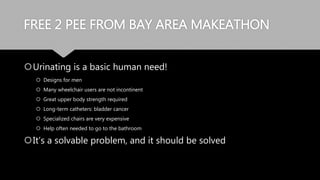
FREE 2 PEE FROM BAY AREA MAKEATHON
Urinating is a basic human need!
 Designs for men
 Many wheelchair users are not incontinent
 Great upper body strength required
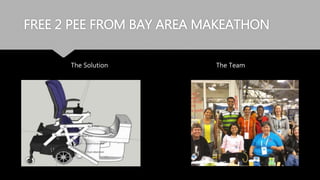
 Long-term catheters: bladder cancer
 Specialized chairs are very expensive
 Help often needed to go to the bathroom
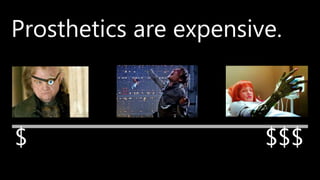
It’s a solvable problem, and it should be solved
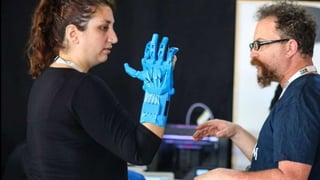
FREE 2 PEE FROM BAY AREA MAKEATHON
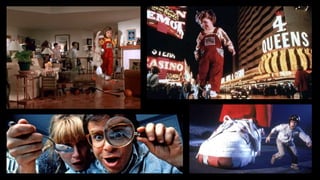
The Solution The Team
TECHNOLOGY SHOULD
PROVIDE OPTIONS
$ $$$
Prosthetics are expensive.
TECHNOLOGY SHOULD
BE ACCESSIBLE
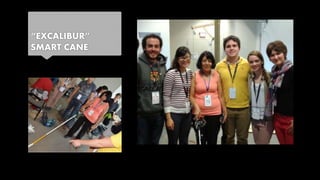
“EXCALIBUR”
SMART CANE
TECHNOLOGY SHOULD
BE INCLUSIVE
TECHNOLOGY SHOULD
SOLVE THE
RIGHT PROBLEM
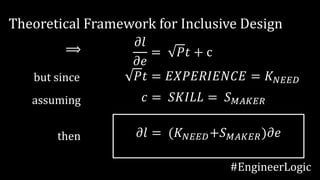
Theoretical Framework for Inclusive Design
𝜕2
𝑙
𝜕𝑡𝜕𝑒
− 𝑃 = 0
𝜕2
𝑙
𝜕𝑡𝜕𝑒
= 𝑃
𝜕𝑙
𝜕𝑒
= 𝐶 𝑑𝑡
⟹
⟹
Theoretical Framework for Inclusive Design
𝑃𝑡 = 𝐸𝑋𝑃𝐸𝑅𝐼𝐸𝑁𝐶𝐸 = 𝐾 𝑁𝐸𝐸𝐷
𝜕𝑙
𝜕𝑒
= 𝑃𝑡 + c⟹
but since
assuming
#EngineerLogic
𝑐 = 𝑆𝐾𝐼𝐿𝐿 = 𝑆 𝑀𝐴𝐾𝐸𝑅
then 𝜕𝑙 = (𝐾 𝑁𝐸𝐸𝐷+𝑆 𝑀𝐴𝐾𝐸𝑅)𝜕𝑒
info@tomcalgary.com
PROPOSE A CHALLENGE.
DEVELOP A SOLUTION.
Deadline to apply is July 15th
Assistive Tech with Inclusive Design

Assistive Tech with Inclusive Design

Editor's Notes

  • #2 Hi everyone, My name is Kathryn Simone and I’m a grad student in biomedical engineering at the University of Calgary. My research involves developing tools that enable the study of the brain with light. And as interesting as that may sound to my fellow nerds, that is not what I’m going to be talking about tonight. I’m going to be talking about something much more exciting. I’ll be talking about TOM. Not TED, but TOM. I’ll talk about our work around the world and right here in Calgary, using inclusive design to build practical solutions for everyday challenges posed by disability.
  • #3 TOM stands for Tikkun Olam Makers. ‘Tikkun Olam’ is a phrase from Hebrew that roughly translates to ‘repair of the world’. As a newcomer to Jewish literature, I chose to interpret this to mean that we are the pieces, and the ‘fixing’ happens when we come together. From the perspective of disability, our society is far from inclusive: it’s fair to say this aspect of the world is broken. And unfortunately, the technologies that promised to liberate us all, that many of us wouldn’t be able to go a day without, are inaccessible to many. The private sector either can’t or won’t address these challenges adequately, whether that’s because of 1. insufficient market demographics, 2. failure to involve end users in the design process, and finally 3. the exhorbitant pricetag they place on specialized equipment. During my time with TOM, I’ve heard from many people with disabilities and the challenges they face, and studied many of the projects we’ve taken on. As an engineer, I am shocked regularly when I learn of another way technology has failed a certain population. There is hardly ever ‘an app for that’, if you will, a disappointment that I hope you’ll understand after my talk tonight. The bottom line is that too often, to meet the most basic human needs, people with disabilities have few options. That’s the bad news.
  • #4 The good news is that because of the ‘Maker Movement’ and the DIY culture of the last decade or so, we’ve gained widespread access to technical knowledge as well as expertise, personal fabrication equipment like 3D printers, and the ability to buy specialized components from online retailers. For what’s likely the first time in history, we’re closing the gap between the designer and user. People can address their own challenges, with solutions that work for them, and at a fraction of the cost. For people with disabilities, personalized tech is necessary as every body, and every preference for how that tech will be used, is unique. For TOM makers, therefore, the biggest difference to make through the maker movement will be with people with disabilities.
  • #5 So, TOM’s operations began in 2014 in Israel, on the high-tech coastline of Tel-Aviv: The middle east’s counterpart of Silicon Valley.
  • #6 They bring together people living with disabilities and technical designers during ‘makeathons’: 72-hour hackathons where physical things often get built. The goal is to address neglected challenges posed by disability, and produce working, open-source prototypes.
  • #7 By involving the end users, with the deepest knowledge of the challenge, at every step of the design process, TOM makeathons produces more refined products, that solve the right problems.
  • #8 Since 2014, TOM has grown so rapidly, and has made an impact all over the world. Big cities like San Francisco, Sao Paolo, and Saigon have hosted makeathons in the last few months.
  • #9 And I’m telling you all this because this August, TOM is coming to Calgary. The kindness and enthusiasm we’ve received from the communities has been outstanding. Everyone is so supportive and excited to be a part of this, and have been generous to contribute even during the city’s rough economic times. We’ll have ten design teams, each of which will work on one challenge for 72-hours straight at EGB Manufacturing in Cochrane. With the support of The Calgary Jewish Federation, Javelin Tech, Google.org, and the Calgary Foundation, we’re sure to have a successful event.
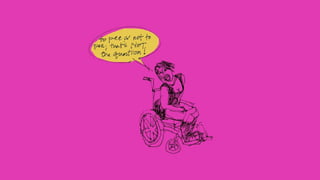
  • #10 To give you an idea of what kinds of challenges we’ll be taking on, I’m going to talk about a few projects that have come out of TOM makeathons in the past, and what we’ve learned about inclusive design on the way. Since 2014, there’s been close to 150 projects. Today I’ll talk about three. So this is an 18+ event, and now that you’ve likely had a few drinks, I’ll introduce the first project by asking you what if you had to go 12 hours without peeing. (Oh looks like I’ve inspired someone to a bathroom break already). But seriously though. 12 hours. How would you work? How would you go on a date? Would you ration your water intake and dehydrate yourself? Or just get really good at holding it in?
  • #11 This is precisely the frustration that many female wheelchair users face. Team Free to Pee, from the Bay Area Makeathon, boldly took on the challenge to enable women to relieve themselves independently in September. The diverse team identified that while wheelchair designs have solved this problem for men, female users are often encouraged to use catheters or adult diapers even if they are not incontinent. Specialized chairs are ‘exhorbitantly expensive’, and cups don’t work at all here. Team free to pee wanted women to have better options.
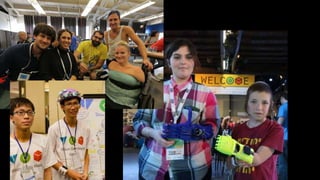
  • #12 So after being presented with the challenge, they brainstormed many ideas, threw many of them out, iterated on some, combined others. Those on the team that did not use powerchairs learned about the many ways women can take off their pants, that they couldn’t assume the user’s torso stability or arm strength, or even the dimensions of the chair. It was a very complex project to complete in 3 days, but they did it, and built a servo-motor powered sling-system to lift the user up and position a channel for the waste underneath. Taking a look at the team, we see why they were successful. There were three powerchair users, two of which could not relieve themselves independently. A mechanical engineer, an occupational therapist. The ‘makers’ of the team learned a lot about the challenges these women face and how technology has largely failed them.
  • #13 From this project, we learned that technology should provide options. Sounds like a no-brainer, right? But unfortunately we don’t spend enough time away from the center of someone’s bell curve to really know this.
  • #14 The second challenge I’d like to talk about is prosthetics. They are insanely expensive! And for parents of growing children, it can be a huge financial burden trying to keep up when insurance can’t help.
  • #15 This is a prime example of where 3D printing really shines in inclusive tech. The ease with which things can be scaled, customized, colored and recolored- is fantastic. Designers at the makeathon in Nazareth produced such a prototype that responds to muscle tension in the user’s arm to flex the fingers. The total cost of this device is $300. An off-the shelf prosthetic would sell for over $10 000. It doesn’t have the same functionality, but it is optimized for the end-user’s needs. Most importantly, because all TOM projects are made open-source, someone else living with a similar challenge can download it and adapt it to their needs.
  • #16 Had this tech were around in the 90s, Wayne Szalinski would have no worries providing for his kids of all sizes. Especially when his laser inevitably misfires when he’s out of work.
  • #17 The takeaway from this project is that technology should be accessible. Providing a way to meet someones needs shouldn’t exploit them.
  • #18 The last project I’ll talk about addresses vision impairment. While most of us are looking for ways to ‘give everything a yellow tinge’ as one Amazon Reviewer described it, the blind are describing colossal failures of the white cane. This is such a challenge for so many people that TOM has taken on four distinct projects in an attempt to overcome it.
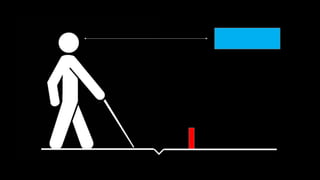
  • #19 But, you may ask (as I did) what could be wrong with the cane? It detects obstacles in front of the user as it should, right? But what about obstacles that a user can step over? Or those overhead? The cane fails in these situations. Most alarmingly, it often gets stuck in cracks in the sidewalk that causes the user to fall. One need-knower related that this happens so often that the visually impaired develop serious knee problems.
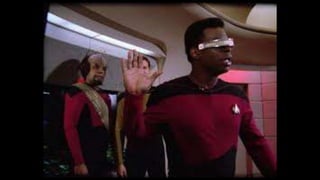
  • #20 Technology fails so massively here that 24th century engineers can’t even.
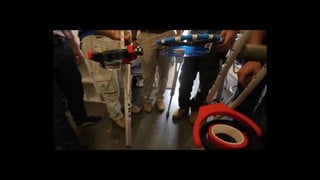
  • #21 At last year’s Makeathon in Calgary, a visually impaired person, together with a group of biomedical engineering students from UofC, designed a sensorized smart cane that solved many of these challenges. The traditional cane was outfitted with a boot to allow it to slide over cracks. Sensors detected obstacles around the user and responded with tactile feedback. Smartcanes already on the market were unsatisfactory as they would alert the user with audio feedback, which is public and embarrassing. Moreover, they are difficult to learn. The ‘excalibur’ offers a personalized solution.
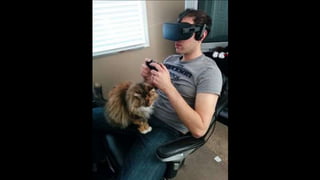
  • #22 With the coming disruption of virtual reality, now, more than ever, we need to be reminded that technology should be inclusive.
  • #23 The many challenges proposed by the visually impaired to TOM really drives this point home.
  • #24 So I’ve made the case that technology should provide options, should be accessible, and should be inclusive. Pretty simple. The last one, and probably the most important one, is that technology should solve the right problem. This one is tricky, and since I haven’t thrown up a slide with equations yet, let’s do a bit of math.
  • #25 So. The basic premise is that TOM wants to make a little change in someone’s life with a little time and a little effort. But without access to the root of the problem, we will have zero effect. This of course implies that the second partial derivative of life with respect to time and effort is equal to the root of the problem. Integrating both sides with respect to time, we get the root of the problem multiplied by time and a constant.
  • #26 This first term, of course, is experience: we’ll define this as knowledge of a need. Further assuming that the constant is skill, we see that when we bring skill and knowledge together, it only takes a little effort to make an impact.
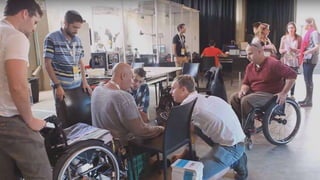
  • #27 That’s basically our recipe for the makeathon. We bring together technically skilled individuals and people with disabilities for a short period of time – 72 hours – and magical things happen. The Calgary Area Makeathon, August 25-28, will bring together over 60 people to address 10 challenges.
  • #28 If you’d like to participate on a design team, as a ‘maker’, or a ‘need-knower’, we want to hear from you. The deadline to apply is July 15.
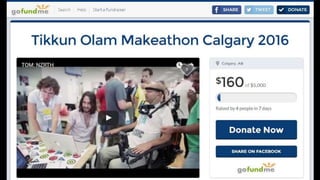
  • #29 If you’re interested in supporting in other ways, though, we’ve got you covered. Makeathons are not cheap, and we’re fundraising to help supplement the support we’ve received from the community. So please, check out our crowdfunding pages and drop a few dollars if you can.
  • #30 I’ll close now with a few words from Kim, a woman who was born with no arms or legs who helped design a mouth-controlled device at another TOM makeathon.