Asian art
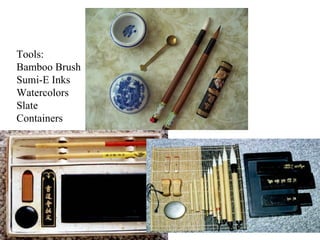
Tools:
Bamboo Brush
Sumi-E Inks
Watercolors
Slate
Containers
What we are looking for:
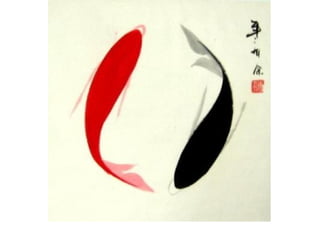
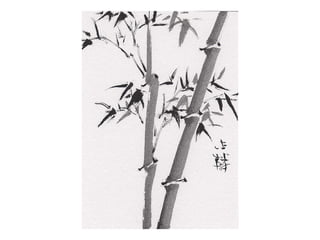
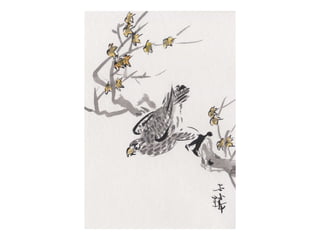
•   Theme
•   Subject
•   Line, line quality
•   Brush Stroke
•   Use of text in the artworks
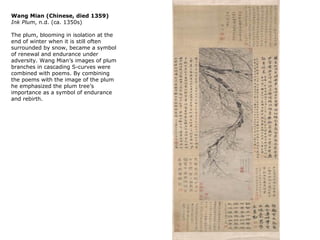
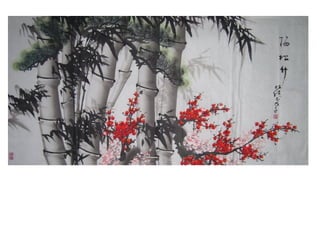
Wang Mian (Chinese, died 1359)
Ink Plum, n.d. (ca. 1350s)

The plum, blooming in isolation at the
end of winter when it is still often
surrounded by snow, became a symbol
of renewal and endurance under
adversity. Wang Mian’s images of plum
branches in cascading S-curves were
combined with poems. By combining
the poems with the image of the plum
he emphasized the plum tree’s
importance as a symbol of endurance
and rebirth.
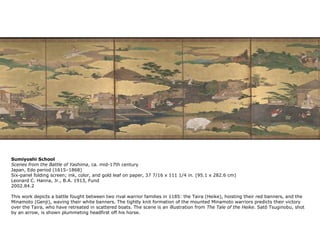
Sumiyoshi School
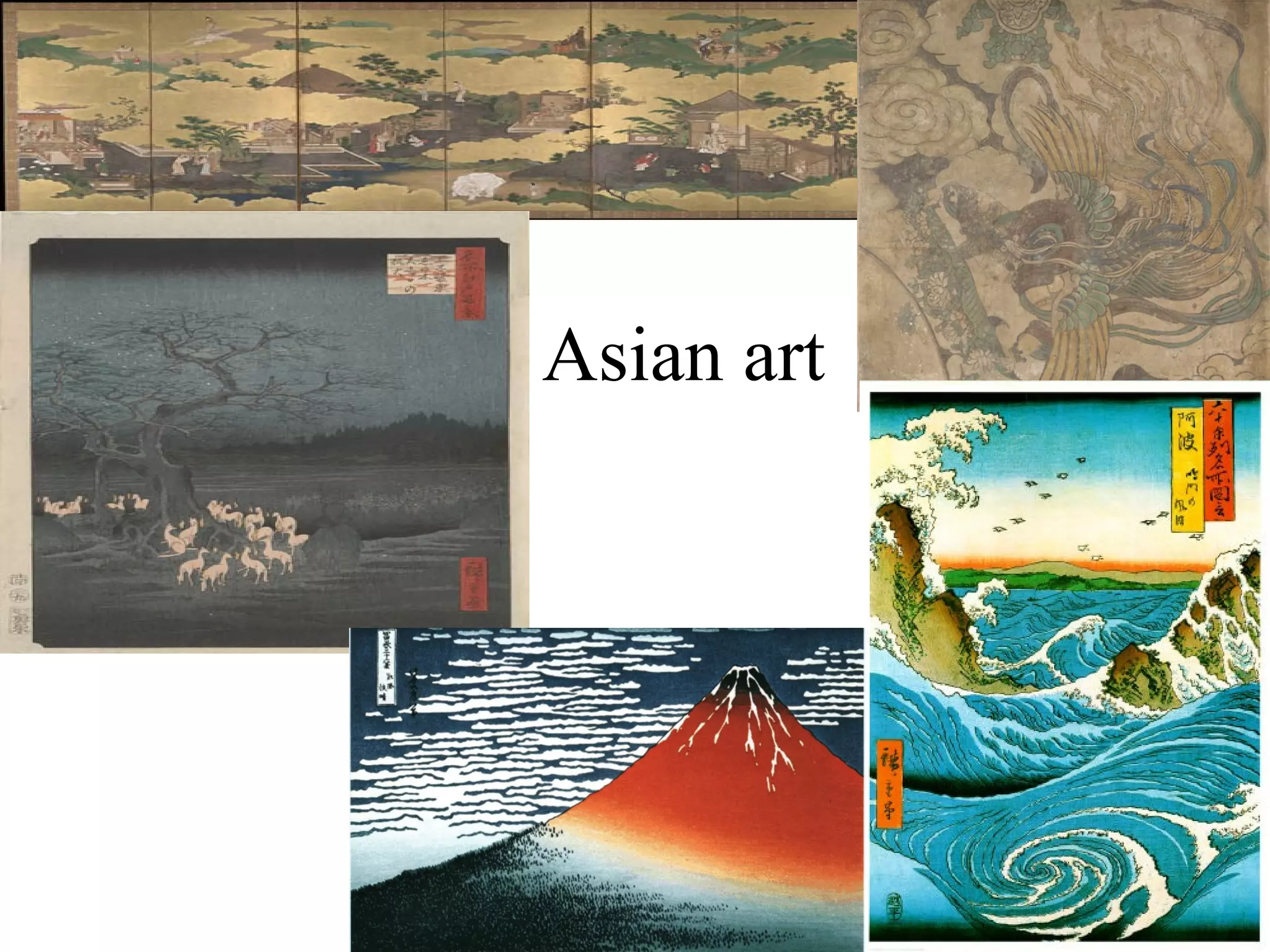
Scenes from the Battle of Yashima, ca. mid-17th century
Japan, Edo period (1615–1868)
Six-panel folding screen; ink, color, and gold leaf on paper, 37 7/16 x 111 1/4 in. (95.1 x 282.6 cm)
Leonard C. Hanna, Jr., B.A. 1913, Fund
2002.84.2

This work depicts a battle fought between two rival warrior families in 1185: the Taira (Heike), hoisting their red banners, and the
Minamoto (Genji), waving their white banners. The tightly knit formation of the mounted Minamoto warriors predicts their victory
over the Taira, who have retreated in scattered boats. The scene is an illustration from The Tale of the Heike. Satō Tsuginobu, shot
by an arrow, is shown plummeting headfirst off his horse.
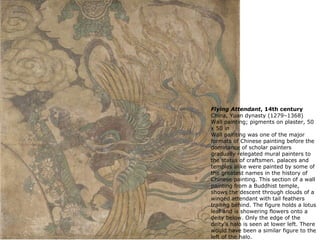
Flying Attendant, 14th century
China, Yuan dynasty (1279–1368)
Wall painting; pigments on plaster, 50
x 50 in
Wall painting was one of the major
formats of Chinese painting before the
dominance of scholar painters
gradually relegated mural painters to
the status of craftsmen. palaces and
temples alike were painted by some of
the greatest names in the history of
Chinese painting. This section of a wall
painting from a Buddhist temple,
shows the descent through clouds of a
winged attendant with tail feathers
trailing behind. The figure holds a lotus
leaf and is showering flowers onto a
deity below. Only the edge of the
deity’s halo is seen at lower left. There
would have been a similar figure to the
left of the halo.
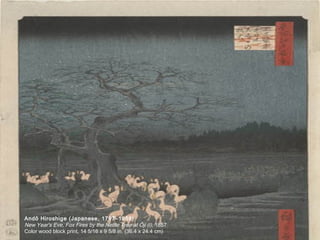
Andō Hiroshige (Japanese, 1797–1858)
New Year's Eve, Fox Fires by the Nettle Tree at Ōji (i), 1857
Color wood block print, 14 5/16 x 9 5/8 in. (36.4 x 24.4 cm)
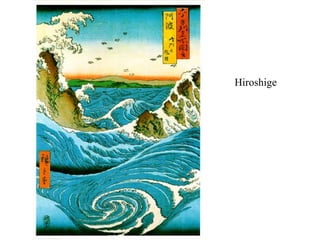
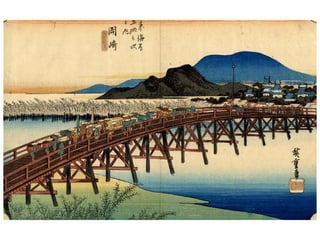
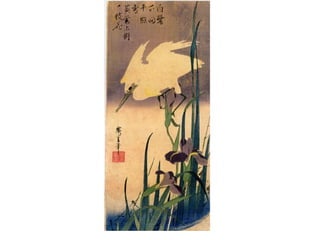
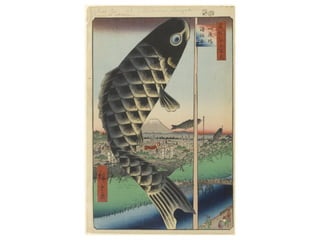
Hiroshige
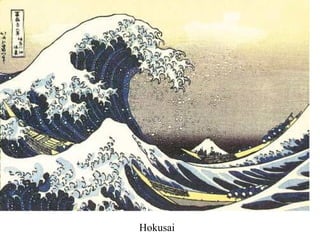
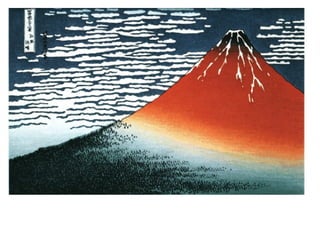
Hokusai
Asian art
Asian art

Asian art

  • 1.
  • 2.
  • 3.
    What we arelooking for: • Theme • Subject • Line, line quality • Brush Stroke • Use of text in the artworks
  • 4.
    Wang Mian (Chinese,died 1359) Ink Plum, n.d. (ca. 1350s) The plum, blooming in isolation at the end of winter when it is still often surrounded by snow, became a symbol of renewal and endurance under adversity. Wang Mian’s images of plum branches in cascading S-curves were combined with poems. By combining the poems with the image of the plum he emphasized the plum tree’s importance as a symbol of endurance and rebirth.
  • 9.
    Sumiyoshi School Scenes fromthe Battle of Yashima, ca. mid-17th century Japan, Edo period (1615–1868) Six-panel folding screen; ink, color, and gold leaf on paper, 37 7/16 x 111 1/4 in. (95.1 x 282.6 cm) Leonard C. Hanna, Jr., B.A. 1913, Fund 2002.84.2 This work depicts a battle fought between two rival warrior families in 1185: the Taira (Heike), hoisting their red banners, and the Minamoto (Genji), waving their white banners. The tightly knit formation of the mounted Minamoto warriors predicts their victory over the Taira, who have retreated in scattered boats. The scene is an illustration from The Tale of the Heike. Satō Tsuginobu, shot by an arrow, is shown plummeting headfirst off his horse.
  • 10.
    Flying Attendant, 14thcentury China, Yuan dynasty (1279–1368) Wall painting; pigments on plaster, 50 x 50 in Wall painting was one of the major formats of Chinese painting before the dominance of scholar painters gradually relegated mural painters to the status of craftsmen. palaces and temples alike were painted by some of the greatest names in the history of Chinese painting. This section of a wall painting from a Buddhist temple, shows the descent through clouds of a winged attendant with tail feathers trailing behind. The figure holds a lotus leaf and is showering flowers onto a deity below. Only the edge of the deity’s halo is seen at lower left. There would have been a similar figure to the left of the halo.
  • 11.
    Andō Hiroshige (Japanese,1797–1858) New Year's Eve, Fox Fires by the Nettle Tree at Ōji (i), 1857 Color wood block print, 14 5/16 x 9 5/8 in. (36.4 x 24.4 cm)
  • 12.
  • 15.