The ACC/AHA ASCVD Risk Estimator App
and the EHR FHIR Integration Project
Ty J. Gluckman, MD, FACC, FAHA
Medical Director, Clinical
Transformation
Providence Heart and Vascular Institute, Oregon
Region and
Associate Editor, Practice Guidelines
and Clinical Documents, ACC.org
Disclosures
Nothing to disclose
History of the
ASCVD Risk
Estimator App
2007-2015:
Emergence of
quality and value-
based care
2015:
MACRA passed,
SGR repealed
ASCVD risk
estimator EHR
integration
Making the tool
work for care
providers
Just the tip of
the iceberg
Purpose of the
ASCVD Risk
Estimator App
Measuring our
success
Objectives
It starts with
having a
problem that is
improved by
having a point of
care tool which
supports better
clinical decision-
making and/or
improved
patient
outcomes
So, Why Build a Medical App?
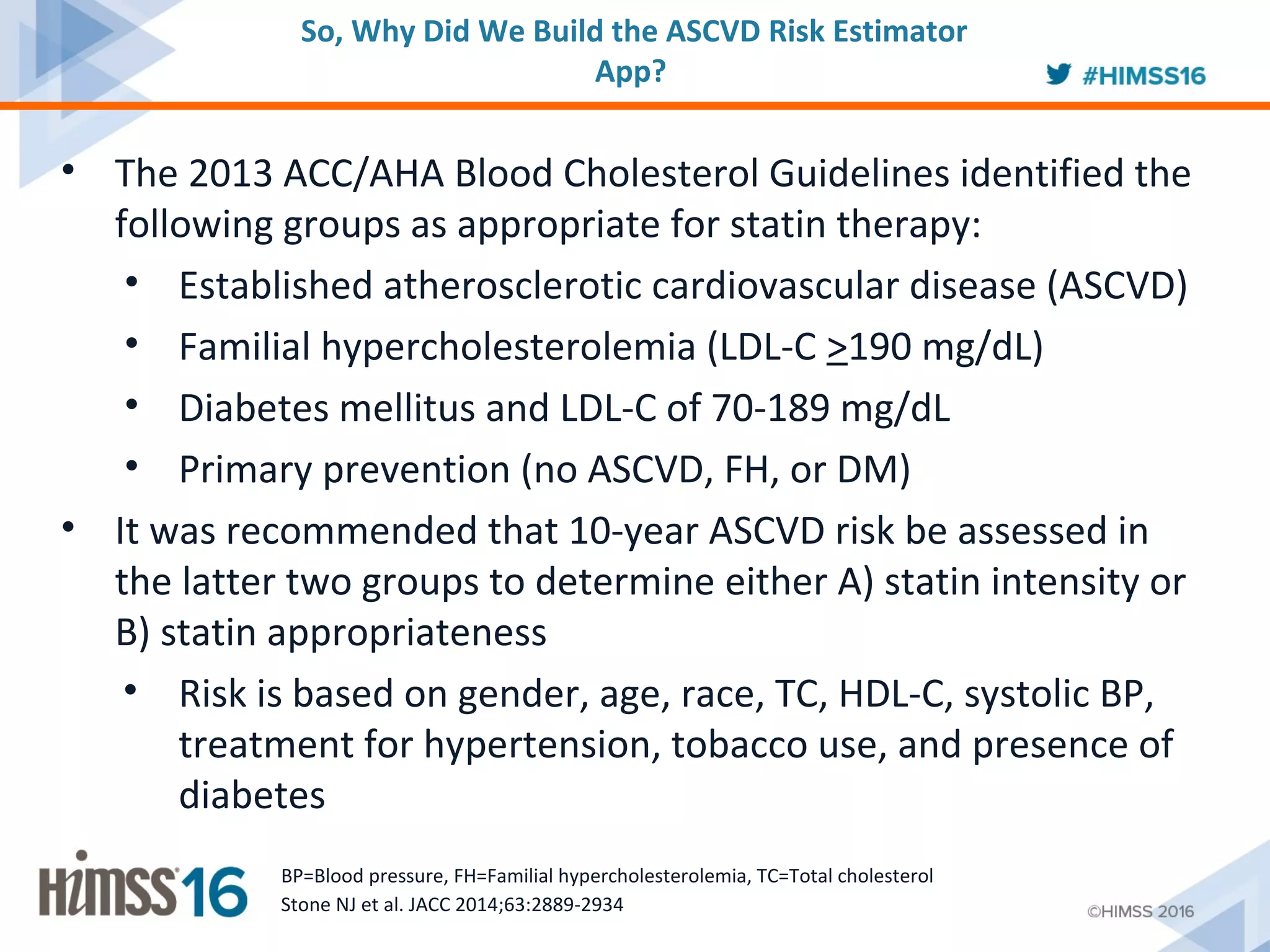
• The 2013 ACC/AHA Blood Cholesterol Guidelines identified the
following groups as appropriate for statin therapy:
• Established atherosclerotic cardiovascular disease (ASCVD)
• Familial hypercholesterolemia (LDL-C >190 mg/dL)
• Diabetes mellitus and LDL-C of 70-189 mg/dL
• Primary prevention (no ASCVD, FH, or DM)
• It was recommended that 10-year ASCVD risk be assessed in
the latter two groups to determine either A) statin intensity or
B) statin appropriateness
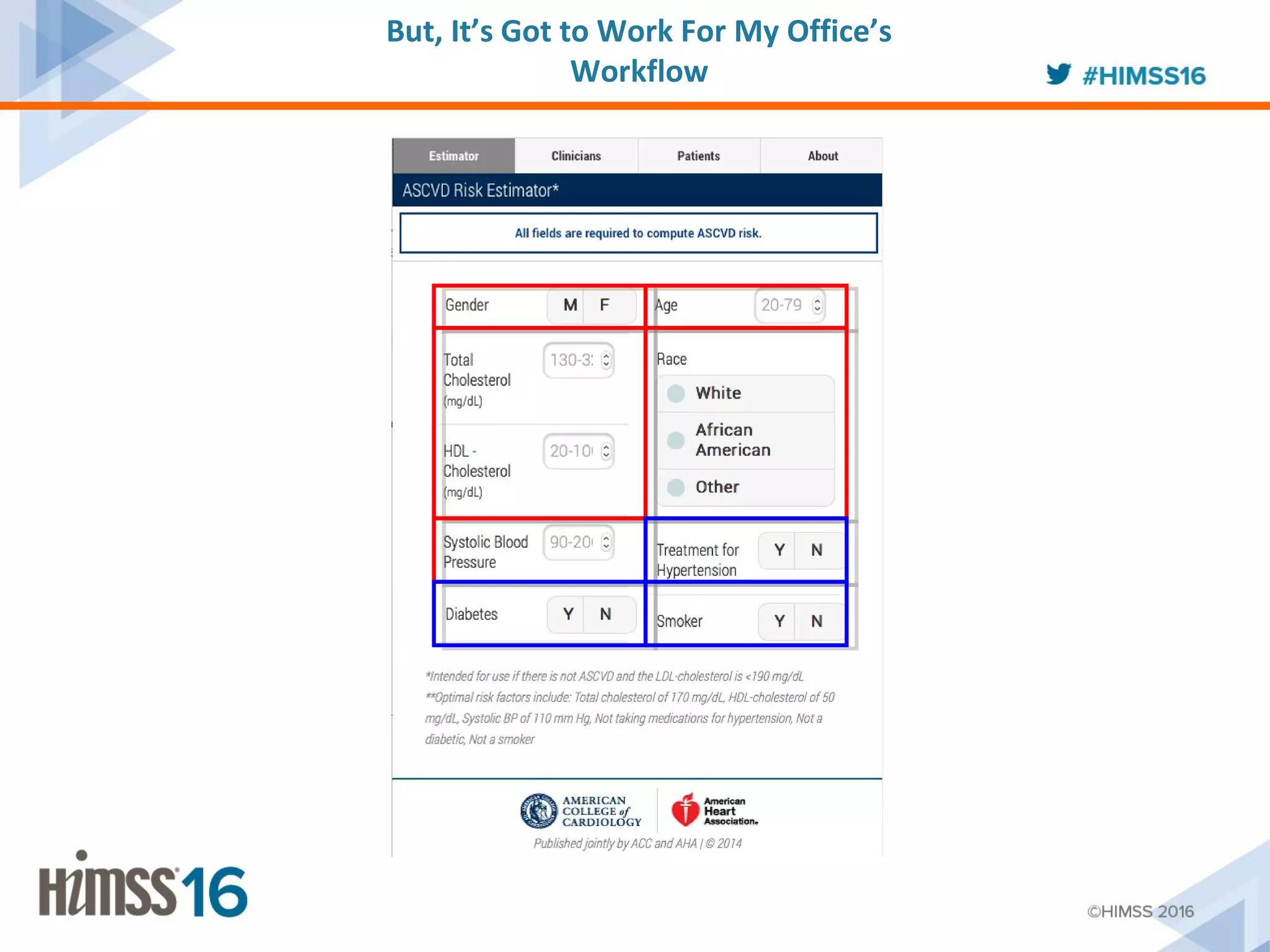
• Risk is based on gender, age, race, TC, HDL-C, systolic BP,
treatment for hypertension, tobacco use, and presence of
diabetes
Stone NJ et al. JACC 2014;63:2889-2934
BP=Blood pressure, FH=Familial hypercholesterolemia, TC=Total cholesterol
So, Why Did We Build the ASCVD Risk Estimator
App?
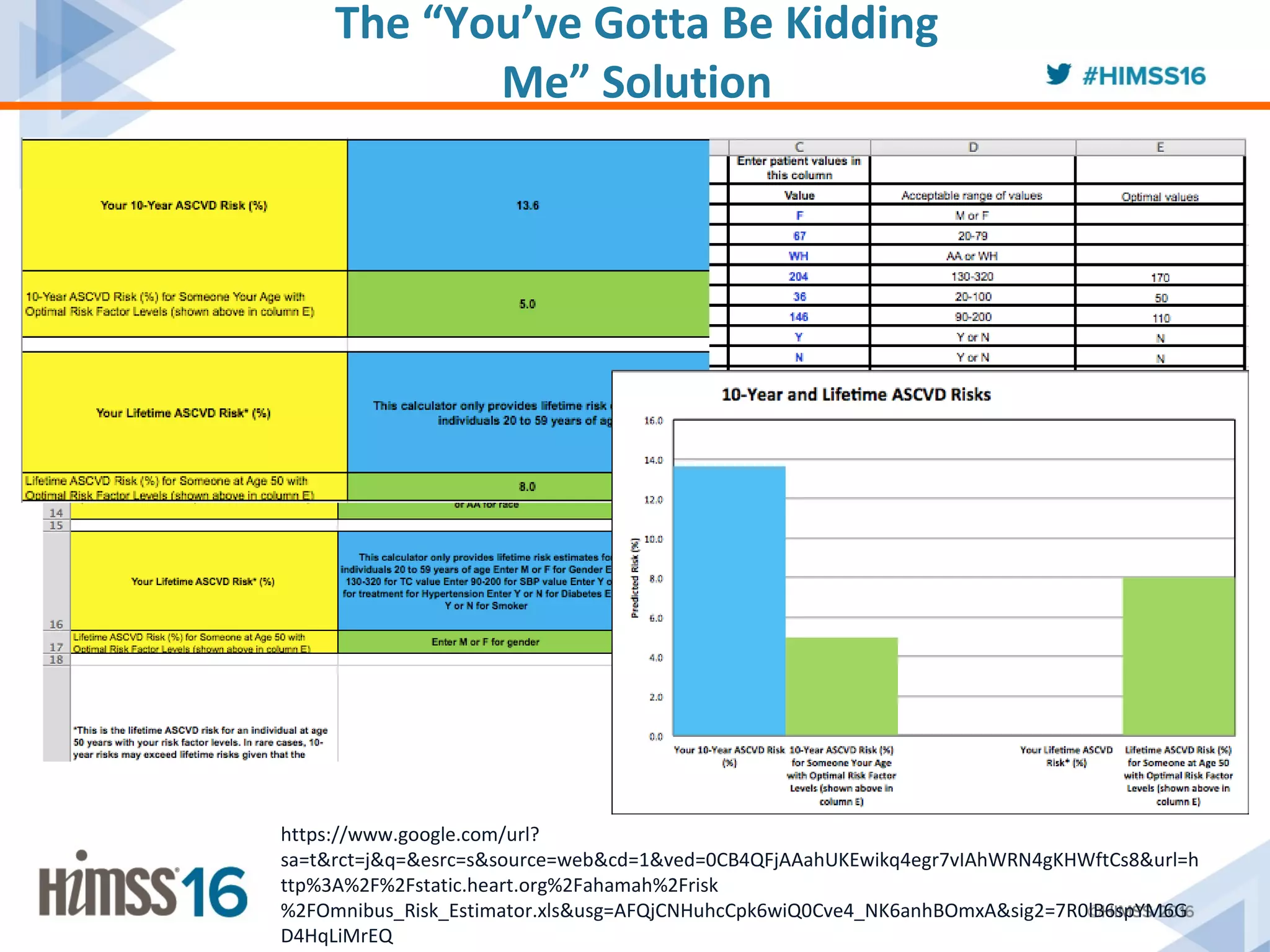
The “You’ve Gotta Be Kidding
Me” Solution
https://www.google.com/url?
sa=t&rct=j&q=&esrc=s&source=web&cd=1&ved=0CB4QFjAAahUKEwikq4egr7vIAhWRN4gKHWftCs8&url=h
ttp%3A%2F%2Fstatic.heart.org%2Fahamah%2Frisk
%2FOmnibus_Risk_Estimator.xls&usg=AFQjCNHuhcCpk6wiQ0Cve4_NK6anhBOmxA&sig2=7R0lB6spYM6G
D4HqLiMrEQ
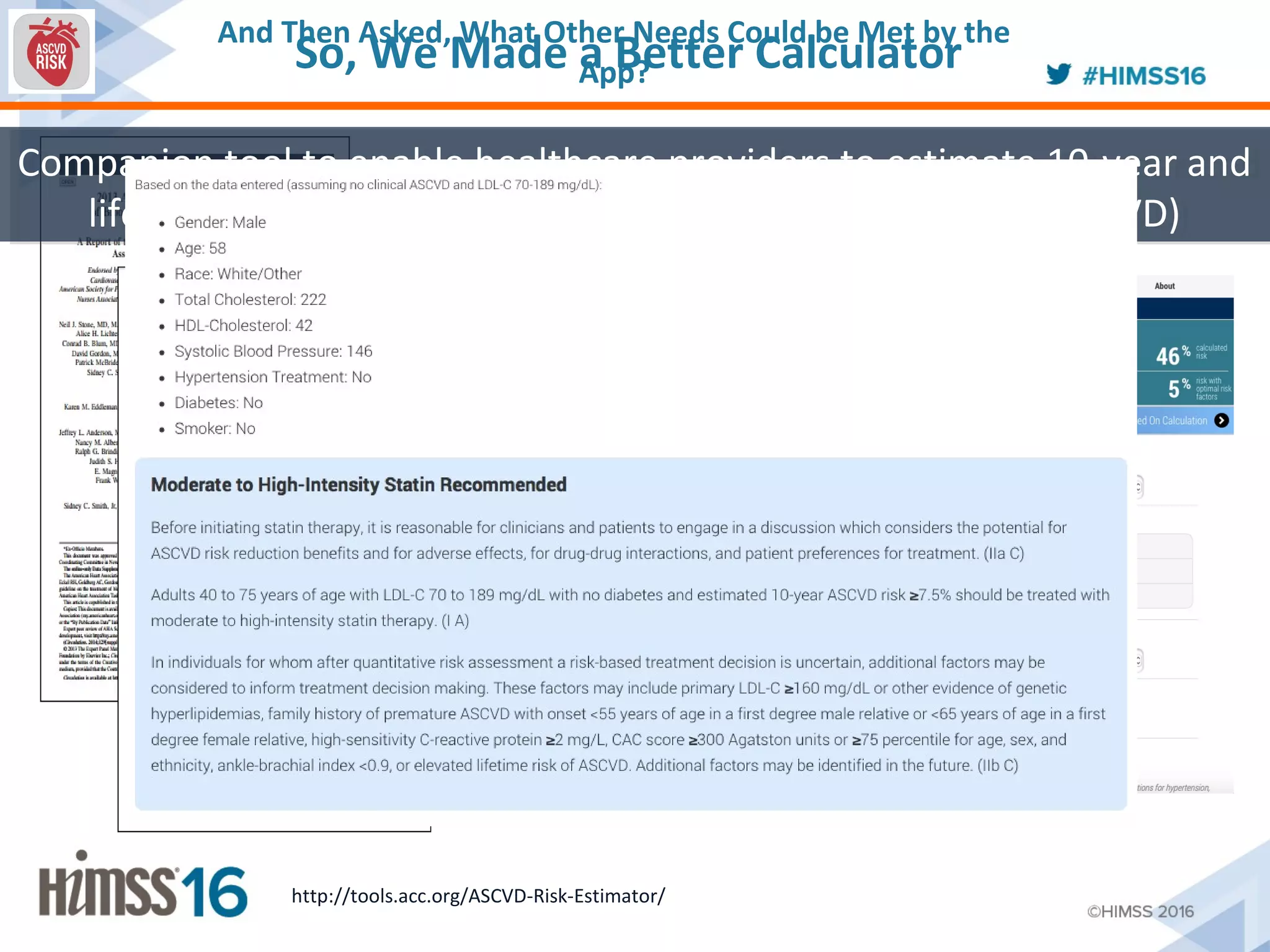
So, We Made a Better Calculator
Companion tool to enable healthcare providers to estimate 10-year and
lifetime risks for atherosclerotic cardiovascular disease (ASCVD)
Companion tool to enable healthcare providers to estimate 10-year and
lifetime risks for atherosclerotic cardiovascular disease (ASCVD)
http://tools.acc.org/ASCVD-Risk-Estimator/
And Then Asked, What Other Needs Could be Met by the
App?
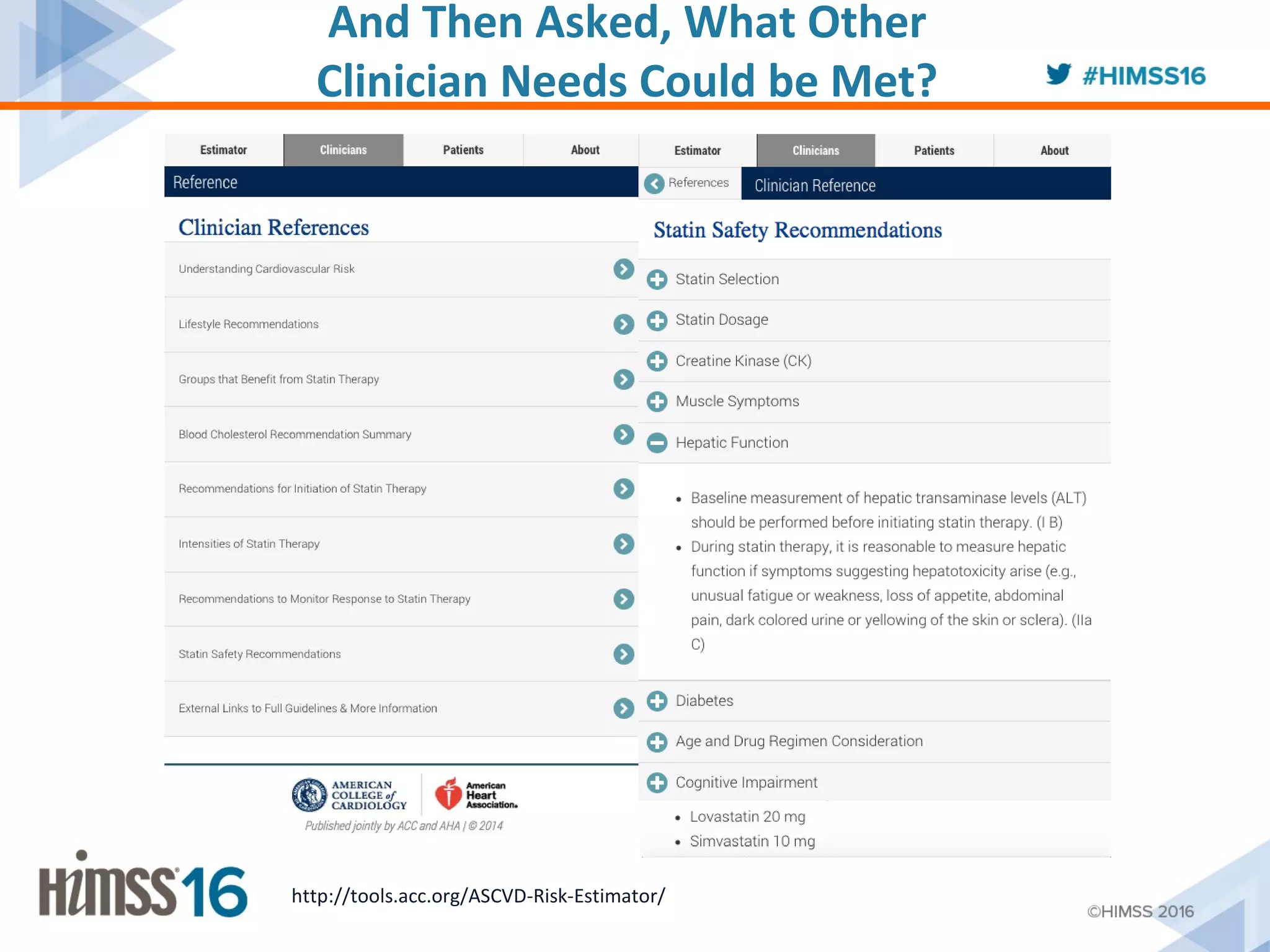
And Then Asked, What Other
Clinician Needs Could be Met?
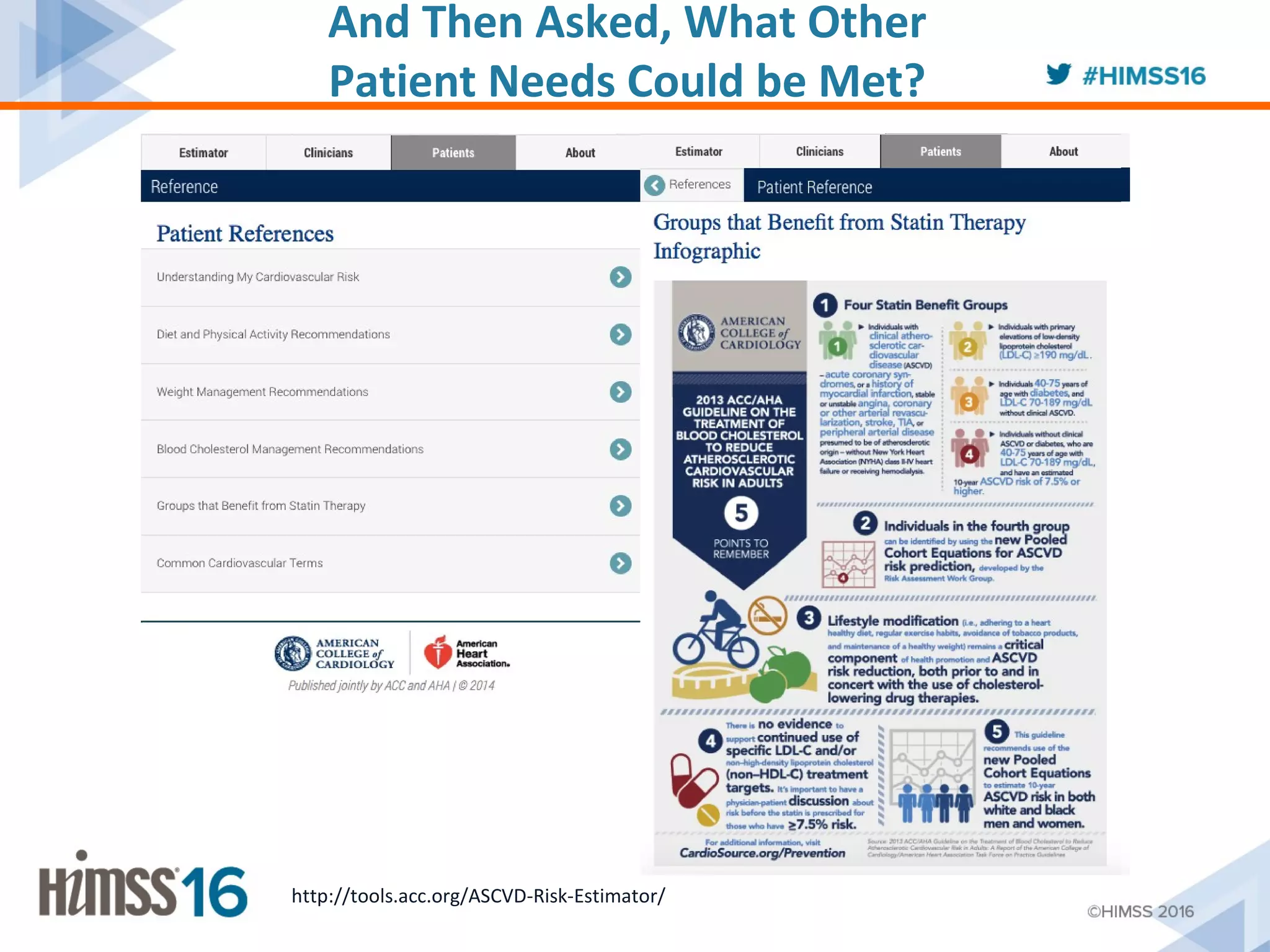
http://tools.acc.org/ASCVD-Risk-Estimator/
And Then Asked, What Other
Patient Needs Could be Met?
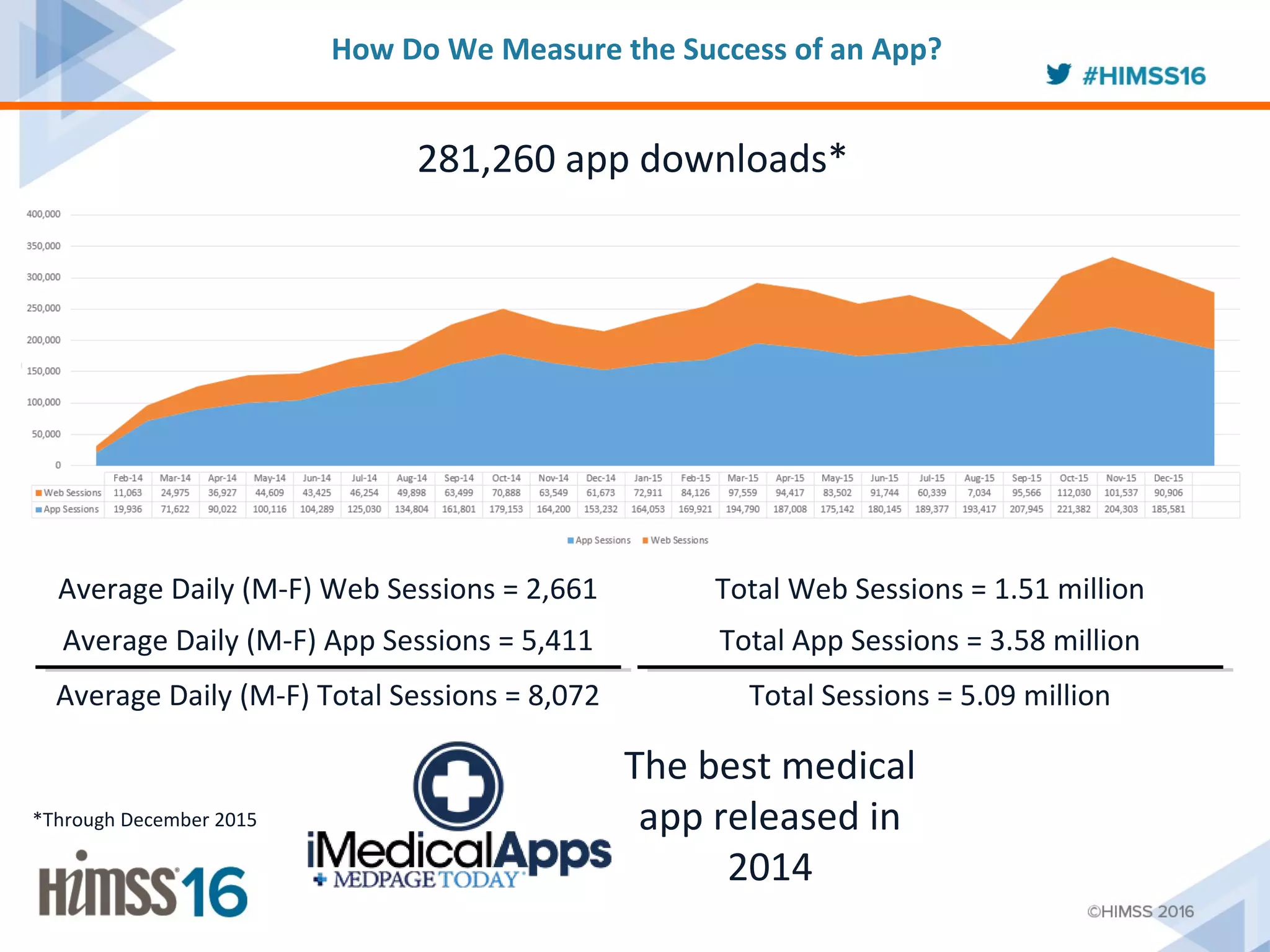
Average Daily (M-F) Web Sessions = 2,661
Average Daily (M-F) App Sessions = 5,411
*Through December 2015
Average Daily (M-F) Total Sessions = 8,072
Total Web Sessions = 1.51 million
Total App Sessions = 3.58 million
Total Sessions = 5.09 million
281,260 app downloads*
The best medical
app released in
2014
How Do We Measure the Success of an App?
But, Where Are We Spending All of Our Time These
Days?
EHR Integration of the
ASCVD Risk Estimator
• Clinicians expend many hours documenting patient visits in
their electronic health record (EHR) system. To access a clinical
app, however, care providers often use a smart phone or tablet.
• Integrating ACC clinical apps into electronic health record (EHR)
systems will enhance current workflows and documentation by
making these tools available to clinicians at the point of care.
• Fast Healthcare Interoperability Resources (FHIR) Specification
defines a standard that advances the capability of clinical apps
by requesting specific patient data from the patient’s electronic
chart to be inserted into the risk tool.
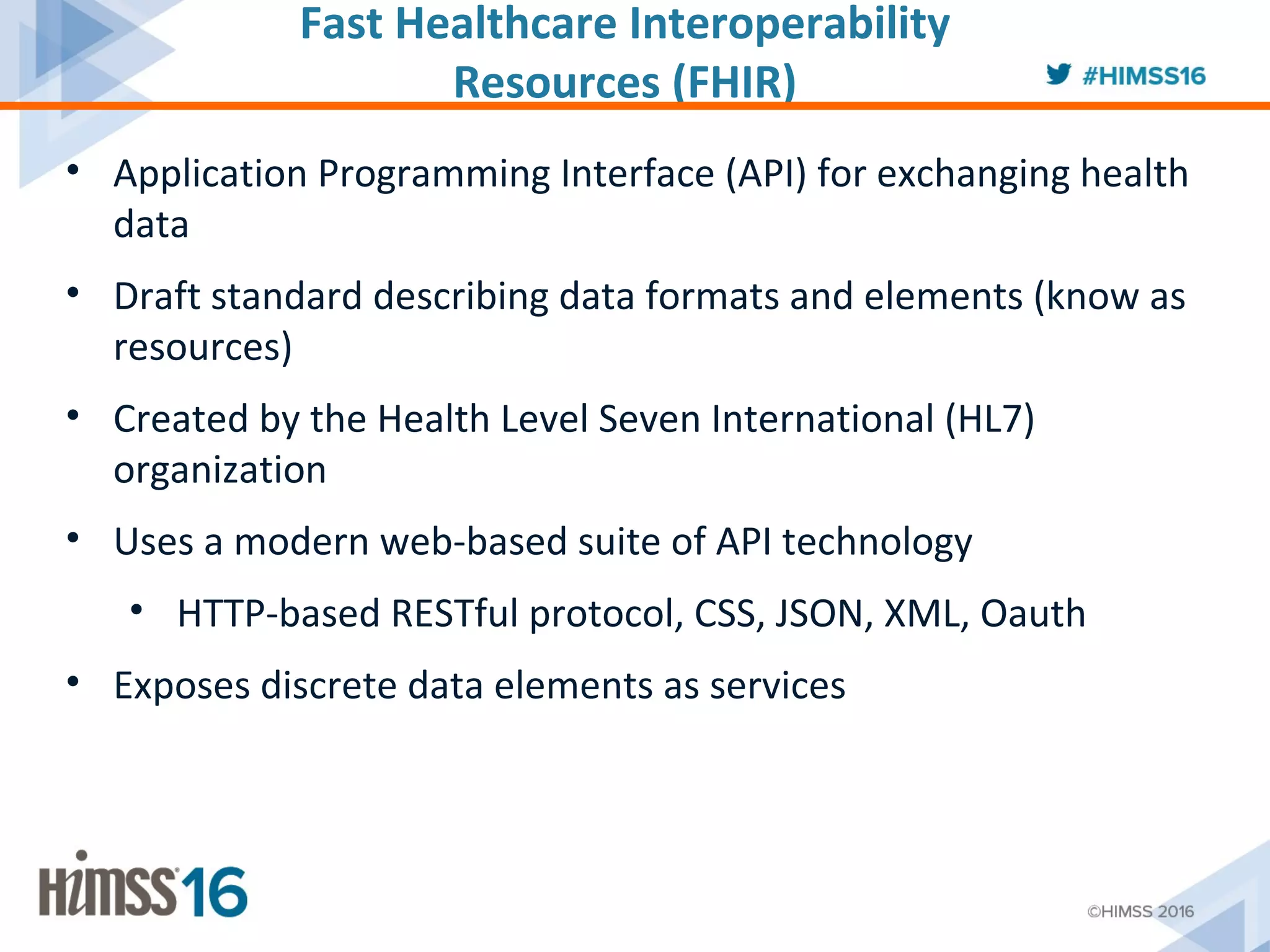
Fast Healthcare Interoperability
Resources (FHIR)
• Application Programming Interface (API) for exchanging health
data
• Draft standard describing data formats and elements (know as
resources)
• Created by the Health Level Seven International (HL7)
organization
• Uses a modern web-based suite of API technology
• HTTP-based RESTful protocol, CSS, JSON, XML, Oauth
• Exposes discrete data elements as services
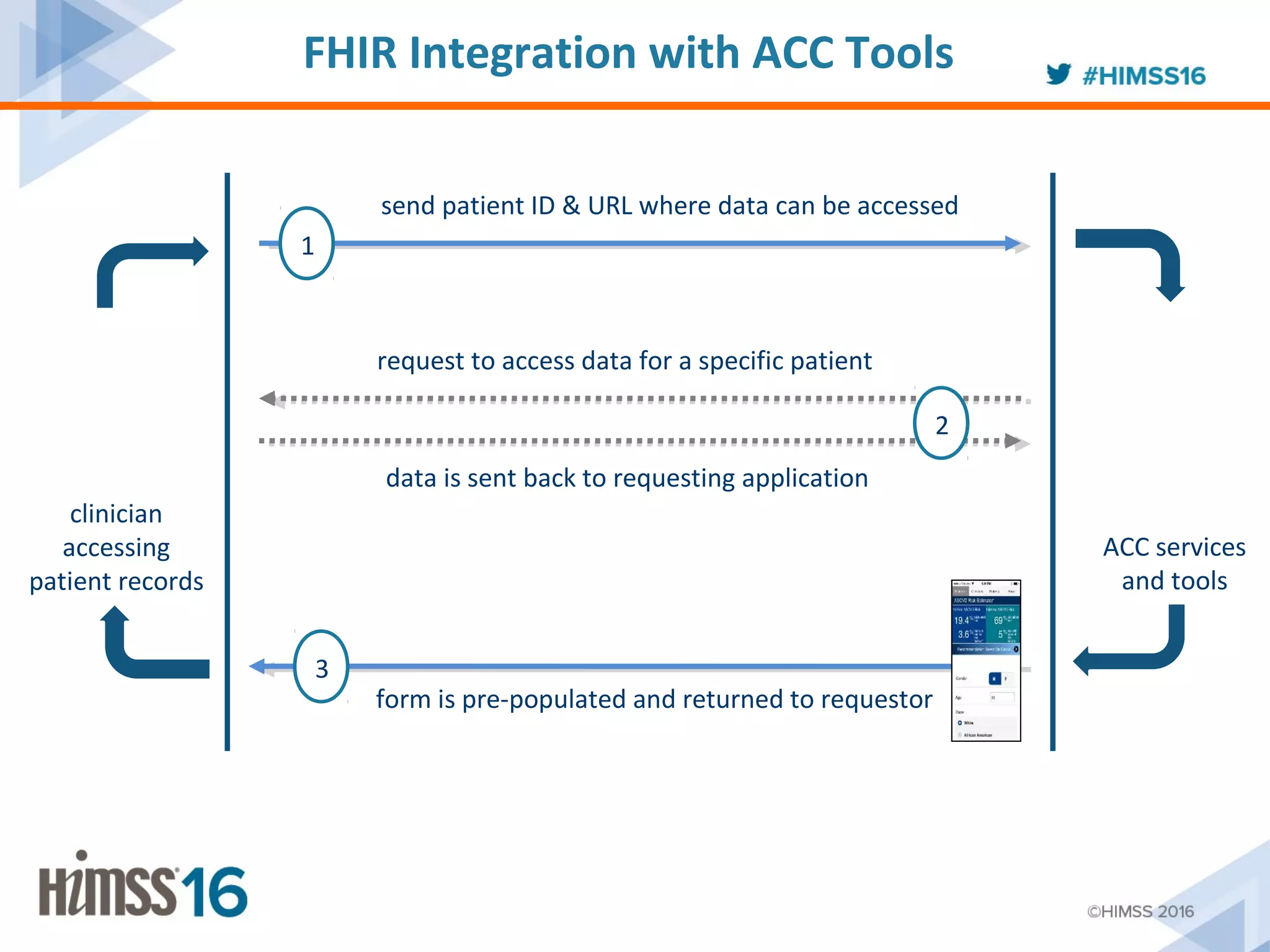
FHIR Integration with ACC Tools
1
send patient ID & URL where data can be accessed
2
request to access data for a specific patient
data is sent back to requesting application
3
form is pre-populated and returned to requestor
clinician
accessing
patient records
ACC services
and tools
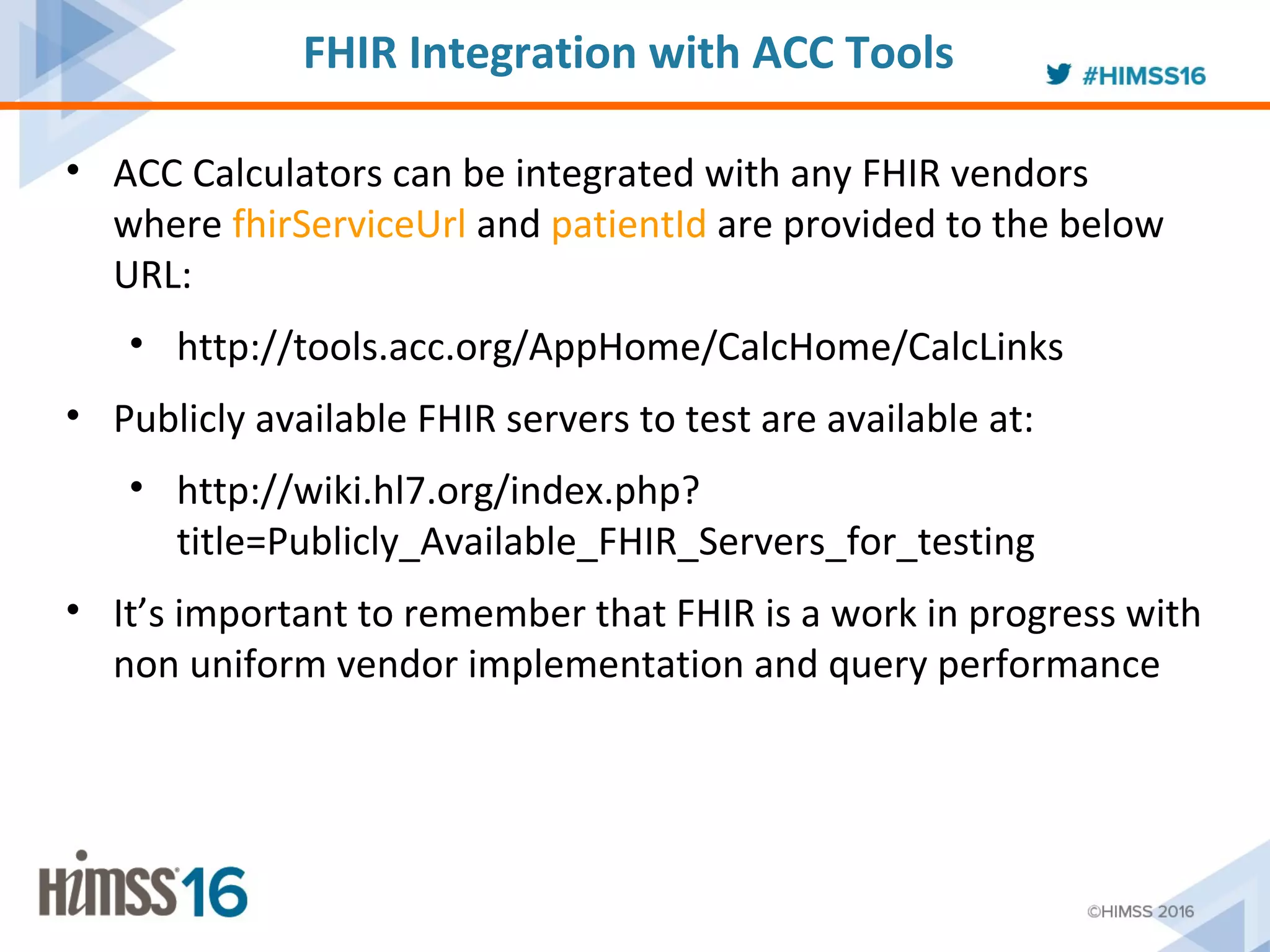
• ACC Calculators can be integrated with any FHIR vendors
where fhirServiceUrl and patientId are provided to the below
URL:
• http://tools.acc.org/AppHome/CalcHome/CalcLinks
• Publicly available FHIR servers to test are available at:
• http://wiki.hl7.org/index.php?
title=Publicly_Available_FHIR_Servers_for_testing
• It’s important to remember that FHIR is a work in progress with
non uniform vendor implementation and query performance
FHIR Integration with ACC Tools
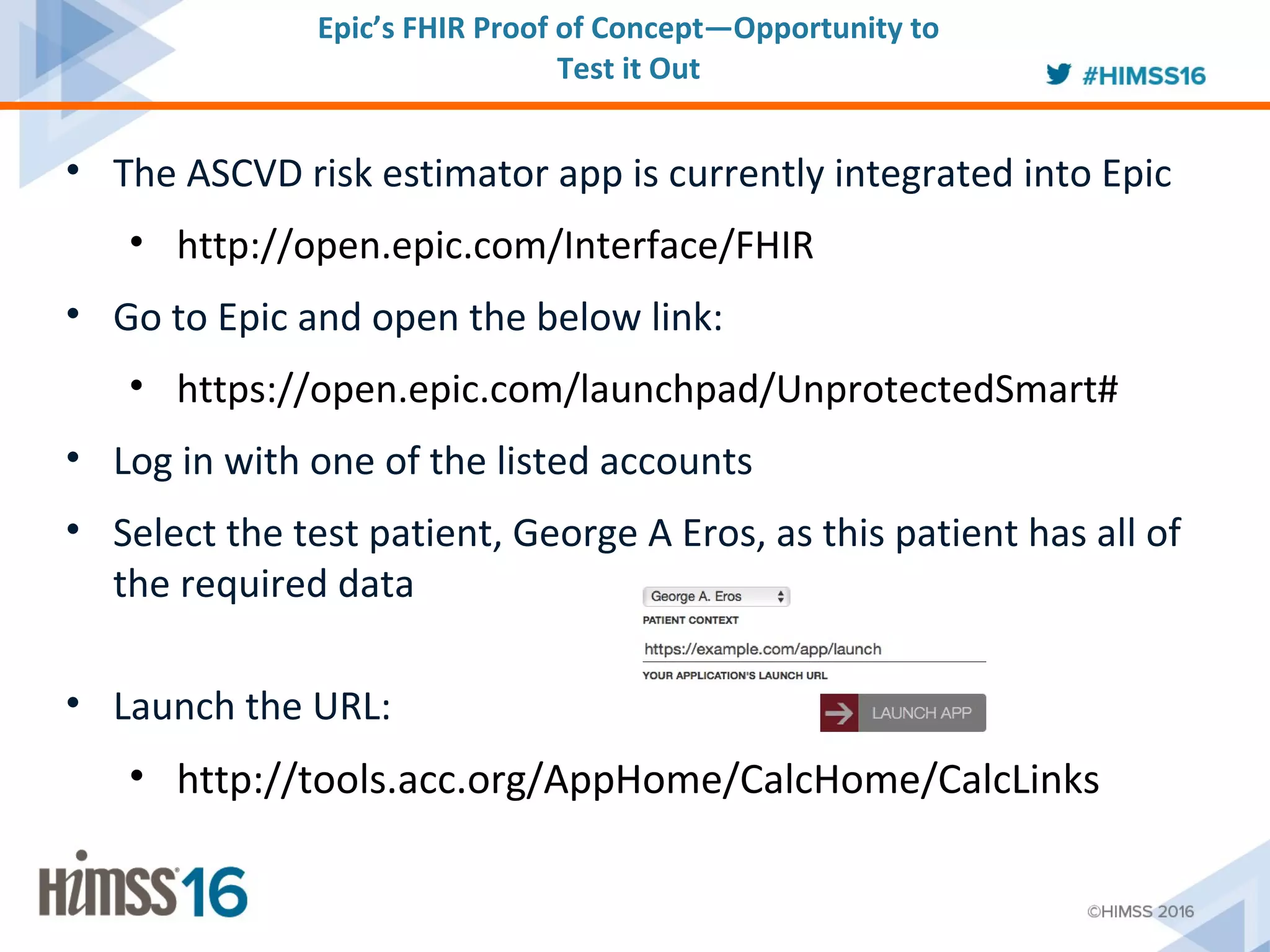
• The ASCVD risk estimator app is currently integrated into Epic
• http://open.epic.com/Interface/FHIR
• Go to Epic and open the below link:
• https://open.epic.com/launchpad/UnprotectedSmart#
• Log in with one of the listed accounts
• Select the test patient, George A Eros, as this patient has all of
the required data
• Launch the URL:
• http://tools.acc.org/AppHome/CalcHome/CalcLinks
Epic’s FHIR Proof of Concept—Opportunity to
Test it Out
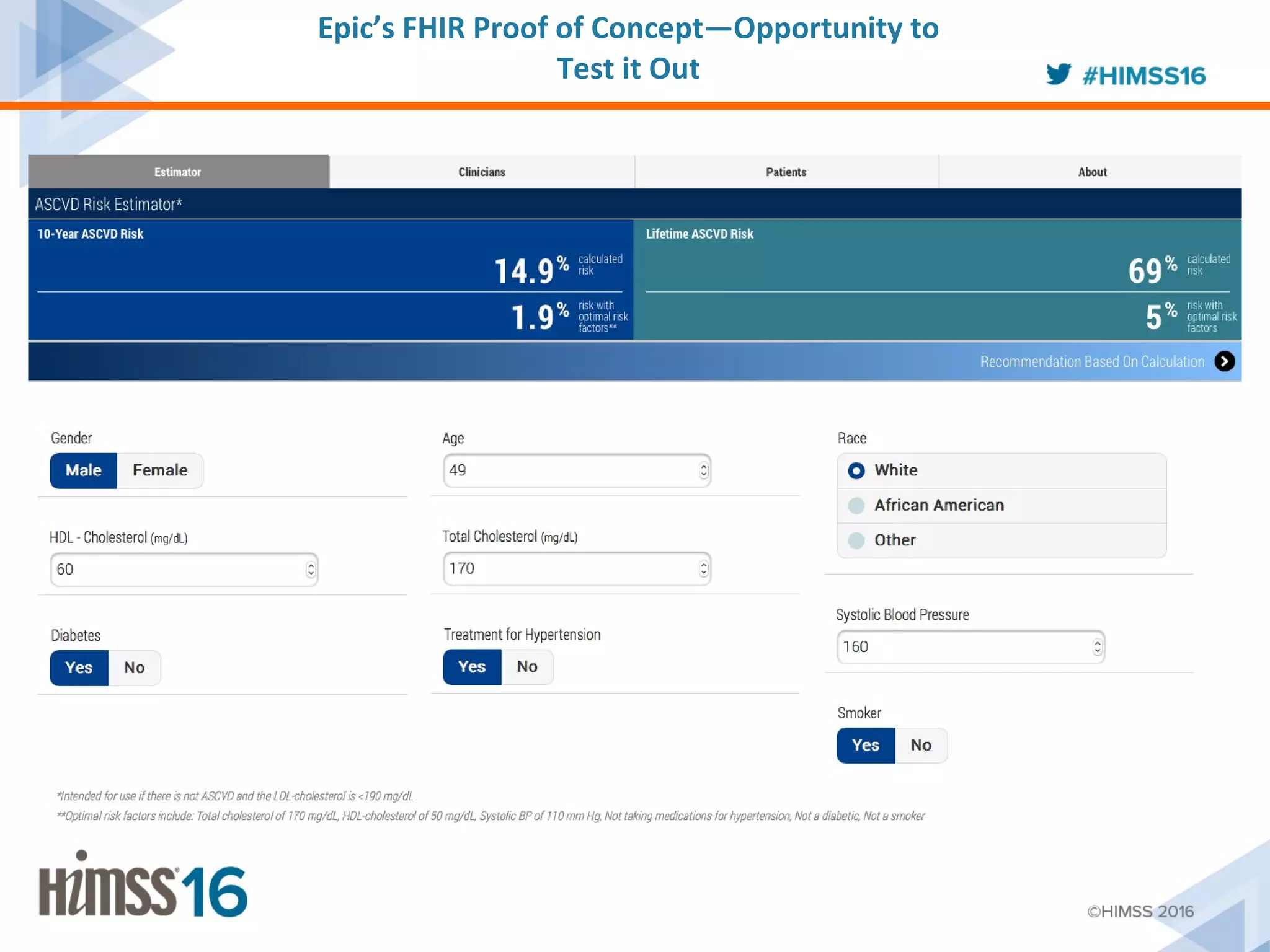
Epic’s FHIR Proof of Concept—Opportunity to
Test it Out
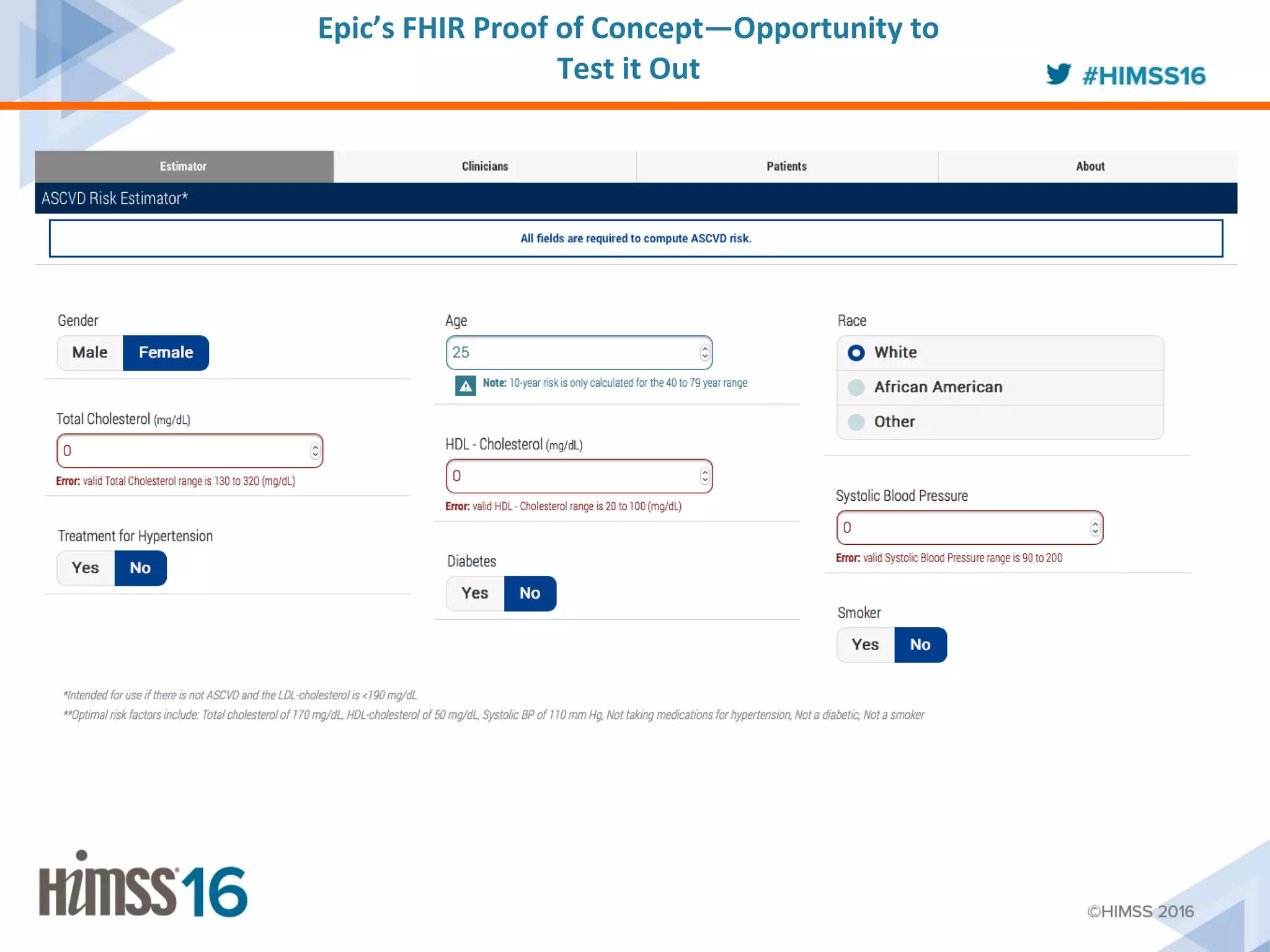
Epic’s FHIR Proof of Concept—Opportunity to
Test it Out
But, It’s Got to Work For My Office’s
Workflow
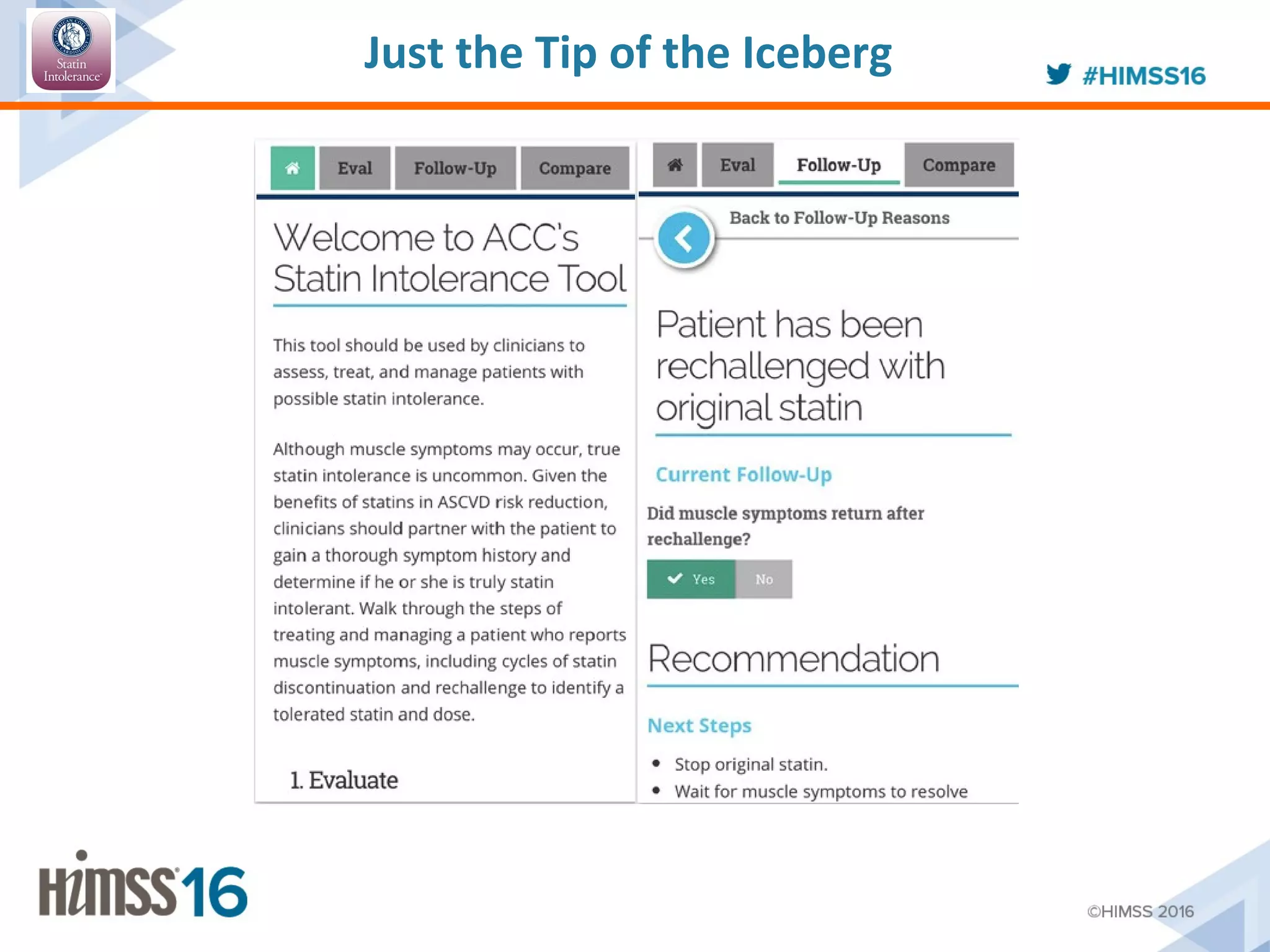
Just the Tip of the Iceberg
ACC’s Exciting FHIR Future
• Work with other EHR vendors to integrate the ASCVD risk
estimator app
• Implement FHIR interfaces to other ACC tools and services:
• Assessment of CHA2DS2-VASc and HAS-BLED scores in
patients with nonvalvular atrial fibrillation (NVAF)
• Risk of inpatient mortality in patients undergoing
transaortic valve replacement (TAVR)
• Prototype FHIR integration with National Cardiovascular Data
Registry risk scores
• Examples include the CathPCI inpatient mortality,
restenosis and bleeding risk scores
Questions

ASCVD EHR Integration Pilot Using FHIR

  • 1.
    The ACC/AHA ASCVDRisk Estimator App and the EHR FHIR Integration Project Ty J. Gluckman, MD, FACC, FAHA Medical Director, Clinical Transformation Providence Heart and Vascular Institute, Oregon Region and Associate Editor, Practice Guidelines and Clinical Documents, ACC.org
  • 2.
  • 3.
    History of the ASCVDRisk Estimator App 2007-2015: Emergence of quality and value- based care 2015: MACRA passed, SGR repealed ASCVD risk estimator EHR integration Making the tool work for care providers Just the tip of the iceberg Purpose of the ASCVD Risk Estimator App Measuring our success Objectives
  • 4.
    It starts with havinga problem that is improved by having a point of care tool which supports better clinical decision- making and/or improved patient outcomes So, Why Build a Medical App?
  • 5.
    • The 2013ACC/AHA Blood Cholesterol Guidelines identified the following groups as appropriate for statin therapy: • Established atherosclerotic cardiovascular disease (ASCVD) • Familial hypercholesterolemia (LDL-C >190 mg/dL) • Diabetes mellitus and LDL-C of 70-189 mg/dL • Primary prevention (no ASCVD, FH, or DM) • It was recommended that 10-year ASCVD risk be assessed in the latter two groups to determine either A) statin intensity or B) statin appropriateness • Risk is based on gender, age, race, TC, HDL-C, systolic BP, treatment for hypertension, tobacco use, and presence of diabetes Stone NJ et al. JACC 2014;63:2889-2934 BP=Blood pressure, FH=Familial hypercholesterolemia, TC=Total cholesterol So, Why Did We Build the ASCVD Risk Estimator App?
  • 6.
    The “You’ve GottaBe Kidding Me” Solution https://www.google.com/url? sa=t&rct=j&q=&esrc=s&source=web&cd=1&ved=0CB4QFjAAahUKEwikq4egr7vIAhWRN4gKHWftCs8&url=h ttp%3A%2F%2Fstatic.heart.org%2Fahamah%2Frisk %2FOmnibus_Risk_Estimator.xls&usg=AFQjCNHuhcCpk6wiQ0Cve4_NK6anhBOmxA&sig2=7R0lB6spYM6G D4HqLiMrEQ
  • 7.
    So, We Madea Better Calculator Companion tool to enable healthcare providers to estimate 10-year and lifetime risks for atherosclerotic cardiovascular disease (ASCVD) Companion tool to enable healthcare providers to estimate 10-year and lifetime risks for atherosclerotic cardiovascular disease (ASCVD) http://tools.acc.org/ASCVD-Risk-Estimator/ And Then Asked, What Other Needs Could be Met by the App?
  • 8.
    And Then Asked,What Other Clinician Needs Could be Met? http://tools.acc.org/ASCVD-Risk-Estimator/
  • 9.
    http://tools.acc.org/ASCVD-Risk-Estimator/ And Then Asked,What Other Patient Needs Could be Met?
  • 10.
    Average Daily (M-F)Web Sessions = 2,661 Average Daily (M-F) App Sessions = 5,411 *Through December 2015 Average Daily (M-F) Total Sessions = 8,072 Total Web Sessions = 1.51 million Total App Sessions = 3.58 million Total Sessions = 5.09 million 281,260 app downloads* The best medical app released in 2014 How Do We Measure the Success of an App?
  • 11.
    But, Where AreWe Spending All of Our Time These Days?
  • 12.
    EHR Integration ofthe ASCVD Risk Estimator • Clinicians expend many hours documenting patient visits in their electronic health record (EHR) system. To access a clinical app, however, care providers often use a smart phone or tablet. • Integrating ACC clinical apps into electronic health record (EHR) systems will enhance current workflows and documentation by making these tools available to clinicians at the point of care. • Fast Healthcare Interoperability Resources (FHIR) Specification defines a standard that advances the capability of clinical apps by requesting specific patient data from the patient’s electronic chart to be inserted into the risk tool.
  • 13.
    Fast Healthcare Interoperability Resources(FHIR) • Application Programming Interface (API) for exchanging health data • Draft standard describing data formats and elements (know as resources) • Created by the Health Level Seven International (HL7) organization • Uses a modern web-based suite of API technology • HTTP-based RESTful protocol, CSS, JSON, XML, Oauth • Exposes discrete data elements as services
  • 14.
    FHIR Integration withACC Tools 1 send patient ID & URL where data can be accessed 2 request to access data for a specific patient data is sent back to requesting application 3 form is pre-populated and returned to requestor clinician accessing patient records ACC services and tools
  • 15.
    • ACC Calculatorscan be integrated with any FHIR vendors where fhirServiceUrl and patientId are provided to the below URL: • http://tools.acc.org/AppHome/CalcHome/CalcLinks • Publicly available FHIR servers to test are available at: • http://wiki.hl7.org/index.php? title=Publicly_Available_FHIR_Servers_for_testing • It’s important to remember that FHIR is a work in progress with non uniform vendor implementation and query performance FHIR Integration with ACC Tools
  • 16.
    • The ASCVDrisk estimator app is currently integrated into Epic • http://open.epic.com/Interface/FHIR • Go to Epic and open the below link: • https://open.epic.com/launchpad/UnprotectedSmart# • Log in with one of the listed accounts • Select the test patient, George A Eros, as this patient has all of the required data • Launch the URL: • http://tools.acc.org/AppHome/CalcHome/CalcLinks Epic’s FHIR Proof of Concept—Opportunity to Test it Out
  • 17.
    Epic’s FHIR Proofof Concept—Opportunity to Test it Out
  • 18.
    Epic’s FHIR Proofof Concept—Opportunity to Test it Out
  • 19.
    But, It’s Gotto Work For My Office’s Workflow
  • 20.
    Just the Tipof the Iceberg
  • 21.
    ACC’s Exciting FHIRFuture • Work with other EHR vendors to integrate the ASCVD risk estimator app • Implement FHIR interfaces to other ACC tools and services: • Assessment of CHA2DS2-VASc and HAS-BLED scores in patients with nonvalvular atrial fibrillation (NVAF) • Risk of inpatient mortality in patients undergoing transaortic valve replacement (TAVR) • Prototype FHIR integration with National Cardiovascular Data Registry risk scores • Examples include the CathPCI inpatient mortality, restenosis and bleeding risk scores
  • 22.