MODERN ART
OBJECTIVES SCIENTIA (BIASA)
1. Identify distinct characteristics of arts from the various art
movements impressionism, expressionism and cubism
2. Familiarize with the renowned artist associated with
impressionism, expressionism and cubism
3. Identify representative artist and Filipino counterparts from
the various art movements
4. Analyze art elements and principles in the production of
work following a specific art style from the various art
movements.
•
VIRTUS (MAGANACA)
1. Manifest awareness of Western historical and
cultural heritage.
2. Deepen understanding about the modern art
and the different artistic style during that
period.
3. Show the influences of modern art
movements on the Philippine art forms
COMMUNITAS (MAYAP)
1. Create an artwork guided by technique
and styles of the various art movements
2. Explore the different art movements a
inform artistic creations by creating a
project.
3. Mount an exhibit using completed artworks
influenced by modern art movements
MODERN ART
is characterized by the
contemporary styles of visual
art produced from 1860s to
1970s. During this period,
artist experimented with other
materials to produce art.
Impressionism
Expressionism
Characteristics
Artists
Paintings
ART MOVEMENT OR STYLE
1. IMPRESSIONISM
•It is a style that tried to
capture an impression of
what the eye sees at a
given moment and the
effect of sunlight on the
subject
1. IMPRESSIONISM
Developed in Paris, France in late
1860s and early 1870s
The Impressionists sought to express their
perceptions of nature, rather than create
exact representations
Impressionist artists were not trying to paint a
reflection of real life, but an ‘impression’ of what the
person, light, atmosphere, object or landscape looked
like to them. And that’s why they were called
impressionists. They tried to capture the movement
and life of what they saw and show it to us as if it
were happening before our eyes.
1. Uses of color and light to unify images
2. Uses pure, intense on the canvas
3. Uses thin brushstrokes and dabs on paint
4. Abandoning traditional linear perspective
5. Avoid clarity of forms, sometimes they look
undefined and a bit fuzzy
6. Moving from studio to countryside or streets
Characteristics of Impressionist Painters
1. Claude Monet
• The true pioneer of the impressionists
• He constantly exploring “what do I see
and how do I record it in painting?”
• He has a long-lasting fascination in
observing and painting light and nature
• French painter
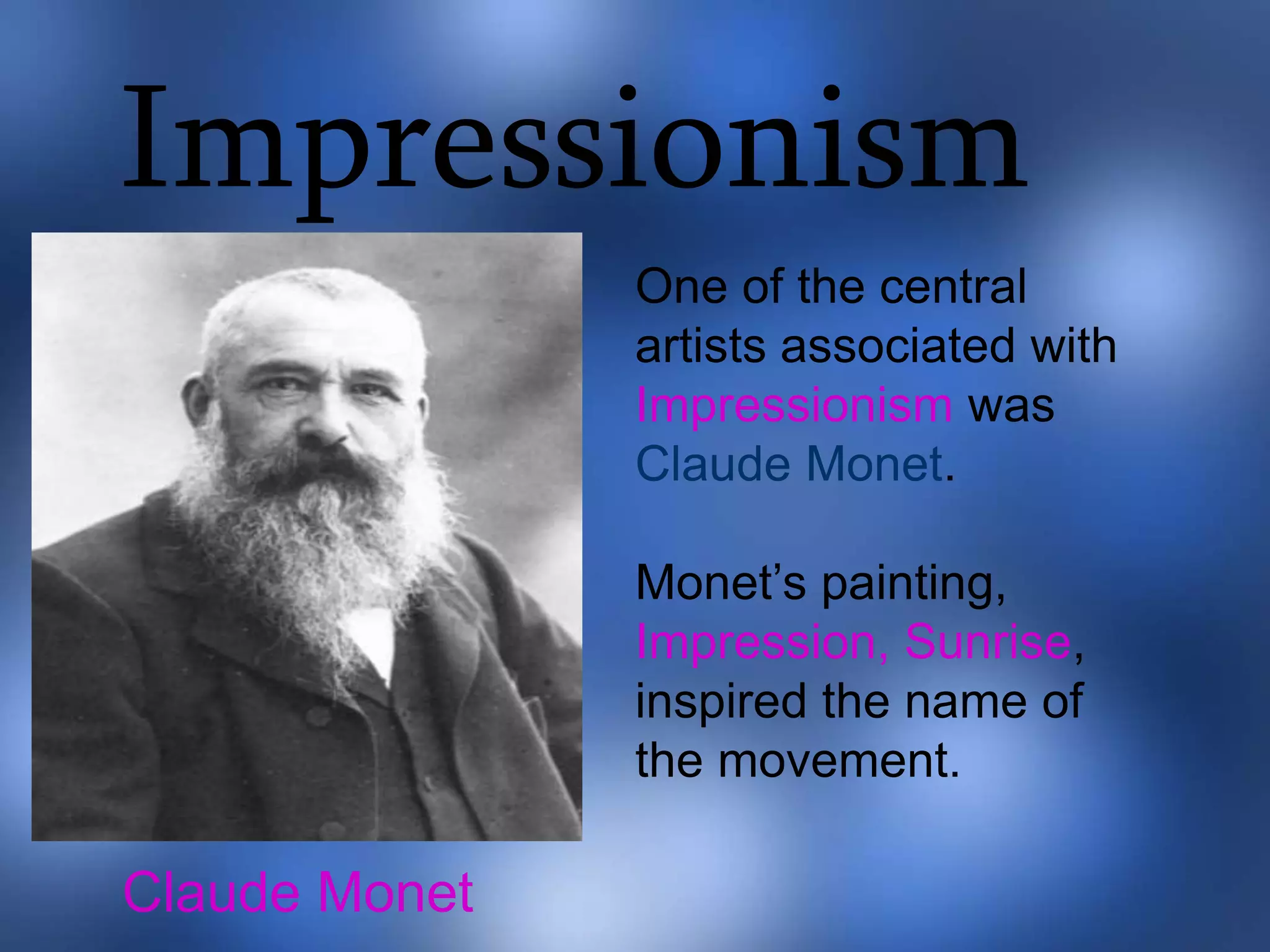
Claude Monet
One of the central
artists associated with
Impressionism was
Claude Monet.
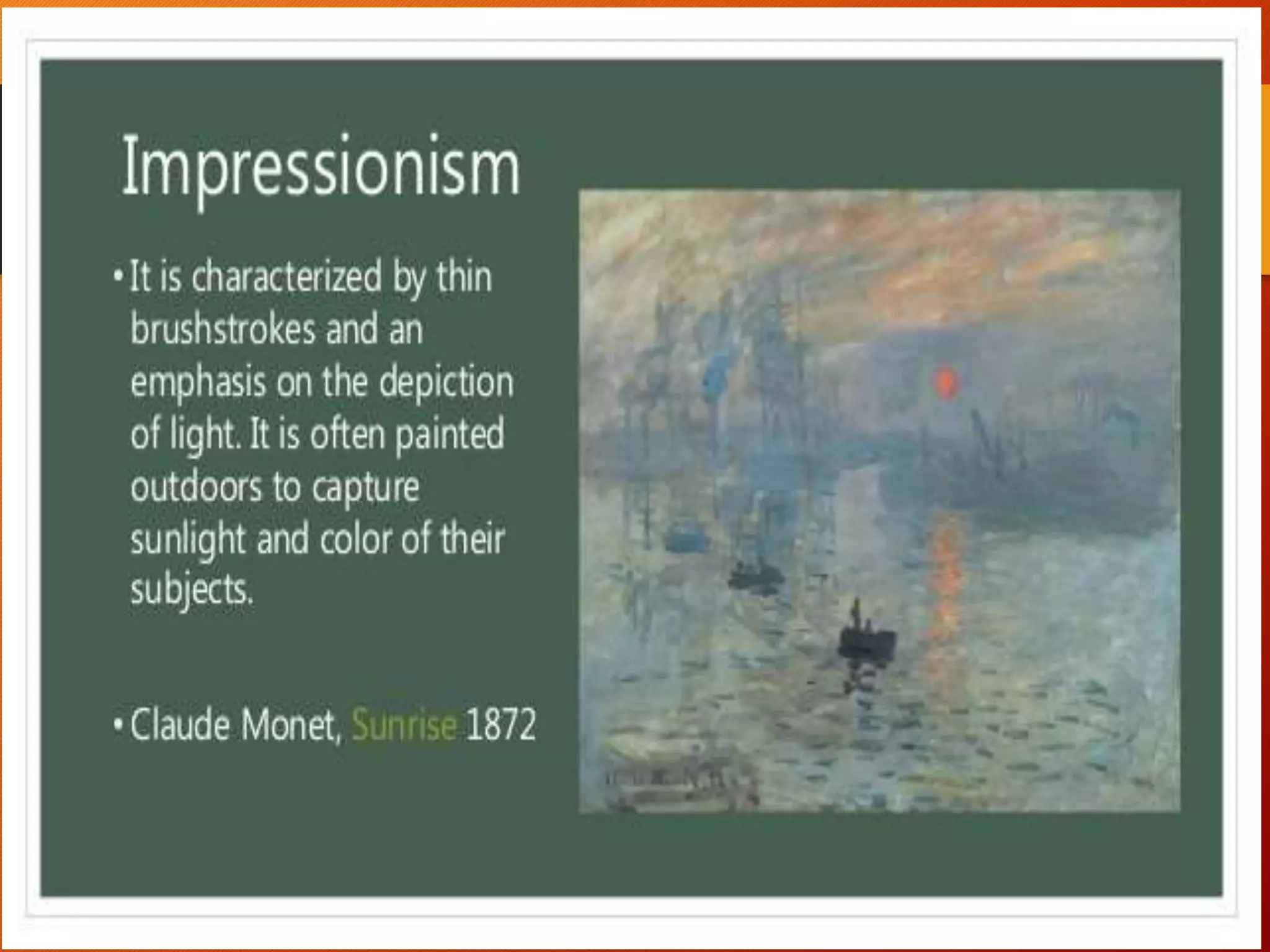
Monet’s painting,
Impression, Sunrise,
inspired the name of
the movement.
Impressionism
Impression, Sunrise
By Claude Monet (oil canvas)
Visiting his
home and
garden in
Giverny, is
like walking
inside his
paintings.
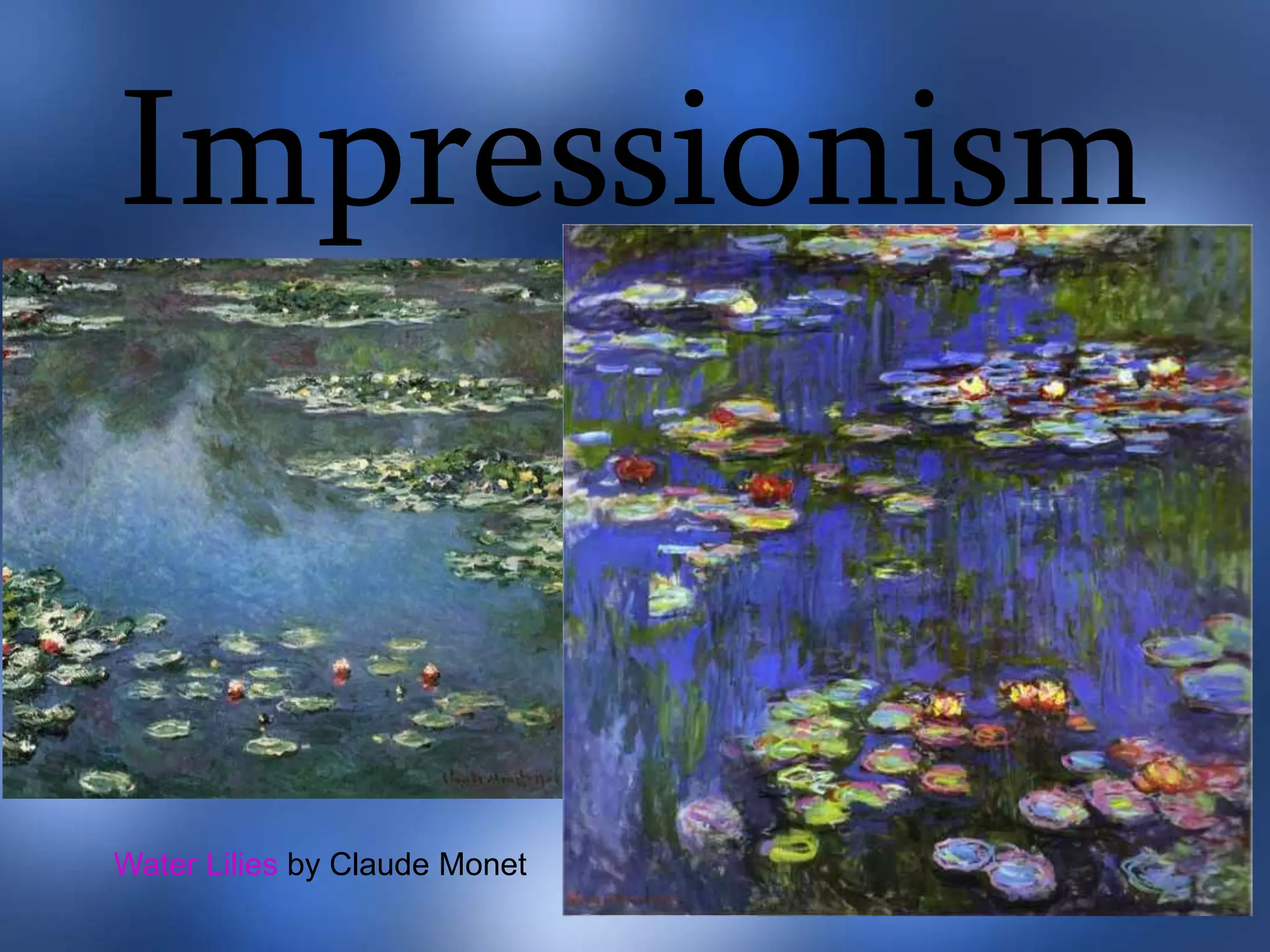
The water
lilies are still
there.
Impressionism
Water Lilies by Claude Monet
Impressionism
Vincent Willem Van Gogh
was a Dutch Post-Impressionist painter who
posthumously became one of the most famous and
influential figures in Western art history in a decade
he created about 2,100 artworks, including around
860 oil paintings, most of which date from the last two
years of his
• In Starry Night contoured forms are
a means of expression and they are
used to convey emotion
• The Starry Night depicts a
dreamy interpretation of the artist's
asylum room's sweeping view of Saint-
Rémy-de-Provence.
Vincent van Gogh
Édouard Manet was a French modernist
painter. He was one of the first 19th-century artists to paint
modern life, and a pivotal figure in the transition from
Realism to Impressionism.
Born: January 23, 1832
Paris, France
The Railway 1873
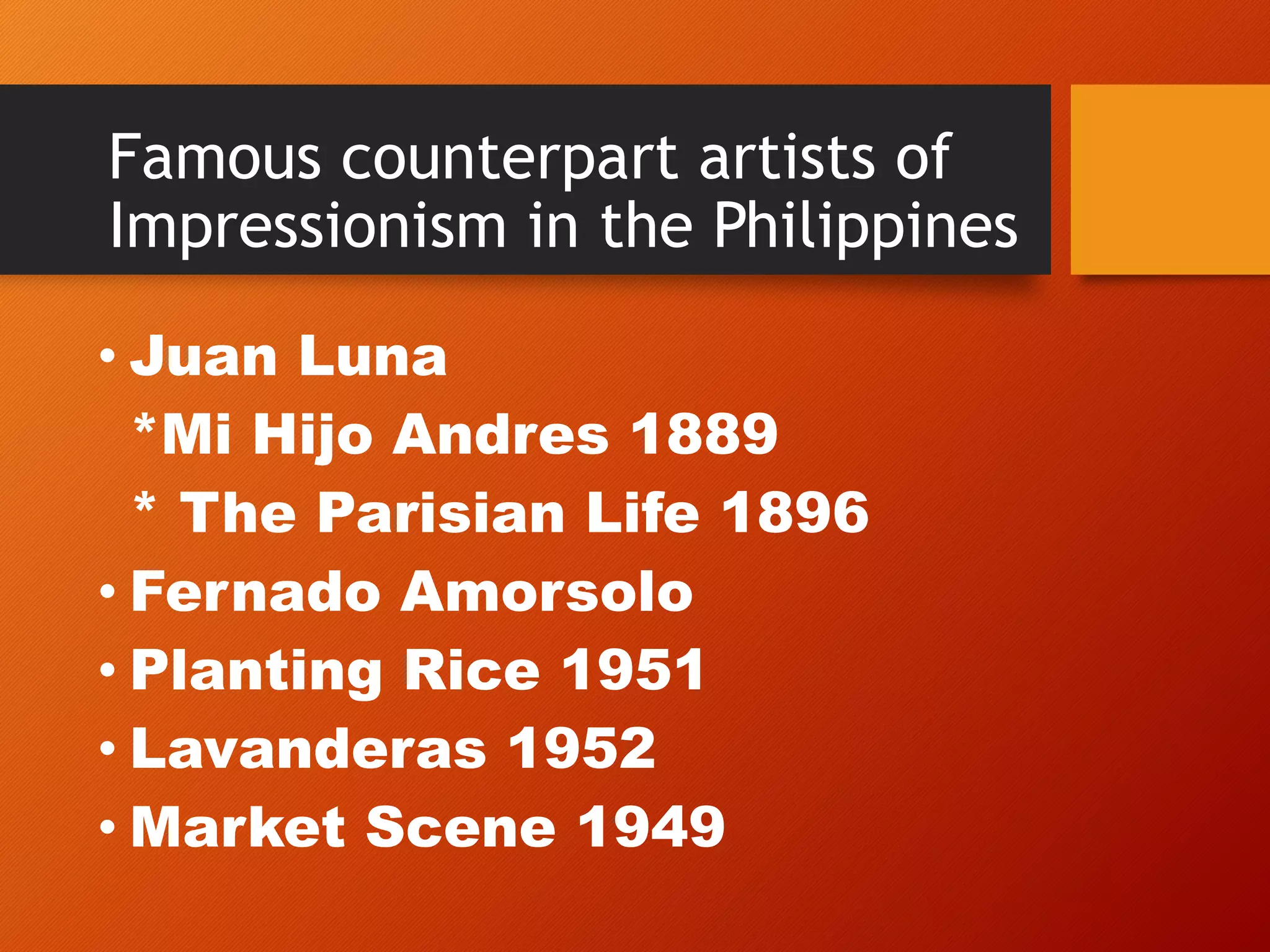
Famous counterpart artists of
Impressionism in the Philippines
• Juan Luna
*Mi Hijo Andres 1889
* The Parisian Life 1896
• Fernado Amorsolo
• Planting Rice 1951
• Lavanderas 1952
• Market Scene 1949
Harvest
Cockfighting
Tinikling
The bathers
JUAN LUNA’S
PAINTINGS
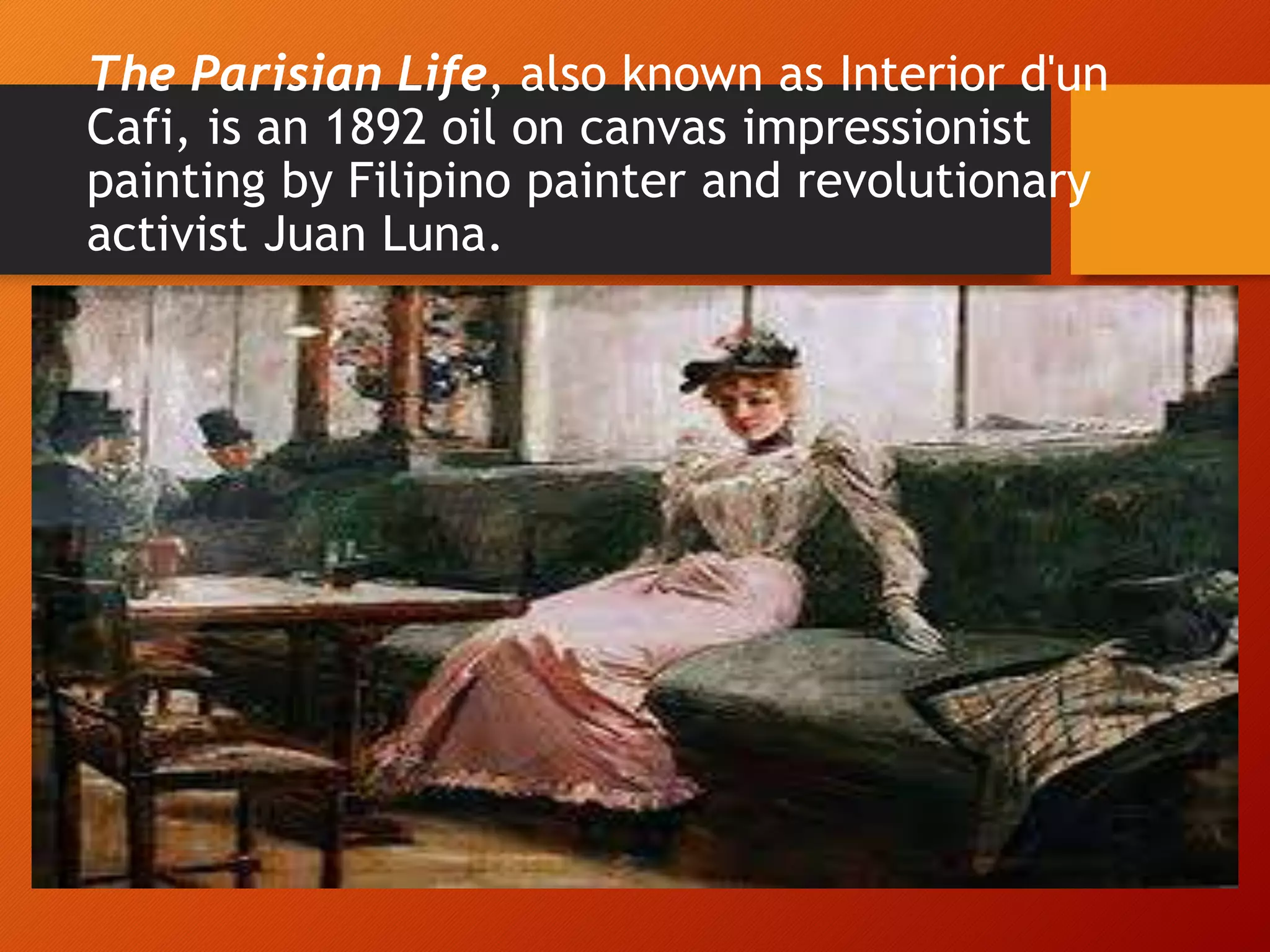
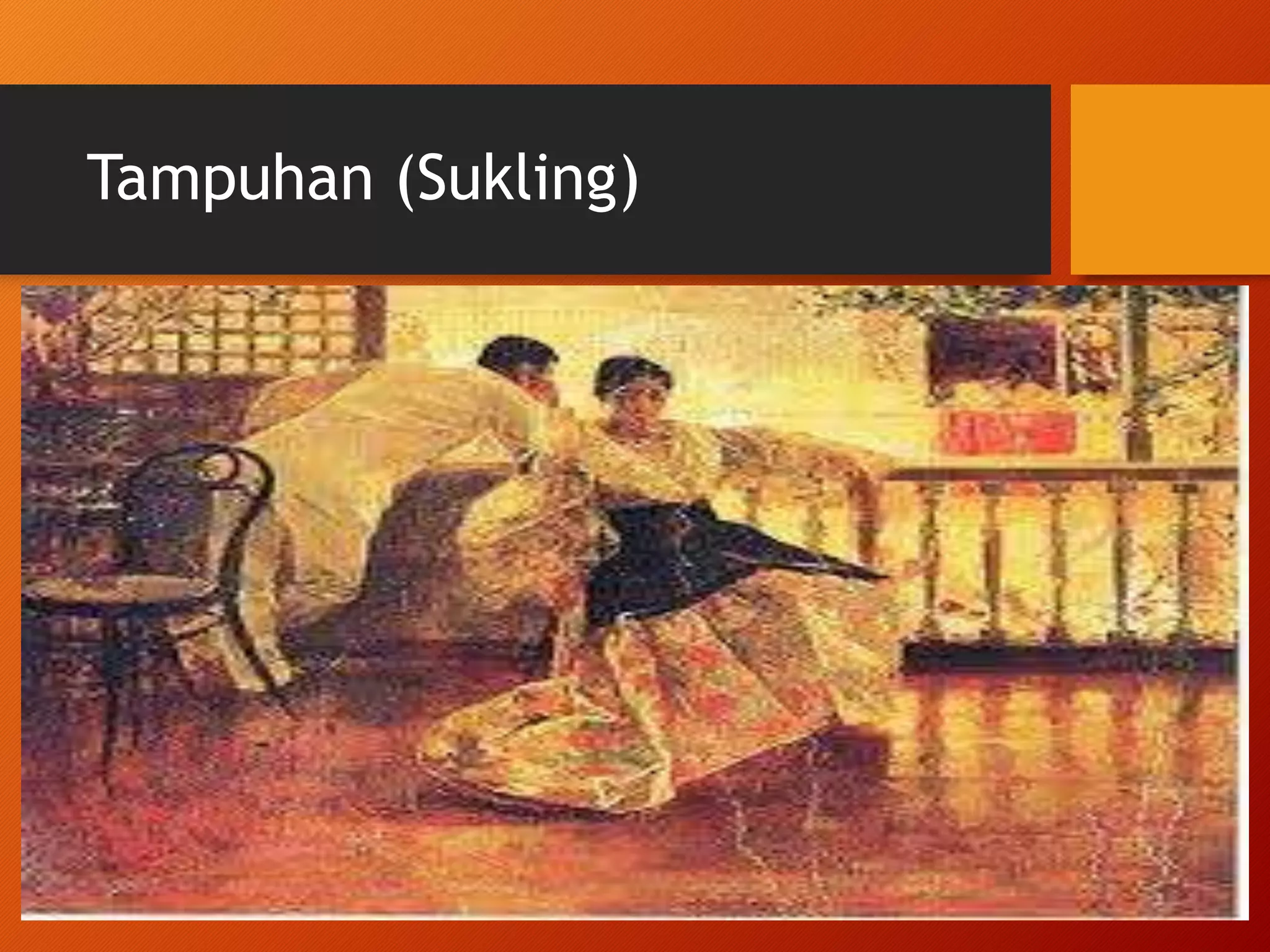
The Parisian Life, also known as Interior d'un
Cafi, is an 1892 oil on canvas impressionist
painting by Filipino painter and revolutionary
activist Juan Luna.
Tampuhan (Sukling)
The Death of Cleopatra, also known simply
as Cleopatra, is an 1881 painting made by
the Filipino painter Juan Luna
•Spoliarium is a Latin word referring to
the basement of the Roman Colosseum
where the fallen and dying gladiators are
dumped and devoid of their worldly
possessions. At the center of Luna's
painting are fallen gladiators being
dragged by Roman soldiers.
Expressionism
•Originated in Germany before World War
I
• The art movement in which artworks
conveyed strong feelings rather than to
represent the external world.
• Artist use this style to show fear, anger,
darkness, protest against brutality and
inhumanity
Characteristics of Expressionist
painting
1.violent
2.unreal color
3.dramatic brushstroke
4. Intense
5. Passionate
6. highly personal
Anxiety
1. Edvard Munch
• The best know forerunner of
expressionism.
• His painting expresses fear
• He was one of the several expressionists
who felt strongly that painting could
show people worrying and suffering
Famous Painting of Munch
• The Scream
Influence of Expressionism on the
Philippine Art
National Artist Victor Edades –
Father of Philippine Modern Art
• The Builders 1928- famous
painting of Edades
Criteria
Neatness/design 10 points
Interpretation 10 points
Color Harmony 5 points
Clarity of idea 10 points
Submission time on 5 points
Surrealism
•the exploration of the dream
as a valid form of reality, and a
willingness to depict images
•It is made up of pure
imagination and personal
expression
Metamorphosis of Narcissus
Pop Art
•It refer to a style grounded
in a consumer culture.
1. Andy Warhol
• He is a prominent figure in pop
art.
• His background as a commercial
artist and illustrator explains why
his work appear the way they do
Performance Art
•It requires artists to use
their bodies in front of an
audience
Art Mob
• Artists take their art to the streets,
parks, malls
• It is a form of spectacle that grew out
as an extension of performance art
• It become popular with its eclectic
combination of art and showmanship

ART-Impressionism-new2.pptx

  • 1.
  • 2.
    OBJECTIVES SCIENTIA (BIASA) 1.Identify distinct characteristics of arts from the various art movements impressionism, expressionism and cubism 2. Familiarize with the renowned artist associated with impressionism, expressionism and cubism 3. Identify representative artist and Filipino counterparts from the various art movements 4. Analyze art elements and principles in the production of work following a specific art style from the various art movements. • VIRTUS (MAGANACA) 1. Manifest awareness of Western historical and cultural heritage. 2. Deepen understanding about the modern art and the different artistic style during that period. 3. Show the influences of modern art movements on the Philippine art forms COMMUNITAS (MAYAP) 1. Create an artwork guided by technique and styles of the various art movements 2. Explore the different art movements a inform artistic creations by creating a project. 3. Mount an exhibit using completed artworks influenced by modern art movements
  • 3.
    MODERN ART is characterizedby the contemporary styles of visual art produced from 1860s to 1970s. During this period, artist experimented with other materials to produce art.
  • 4.
  • 5.
    1. IMPRESSIONISM •It isa style that tried to capture an impression of what the eye sees at a given moment and the effect of sunlight on the subject
  • 6.
    1. IMPRESSIONISM Developed inParis, France in late 1860s and early 1870s The Impressionists sought to express their perceptions of nature, rather than create exact representations Impressionist artists were not trying to paint a reflection of real life, but an ‘impression’ of what the person, light, atmosphere, object or landscape looked like to them. And that’s why they were called impressionists. They tried to capture the movement and life of what they saw and show it to us as if it were happening before our eyes.
  • 7.
    1. Uses ofcolor and light to unify images 2. Uses pure, intense on the canvas 3. Uses thin brushstrokes and dabs on paint 4. Abandoning traditional linear perspective 5. Avoid clarity of forms, sometimes they look undefined and a bit fuzzy 6. Moving from studio to countryside or streets Characteristics of Impressionist Painters
  • 8.
    1. Claude Monet •The true pioneer of the impressionists • He constantly exploring “what do I see and how do I record it in painting?” • He has a long-lasting fascination in observing and painting light and nature • French painter
  • 9.
    Claude Monet One ofthe central artists associated with Impressionism was Claude Monet. Monet’s painting, Impression, Sunrise, inspired the name of the movement. Impressionism
  • 11.
  • 13.
    Visiting his home and gardenin Giverny, is like walking inside his paintings. The water lilies are still there. Impressionism
  • 14.
    Water Lilies byClaude Monet Impressionism
  • 15.
    Vincent Willem VanGogh was a Dutch Post-Impressionist painter who posthumously became one of the most famous and influential figures in Western art history in a decade he created about 2,100 artworks, including around 860 oil paintings, most of which date from the last two years of his
  • 16.
    • In StarryNight contoured forms are a means of expression and they are used to convey emotion • The Starry Night depicts a dreamy interpretation of the artist's asylum room's sweeping view of Saint- Rémy-de-Provence.
  • 17.
  • 19.
    Édouard Manet wasa French modernist painter. He was one of the first 19th-century artists to paint modern life, and a pivotal figure in the transition from Realism to Impressionism. Born: January 23, 1832 Paris, France The Railway 1873
  • 20.
    Famous counterpart artistsof Impressionism in the Philippines • Juan Luna *Mi Hijo Andres 1889 * The Parisian Life 1896 • Fernado Amorsolo • Planting Rice 1951 • Lavanderas 1952 • Market Scene 1949
  • 22.
  • 24.
  • 25.
  • 26.
  • 27.
  • 29.
    The Parisian Life,also known as Interior d'un Cafi, is an 1892 oil on canvas impressionist painting by Filipino painter and revolutionary activist Juan Luna.
  • 30.
  • 31.
    The Death ofCleopatra, also known simply as Cleopatra, is an 1881 painting made by the Filipino painter Juan Luna
  • 33.
    •Spoliarium is aLatin word referring to the basement of the Roman Colosseum where the fallen and dying gladiators are dumped and devoid of their worldly possessions. At the center of Luna's painting are fallen gladiators being dragged by Roman soldiers.
  • 34.
    Expressionism •Originated in Germanybefore World War I • The art movement in which artworks conveyed strong feelings rather than to represent the external world. • Artist use this style to show fear, anger, darkness, protest against brutality and inhumanity
  • 35.
    Characteristics of Expressionist painting 1.violent 2.unrealcolor 3.dramatic brushstroke 4. Intense 5. Passionate 6. highly personal
  • 39.
  • 40.
    1. Edvard Munch •The best know forerunner of expressionism. • His painting expresses fear • He was one of the several expressionists who felt strongly that painting could show people worrying and suffering
  • 42.
    Famous Painting ofMunch • The Scream Influence of Expressionism on the Philippine Art National Artist Victor Edades – Father of Philippine Modern Art • The Builders 1928- famous painting of Edades
  • 44.
    Criteria Neatness/design 10 points Interpretation10 points Color Harmony 5 points Clarity of idea 10 points Submission time on 5 points
  • 46.
    Surrealism •the exploration ofthe dream as a valid form of reality, and a willingness to depict images •It is made up of pure imagination and personal expression
  • 48.
  • 53.
    Pop Art •It referto a style grounded in a consumer culture.
  • 56.
    1. Andy Warhol •He is a prominent figure in pop art. • His background as a commercial artist and illustrator explains why his work appear the way they do
  • 59.
    Performance Art •It requiresartists to use their bodies in front of an audience
  • 60.
    Art Mob • Artiststake their art to the streets, parks, malls • It is a form of spectacle that grew out as an extension of performance art • It become popular with its eclectic combination of art and showmanship