Impressionism
VISUAL ART 101
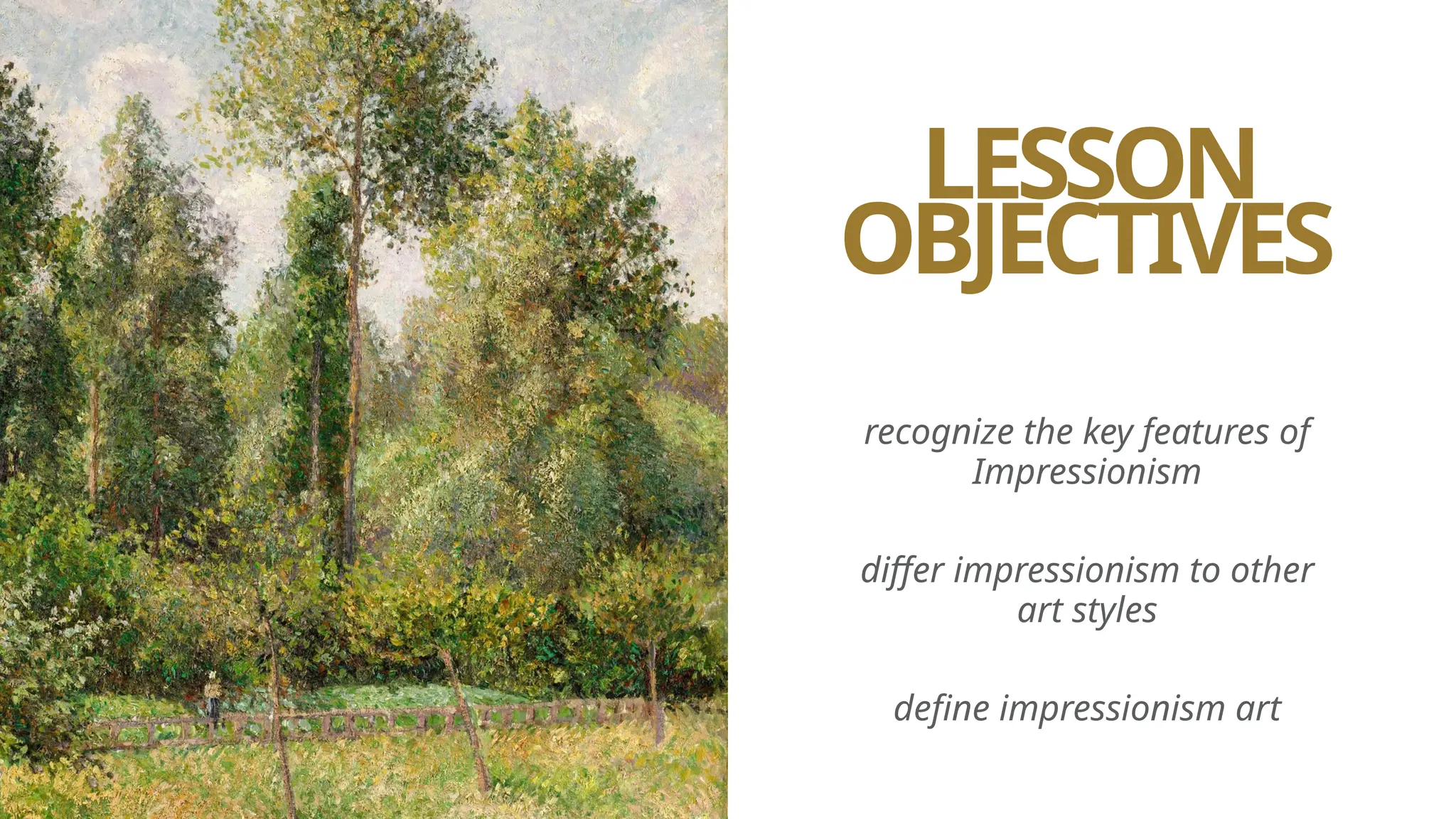
LESSON
OBJECTIVES
recognize the key features of
Impressionism
differ impressionism to other
art styles
define impressionism art
OBSERVE
What is the first element of the
painting that catches your eye?
What do you believe the individual
depicted in the painting is doing?
Can you make a guess as to the
time of day depicted in the scene?
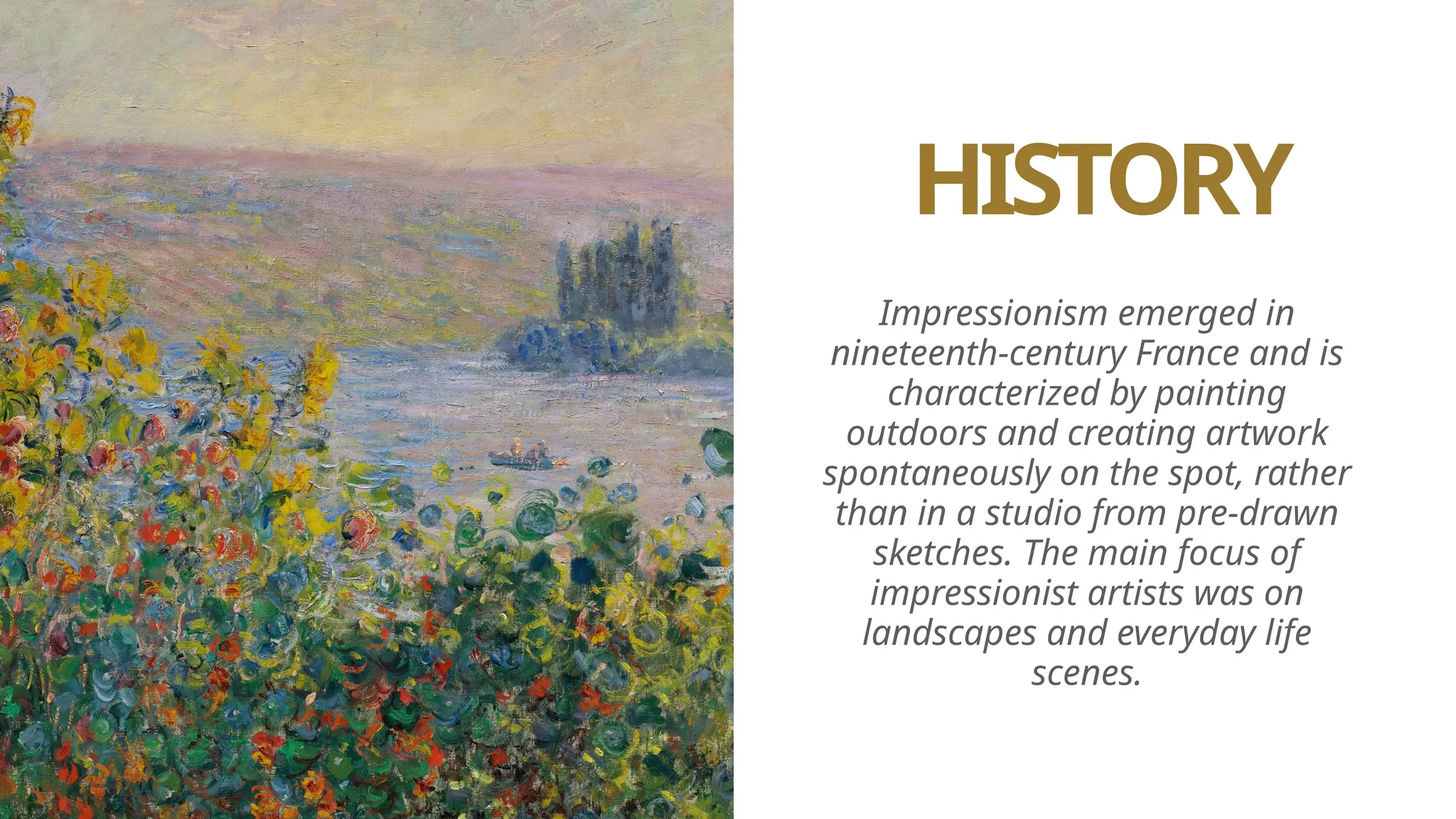
HISTORY
Impressionism emerged in
nineteenth-century France and is
characterized by painting
outdoors and creating artwork
spontaneously on the spot, rather
than in a studio from pre-drawn
sketches. The main focus of
impressionist artists was on
landscapes and everyday life
scenes.
DEVELOPING
IMPRESSIONIS
M
Impressionism was created by
Claude Monet and fellow artists in
Paris starting in the early 1860s.
However, the idea of painting on
location was first explored in
Britain around 1813-17 and
aimed to capture nature
realistically.
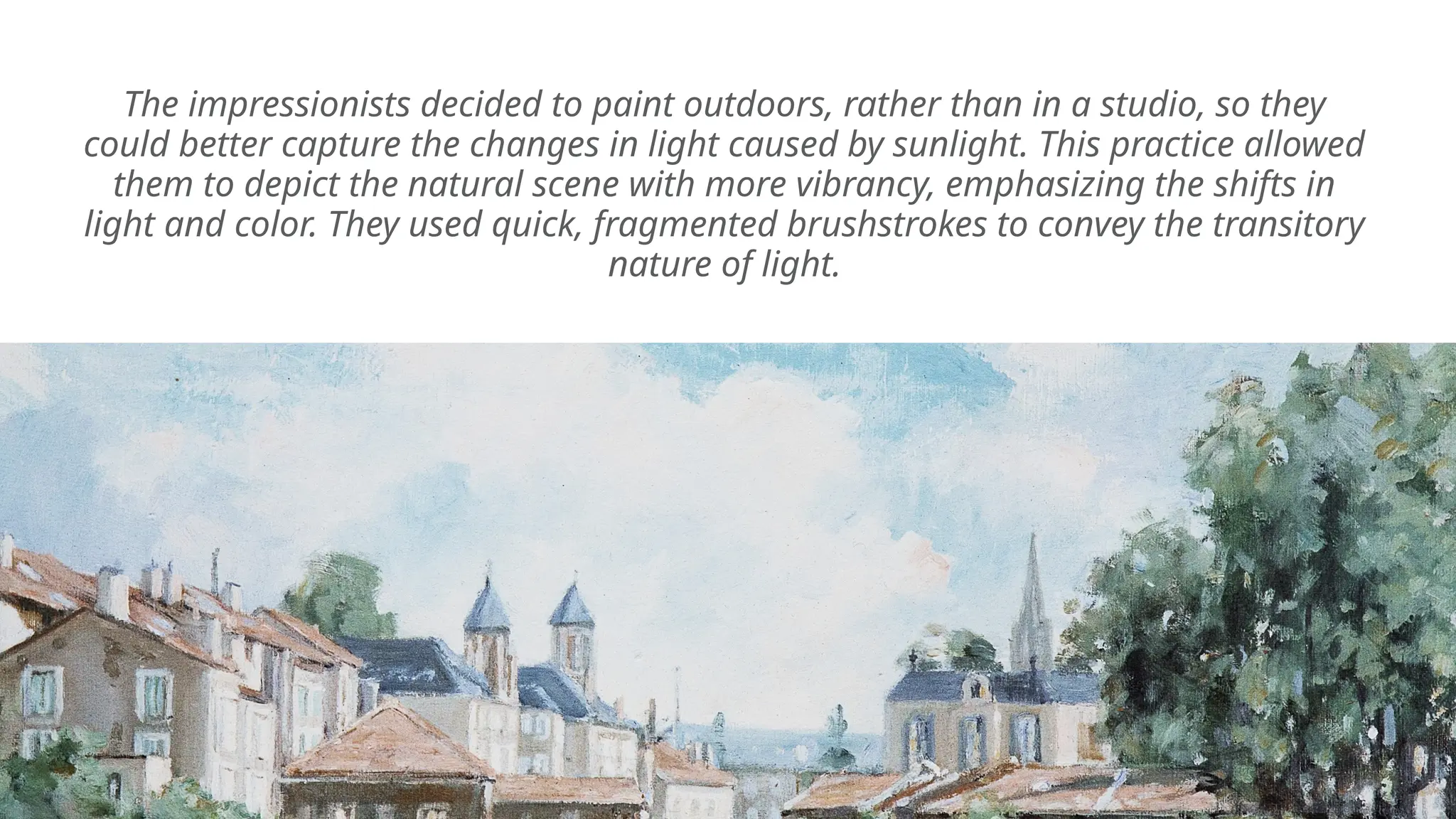
The impressionists decided to paint outdoors, rather than in a studio, so they
could better capture the changes in light caused by sunlight. This practice allowed
them to depict the natural scene with more vibrancy, emphasizing the shifts in
light and color. They used quick, fragmented brushstrokes to convey the transitory
nature of light.
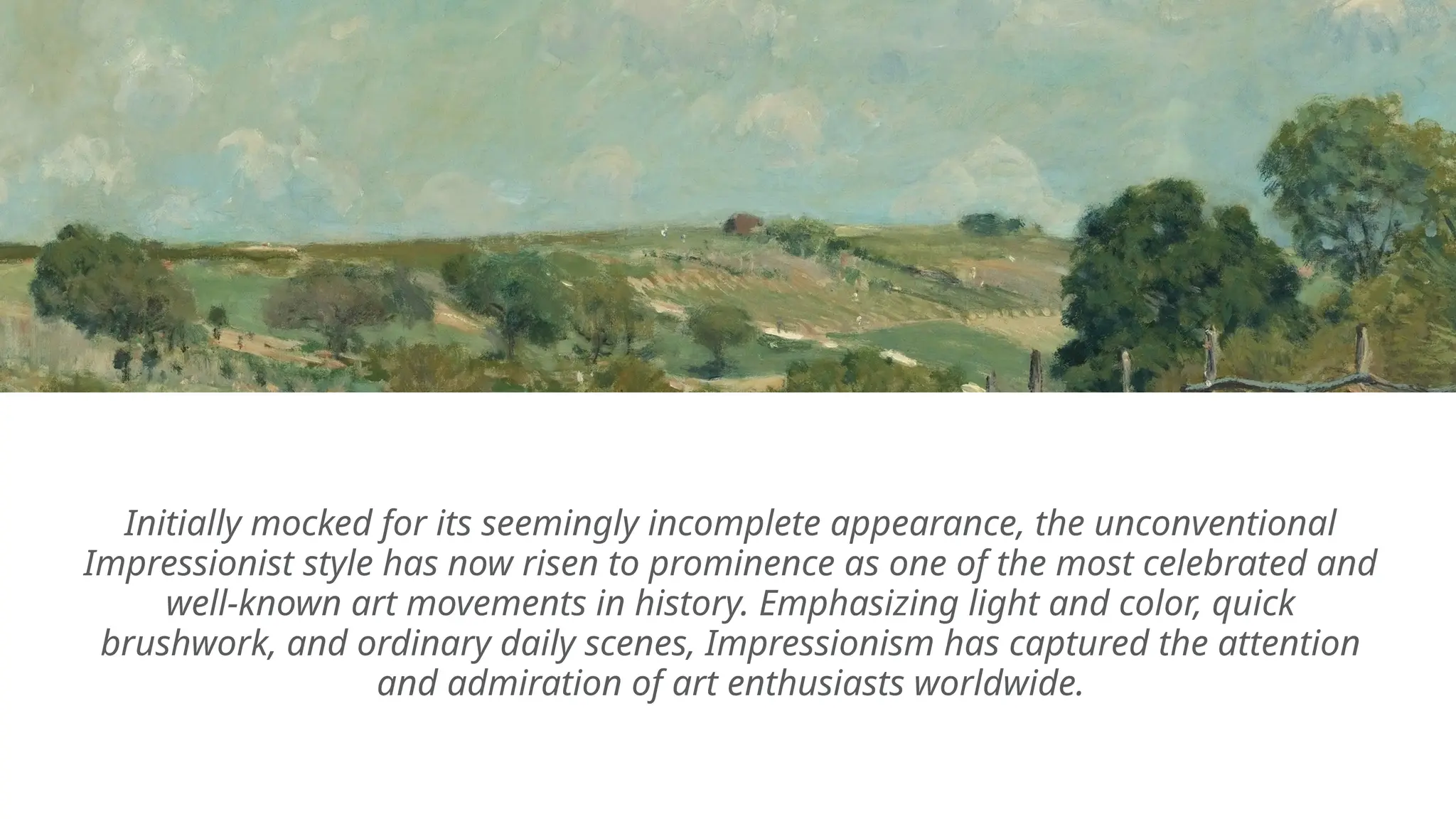
Initially mocked for its seemingly incomplete appearance, the unconventional
Impressionist style has now risen to prominence as one of the most celebrated and
well-known art movements in history. Emphasizing light and color, quick
brushwork, and ordinary daily scenes, Impressionism has captured the attention
and admiration of art enthusiasts worldwide.
BritishImpressionism
BRITISH
IMPRESSIONISM
British impressionism refers to the
art produced by British artists
during the late 19th century who
were inspired by the concepts of
the French impressionists.
THEBEGINNING
James McNeill Whistler introduced
modernist ideas and techniques,
including rapid brushstrokes,
attention to light and shade, and
portraying everyday scenes, which
later became known as French
impressionism, to Britain when he
moved to London in 1863.
Even though British artists were influenced by the French Impressionists, the
adoption of the Impressionist style was not widely recognized as a significant
movement in Britain.
Thankyou

Visual Art Impressionism Education Presentation in Colorful Illustrative Style.pptx

  • 1.
  • 2.
    LESSON OBJECTIVES recognize the keyfeatures of Impressionism differ impressionism to other art styles define impressionism art
  • 3.
    OBSERVE What is thefirst element of the painting that catches your eye? What do you believe the individual depicted in the painting is doing? Can you make a guess as to the time of day depicted in the scene?
  • 4.
    HISTORY Impressionism emerged in nineteenth-centuryFrance and is characterized by painting outdoors and creating artwork spontaneously on the spot, rather than in a studio from pre-drawn sketches. The main focus of impressionist artists was on landscapes and everyday life scenes.
  • 5.
    DEVELOPING IMPRESSIONIS M Impressionism was createdby Claude Monet and fellow artists in Paris starting in the early 1860s. However, the idea of painting on location was first explored in Britain around 1813-17 and aimed to capture nature realistically.
  • 6.
    The impressionists decidedto paint outdoors, rather than in a studio, so they could better capture the changes in light caused by sunlight. This practice allowed them to depict the natural scene with more vibrancy, emphasizing the shifts in light and color. They used quick, fragmented brushstrokes to convey the transitory nature of light.
  • 7.
    Initially mocked forits seemingly incomplete appearance, the unconventional Impressionist style has now risen to prominence as one of the most celebrated and well-known art movements in history. Emphasizing light and color, quick brushwork, and ordinary daily scenes, Impressionism has captured the attention and admiration of art enthusiasts worldwide.
  • 8.
  • 9.
    BRITISH IMPRESSIONISM British impressionism refersto the art produced by British artists during the late 19th century who were inspired by the concepts of the French impressionists.
  • 10.
    THEBEGINNING James McNeill Whistlerintroduced modernist ideas and techniques, including rapid brushstrokes, attention to light and shade, and portraying everyday scenes, which later became known as French impressionism, to Britain when he moved to London in 1863.
  • 11.
    Even though Britishartists were influenced by the French Impressionists, the adoption of the Impressionist style was not widely recognized as a significant movement in Britain.
  • 12.