PROJECT TITLE :-
SMART HEALTH MONITORING SYTEM
PRESENTED BY:-
APARNA SHUKLA
CONTENTS
 Introduction
 Objectives
 Features
 Hardware Requirements
 Software Requirements
 Flowchart
 Limitations
 Applications
 Challenges
 Benefits
 Implementation
 Future Development
 Conclusion
 Reference
Introduction
 Smart health monitoring system using
Python & Tkinter without sensors is a
software-based solution .This system utilizes
algorithms to analyze user-input data for
health monitoring . The system provides
real-time health insights to users without the
need for physical sensors.
Objectives
 The purpose of this system is to enable
individuals to monitor their health using
readily available technology.
 By leveraging Python and Tkinter, users can
track their health metrics conveniently.
 This system aims to promote proactive
health management and wellness.
Features
 The system includes features such as input
forms for users to enter their health data.
 Users can view graphical representations of
their health metrics within the application.
 It provides personalized health
recommendations based on the data input by
the user.
Hardware Requirements
 Computer or Laptop:
◦ Processor: Intel Core i3 or equivalent (or
better for smoother performance).
◦ RAM: 4GB minimum (8GB recommended for
better performance).
◦ Storage: 100GB of free space for development
and data storage.
Software Requirements
 Operating System:
◦ Windows, macOS, or Linux.
 Programming Language:
◦ Python (Version 3.6 or later).
 Libraries and Frameworks:
◦ Tkinter: For creating the graphical user interface (GUI).
◦ NumPy: For numerical operations (if needed for calculations).
◦ Pandas: For data manipulation and analysis (optional).
◦ Matplotlib: For plotting graphs (if you want to visualize data).
◦ OpenCV or PIL (Pillow): For handling images if needed.
 Development Environment:
◦ IDE/Text Editor: PyCharm, VSCode, or any other Python IDE or text editor of your
choice.
 Database (Optional):
◦ SQLite: For storing user data and monitoring records locally.
◦ MySQL or PostgreSQL: If you need more advanced database features or remote
storage.
 Simulation Tools (Optional):
◦ Simulated Data: For testing purposes, create mock data to simulate health metrics like
heart rate, temperature, etc.
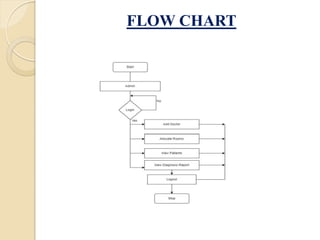
FLOW CHART
Limitations
 Data Accuracy and Reliability
 Limited Scope
 User Dependency
 Lack of Integration
 Limited Customization
 Data Security and Privacy
Applications
 Virtual Health Consultations
 Health Records Management
 Diet and Nutrition Planning
 Mental Health Support
 Exercise and Fitness Tracking
 Symptom Checker
 Medication Reminders
Challenges
 1. Data Accuracy
 2. Data transmission and connectivity
 3. Power consumption
 4. Scalability
 5.Cost
 6. Security and Privacy
Benefits
 Users benefit from proactive health
monitoring and personalized insights.
 The system empowers individuals to take
control of their well-being and make
informed decisions.
 By using Python & Tkinter without sensors,
the system offers a cost-effective and
accessible solution for health monitoring.
Implementation
 Implementing the smart health monitoring
system requires expertise in Python
programming and Tkinter GUI development.
 Collaboration with healthcare professionals
may be beneficial to ensure the system's
accuracy and relevance.
 User training and onboarding are essential
for successful deployment and adoption of
the system.
Future Development
 Future development plans include expanding the
system's capabilities and features.
 Enhancements such as AI integration and
predictive analytics are under consideration.
 The system aims to stay at the forefront of
technology advancements in health monitoring.
Conclusion
 The smart health monitoring system using Python &
Tkinter without sensors offers a convenient and
efficient way for individuals to monitor their health.
 By leveraging technology and data analysis, users
can gain valuable insights into their well-being and
make informed decisions.
 This system represents a significant advancement in
health monitoring solutions, promoting proactive
health management and wellness.
Reference
 Smith, J. (2021). Smart Health Monitoring
Systems: A Review of Technologies and
Applications. Journal of Health Informatics.
 Python Software Foundation. (n.d.). Python
Documentation.
https://www.python.org/doc/.
 Tkinter Documentation. (n.d.). Tkinter 8.6
Documentation.
https://tkdocs.com/tutorial/index.html.
THANK YOU

artificial intelligence in health care system

  • 1.
    PROJECT TITLE :- SMARTHEALTH MONITORING SYTEM PRESENTED BY:- APARNA SHUKLA
  • 2.
    CONTENTS  Introduction  Objectives Features  Hardware Requirements  Software Requirements  Flowchart  Limitations  Applications  Challenges  Benefits  Implementation  Future Development  Conclusion  Reference
  • 3.
    Introduction  Smart healthmonitoring system using Python & Tkinter without sensors is a software-based solution .This system utilizes algorithms to analyze user-input data for health monitoring . The system provides real-time health insights to users without the need for physical sensors.
  • 4.
    Objectives  The purposeof this system is to enable individuals to monitor their health using readily available technology.  By leveraging Python and Tkinter, users can track their health metrics conveniently.  This system aims to promote proactive health management and wellness.
  • 5.
    Features  The systemincludes features such as input forms for users to enter their health data.  Users can view graphical representations of their health metrics within the application.  It provides personalized health recommendations based on the data input by the user.
  • 6.
    Hardware Requirements  Computeror Laptop: ◦ Processor: Intel Core i3 or equivalent (or better for smoother performance). ◦ RAM: 4GB minimum (8GB recommended for better performance). ◦ Storage: 100GB of free space for development and data storage.
  • 7.
    Software Requirements  OperatingSystem: ◦ Windows, macOS, or Linux.  Programming Language: ◦ Python (Version 3.6 or later).  Libraries and Frameworks: ◦ Tkinter: For creating the graphical user interface (GUI). ◦ NumPy: For numerical operations (if needed for calculations). ◦ Pandas: For data manipulation and analysis (optional). ◦ Matplotlib: For plotting graphs (if you want to visualize data). ◦ OpenCV or PIL (Pillow): For handling images if needed.  Development Environment: ◦ IDE/Text Editor: PyCharm, VSCode, or any other Python IDE or text editor of your choice.  Database (Optional): ◦ SQLite: For storing user data and monitoring records locally. ◦ MySQL or PostgreSQL: If you need more advanced database features or remote storage.  Simulation Tools (Optional): ◦ Simulated Data: For testing purposes, create mock data to simulate health metrics like heart rate, temperature, etc.
  • 8.
  • 9.
    Limitations  Data Accuracyand Reliability  Limited Scope  User Dependency  Lack of Integration  Limited Customization  Data Security and Privacy
  • 10.
    Applications  Virtual HealthConsultations  Health Records Management  Diet and Nutrition Planning  Mental Health Support  Exercise and Fitness Tracking  Symptom Checker  Medication Reminders
  • 11.
    Challenges  1. DataAccuracy  2. Data transmission and connectivity  3. Power consumption  4. Scalability  5.Cost  6. Security and Privacy
  • 12.
    Benefits  Users benefitfrom proactive health monitoring and personalized insights.  The system empowers individuals to take control of their well-being and make informed decisions.  By using Python & Tkinter without sensors, the system offers a cost-effective and accessible solution for health monitoring.
  • 13.
    Implementation  Implementing thesmart health monitoring system requires expertise in Python programming and Tkinter GUI development.  Collaboration with healthcare professionals may be beneficial to ensure the system's accuracy and relevance.  User training and onboarding are essential for successful deployment and adoption of the system.
  • 14.
    Future Development  Futuredevelopment plans include expanding the system's capabilities and features.  Enhancements such as AI integration and predictive analytics are under consideration.  The system aims to stay at the forefront of technology advancements in health monitoring.
  • 15.
    Conclusion  The smarthealth monitoring system using Python & Tkinter without sensors offers a convenient and efficient way for individuals to monitor their health.  By leveraging technology and data analysis, users can gain valuable insights into their well-being and make informed decisions.  This system represents a significant advancement in health monitoring solutions, promoting proactive health management and wellness.
  • 16.
    Reference  Smith, J.(2021). Smart Health Monitoring Systems: A Review of Technologies and Applications. Journal of Health Informatics.  Python Software Foundation. (n.d.). Python Documentation. https://www.python.org/doc/.  Tkinter Documentation. (n.d.). Tkinter 8.6 Documentation. https://tkdocs.com/tutorial/index.html.
  • 17.