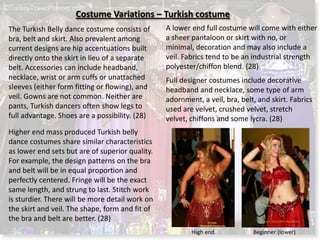
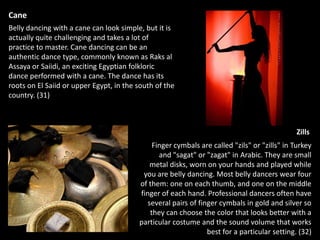
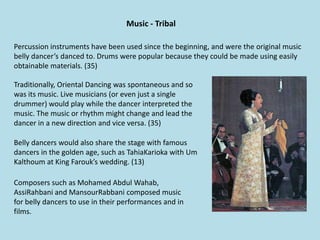
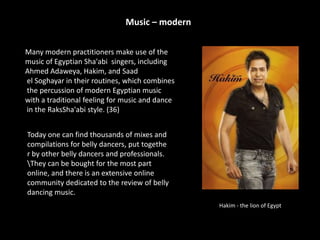
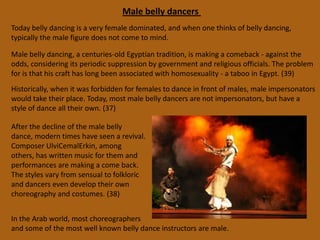
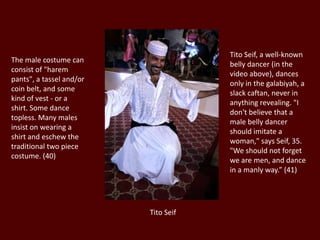
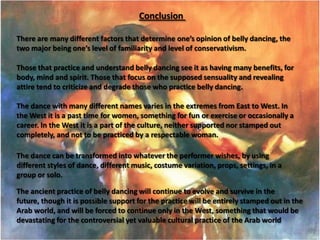
Belly dancing has origins in ancient fertility rituals and traditions from various Middle Eastern cultures. It developed into a professional art form in Egypt in the early 20th century, led by influential dancers like Samia Gamal and Tahia Carioca. While belly dancing is still popular in some contexts, it also faces criticism and stigma in conservative Islamic societies as promoting immodesty. Today it struggles for acceptance in the modern Arab world but remains an important part of cultural heritage and expression.

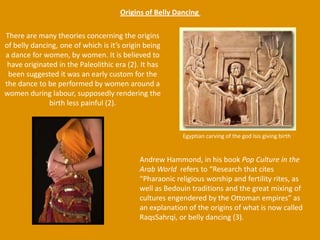
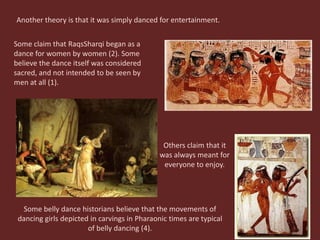
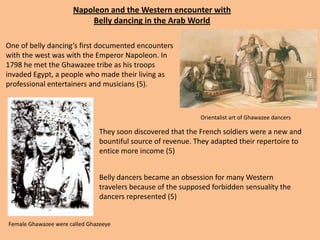
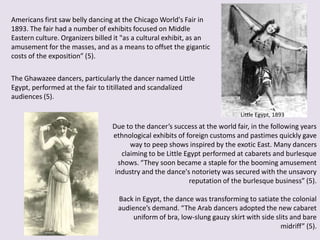
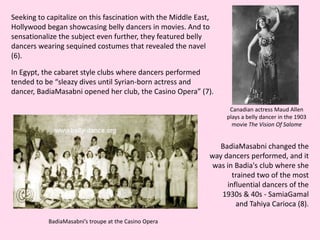
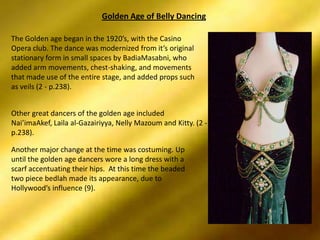
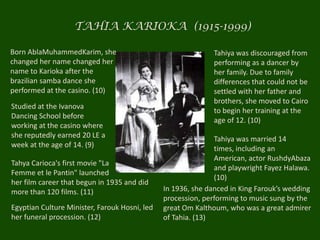
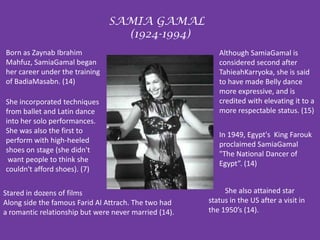

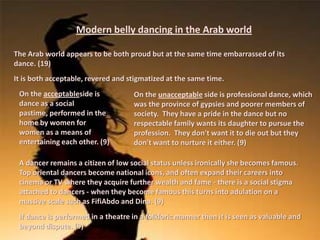
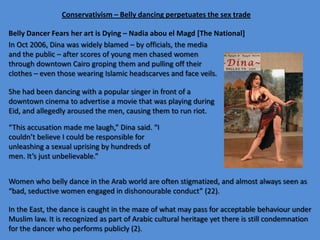
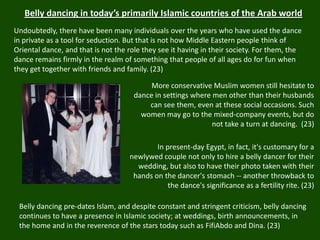
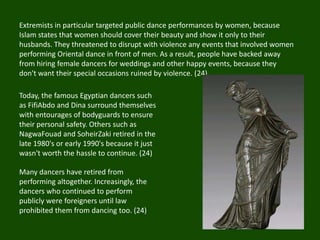
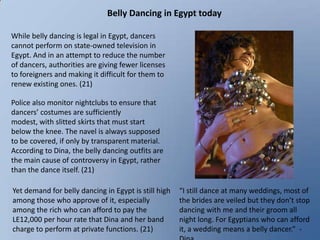
![Conservativism – Belly dancing perpetuates the sex trade Belly Dancer Fears her art is Dying – Nadia abou el Magd [The National]In Oct 2006, Dina was widely blamed – by officials, the media and the public – after scores of young men chased women through downtown Cairo groping them and pulling off their clothes – even those wearing Islamic headscarves and face veils. She had been dancing with a popular singer in front of a downtown cinema to advertise a movie that was playing during Eid, and allegedly aroused the men, causing them to run riot. “This accusation made me laugh,” Dina said. “I couldn’t believe I could be responsible for unleashing a sexual uprising by hundreds of men. It’s just unbelievable.” Women who belly dance in the Arab world are often stigmatized, and almost always seen as “bad, seductive women engaged in dishonourable conduct” (22).In the East, the dance is caught in the maze of what may pass for acceptable behaviour under Muslim law. It is recognized as part of Arabic cultural heritage yet there is still condemnation for the dancer who performs publicly (2).](https://image.slidesharecdn.com/arb2103-finalprojet4-100803002017-phpapp02/85/Arb2103-final-projet4-21-320.jpg)