Community Acquired Pneumonia
•Affects all ages
• Droplet infection spread
• M/c cause- Streptococcus
pneumoniae
• Causative agents- Bacterial, Fungi,
Viruses and Protozoa
4.
How to approacha case of CAP?
• Detailed History Taking
• Clinical Examination
• Investigations
• Severity Assesment
• Management
5.
Bedside
History in
Pneumonia
• Fever:Chills, rigors
• Cough: Dry or productive
(purulent, rusty, or foul-smelling
sputum)
• Chest Pain: Pleuritic in nature
• Dyspnoea: Ranges from mild to
severe
• Constitutional Symptoms:
Malaise, fatigue, anorexia
• Associated Symptoms
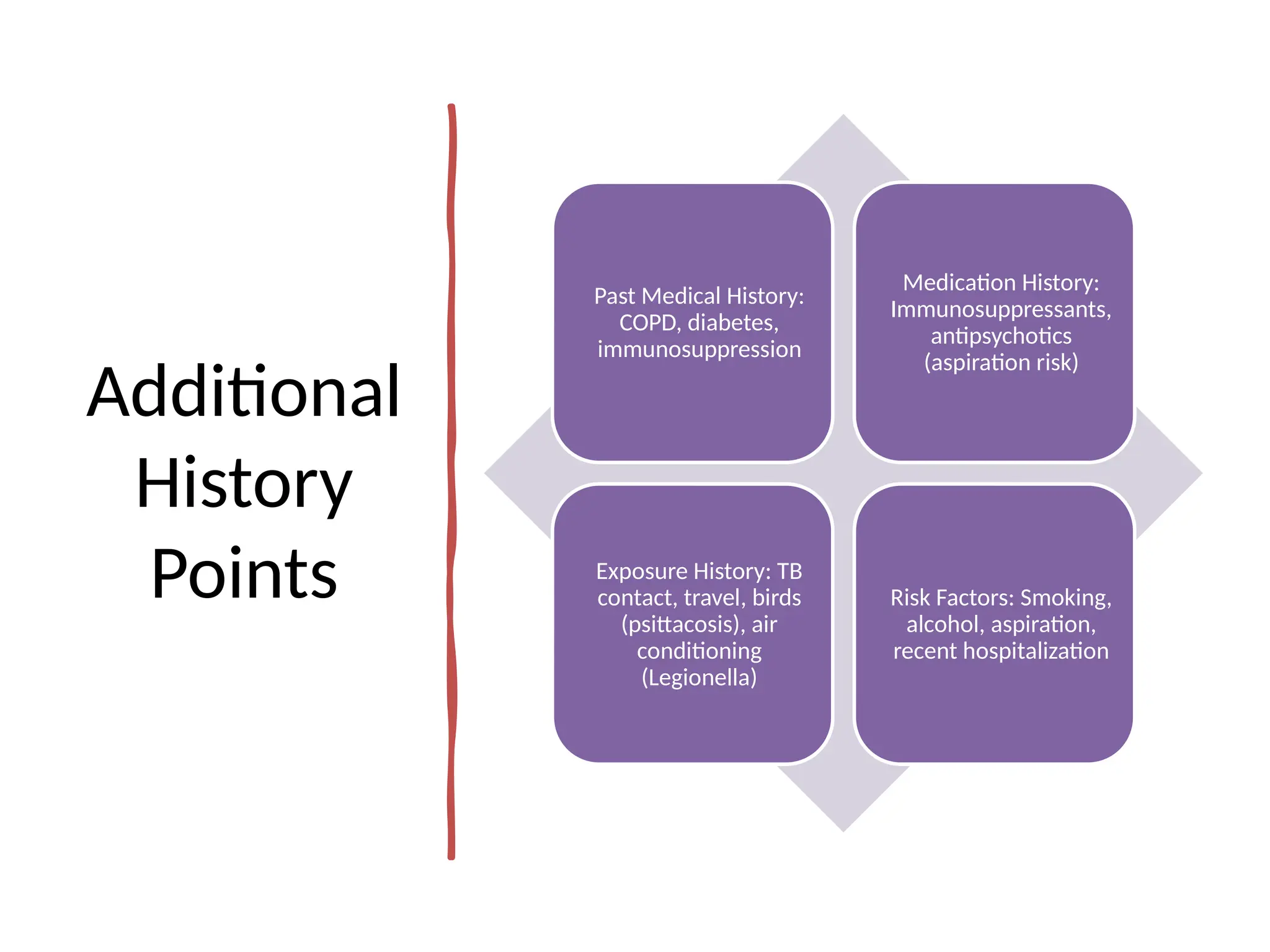
Environmental history
1. Exposureto contaminated air conditioners,
recent hotel stay– Legionella
2. Exposure to infected humans - SARS-CoV2
3. Outbreak in shelters for homeless men-
Strep Pneumoniae; Mycobacterium
Tuberculosis
15.
Animal
contact
history
1. Exposure toparturient
cats, goat, sheep- Coxiella
burnetti
2. Exposure to birds-
Chlamydia psitacci,
3. Exposure to mouse
dropping – Hanta virus
4. Exposure to rabits-
Francisella Tularensis
16.
Travel
History
1. Travel tosoutheast asia-
Avian Influenza,
Melioidosis
2. Immigrants from Asia- TB
3. Travel to Ohio-
Histoplasma
4. Travel anywhere -
Legionella
Clues to theEtiology of Pneumonia from
History and Physical Examination
• Prior mild respiratory illness with improvement
and then rapid deterioration - Bacterial super
infection of viral Pneumonia ( S.aureus )
• Pneumococcal Pneumonia – Fever with severe
rigors
• Abrupt onset, recurrent chills, mild diarrhoea -
Legionnaires
23.
Variations in
Clinical
Features :CAP
• Often acute onset
• High fever, productive cough
• Pleuritic chest pain
• Lobar consolidation common
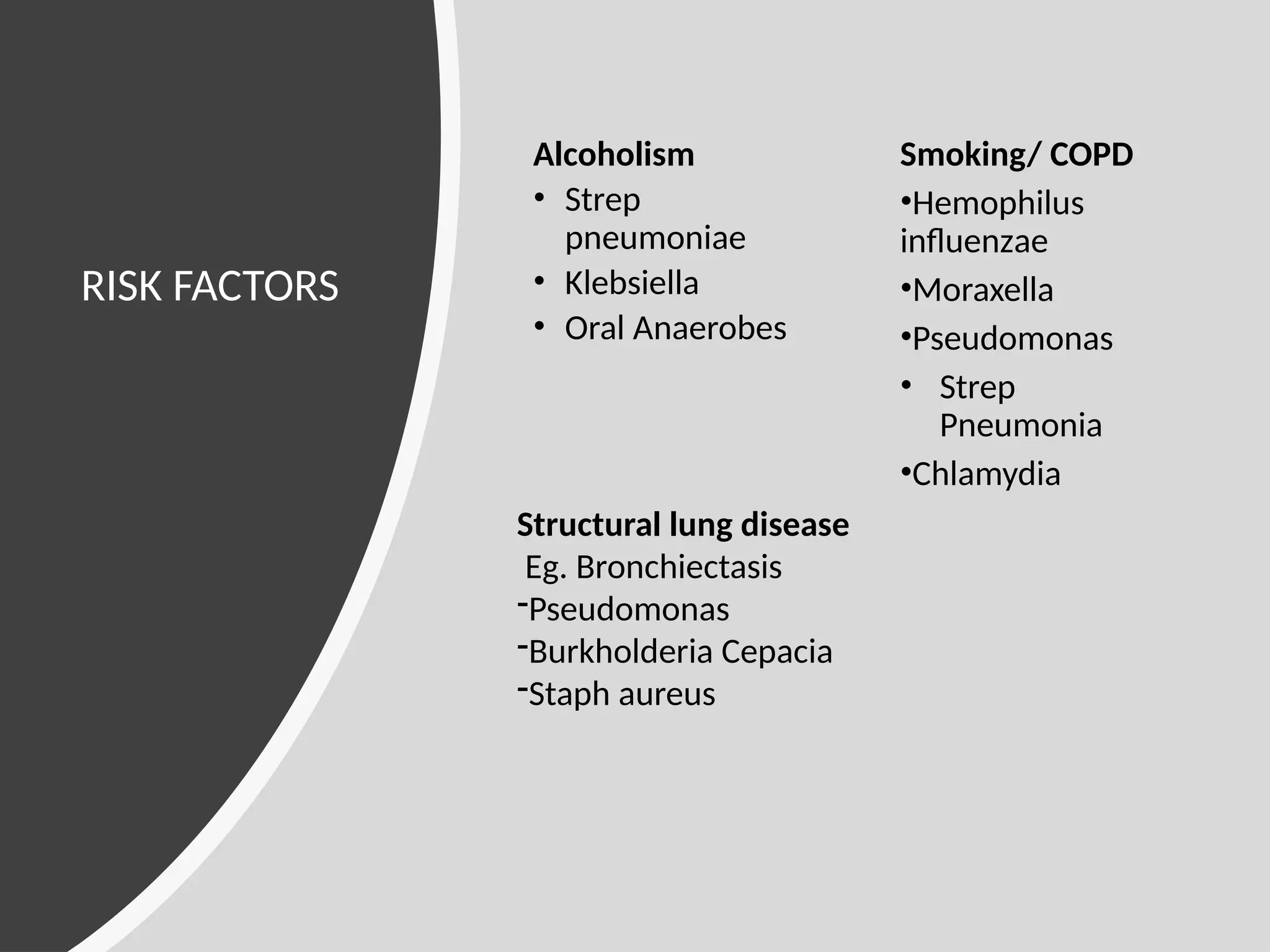
• Common pathogens: Streptococcus
pneumoniae, Haemophilus
influenzae
24.
Variations
HAP / VAP
•Develops ≥48 hours after
admission/intubation
• Often subtle symptoms due to underlying
illness
• New/worsening infiltrate on imaging
• Common pathogens: Gram-negative rods,
MRSA
• Less pleuritic pain, more systemic signs
(delirium, sepsis)
25.
Variations – Aspiration
Pneumonia
Historyof vomiting, dysphagia, seizure, or stroke
Foul-smelling sputum
Often affects right lower lobe
Anaerobic organisms common
Chronic aspiration may lead to lung abscess
26.
Variations
– Atypical
Pneumonia
• Causedby Mycoplasma, Chlamydia,
Legionella, viruses
• Gradual onset, low-grade fever
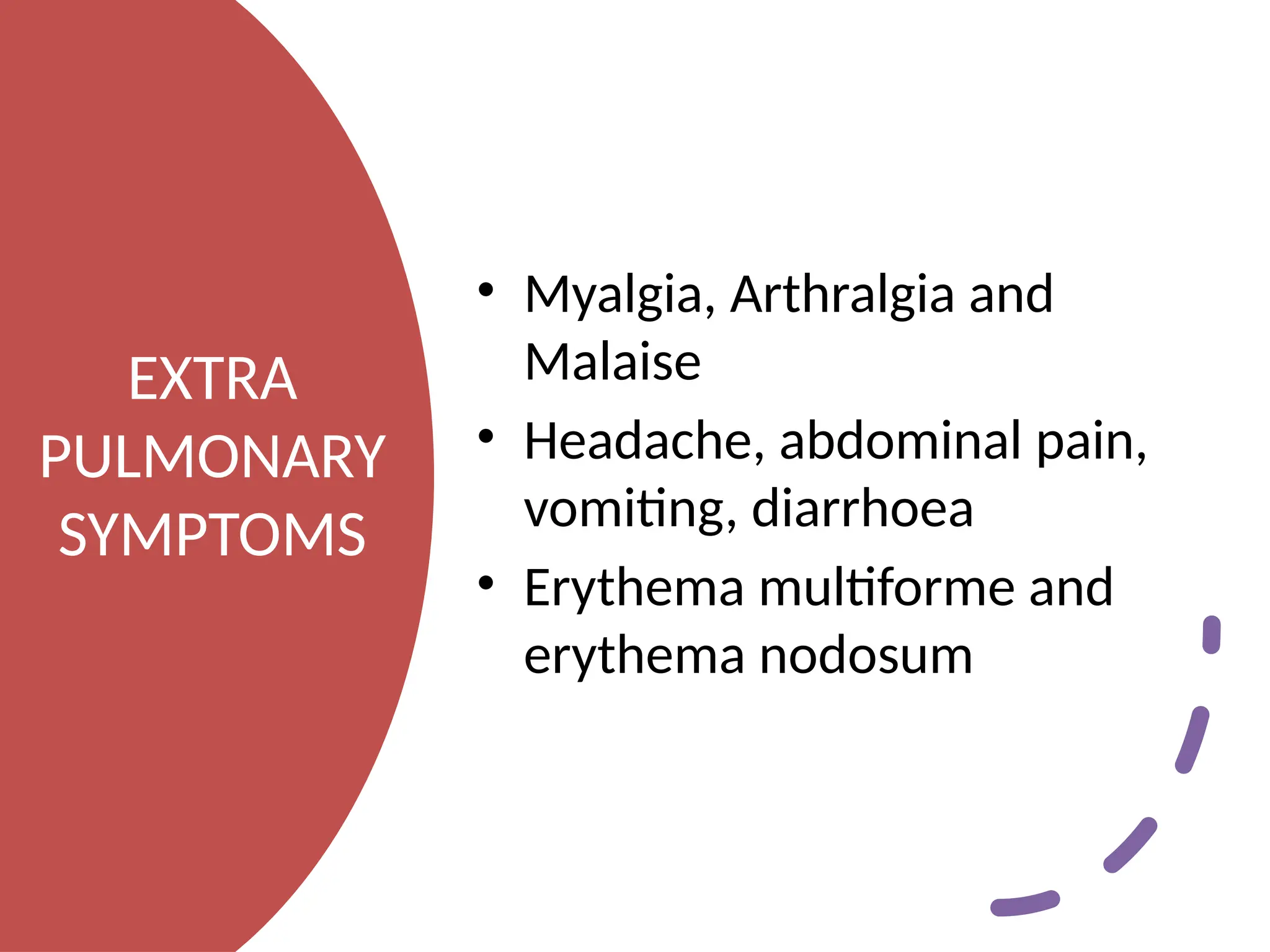
• Dry cough, extrapulmonary features (rash,
diarrhea, myalgia)
• Often minimal findings on auscultation
• Chest X-ray may show more than clinical
findings suggest
28.
REFERENCES
Jameson, J. L.,Fauci, A. S., Kasper, D. L., Hauser, S. L.,
Longo, D. L., & Loscalzo, J. (Eds.). (2022). Harrison’s
Principles of Internal Medicine (21st
ed.). McGraw Hill.
• Grippi, M. A., Celli, B. R., Fuster, V., Gallagher, C. G.,
Hall, J. B., & Martinez, F. J. (Eds.). (2023). Fishman’s
Pulmonary Diseases and Disorders (6th
ed.).
McGraw Hill.









![1 PNEUMONIA-.. [YR 4] APRIL 2022_102703.pptx](https://cdn.slidesharecdn.com/ss_thumbnails/1pneumonia-230226170120-ed58f972-thumbnail.jpg?width=640&height=640&fit=bounds)


