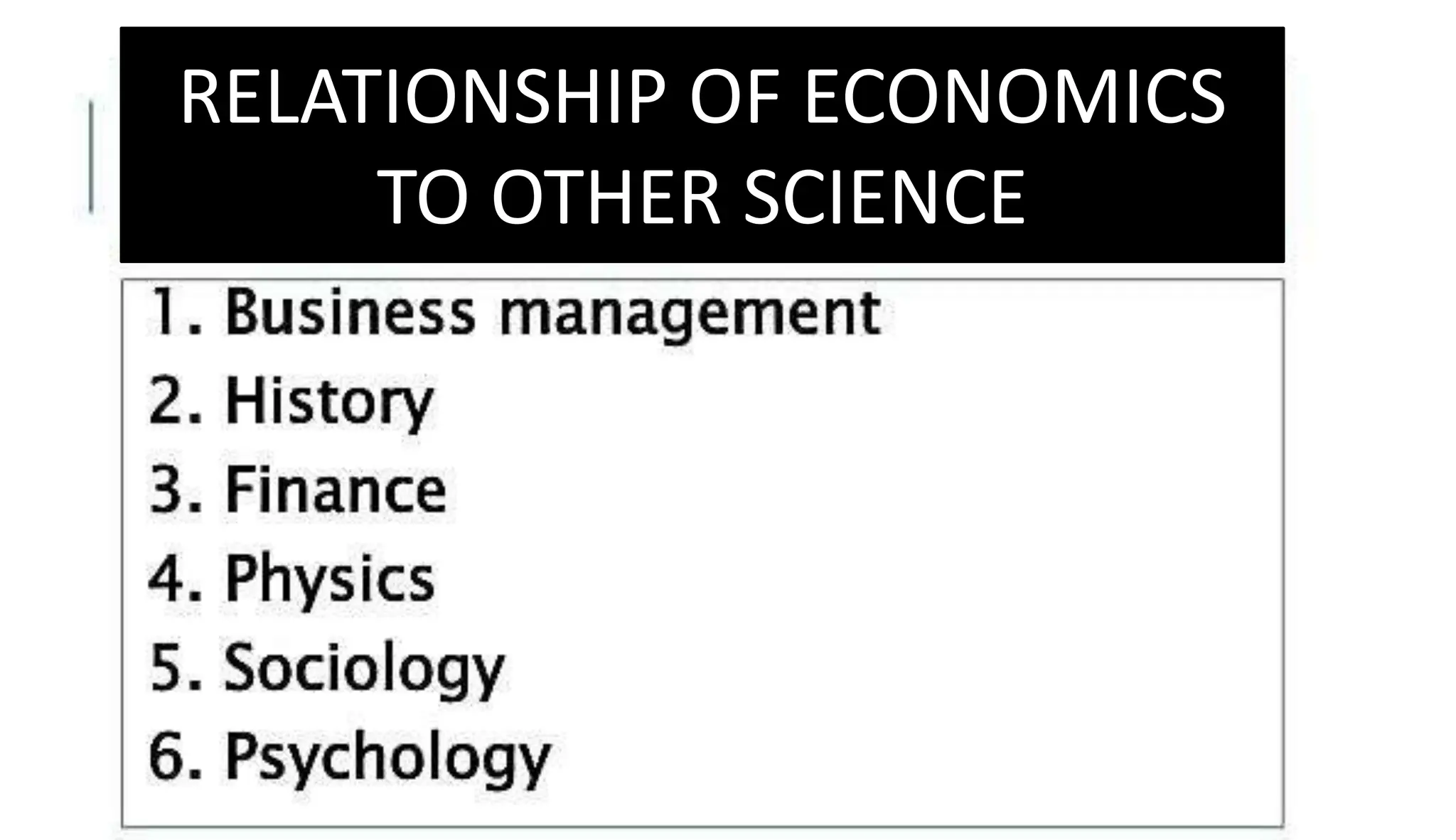
RELATIONSHIP OF ECONOMICS
TO OTHER SCIENCE
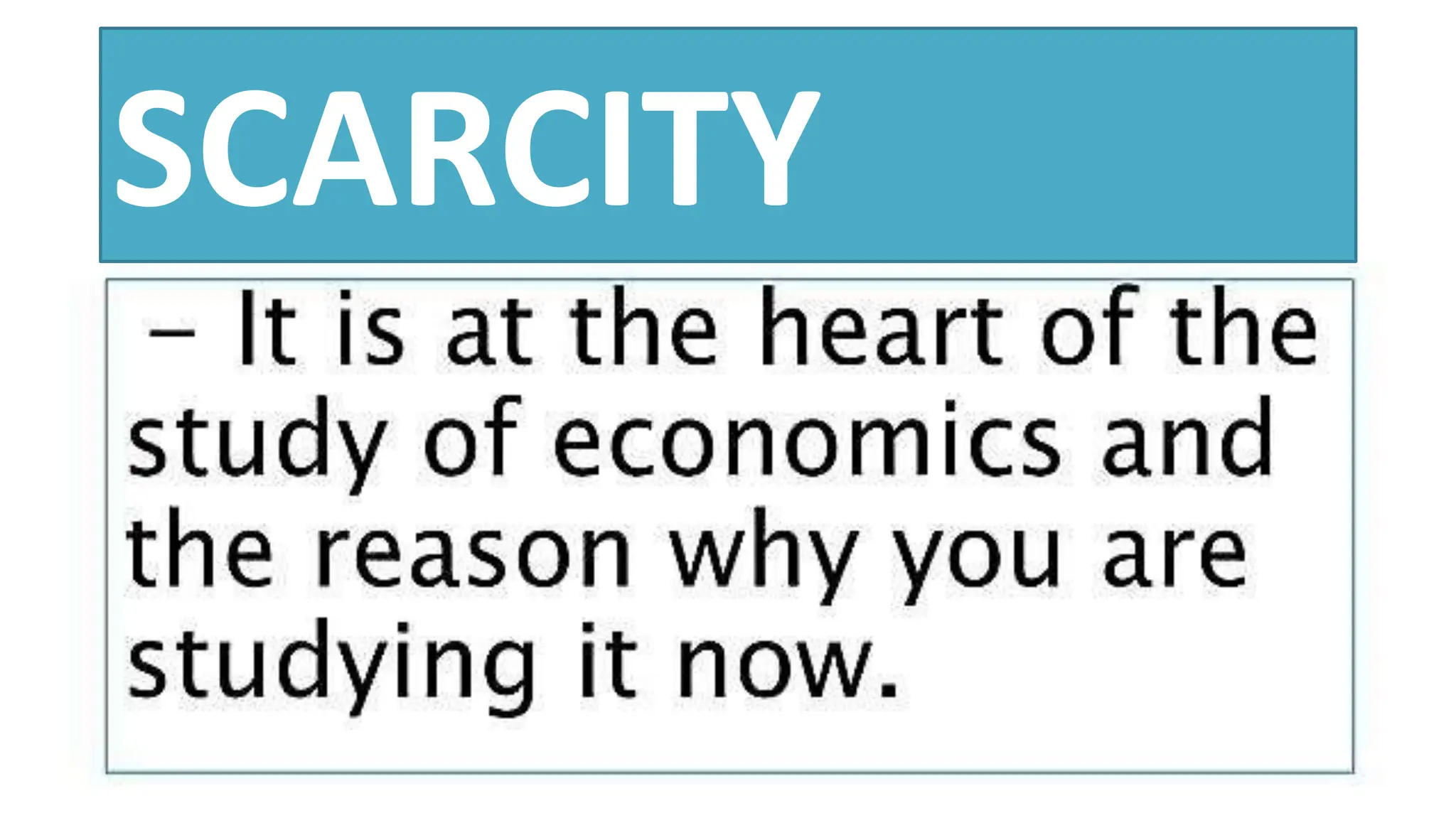
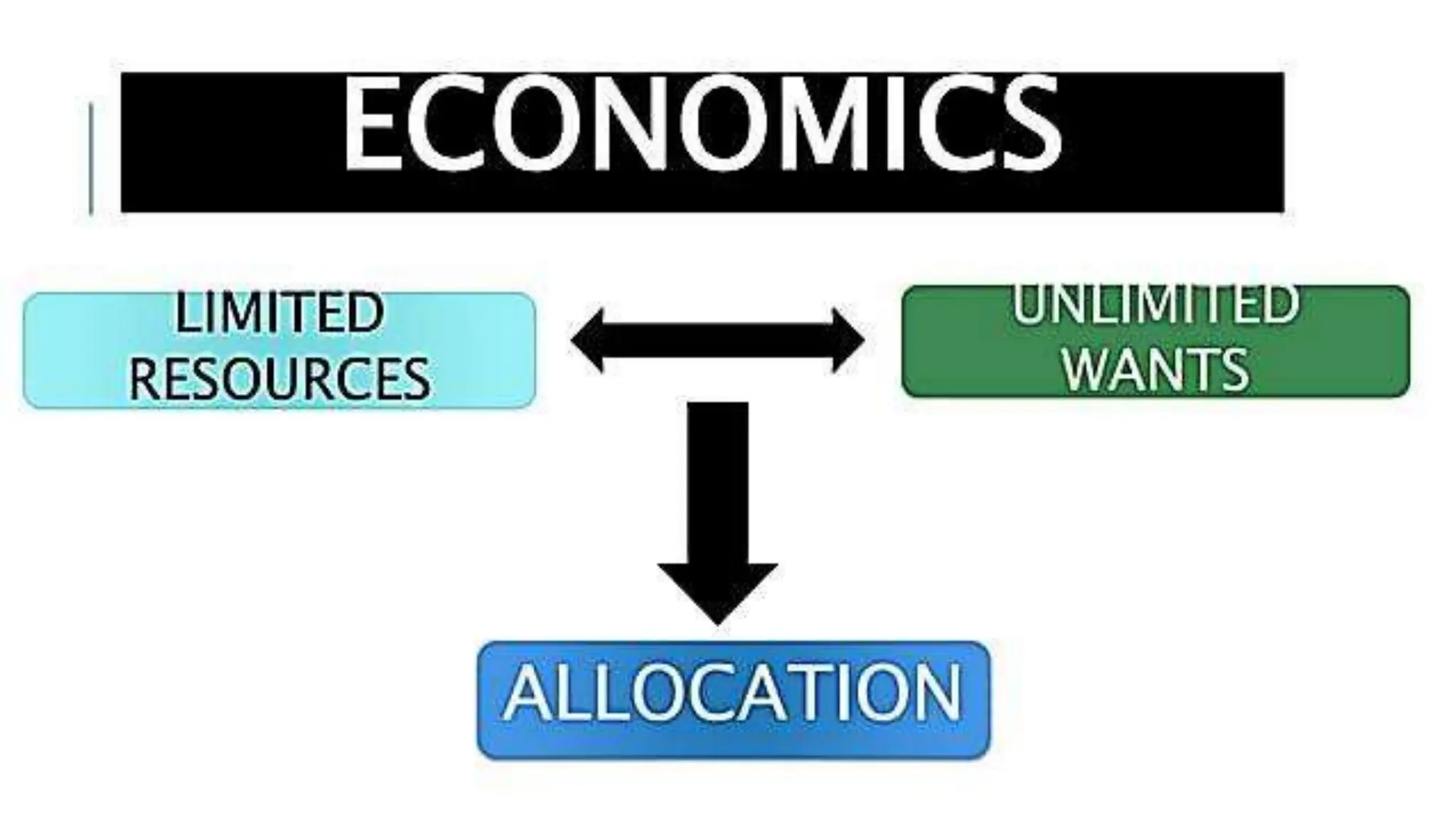
SCARCITY
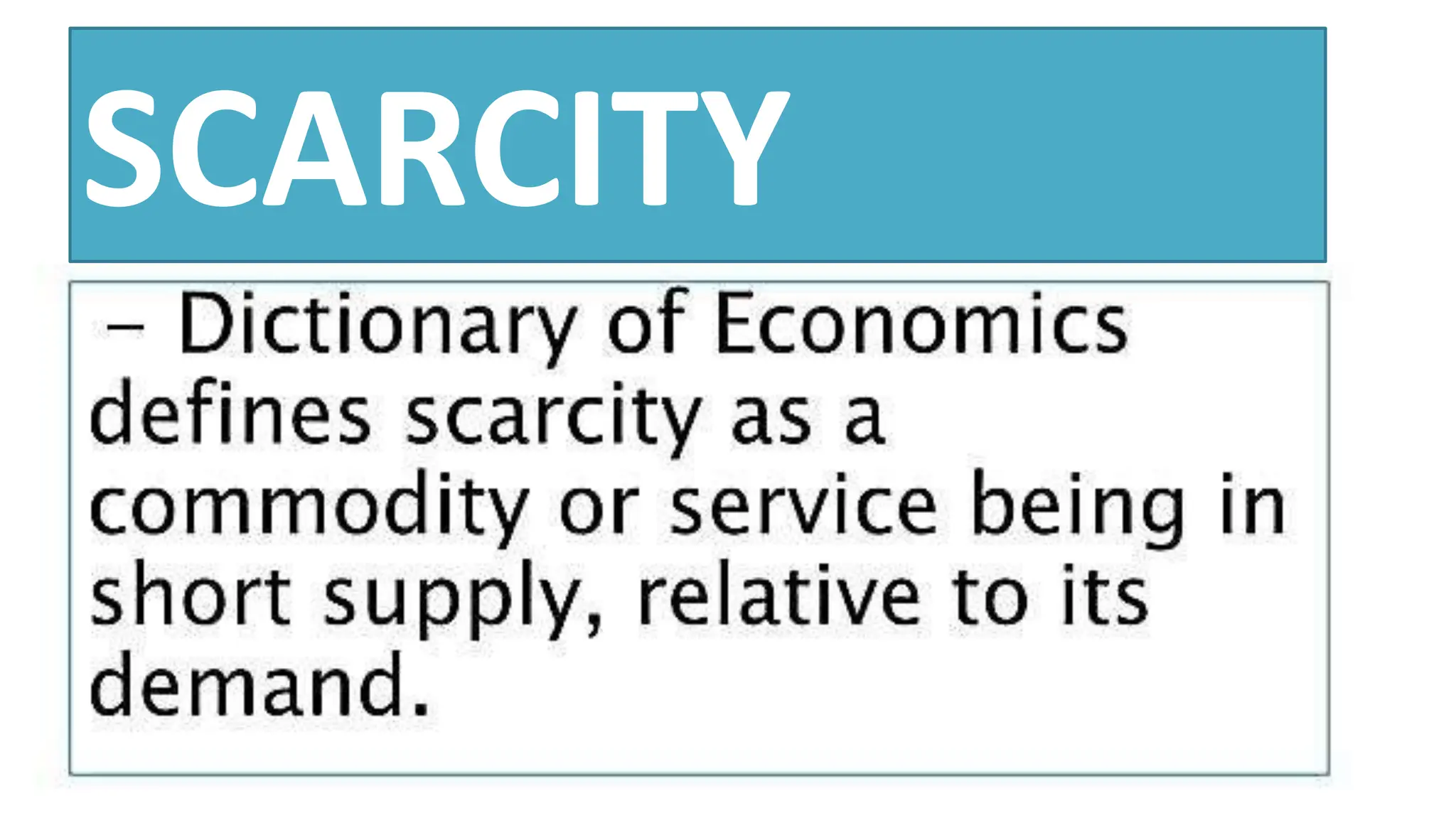
SCARCITY
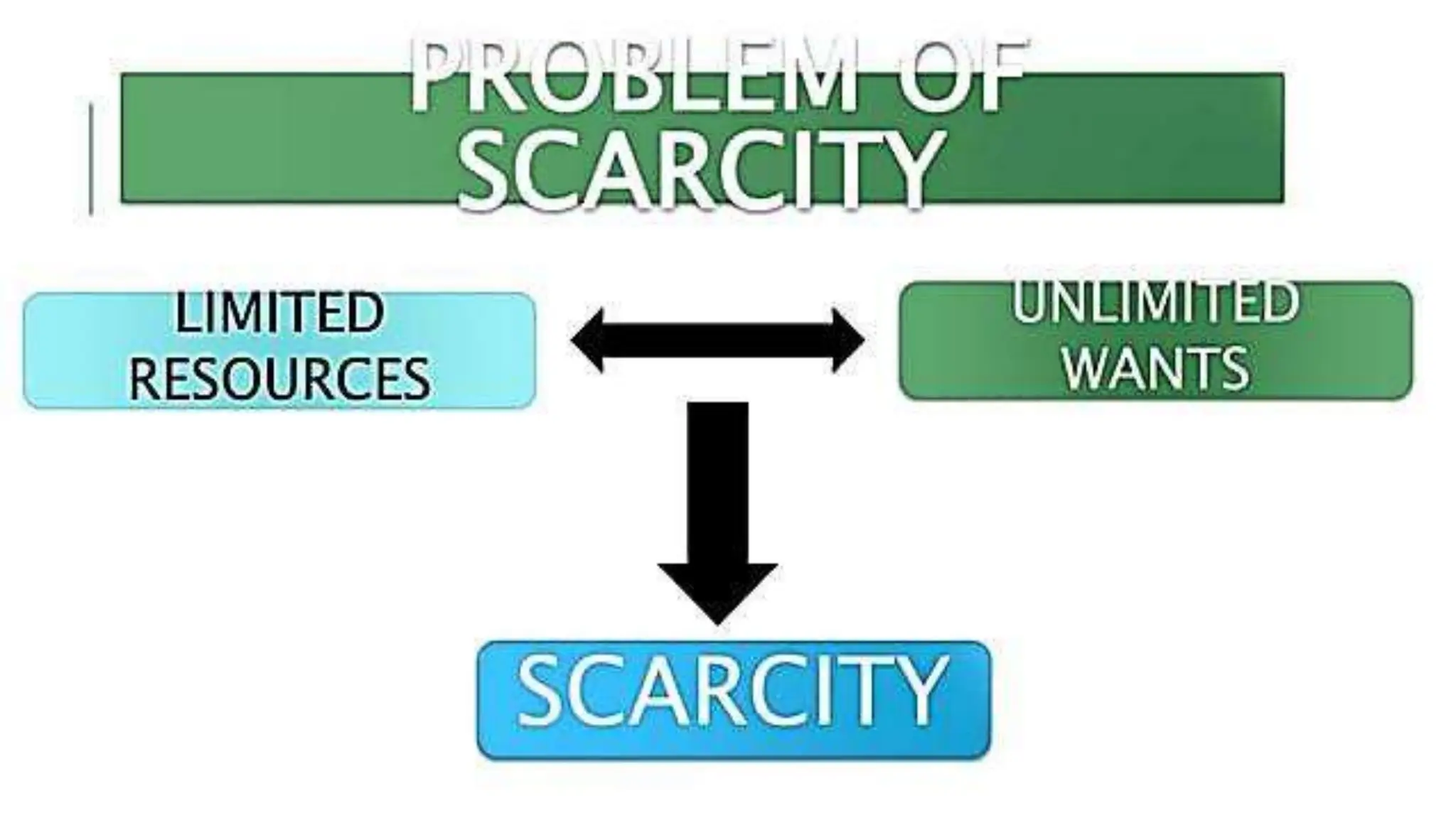
SCARCITY
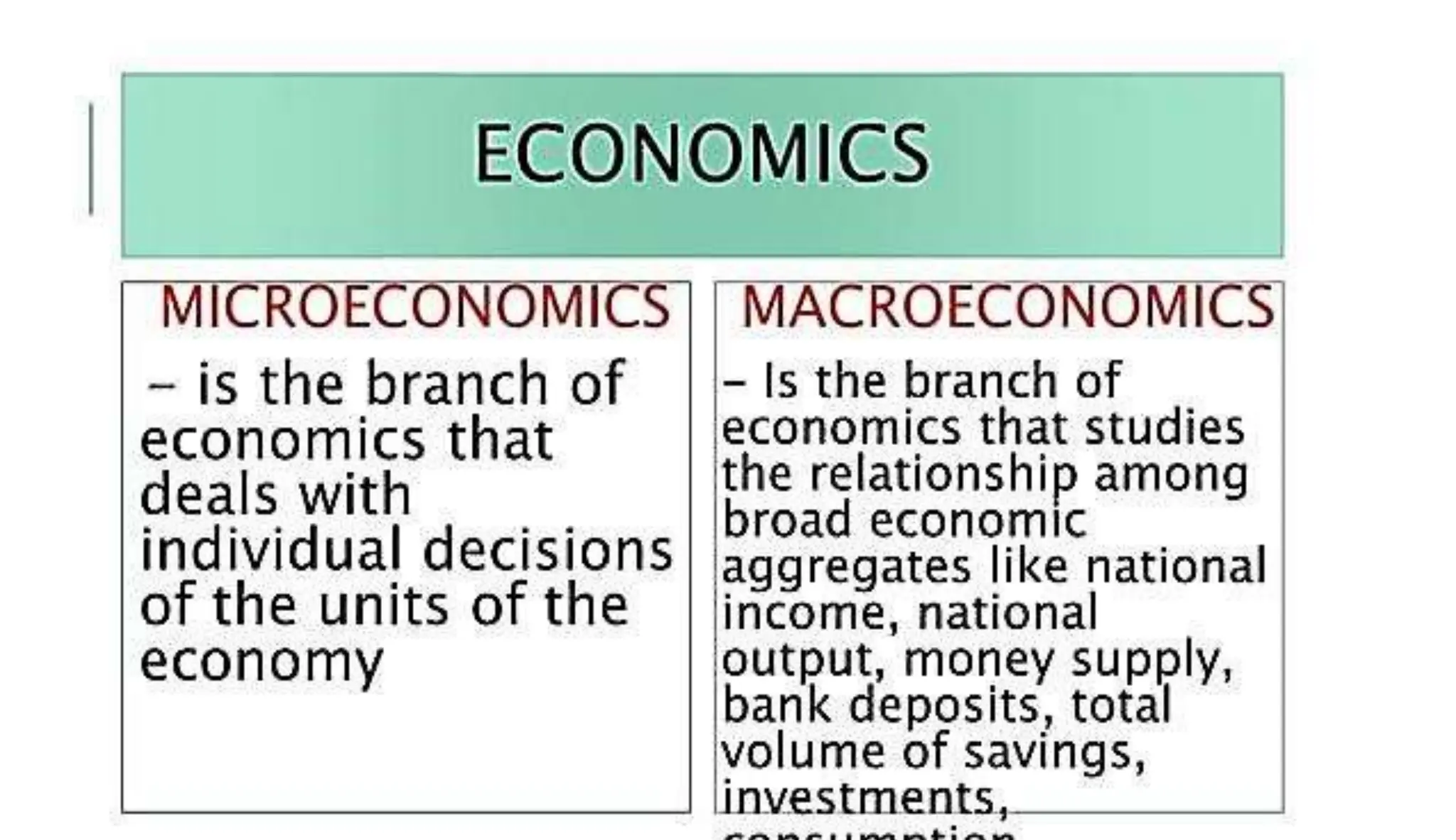
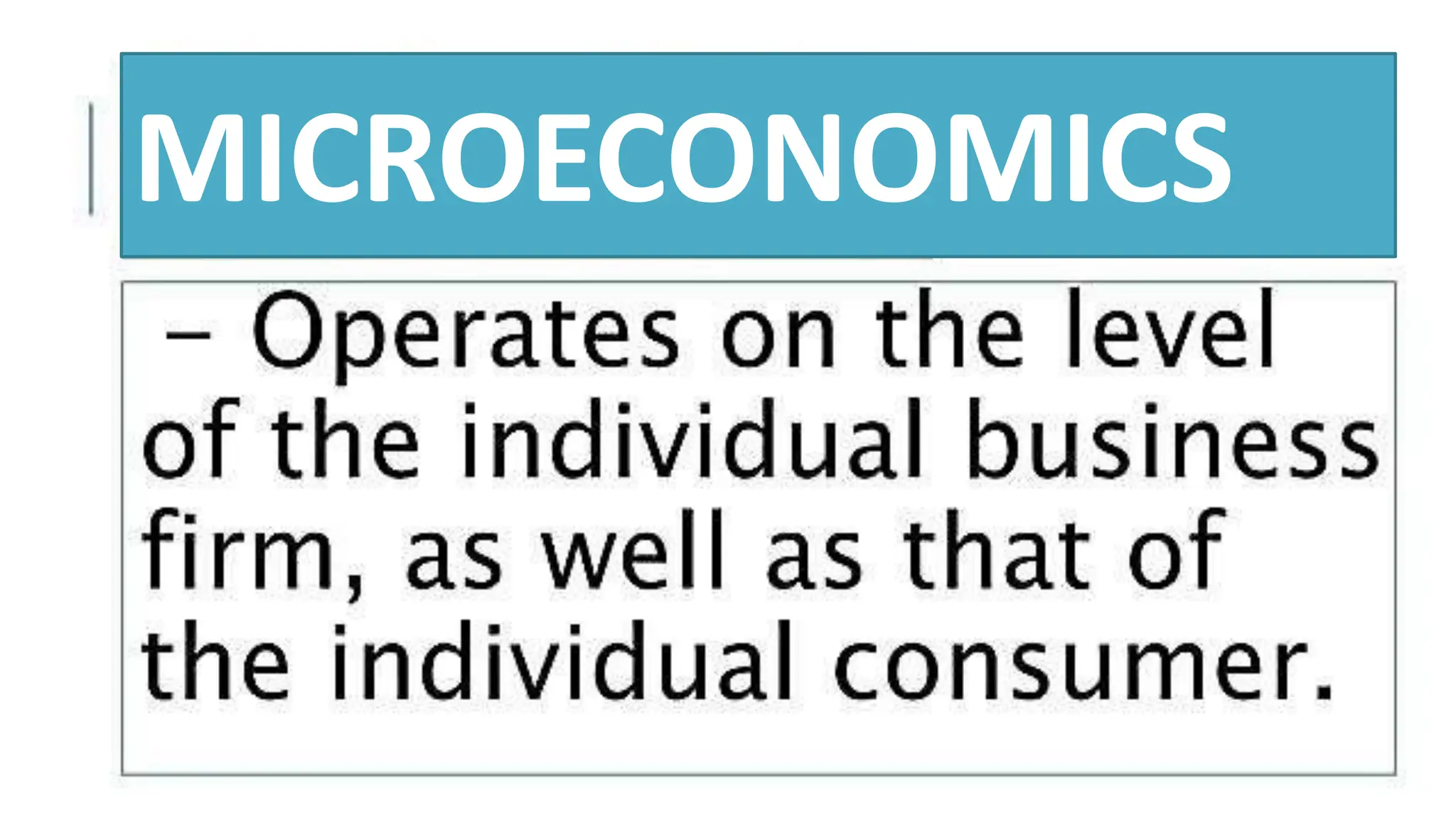
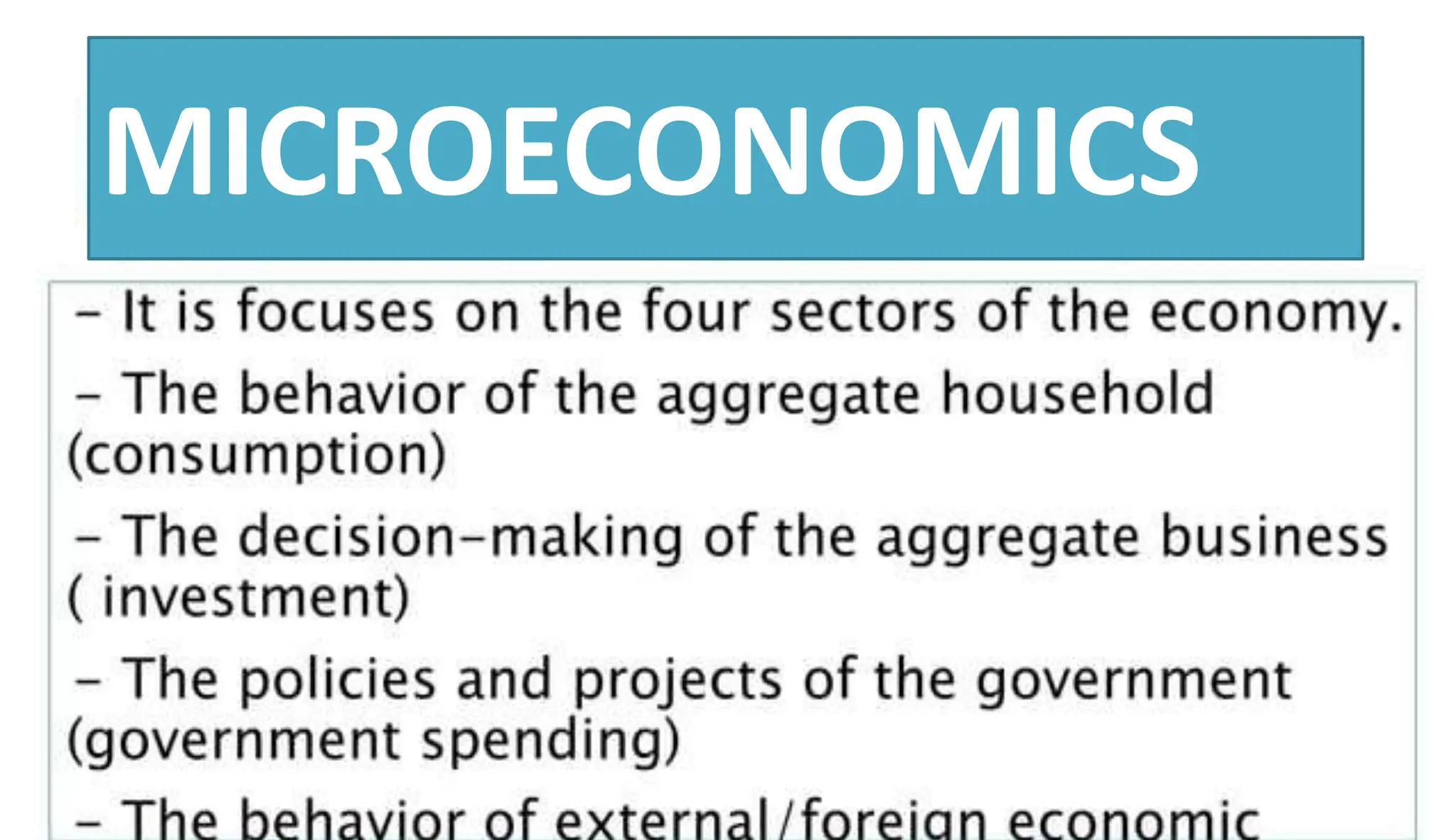
MICROECONOMICS
MICROECONOMICS
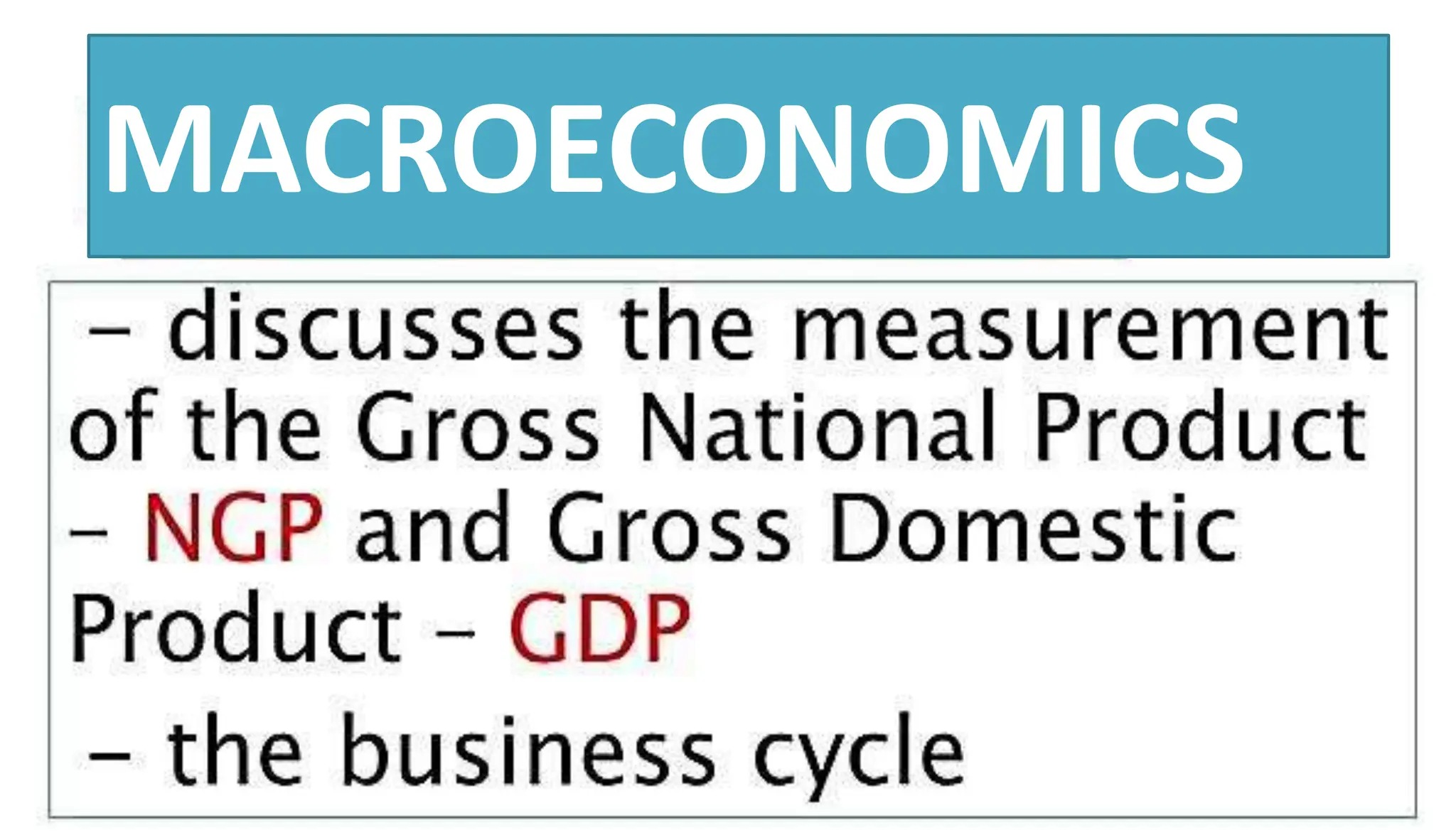
MACROECONOMICS
ECONOMIC RESOURCES
Economic resources, also known as factors of
production, are the resources used to
produce goods and services. These resources

are, by nature, limited and therefore,
command a payment that becomes the
income of the resources owner.
FACTORS OF PRODUCTION
1. LAND – soil and natural resources that
are found in nature and are not man-
made.
FACTORS OF PRODUCTION
2. LABOR – physical and human effort
exerted in production. It covers manual
workers like construction workers,
machine operators, and production
workers, as well as professionals like
nurses, lawyers, and doctors.
FACTORS OF PRODUCTION
3. CAPITAL – man-made resources used in
the production of goods and services,
which include machineries and
equipment.
ECONOMIC SYSTEM
1. Traditional economy. Decisions are based on
traditions and practice upheld over the years and
passed on from generation to generation.
Methods are stagnant and therefore not
progressive. Traditional societies exist in primitive
and backward civilizations.
ECONOMIC SYSTEM
2. Command economy. This is the authoritative
system wherein decision-making is centralized in
the government or planning committee. Decisions
are imposed on the people who do not have a say
in what goods are to be produced. This economy
holds true in dictatorial, socialist, and communist
nations.
ECONOMIC SYSTEM
3. Market economy. This is the most democratic
form of economic system. Based on the workings
of demand and supply, decisions are made on
what goods and services to produce. People’s
preferences are reflected in the prices they are
willing to pay in the market and are therefore the
basis of the producers’ decisions on what goods to
produce.
WHY ECONOMICS IS
IMPORTANT?
Economics will help the students understand why
there is a need for everybody, including the
government, to budget and properly allocate the
use of whatever resources are available.

Applied-Economics... PRINCIPLES AND DETAILS

  • 6.
  • 15.
  • 16.
  • 17.
  • 23.
  • 24.
  • 25.
  • 30.
  • 31.
    Economic resources, alsoknown as factors of production, are the resources used to produce goods and services. These resources are, by nature, limited and therefore, command a payment that becomes the income of the resources owner.
  • 32.
    FACTORS OF PRODUCTION 1.LAND – soil and natural resources that are found in nature and are not man- made.
  • 33.
    FACTORS OF PRODUCTION 2.LABOR – physical and human effort exerted in production. It covers manual workers like construction workers, machine operators, and production workers, as well as professionals like nurses, lawyers, and doctors.
  • 34.
    FACTORS OF PRODUCTION 3.CAPITAL – man-made resources used in the production of goods and services, which include machineries and equipment.
  • 35.
    ECONOMIC SYSTEM 1. Traditionaleconomy. Decisions are based on traditions and practice upheld over the years and passed on from generation to generation. Methods are stagnant and therefore not progressive. Traditional societies exist in primitive and backward civilizations.
  • 36.
    ECONOMIC SYSTEM 2. Commandeconomy. This is the authoritative system wherein decision-making is centralized in the government or planning committee. Decisions are imposed on the people who do not have a say in what goods are to be produced. This economy holds true in dictatorial, socialist, and communist nations.
  • 37.
    ECONOMIC SYSTEM 3. Marketeconomy. This is the most democratic form of economic system. Based on the workings of demand and supply, decisions are made on what goods and services to produce. People’s preferences are reflected in the prices they are willing to pay in the market and are therefore the basis of the producers’ decisions on what goods to produce.
  • 38.
  • 39.
    Economics will helpthe students understand why there is a need for everybody, including the government, to budget and properly allocate the use of whatever resources are available.