The serial and parallel scheduling procedures which
usually operate on these lists have also been
extended to handle fuzzy time parameters
By
RAJ A C
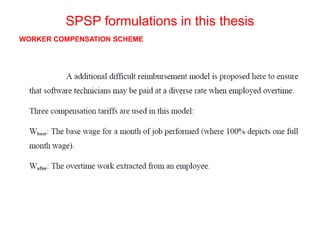
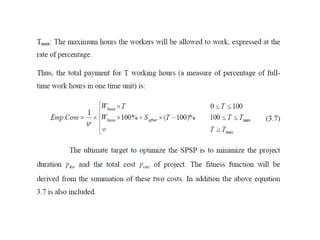
SPSP formulations in this thesis
WORKER COMPENSATION SCHEME
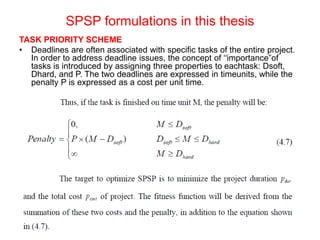
SPSP formulations in this thesis
TASK PRIORITY SCHEME
• Deadlines are often associated with specific tasks of the entire project.
In order to address deadline issues, the concept of ‘‘importance”of
tasks is introduced by assigning three properties to eachtask: Dsoft,
Dhard, and P. The two deadlines are expressed in timeunits, while the
penalty P is expressed as a cost per unit time.
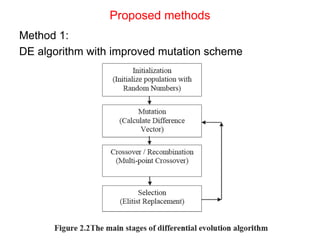
Proposed methods
Method 1:
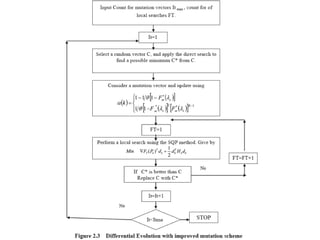
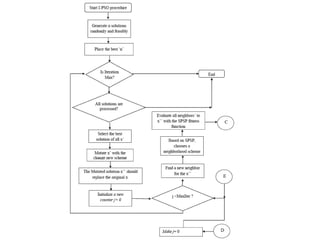
DE algorithm with improved mutation scheme
Application of heuristic practical problem.pptx

Application of heuristic practical problem.pptx

  • 1.
    The serial andparallel scheduling procedures which usually operate on these lists have also been extended to handle fuzzy time parameters By RAJ A C
  • 5.
    SPSP formulations inthis thesis WORKER COMPENSATION SCHEME
  • 7.
    SPSP formulations inthis thesis TASK PRIORITY SCHEME • Deadlines are often associated with specific tasks of the entire project. In order to address deadline issues, the concept of ‘‘importance”of tasks is introduced by assigning three properties to eachtask: Dsoft, Dhard, and P. The two deadlines are expressed in timeunits, while the penalty P is expressed as a cost per unit time.
  • 8.
    Proposed methods Method 1: DEalgorithm with improved mutation scheme