{
Flaws of the Law on
Domicile
Presented by: Sahar Saqib
Department: LL.B (Hons)
Conducted: 01/02/2014
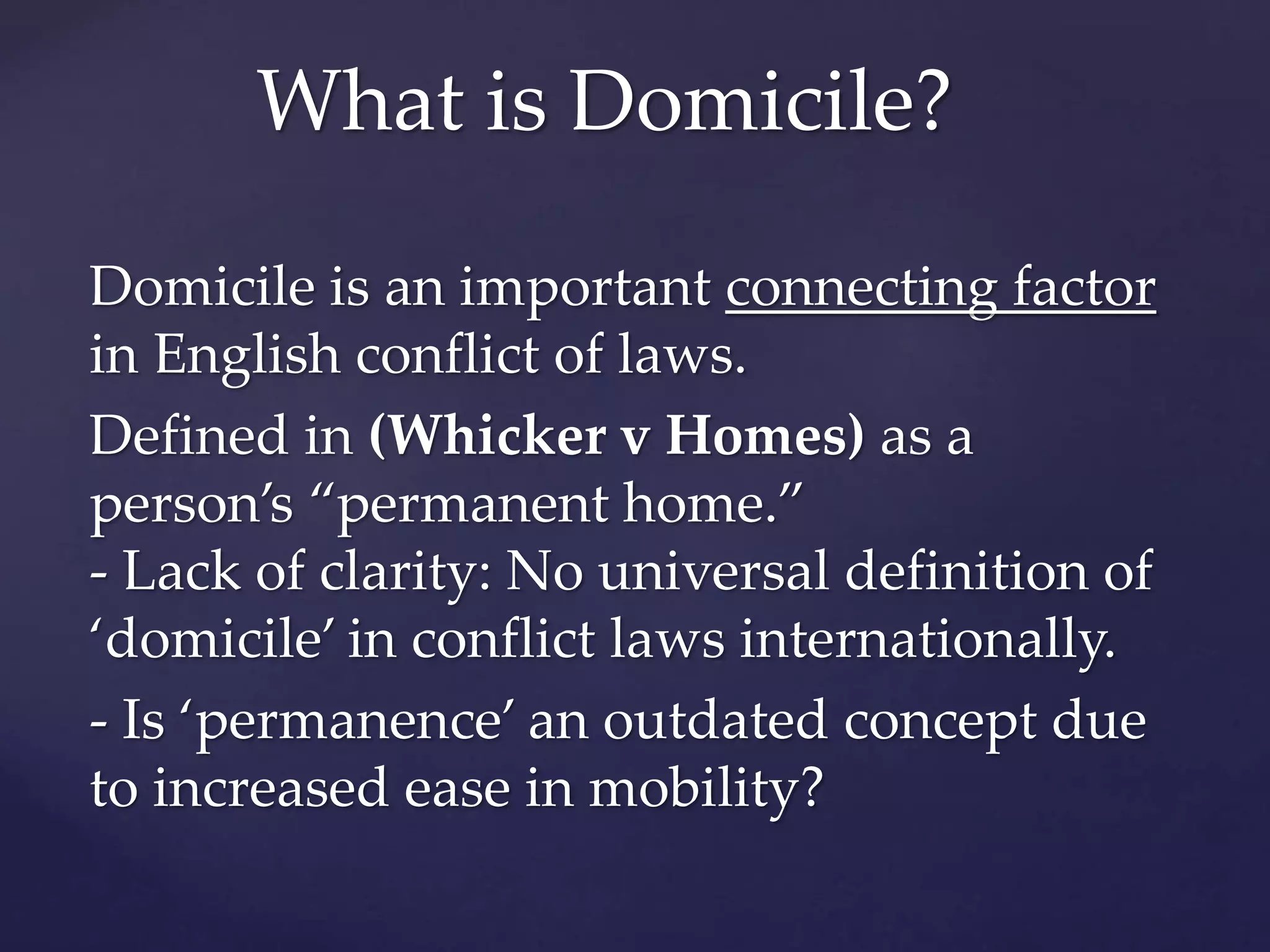
Domicile is an important connecting factor
in English conflict of laws.
Defined in (Whicker v Homes) as a
person’s “permanent home.”
- Lack of clarity: No universal definition of
‘domicile’ in conflict laws internationally.
- Is ‘permanence’ an outdated concept due
to increased ease in mobility?
What is Domicile?
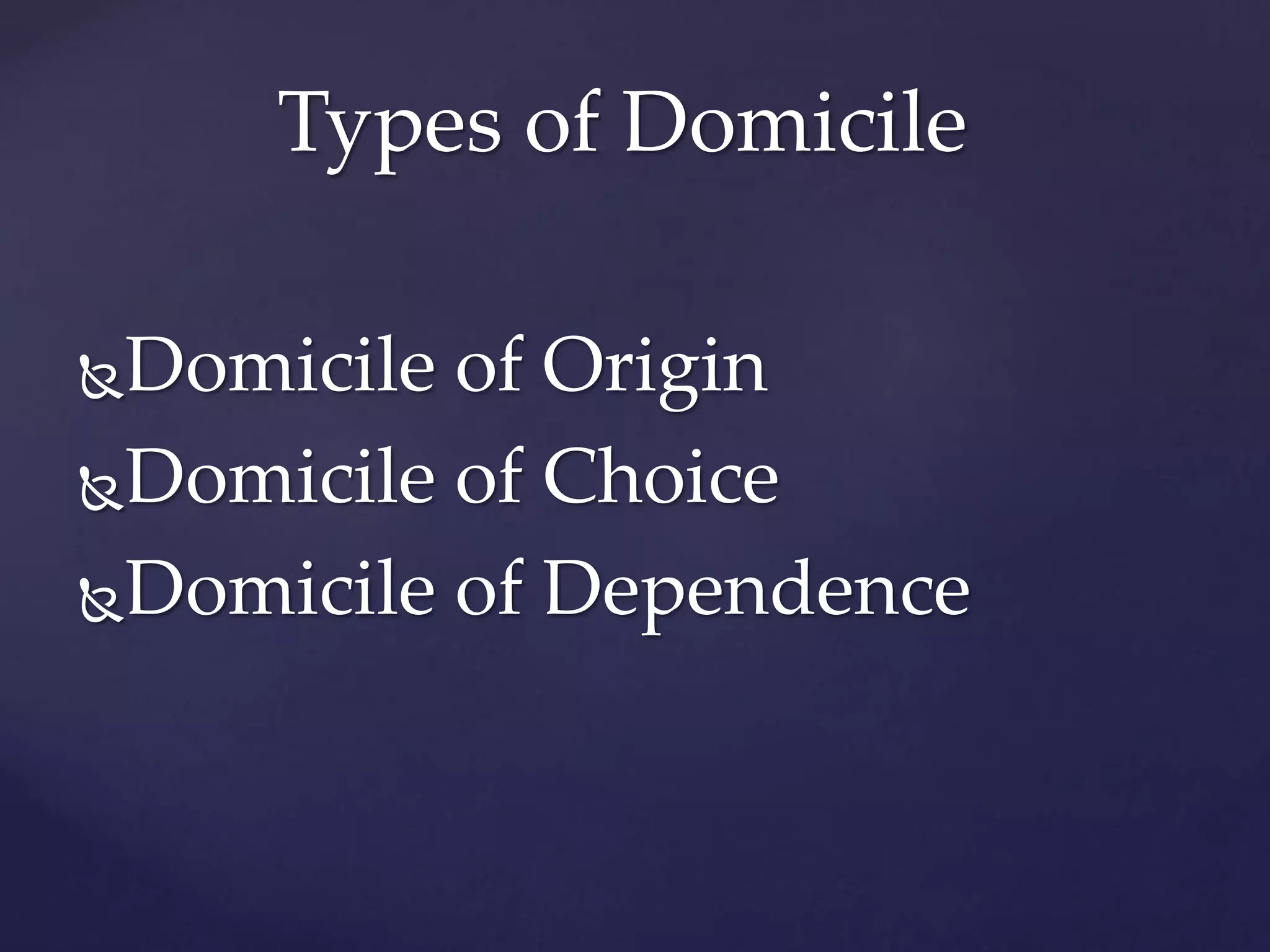
Domicile of Origin
Domicile of Choice
Domicile of Dependence
Types of Domicile
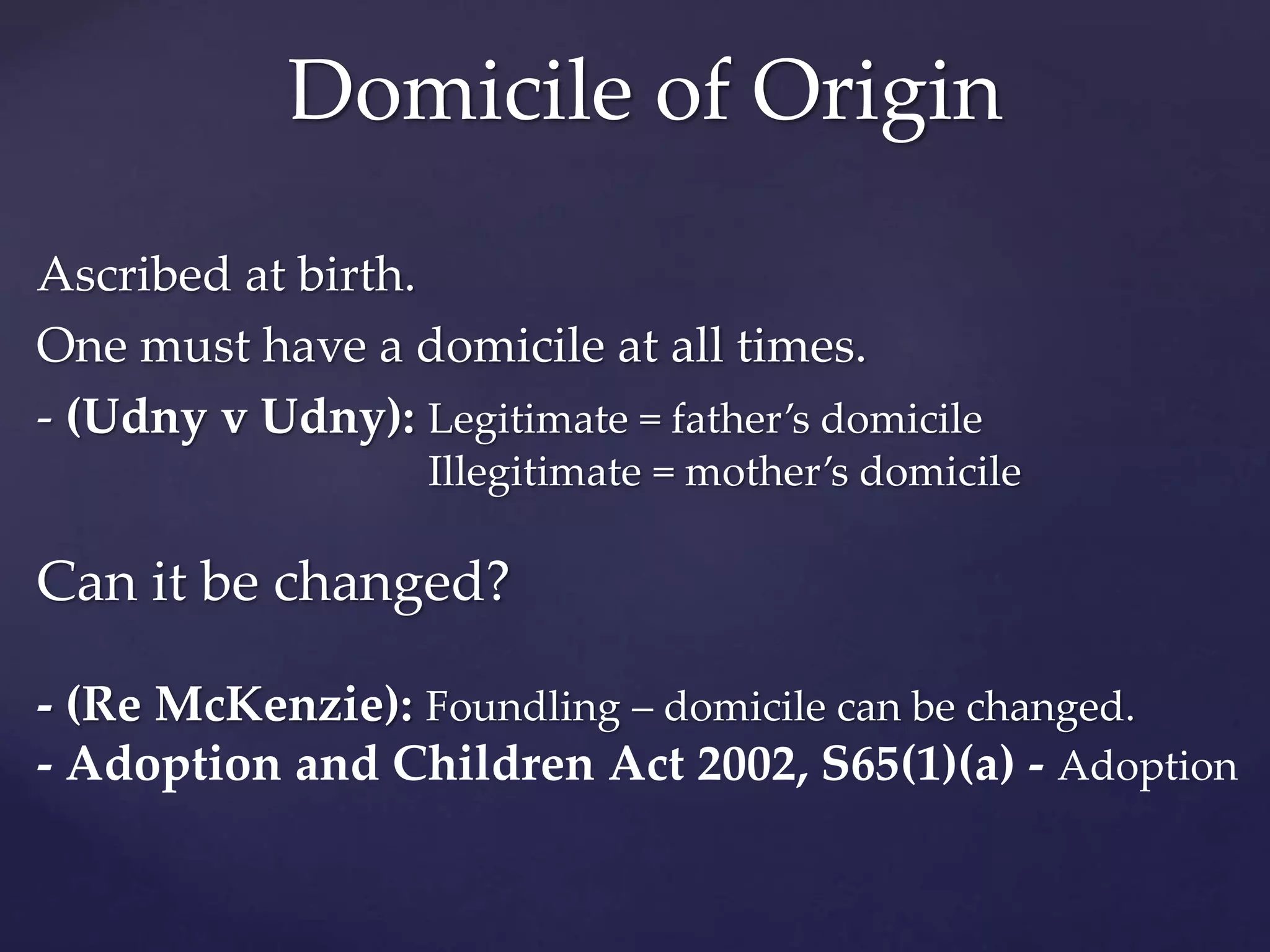
Ascribed at birth.
One must have a domicile at all times.
- (Udny v Udny): Legitimate = father’s domicile
Illegitimate = mother’s domicile
Can it be changed?
- (Re McKenzie): Foundling – domicile can be changed.
- Adoption and Children Act 2002, S65(1)(a) - Adoption
Domicile of Origin
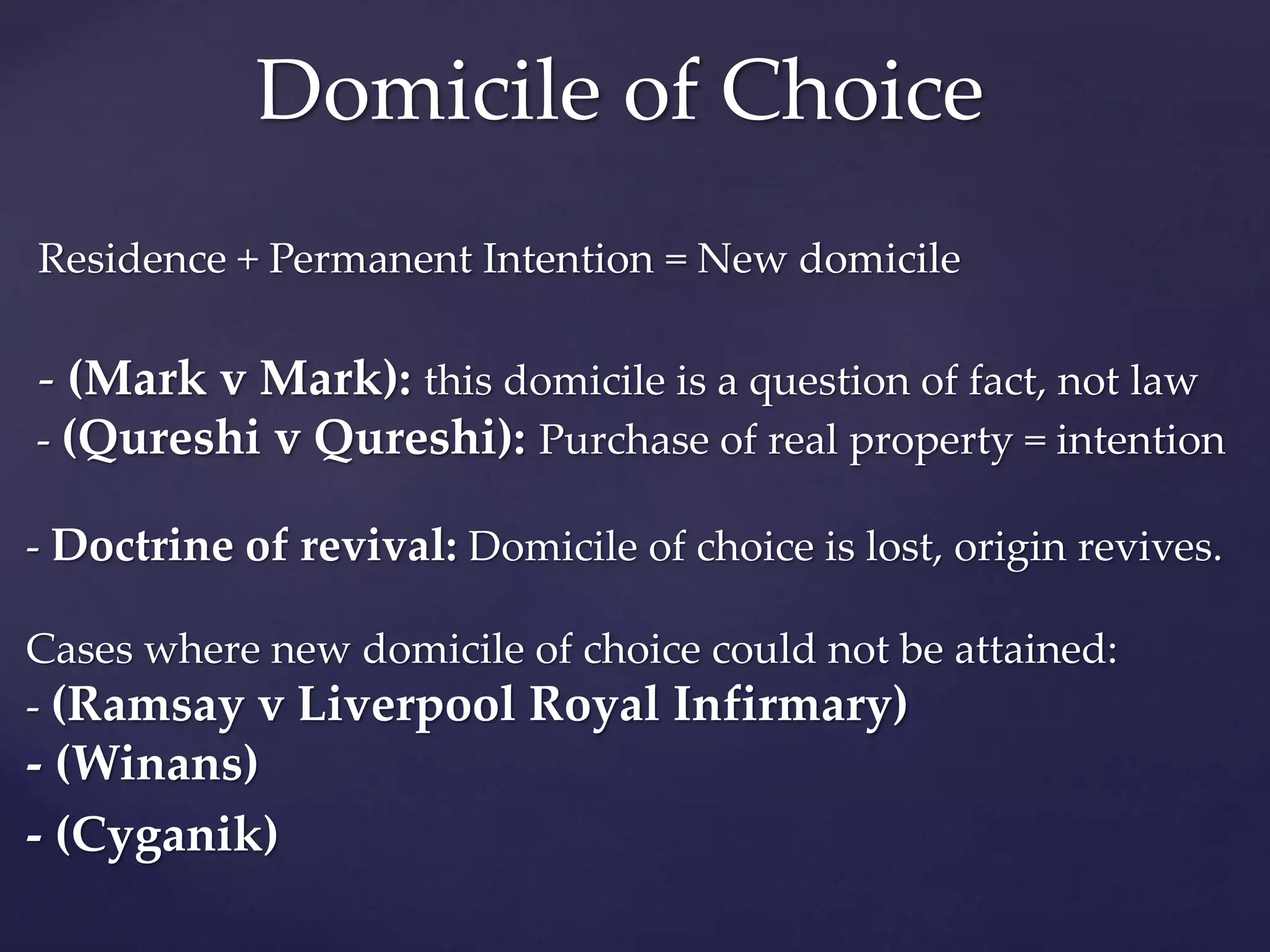
Residence + Permanent Intention = New domicile
- (Mark v Mark): this domicile is a question of fact, not law
- (Qureshi v Qureshi): Purchase of real property = intention
- Doctrine of revival: Domicile of choice is lost, origin revives.
Cases where new domicile of choice could not be attained:
- (Ramsay v Liverpool Royal Infirmary)
- (Winans)
- (Cyganik)
Domicile of Choice
1. Domicile of choice given undue importance.
- Mobile day and age, e.g. European Union
- Historical significance of the law is outdated.
2. Domicile of choice is unnecessarily burdensome to prove.
- Apply an ordinary standard of proof –
Balance of probabilities test
- ‘The Conflict of Laws’, C.M.V Clarkson & Jonathan Hill
Domicile of Choice: Criticisms
Who are Dependents?
- Children under 16
- Mentally disordered
Domicile and Matrimonial Proceedings Act 1973:
- Married women no longer have a domicile of dependence.
Criticism:
- One cannot acquire a domicile of choice independently.
- Domicile remains the same/changes with person on whom
they are legally dependent.
Domicile of Dependence
Nationality and habitual residence – attractive alternatives to
domicile as a connecting factor.
Habitual residence – regular physical presence endured for some time.
Why Nationality?
- More easily ascertainable
- Does not automatically change and requires formalities
- Propositus is always aware of and initiates the change
Law Commission suggested 21 recommendations for reform
(Timothy Lyon, Michael Parkinson)
Suggested Reform: Nationality?
{
Thank you! 
Questions?

Appendix C - Oral Presentation PowerPoint

  • 1.
    { Flaws of theLaw on Domicile Presented by: Sahar Saqib Department: LL.B (Hons) Conducted: 01/02/2014
  • 2.
    Domicile is animportant connecting factor in English conflict of laws. Defined in (Whicker v Homes) as a person’s “permanent home.” - Lack of clarity: No universal definition of ‘domicile’ in conflict laws internationally. - Is ‘permanence’ an outdated concept due to increased ease in mobility? What is Domicile?
  • 3.
    Domicile of Origin Domicileof Choice Domicile of Dependence Types of Domicile
  • 4.
    Ascribed at birth. Onemust have a domicile at all times. - (Udny v Udny): Legitimate = father’s domicile Illegitimate = mother’s domicile Can it be changed? - (Re McKenzie): Foundling – domicile can be changed. - Adoption and Children Act 2002, S65(1)(a) - Adoption Domicile of Origin
  • 5.
    Residence + PermanentIntention = New domicile - (Mark v Mark): this domicile is a question of fact, not law - (Qureshi v Qureshi): Purchase of real property = intention - Doctrine of revival: Domicile of choice is lost, origin revives. Cases where new domicile of choice could not be attained: - (Ramsay v Liverpool Royal Infirmary) - (Winans) - (Cyganik) Domicile of Choice
  • 6.
    1. Domicile ofchoice given undue importance. - Mobile day and age, e.g. European Union - Historical significance of the law is outdated. 2. Domicile of choice is unnecessarily burdensome to prove. - Apply an ordinary standard of proof – Balance of probabilities test - ‘The Conflict of Laws’, C.M.V Clarkson & Jonathan Hill Domicile of Choice: Criticisms
  • 7.
    Who are Dependents? -Children under 16 - Mentally disordered Domicile and Matrimonial Proceedings Act 1973: - Married women no longer have a domicile of dependence. Criticism: - One cannot acquire a domicile of choice independently. - Domicile remains the same/changes with person on whom they are legally dependent. Domicile of Dependence
  • 8.
    Nationality and habitualresidence – attractive alternatives to domicile as a connecting factor. Habitual residence – regular physical presence endured for some time. Why Nationality? - More easily ascertainable - Does not automatically change and requires formalities - Propositus is always aware of and initiates the change Law Commission suggested 21 recommendations for reform (Timothy Lyon, Michael Parkinson) Suggested Reform: Nationality?
  • 9.