Amanda Potter Technology in the Biology Classroom
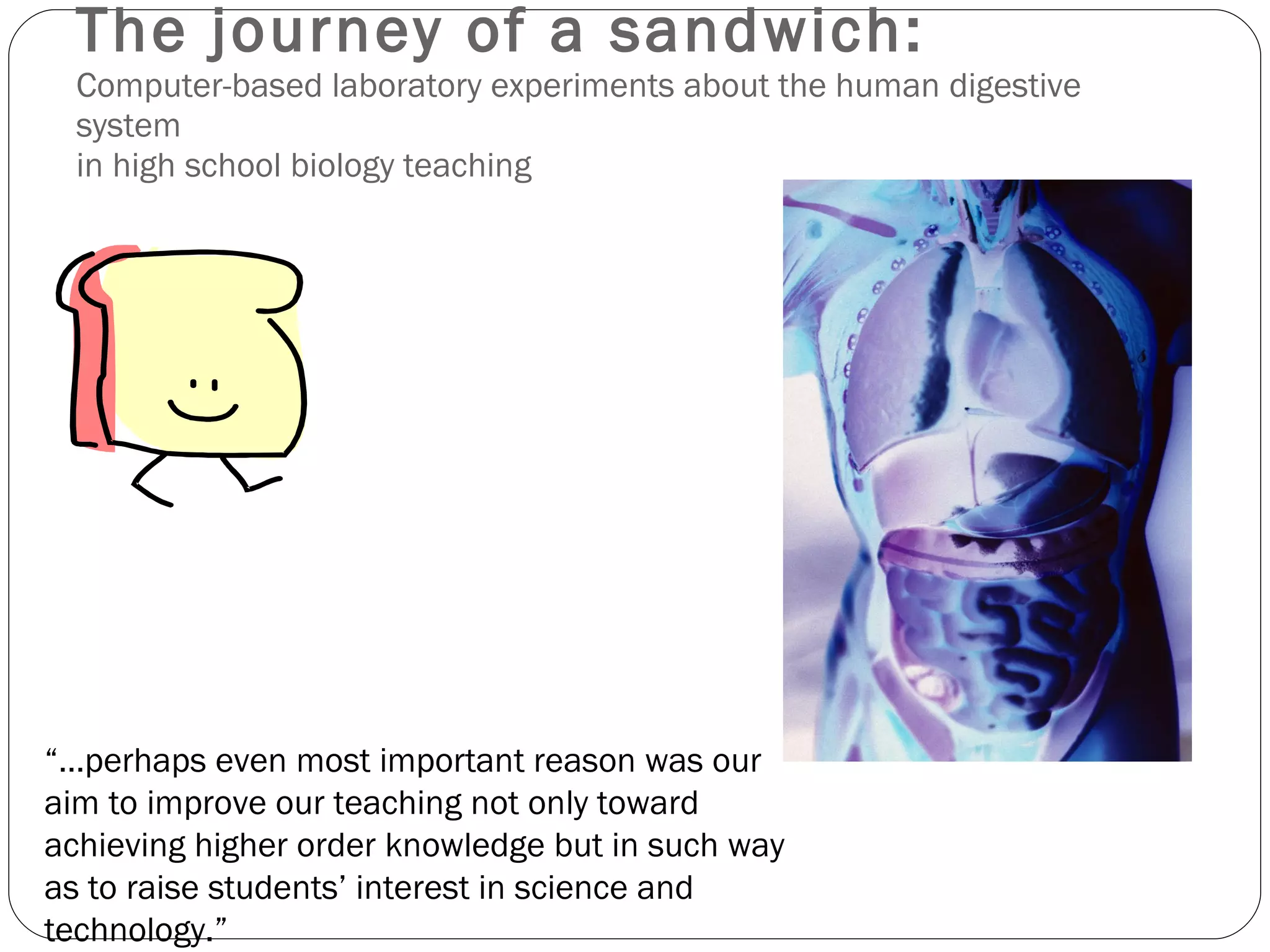
The journey of a sandwich:  Computer-based laboratory experiments about the human digestive system  in high school biology teaching “… perhaps even most important reason was our aim to improve our teaching not only toward achieving higher order knowledge but in such way as to raise students’ interest in science and technology.”  (Sorgo, Hajdinjak & Briski, 2008, p. 92)
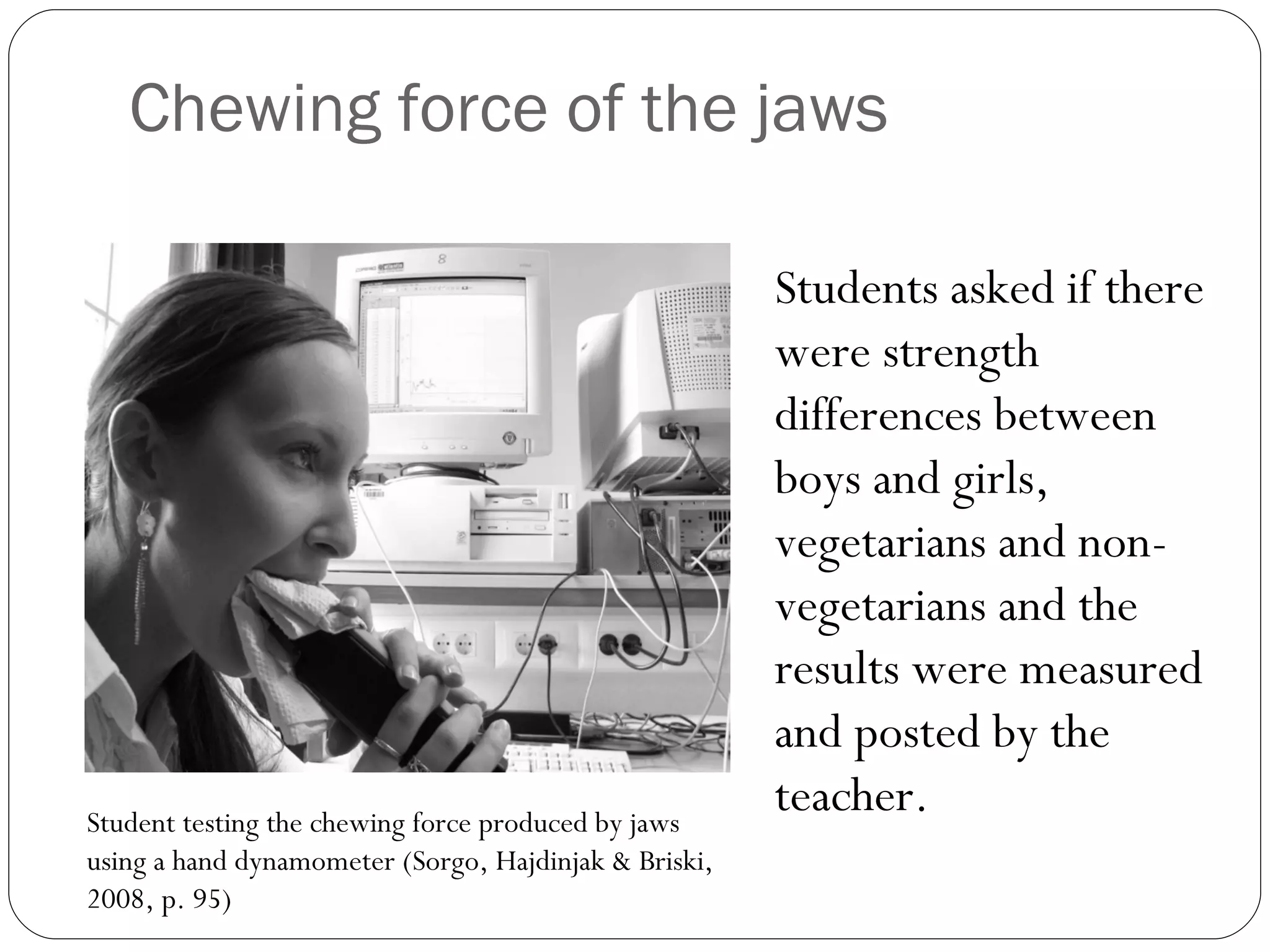
Chewing force of the jaws Student testing the chewing force produced by jaws using a hand dynamometer (Sorgo, Hajdinjak & Briski, 2008, p. 95) Students asked if there were strength differences between boys and girls, vegetarians and non-vegetarians and the results were measured and posted by the teacher.
The results of technology-based lab experiments? There was “a switch from teacher-centered lectures toward student centered practices, where students gain new knowledge through firsthand experience.” Also, discussion was stimulated “about the physiology of the digestive system based on students’ personal experience with some of the underlying phenomena after the experiments.” (Sorgo, Hajdinjak & Briski, 2008, p. 98)
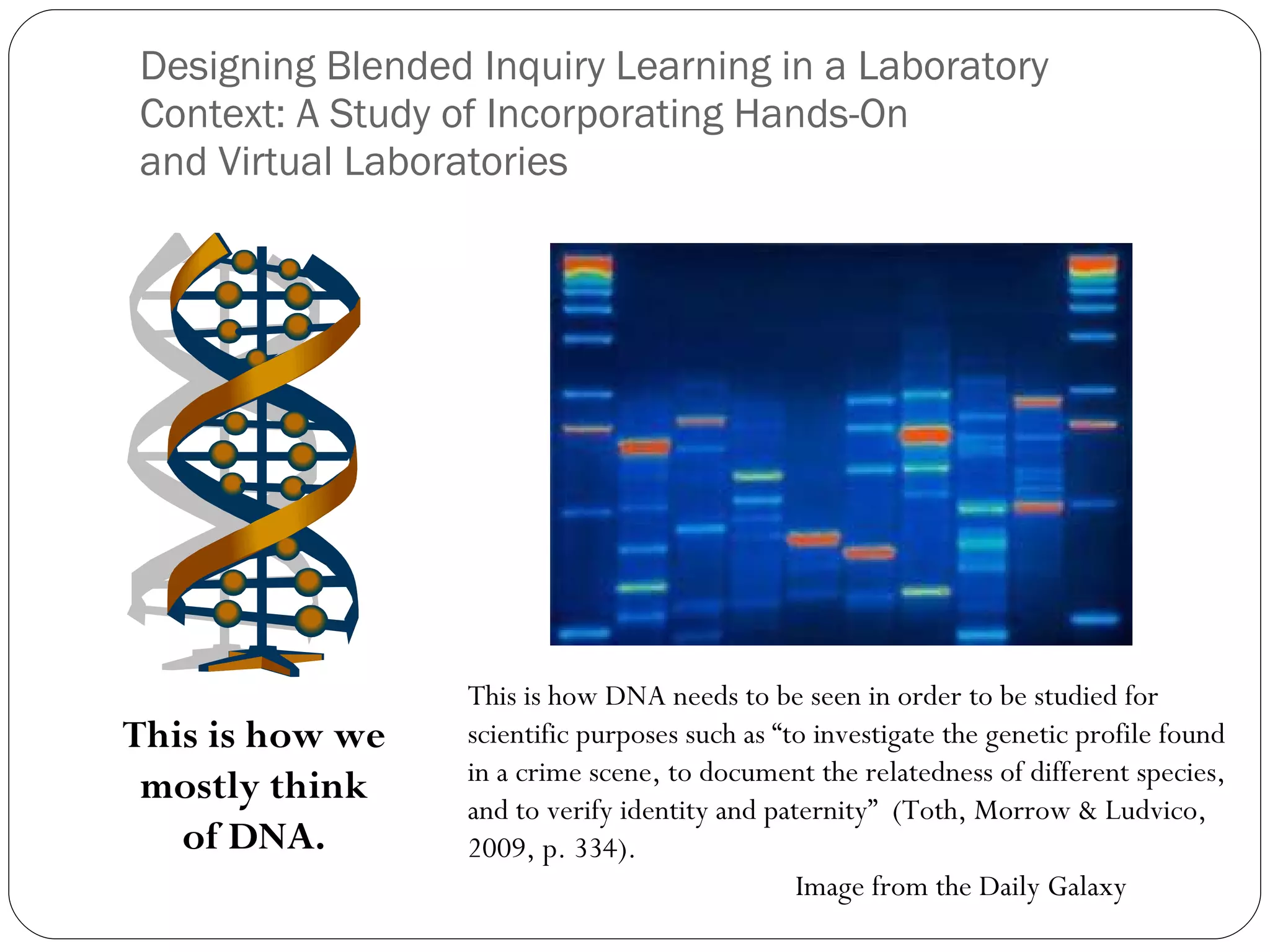
Designing Blended Inquiry Learning in a Laboratory Context: A Study of Incorporating Hands-On and Virtual Laboratories This is how we mostly think of DNA. This is how DNA needs to be seen in order to be studied for scientific purposes such as “to investigate the genetic profile found in a crime scene, to document the relatedness of different species, and to verify identity and paternity”  (Toth, Morrow & Ludvico, 2009, p. 334). Image from the Daily Galaxy
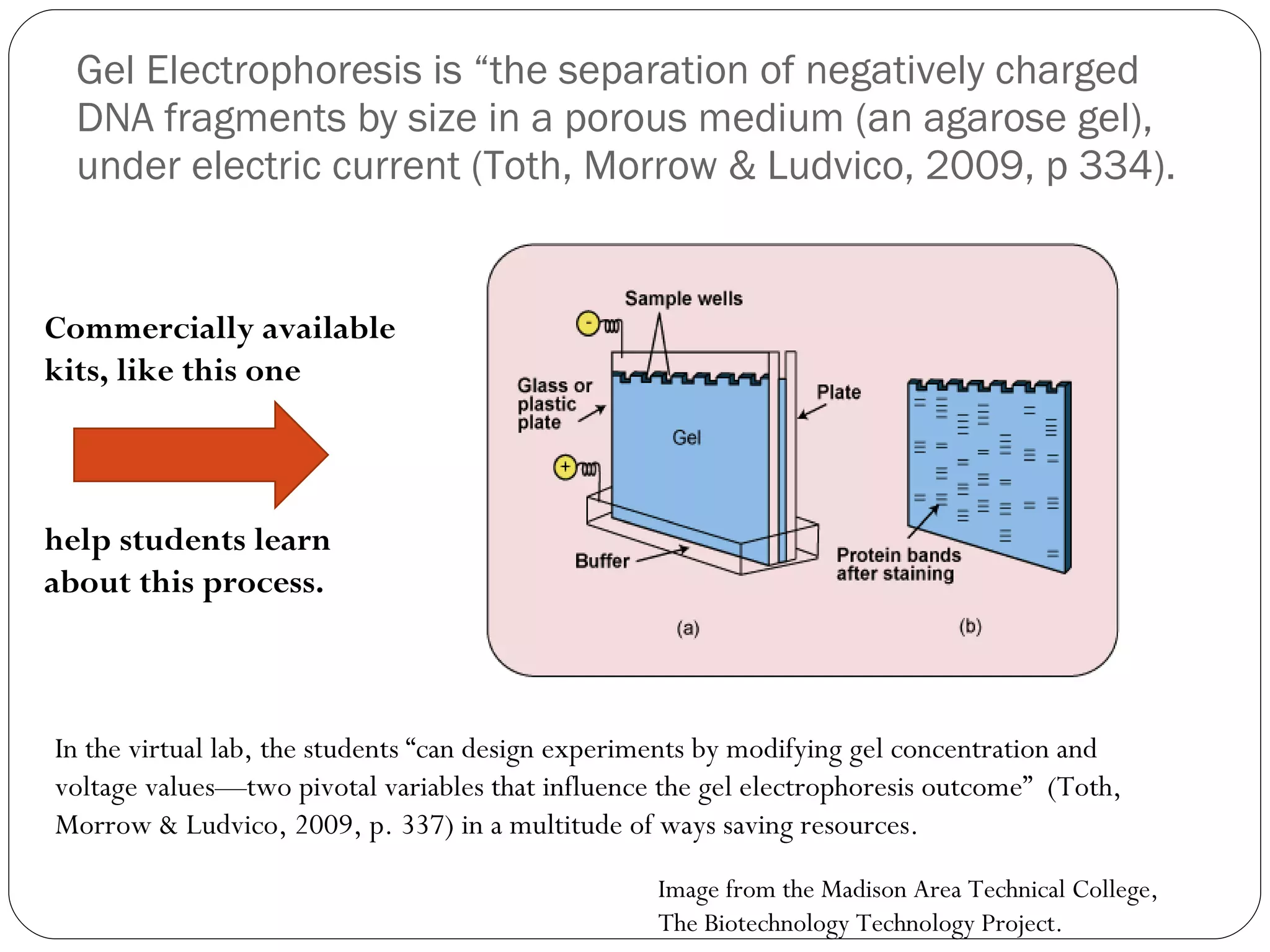
Gel Electrophoresis is “the separation of negatively charged DNA fragments by size in a porous medium (an agarose gel), under electric current (Toth, Morrow & Ludvico, 2009, p 334). In the virtual lab, the students “can design experiments by modifying gel concentration and voltage values—two pivotal variables that influence the gel electrophoresis outcome”  (Toth, Morrow & Ludvico, 2009, p. 337) in a multitude of ways saving resources.  Commercially available kits, like this one help students learn about this process. Image from the Madison Area Technical College,  The Biotechnology Technology Project.
Student Noted Benefits For the Virtual Laboratory added illustration of the mechanisms of the movement of different-size (small, medium, and large) DNA fragments the ease and speed of experimental design the process of automation which helped them synthesizes their knowledge without the error common in the hands-on laboratory environment. For the Hands-On Laboratory helped them learn:  the manual skill of loading DNA without puncturing the gels the effects of their erroneous reversal of the positive and negative poles the effects a variety of measurement and design errors that can contribute to the interpretation of results. (Toth, Morrow & Ludvico, 2009, p 341-342)
References McKinney, L. (2009, May). Is culture coded in DNA” New research says “yes”.  The  Daily Galaxy . Retrieved from  http://www.dailygalaxy.com/my_weblog/2009/05/is-culture-genetically- 	 encoded-new-research-says-yes.html Mowery, J. & Seidman, L. Protein Purification Manual.  Biotechnology Lab Technical  Program Laboratory  Manual. Retrieved from  http://biotech.matcmadison.edu/resources/proteins/labManual/chapter_5	procedure5_3.htm Sorgo, A., Hajdinjak, Z. & Briski, D. (2008). The journey of a sandwich: computer- based laboratory experiments about the human digestive system in high  school biology teaching.  Advances in Physiology Education, 32 , 92-99.  doi:10.1152/advan.00035.2007 Toth, E. E., Morrow, B. L. & Ludvico, L. R. (2009). Designing blended inquiry  learning in a laboratory context: A study of incorporating hands-on and  virtual laboratories.  Innovative Higher Education ,  33 (5). 333-344. doi:  10.1007/s10755-008-9087-7

APotterAssignmentFolderPresentation

  • 1.
    Amanda Potter Technologyin the Biology Classroom
  • 2.
    The journey ofa sandwich: Computer-based laboratory experiments about the human digestive system in high school biology teaching “… perhaps even most important reason was our aim to improve our teaching not only toward achieving higher order knowledge but in such way as to raise students’ interest in science and technology.” (Sorgo, Hajdinjak & Briski, 2008, p. 92)
  • 3.
    Chewing force ofthe jaws Student testing the chewing force produced by jaws using a hand dynamometer (Sorgo, Hajdinjak & Briski, 2008, p. 95) Students asked if there were strength differences between boys and girls, vegetarians and non-vegetarians and the results were measured and posted by the teacher.
  • 4.
    The results oftechnology-based lab experiments? There was “a switch from teacher-centered lectures toward student centered practices, where students gain new knowledge through firsthand experience.” Also, discussion was stimulated “about the physiology of the digestive system based on students’ personal experience with some of the underlying phenomena after the experiments.” (Sorgo, Hajdinjak & Briski, 2008, p. 98)
  • 5.
    Designing Blended InquiryLearning in a Laboratory Context: A Study of Incorporating Hands-On and Virtual Laboratories This is how we mostly think of DNA. This is how DNA needs to be seen in order to be studied for scientific purposes such as “to investigate the genetic profile found in a crime scene, to document the relatedness of different species, and to verify identity and paternity” (Toth, Morrow & Ludvico, 2009, p. 334). Image from the Daily Galaxy
  • 6.
    Gel Electrophoresis is“the separation of negatively charged DNA fragments by size in a porous medium (an agarose gel), under electric current (Toth, Morrow & Ludvico, 2009, p 334). In the virtual lab, the students “can design experiments by modifying gel concentration and voltage values—two pivotal variables that influence the gel electrophoresis outcome” (Toth, Morrow & Ludvico, 2009, p. 337) in a multitude of ways saving resources. Commercially available kits, like this one help students learn about this process. Image from the Madison Area Technical College, The Biotechnology Technology Project.
  • 7.
    Student Noted BenefitsFor the Virtual Laboratory added illustration of the mechanisms of the movement of different-size (small, medium, and large) DNA fragments the ease and speed of experimental design the process of automation which helped them synthesizes their knowledge without the error common in the hands-on laboratory environment. For the Hands-On Laboratory helped them learn: the manual skill of loading DNA without puncturing the gels the effects of their erroneous reversal of the positive and negative poles the effects a variety of measurement and design errors that can contribute to the interpretation of results. (Toth, Morrow & Ludvico, 2009, p 341-342)
  • 8.
    References McKinney, L.(2009, May). Is culture coded in DNA” New research says “yes”. The Daily Galaxy . Retrieved from http://www.dailygalaxy.com/my_weblog/2009/05/is-culture-genetically- encoded-new-research-says-yes.html Mowery, J. & Seidman, L. Protein Purification Manual. Biotechnology Lab Technical Program Laboratory Manual. Retrieved from http://biotech.matcmadison.edu/resources/proteins/labManual/chapter_5 procedure5_3.htm Sorgo, A., Hajdinjak, Z. & Briski, D. (2008). The journey of a sandwich: computer- based laboratory experiments about the human digestive system in high school biology teaching. Advances in Physiology Education, 32 , 92-99. doi:10.1152/advan.00035.2007 Toth, E. E., Morrow, B. L. & Ludvico, L. R. (2009). Designing blended inquiry learning in a laboratory context: A study of incorporating hands-on and virtual laboratories. Innovative Higher Education , 33 (5). 333-344. doi: 10.1007/s10755-008-9087-7