ANTIBIOTICS
P R E S E N T E D B Y :
D R . A M E E R A S A L A H U D H E E N
J R ( A C A D E M I C )
A I I M S P A T N A
CONTENTS
• Introduction
• Classifications
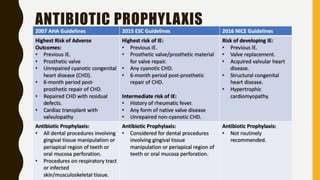
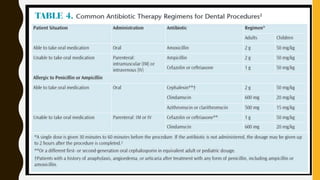
• Antibiotic prophylaxis
• Misuse of antibiotics
• General principles of antimicrobial agent
• Selection of antimicrobial agent
• Empirical therapy
• Antibiotic combination
• Therapeutic uses in OMFS
• Conclusion
• references
INTRODUCTION
• “Antibiotic” is from antibiosis, meaning against life.
• Substances derived from a microorganism or produced synthetically to kill or suppress
the growth of other organisms.
• Antibiotics targets against bacteria, fungi and parasites
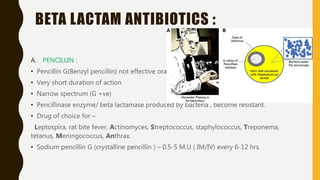
• Alexander Fleming discovered pencillin, the first natural antibiotic, in 1928.
• Fleming also predicted the rise of antibiotic resistance.
• Before bacteria can multiply & cause symptoms, the immune system can typically kill
them. WBCs attack harmful bacteria and, even if symptoms do occur, the immune system
can usually cope and fight off the infection.
• Sometimes, however, the number of harmful bacteria is excessive, and the immune
system can’t fight them all. Antibiotics are useful in this scenario.
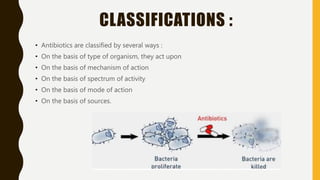
CLASSIFICATIONS :
• Antibiotics are classified by several ways :
• On the basis of type of organism, they act upon
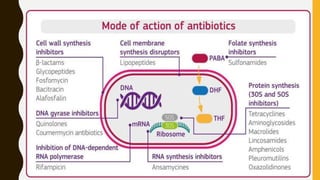
• On the basis of mechanism of action
• On the basis of spectrum of activity
• On the basis of mode of action
• On the basis of sources.
ON THE BASIS OF TYPE OF ORGANISM
• Antibacterials – pencillin
aminoglycosides
erythromycin etc.
• Antifungals – griseofulvin
amphotericin
ketoconazole
• Antiprotozoal – metronidazole
chloroquine
ON THE BASIS OF MECHANISM OF ACTION
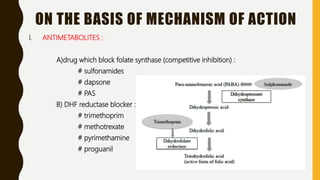
I. ANTIMETABOLITES :
A)drug which block folate synthase (competitive inhibition) :
# sulfonamides
# dapsone
# PAS
B) DHF reductase blocker :
# trimethoprim
# methotrexate
# pyrimethamine
# proguanil
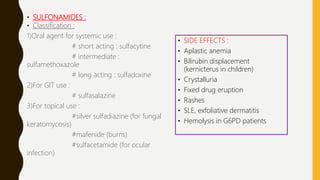
• SULFONAMIDES :
• Classification :
1)Oral agent for systemic use :
# short acting : sulfacytine
# intermediate :
sulfamethoxazole
# long acting : sulfadoxine
2)For GIT use :
# sulfasalazine
3)For topical use :
#silver sulfadiazine (for fungal
keratomycosis)
#mafenide (burns)
#sulfacetamide (for ocular
infection)
• SIDE EFFECTS :
• Aplastic anemia
• Bilirubin displacement
(kernicterus in children)
• Crystalluria
• Fixed drug eruption
• Rashes
• SLE, exfoliative dermatitis
• Hemolysis in G6PD patients
II. DRUGS INHIBITING CELL WALL SYNTHESIS :
#Fosfomycin
# beta lactam antibiotics
# bacitracin
# cycloserine
# vancomycin
BETA LACTAM ANTIBIOTICS :
A. PENCILLIN :
• Pencillin G(Benzyl pencillin) not effective orally.
• Very short duration of action
• Narrow spectrum (G +ve)
• Pencillinase enzyme/ beta lactamase produced by bacteria , become resistant.
• Drug of choice for –
Leptospira, rat bite fever, Actinomyces, Streptococcus, staphylococcus, Treponema,
tetanus, Meningococcus, Anthrax.
• Sodium pencillin G (crystalline pencillin ) – 0.5-5 M.U ( IM/IV) every 6-12 hrs.
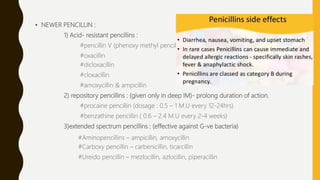
• NEWER PENCILLIN :
1) Acid- resistant pencillins :
#pencillin V (phenoxy methyl pencillin)
#oxacillin
#dicloxacillin
#cloxacillin
#amoxycillin & ampicillin
2) repository pencillins : (given only in deep IM)- prolong duration of action.
#procaine pencillin (dosage : 0.5 – 1 M.U every 12-24hrs)
#benzathine pencillin ( 0.6 – 2.4 M.U every 2-4 weeks)
3)extended spectrum pencillins : (effective against G-ve bacteria)
#Aminopencillins – ampicillin, amoxycillin
#Carboxy pencillin – carbenicillin, ticarcillin
#Ureido pencillin – mezlocillin, azlocillin, piperacillin
4)penicillinase resistant pencillins :
#cloxacillin
#oxacillin
#nafcillin
#dicloxacillin
#methicillin
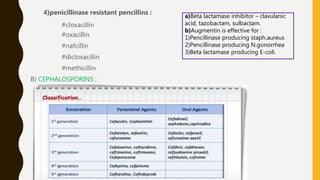
B) CEPHALOSPORINS :
a)Beta lactamase inhibitor – clavulanic
acid, tazobactam, sulbactam.
b)Augmentin is effective for :
1)Pencillinase producing staph.aureus
2)Pencillinase producing N.gonorrhea
3)Beta lactamase producing E-coli.
C) MONOBACTEM :
Eg : aztreonam ( only beta lactam antibiotic used if patient have severe allergy to
pencillin & cephalosporins )
• Indication : hospital acquired infection from urinary, biliary, GIT
D) CARBAPENEM : (only beta lactam which are effective against ESBL producing
organisms )
Eg : imipenem, faropenem, etrapenem.
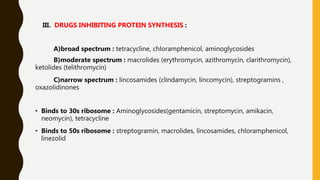
III. DRUGS INHIBITING PROTEIN SYNTHESIS :
A)broad spectrum : tetracycline, chloramphenicol, aminoglycosides
B)moderate spectrum : macrolides (erythromycin, azithromycin, clarithromycin),
ketolides (telithromycin)
C)narrow spectrum : lincosamides (clindamycin, lincomycin), streptogramins ,
oxazolidinones
• Binds to 30s ribosome : Aminoglycosides(gentamicin, streptomycin, amikacin,
neomycin), tetracycline
• Binds to 50s ribosome : streptogramin, macrolides, lincosamides, chloramphenicol,
linezolid
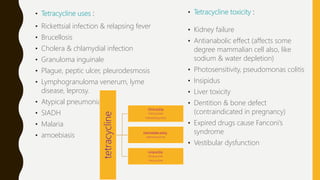
• Tetracycline uses :
• Rickettsial infection & relapsing fever
• Brucellosis
• Cholera & chlamydial infection
• Granuloma inguinale
• Plague, peptic ulcer, pleurodesmosis
• Lymphogranuloma venerum, lyme
disease, leprosy.
• Atypical pneumonia
• SIADH
• Malaria
• amoebiasis
• Tetracycline toxicity :
• Kidney failure
• Antianabolic effect (affects some
degree mammalian cell also, like
sodium & water depletion)
• Photosensitivity, pseudomonas colitis
• Insipidus
• Liver toxicity
• Dentition & bone defect
(contraindicated in pregnancy)
• Expired drugs cause Fanconi’s
syndrome
• Vestibular dysfunction
tetracycline •Short acting:
•Tetracycline
•chlortetracycline
Intermediate acting :
demeclocycline
Long acting:
Doxycycline
minocycline
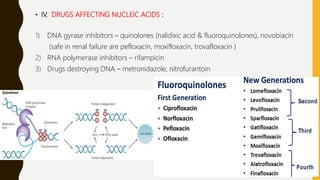
• IV. DRUGS AFFECTING NUCLEIC ACIDS :
1) DNA gyrase inhibitors – quinolones (nalidixic acid & fluoroquinolones), novobiacin
(safe in renal failure are pefloxacin, moxifloxacin, trovafloxacin )
2) RNA polymerase inhibitors – rifampicin
3) Drugs destroying DNA – metronidazole, nitrofurantoin
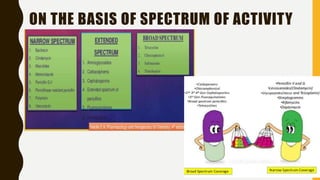
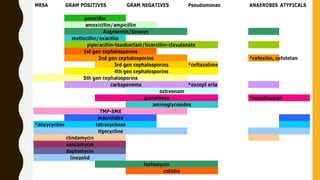
ON THE BASIS OF SPECTRUM OF ACTIVITY
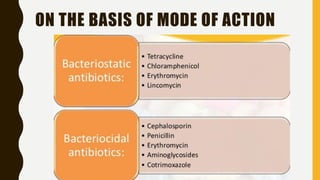
ON THE BASIS OF MODE OF ACTION
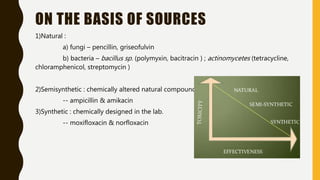
ON THE BASIS OF SOURCES
1)Natural :
a) fungi – pencillin, griseofulvin
b) bacteria – bacillus sp. (polymyxin, bacitracin ) ; actinomycetes (tetracycline,
chloramphenicol, streptomycin )
2)Semisynthetic : chemically altered natural compounds.
-- ampicillin & amikacin
3)Synthetic : chemically designed in the lab.
-- moxifloxacin & norfloxacin
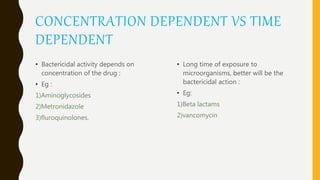
CONCENTRATION DEPENDENT VS TIME
DEPENDENT
• Bactericidal activity depends on
concentration of the drug :
• Eg :
1)Aminoglycosides
2)Metronidazole
3)fluroquinolones.
• Long time of exposure to
microorganisms, better will be the
bactericidal action :
• Eg:
1)Beta lactams
2)vancomycin
ANTIBIOTIC PROPHYLAXIS
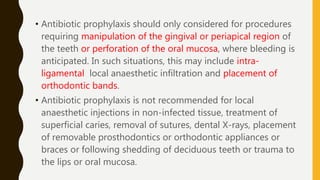
• Antibiotic prophylaxis should only considered for procedures
requiring manipulation of the gingival or periapical region of
the teeth or perforation of the oral mucosa, where bleeding is
anticipated. In such situations, this may include intra-
ligamental local anaesthetic infiltration and placement of
orthodontic bands.
• Antibiotic prophylaxis is not recommended for local
anaesthetic injections in non-infected tissue, treatment of
superficial caries, removal of sutures, dental X-rays, placement
of removable prosthodontics or orthodontic appliances or
braces or following shedding of deciduous teeth or trauma to
the lips or oral mucosa.
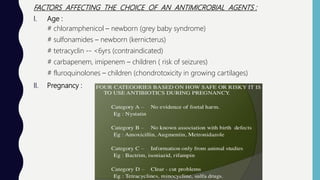
FACTORS AFFECTING THE CHOICE OF AN ANTIMICROBIAL AGENTS :
I. Age :
# chloramphenicol – newborn (grey baby syndrome)
# sulfonamides – newborn (kernicterus)
# tetracyclin -- <6yrs (contraindicated)
# carbapenem, imipenem – children ( risk of seizures)
# fluroquinolones – children (chondrotoxicity in growing cartilages)
II. Pregnancy :
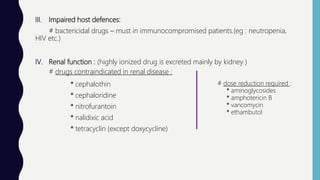
III. Impaired host defences:
# bactericidal drugs – must in immunocompromised patients.(eg : neutropenia,
HIV etc.)
IV. Renal function : (highly ionized drug is excreted mainly by kidney )
# drugs contraindicated in renal disease :
* cephalothin
* cephaloridine
* nitrofurantoin
* nalidixic acid
* tetracyclin (except doxycycline)
# dose reduction required :
* aminoglycosides
* amphotericin B
* vancomycin
* ethambutol
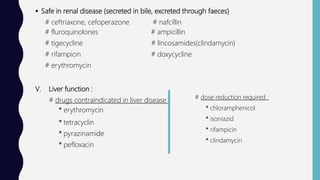
 Safe in renal disease (secreted in bile, excreted through faeces)
# ceftriaxone, cefoperazone # nafcillin
# fluroquinolones # ampicillin
# tigecycline # lincosamides(clindamycin)
# rifampicin # doxycycline
# erythromycin
V. Liver function :
# drugs contraindicated in liver disease :
* erythromycin
* tetracyclin
* pyrazinamide
* pefloxacin
# dose reduction required :
* chloramphenicol
* isoniazid
* rifampicin
* clindamycin
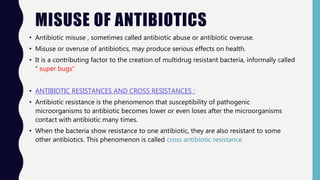
MISUSE OF ANTIBIOTICS
• Antibiotic misuse , sometimes called antibiotic abuse or antibiotic overuse.
• Misuse or overuse of antibiotics, may produce serious effects on health.
• It is a contributing factor to the creation of multidrug resistant bacteria, informally called
“ super bugs”
• ANTIBIOTIC RESISTANCES AND CROSS RESISTANCES :
• Antibiotic resistance is the phenomenon that susceptibility of pathogenic
microorganisms to antibiotic becomes lower or even loses after the microorganisms
contact with antibiotic many times.
• When the bacteria show resistance to one antibiotic, they are also resistant to some
other antibiotics. This phenomenon is called cross antibiotic resistance.
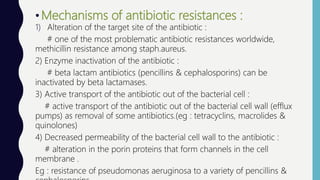
•Mechanisms of antibiotic resistances :
1) Alteration of the target site of the antibiotic :
# one of the most problematic antibiotic resistances worldwide,
methicillin resistance among staph.aureus.
2) Enzyme inactivation of the antibiotic :
# beta lactam antibiotics (pencillins & cephalosporins) can be
inactivated by beta lactamases.
3) Active transport of the antibiotic out of the bacterial cell :
# active transport of the antibiotic out of the bacterial cell wall (efflux
pumps) as removal of some antibiotics.(eg : tetracyclins, macrolides &
quinolones)
4) Decreased permeability of the bacterial cell wall to the antibiotic :
# alteration in the porin proteins that form channels in the cell
membrane .
Eg : resistance of pseudomonas aeruginosa to a variety of pencillins &
GENERAL PRINCIPLES OF ANTIMICROBIAL
THERAPY :
• Identification of the infecting organisms should precede
antimicrobial therapy when possible.
• The pathogenic microorganism susceptibility to antimicrobial
agents should be determined, if a suitable test exists.
• Factors that influence the choice of an antimicrobial agent or
its dosage for a patient include the age, renal & hepatic
function, pregnancy status and the site of infection, etc.
SELECTION OF ANTIMICROBIAL AGENT :
• Empirical therapy – prior to identification of organism for
critically ill patients.
• Organism’s susceptibility to the antibiotic.
• Patient’s factors – immune system, renal/ hepatic function
• Effect of site of infection on therapy
(lipophilic – tetracycline, macrolides, fluroquinolones)-
intracellular pathogen(chlamydia, rickettsia)
(hydrophilic – beta lactam, vancomycin, aminoglycosides) –
confined to ECF
• Safety of the agent
• Cost of therapy
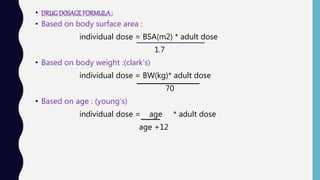
• DRUGDOSAGEFORMULA:
• Based on body surface area :
individual dose = BSA(m2) * adult dose
1.7
• Based on body weight :(clark’s)
individual dose = BW(kg)* adult dose
70
• Based on age : (young’s)
individual dose = age * adult dose
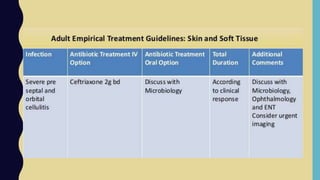
age +12
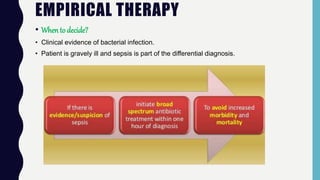
EMPIRICAL THERAPY
• When to decide?
• Clinical evidence of bacterial infection.
• Patient is gravely ill and sepsis is part of the differential diagnosis.
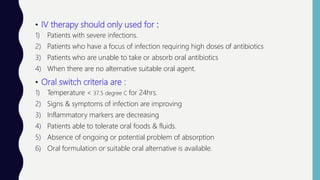
• IV therapy should only used for :
1) Patients with severe infections.
2) Patients who have a focus of infection requiring high doses of antibiotics
3) Patients who are unable to take or absorb oral antibiotics
4) When there are no alternative suitable oral agent.
• Oral switch criteria are :
1) Temperature < 37.5 degree C for 24hrs.
2) Signs & symptoms of infection are improving
3) Inflammatory markers are decreasing
4) Patients able to tolerate oral foods & fluids.
5) Absence of ongoing or potential problem of absorption
6) Oral formulation or suitable oral alternative is available.
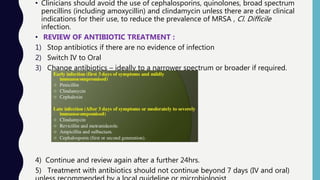
• Clinicians should avoid the use of cephalosporins, quinolones, broad spectrum
pencillins (including amoxycillin) and clindamycin unless there are clear clinical
indications for their use, to reduce the prevalence of MRSA , Cl. Difficile
infection.
• REVIEW OF ANTIBIOTIC TREATMENT :
1) Stop antibiotics if there are no evidence of infection
2) Switch IV to Oral
3) Change antibiotics – ideally to a narrower spectrum or broader if required.
4) Continue and review again after a further 24hrs.
5) Treatment with antibiotics should not continue beyond 7 days (IV and oral)
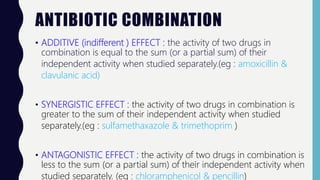
ANTIBIOTIC COMBINATION
• ADDITIVE (indifferent ) EFFECT : the activity of two drugs in
combination is equal to the sum (or a partial sum) of their
independent activity when studied separately.(eg : amoxicillin &
clavulanic acid)
• SYNERGISTIC EFFECT : the activity of two drugs in combination is
greater to the sum of their independent activity when studied
separately.(eg : sulfamethaxazole & trimethoprim )
• ANTAGONISTIC EFFECT : the activity of two drugs in combination is
less to the sum (or a partial sum) of their independent activity when
studied separately. (eg : chloramphenicol & pencillin)
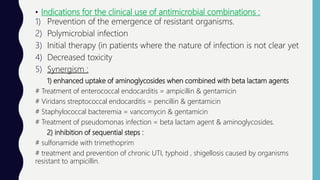
• Indications for the clinical use of antimicrobial combinations :
1) Prevention of the emergence of resistant organisms.
2) Polymicrobial infection
3) Initial therapy (in patients where the nature of infection is not clear yet
4) Decreased toxicity
5) Synergism :
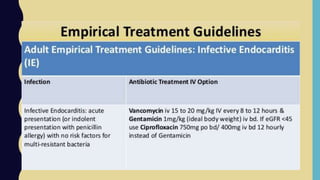
1) enhanced uptake of aminoglycosides when combined with beta lactam agents
# Treatment of enterococcal endocarditis = ampicillin & gentamicin
# Viridans streptococcal endocarditis = pencillin & gentamicin
# Staphylococcal bacteremia = vancomycin & gentamicin
# Treatment of pseudomonas infection = beta lactam agent & aminoglycosides.
2) inhibition of sequential steps :
# sulfonamide with trimethoprim
# treatment and prevention of chronic UTI, typhoid , shigellosis caused by organisms
resistant to ampicillin.
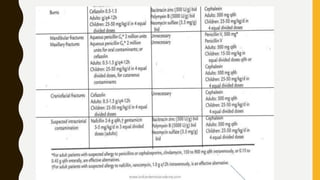
THERAPEUTIC USES OF ANTIBIOTICS IN
ORAL & MAXILLOFACIAL SURGERY
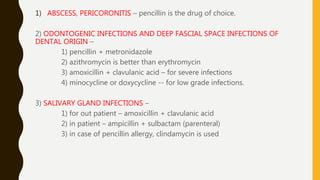
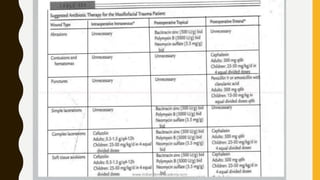
1) ABSCESS, PERICORONITIS – pencillin is the drug of choice.
2) ODONTOGENIC INFECTIONS AND DEEP FASCIAL SPACE INFECTIONS OF
DENTAL ORIGIN –
1) pencillin + metronidazole
2) azithromycin is better than erythromycin
3) amoxicillin + clavulanic acid – for severe infections
4) minocycline or doxycycline -- for low grade infections.
3) SALIVARY GLAND INFECTIONS –
1) for out patient – amoxicillin + clavulanic acid
2) in patient – ampicillin + sulbactam (parenteral)
3) in case of pencillin allergy, clindamycin is used
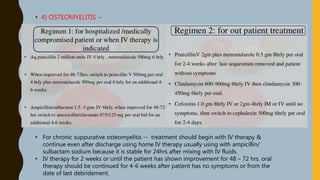
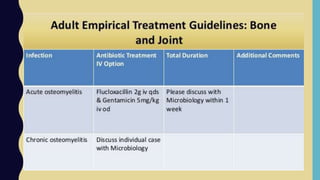
• 4) OSTEOMYELITIS –
• For chronic suppurative osteomyelitis -- treatment should begin with IV therapy &
continue even after discharge using home IV therapy usually using with ampicillin/
sulbactam sodium because it is stable for 24hrs after mixing with IV fluids.
• IV therapy for 2 weeks or until the patient has shown improvement for 48 – 72 hrs. oral
therapy should be continued for 4-6 weeks after patient has no symptoms or from the
date of last debridement.
CONCLUSION
• Antibiotics are used to treat infections and are also
responsible for making them more difficult to treat
because of their misuse and development of
resistance. the only way to keep antibiotics useful is to
use them appropriately & judiciously.
REFERENCES
1) review of pharmacology – 12th edition- gobind rai garg, sparsh gupta
2) Medical pharmacology – K.D Tripathi
3) Contemporary oral & maxillofacial surgery – Peterson 4th edition
4) Antibiotic prophylaxis in oral & maxillofacial surgery .med oral patol oral cir buccal
2006;11:E292-6.
5) www.indiandentalacademy.com
6) Google – pictures
THANK YOU

ANTIBIOTICS.pptx

  • 1.
    ANTIBIOTICS P R ES E N T E D B Y : D R . A M E E R A S A L A H U D H E E N J R ( A C A D E M I C ) A I I M S P A T N A
  • 2.
    CONTENTS • Introduction • Classifications •Antibiotic prophylaxis • Misuse of antibiotics • General principles of antimicrobial agent • Selection of antimicrobial agent • Empirical therapy • Antibiotic combination • Therapeutic uses in OMFS • Conclusion • references
  • 3.
    INTRODUCTION • “Antibiotic” isfrom antibiosis, meaning against life. • Substances derived from a microorganism or produced synthetically to kill or suppress the growth of other organisms. • Antibiotics targets against bacteria, fungi and parasites • Alexander Fleming discovered pencillin, the first natural antibiotic, in 1928. • Fleming also predicted the rise of antibiotic resistance. • Before bacteria can multiply & cause symptoms, the immune system can typically kill them. WBCs attack harmful bacteria and, even if symptoms do occur, the immune system can usually cope and fight off the infection. • Sometimes, however, the number of harmful bacteria is excessive, and the immune system can’t fight them all. Antibiotics are useful in this scenario.
  • 4.
    CLASSIFICATIONS : • Antibioticsare classified by several ways : • On the basis of type of organism, they act upon • On the basis of mechanism of action • On the basis of spectrum of activity • On the basis of mode of action • On the basis of sources.
  • 5.
    ON THE BASISOF TYPE OF ORGANISM • Antibacterials – pencillin aminoglycosides erythromycin etc. • Antifungals – griseofulvin amphotericin ketoconazole • Antiprotozoal – metronidazole chloroquine
  • 8.
    ON THE BASISOF MECHANISM OF ACTION I. ANTIMETABOLITES : A)drug which block folate synthase (competitive inhibition) : # sulfonamides # dapsone # PAS B) DHF reductase blocker : # trimethoprim # methotrexate # pyrimethamine # proguanil
  • 9.
    • SULFONAMIDES : •Classification : 1)Oral agent for systemic use : # short acting : sulfacytine # intermediate : sulfamethoxazole # long acting : sulfadoxine 2)For GIT use : # sulfasalazine 3)For topical use : #silver sulfadiazine (for fungal keratomycosis) #mafenide (burns) #sulfacetamide (for ocular infection) • SIDE EFFECTS : • Aplastic anemia • Bilirubin displacement (kernicterus in children) • Crystalluria • Fixed drug eruption • Rashes • SLE, exfoliative dermatitis • Hemolysis in G6PD patients
  • 10.
    II. DRUGS INHIBITINGCELL WALL SYNTHESIS : #Fosfomycin # beta lactam antibiotics # bacitracin # cycloserine # vancomycin
  • 11.
    BETA LACTAM ANTIBIOTICS: A. PENCILLIN : • Pencillin G(Benzyl pencillin) not effective orally. • Very short duration of action • Narrow spectrum (G +ve) • Pencillinase enzyme/ beta lactamase produced by bacteria , become resistant. • Drug of choice for – Leptospira, rat bite fever, Actinomyces, Streptococcus, staphylococcus, Treponema, tetanus, Meningococcus, Anthrax. • Sodium pencillin G (crystalline pencillin ) – 0.5-5 M.U ( IM/IV) every 6-12 hrs.
  • 12.
    • NEWER PENCILLIN: 1) Acid- resistant pencillins : #pencillin V (phenoxy methyl pencillin) #oxacillin #dicloxacillin #cloxacillin #amoxycillin & ampicillin 2) repository pencillins : (given only in deep IM)- prolong duration of action. #procaine pencillin (dosage : 0.5 – 1 M.U every 12-24hrs) #benzathine pencillin ( 0.6 – 2.4 M.U every 2-4 weeks) 3)extended spectrum pencillins : (effective against G-ve bacteria) #Aminopencillins – ampicillin, amoxycillin #Carboxy pencillin – carbenicillin, ticarcillin #Ureido pencillin – mezlocillin, azlocillin, piperacillin
  • 13.
    4)penicillinase resistant pencillins: #cloxacillin #oxacillin #nafcillin #dicloxacillin #methicillin B) CEPHALOSPORINS : a)Beta lactamase inhibitor – clavulanic acid, tazobactam, sulbactam. b)Augmentin is effective for : 1)Pencillinase producing staph.aureus 2)Pencillinase producing N.gonorrhea 3)Beta lactamase producing E-coli.
  • 14.
    C) MONOBACTEM : Eg: aztreonam ( only beta lactam antibiotic used if patient have severe allergy to pencillin & cephalosporins ) • Indication : hospital acquired infection from urinary, biliary, GIT D) CARBAPENEM : (only beta lactam which are effective against ESBL producing organisms ) Eg : imipenem, faropenem, etrapenem.
  • 15.
    III. DRUGS INHIBITINGPROTEIN SYNTHESIS : A)broad spectrum : tetracycline, chloramphenicol, aminoglycosides B)moderate spectrum : macrolides (erythromycin, azithromycin, clarithromycin), ketolides (telithromycin) C)narrow spectrum : lincosamides (clindamycin, lincomycin), streptogramins , oxazolidinones • Binds to 30s ribosome : Aminoglycosides(gentamicin, streptomycin, amikacin, neomycin), tetracycline • Binds to 50s ribosome : streptogramin, macrolides, lincosamides, chloramphenicol, linezolid
  • 16.
    • Tetracycline uses: • Rickettsial infection & relapsing fever • Brucellosis • Cholera & chlamydial infection • Granuloma inguinale • Plague, peptic ulcer, pleurodesmosis • Lymphogranuloma venerum, lyme disease, leprosy. • Atypical pneumonia • SIADH • Malaria • amoebiasis • Tetracycline toxicity : • Kidney failure • Antianabolic effect (affects some degree mammalian cell also, like sodium & water depletion) • Photosensitivity, pseudomonas colitis • Insipidus • Liver toxicity • Dentition & bone defect (contraindicated in pregnancy) • Expired drugs cause Fanconi’s syndrome • Vestibular dysfunction tetracycline •Short acting: •Tetracycline •chlortetracycline Intermediate acting : demeclocycline Long acting: Doxycycline minocycline
  • 17.
    • IV. DRUGSAFFECTING NUCLEIC ACIDS : 1) DNA gyrase inhibitors – quinolones (nalidixic acid & fluoroquinolones), novobiacin (safe in renal failure are pefloxacin, moxifloxacin, trovafloxacin ) 2) RNA polymerase inhibitors – rifampicin 3) Drugs destroying DNA – metronidazole, nitrofurantoin
  • 18.
    ON THE BASISOF SPECTRUM OF ACTIVITY
  • 20.
    ON THE BASISOF MODE OF ACTION
  • 21.
    ON THE BASISOF SOURCES 1)Natural : a) fungi – pencillin, griseofulvin b) bacteria – bacillus sp. (polymyxin, bacitracin ) ; actinomycetes (tetracycline, chloramphenicol, streptomycin ) 2)Semisynthetic : chemically altered natural compounds. -- ampicillin & amikacin 3)Synthetic : chemically designed in the lab. -- moxifloxacin & norfloxacin
  • 22.
    CONCENTRATION DEPENDENT VSTIME DEPENDENT • Bactericidal activity depends on concentration of the drug : • Eg : 1)Aminoglycosides 2)Metronidazole 3)fluroquinolones. • Long time of exposure to microorganisms, better will be the bactericidal action : • Eg: 1)Beta lactams 2)vancomycin
  • 23.
  • 24.
    • Antibiotic prophylaxisshould only considered for procedures requiring manipulation of the gingival or periapical region of the teeth or perforation of the oral mucosa, where bleeding is anticipated. In such situations, this may include intra- ligamental local anaesthetic infiltration and placement of orthodontic bands. • Antibiotic prophylaxis is not recommended for local anaesthetic injections in non-infected tissue, treatment of superficial caries, removal of sutures, dental X-rays, placement of removable prosthodontics or orthodontic appliances or braces or following shedding of deciduous teeth or trauma to the lips or oral mucosa.
  • 26.
    FACTORS AFFECTING THECHOICE OF AN ANTIMICROBIAL AGENTS : I. Age : # chloramphenicol – newborn (grey baby syndrome) # sulfonamides – newborn (kernicterus) # tetracyclin -- <6yrs (contraindicated) # carbapenem, imipenem – children ( risk of seizures) # fluroquinolones – children (chondrotoxicity in growing cartilages) II. Pregnancy :
  • 27.
    III. Impaired hostdefences: # bactericidal drugs – must in immunocompromised patients.(eg : neutropenia, HIV etc.) IV. Renal function : (highly ionized drug is excreted mainly by kidney ) # drugs contraindicated in renal disease : * cephalothin * cephaloridine * nitrofurantoin * nalidixic acid * tetracyclin (except doxycycline) # dose reduction required : * aminoglycosides * amphotericin B * vancomycin * ethambutol
  • 28.
     Safe inrenal disease (secreted in bile, excreted through faeces) # ceftriaxone, cefoperazone # nafcillin # fluroquinolones # ampicillin # tigecycline # lincosamides(clindamycin) # rifampicin # doxycycline # erythromycin V. Liver function : # drugs contraindicated in liver disease : * erythromycin * tetracyclin * pyrazinamide * pefloxacin # dose reduction required : * chloramphenicol * isoniazid * rifampicin * clindamycin
  • 29.
    MISUSE OF ANTIBIOTICS •Antibiotic misuse , sometimes called antibiotic abuse or antibiotic overuse. • Misuse or overuse of antibiotics, may produce serious effects on health. • It is a contributing factor to the creation of multidrug resistant bacteria, informally called “ super bugs” • ANTIBIOTIC RESISTANCES AND CROSS RESISTANCES : • Antibiotic resistance is the phenomenon that susceptibility of pathogenic microorganisms to antibiotic becomes lower or even loses after the microorganisms contact with antibiotic many times. • When the bacteria show resistance to one antibiotic, they are also resistant to some other antibiotics. This phenomenon is called cross antibiotic resistance.
  • 30.
    •Mechanisms of antibioticresistances : 1) Alteration of the target site of the antibiotic : # one of the most problematic antibiotic resistances worldwide, methicillin resistance among staph.aureus. 2) Enzyme inactivation of the antibiotic : # beta lactam antibiotics (pencillins & cephalosporins) can be inactivated by beta lactamases. 3) Active transport of the antibiotic out of the bacterial cell : # active transport of the antibiotic out of the bacterial cell wall (efflux pumps) as removal of some antibiotics.(eg : tetracyclins, macrolides & quinolones) 4) Decreased permeability of the bacterial cell wall to the antibiotic : # alteration in the porin proteins that form channels in the cell membrane . Eg : resistance of pseudomonas aeruginosa to a variety of pencillins &
  • 31.
    GENERAL PRINCIPLES OFANTIMICROBIAL THERAPY : • Identification of the infecting organisms should precede antimicrobial therapy when possible. • The pathogenic microorganism susceptibility to antimicrobial agents should be determined, if a suitable test exists. • Factors that influence the choice of an antimicrobial agent or its dosage for a patient include the age, renal & hepatic function, pregnancy status and the site of infection, etc.
  • 32.
    SELECTION OF ANTIMICROBIALAGENT : • Empirical therapy – prior to identification of organism for critically ill patients. • Organism’s susceptibility to the antibiotic. • Patient’s factors – immune system, renal/ hepatic function • Effect of site of infection on therapy (lipophilic – tetracycline, macrolides, fluroquinolones)- intracellular pathogen(chlamydia, rickettsia) (hydrophilic – beta lactam, vancomycin, aminoglycosides) – confined to ECF • Safety of the agent • Cost of therapy
  • 33.
    • DRUGDOSAGEFORMULA: • Basedon body surface area : individual dose = BSA(m2) * adult dose 1.7 • Based on body weight :(clark’s) individual dose = BW(kg)* adult dose 70 • Based on age : (young’s) individual dose = age * adult dose age +12
  • 34.
    EMPIRICAL THERAPY • Whento decide? • Clinical evidence of bacterial infection. • Patient is gravely ill and sepsis is part of the differential diagnosis.
  • 35.
    • IV therapyshould only used for : 1) Patients with severe infections. 2) Patients who have a focus of infection requiring high doses of antibiotics 3) Patients who are unable to take or absorb oral antibiotics 4) When there are no alternative suitable oral agent. • Oral switch criteria are : 1) Temperature < 37.5 degree C for 24hrs. 2) Signs & symptoms of infection are improving 3) Inflammatory markers are decreasing 4) Patients able to tolerate oral foods & fluids. 5) Absence of ongoing or potential problem of absorption 6) Oral formulation or suitable oral alternative is available.
  • 36.
    • Clinicians shouldavoid the use of cephalosporins, quinolones, broad spectrum pencillins (including amoxycillin) and clindamycin unless there are clear clinical indications for their use, to reduce the prevalence of MRSA , Cl. Difficile infection. • REVIEW OF ANTIBIOTIC TREATMENT : 1) Stop antibiotics if there are no evidence of infection 2) Switch IV to Oral 3) Change antibiotics – ideally to a narrower spectrum or broader if required. 4) Continue and review again after a further 24hrs. 5) Treatment with antibiotics should not continue beyond 7 days (IV and oral)
  • 40.
    ANTIBIOTIC COMBINATION • ADDITIVE(indifferent ) EFFECT : the activity of two drugs in combination is equal to the sum (or a partial sum) of their independent activity when studied separately.(eg : amoxicillin & clavulanic acid) • SYNERGISTIC EFFECT : the activity of two drugs in combination is greater to the sum of their independent activity when studied separately.(eg : sulfamethaxazole & trimethoprim ) • ANTAGONISTIC EFFECT : the activity of two drugs in combination is less to the sum (or a partial sum) of their independent activity when studied separately. (eg : chloramphenicol & pencillin)
  • 41.
    • Indications forthe clinical use of antimicrobial combinations : 1) Prevention of the emergence of resistant organisms. 2) Polymicrobial infection 3) Initial therapy (in patients where the nature of infection is not clear yet 4) Decreased toxicity 5) Synergism : 1) enhanced uptake of aminoglycosides when combined with beta lactam agents # Treatment of enterococcal endocarditis = ampicillin & gentamicin # Viridans streptococcal endocarditis = pencillin & gentamicin # Staphylococcal bacteremia = vancomycin & gentamicin # Treatment of pseudomonas infection = beta lactam agent & aminoglycosides. 2) inhibition of sequential steps : # sulfonamide with trimethoprim # treatment and prevention of chronic UTI, typhoid , shigellosis caused by organisms resistant to ampicillin.
  • 43.
    THERAPEUTIC USES OFANTIBIOTICS IN ORAL & MAXILLOFACIAL SURGERY
  • 44.
    1) ABSCESS, PERICORONITIS– pencillin is the drug of choice. 2) ODONTOGENIC INFECTIONS AND DEEP FASCIAL SPACE INFECTIONS OF DENTAL ORIGIN – 1) pencillin + metronidazole 2) azithromycin is better than erythromycin 3) amoxicillin + clavulanic acid – for severe infections 4) minocycline or doxycycline -- for low grade infections. 3) SALIVARY GLAND INFECTIONS – 1) for out patient – amoxicillin + clavulanic acid 2) in patient – ampicillin + sulbactam (parenteral) 3) in case of pencillin allergy, clindamycin is used
  • 45.
    • 4) OSTEOMYELITIS– • For chronic suppurative osteomyelitis -- treatment should begin with IV therapy & continue even after discharge using home IV therapy usually using with ampicillin/ sulbactam sodium because it is stable for 24hrs after mixing with IV fluids. • IV therapy for 2 weeks or until the patient has shown improvement for 48 – 72 hrs. oral therapy should be continued for 4-6 weeks after patient has no symptoms or from the date of last debridement.
  • 48.
    CONCLUSION • Antibiotics areused to treat infections and are also responsible for making them more difficult to treat because of their misuse and development of resistance. the only way to keep antibiotics useful is to use them appropriately & judiciously.
  • 49.
    REFERENCES 1) review ofpharmacology – 12th edition- gobind rai garg, sparsh gupta 2) Medical pharmacology – K.D Tripathi 3) Contemporary oral & maxillofacial surgery – Peterson 4th edition 4) Antibiotic prophylaxis in oral & maxillofacial surgery .med oral patol oral cir buccal 2006;11:E292-6. 5) www.indiandentalacademy.com 6) Google – pictures
  • 50.