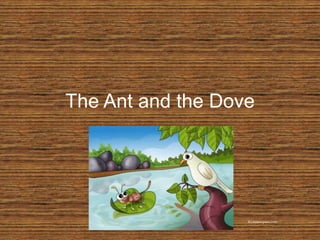
The Ant and the Dove 
Kidstimepass.com
An Ant went to the bank of a 
river to quench its thirst, and 
being carried away by the rush 
of the stream, was on the point 
of drowning.
A Dove sitting on a tree 
overhanging the water plucked 
a leaf and let it fall into the 
stream close to her.
The Ant climbed onto it and 
floated in safety to the bank. 
Shortly afterwards, a bird 
catcher came and stood under 
the tree, and laid his lime-twigs 
for the Dove, which sat in the 
branches.
The Ant, perceiving his design, 
stung him in the foot. In pain, 
the bird catcher threw down the 
twigs, and the noise made the 
Dove take wing.
Moral 
One good turn deserves another. 
If someone does something to help 
you, you should do something to 
help him / her when possible.
What did the Dove do for the 
Ant? 
What did the Ant do for the 
Dove?
Fables are often told in very simple language. You 
have been learning about literary terms and 
imagery. 
Look at the fable carefully. Where can you add 
imagery? Try to re-write the fable leaving the story 
the same but adding sensory words that give your 
reader a better 
image of the characters and setting.

Antanddove

  • 1.
    The Ant andthe Dove Kidstimepass.com
  • 2.
    An Ant wentto the bank of a river to quench its thirst, and being carried away by the rush of the stream, was on the point of drowning.
  • 3.
    A Dove sittingon a tree overhanging the water plucked a leaf and let it fall into the stream close to her.
  • 4.
    The Ant climbedonto it and floated in safety to the bank. Shortly afterwards, a bird catcher came and stood under the tree, and laid his lime-twigs for the Dove, which sat in the branches.
  • 5.
    The Ant, perceivinghis design, stung him in the foot. In pain, the bird catcher threw down the twigs, and the noise made the Dove take wing.
  • 6.
    Moral One goodturn deserves another. If someone does something to help you, you should do something to help him / her when possible.
  • 7.
    What did theDove do for the Ant? What did the Ant do for the Dove?
  • 8.
    Fables are oftentold in very simple language. You have been learning about literary terms and imagery. Look at the fable carefully. Where can you add imagery? Try to re-write the fable leaving the story the same but adding sensory words that give your reader a better image of the characters and setting.