Throughout history, the greatest and
most effective leaders are those able to
achieve the balance of interacting with
their team while still maintaining
authority. In a simple statement, an
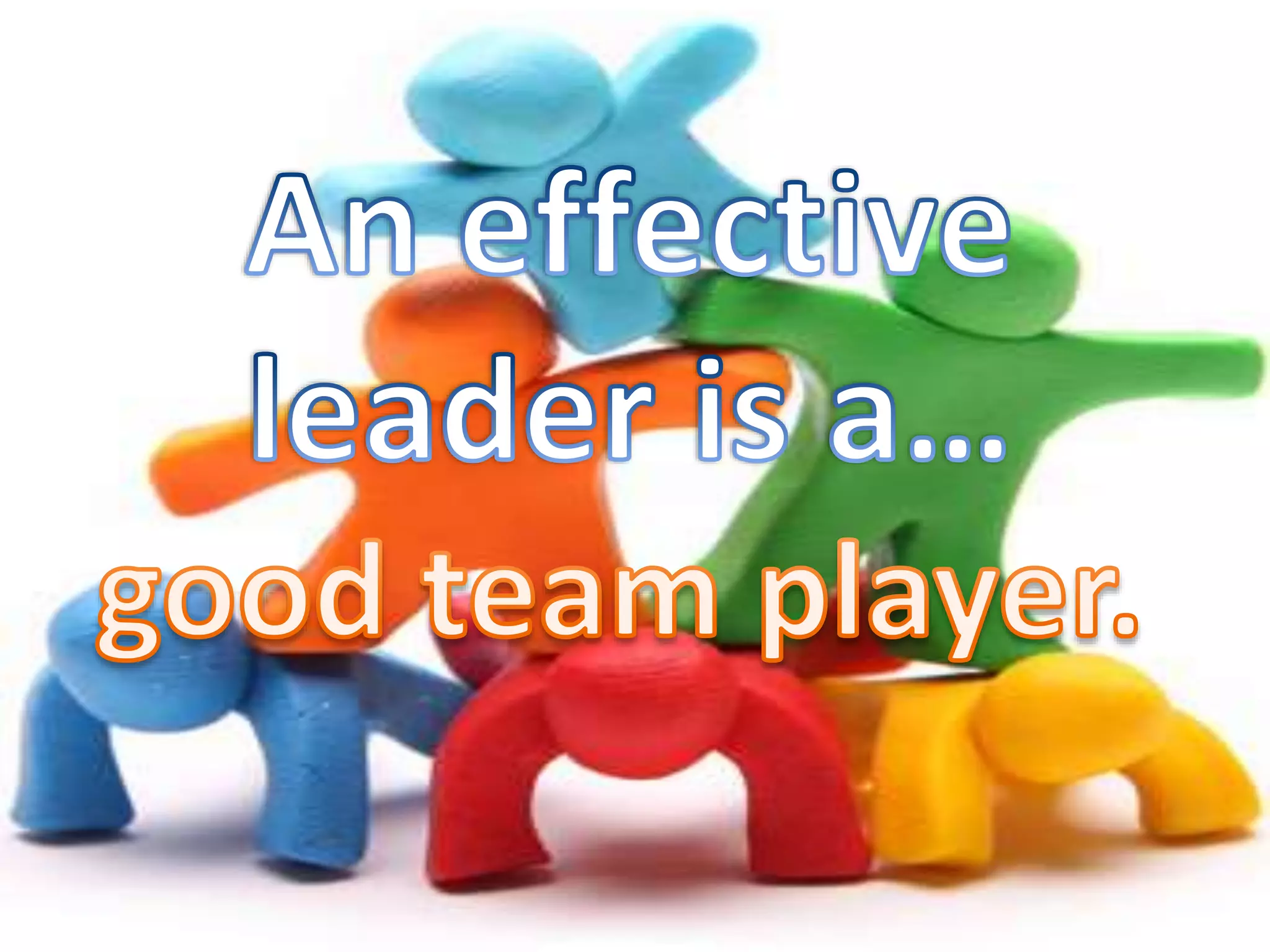
effective leader must never forget that he
or she is still a team player.
To succeed, a team needs to have good team
players and that includes the leader who will
collaborate and communicate with the other
members. But before we go on with the
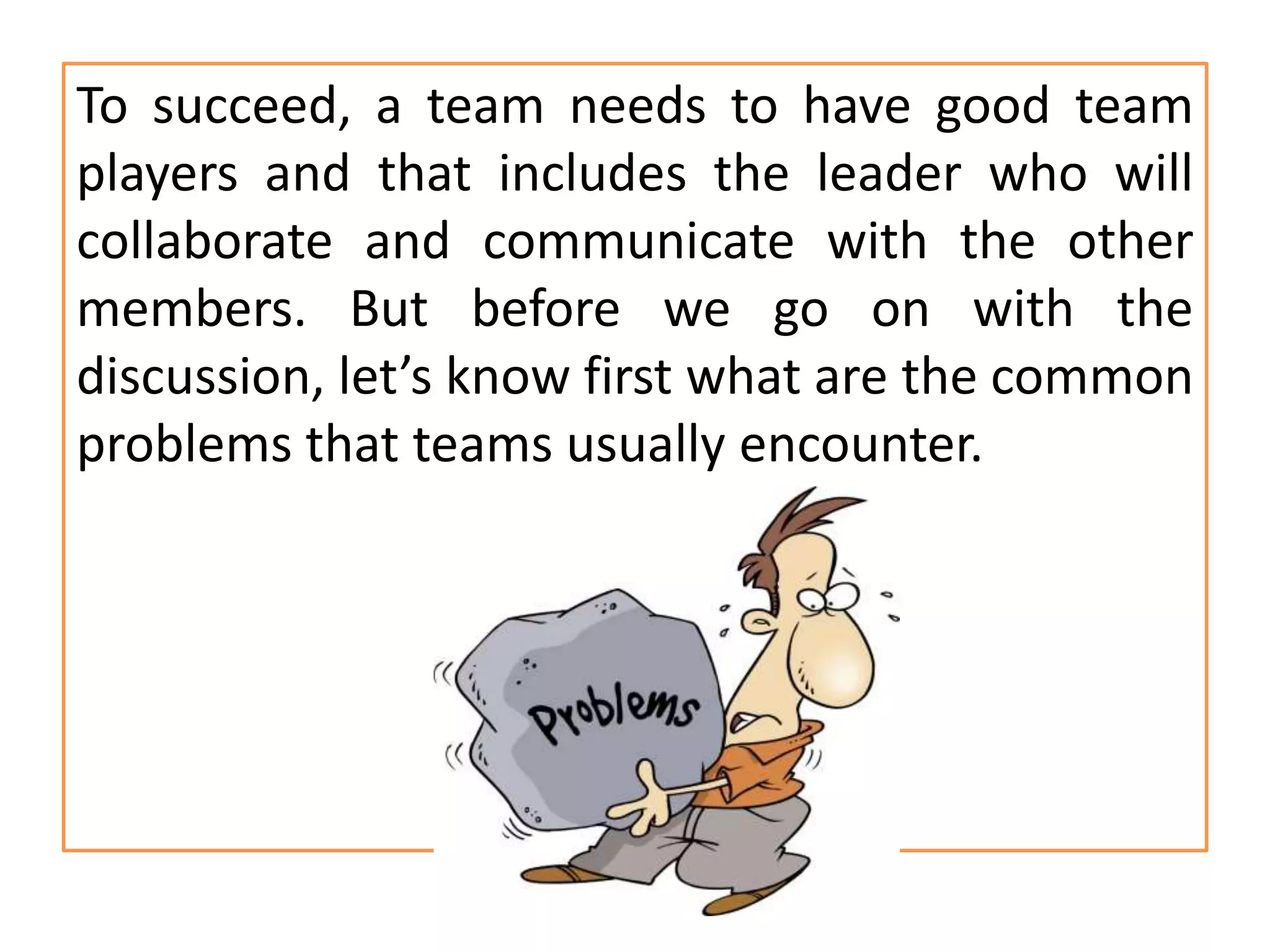
discussion, let’s know first what are the common
problems that teams usually encounter.
Some common problems in a team include:
A. Conflicting styles of decision making - Your job as
team leader is to make decisions based on principles
rather than personality.
B. Lack of trust - Trust is essential for any team – it is
the foundation of collaboration. It takes a leader who is
willing to show integrity and take on the hard work of
dealing with differences to build trust within a team.
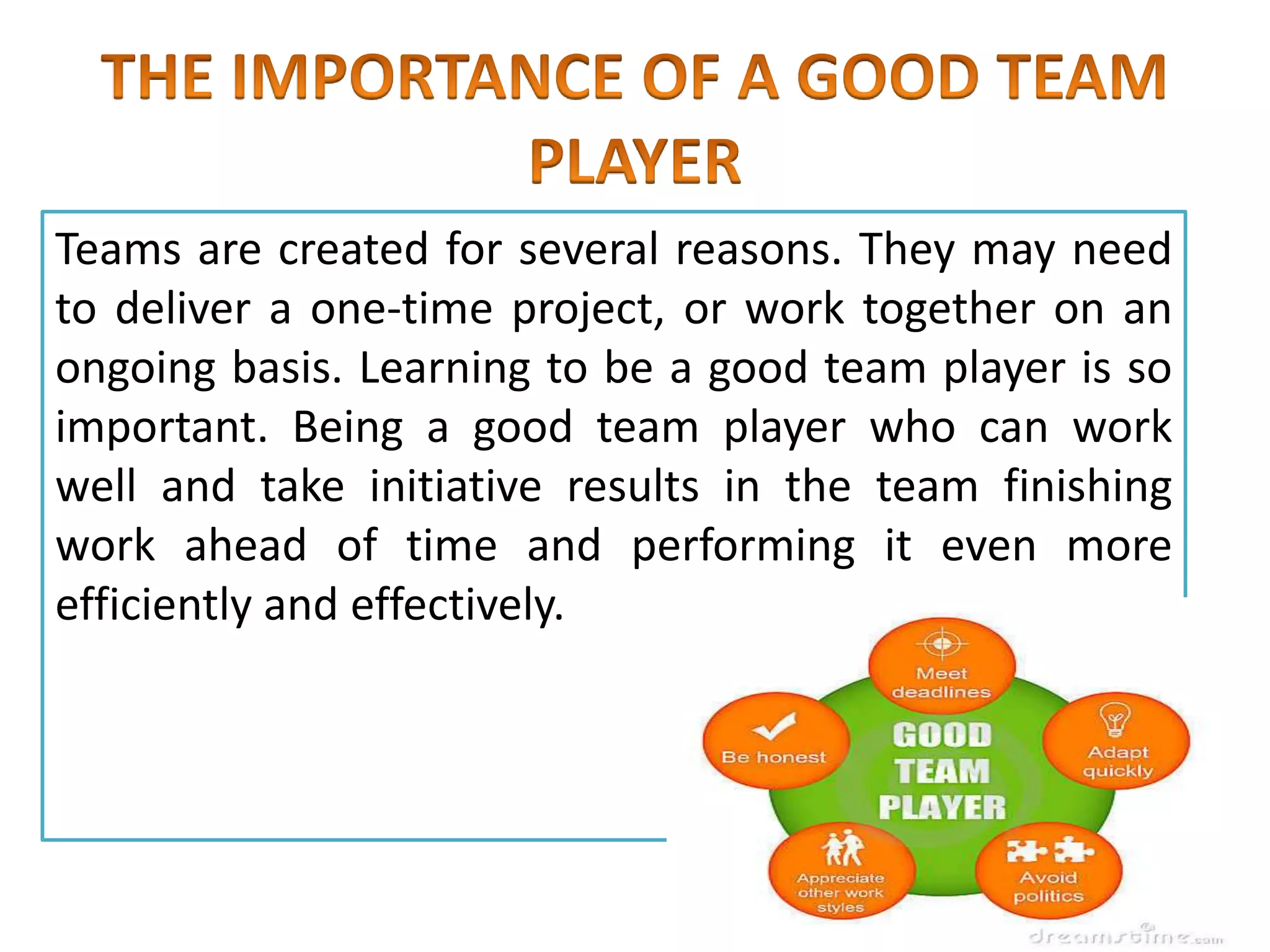
Teams are created for several reasons. They may need
to deliver a one-time project, or work together on an
ongoing basis. Learning to be a good team player is so
important. Being a good team player who can work
well and take initiative results in the team finishing
work ahead of time and performing it even more
efficiently and effectively.
HOW TO BECOME A
GOOD TEAM PLAYER
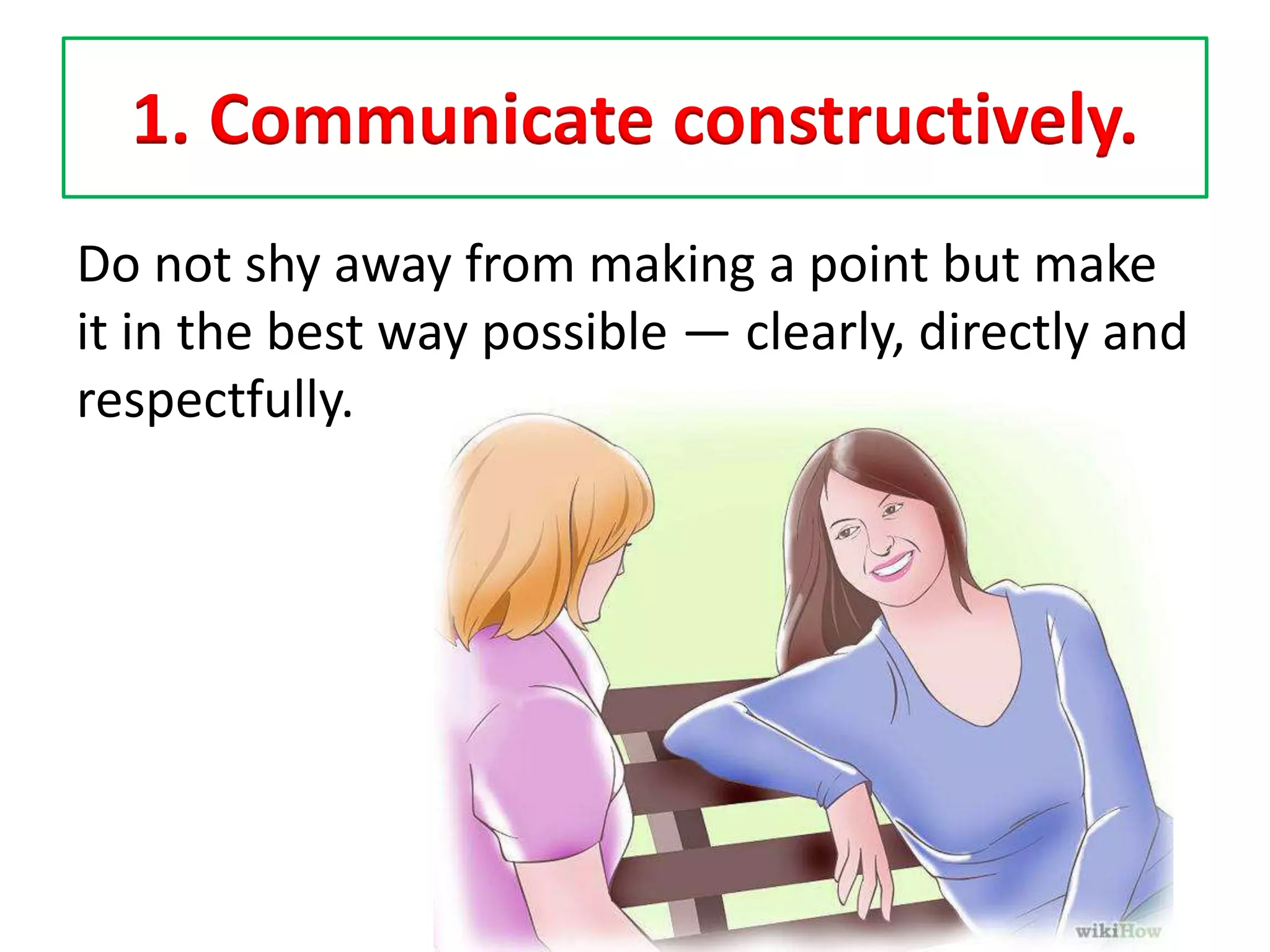
1. Communicate constructively.
Do not shy away from making a point but make
it in the best way possible — clearly, directly and
respectfully.
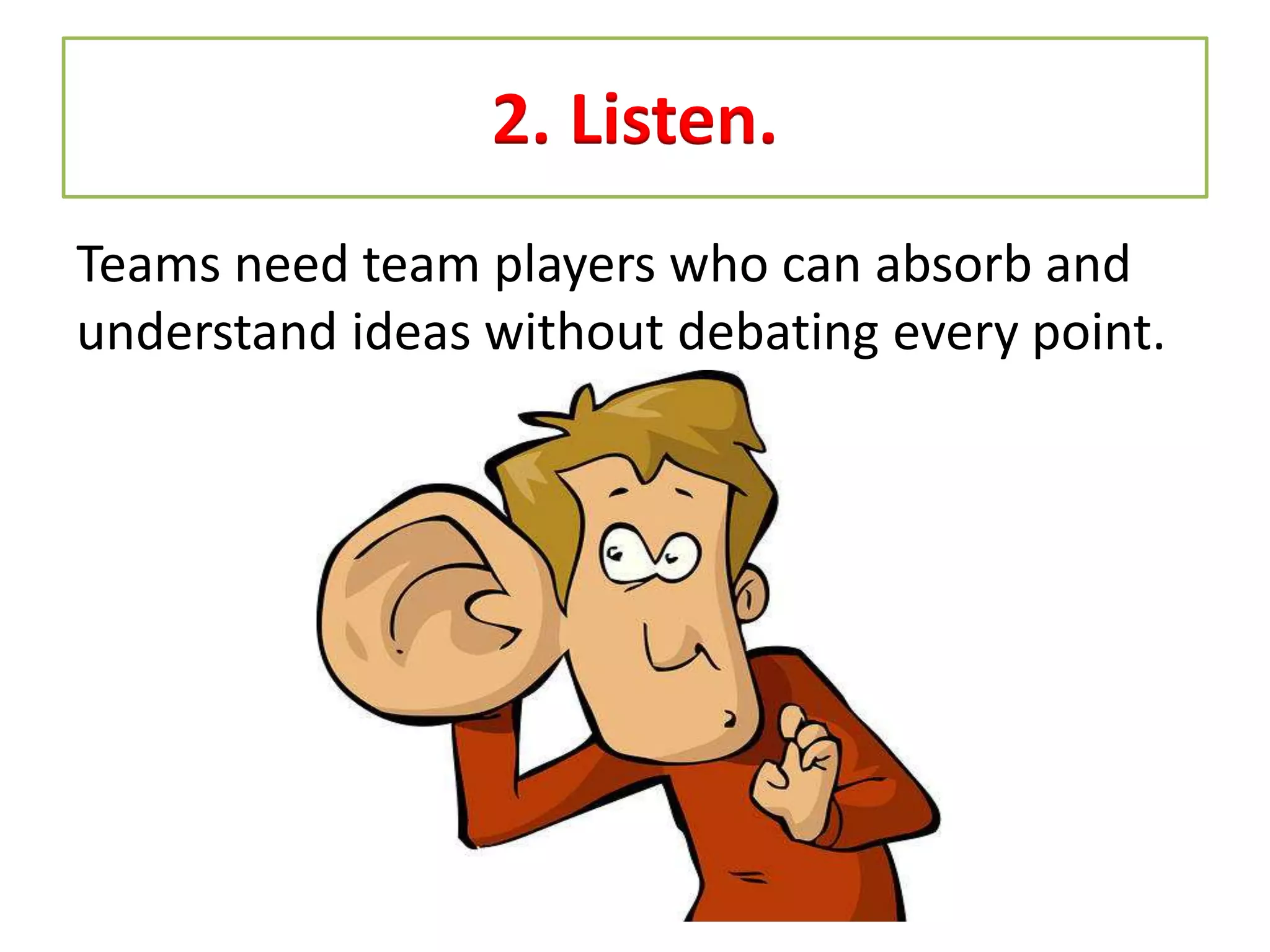
2. Listen.
Teams need team players who can absorb and
understand ideas without debating every point.
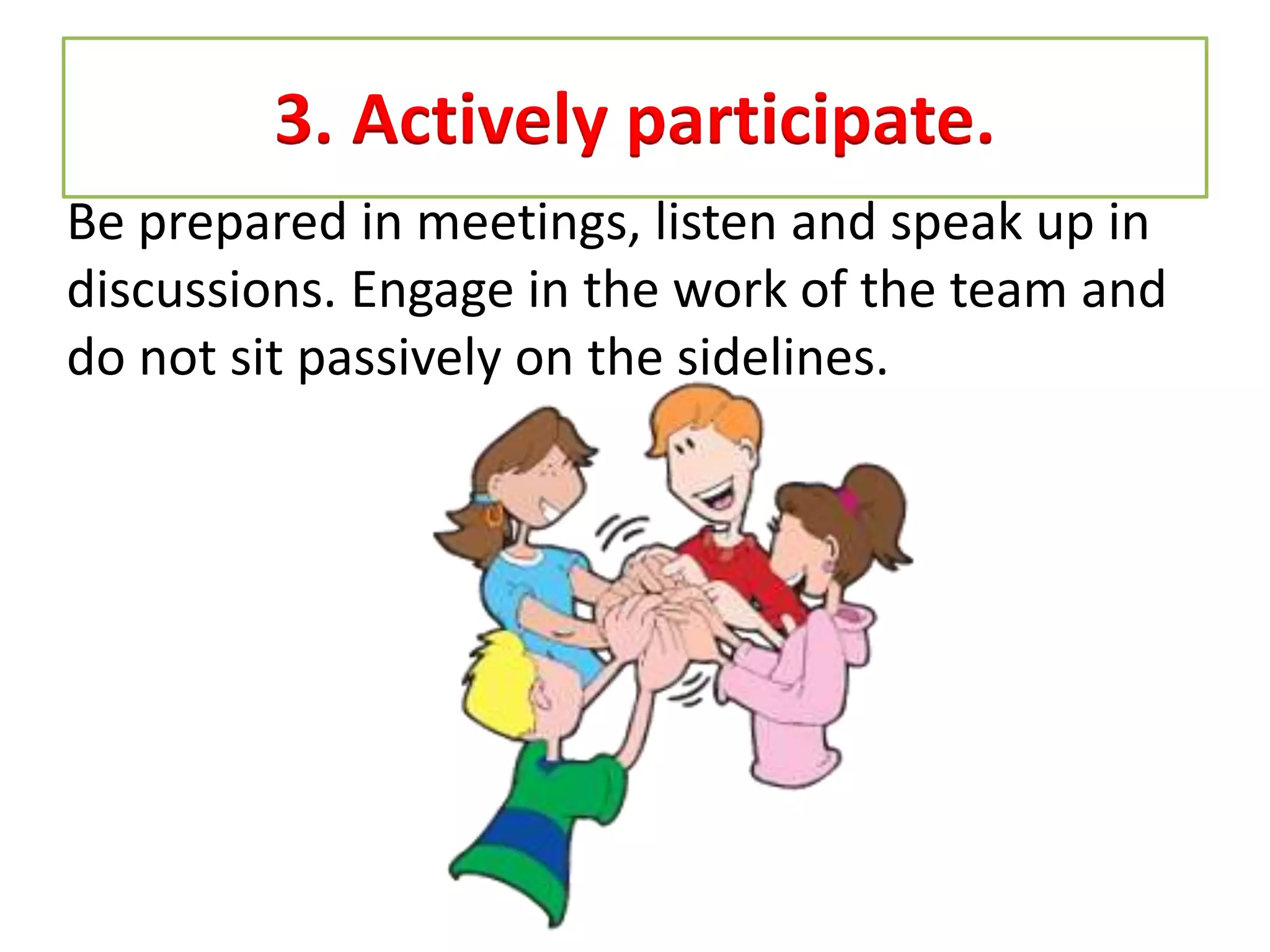
3. Actively participate.
Be prepared in meetings, listen and speak up in
discussions. Engage in the work of the team and
do not sit passively on the sidelines.
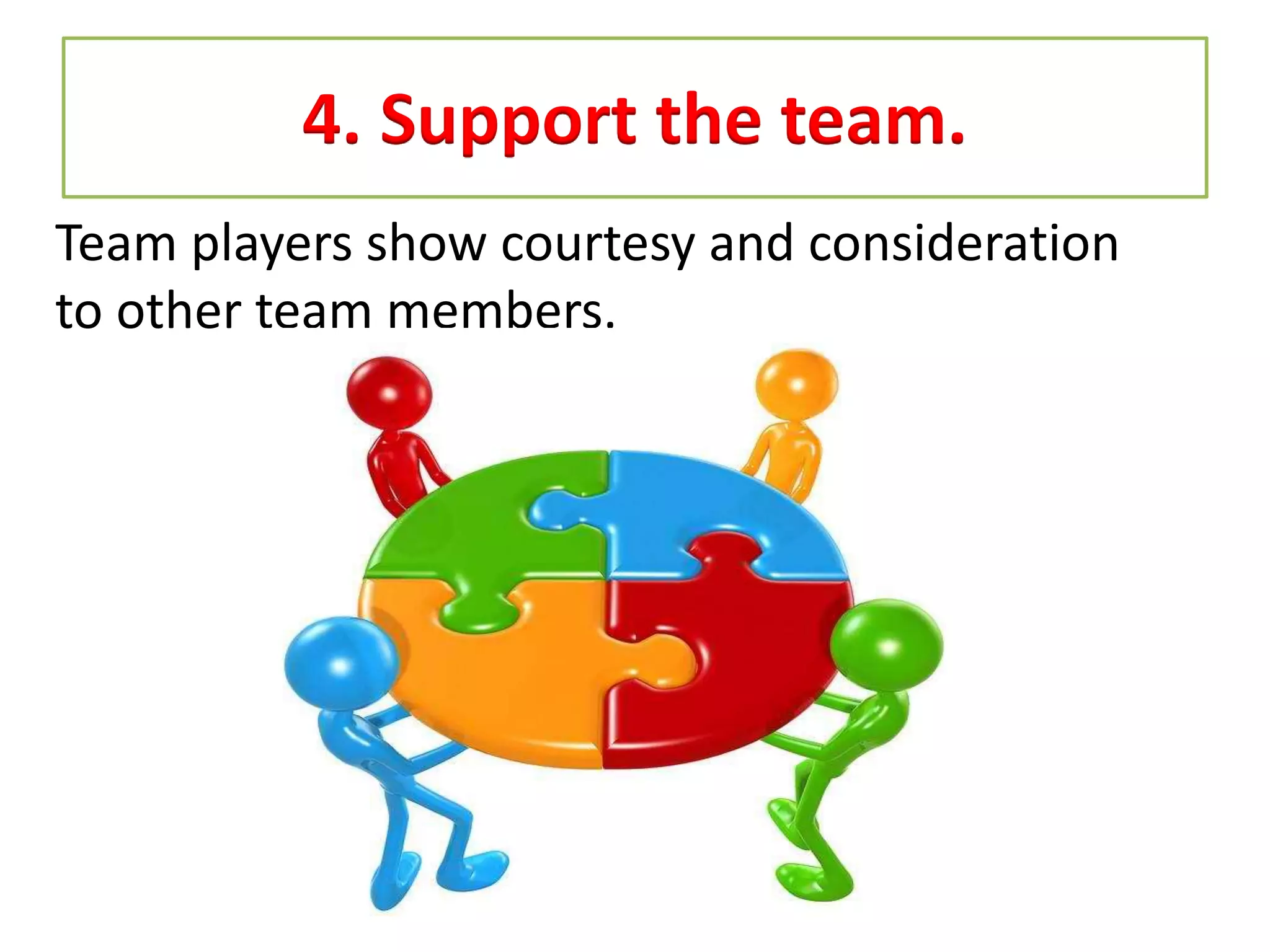
4. Support the team.
Team players show courtesy and consideration
to other team members.
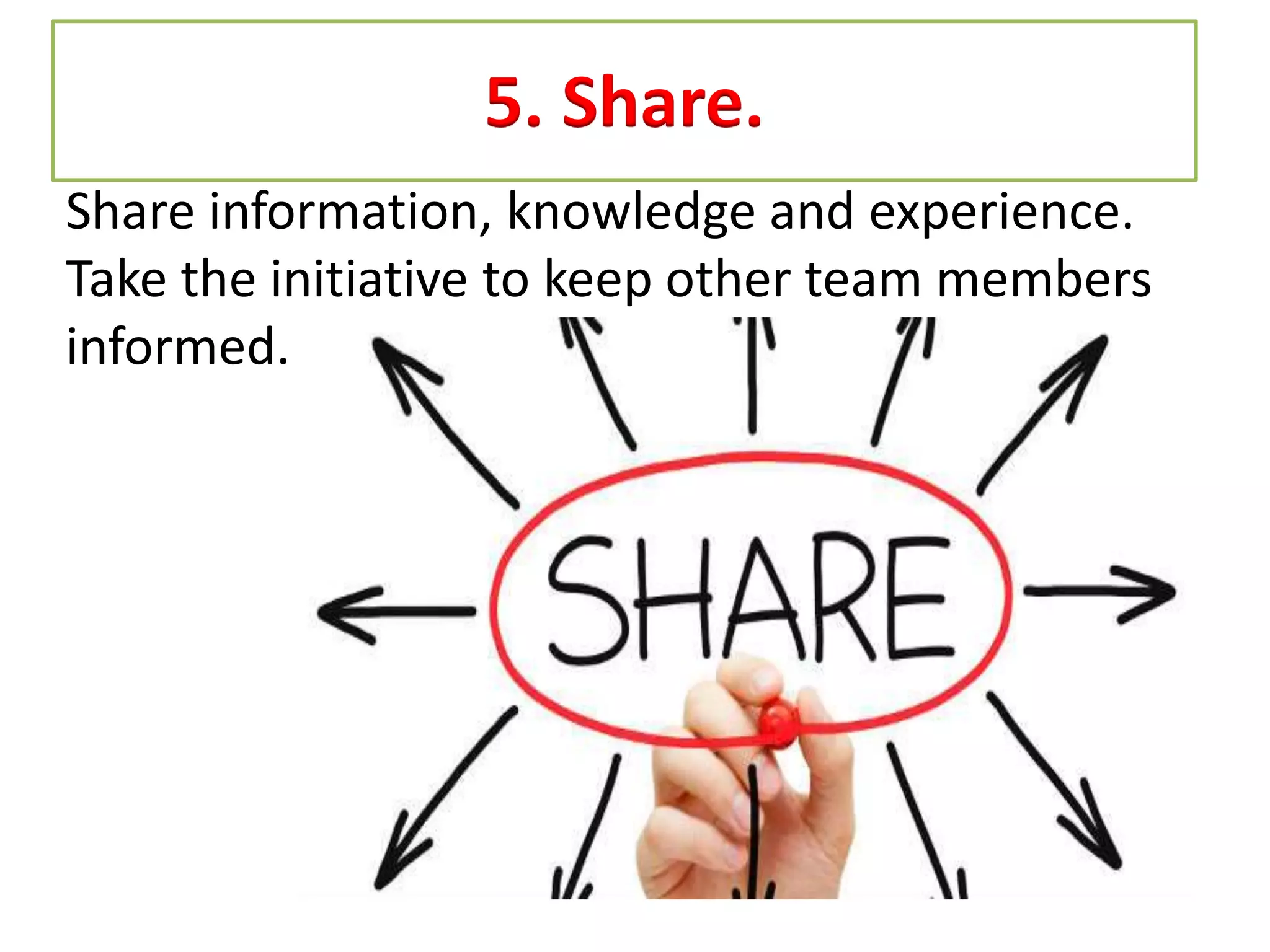
5. Share.
Share information, knowledge and experience.
Take the initiative to keep other team members
informed.
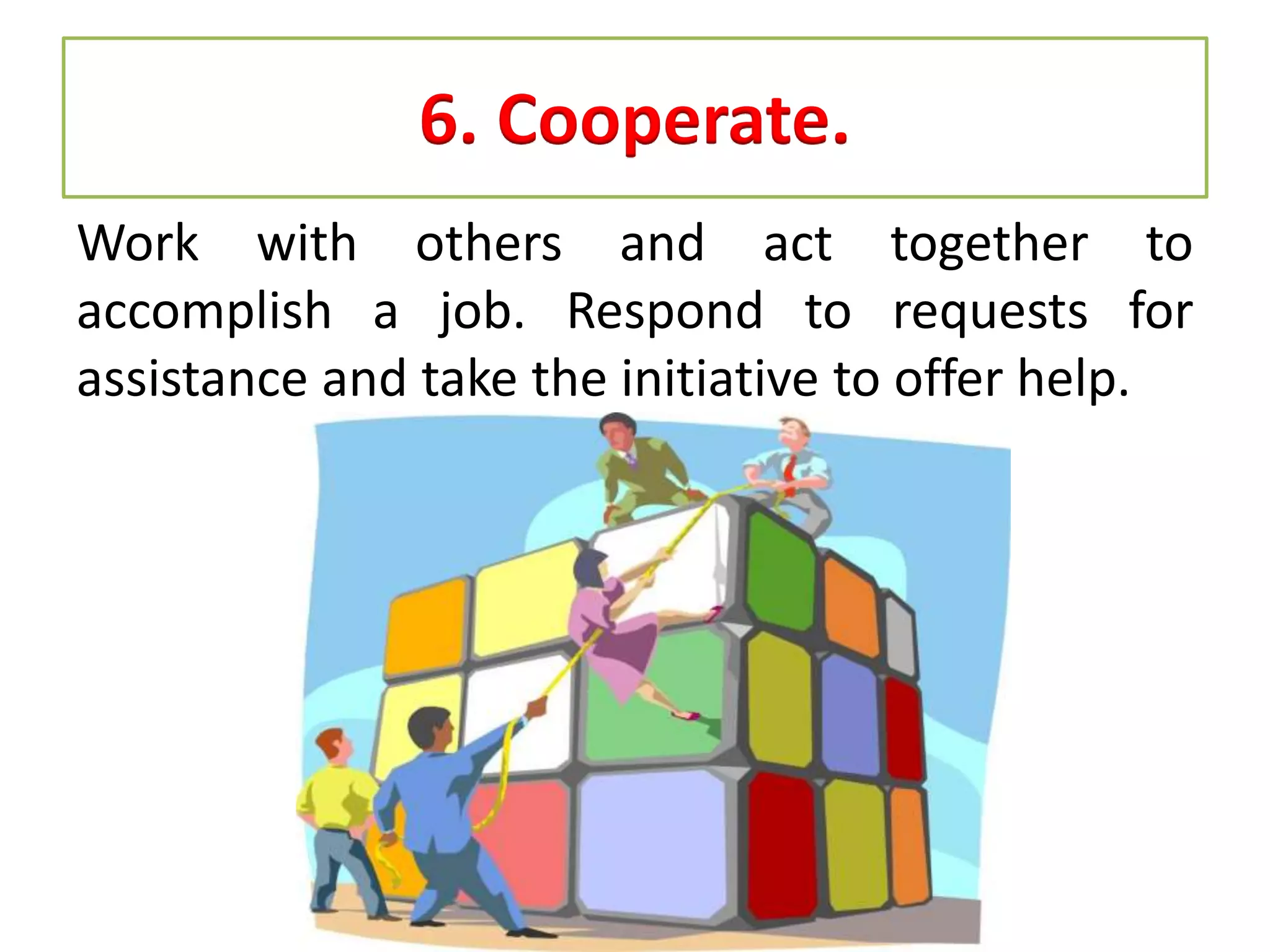
6. Cooperate.
Work with others and act together to
accomplish a job. Respond to requests for
assistance and take the initiative to offer help.
7. Be flexible.
Teams often deal with changing conditions and
often create changes. A flexible team member
can consider different points of views and
compromise when needed.
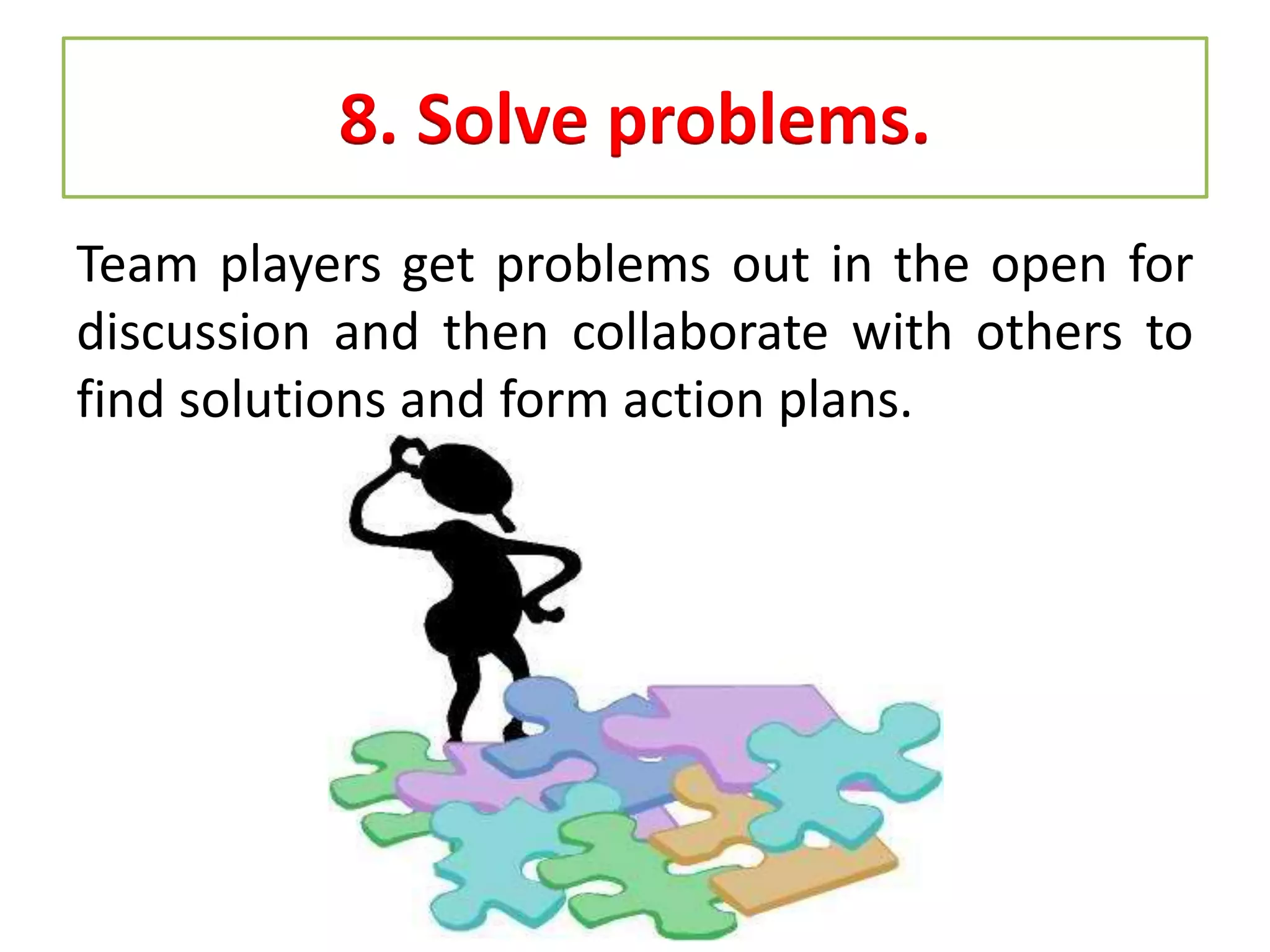
8. Solve problems.
Team players get problems out in the open for
discussion and then collaborate with others to
find solutions and form action plans.
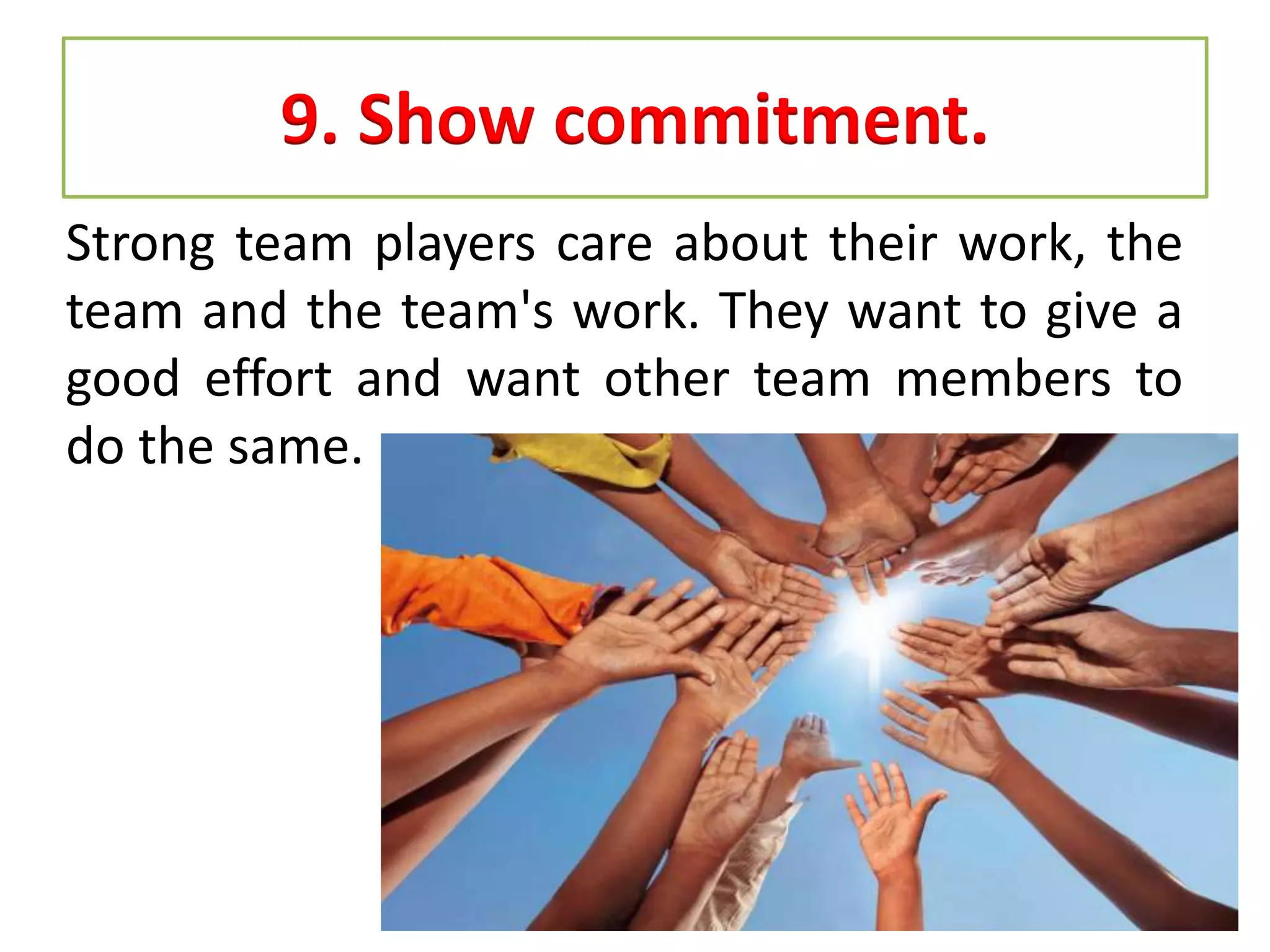
9. Show commitment.
Strong team players care about their work, the
team and the team's work. They want to give a
good effort and want other team members to
do the same.
10. Be reliable.
Make sure you do your fair share and meet
commitments. Be consistent by delivering a
good performance all the time, not just some of
the time.
An Effective Leader: A Good Team Player

An Effective Leader: A Good Team Player

  • 3.
    Throughout history, thegreatest and most effective leaders are those able to achieve the balance of interacting with their team while still maintaining authority. In a simple statement, an effective leader must never forget that he or she is still a team player.
  • 5.
    To succeed, ateam needs to have good team players and that includes the leader who will collaborate and communicate with the other members. But before we go on with the discussion, let’s know first what are the common problems that teams usually encounter.
  • 6.
    Some common problemsin a team include: A. Conflicting styles of decision making - Your job as team leader is to make decisions based on principles rather than personality. B. Lack of trust - Trust is essential for any team – it is the foundation of collaboration. It takes a leader who is willing to show integrity and take on the hard work of dealing with differences to build trust within a team.
  • 7.
    Teams are createdfor several reasons. They may need to deliver a one-time project, or work together on an ongoing basis. Learning to be a good team player is so important. Being a good team player who can work well and take initiative results in the team finishing work ahead of time and performing it even more efficiently and effectively.
  • 8.
    HOW TO BECOMEA GOOD TEAM PLAYER
  • 9.
    1. Communicate constructively. Donot shy away from making a point but make it in the best way possible — clearly, directly and respectfully.
  • 10.
    2. Listen. Teams needteam players who can absorb and understand ideas without debating every point.
  • 11.
    3. Actively participate. Beprepared in meetings, listen and speak up in discussions. Engage in the work of the team and do not sit passively on the sidelines.
  • 12.
    4. Support theteam. Team players show courtesy and consideration to other team members.
  • 13.
    5. Share. Share information,knowledge and experience. Take the initiative to keep other team members informed.
  • 14.
    6. Cooperate. Work withothers and act together to accomplish a job. Respond to requests for assistance and take the initiative to offer help.
  • 15.
    7. Be flexible. Teamsoften deal with changing conditions and often create changes. A flexible team member can consider different points of views and compromise when needed.
  • 16.
    8. Solve problems. Teamplayers get problems out in the open for discussion and then collaborate with others to find solutions and form action plans.
  • 17.
    9. Show commitment. Strongteam players care about their work, the team and the team's work. They want to give a good effort and want other team members to do the same.
  • 18.
    10. Be reliable. Makesure you do your fair share and meet commitments. Be consistent by delivering a good performance all the time, not just some of the time.