AMAZON API GATEWAY
WHAT IS AMAZON API GATEWAY
 Fully managed service
 Makes it easy for developers to publish, maintain, monitor, and secure APIs at any scale
 An AWS service for creating, publishing, maintaining, monitoring, and securing REST, HTTP, and WebSocket APIs at
any scale
AMAZON API GATEWAY FEATURES
 Support for RESTful APIs and WebSocket APIs
 Private integrations with AWS ELB & AWS Cloud Map
 Metering
 Security
 Resiliency
 Operations Monitoring
 Lifecycle Management
 AWS Authorization
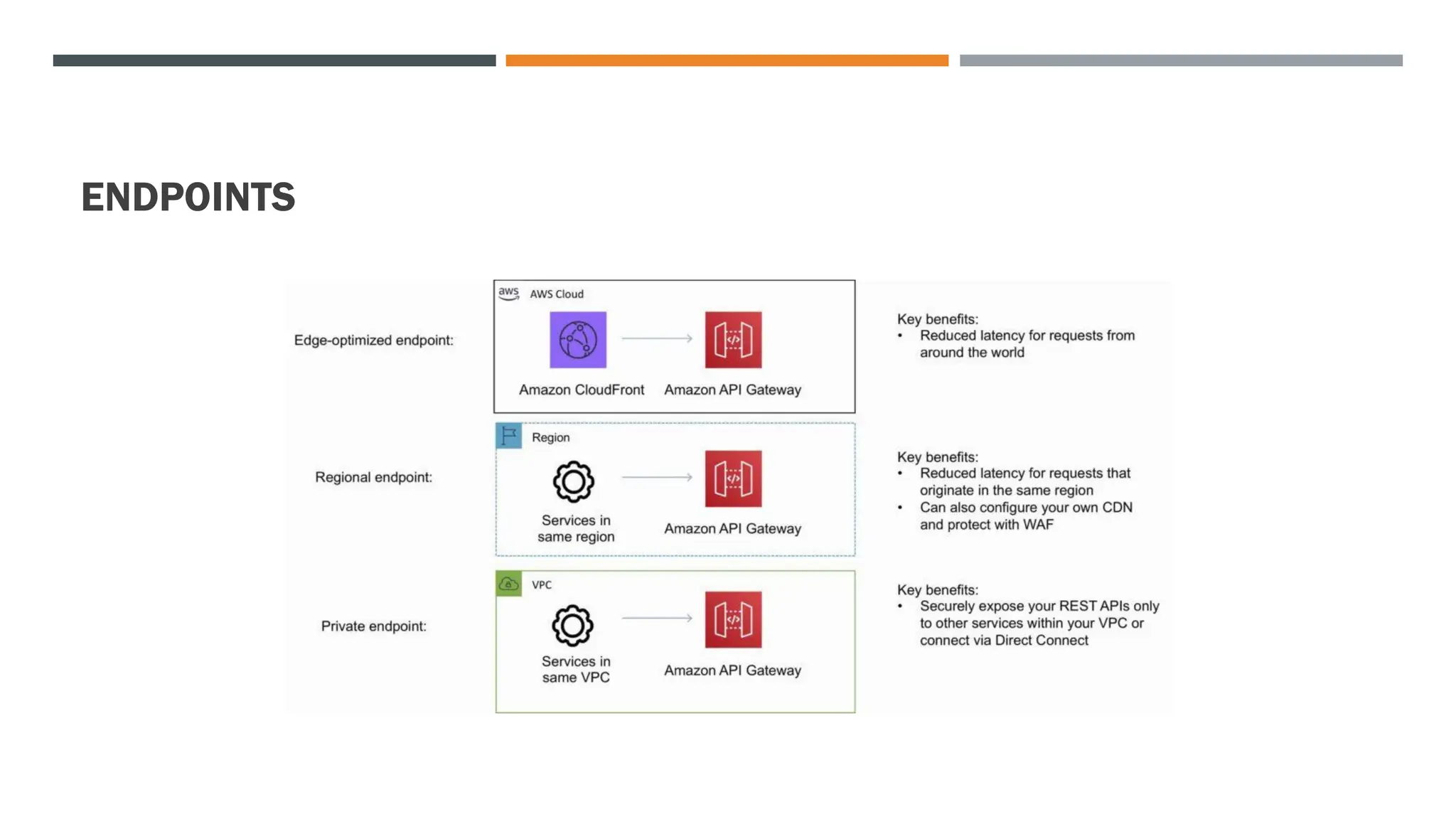
ENDPOINTS
 An API endpoint type is a hostname for an API in API Gateway that is deployed to a specific region.
 The hostname is of the form {api-id}.execute-api.{region}.amazonaws.com
 Types of endpoints includes
- Edge-Optimized Endpoint
- Regional Endpoint
- Private Endpoint
ENDPOINTS
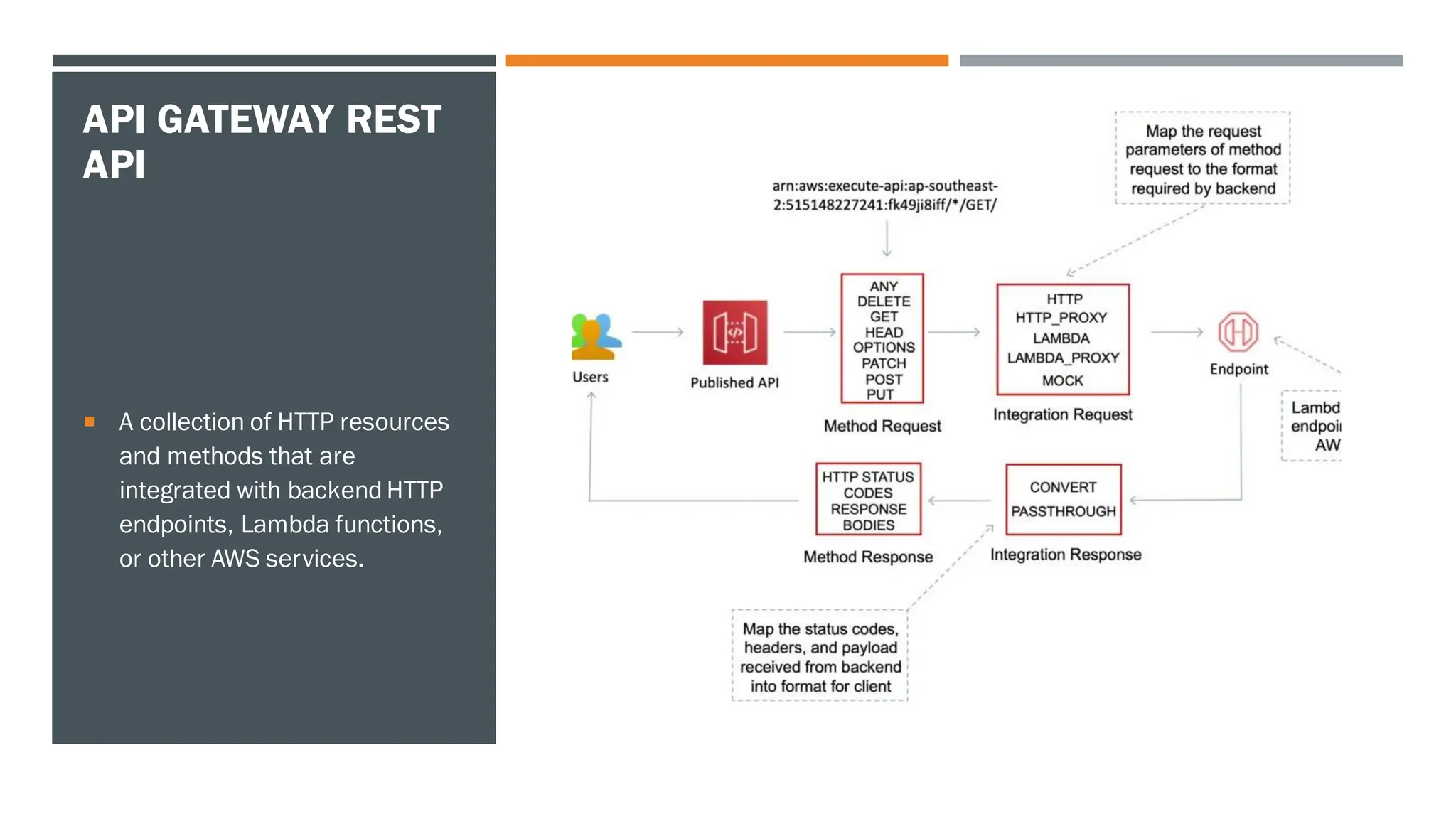
API GATEWAY REST
API
 A collection of HTTP resources
and methods that are
integrated with backend HTTP
endpoints, Lambda functions,
or other AWS services.
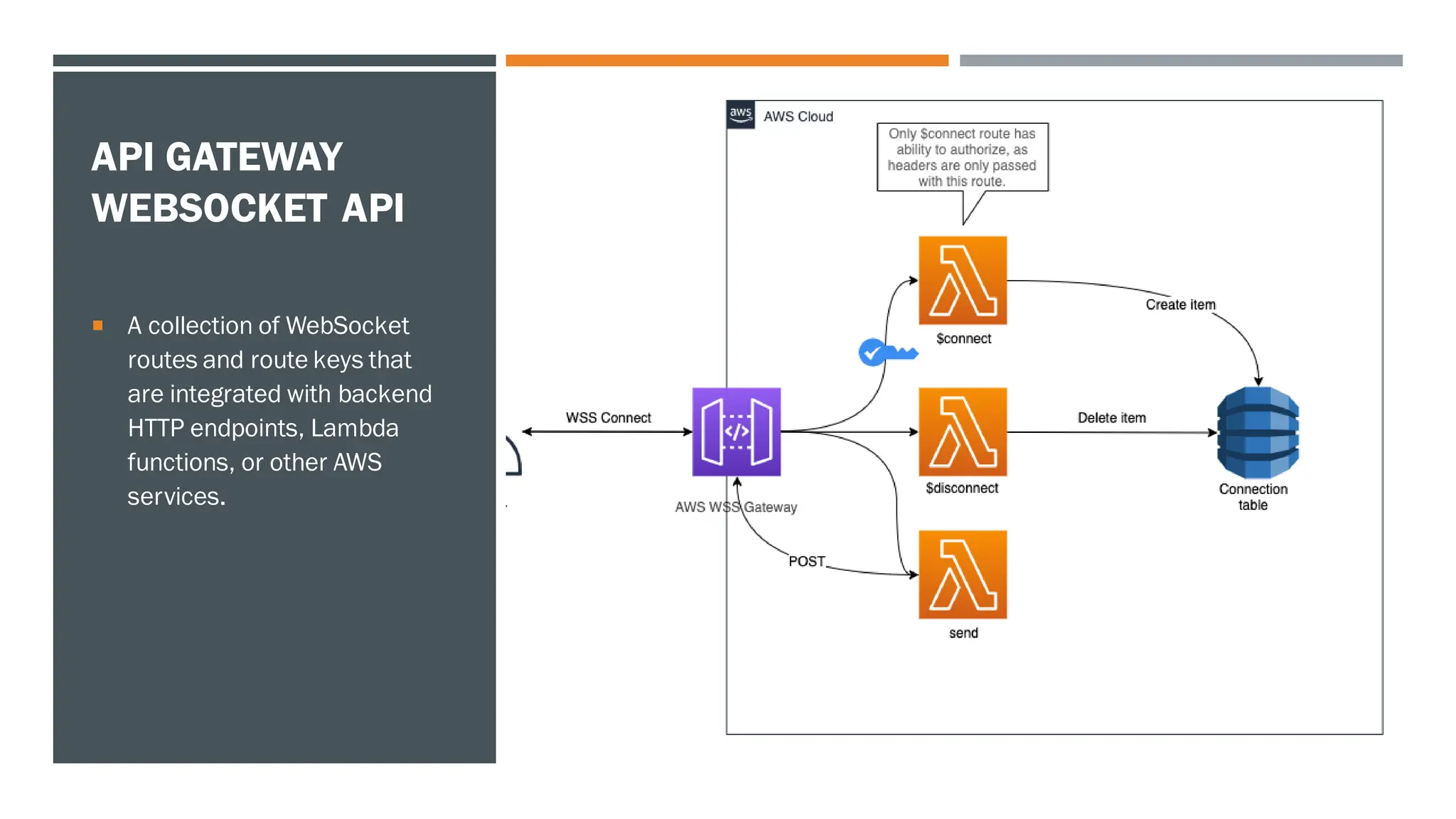
API GATEWAY
WEBSOCKET API
 A collection of WebSocket
routes and route keys that
are integrated with backend
HTTP endpoints, Lambda
functions, or other AWS
services.
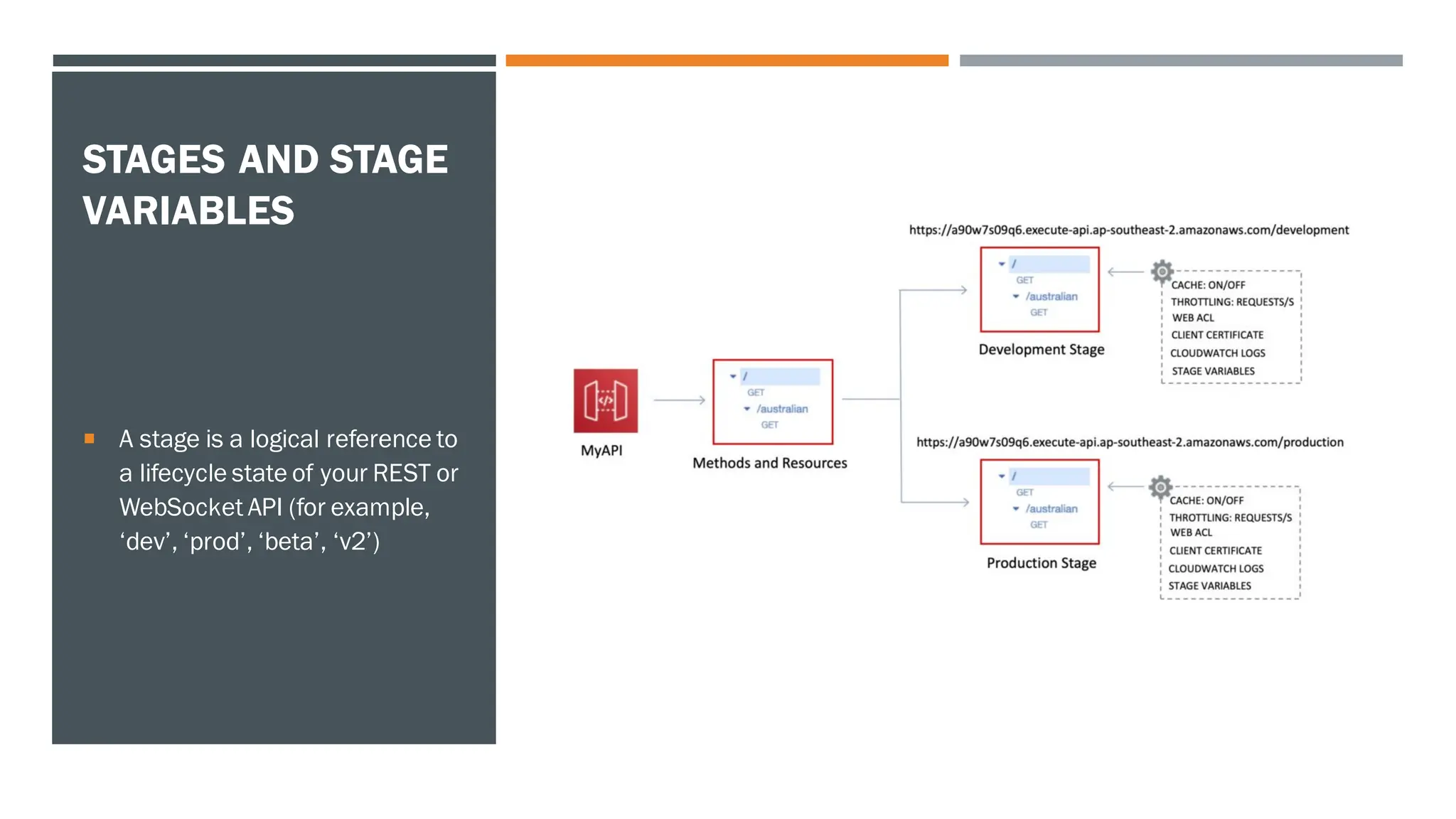
STAGES AND STAGE
VARIABLES
 A stage is a logical reference to
a lifecycle state of your REST or
WebSocket API (for example,
‘dev’, ‘prod’, ‘beta’, ‘v2’)
MAPPING
TEMPLATES
 Mapping templates can be
used to modify request /
respons
CACHING
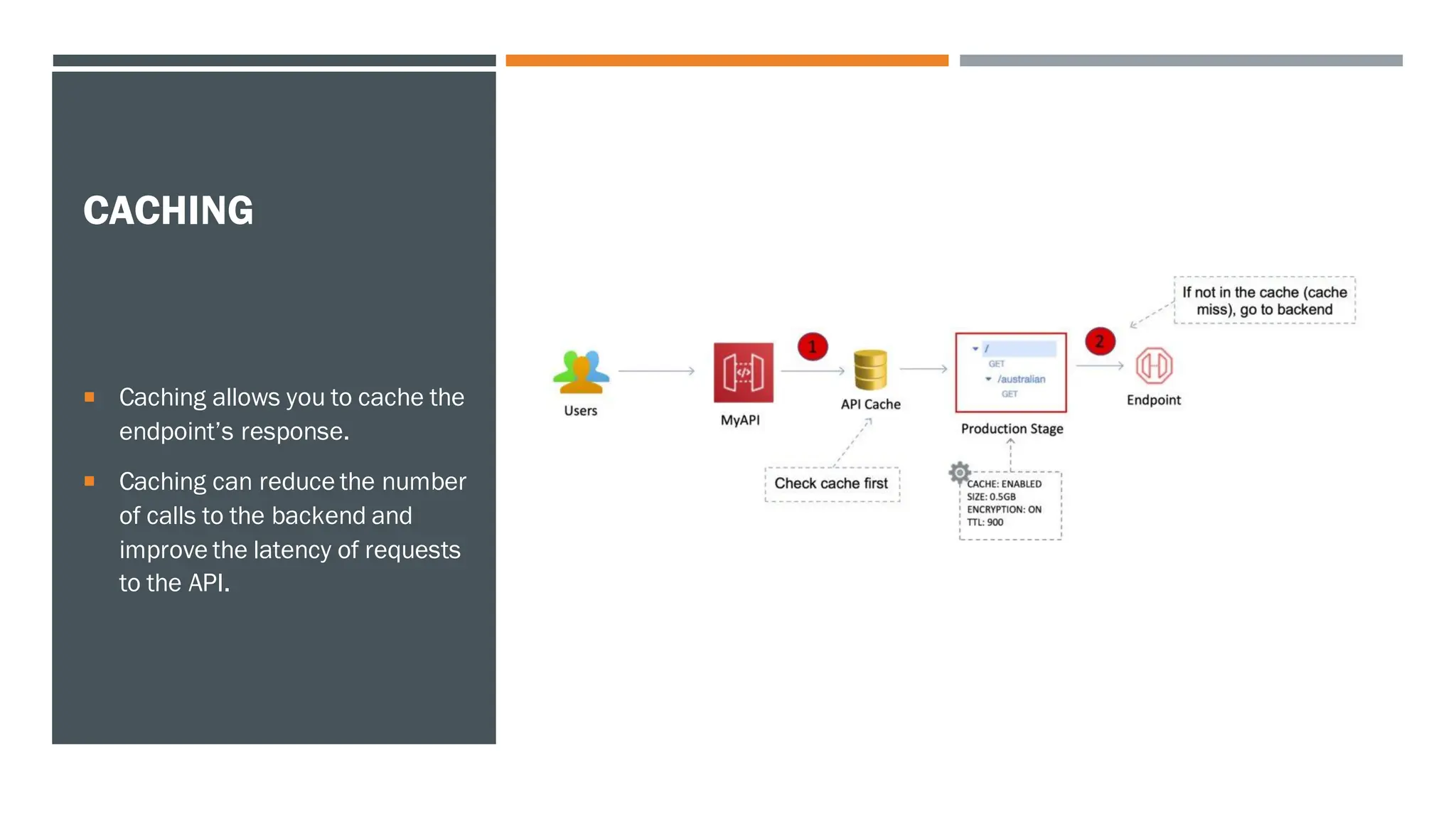
 Caching allows you to cache the
endpoint’s response.
 Caching can reduce the number
of calls to the backend and
improve the latency of requests
to the API.
API THROTTLING
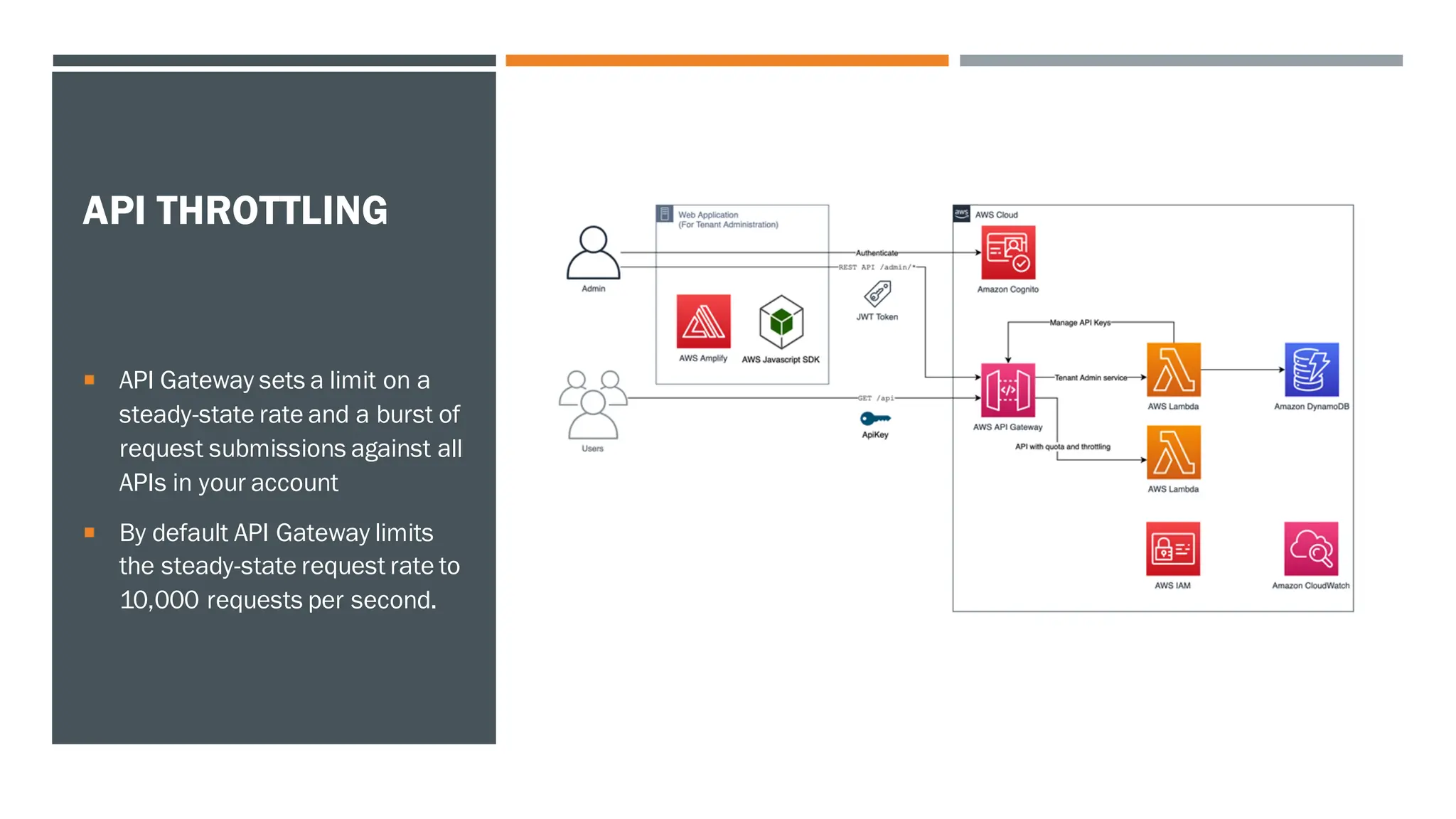
 API Gateway sets a limit on a
steady-state rate and a burst of
request submissions against all
APIs in your account
 By default API Gateway limits
the steady-state request rate to
10,000 requests per second.
INTEGRATION
TYPE
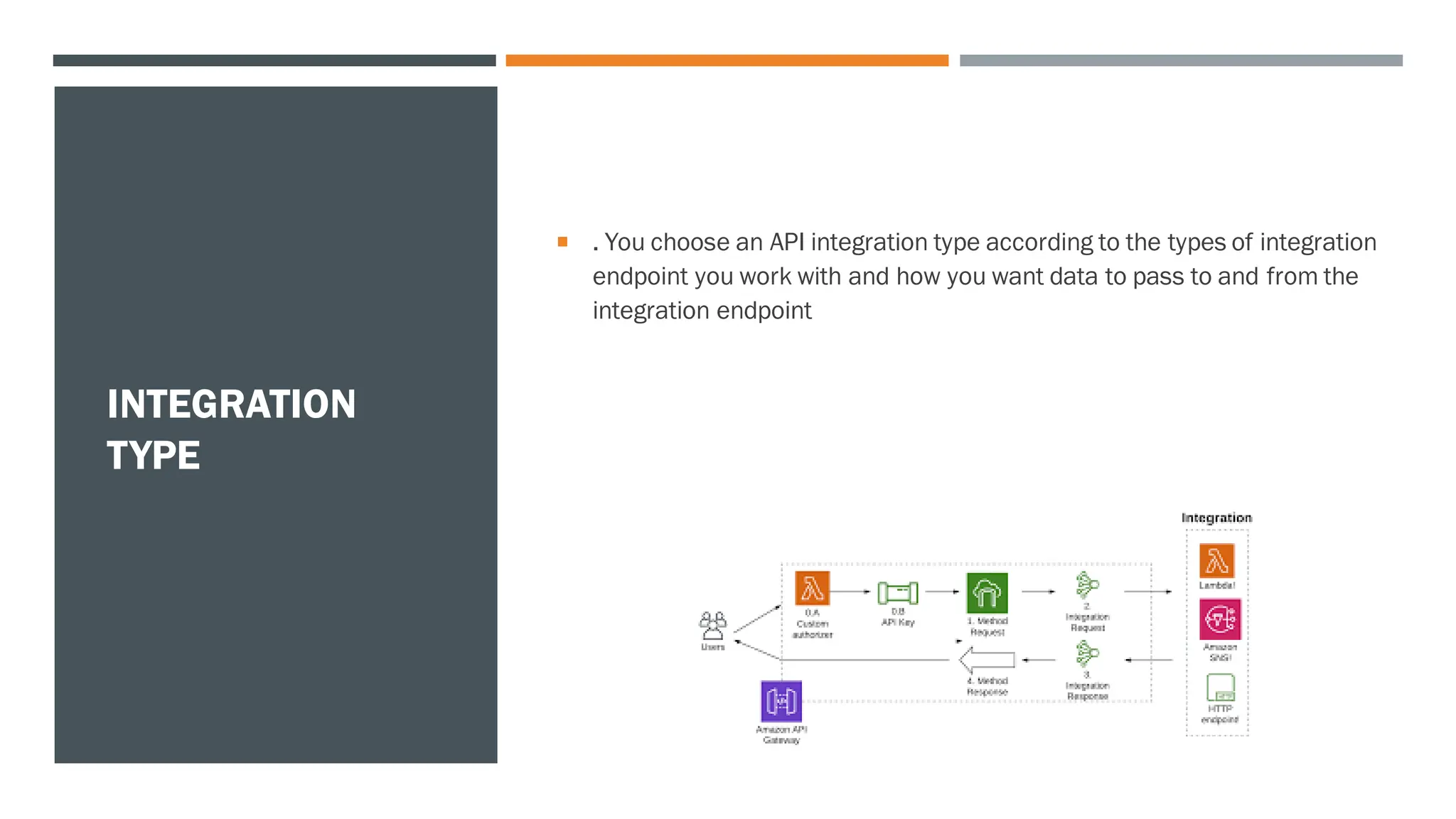
 . You choose an API integration type according to the types of integration
endpoint you work with and how you want data to pass to and from the
integration endpoint
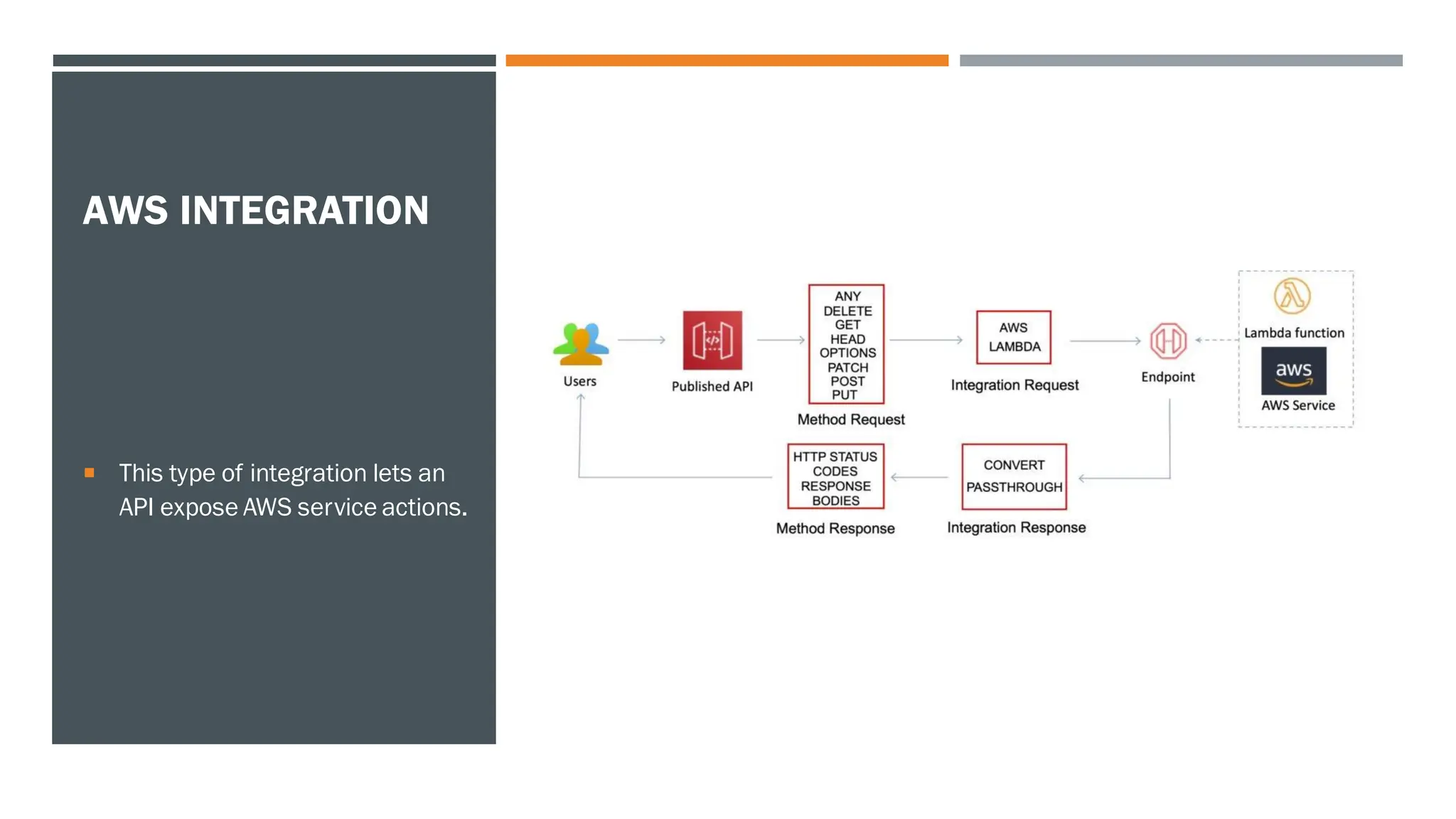
AWS INTEGRATION
 This type of integration lets an
API expose AWS service actions.
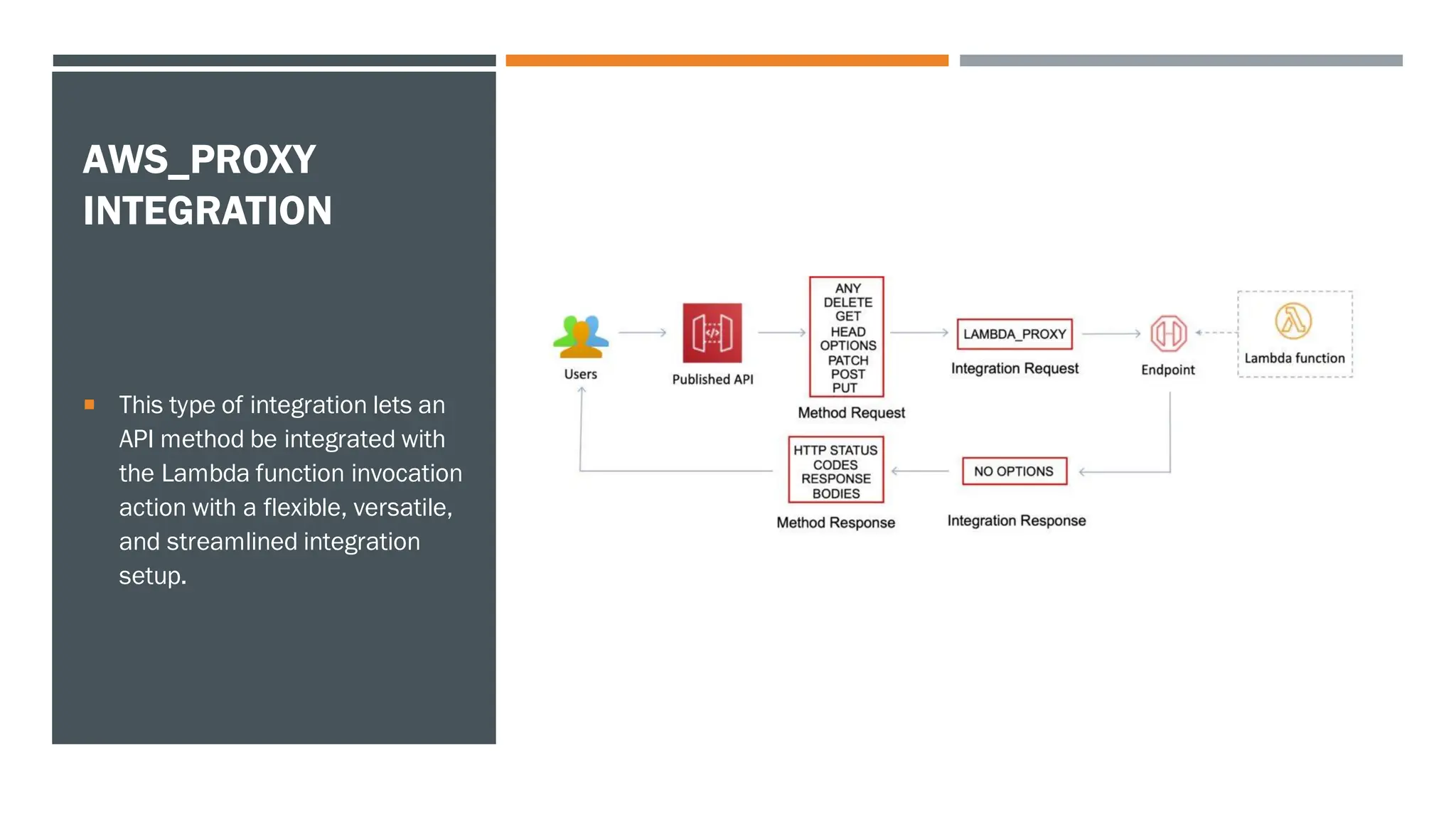
AWS_PROXY
INTEGRATION
 This type of integration lets an
API method be integrated with
the Lambda function invocation
action with a flexible, versatile,
and streamlined integration
setup.
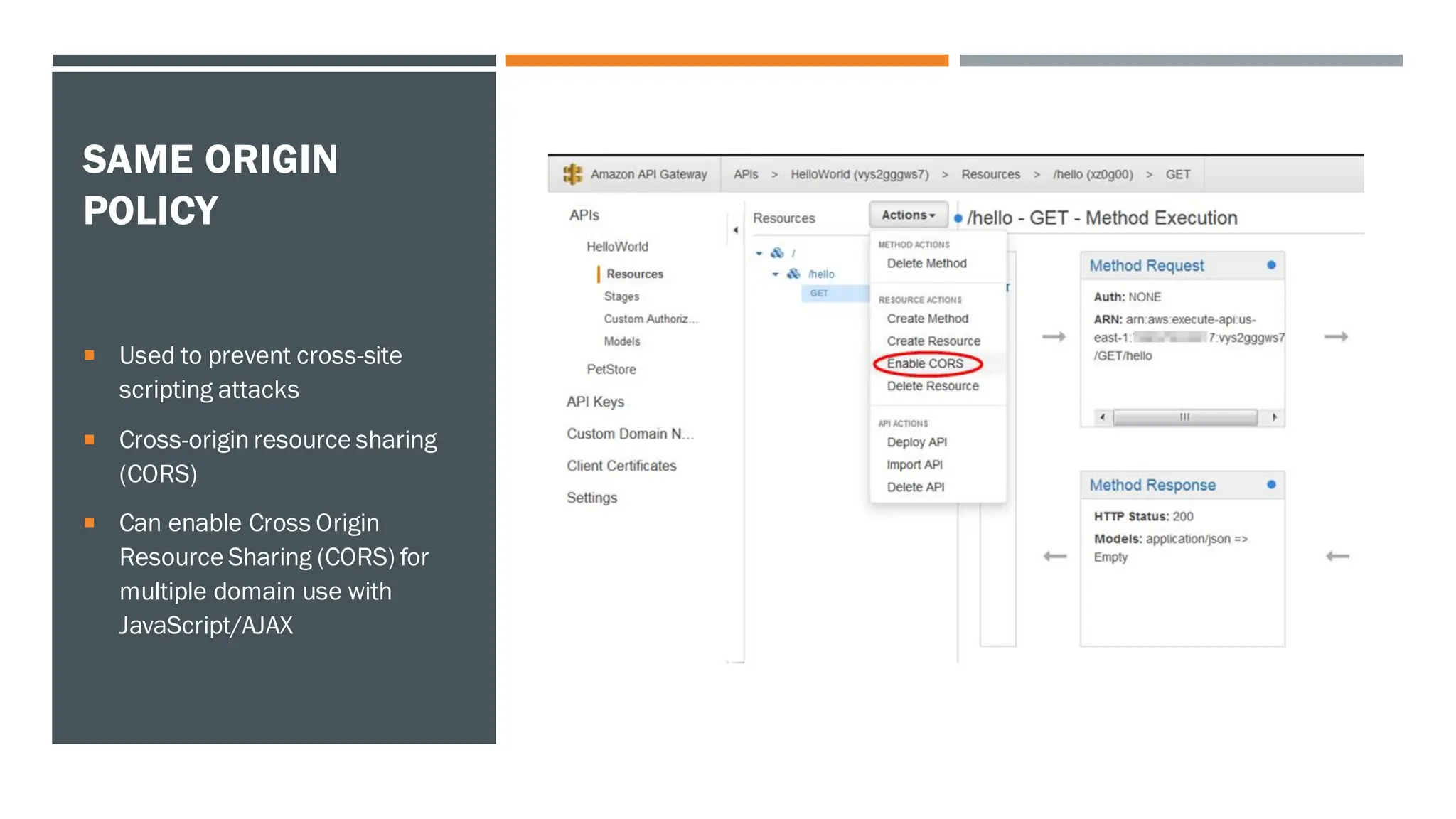
SAME ORIGIN
POLICY
 Used to prevent cross-site
scripting attacks
 Cross-origin resource sharing
(CORS)
 Can enable Cross Origin
Resource Sharing (CORS) for
multiple domain use with
JavaScript/AJAX

Amazon Web Services Amazon: API Gateway.pdf

  • 1.
  • 2.
    WHAT IS AMAZONAPI GATEWAY  Fully managed service  Makes it easy for developers to publish, maintain, monitor, and secure APIs at any scale  An AWS service for creating, publishing, maintaining, monitoring, and securing REST, HTTP, and WebSocket APIs at any scale
  • 3.
    AMAZON API GATEWAYFEATURES  Support for RESTful APIs and WebSocket APIs  Private integrations with AWS ELB & AWS Cloud Map  Metering  Security  Resiliency  Operations Monitoring  Lifecycle Management  AWS Authorization
  • 4.
    ENDPOINTS  An APIendpoint type is a hostname for an API in API Gateway that is deployed to a specific region.  The hostname is of the form {api-id}.execute-api.{region}.amazonaws.com  Types of endpoints includes - Edge-Optimized Endpoint - Regional Endpoint - Private Endpoint
  • 5.
  • 6.
    API GATEWAY REST API A collection of HTTP resources and methods that are integrated with backend HTTP endpoints, Lambda functions, or other AWS services.
  • 7.
    API GATEWAY WEBSOCKET API A collection of WebSocket routes and route keys that are integrated with backend HTTP endpoints, Lambda functions, or other AWS services.
  • 8.
    STAGES AND STAGE VARIABLES A stage is a logical reference to a lifecycle state of your REST or WebSocket API (for example, ‘dev’, ‘prod’, ‘beta’, ‘v2’)
  • 9.
    MAPPING TEMPLATES  Mapping templatescan be used to modify request / respons
  • 10.
    CACHING  Caching allowsyou to cache the endpoint’s response.  Caching can reduce the number of calls to the backend and improve the latency of requests to the API.
  • 11.
    API THROTTLING  APIGateway sets a limit on a steady-state rate and a burst of request submissions against all APIs in your account  By default API Gateway limits the steady-state request rate to 10,000 requests per second.
  • 12.
    INTEGRATION TYPE  . Youchoose an API integration type according to the types of integration endpoint you work with and how you want data to pass to and from the integration endpoint
  • 13.
    AWS INTEGRATION  Thistype of integration lets an API expose AWS service actions.
  • 14.
    AWS_PROXY INTEGRATION  This typeof integration lets an API method be integrated with the Lambda function invocation action with a flexible, versatile, and streamlined integration setup.
  • 15.
    SAME ORIGIN POLICY  Usedto prevent cross-site scripting attacks  Cross-origin resource sharing (CORS)  Can enable Cross Origin Resource Sharing (CORS) for multiple domain use with JavaScript/AJAX