 One in which a teacher observes and makes a
judgment about the student’s demonstration of a skill
or competency in creating a product, constructing a
response, or making a presentation.
 Emphasis on student’s ability to perform tasks by
producing their own work with their knowledge and
skills.
 Students perform, create, construct, produce, or
do something
 Deep understanding and/or reasoning skills are
needed and assessed
 Involves sustained work, often days
 Calls on students to explain, justify and defend
 Involves engaging ideas of importance and
substance
 Relies on trained assessor’s judgments for scoring
 Multiple criteria and standards are specified
 No single “correct” answer
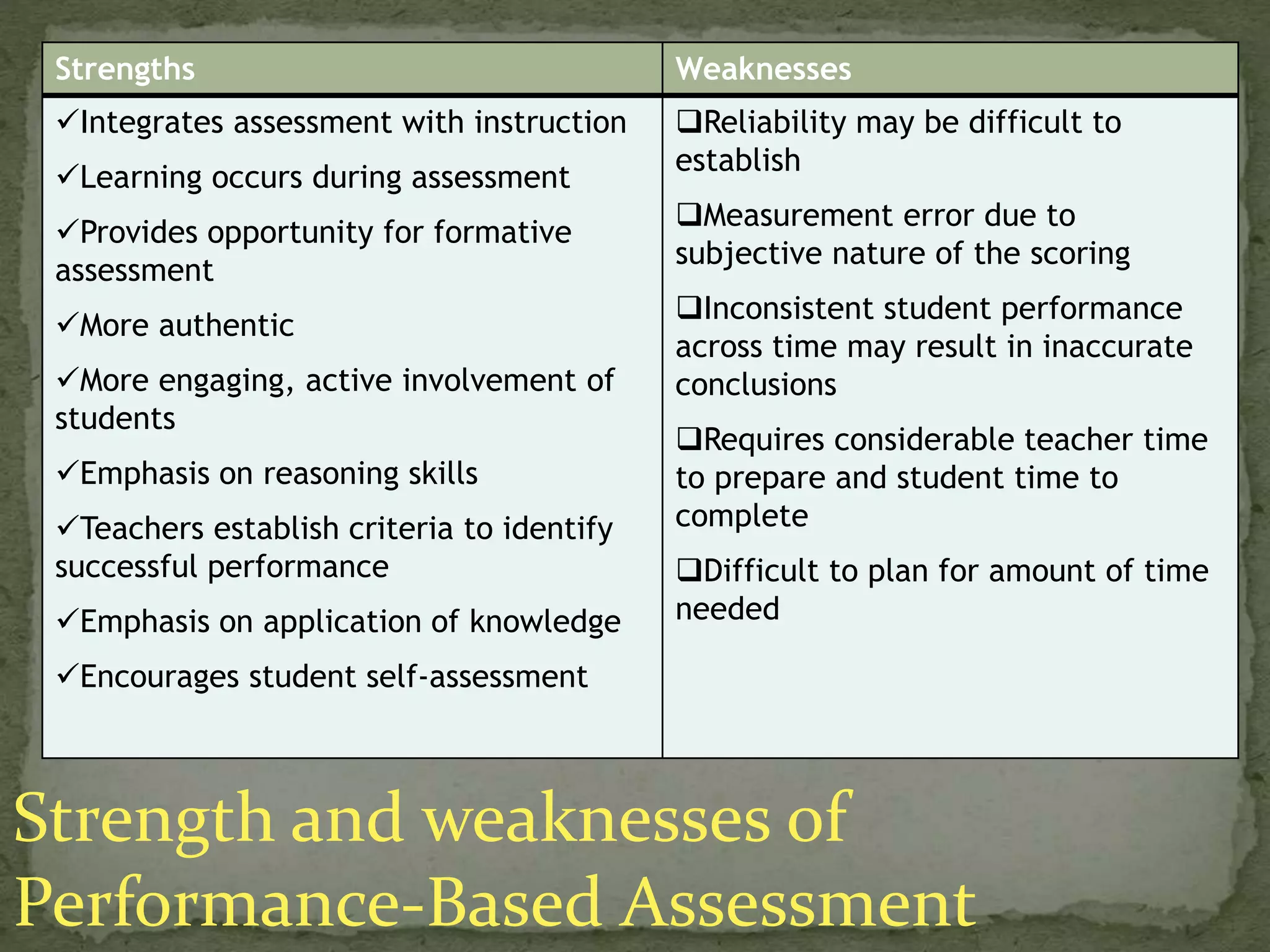
Strengths Weaknesses
Integrates assessment with instruction
Learning occurs during assessment
Provides opportunity for formative
assessment
More authentic
More engaging, active involvement of
students
Emphasis on reasoning skills
Teachers establish criteria to identify
successful performance
Emphasis on application of knowledge
Encourages student self-assessment
Reliability may be difficult to
establish
Measurement error due to
subjective nature of the scoring
Inconsistent student performance
across time may result in inaccurate
conclusions
Requires considerable teacher time
to prepare and student time to
complete
Difficult to plan for amount of time
needed
Strength and weaknesses of
Performance-Based Assessment
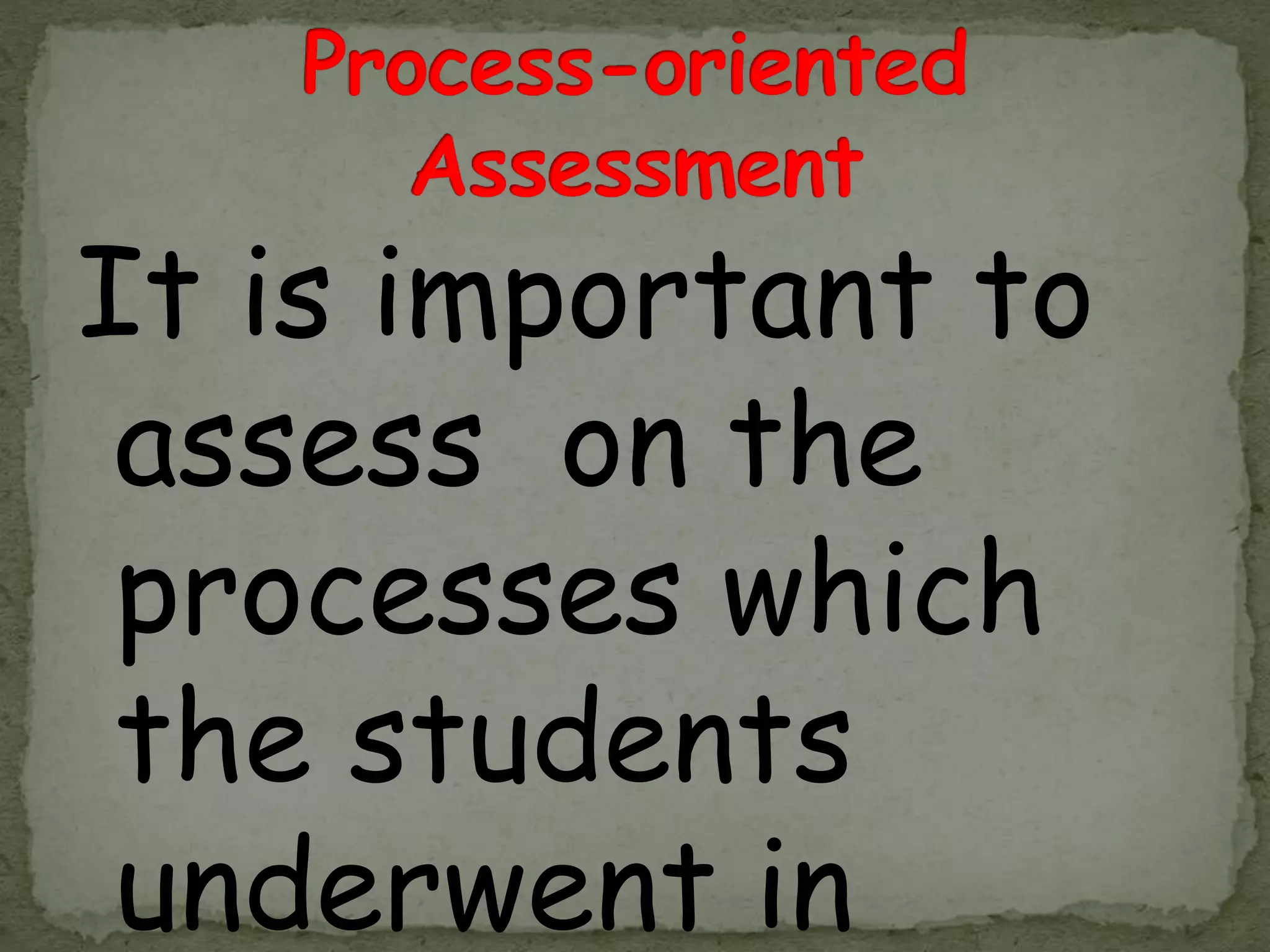
It is important to
assess on the
processes which
the students
underwent in
“Assessment is not an end in
itself but a vehicle for
educational improvement.”
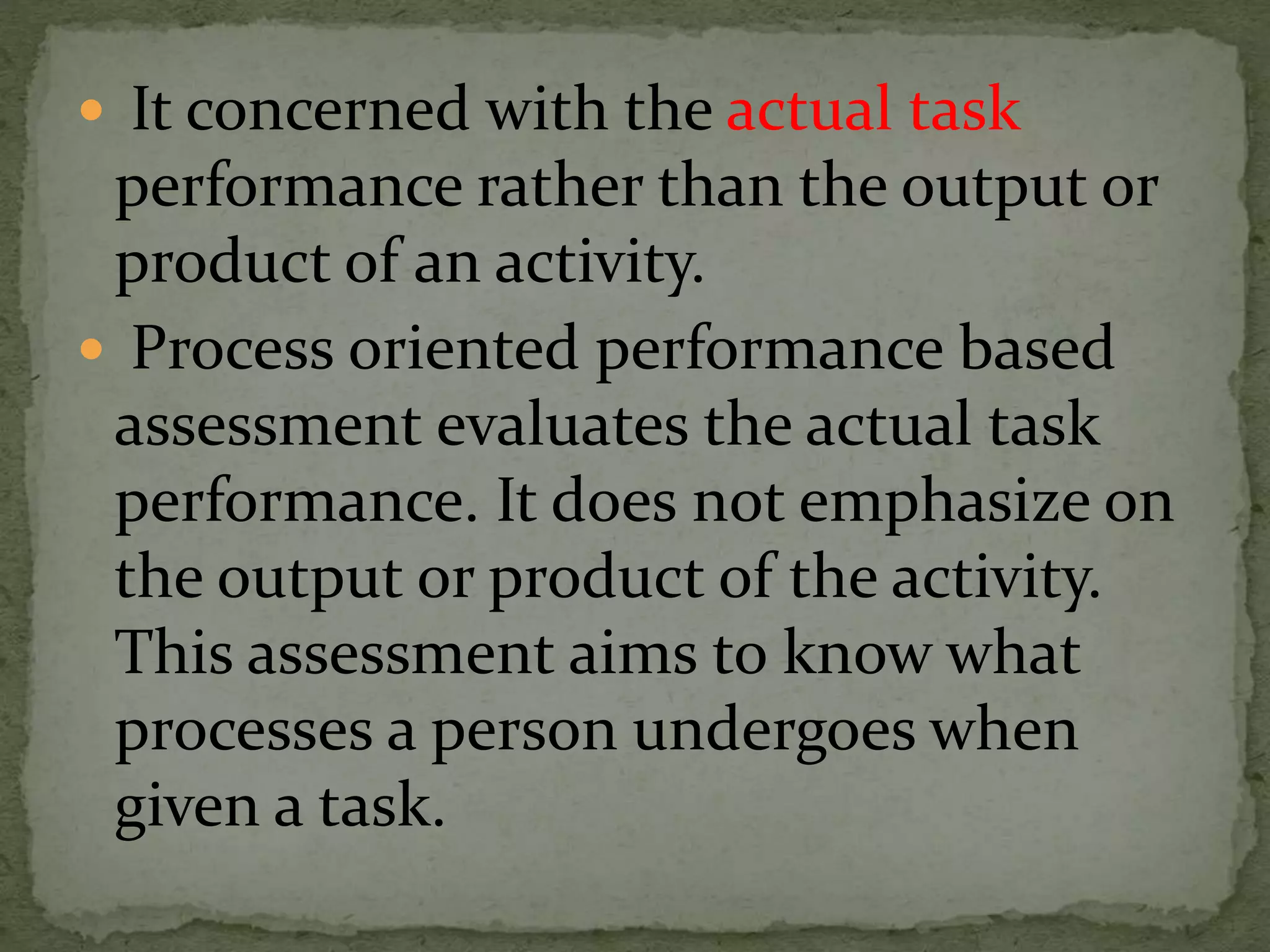
 It concerned with the actual task
performance rather than the output or
product of an activity.
 Process oriented performance based
assessment evaluates the actual task
performance. It does not emphasize on
the output or product of the activity.
This assessment aims to know what
processes a person undergoes when
given a task.
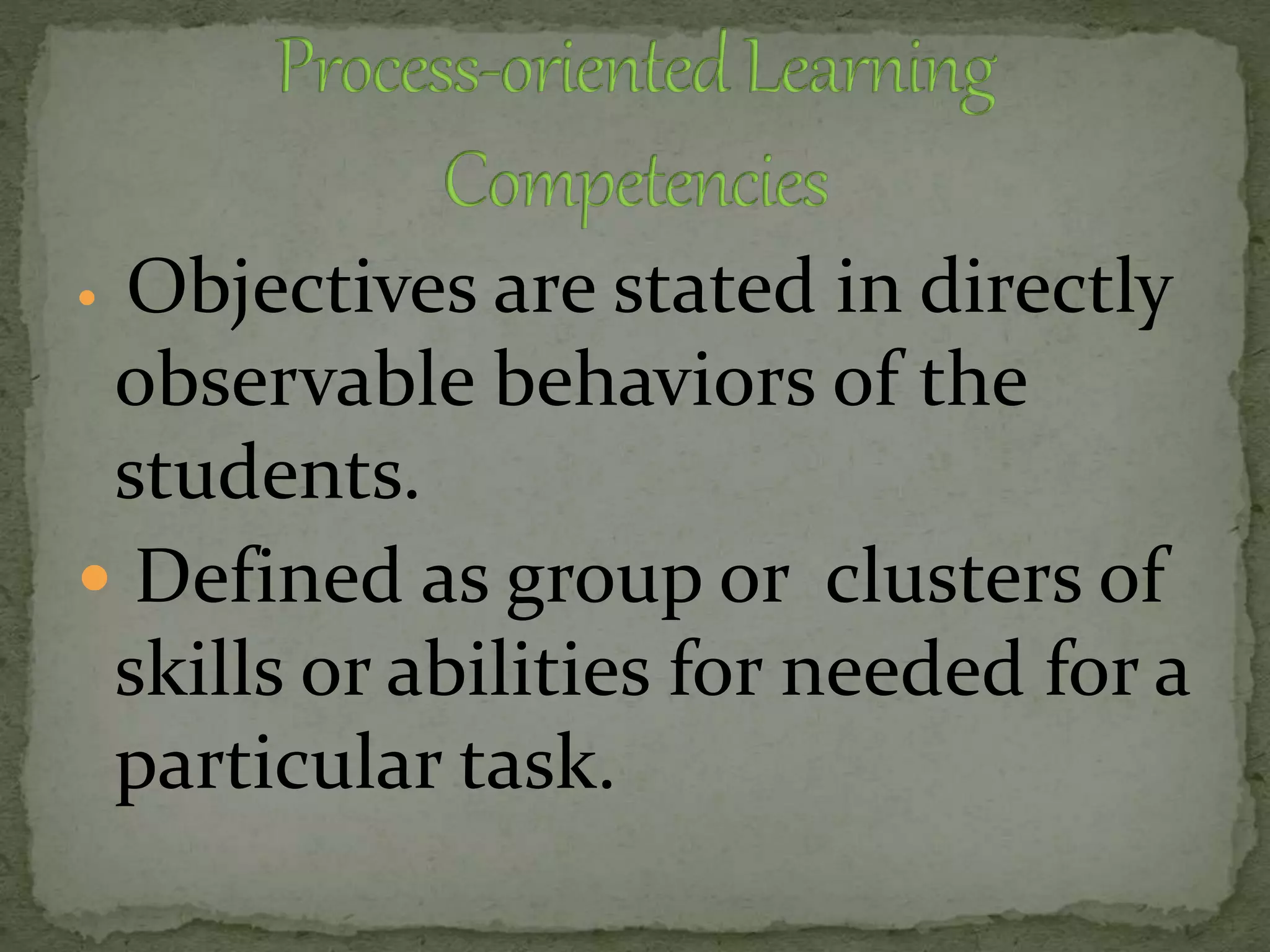
 Objectives are stated in directly
observable behaviors of the
students.
 Defined as group or clusters of
skills or abilities for needed for a
particular task.
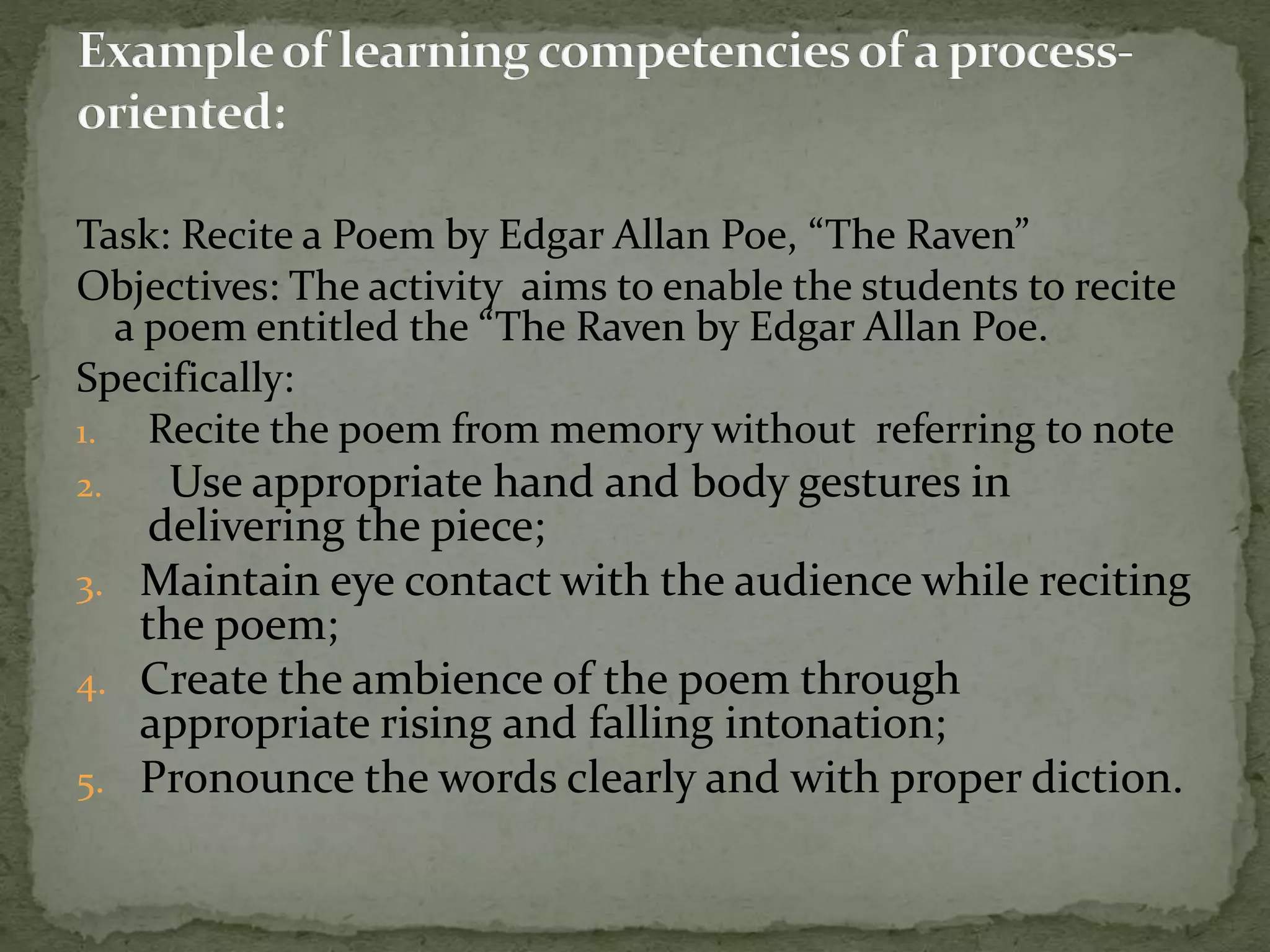
Task: Recite a Poem by Edgar Allan Poe, “The Raven”
Objectives: The activity aims to enable the students to recite
a poem entitled the “The Raven by Edgar Allan Poe.
Specifically:
1. Recite the poem from memory without referring to note
2. Use appropriate hand and body gestures in
delivering the piece;
3. Maintain eye contact with the audience while reciting
the poem;
4. Create the ambience of the poem through
appropriate rising and falling intonation;
5. Pronounce the words clearly and with proper diction.
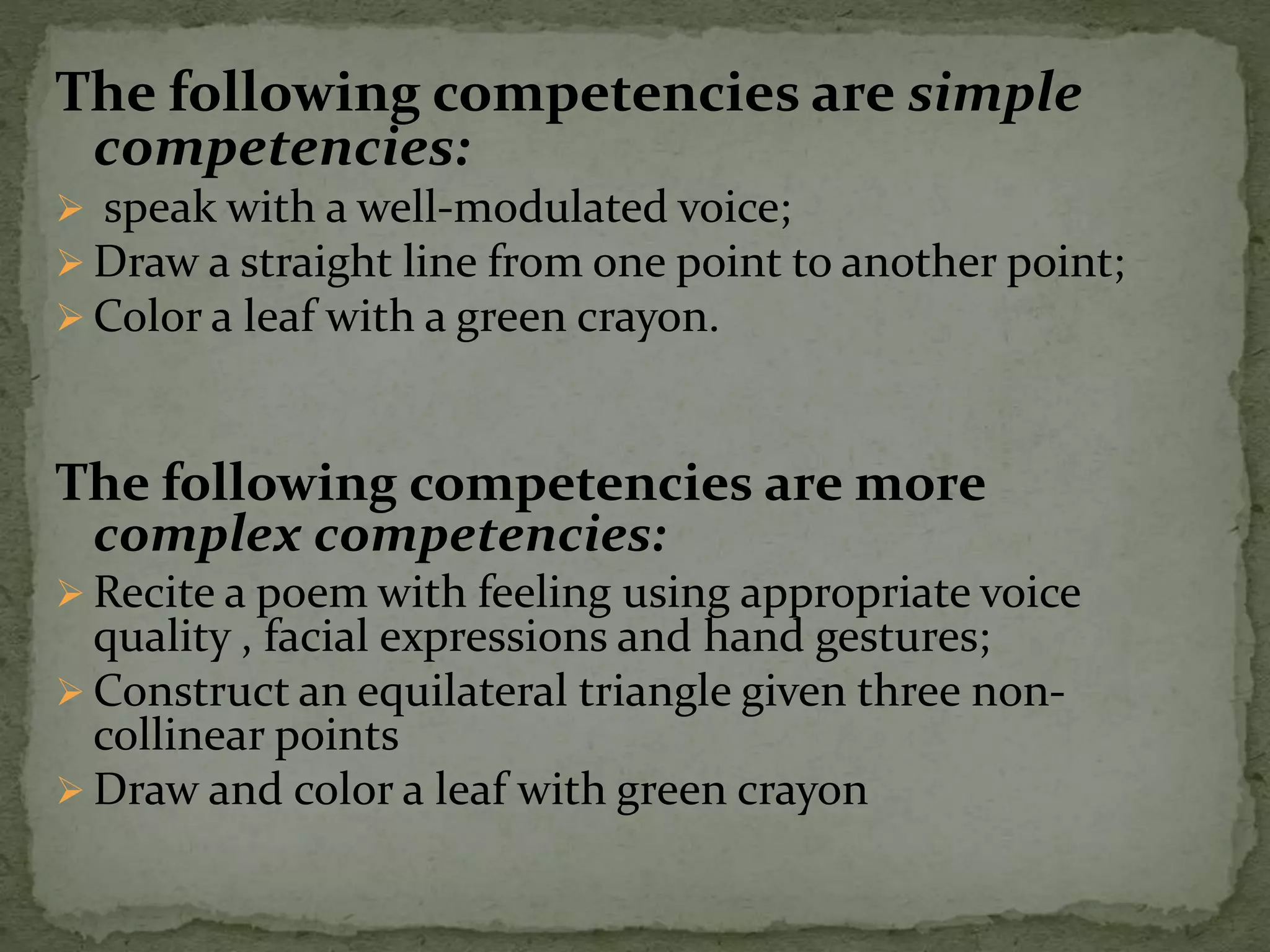
The following competencies are simple
competencies:
 speak with a well-modulated voice;
 Draw a straight line from one point to another point;
 Color a leaf with a green crayon.
The following competencies are more
complex competencies:
 Recite a poem with feeling using appropriate voice
quality , facial expressions and hand gestures;
 Construct an equilateral triangle given three non-
collinear points
 Draw and color a leaf with green crayon
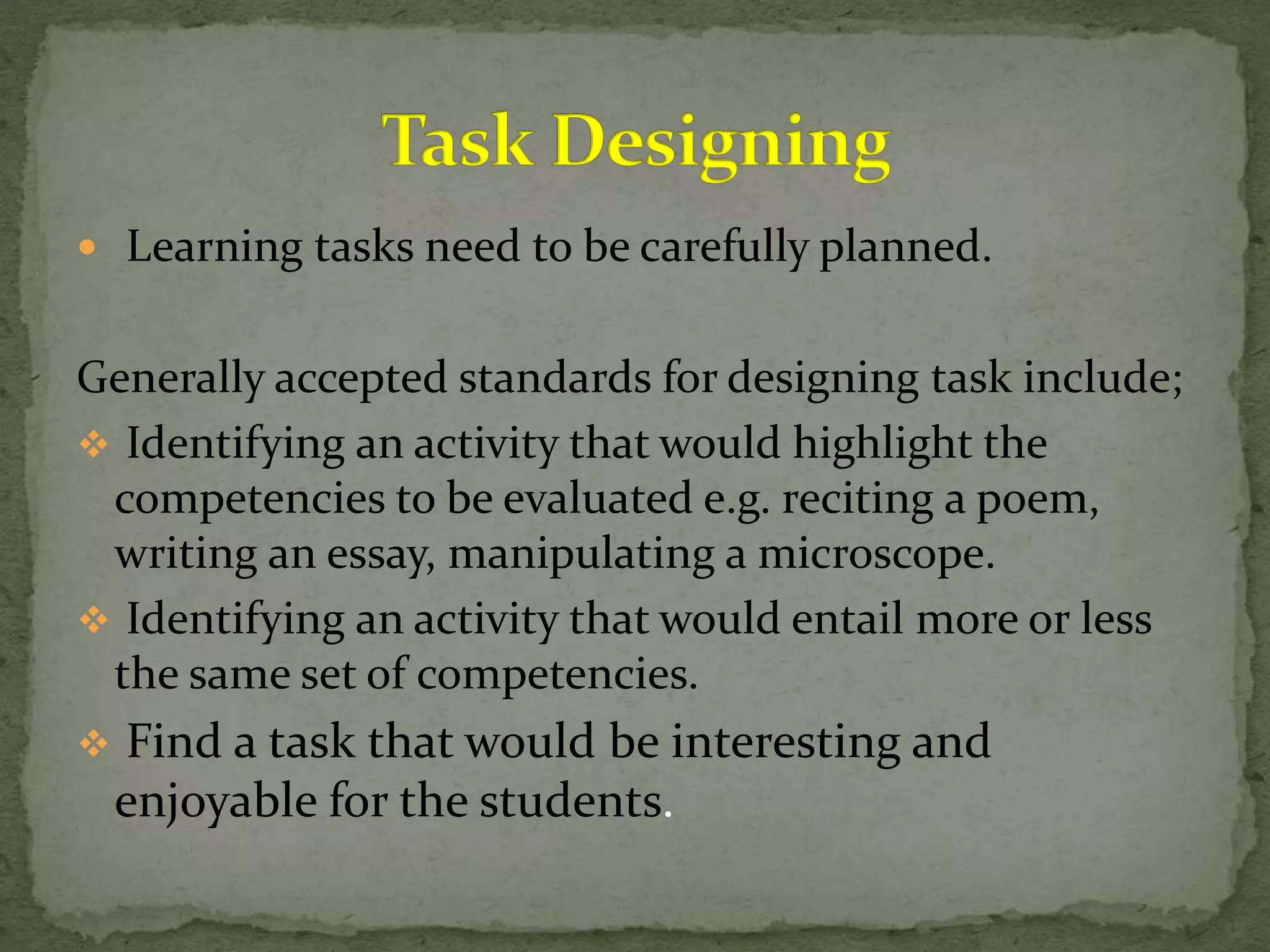
 Learning tasks need to be carefully planned.
Generally accepted standards for designing task include;
 Identifying an activity that would highlight the
competencies to be evaluated e.g. reciting a poem,
writing an essay, manipulating a microscope.
 Identifying an activity that would entail more or less
the same set of competencies.
 Find a task that would be interesting and
enjoyable for the students.
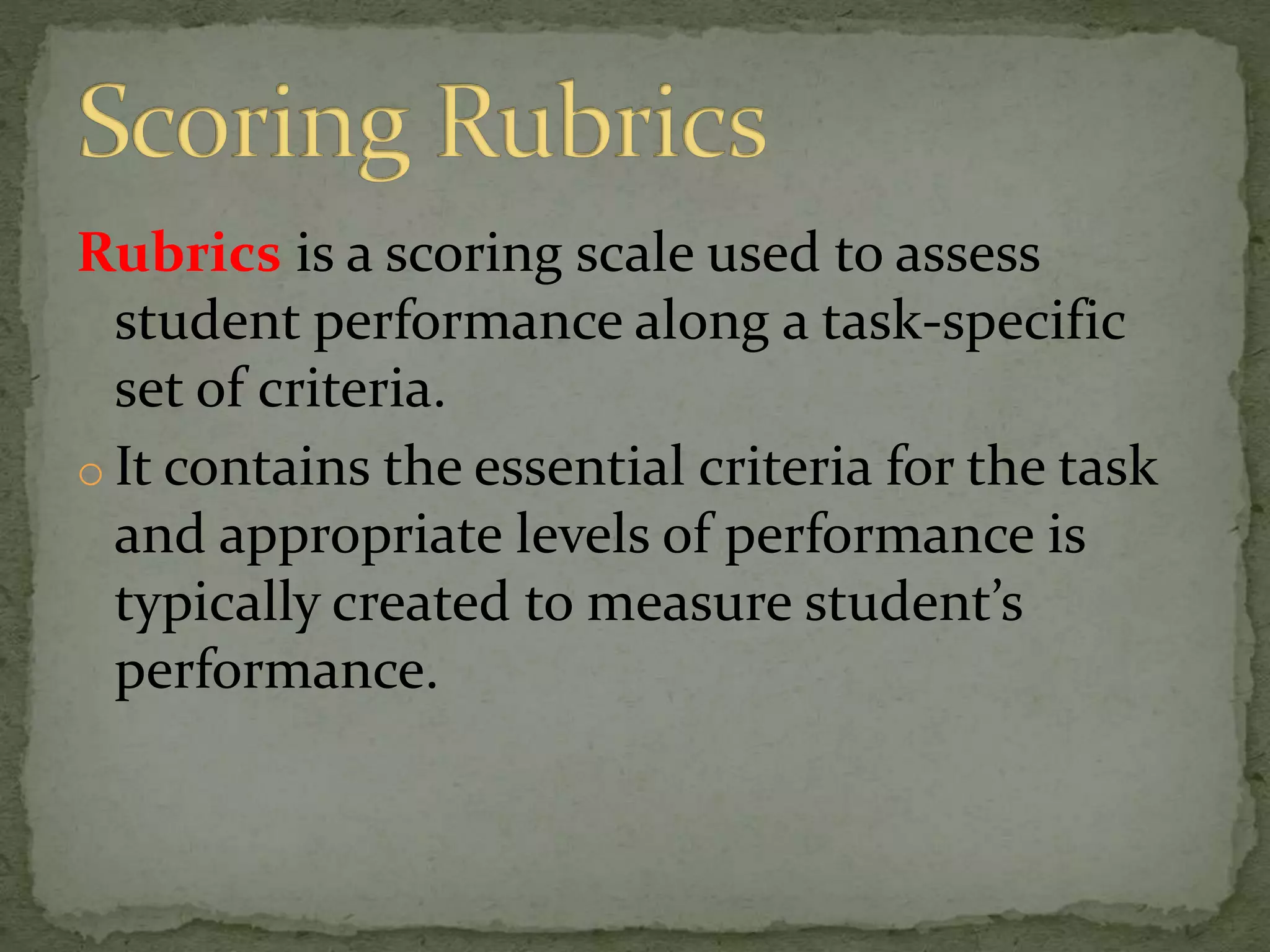
Rubrics is a scoring scale used to assess
student performance along a task-specific
set of criteria.
o It contains the essential criteria for the task
and appropriate levels of performance is
typically created to measure student’s
performance.
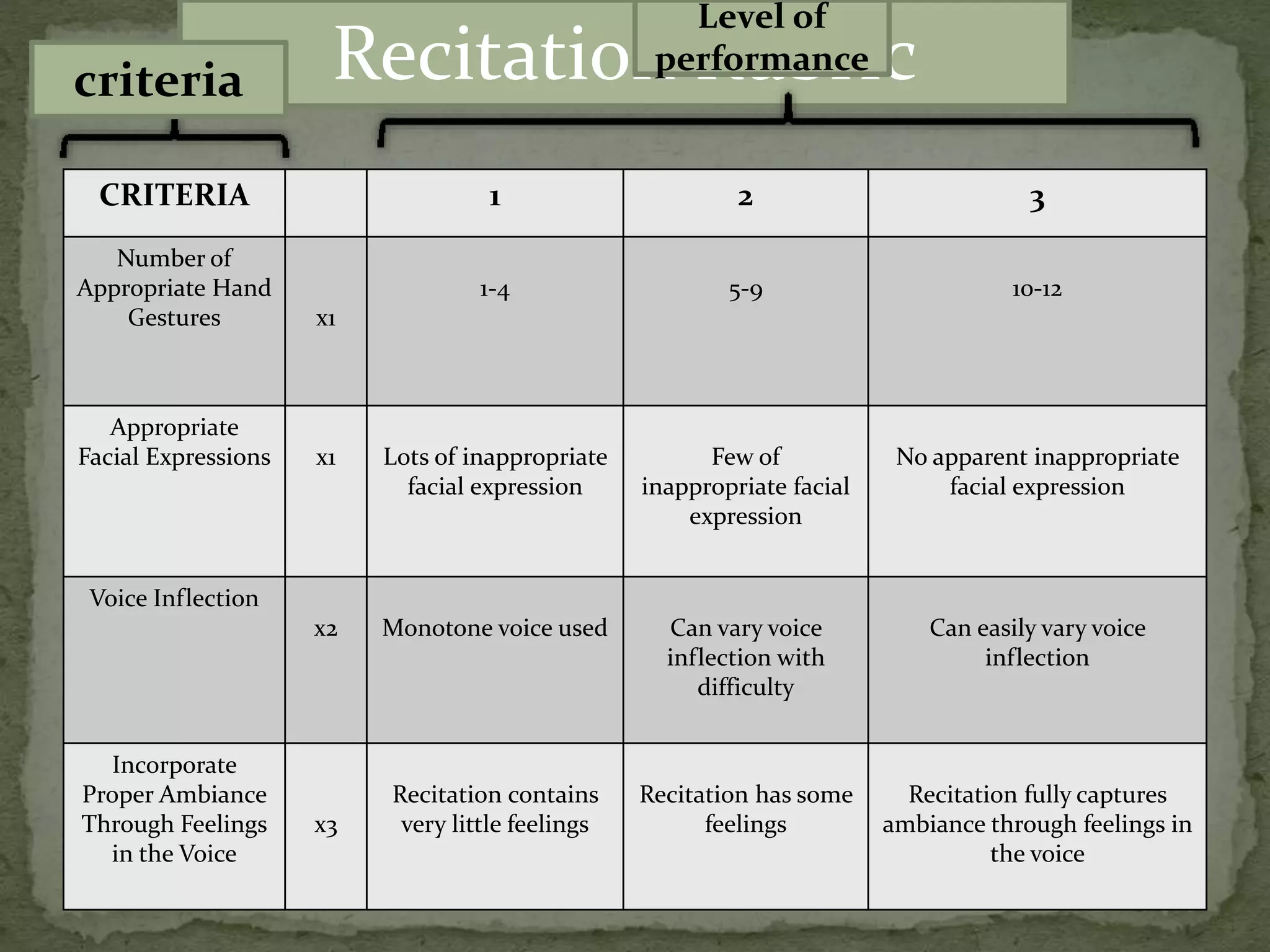
CRITERIA 1 2 3
Number of
Appropriate Hand
Gestures x1
1-4 5-9 10-12
Appropriate
Facial Expressions x1 Lots of inappropriate
facial expression
Few of
inappropriate facial
expression
No apparent inappropriate
facial expression
Voice Inflection
x2 Monotone voice used Can vary voice
inflection with
difficulty
Can easily vary voice
inflection
Incorporate
Proper Ambiance
Through Feelings
in the Voice
x3
Recitation contains
very little feelings
Recitation has some
feelings
Recitation fully captures
ambiance through feelings in
the voice
Recitation Rubriccriteria
Level of
performance
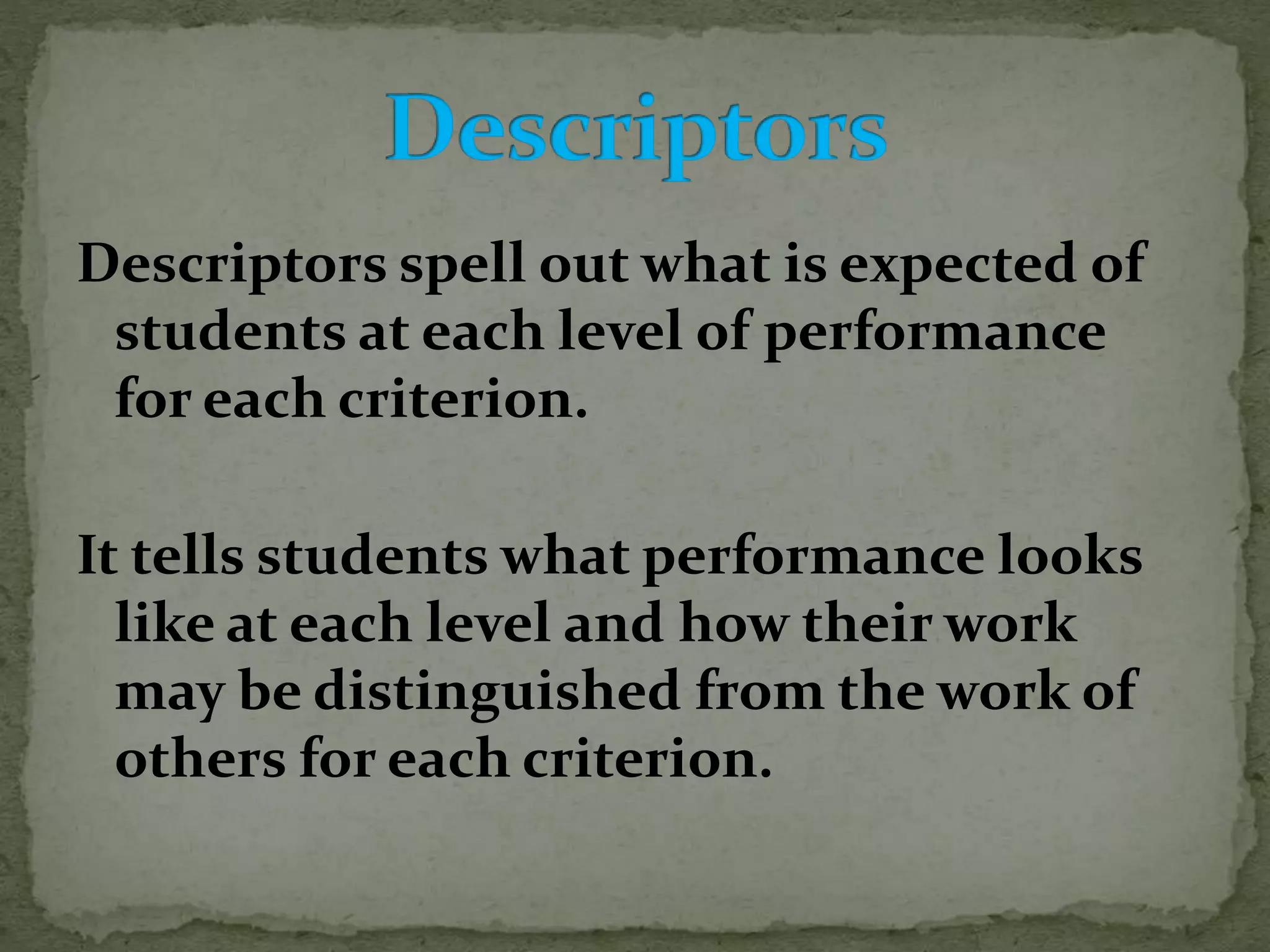
Descriptors spell out what is expected of
students at each level of performance
for each criterion.
It tells students what performance looks
like at each level and how their work
may be distinguished from the work of
others for each criterion.
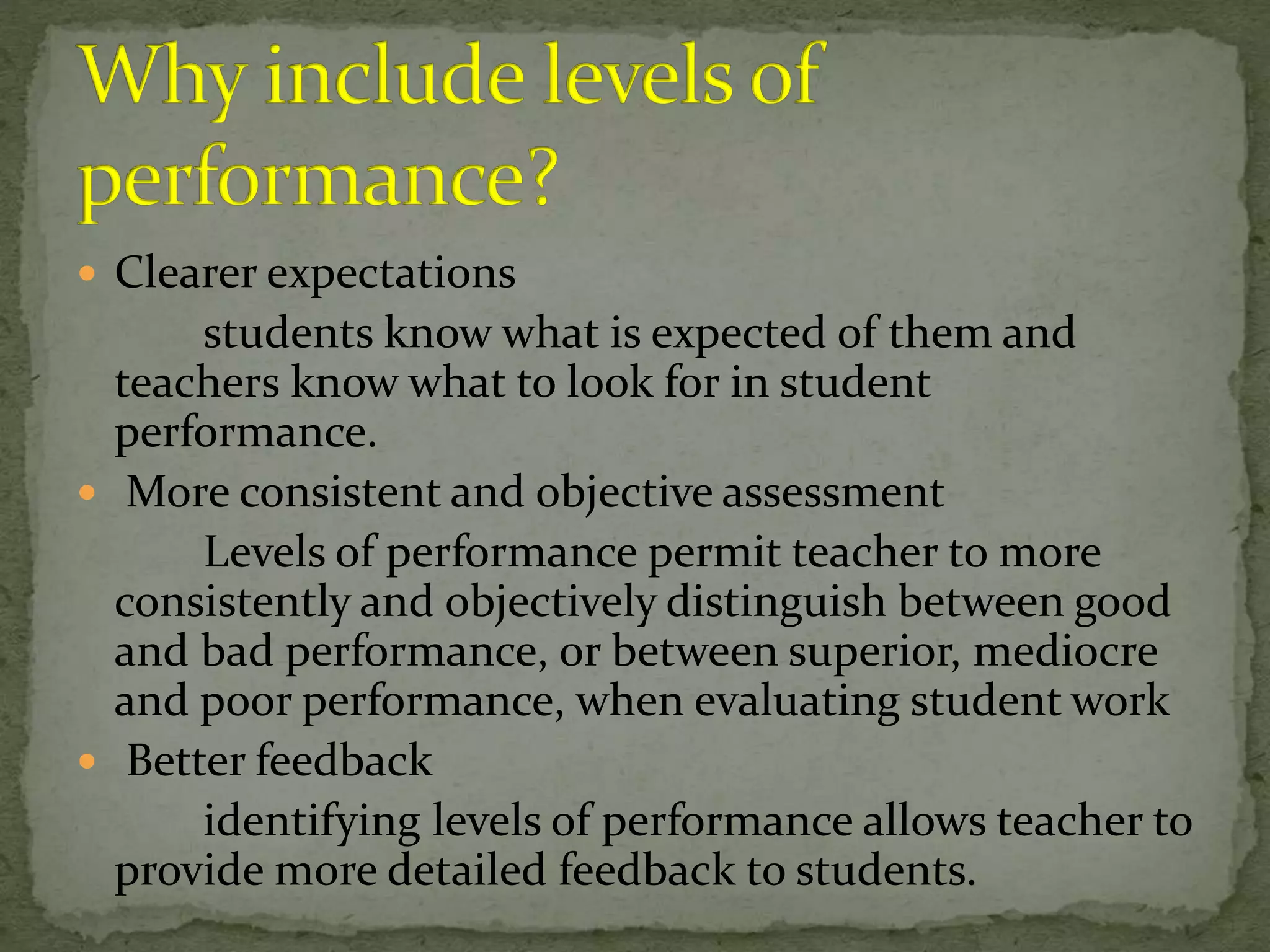
 Clearer expectations
students know what is expected of them and
teachers know what to look for in student
performance.
 More consistent and objective assessment
Levels of performance permit teacher to more
consistently and objectively distinguish between good
and bad performance, or between superior, mediocre
and poor performance, when evaluating student work
 Better feedback
identifying levels of performance allows teacher to
provide more detailed feedback to students.
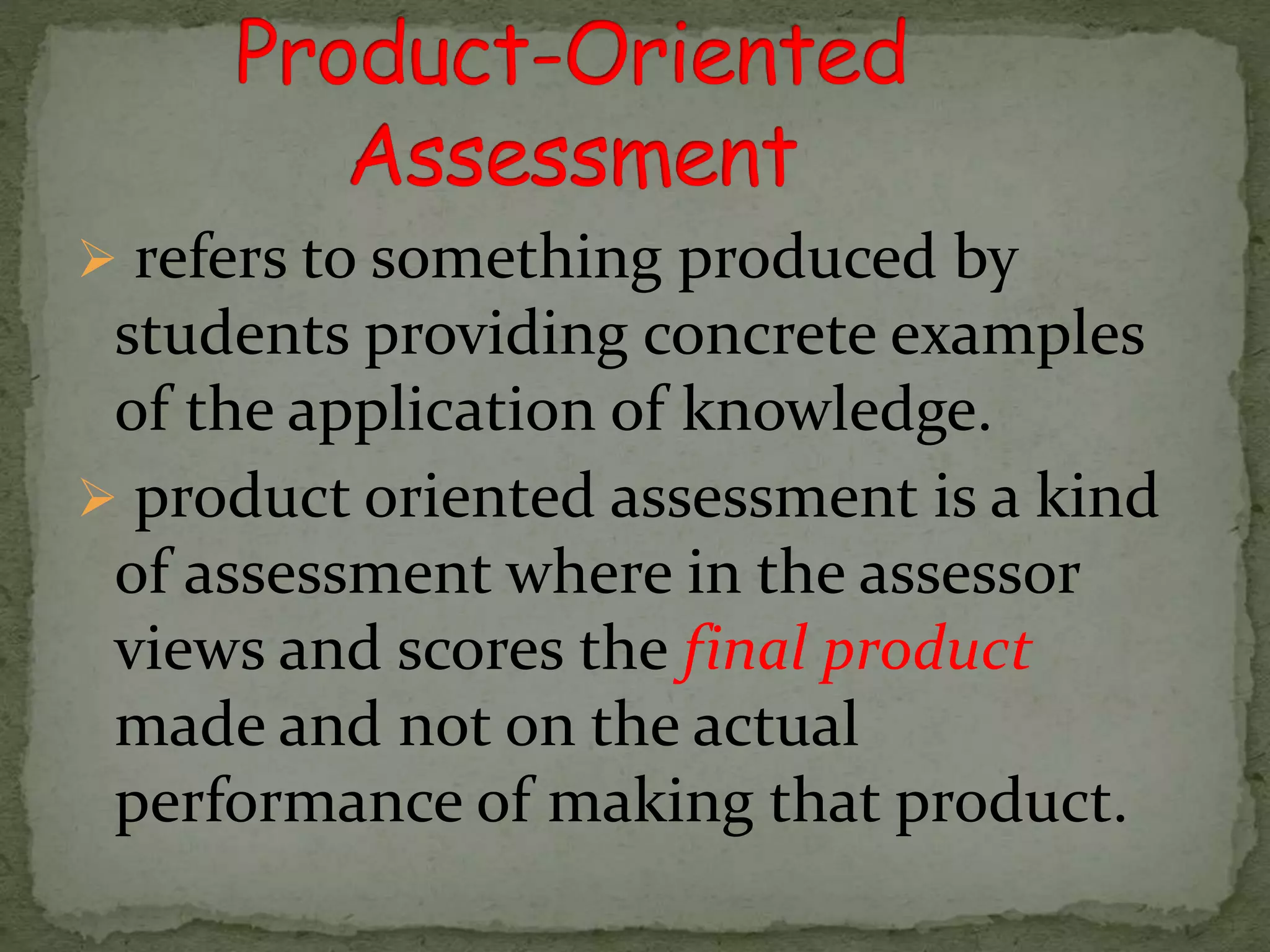
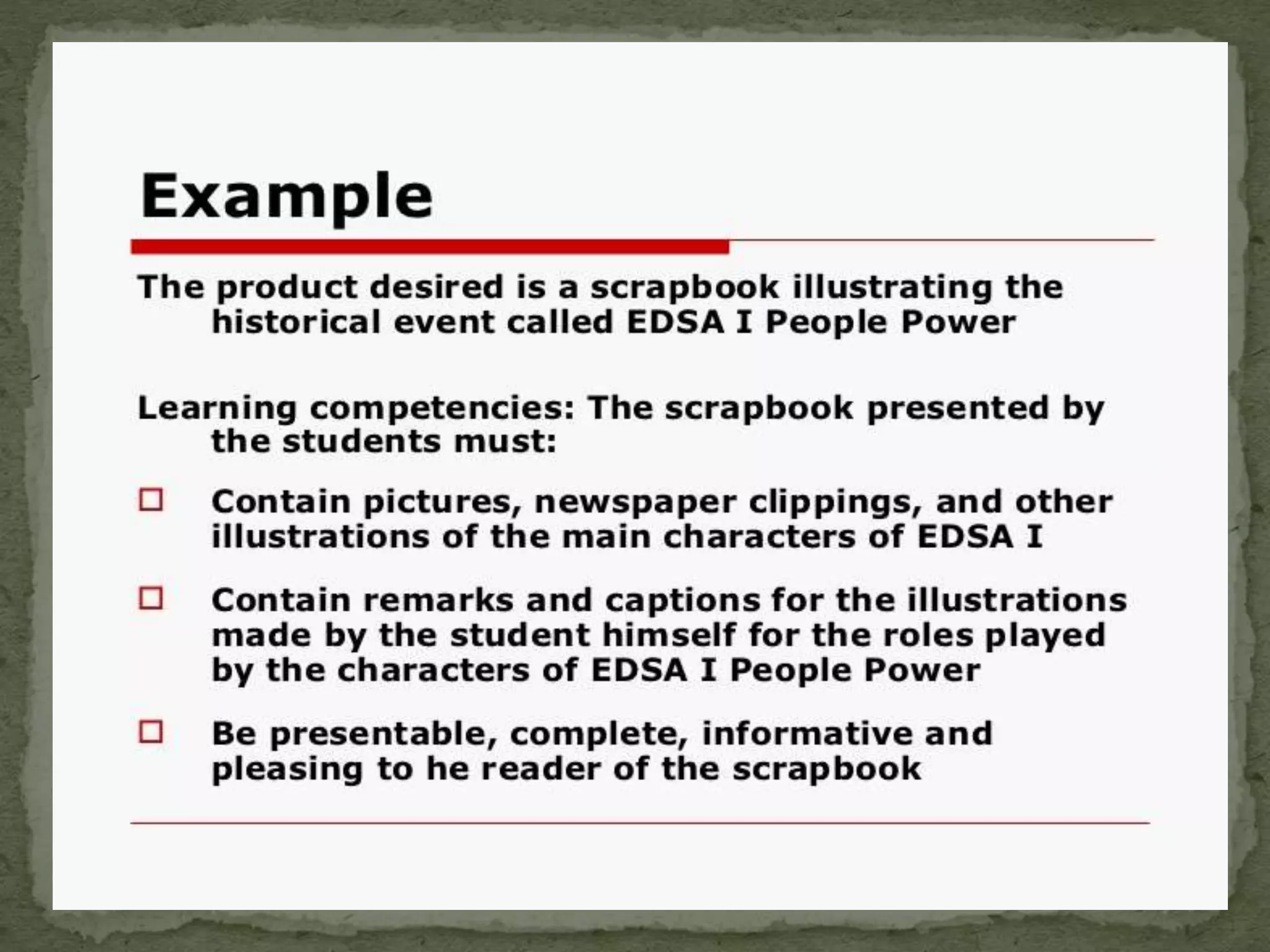
 refers to something produced by
students providing concrete examples
of the application of knowledge.
 product oriented assessment is a kind
of assessment where in the assessor
views and scores the final product
made and not on the actual
performance of making that product.
It is concern on the product alone and
not on the process. It is more concern
to the outcome or the performance of
the learner. It also focuses on
achievement of the learner.
 Product assessment focuses on
evaluating the result or outcome of a
process.
 Targeted tasks that lead to product or overall
learning outcome.
 the learning competencies associated with
products or outputs are linked with an assessment
with three levels of performance manifested by the
product, namely:
novice or beginner’s level
Skilled level
Expert level
 Level 1 : Does the finished product or project
illustrates the minimum expected parts or
functions? ( Beginner)
 Level 2 : Does the finished product or project
contains additional parts and functions on top of
the minimum requirements which tend to
enhance the final product? (skilled level)
 Level 3: Does the finished product contains the
basic minimum parts and functions, have the
additional features on top of the minimum, and is
aesthetically pleasing? (Expert level)
It is associated with task designing include:
 Complexity
Level of complexity of the project needs to be within
the range of the ability of the students.
 Appeal
The project of the activity must be appealing to the
students. It should be interesting enough.
 Creativity
The project needs to exercise creativity
and divergent thinking.
 Goal-Based
Project is produced in order to attain a
learning objective.
Prepared by:
Montano, Jeraldyn

Alternative mode of assessment

  • 2.
     One inwhich a teacher observes and makes a judgment about the student’s demonstration of a skill or competency in creating a product, constructing a response, or making a presentation.  Emphasis on student’s ability to perform tasks by producing their own work with their knowledge and skills.
  • 3.
     Students perform,create, construct, produce, or do something  Deep understanding and/or reasoning skills are needed and assessed  Involves sustained work, often days  Calls on students to explain, justify and defend  Involves engaging ideas of importance and substance  Relies on trained assessor’s judgments for scoring  Multiple criteria and standards are specified  No single “correct” answer
  • 4.
    Strengths Weaknesses Integrates assessmentwith instruction Learning occurs during assessment Provides opportunity for formative assessment More authentic More engaging, active involvement of students Emphasis on reasoning skills Teachers establish criteria to identify successful performance Emphasis on application of knowledge Encourages student self-assessment Reliability may be difficult to establish Measurement error due to subjective nature of the scoring Inconsistent student performance across time may result in inaccurate conclusions Requires considerable teacher time to prepare and student time to complete Difficult to plan for amount of time needed Strength and weaknesses of Performance-Based Assessment
  • 5.
    It is importantto assess on the processes which the students underwent in
  • 6.
    “Assessment is notan end in itself but a vehicle for educational improvement.”
  • 7.
     It concernedwith the actual task performance rather than the output or product of an activity.  Process oriented performance based assessment evaluates the actual task performance. It does not emphasize on the output or product of the activity. This assessment aims to know what processes a person undergoes when given a task.
  • 8.
     Objectives arestated in directly observable behaviors of the students.  Defined as group or clusters of skills or abilities for needed for a particular task.
  • 9.
    Task: Recite aPoem by Edgar Allan Poe, “The Raven” Objectives: The activity aims to enable the students to recite a poem entitled the “The Raven by Edgar Allan Poe. Specifically: 1. Recite the poem from memory without referring to note 2. Use appropriate hand and body gestures in delivering the piece; 3. Maintain eye contact with the audience while reciting the poem; 4. Create the ambience of the poem through appropriate rising and falling intonation; 5. Pronounce the words clearly and with proper diction.
  • 10.
    The following competenciesare simple competencies:  speak with a well-modulated voice;  Draw a straight line from one point to another point;  Color a leaf with a green crayon. The following competencies are more complex competencies:  Recite a poem with feeling using appropriate voice quality , facial expressions and hand gestures;  Construct an equilateral triangle given three non- collinear points  Draw and color a leaf with green crayon
  • 11.
     Learning tasksneed to be carefully planned. Generally accepted standards for designing task include;  Identifying an activity that would highlight the competencies to be evaluated e.g. reciting a poem, writing an essay, manipulating a microscope.  Identifying an activity that would entail more or less the same set of competencies.  Find a task that would be interesting and enjoyable for the students.
  • 12.
    Rubrics is ascoring scale used to assess student performance along a task-specific set of criteria. o It contains the essential criteria for the task and appropriate levels of performance is typically created to measure student’s performance.
  • 13.
    CRITERIA 1 23 Number of Appropriate Hand Gestures x1 1-4 5-9 10-12 Appropriate Facial Expressions x1 Lots of inappropriate facial expression Few of inappropriate facial expression No apparent inappropriate facial expression Voice Inflection x2 Monotone voice used Can vary voice inflection with difficulty Can easily vary voice inflection Incorporate Proper Ambiance Through Feelings in the Voice x3 Recitation contains very little feelings Recitation has some feelings Recitation fully captures ambiance through feelings in the voice Recitation Rubriccriteria Level of performance
  • 14.
    Descriptors spell outwhat is expected of students at each level of performance for each criterion. It tells students what performance looks like at each level and how their work may be distinguished from the work of others for each criterion.
  • 15.
     Clearer expectations studentsknow what is expected of them and teachers know what to look for in student performance.  More consistent and objective assessment Levels of performance permit teacher to more consistently and objectively distinguish between good and bad performance, or between superior, mediocre and poor performance, when evaluating student work  Better feedback identifying levels of performance allows teacher to provide more detailed feedback to students.
  • 16.
     refers tosomething produced by students providing concrete examples of the application of knowledge.  product oriented assessment is a kind of assessment where in the assessor views and scores the final product made and not on the actual performance of making that product.
  • 17.
    It is concernon the product alone and not on the process. It is more concern to the outcome or the performance of the learner. It also focuses on achievement of the learner.  Product assessment focuses on evaluating the result or outcome of a process.
  • 18.
     Targeted tasksthat lead to product or overall learning outcome.  the learning competencies associated with products or outputs are linked with an assessment with three levels of performance manifested by the product, namely: novice or beginner’s level Skilled level Expert level
  • 19.
     Level 1: Does the finished product or project illustrates the minimum expected parts or functions? ( Beginner)  Level 2 : Does the finished product or project contains additional parts and functions on top of the minimum requirements which tend to enhance the final product? (skilled level)  Level 3: Does the finished product contains the basic minimum parts and functions, have the additional features on top of the minimum, and is aesthetically pleasing? (Expert level)
  • 22.
    It is associatedwith task designing include:  Complexity Level of complexity of the project needs to be within the range of the ability of the students.  Appeal The project of the activity must be appealing to the students. It should be interesting enough.
  • 23.
     Creativity The projectneeds to exercise creativity and divergent thinking.  Goal-Based Project is produced in order to attain a learning objective.
  • 28.