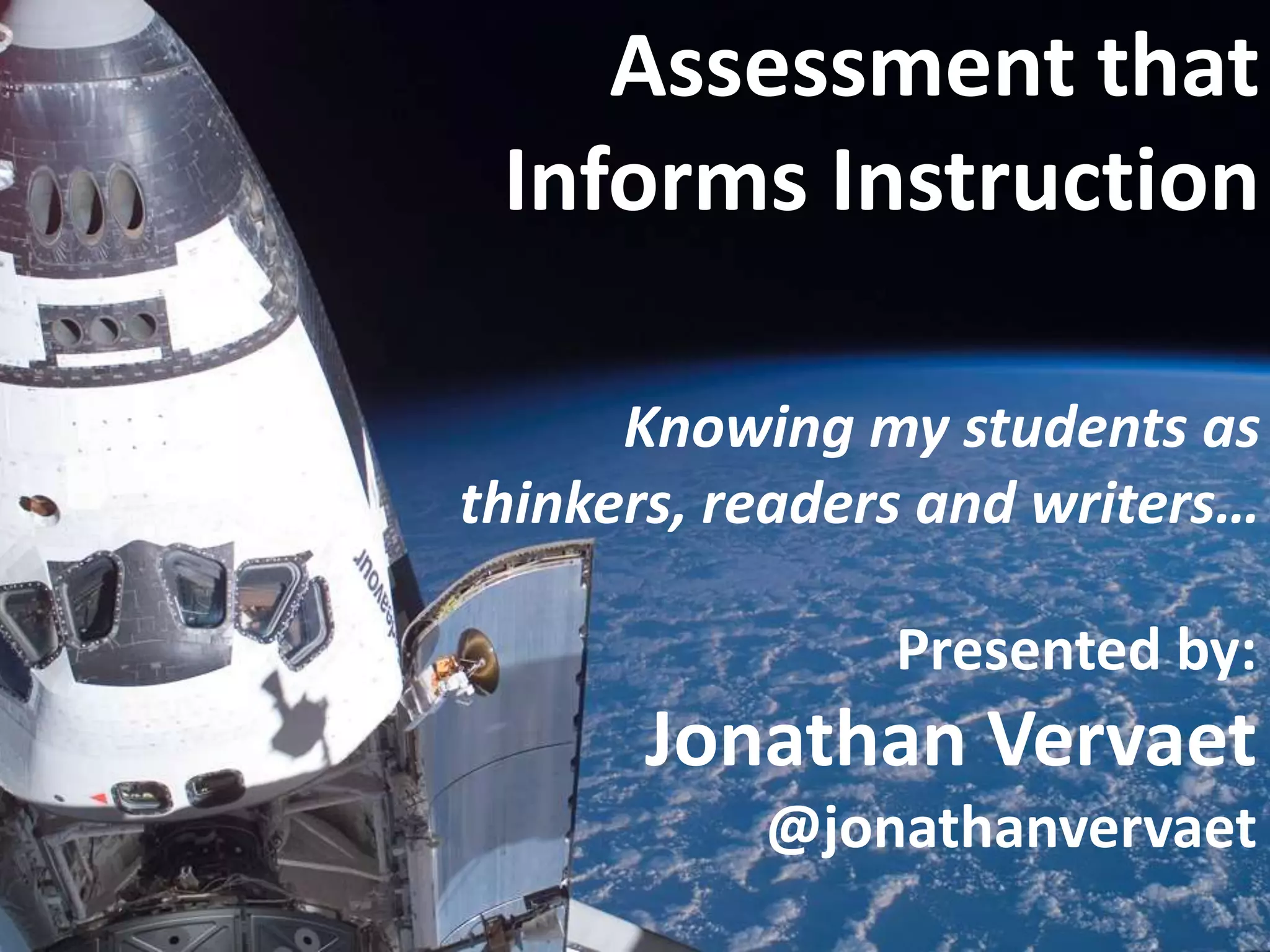







Assessment that
Informs Instruction
Knowing my students as
thinkers, readers and writers…
Presented by:

Jonathan Vervaet
@jonathanvervaet
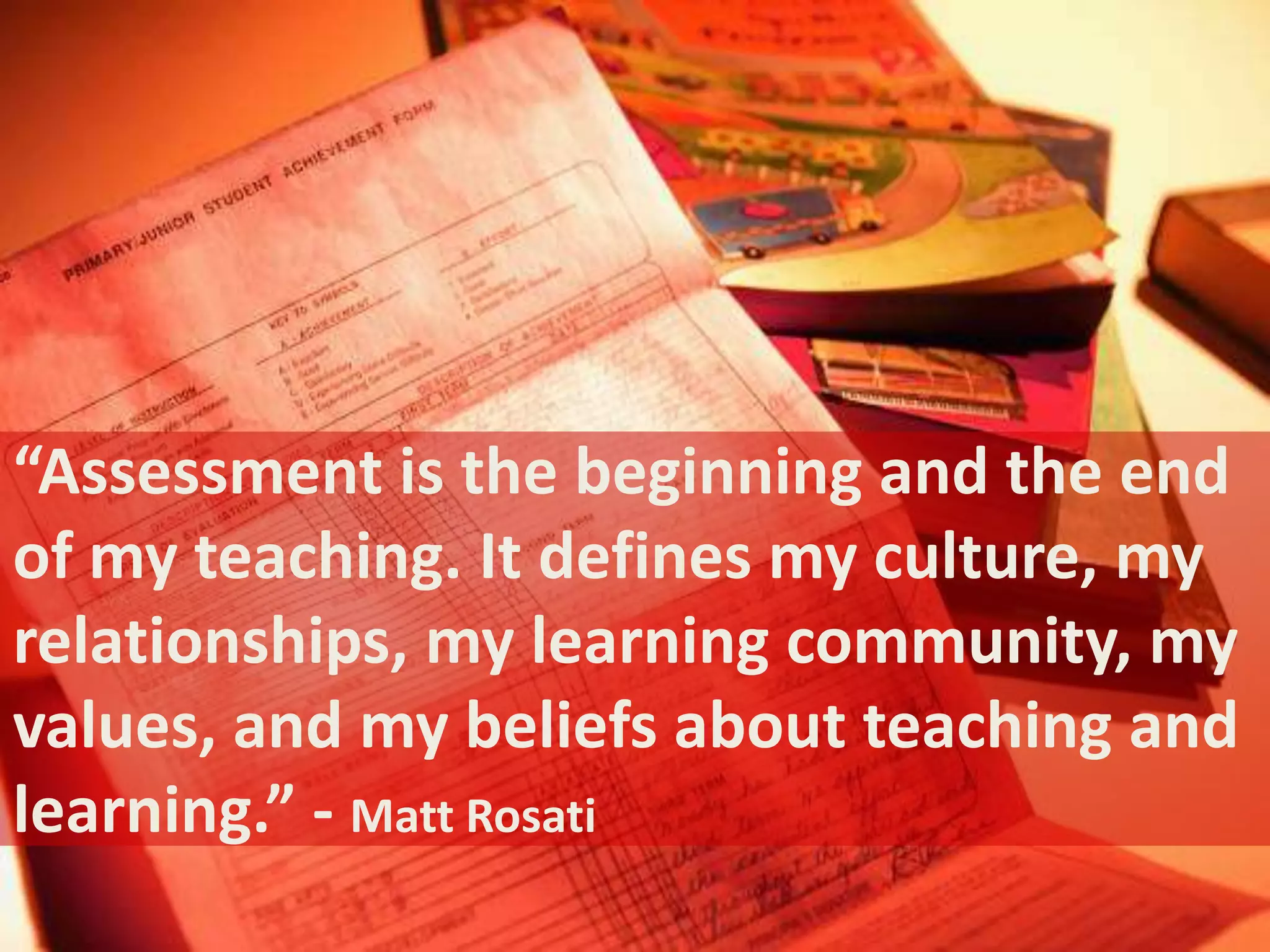
“Assessment is the beginning and the end
of my teaching. It defines my culture, my
relationships, my learning community, my
values, and my beliefs about teaching and
learning.” - Matt Rosati
How the worlds best schools come out on top.

1.Get the right people to become teachers.
2.Develop them to be effective.*
3.Ensure the system is able to deliver the best
possible instruction for every child.

* Coaching classroom practice.
• Move teacher training to the classroom.
• Strong School Leaders
• Teachers learn from each other –
Professional Learning Communities (PLCs)
Becoming Otherwise
How do we ensure the system
is able to deliver the best
possible instruction for every
child?
“If students have not been told
where they are going, it is
unlikely that they will arrive.”
– Shirley Clark
Learning Intentions
“I can find evidence of current
assessment research
in my practice.”
Learning Intentions
“I can identify ways to use
assessment to inform my
instructional decisions .”
Learning Intentions
“I can become curious about
something in the research I
want to inquire further into.”
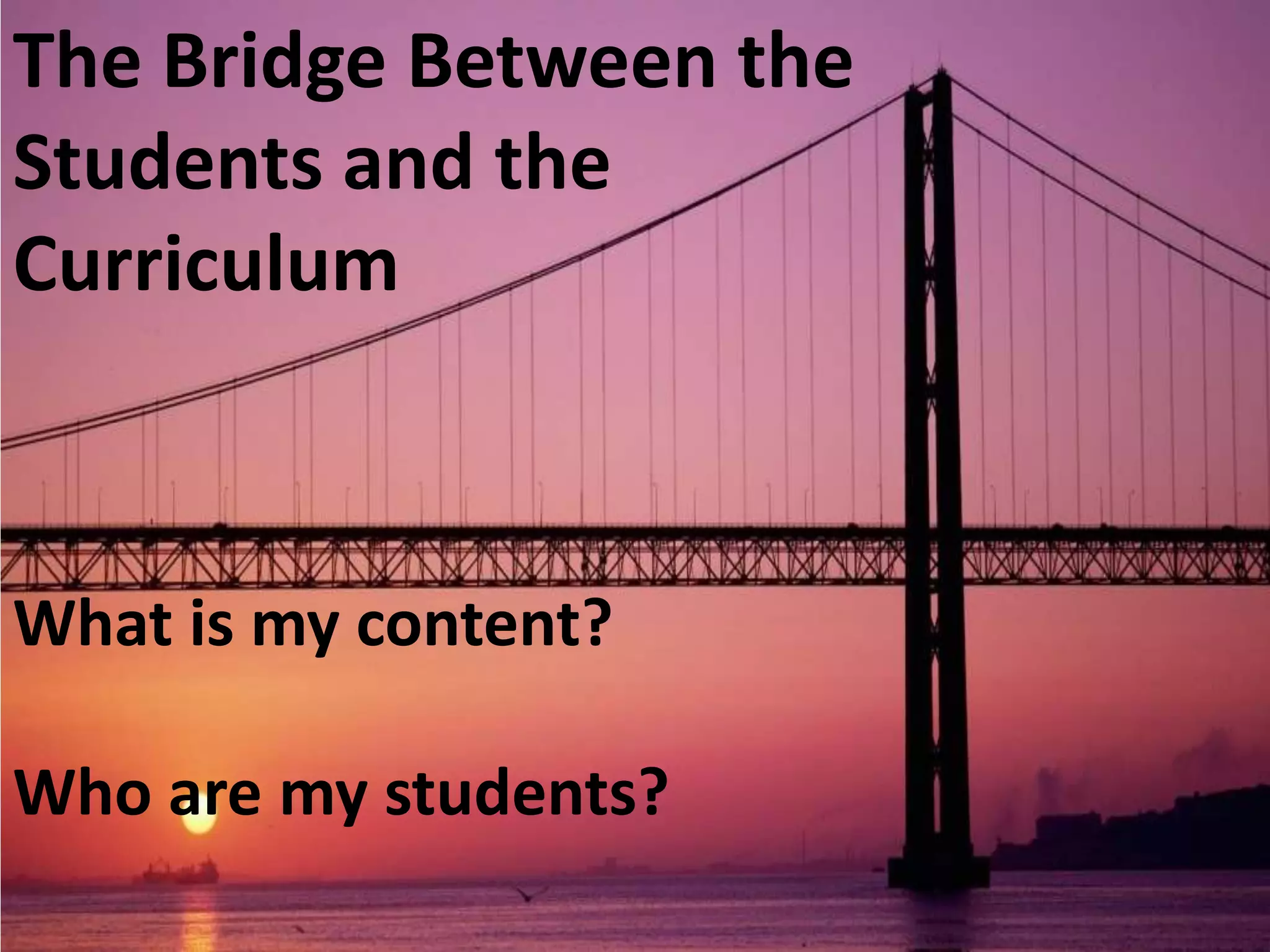
The Bridge Between the
Students and the
Curriculum

What is my content?
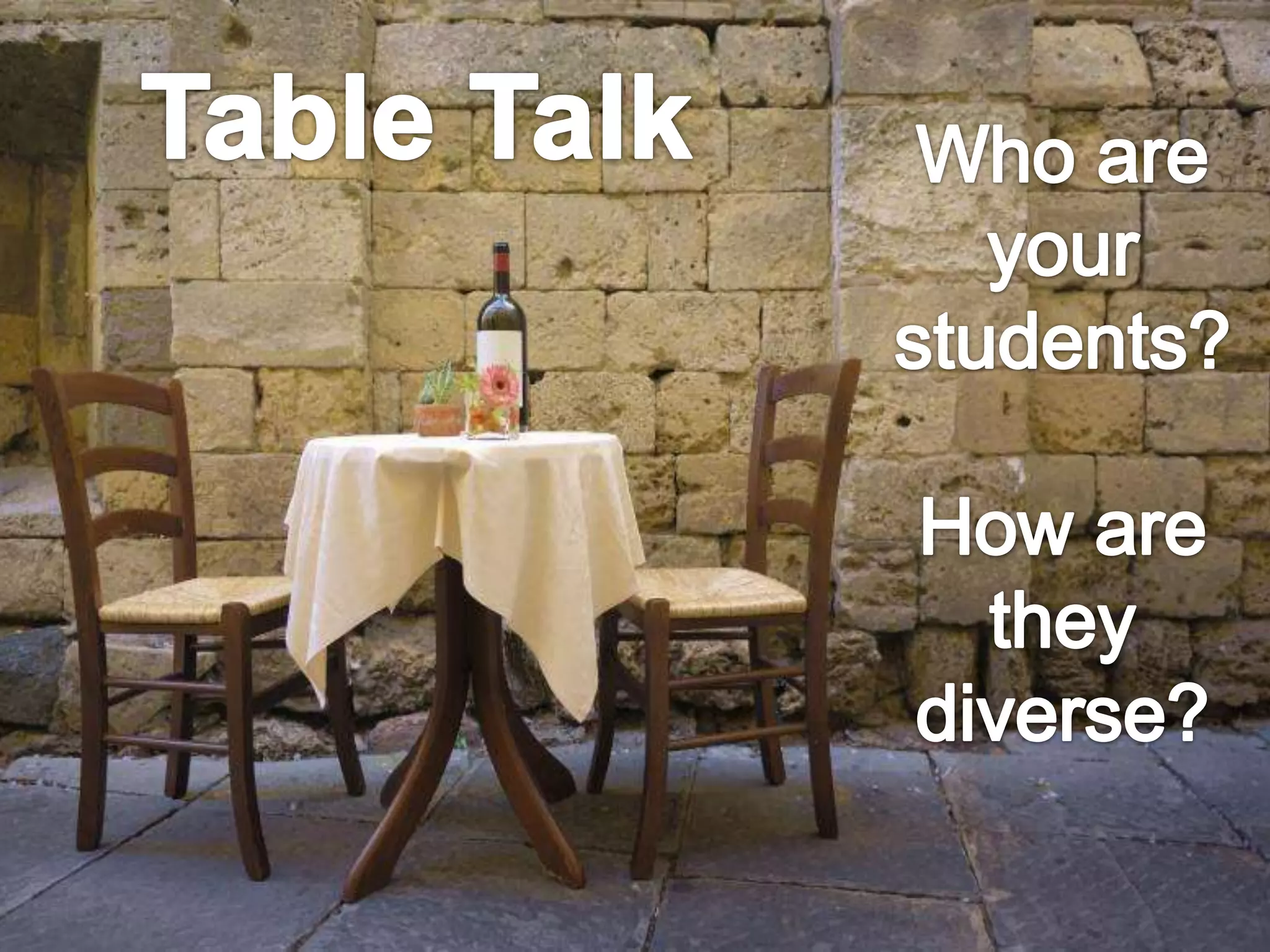
Who are my students?
The Bridge Between the
Students and the
Curriculum

Strategic teaching requires
you to know your students.
What are some
ways you can get
to know your
students both as
learners and as
people?
Proficient Readers
Research

Successful readers
– regardless of age
– are active,
purposeful,
strategic, and
metacognitive.
Proficient Readers
Research

They construct
meaning and learn
from text by using
cognitive strategies
before, during, and
after reading.
“No matter what
grade level you teach,
no matter what
content you teach, no
matter what you teach
with, your goal is to
improve students’
comprehension and
understanding.”
“Student learning
is enhanced
when teachers
at all grades,
teaching all
subjects, see
themselves as
teachers of
literacy.”
Instructional Design

The 8 Cognitive Functions
Good Readers Use
1. Setting a purpose / Reading with
purpose in mind
2. Activating background knowledge
to enhance understanding
3. Monitoring comprehension and
awareness of how to repair
comprehension problems
4. Determining what’s important
5. Making inferences and drawing
conclusions
6. Visualizing mental images
7. Synthesizing and accurately
summarizing information
8. Making connections
What is the most important cognitive
reading function for students?
Performance Based Reading
Assessment
- Curriculum based reading
assessment, created around grade
level expectations for proficient
reading.
- Reading literature, reading for
information, reading poetry etc.
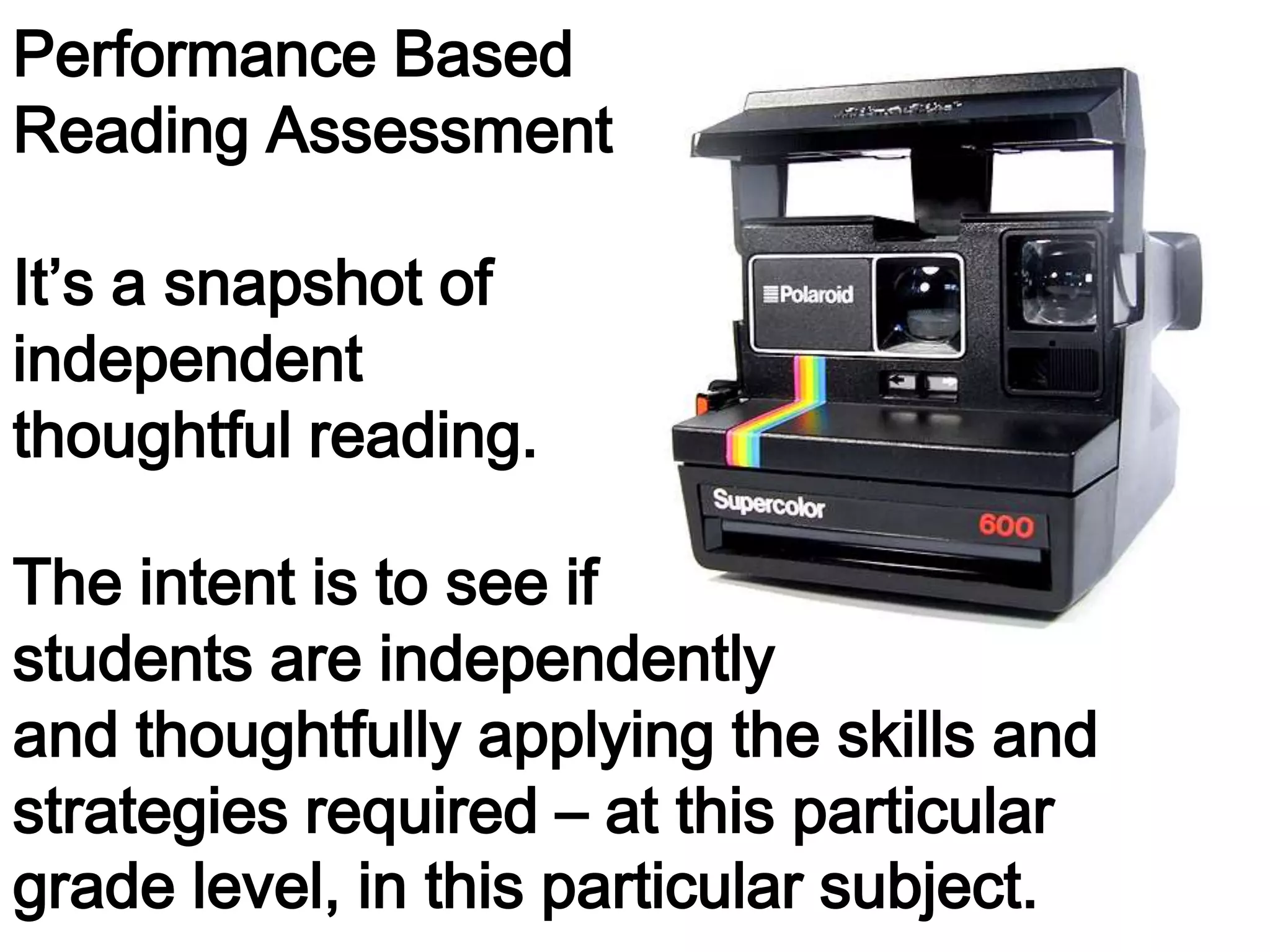
Performance Based
Reading Assessment
It’s a snapshot of
independent
thoughtful reading.
The intent is to see if
students are independently
and thoughtfully applying the skills and
strategies required – at this particular
grade level, in this particular subject.
Helps teachers:
- collect information about their
students’ reading level and ability.
- inform their teaching.
Administered early in the school year or
term.
Examined to
identify areas
of strength and
challenge.
This is NOT FOR MARKS!
Used to help target specific areas
of instruction.

Repeated to help teachers monitor
the effectiveness of their
instruction and adjust teaching
plans.
What does good look like?

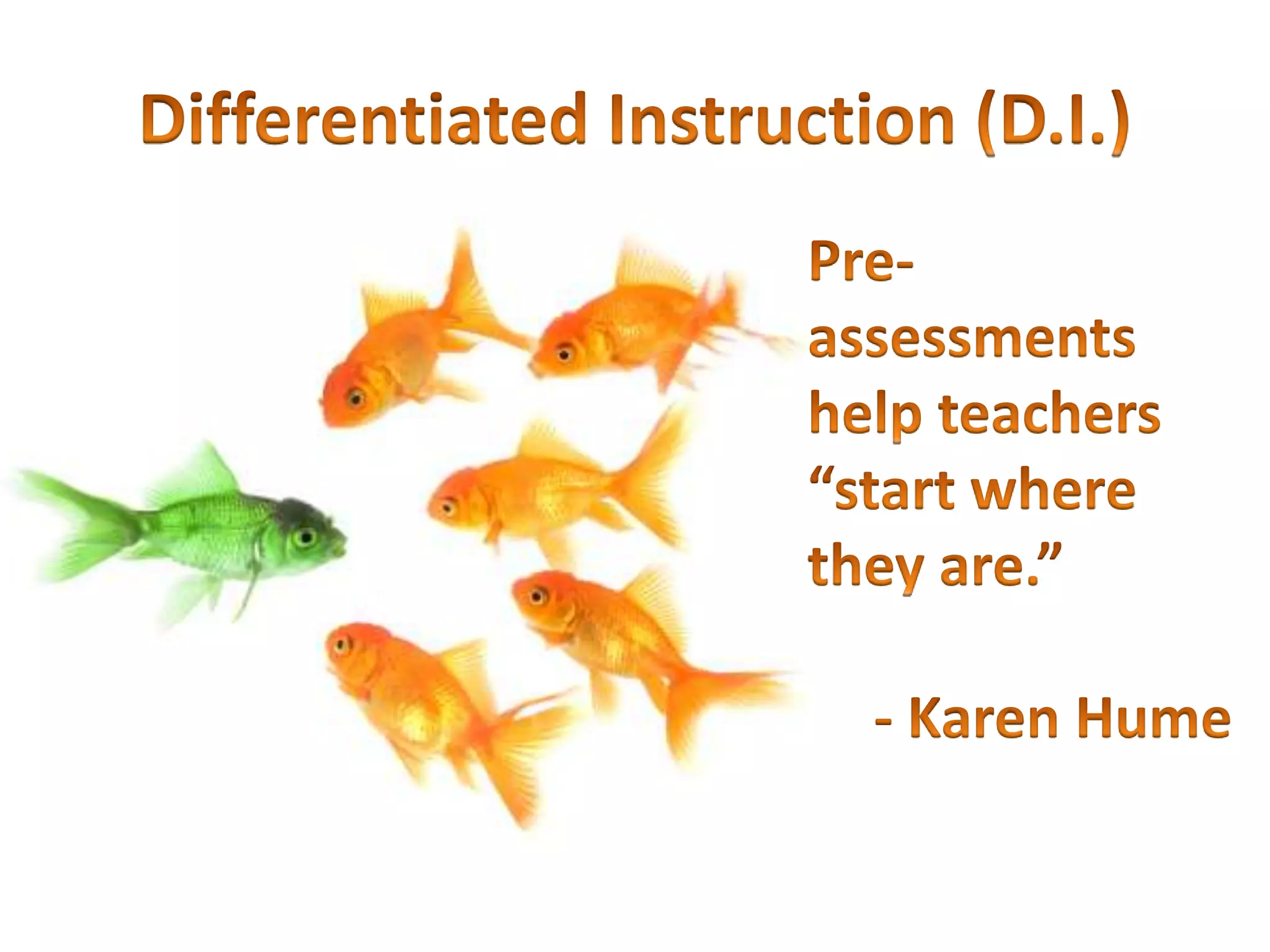
What
does
good look
The Use of
Performance
Standards
Descriptive Scoring –
based on
performance
standards
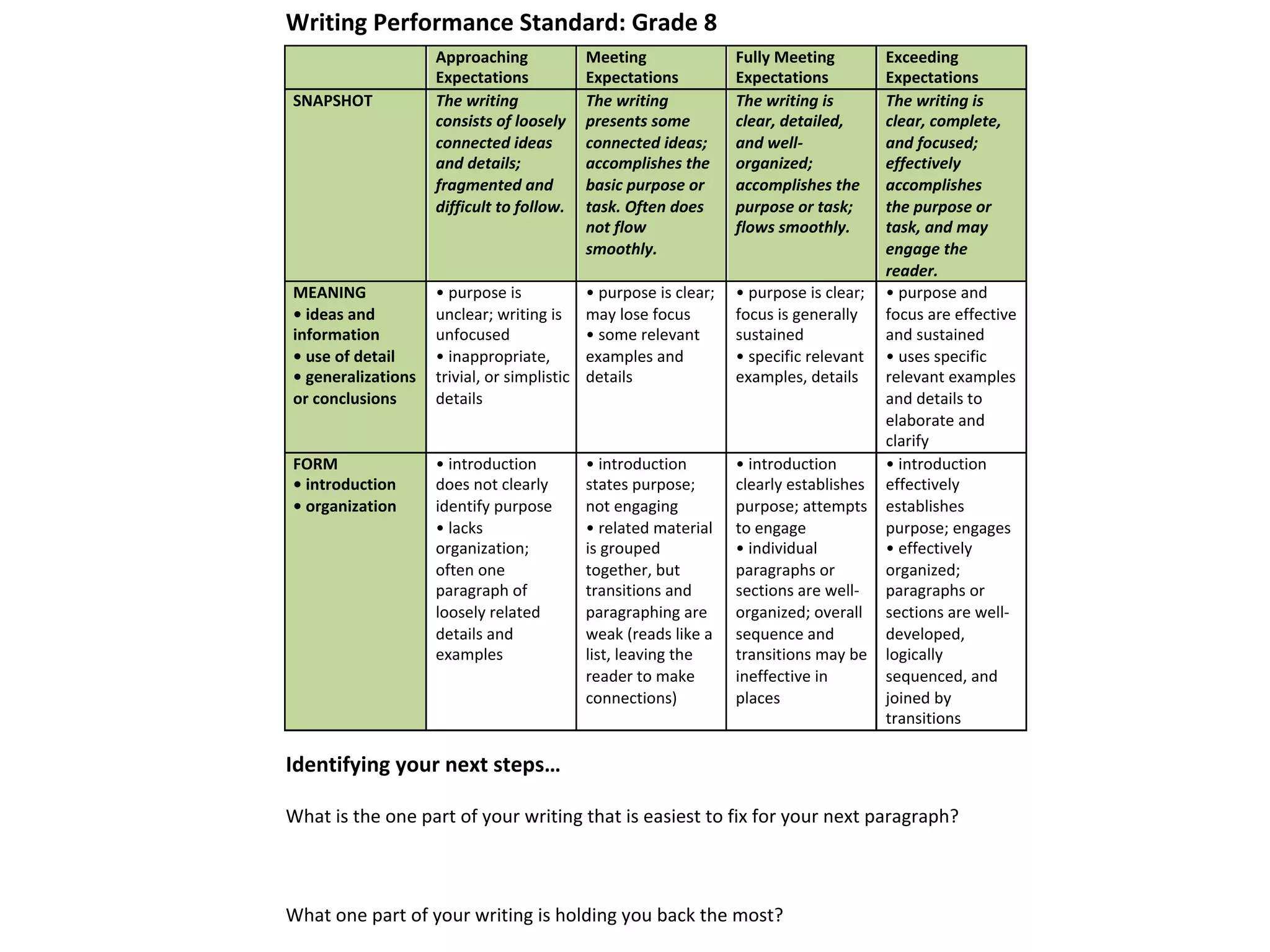
Writing Performance Standard: Grade 8
Approaching
Expectations
The writing
consists of loosely
connected ideas
and details;
fragmented and
difficult to follow.

Meeting
Expectations
The writing
presents some
connected ideas;
accomplishes the
basic purpose or
task. Often does
not flow
smoothly.

Fully Meeting
Expectations
The writing is
clear, detailed,
and wellorganized;
accomplishes the
purpose or task;
flows smoothly.

MEANING
• ideas and
information
• use of detail
• generalizations
or conclusions

• purpose is
unclear; writing is
unfocused
• inappropriate,
trivial, or simplistic
details

• purpose is clear;
may lose focus
• some relevant
examples and
details

• purpose is clear;
focus is generally
sustained
• specific relevant
examples, details

FORM
• introduction
• organization

• introduction
does not clearly
identify purpose
• lacks
organization;
often one
paragraph of
loosely related
details and
examples

• introduction
states purpose;
not engaging
• related material
is grouped
together, but
transitions and
paragraphing are
weak (reads like a
list, leaving the
reader to make
connections)

• introduction
clearly establishes
purpose; attempts
to engage
• individual
paragraphs or
sections are wellorganized; overall
sequence and
transitions may be
ineffective in
places

SNAPSHOT

Exceeding
Expectations
The writing is
clear, complete,
and focused;
effectively
accomplishes
the purpose or
task, and may
engage the
reader.
• purpose and
focus are effective
and sustained
• uses specific
relevant examples
and details to
elaborate and
clarify
• introduction
effectively
establishes
purpose; engages
• effectively
organized;
paragraphs or
sections are welldeveloped,
logically
sequenced, and
joined by
transitions

Identifying your next steps…
What is the one part of your writing that is easiest to fix for your next paragraph?

What one part of your writing is holding you back the most?
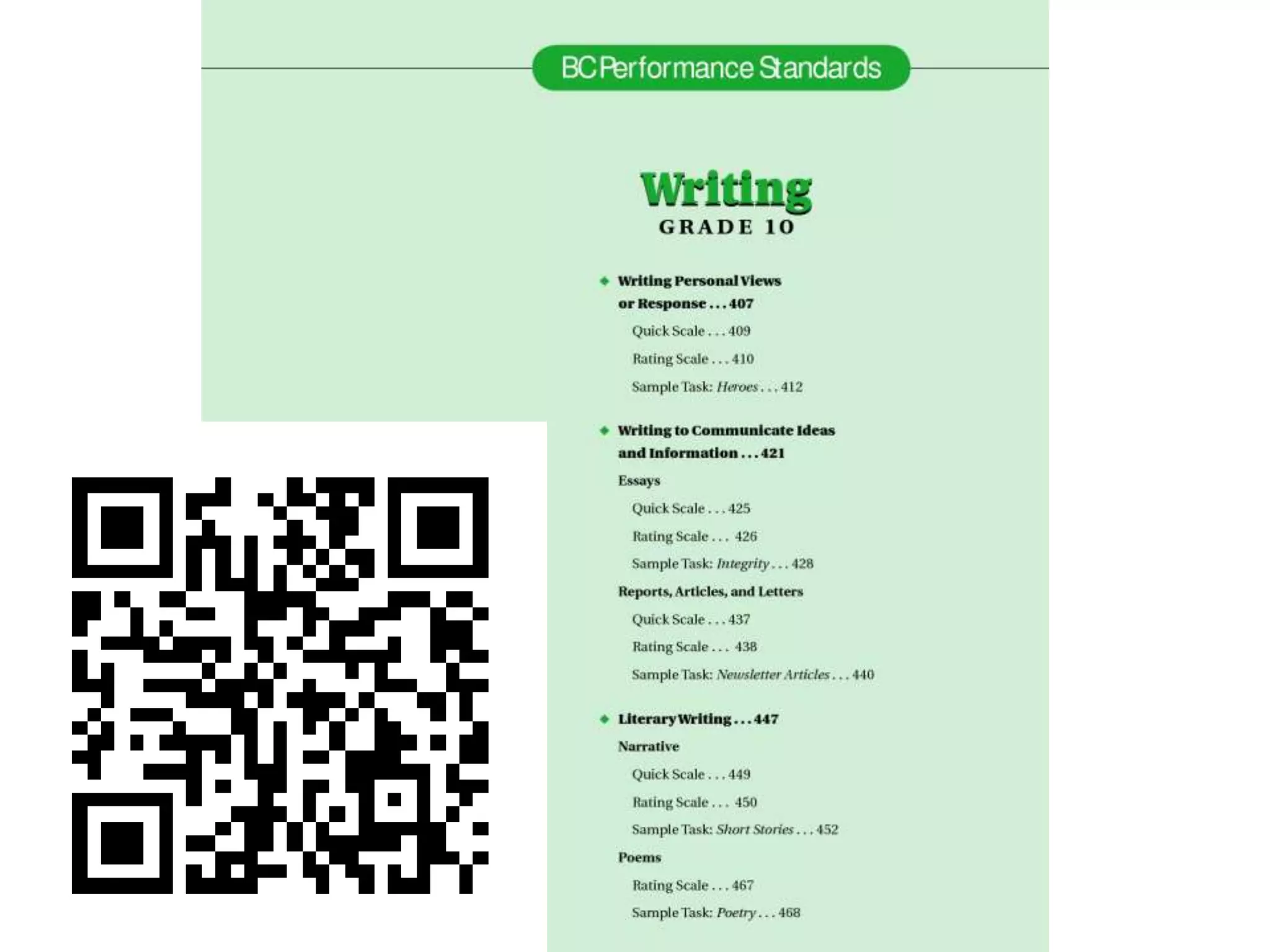
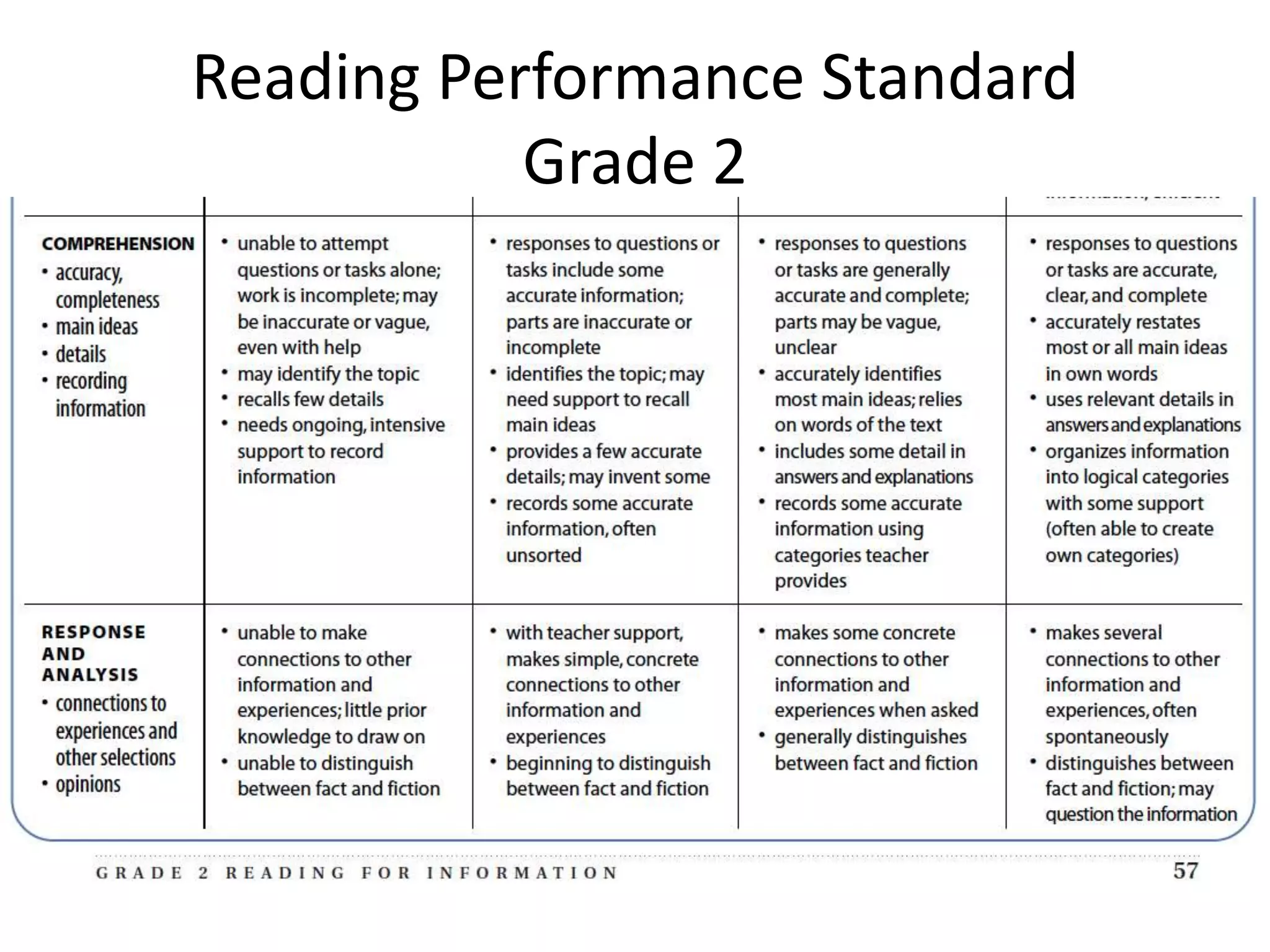
Reading Performance Standard
Grade 2
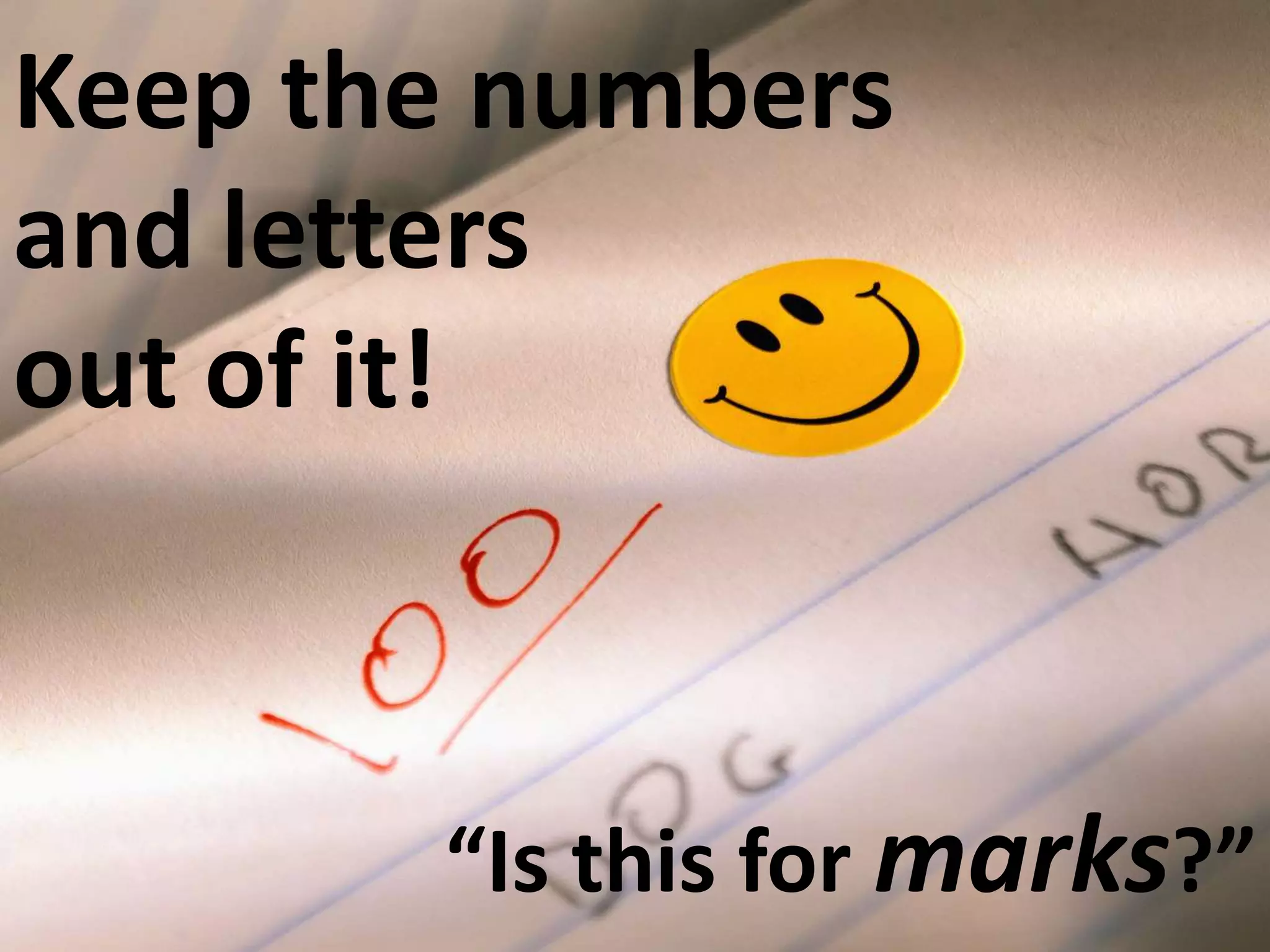
Keep the numbers
and letters
out of it!

“Is this for marks?”
Assessment should
Inform Instruction
Good planning
requires clear
thinking, captured
in a wellconstructed, precise,
written plan, and is
a prerequisite to the
art of effective
teaching.
Thinking is
fundamental
to planning.
“Covering”
Curriculum
Cover – to hide or
conceal
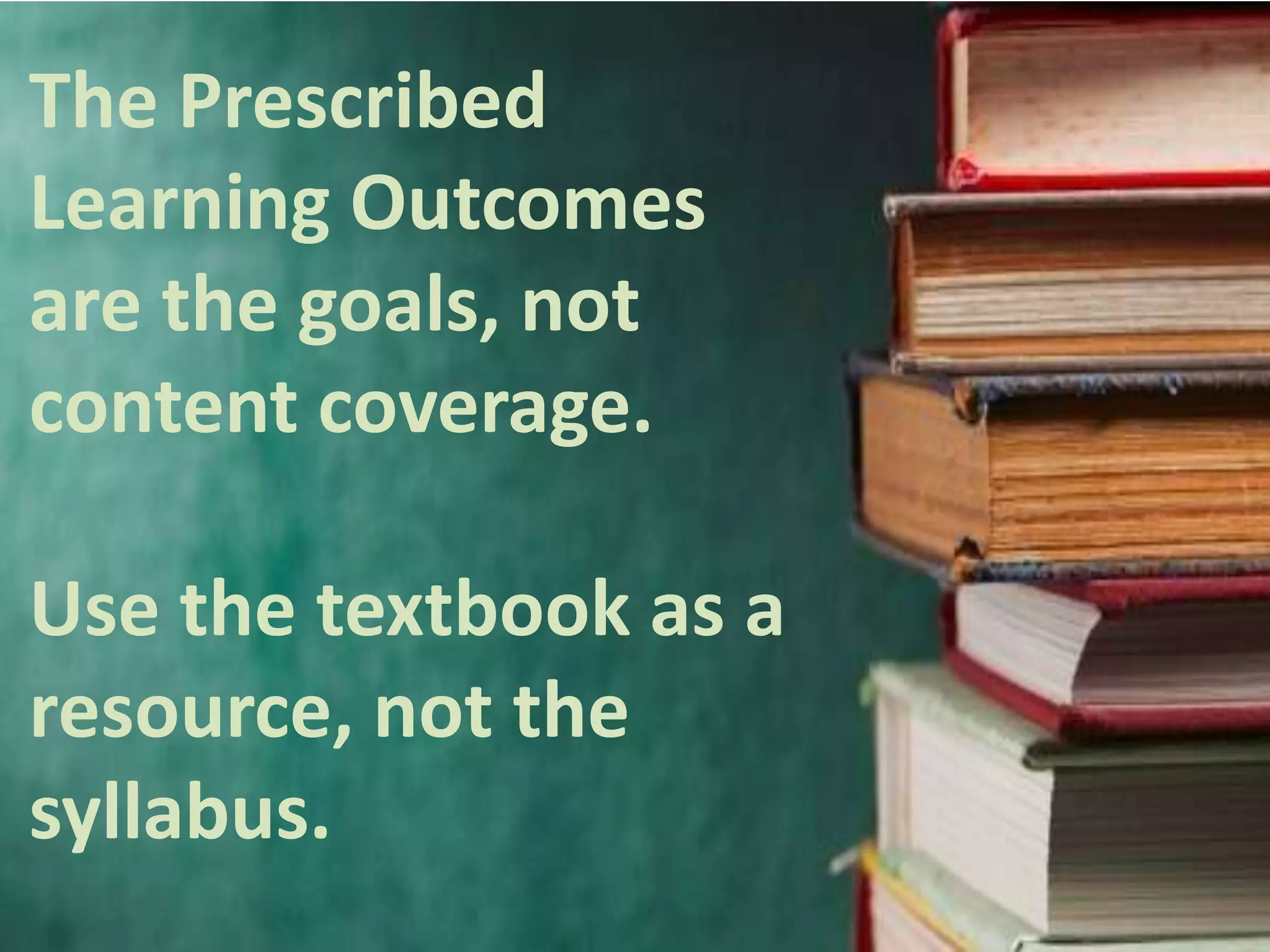
The Prescribed
Learning Outcomes
are the goals, not
content coverage.
Use the textbook as a
resource, not the
syllabus.
Approaches
1. AFL Strategies
2. Open-ended Strategies
3. Gradual Release of Responsibility
4. Co-operative Learning
5. Information / Literature Circles
6. Inquiry
Instructional Design

The Science of Learning
Instructional Design

90% of what we know about the brain we have
learned in approximately the last 2 years
Instructional Design

The same will be true 10 years from now
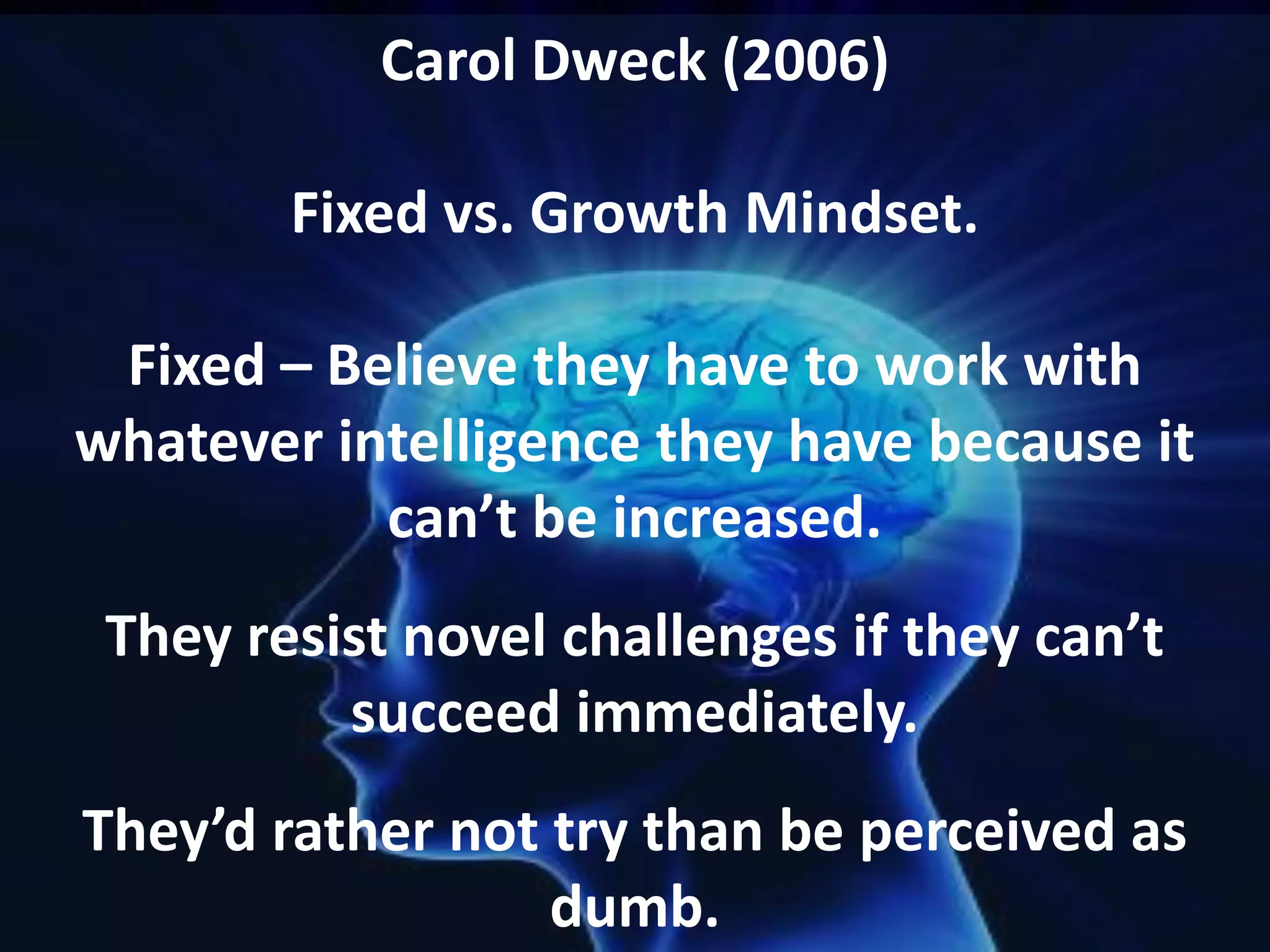
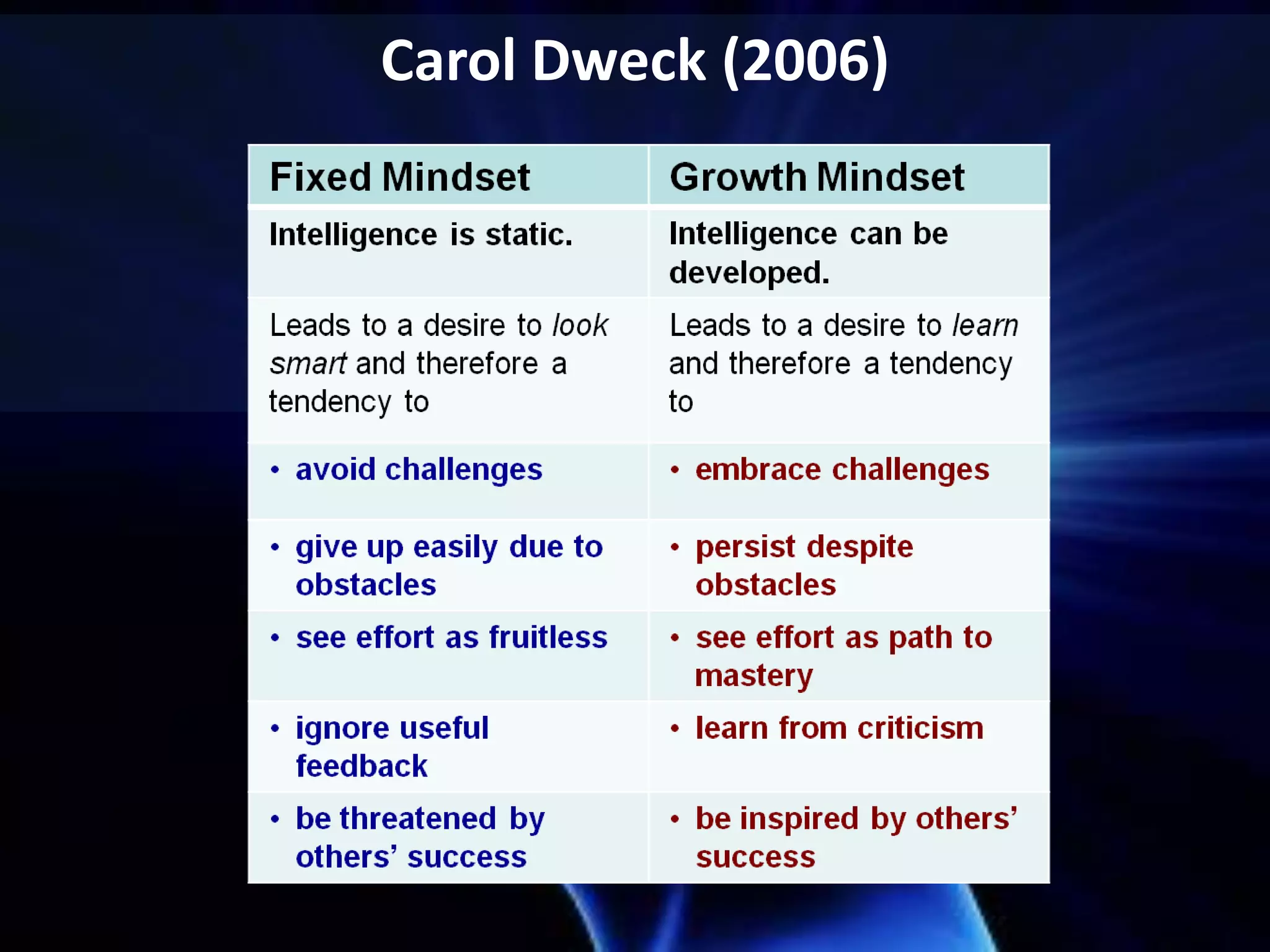
Carol Dweck (2006)
Fixed vs. Growth Mindset.
Fixed – Believe they have to work with
whatever intelligence they have because it
can’t be increased.

They resist novel challenges if they can’t
succeed immediately.
They’d rather not try than be perceived as
dumb.
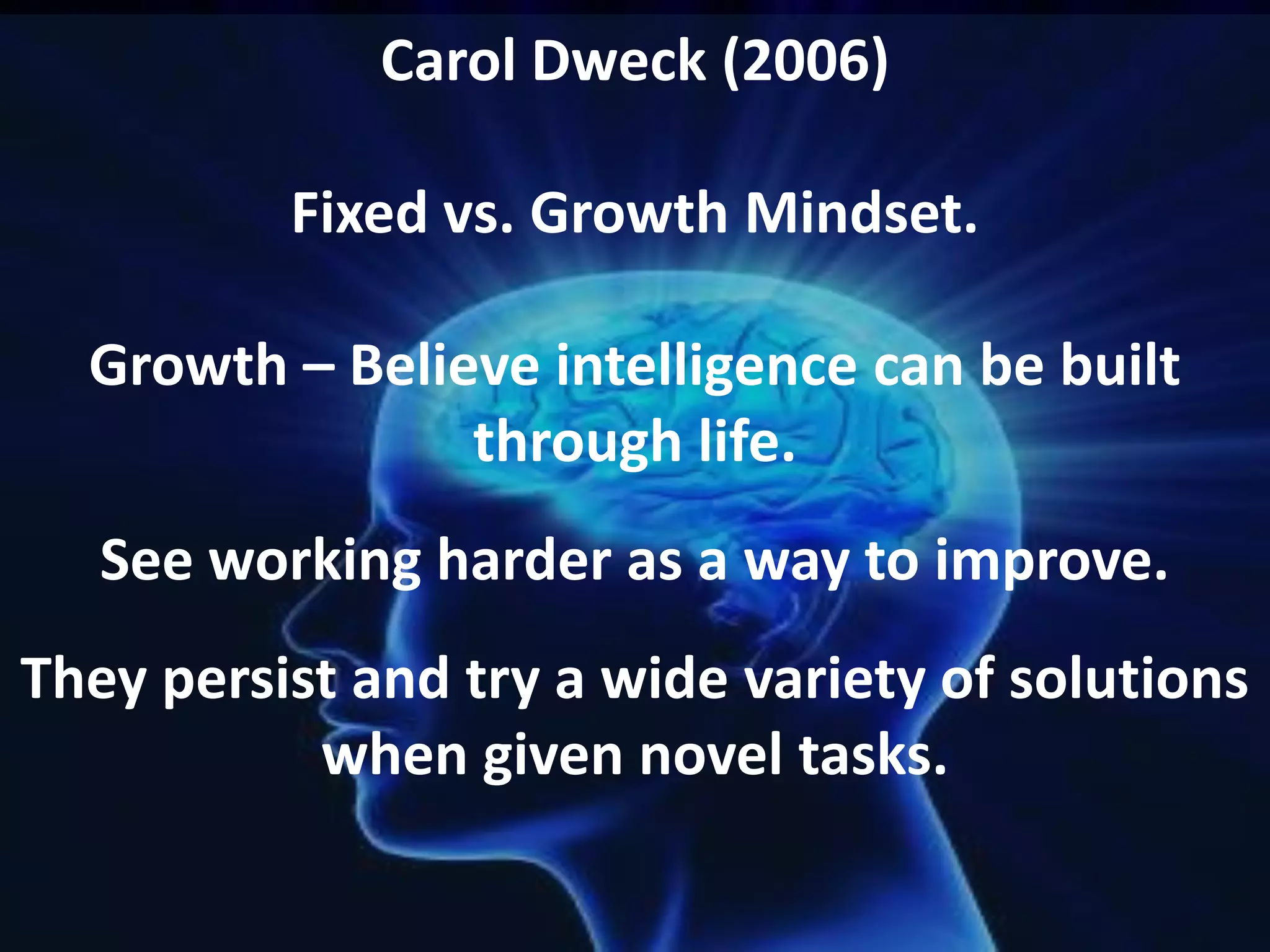
Carol Dweck (2006)
Fixed vs. Growth Mindset.
Growth – Believe intelligence can be built
through life.
See working harder as a way to improve.
They persist and try a wide variety of solutions
when given novel tasks.
Carol Dweck (2006)
Csikzentmihalyi (1990)

Flow Theory – The
exhilarating moments when
we feel in control, full of
purpose, and in the zone.
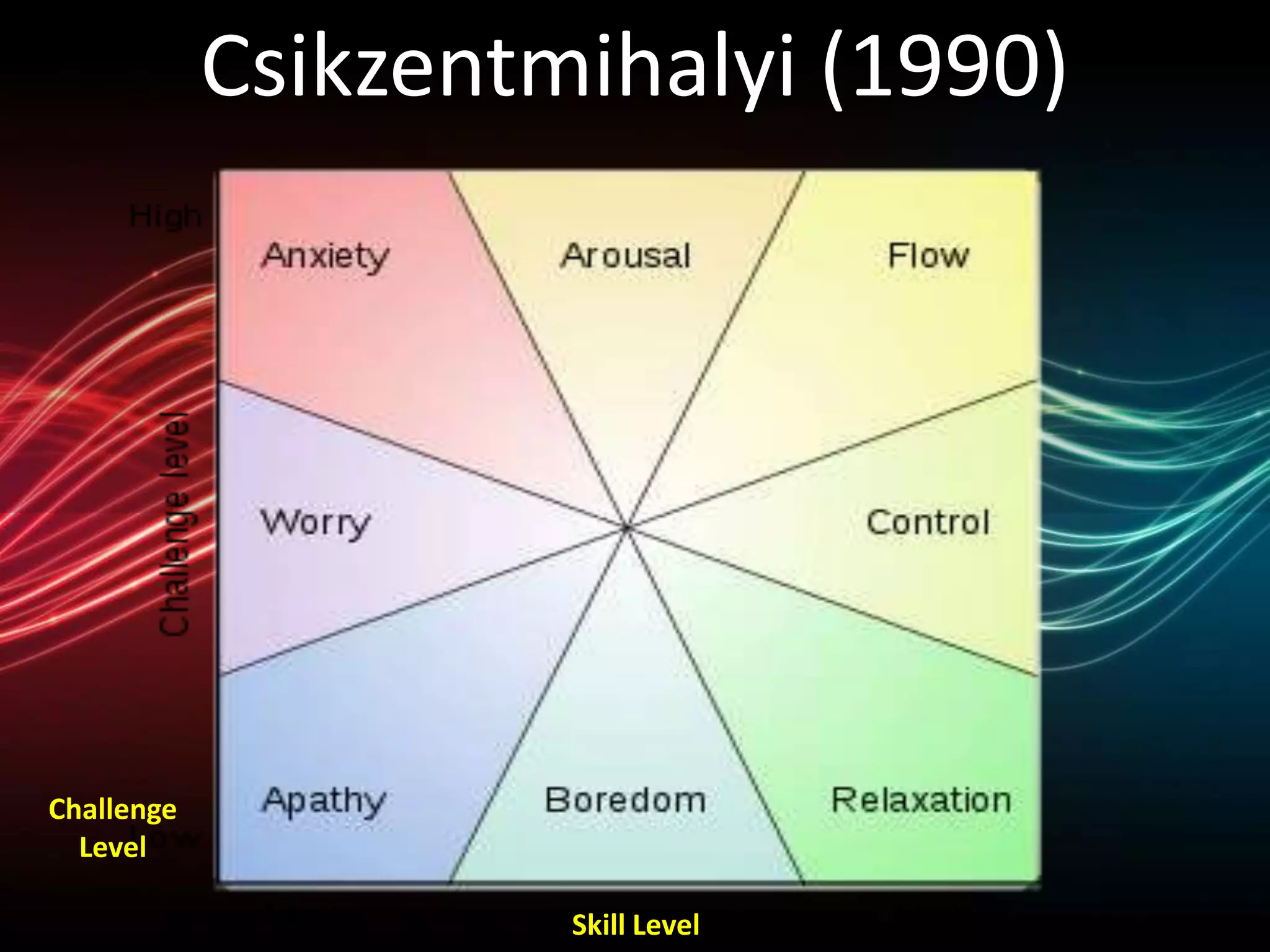
Csikzentmihalyi (1990)

Challenge
Level
Skill Level
Take 3!
How is the science
of learning
connected to
assessment?
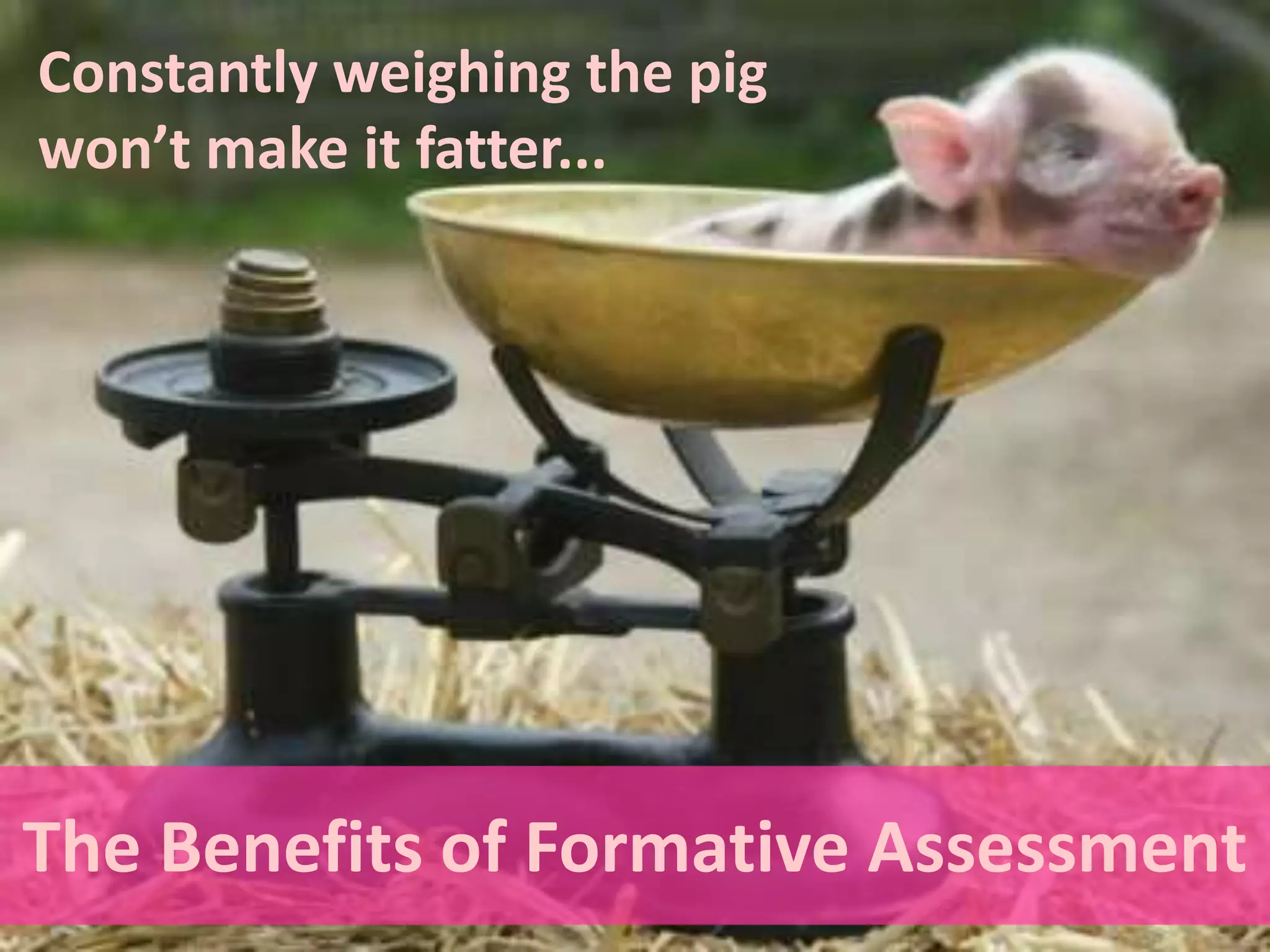
Constantly weighing the pig
won’t make it fatter...

The Benefits of Formative Assessment
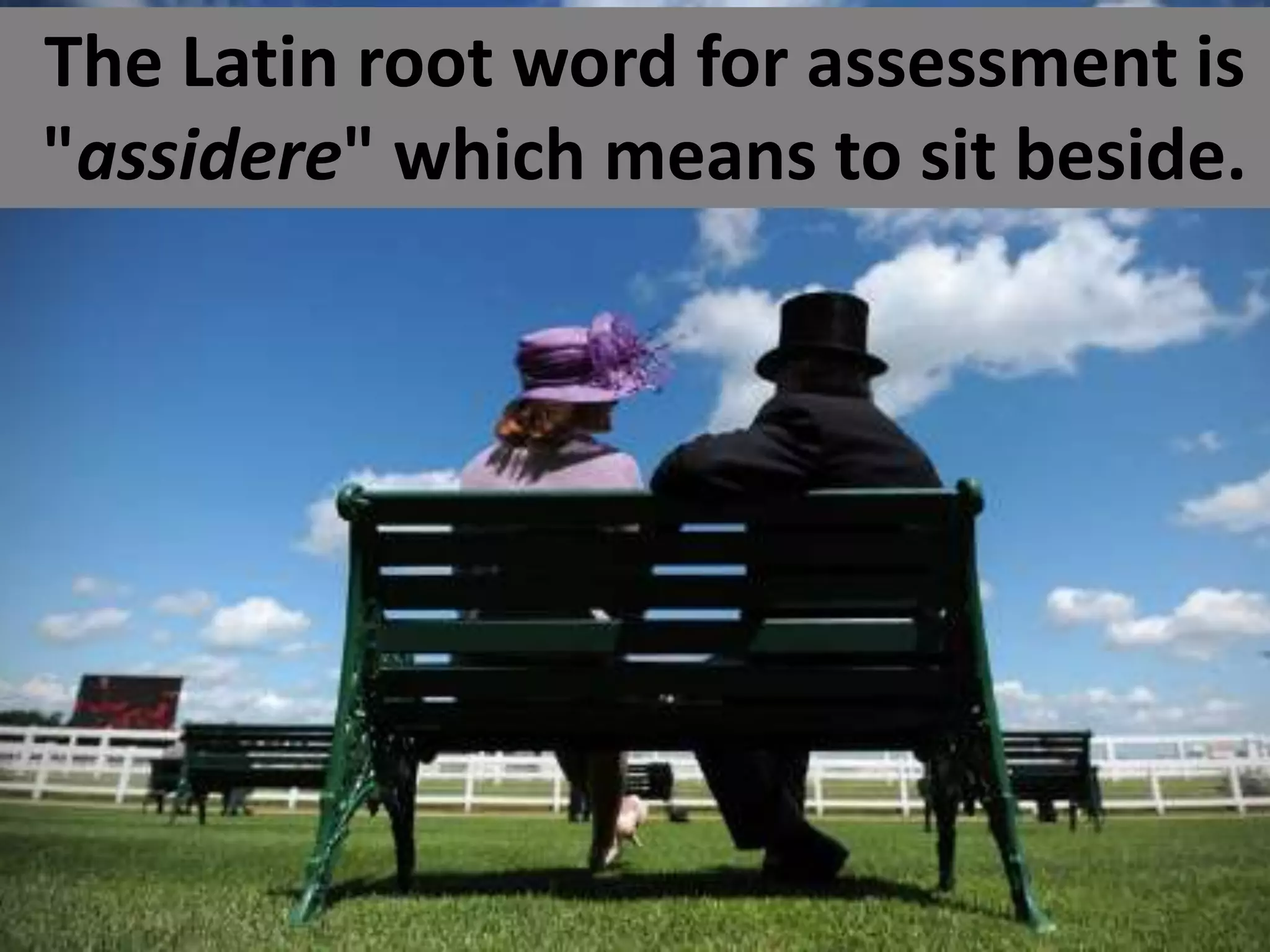
The Latin root word for assessment is
"assidere" which means to sit beside.
"We must constantly remind
ourselves that the ultimate
purpose of evaluation is to
have students become self
evaluating. If students
graduate from our schools
still dependent upon others
to tell them when they are
adequate, good, or
excellent, then we’ve
missed the whole point of
what education is about.”
- Costa and Kallick (1992)
You must use the research to support
your practice to avoid being a well
intentioned “Enthusiastic Amateur.”
- Fullan and Hargraeves “Professional Capital”
Teaching is not rocket science. It is, in
fact, far more complex and demanding
work than rocket science.

- Richard Elmore (Professor of Education Leadership at Harvard
Graduate School of Education)
Contact Information

Jonathan Vervaet
Email: jonathanvervaet@gmail.com
Twitter: @jonathanvervaet
Blog: jonathanvervaet.wordpress.com

Assessment that Informs Instruction

  • 1.
    Assessment that Informs Instruction Knowingmy students as thinkers, readers and writers… Presented by: Jonathan Vervaet @jonathanvervaet
  • 2.
    “Assessment is thebeginning and the end of my teaching. It defines my culture, my relationships, my learning community, my values, and my beliefs about teaching and learning.” - Matt Rosati
  • 3.
    How the worldsbest schools come out on top. 1.Get the right people to become teachers. 2.Develop them to be effective.* 3.Ensure the system is able to deliver the best possible instruction for every child. * Coaching classroom practice. • Move teacher training to the classroom. • Strong School Leaders • Teachers learn from each other – Professional Learning Communities (PLCs)
  • 4.
    Becoming Otherwise How dowe ensure the system is able to deliver the best possible instruction for every child?
  • 5.
    “If students havenot been told where they are going, it is unlikely that they will arrive.” – Shirley Clark
  • 6.
    Learning Intentions “I canfind evidence of current assessment research in my practice.”
  • 7.
    Learning Intentions “I canidentify ways to use assessment to inform my instructional decisions .”
  • 8.
    Learning Intentions “I canbecome curious about something in the research I want to inquire further into.”
  • 12.
    The Bridge Betweenthe Students and the Curriculum What is my content? Who are my students?
  • 13.
    The Bridge Betweenthe Students and the Curriculum Strategic teaching requires you to know your students.
  • 14.
    What are some waysyou can get to know your students both as learners and as people?
  • 15.
    Proficient Readers Research Successful readers –regardless of age – are active, purposeful, strategic, and metacognitive.
  • 16.
    Proficient Readers Research They construct meaningand learn from text by using cognitive strategies before, during, and after reading.
  • 17.
    “No matter what gradelevel you teach, no matter what content you teach, no matter what you teach with, your goal is to improve students’ comprehension and understanding.”
  • 18.
    “Student learning is enhanced whenteachers at all grades, teaching all subjects, see themselves as teachers of literacy.”
  • 19.
    Instructional Design The 8Cognitive Functions Good Readers Use
  • 20.
    1. Setting apurpose / Reading with purpose in mind 2. Activating background knowledge to enhance understanding 3. Monitoring comprehension and awareness of how to repair comprehension problems 4. Determining what’s important
  • 21.
    5. Making inferencesand drawing conclusions 6. Visualizing mental images 7. Synthesizing and accurately summarizing information 8. Making connections What is the most important cognitive reading function for students?
  • 22.
    Performance Based Reading Assessment -Curriculum based reading assessment, created around grade level expectations for proficient reading. - Reading literature, reading for information, reading poetry etc.
  • 23.
    Performance Based Reading Assessment It’sa snapshot of independent thoughtful reading. The intent is to see if students are independently and thoughtfully applying the skills and strategies required – at this particular grade level, in this particular subject.
  • 24.
    Helps teachers: - collectinformation about their students’ reading level and ability. - inform their teaching. Administered early in the school year or term. Examined to identify areas of strength and challenge.
  • 25.
    This is NOTFOR MARKS! Used to help target specific areas of instruction. Repeated to help teachers monitor the effectiveness of their instruction and adjust teaching plans.
  • 26.
    What does goodlook like? What does good look
  • 27.
  • 28.
    Descriptive Scoring – basedon performance standards
  • 30.
    Writing Performance Standard:Grade 8 Approaching Expectations The writing consists of loosely connected ideas and details; fragmented and difficult to follow. Meeting Expectations The writing presents some connected ideas; accomplishes the basic purpose or task. Often does not flow smoothly. Fully Meeting Expectations The writing is clear, detailed, and wellorganized; accomplishes the purpose or task; flows smoothly. MEANING • ideas and information • use of detail • generalizations or conclusions • purpose is unclear; writing is unfocused • inappropriate, trivial, or simplistic details • purpose is clear; may lose focus • some relevant examples and details • purpose is clear; focus is generally sustained • specific relevant examples, details FORM • introduction • organization • introduction does not clearly identify purpose • lacks organization; often one paragraph of loosely related details and examples • introduction states purpose; not engaging • related material is grouped together, but transitions and paragraphing are weak (reads like a list, leaving the reader to make connections) • introduction clearly establishes purpose; attempts to engage • individual paragraphs or sections are wellorganized; overall sequence and transitions may be ineffective in places SNAPSHOT Exceeding Expectations The writing is clear, complete, and focused; effectively accomplishes the purpose or task, and may engage the reader. • purpose and focus are effective and sustained • uses specific relevant examples and details to elaborate and clarify • introduction effectively establishes purpose; engages • effectively organized; paragraphs or sections are welldeveloped, logically sequenced, and joined by transitions Identifying your next steps… What is the one part of your writing that is easiest to fix for your next paragraph? What one part of your writing is holding you back the most?
  • 31.
  • 32.
    Keep the numbers andletters out of it! “Is this for marks?”
  • 34.
  • 35.
    Good planning requires clear thinking,captured in a wellconstructed, precise, written plan, and is a prerequisite to the art of effective teaching.
  • 36.
  • 37.
  • 38.
    Cover – tohide or conceal
  • 39.
    The Prescribed Learning Outcomes arethe goals, not content coverage. Use the textbook as a resource, not the syllabus.
  • 40.
    Approaches 1. AFL Strategies 2.Open-ended Strategies 3. Gradual Release of Responsibility 4. Co-operative Learning 5. Information / Literature Circles 6. Inquiry
  • 41.
  • 42.
    Instructional Design 90% ofwhat we know about the brain we have learned in approximately the last 2 years
  • 43.
    Instructional Design The samewill be true 10 years from now
  • 44.
    Carol Dweck (2006) Fixedvs. Growth Mindset. Fixed – Believe they have to work with whatever intelligence they have because it can’t be increased. They resist novel challenges if they can’t succeed immediately. They’d rather not try than be perceived as dumb.
  • 45.
    Carol Dweck (2006) Fixedvs. Growth Mindset. Growth – Believe intelligence can be built through life. See working harder as a way to improve. They persist and try a wide variety of solutions when given novel tasks.
  • 46.
  • 47.
    Csikzentmihalyi (1990) Flow Theory– The exhilarating moments when we feel in control, full of purpose, and in the zone.
  • 48.
  • 49.
    Take 3! How isthe science of learning connected to assessment?
  • 50.
    Constantly weighing thepig won’t make it fatter... The Benefits of Formative Assessment
  • 51.
    The Latin rootword for assessment is "assidere" which means to sit beside.
  • 52.
    "We must constantlyremind ourselves that the ultimate purpose of evaluation is to have students become self evaluating. If students graduate from our schools still dependent upon others to tell them when they are adequate, good, or excellent, then we’ve missed the whole point of what education is about.” - Costa and Kallick (1992)
  • 54.
    You must usethe research to support your practice to avoid being a well intentioned “Enthusiastic Amateur.” - Fullan and Hargraeves “Professional Capital”
  • 55.
    Teaching is notrocket science. It is, in fact, far more complex and demanding work than rocket science. - Richard Elmore (Professor of Education Leadership at Harvard Graduate School of Education)
  • 56.
    Contact Information Jonathan Vervaet Email:jonathanvervaet@gmail.com Twitter: @jonathanvervaet Blog: jonathanvervaet.wordpress.com

Editor's Notes

  • #6 JonathanLearning Intentions, Universal Designs for Learning, Backwards Design, Essential Questions, Enduring UnderstandingsWhatever way teachers choose to do it we are planning with the end mind.
  • #7 JonathanLearning Intentions, Universal Designs for Learning, Backwards Design, Essential Questions, Enduring UnderstandingsWhatever way teachers choose to do it we are planning with the end mind.
  • #8 JonathanLearning Intentions, Universal Designs for Learning, Backwards Design, Essential Questions, Enduring UnderstandingsWhatever way teachers choose to do it we are planning with the end mind.
  • #9 JonathanLearning Intentions, Universal Designs for Learning, Backwards Design, Essential Questions, Enduring UnderstandingsWhatever way teachers choose to do it we are planning with the end mind.
  • #16 BK – Junior Program at Grade 9 will assume certain skills etc that are continuing to be developed from grade 8.
  • #17 BK – Junior Program at Grade 9 will assume certain skills etc that are continuing to be developed from grade 8.
  • #18 Reading comprehension = Thinking
  • #33 My students haven’t seen a number yet.
  • #51 Practice with out penalty.Descriptive feedback related to agreed upon criteria / performance standards.Raises level of student attainment, and helps struggling students the most.