CLASSROOM
ASSESSMENTS
Performance-Based Strategies
PERFORMANCE-BASED
ASSESSMENT
Performance Assessment
(Authentic Performance Assessment)
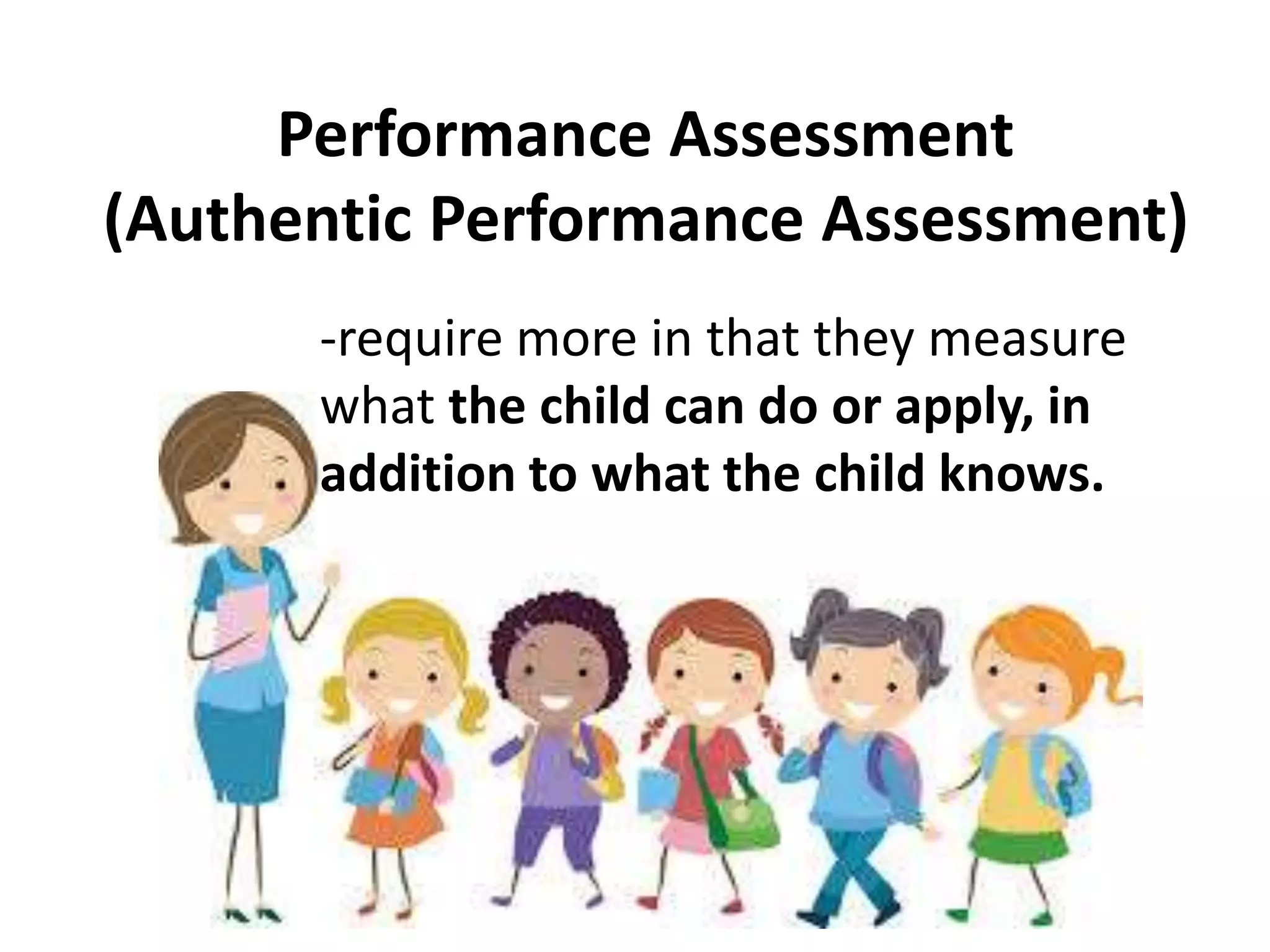
-require more in that they measure
what the child can do or apply, in
addition to what the child knows.
STANDARDS AND
PERFORMANCE-BASED
ASSESSMENT
Authentic Learning
and
Authentic AssessmentAuthentic Learning
and
Authentic Assessment
Purposes for
Performance-Based
Assessment
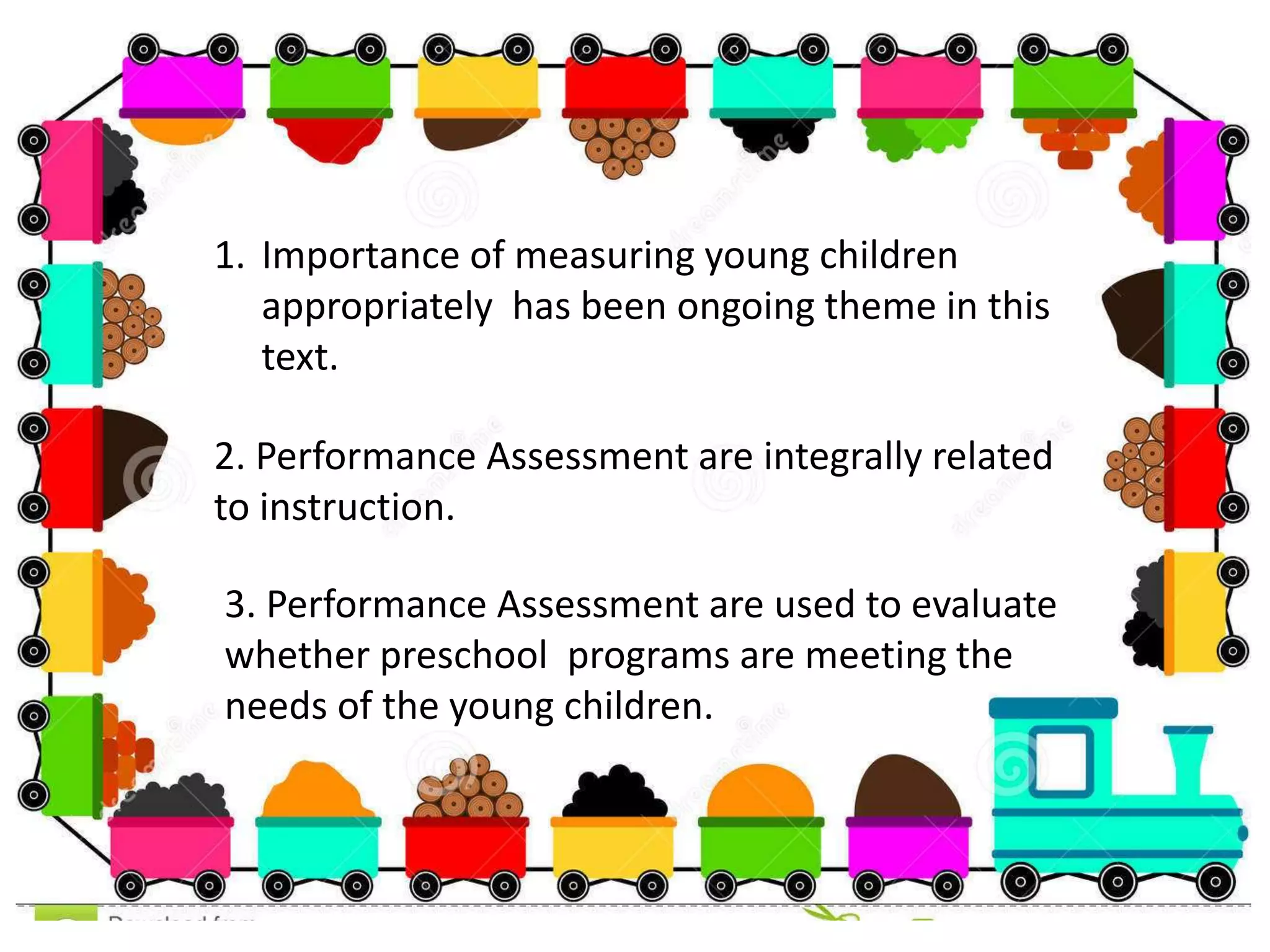
1. Importance of measuring young children
appropriately has been ongoing theme in this
text.
2. Performance Assessment are integrally related
to instruction.
3. Performance Assessment are used to evaluate
whether preschool programs are meeting the
needs of the young children.
Types of
Performance-Based
Assessment
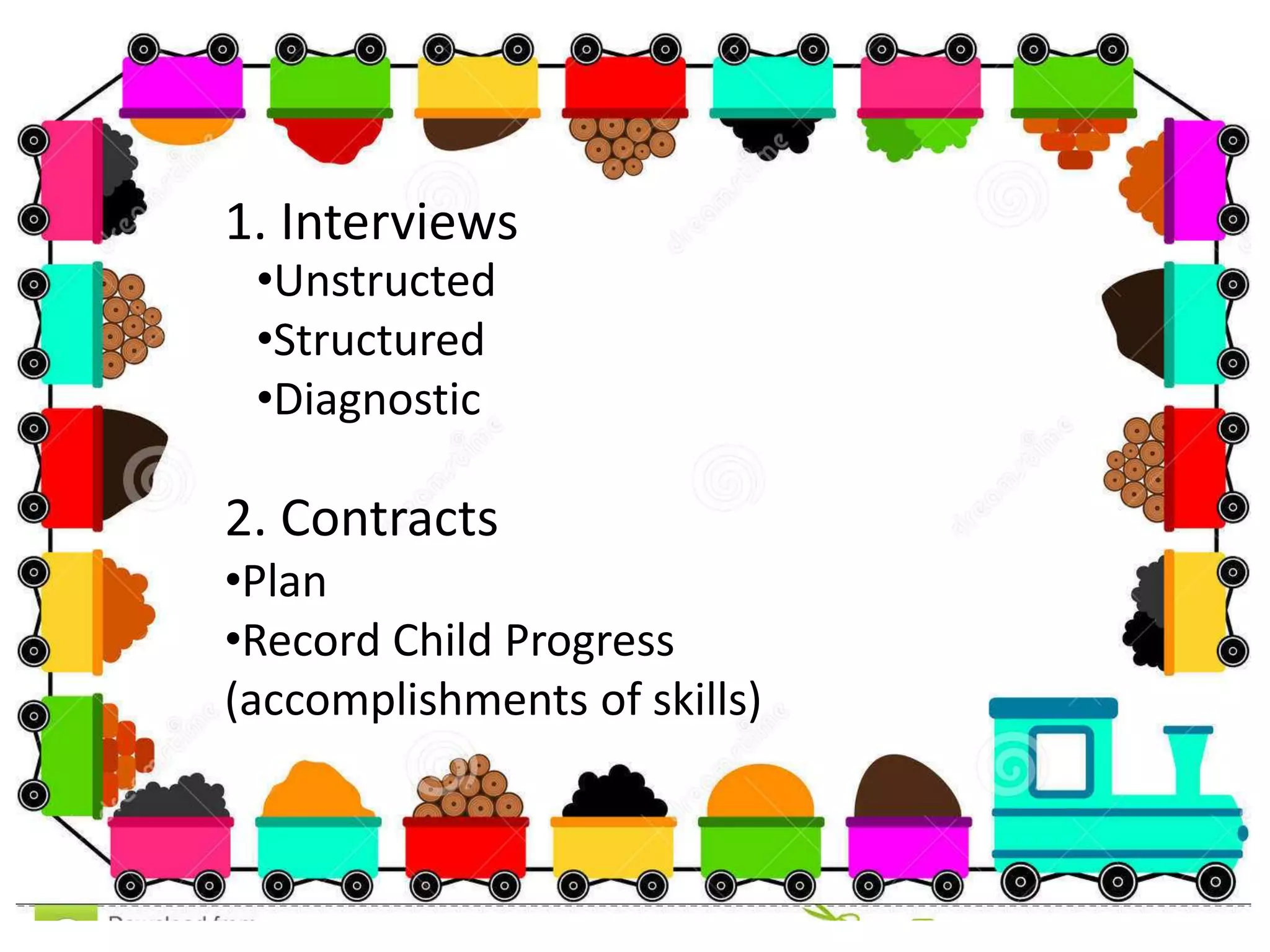
1. Interviews
•Unstructed
•Structured
•Diagnostic
2. Contracts
•Plan
•Record Child Progress
(accomplishments of skills)
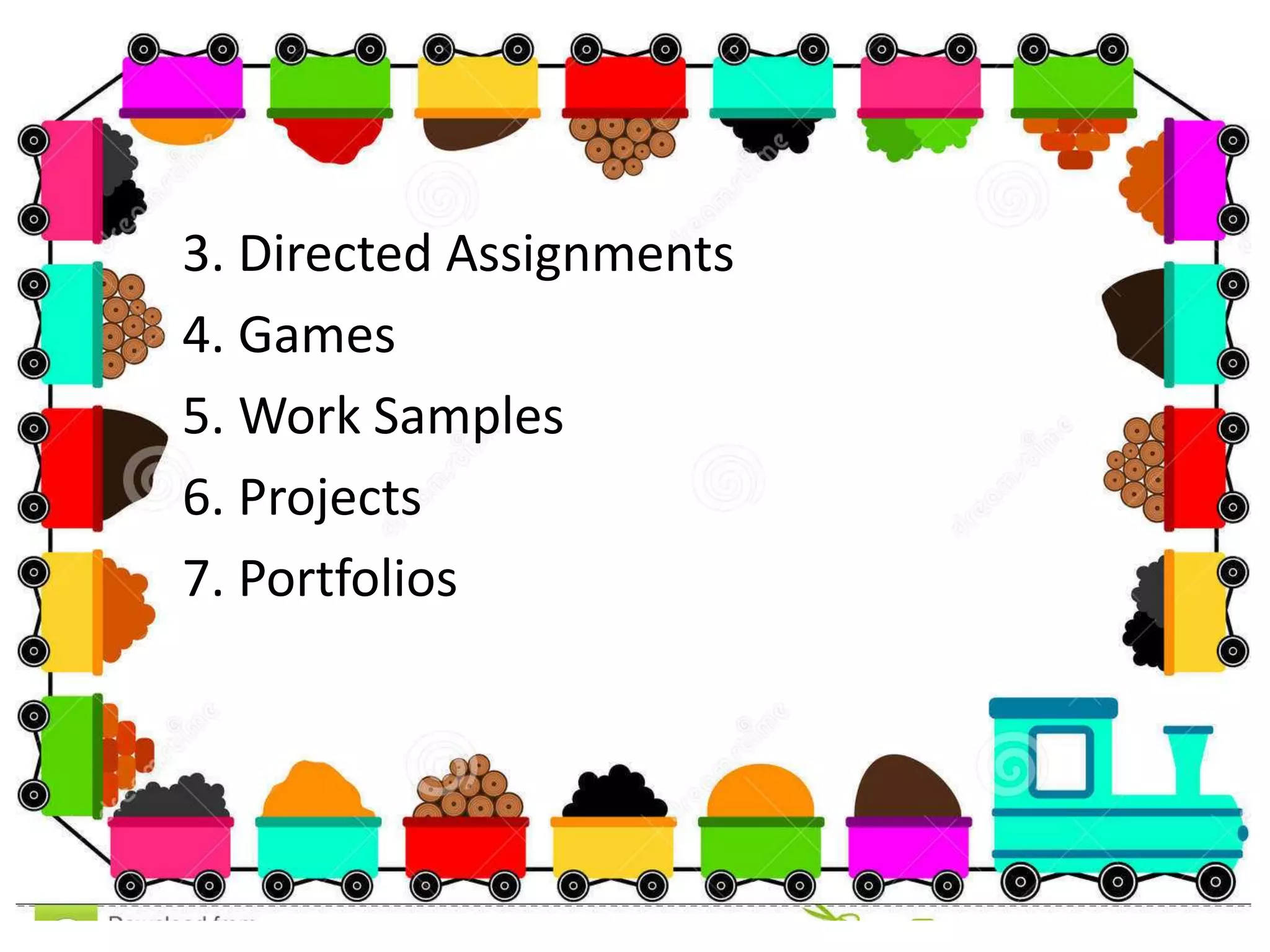
3. Directed Assignments
4. Games
5. Work Samples
6. Projects
7. Portfolios
Understanding the
Interrelated Nature
of Performance
Assessments
The Role of the
Teacher
The Teacher’s Role and Responsibilities:
1. To integrate instruction and assessment fully in
planning and carrying out the program
2. To use knowledge of young children to choose or
design assessment processes
3. To analyze the results to find their meaning for the
program and the children
4. To apply what has been learned to planning next
steps and improving the program
5. To communicate with parents and involve them in
an exchange of information about their child’s
learning and development.
Early Childhood Educators must be aware of the
following:
•Address yourself to the personal and unique attributes
of the children in your care
•Learn to listen, diagnose, examine, hypothesize,
intervene, evaluate, and then reflect and redesign
•Try to create a relationship of trust with children
Classification and
Organization of
Performance Assessments
Can be categorized as:
•Unstructured Performance Assessments
-Part of regular classroom learning activities
•Structured Performance Assessments
-Critical thinking
•Direct Performance Measures
-Use knowledge
•Indirect Performance Measures
•The Role of Observation
•The Role of
Documentation
•The Role of Rubrics
The Role of Observation
Following components be determined
prior to conducting the observation:
•Purpose
•Focus
•Record/Documentation
•Use of the Observation
The Role of Documentation
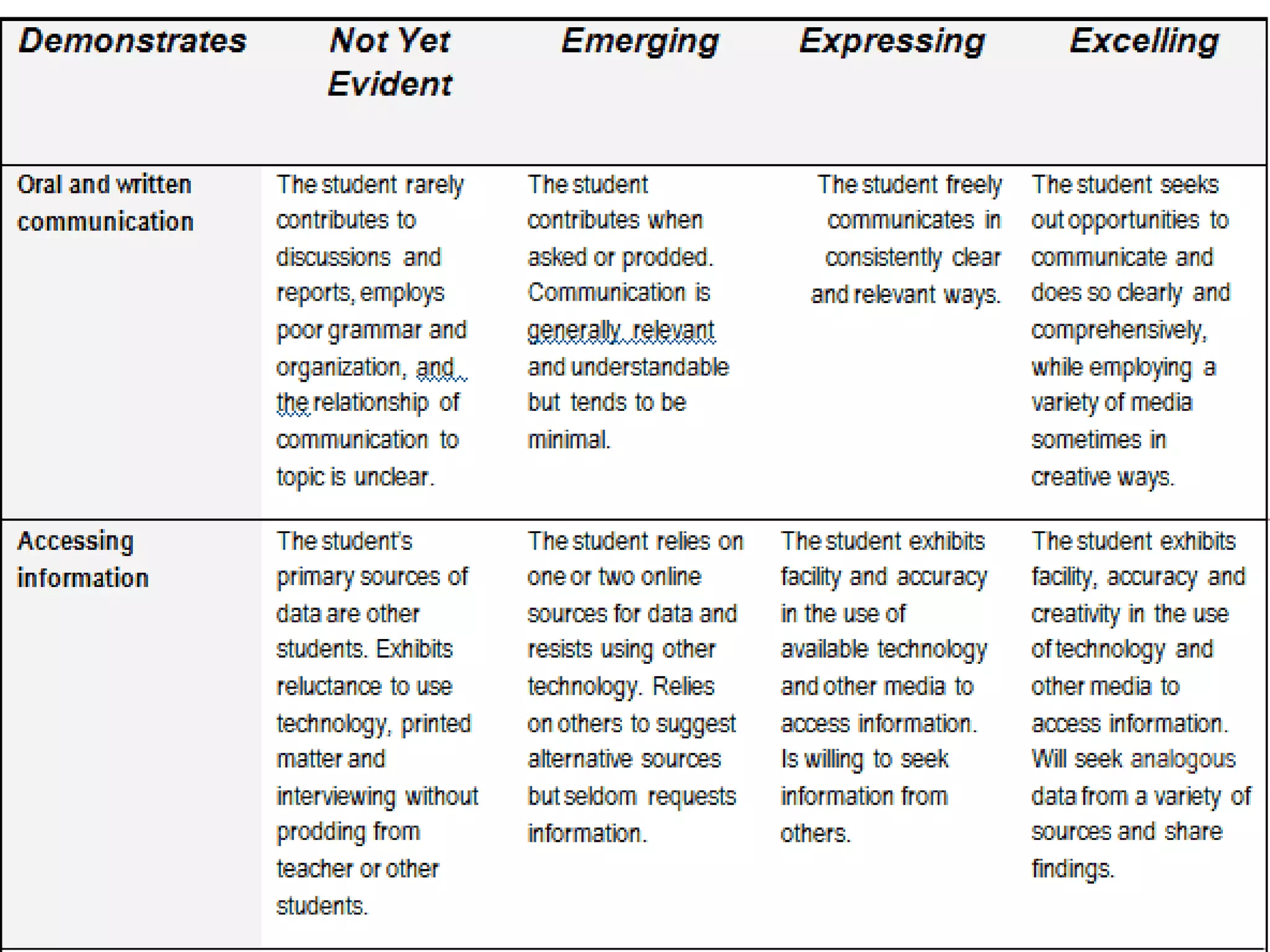
The Role of Rubrics
Advantages and
Disadvantages of Using
Performance-Based
Assessments
Advantages
1. Conducted in the context of what children are
experiencing, rather than in isolation from
classroom curriculum
2. Take advantage of the premise that children
conduct their own understanding
3. Provide a variety of means hereby the child can
demonstrate what he or she understand.
4. It is continues or ongoing
5. Provide meaningful information for
parents to understand their child’s process
and accomplishments
Disadvantages
1 . Time consuming
2. Authentic Assessment can be more
complex than more traditional types of
assessments
3. More traditional forms of assessment
have the goal of evaluating the child’s
achievements
4. There are also concerns about the
validity and relativity of performance
assessments
5. Parental involvement and education
are a requirement when implementing
performance-based evaluation
THANK YOU

Classroom Assessment: Performance-Based strategies