Aligning Projects to Strategy During Economic Uncertainty
1.
Aligning Projects toStrategy During
Economic Uncertainty: The PMO’s
Role in Doing More with Less
Scott Daley
Senior Director, Strategic Accounts
2.
Maximizing the Valueof the PMO When the
Chips are Down
Presenting Investments in their Best Light
Presentation Structure:
1. Introducing OnePlan
2. Clarifying Common Key Considerations
3. Demonstrating how our Clients use OnePlan to
Highlight the Value of the PMO
4. Conclusion
Welcome & Objective
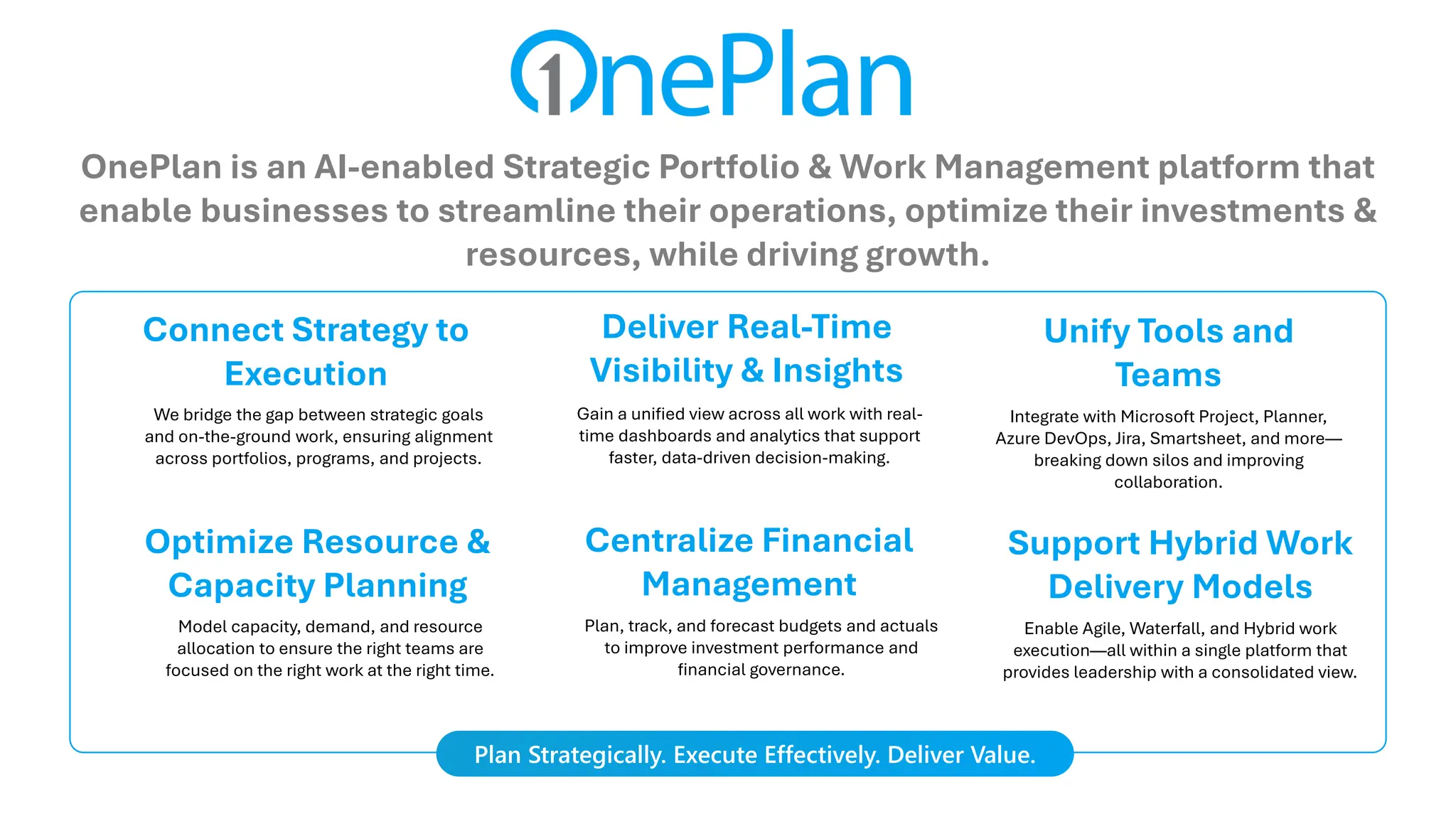
OnePlan is anAI-enabled Strategic Portfolio & Work Management platform that
enable businesses to streamline their operations, optimize their investments &
resources, while driving growth.
Connect Strategy to
Execution
We bridge the gap between strategic goals
and on-the-ground work, ensuring alignment
across portfolios, programs, and projects.
Deliver Real-Time
Visibility & Insights
Gain a unified view across all work with real-
time dashboards and analytics that support
faster, data-driven decision-making.
Unify Tools and
Teams
Integrate with Microsoft Project, Planner,
Azure DevOps, Jira, Smartsheet, and more—
breaking down silos and improving
collaboration.
Optimize Resource &
Capacity Planning
Model capacity, demand, and resource
allocation to ensure the right teams are
focused on the right work at the right time.
Centralize Financial
Management
Plan, track, and forecast budgets and actuals
to improve investment performance and
financial governance.
Support Hybrid Work
Delivery Models
Enable Agile, Waterfall, and Hybrid work
execution—all within a single platform that
provides leadership with a consolidated view.
Plan Strategically. Execute Effectively. Deliver Value.
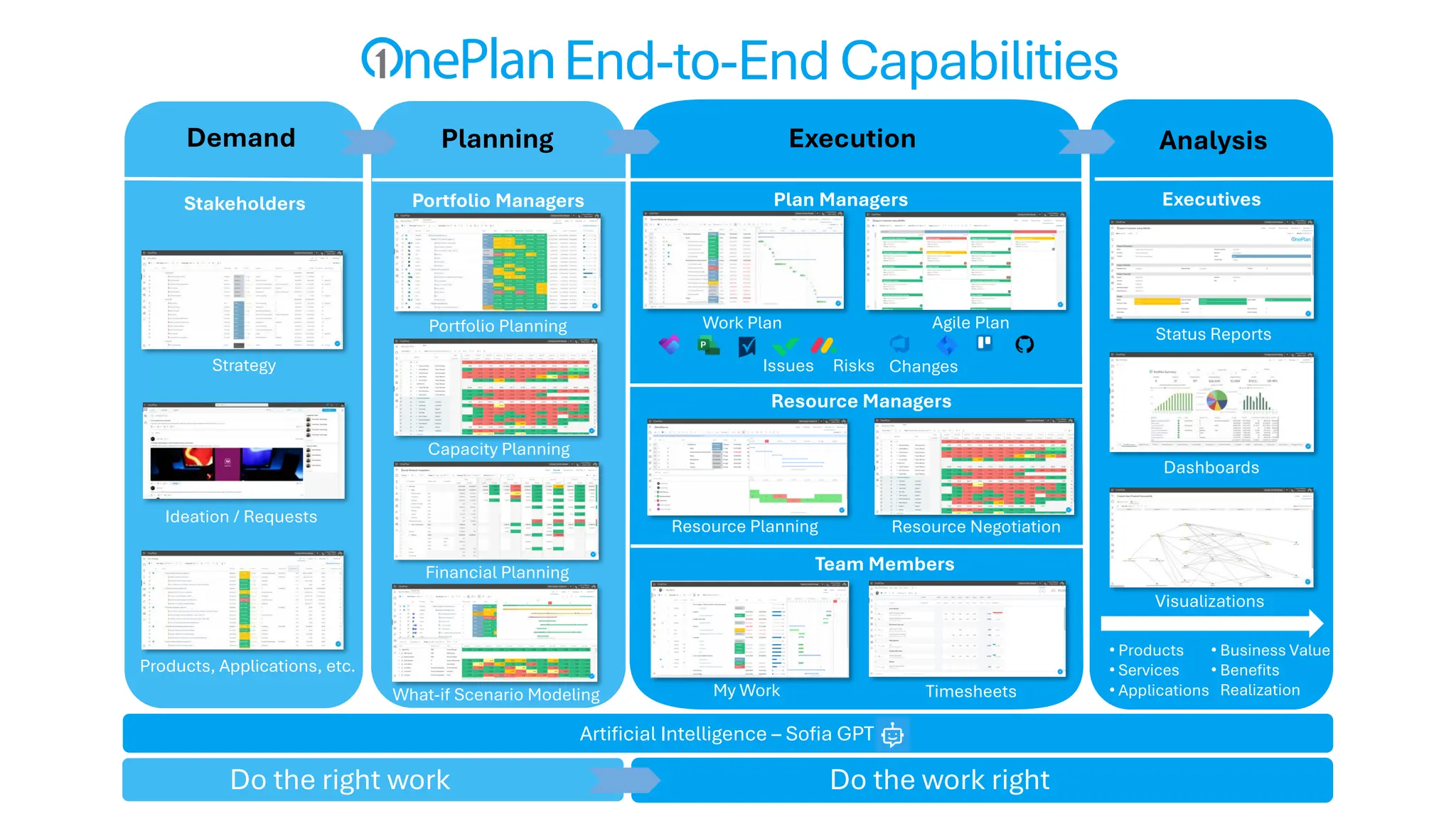
Portfolio Managers
Resource Planning
FinancialPlanning
Work Plan
Visualizations
Dashboards
Status Reports
Plan Managers
Agile Plan
Ideation / Requests
Artificial Intelligence – Sofia GPT
Demand
Timesheets
My Work
Stakeholders
Team Members
Executives
Portfolio Planning
Planning
Do the right work Do the work right
Resource Negotiation
Resource Managers
Products, Applications, etc.
Execution Analysis
What-if Scenario Modeling
• Products
• Services
• Applications
Capacity Planning
Issues Risks Changes
• Business Value
• Benefits
Realization
Strategy
End-to-EndCapabilities
7.
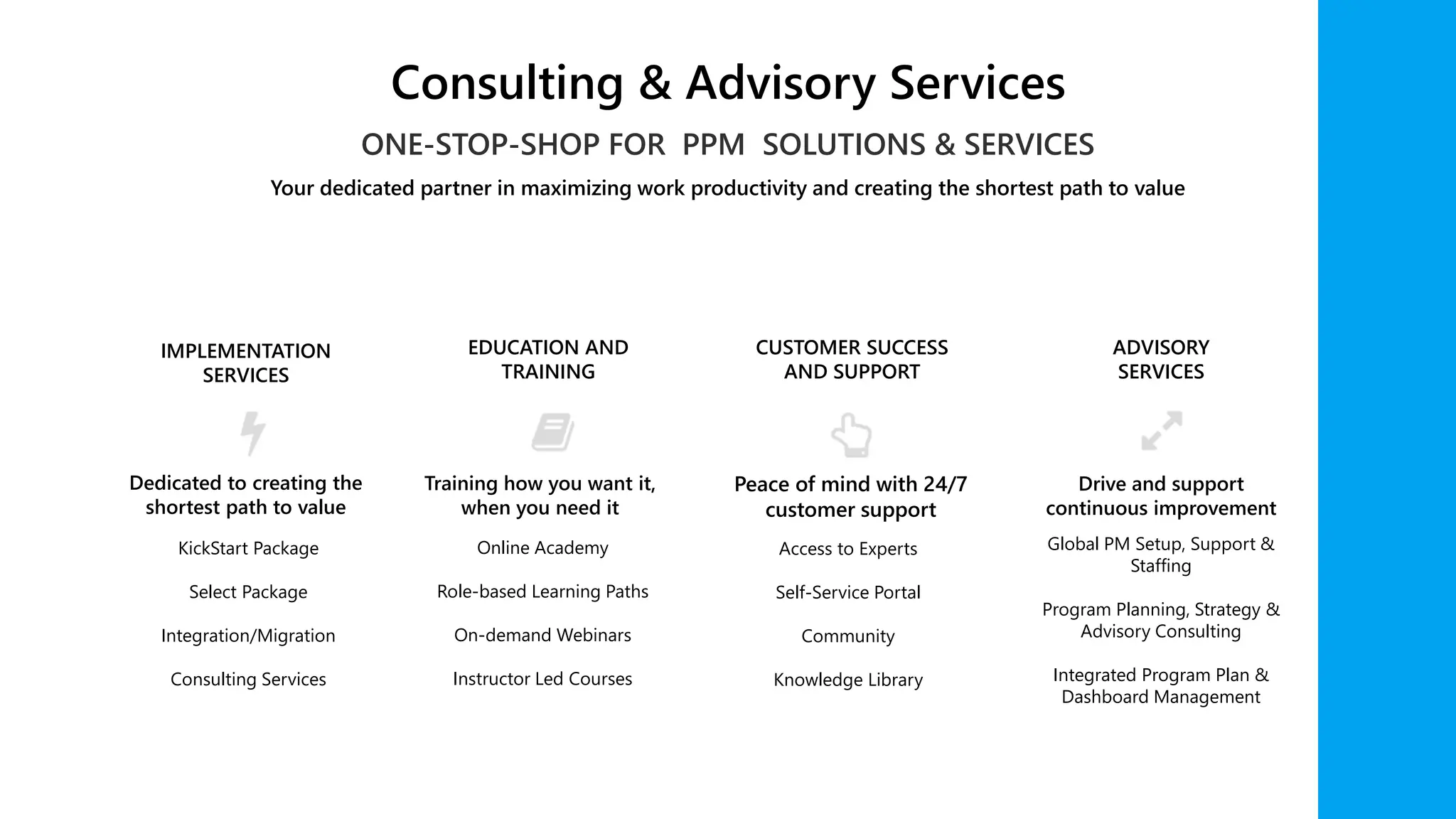
ONE-STOP-SHOP FOR PPMSOLUTIONS & SERVICES
Consulting & Advisory Services
IMPLEMENTATION
SERVICES
EDUCATION AND
TRAINING
CUSTOMER SUCCESS
AND SUPPORT
ADVISORY
SERVICES
Dedicated to creating the
shortest path to value
Training how you want it,
when you need it
Peace of mind with 24/7
customer support
Drive and support
continuous improvement
KickStart Package
Select Package
Integration/Migration
Consulting Services
Online Academy
Role-based Learning Paths
On-demand Webinars
Instructor Led Courses
Access to Experts
Self-Service Portal
Community
Knowledge Library
Global PM Setup, Support &
Staffing
Program Planning, Strategy &
Advisory Consulting
Integrated Program Plan &
Dashboard Management
Your dedicated partner in maximizing work productivity and creating the shortest path to value
8.
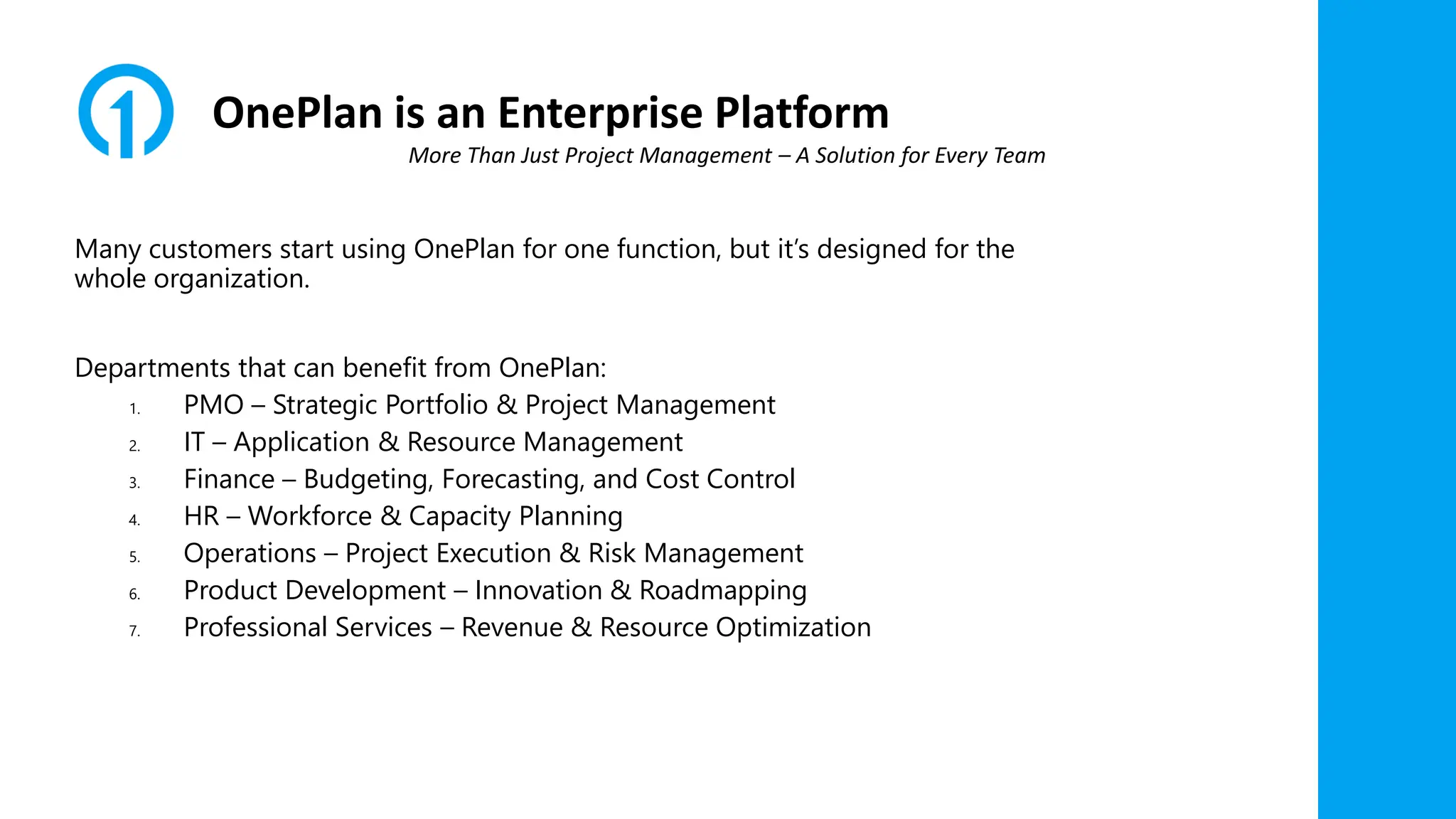
OnePlan is anEnterprise Platform
Many customers start using OnePlan for one function, but it’s designed for the
whole organization.
Departments that can benefit from OnePlan:
1. PMO – Strategic Portfolio & Project Management
2. IT – Application & Resource Management
3. Finance – Budgeting, Forecasting, and Cost Control
4. HR – Workforce & Capacity Planning
5. Operations – Project Execution & Risk Management
6. Product Development – Innovation & Roadmapping
7. Professional Services – Revenue & Resource Optimization
More Than Just Project Management – A Solution for Every Team
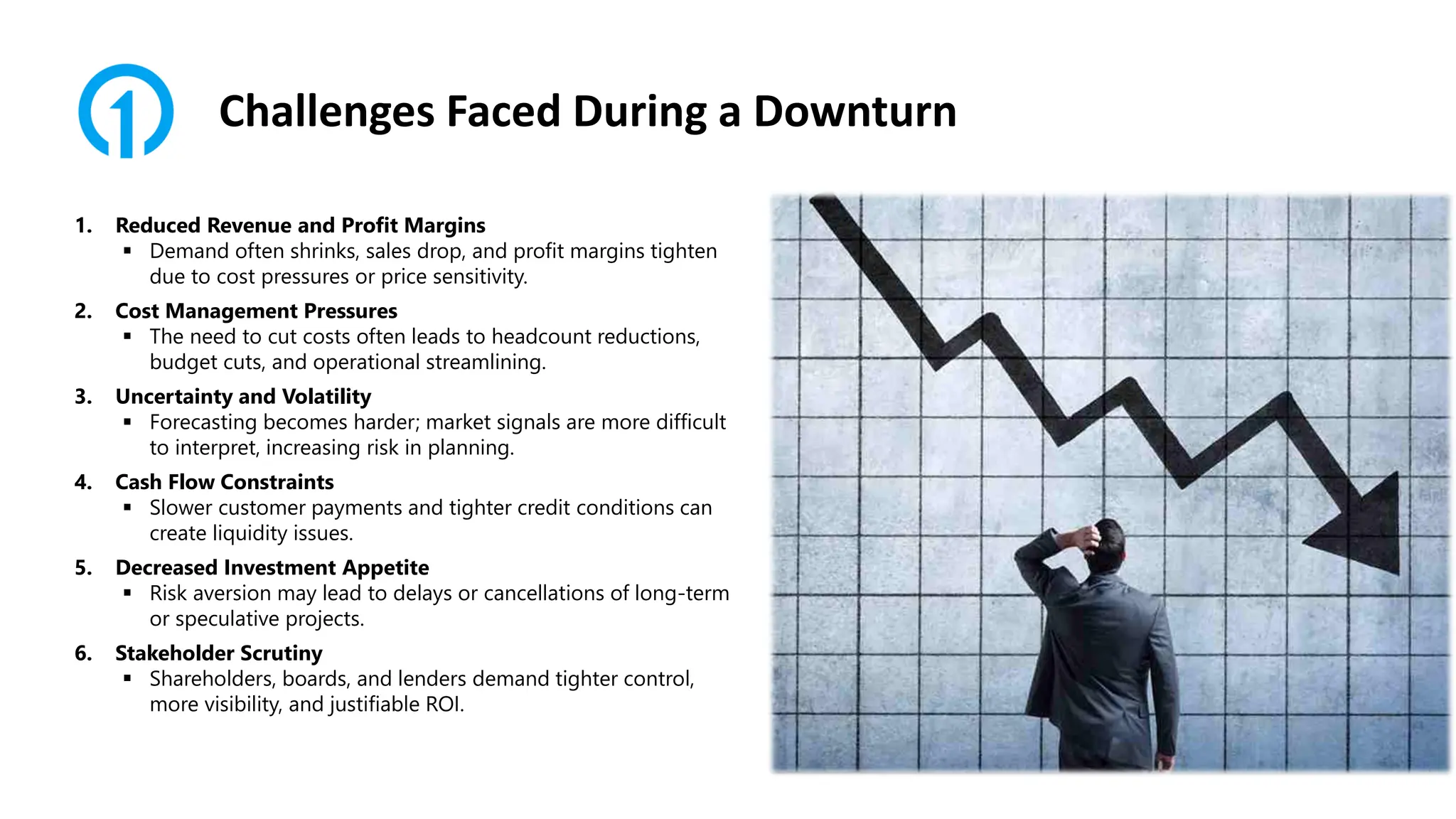
Challenges Faced Duringa Downturn
1. Reduced Revenue and Profit Margins
▪ Demand often shrinks, sales drop, and profit margins tighten
due to cost pressures or price sensitivity.
2. Cost Management Pressures
▪ The need to cut costs often leads to headcount reductions,
budget cuts, and operational streamlining.
3. Uncertainty and Volatility
▪ Forecasting becomes harder; market signals are more difficult
to interpret, increasing risk in planning.
4. Cash Flow Constraints
▪ Slower customer payments and tighter credit conditions can
create liquidity issues.
5. Decreased Investment Appetite
▪ Risk aversion may lead to delays or cancellations of long-term
or speculative projects.
6. Stakeholder Scrutiny
▪ Shareholders, boards, and lenders demand tighter control,
more visibility, and justifiable ROI.
11.
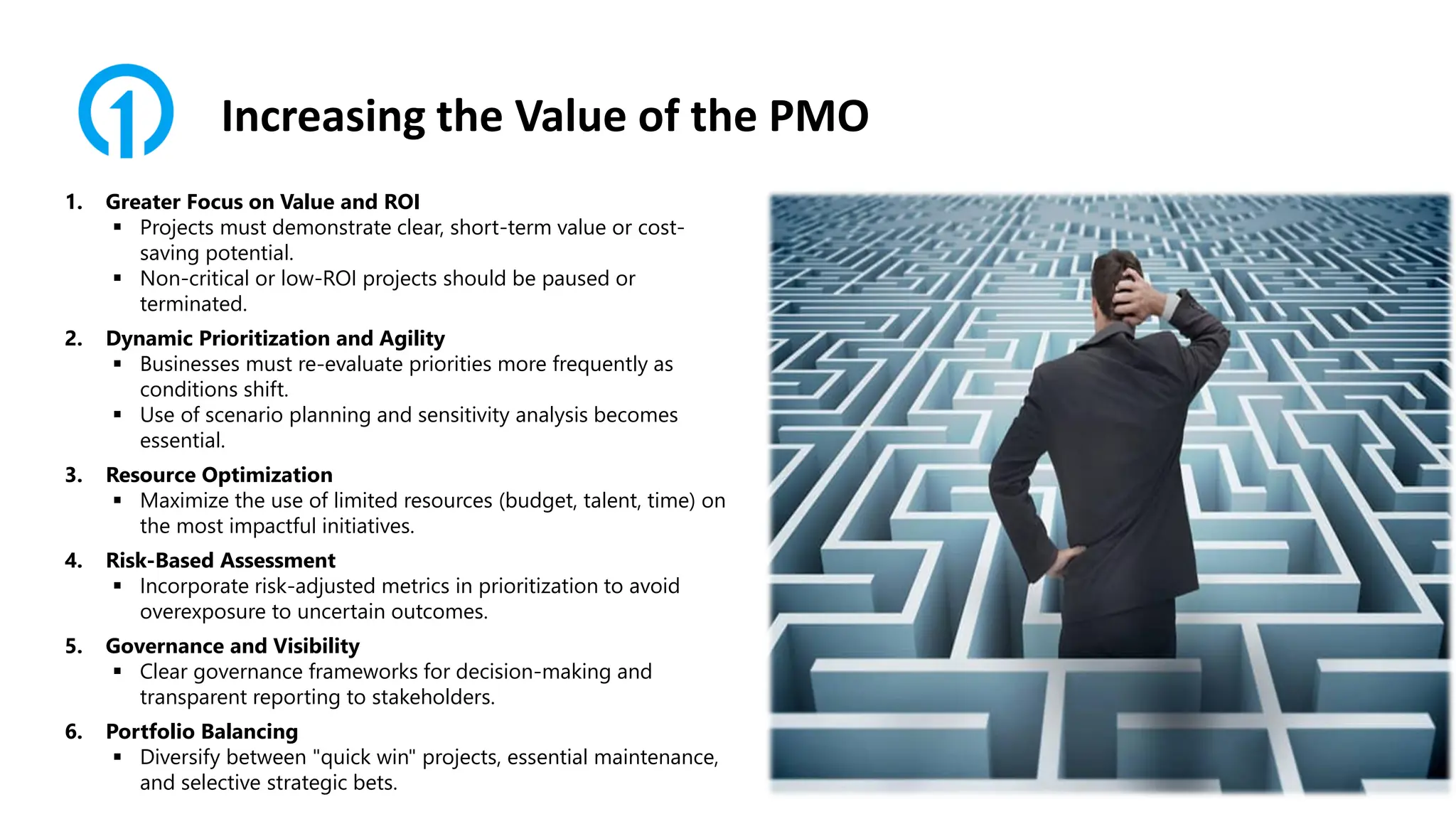
Increasing the Valueof the PMO
1. Greater Focus on Value and ROI
▪ Projects must demonstrate clear, short-term value or cost-
saving potential.
▪ Non-critical or low-ROI projects should be paused or
terminated.
2. Dynamic Prioritization and Agility
▪ Businesses must re-evaluate priorities more frequently as
conditions shift.
▪ Use of scenario planning and sensitivity analysis becomes
essential.
3. Resource Optimization
▪ Maximize the use of limited resources (budget, talent, time) on
the most impactful initiatives.
4. Risk-Based Assessment
▪ Incorporate risk-adjusted metrics in prioritization to avoid
overexposure to uncertain outcomes.
5. Governance and Visibility
▪ Clear governance frameworks for decision-making and
transparent reporting to stakeholders.
6. Portfolio Balancing
▪ Diversify between "quick win" projects, essential maintenance,
and selective strategic bets.
12.
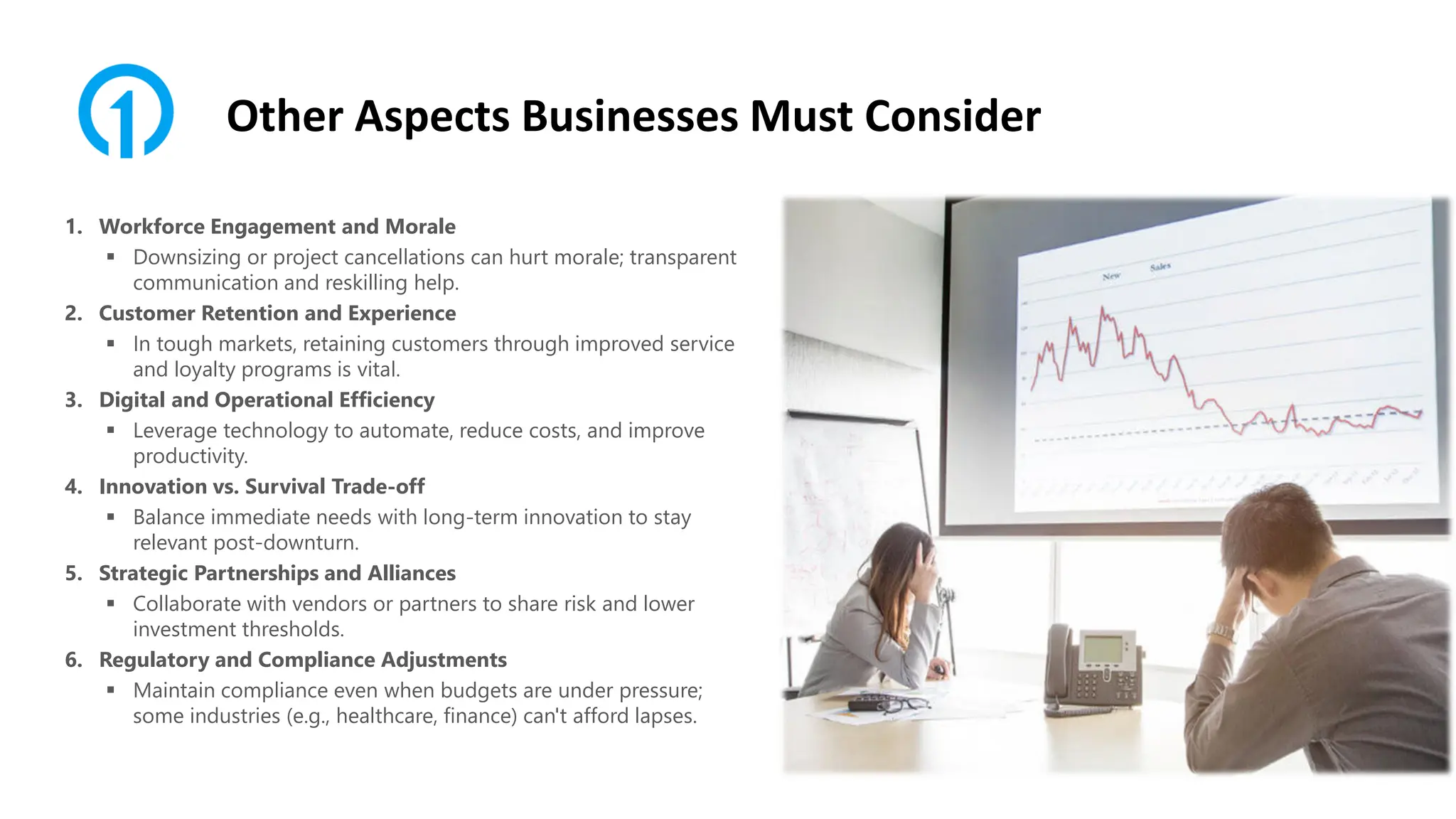
Other Aspects BusinessesMust Consider
1. Workforce Engagement and Morale
▪ Downsizing or project cancellations can hurt morale; transparent
communication and reskilling help.
2. Customer Retention and Experience
▪ In tough markets, retaining customers through improved service
and loyalty programs is vital.
3. Digital and Operational Efficiency
▪ Leverage technology to automate, reduce costs, and improve
productivity.
4. Innovation vs. Survival Trade-off
▪ Balance immediate needs with long-term innovation to stay
relevant post-downturn.
5. Strategic Partnerships and Alliances
▪ Collaborate with vendors or partners to share risk and lower
investment thresholds.
6. Regulatory and Compliance Adjustments
▪ Maintain compliance even when budgets are under pressure;
some industries (e.g., healthcare, finance) can't afford lapses.
13.
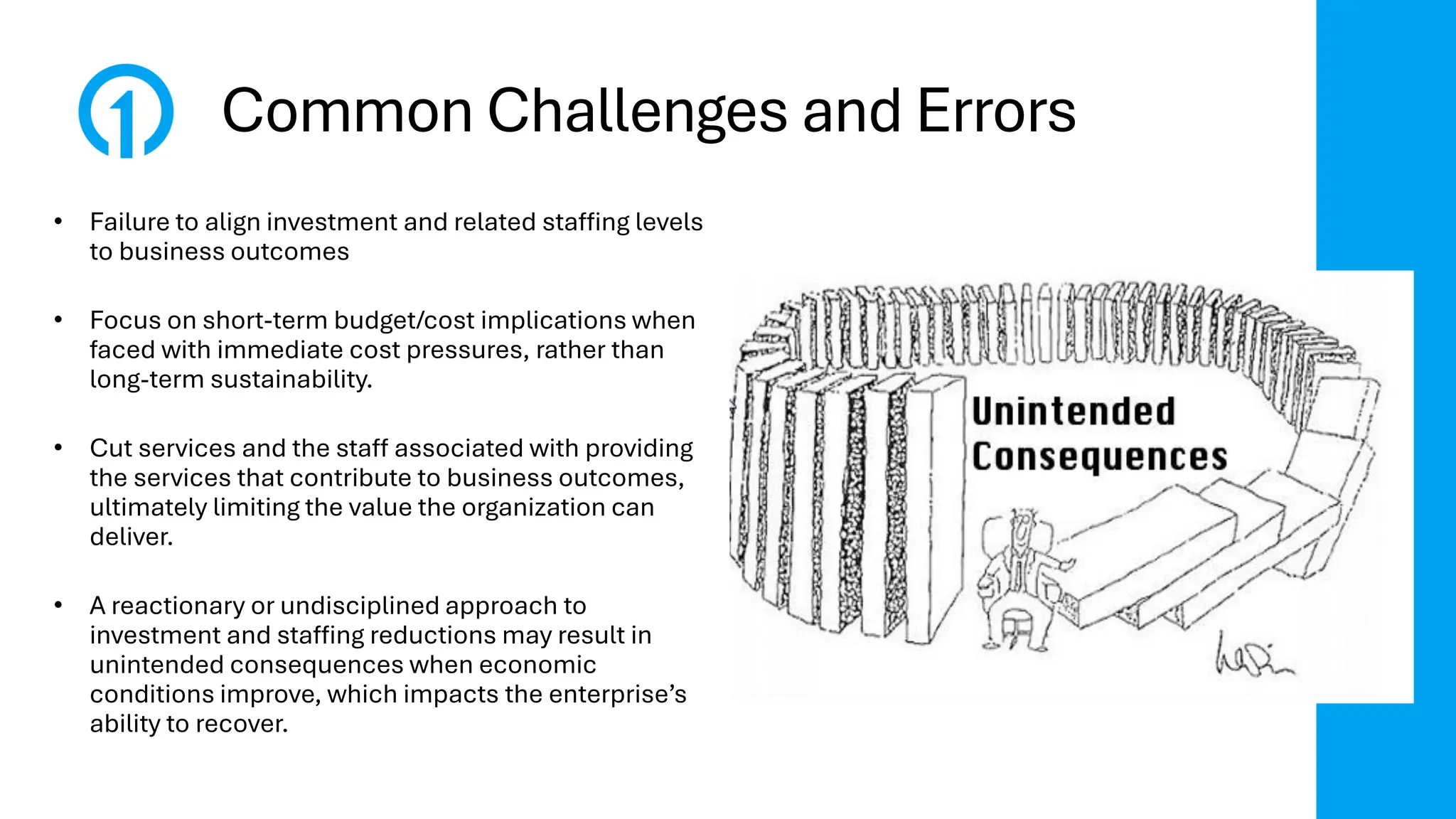
Common Challenges andErrors
• Failure to align investment and related staffing levels
to business outcomes
• Focus on short-term budget/cost implications when
faced with immediate cost pressures, rather than
long-term sustainability.
• Cut services and the staff associated with providing
the services that contribute to business outcomes,
ultimately limiting the value the organization can
deliver.
• A reactionary or undisciplined approach to
investment and staffing reductions may result in
unintended consequences when economic
conditions improve, which impacts the enterprise’s
ability to recover.
14.
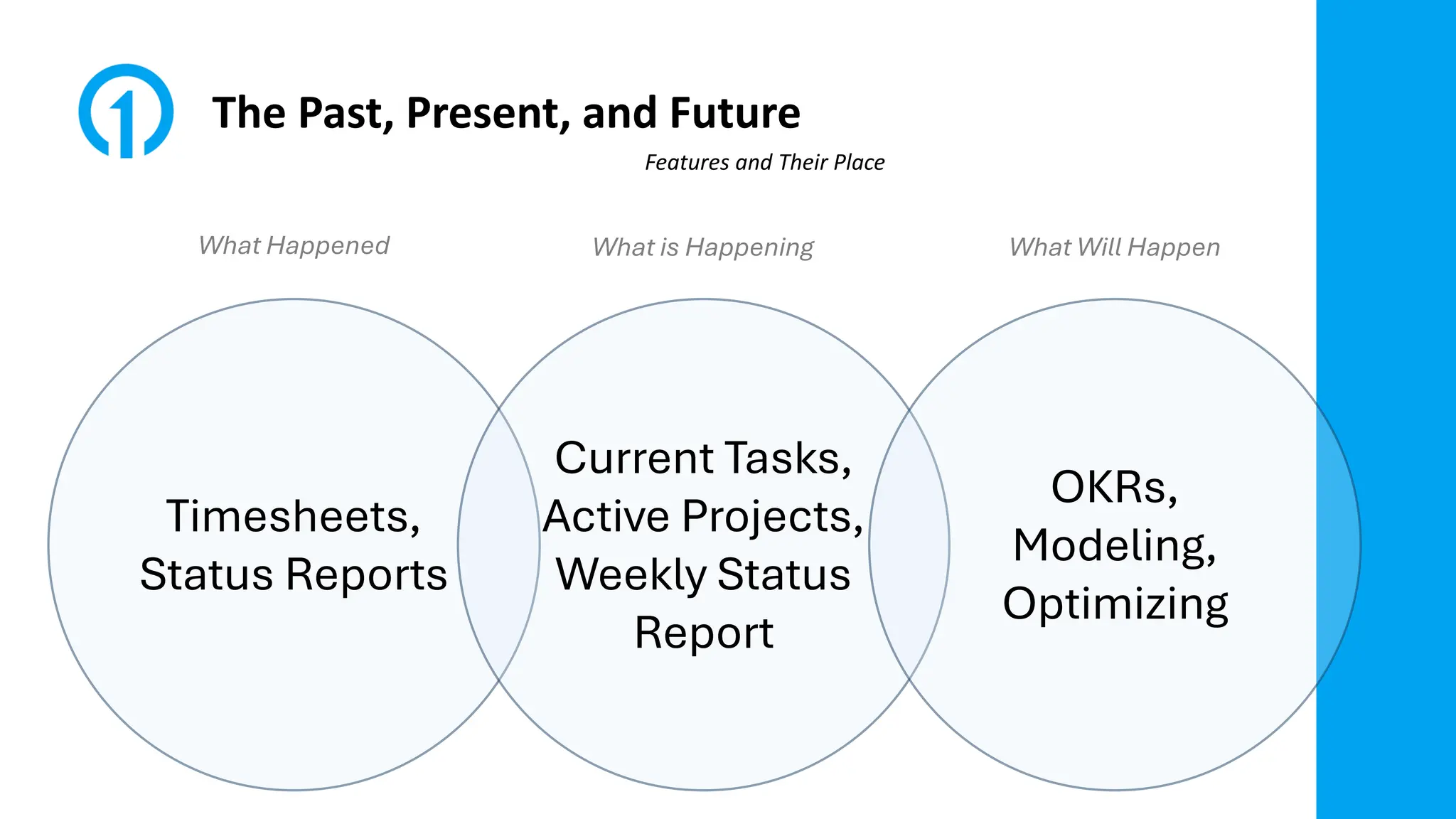
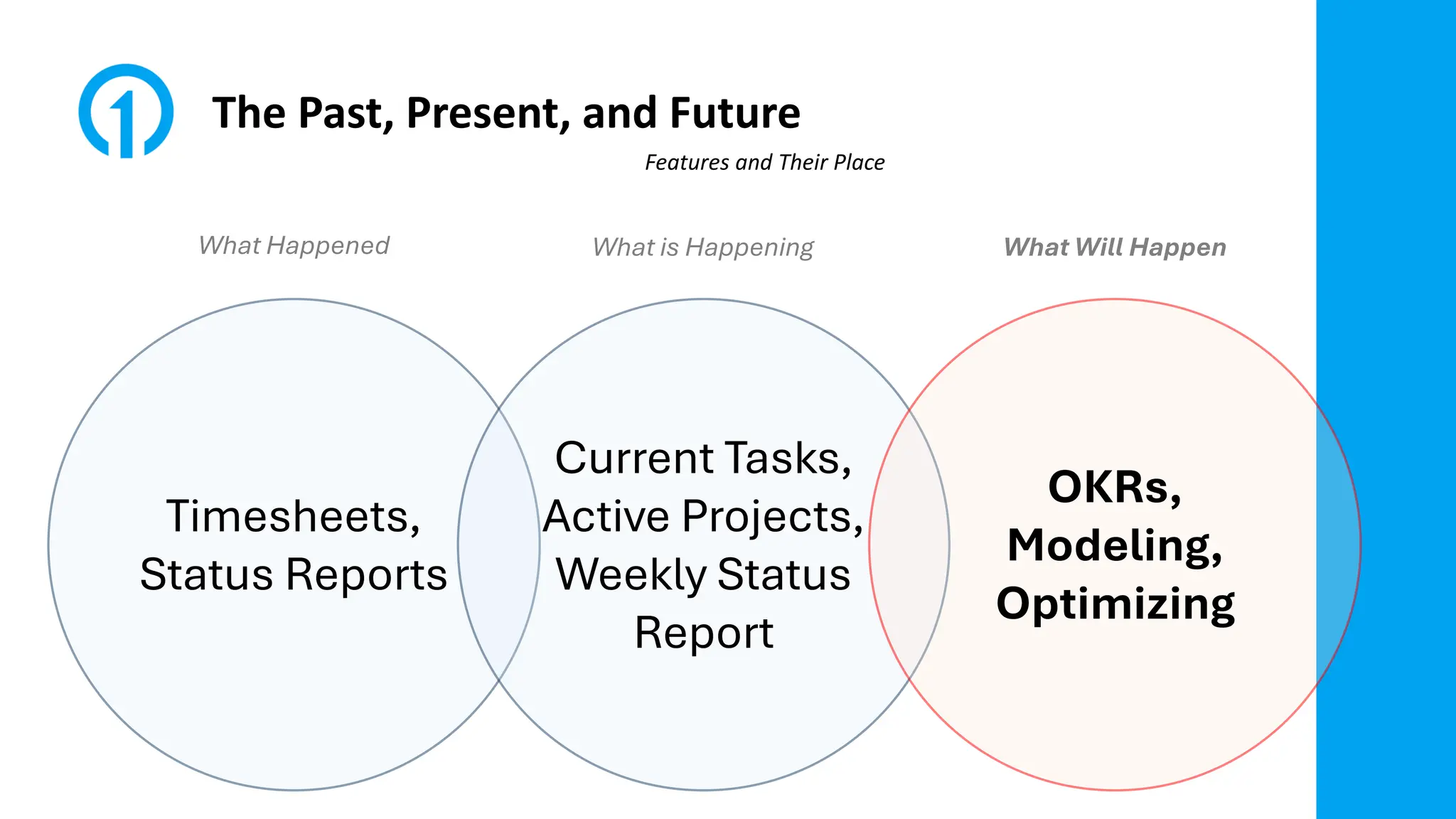
The Past, Present,and Future
Features and Their Place
Timesheets,
Status Reports
Current Tasks,
Active Projects,
Weekly Status
Report
OKRs,
Modeling,
Optimizing
What Happened What is Happening What Will Happen
15.
The Past, Present,and Future
Features and Their Place
Timesheets,
Status Reports
Current Tasks,
Active Projects,
Weekly Status
Report
OKRs,
Modeling,
Optimizing
What Happened What is Happening What Will Happen
16.
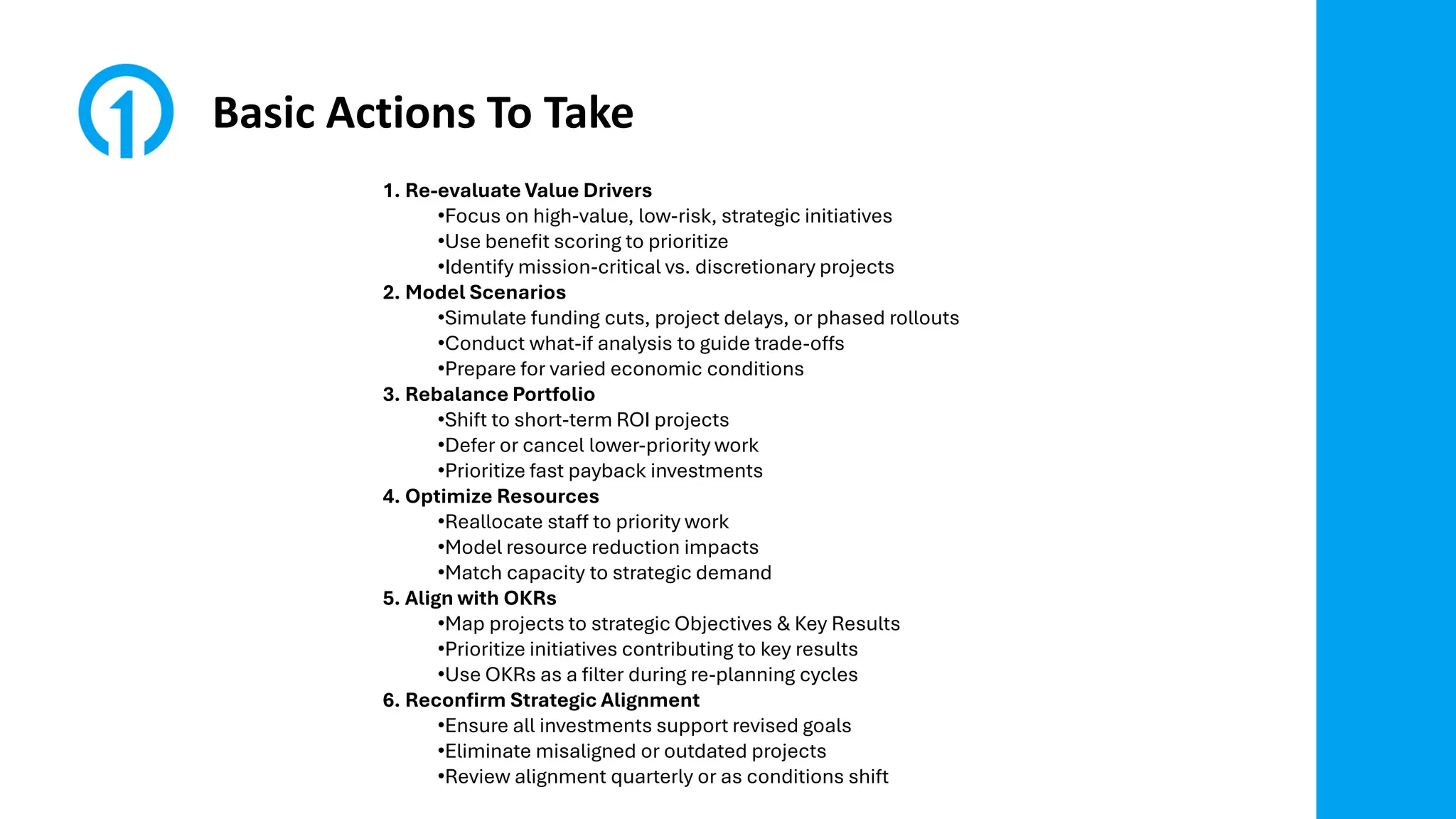
Basic Actions ToTake
1. Re-evaluate Value Drivers
•Focus on high-value, low-risk, strategic initiatives
•Use benefit scoring to prioritize
•Identify mission-critical vs. discretionary projects
2. Model Scenarios
•Simulate funding cuts, project delays, or phased rollouts
•Conduct what-if analysis to guide trade-offs
•Prepare for varied economic conditions
3. Rebalance Portfolio
•Shift to short-term ROI projects
•Defer or cancel lower-priority work
•Prioritize fast payback investments
4. Optimize Resources
•Reallocate staff to priority work
•Model resource reduction impacts
•Match capacity to strategic demand
5. Align with OKRs
•Map projects to strategic Objectives & Key Results
•Prioritize initiatives contributing to key results
•Use OKRs as a filter during re-planning cycles
6. Reconfirm Strategic Alignment
•Ensure all investments support revised goals
•Eliminate misaligned or outdated projects
•Review alignment quarterly or as conditions shift
17.
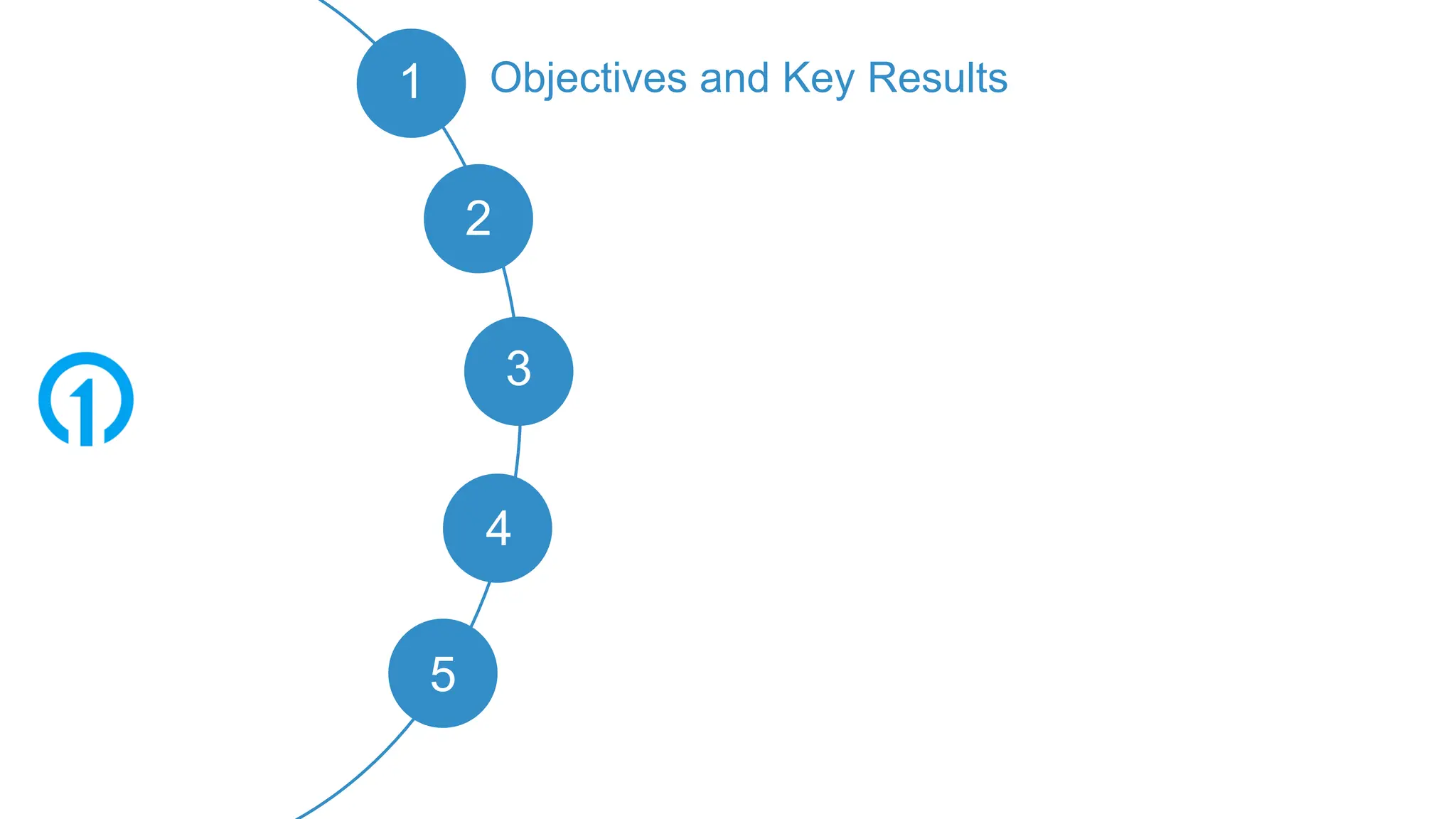
Demonstration
Leveraging OnePlan to:
1.Present Options
2. Identify Optimized Scenarios
3. Support Data-driven Decision Making
And Make the High Value Contribution of
the PMO Obvious
Scene
Scene
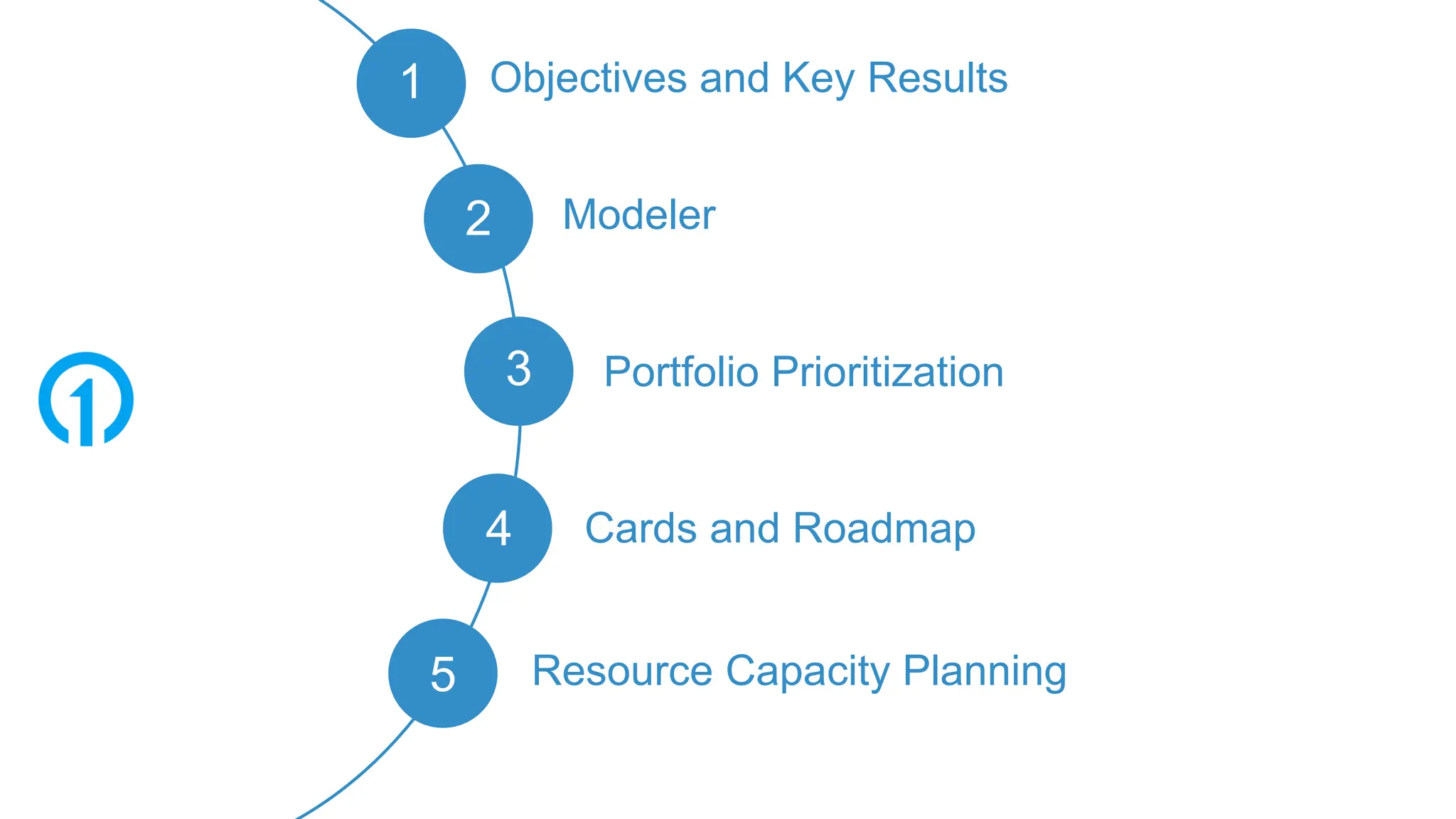
1
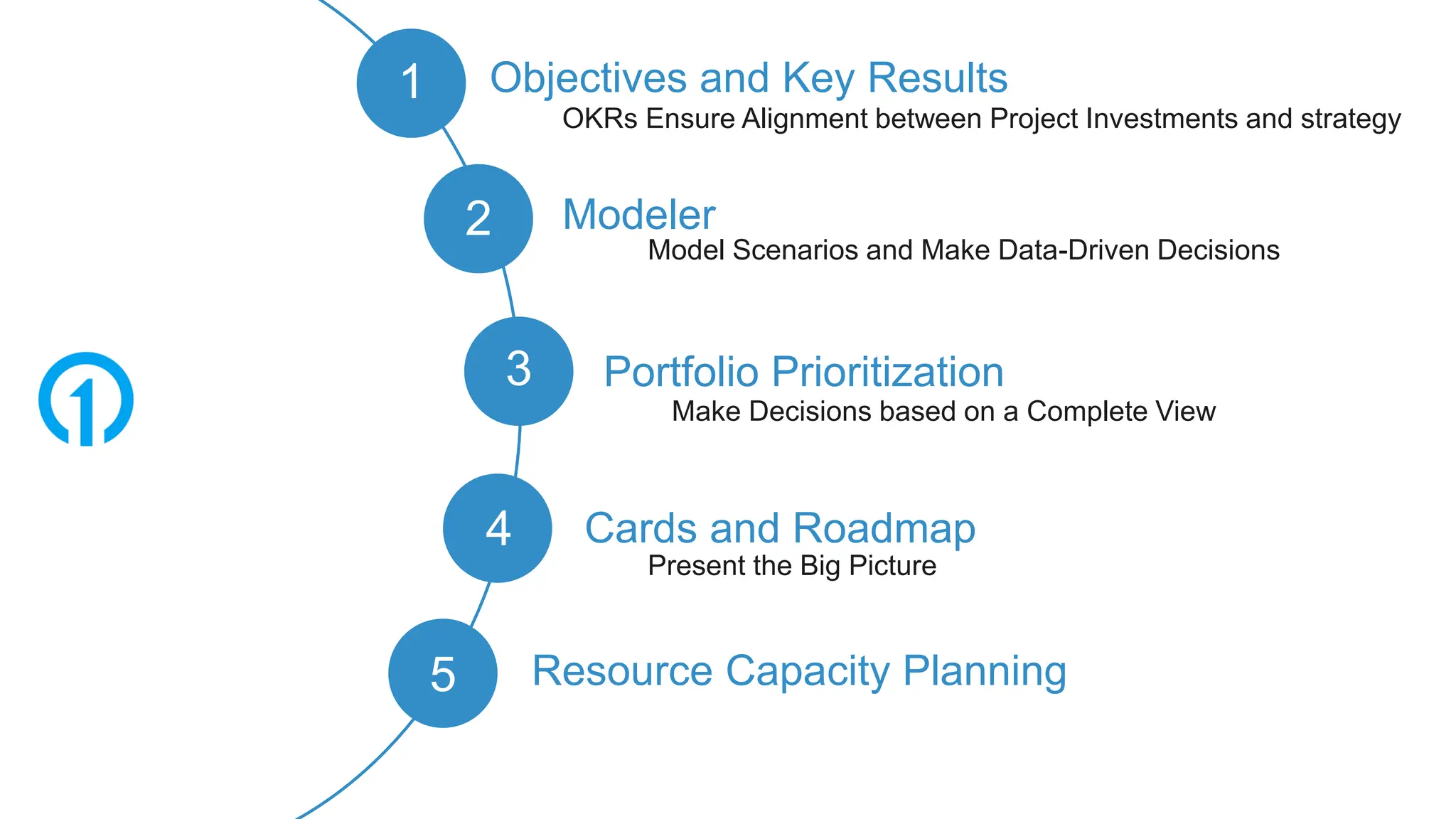
2 Modeler
Objectives andKey Results
3 Portfolio Prioritization
4
5
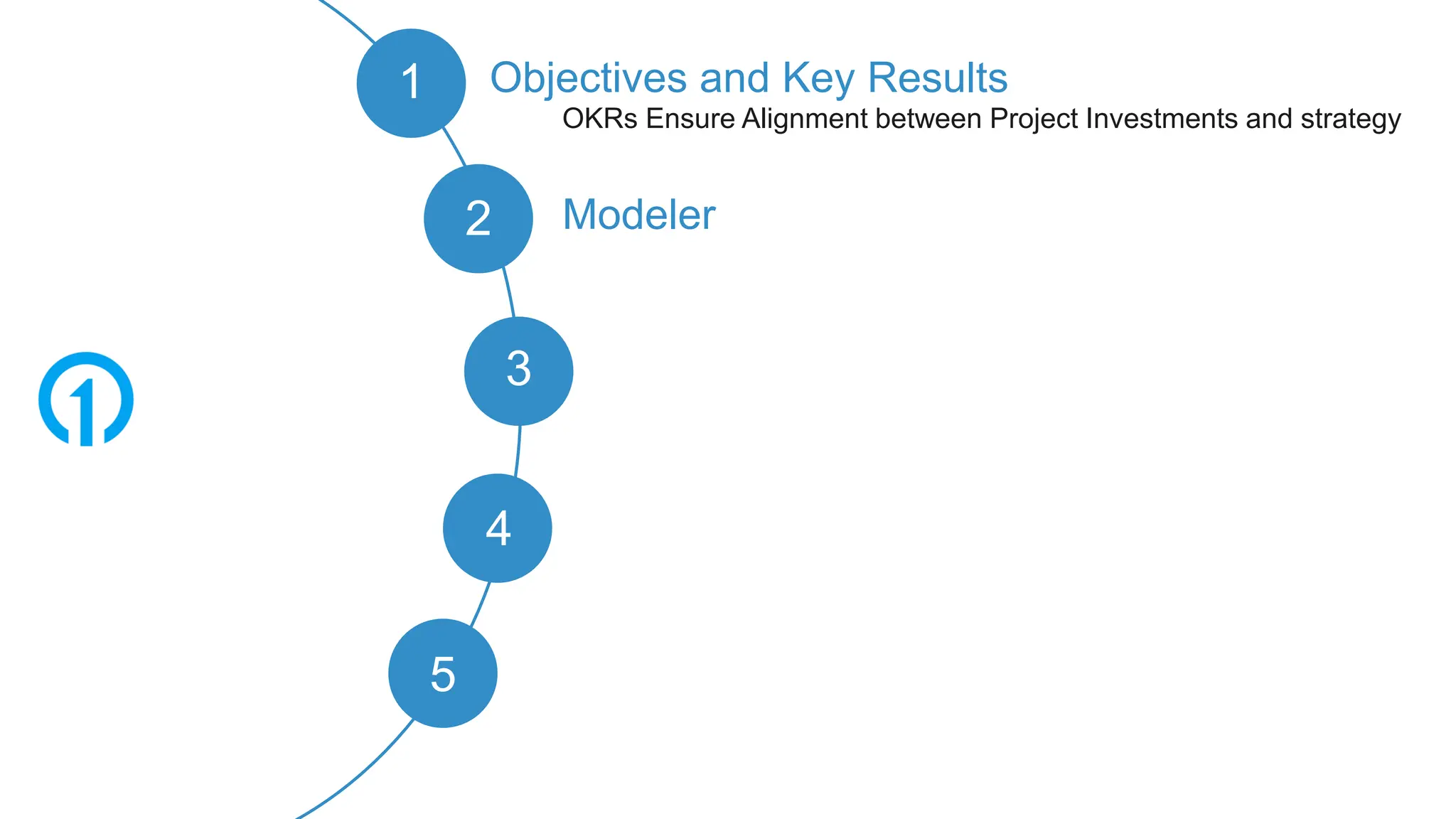
OKRs Ensure Alignment between Project Investments and strategy
Model Scenarios and Make Data-Driven Decisions
22.
Scene
Scene
1
2 Modeler
Objectives andKey Results
3 Portfolio Prioritization
4 Cards and Roadmap
5
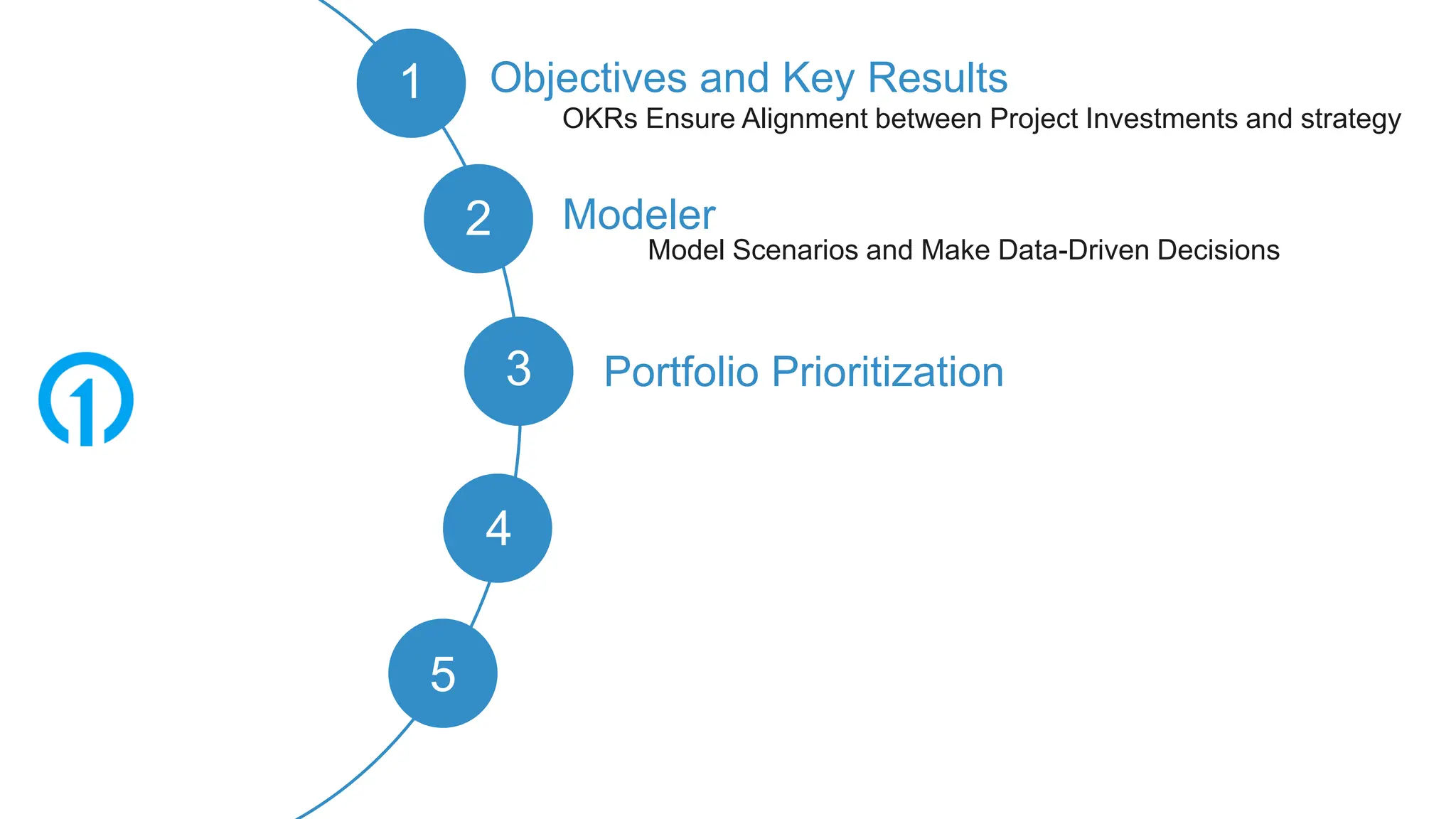
OKRs Ensure Alignment between Project Investments and strategy
Make Decisions based on a Complete View
Model Scenarios and Make Data-Driven Decisions
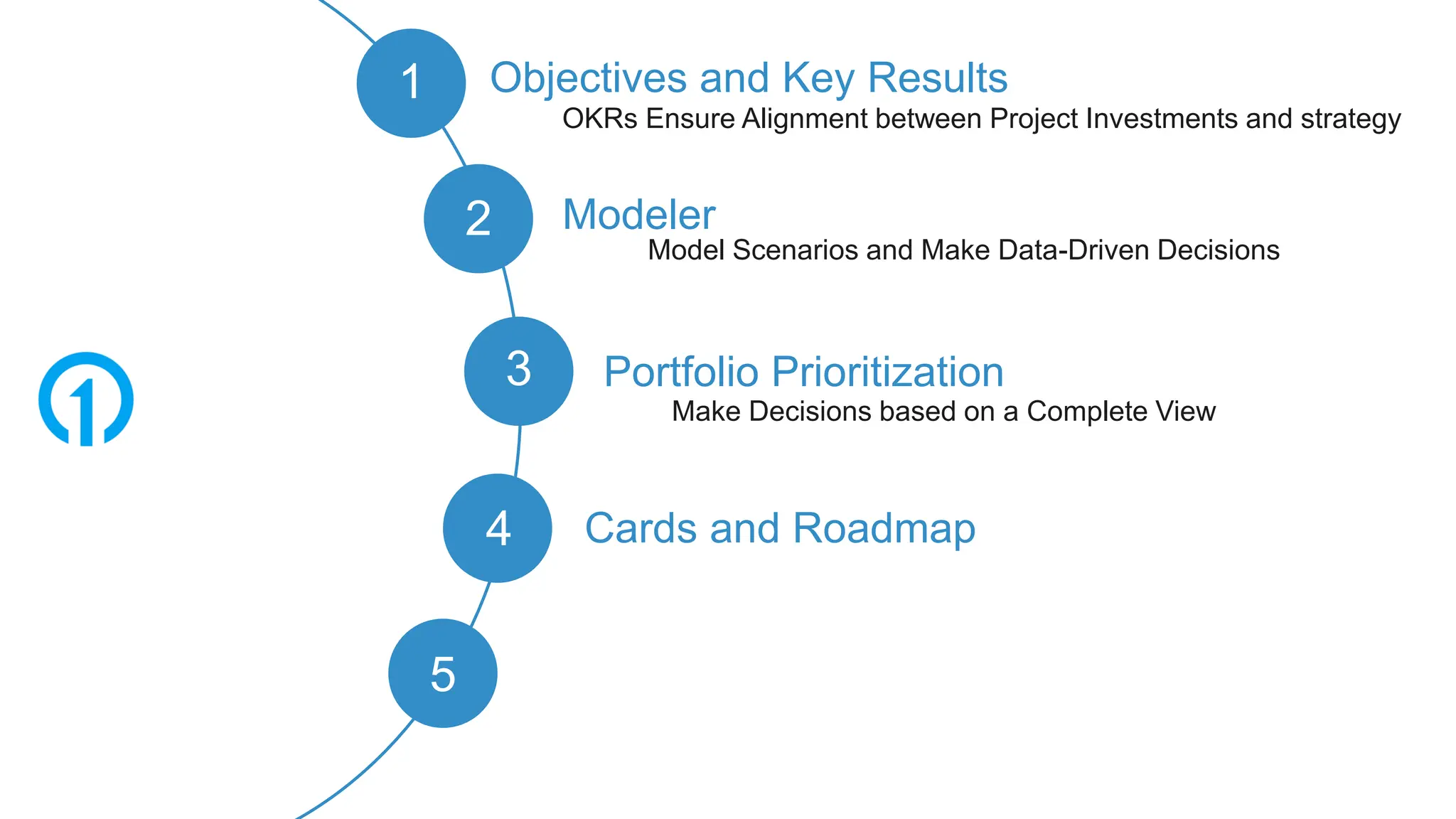
23.
Scene
Scene
1
2 Modeler
Objectives andKey Results
3 Portfolio Prioritization
4 Cards and Roadmap
5 Resource Capacity Planning
OKRs Ensure Alignment between Project Investments and strategy
Make Decisions based on a Complete View
Present the Big Picture
Model Scenarios and Make Data-Driven Decisions
24.
Scene
Scene
1
2 Modeler
Objectives andKey Results
3 Portfolio Prioritization
4 Cards and Roadmap
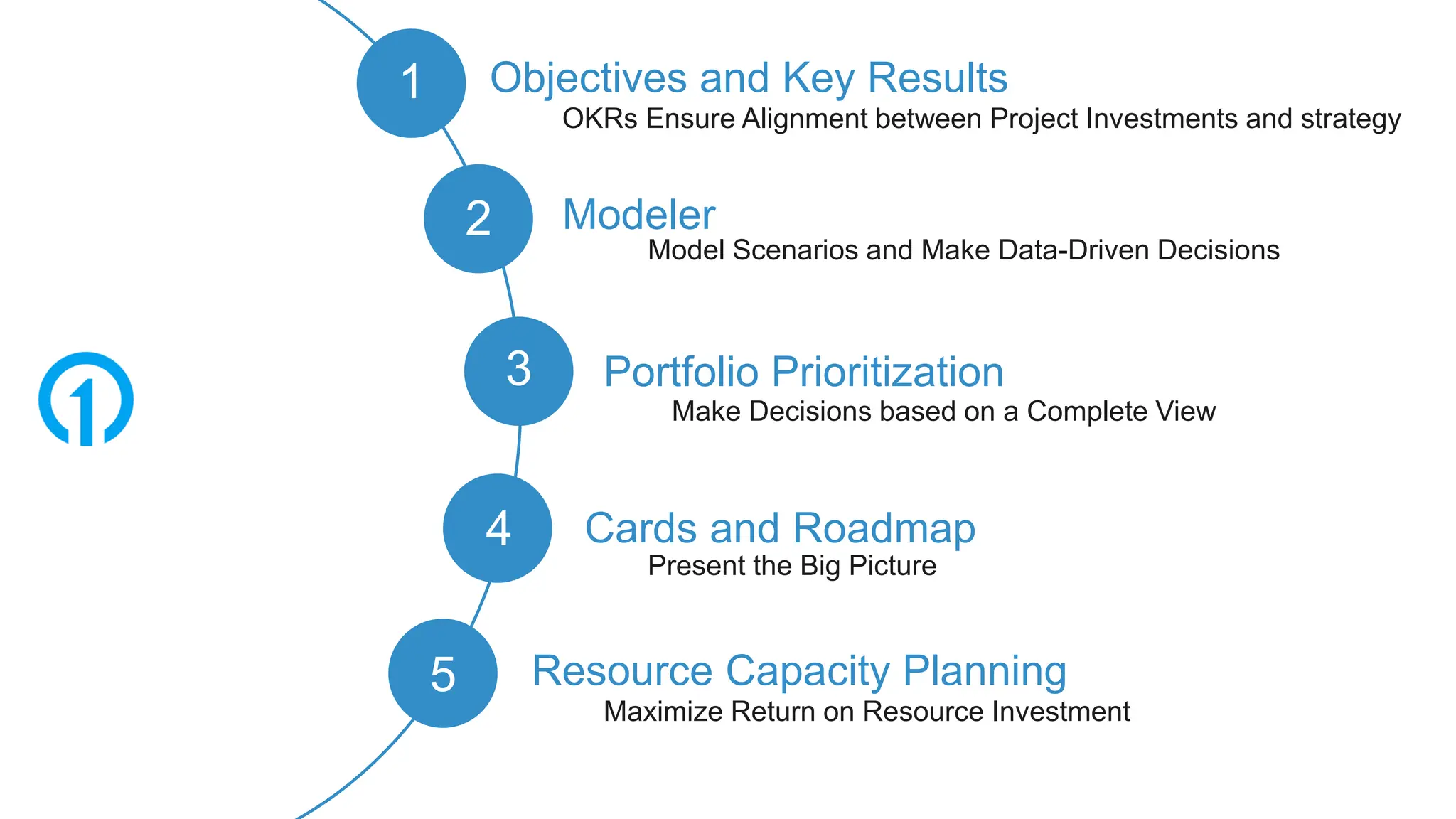
5 Resource Capacity Planning
OKRs Ensure Alignment between Project Investments and strategy
Model Scenarios and Make Data-Driven Decisions
Make Decisions based on a Complete View
Present the Big Picture
Maximize Return on Resource Investment
25.
• When leveragingportfolio modeling
tools to navigate inflation and
budget cuts, an organization should
take a strategic, data-informed
approach
• OnePlan Provides a Comprehensive
Toolset to support that Effort
• Free Trials are Available to Answer
Questions and Validate Claims
• Contact Us With Questions
Summary and Next
Steps
26.
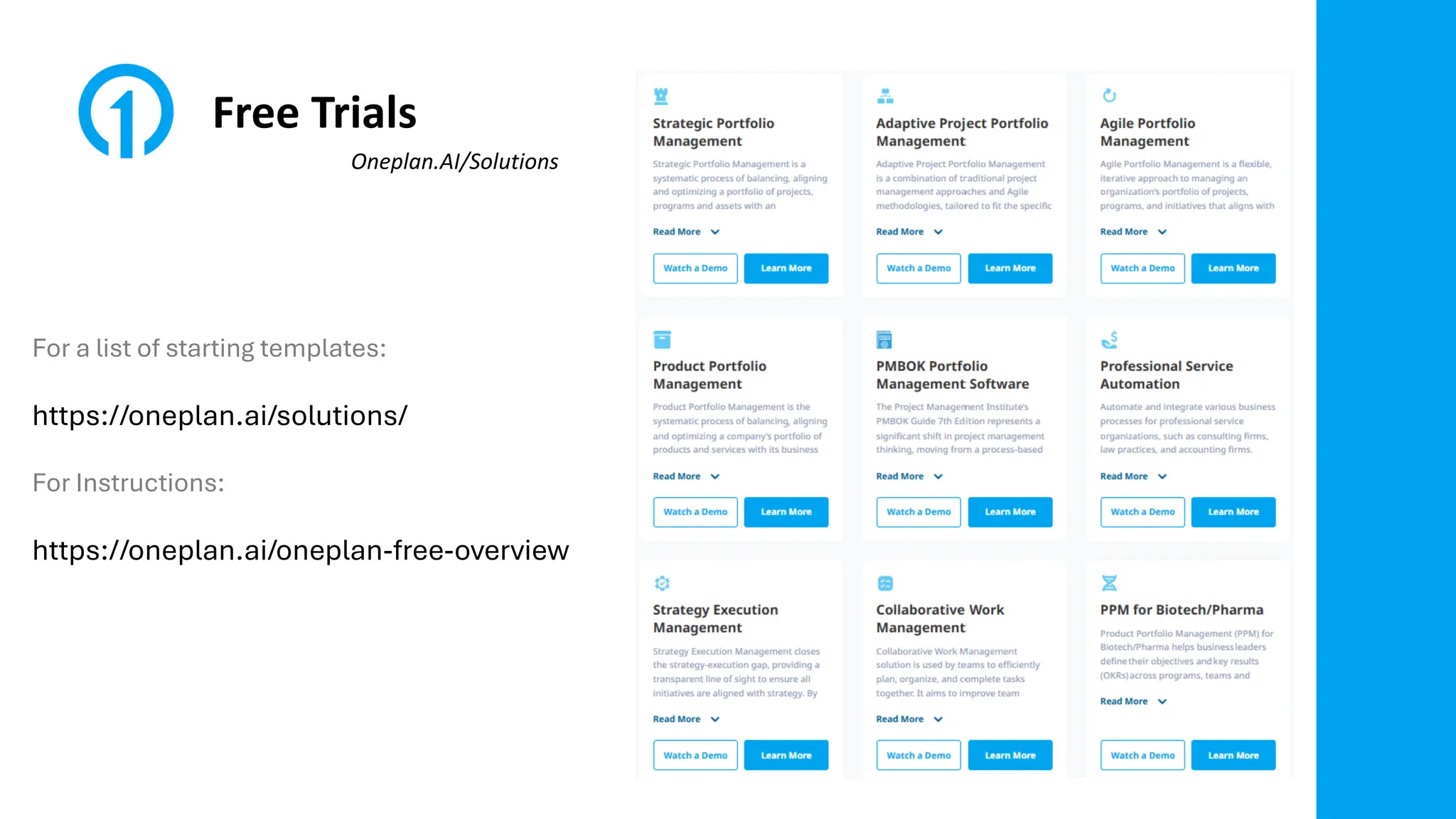
Free Trials
Oneplan.AI/Solutions
For alist of starting templates:
https://oneplan.ai/solutions/
For Instructions:
https://oneplan.ai/oneplan-free-overview