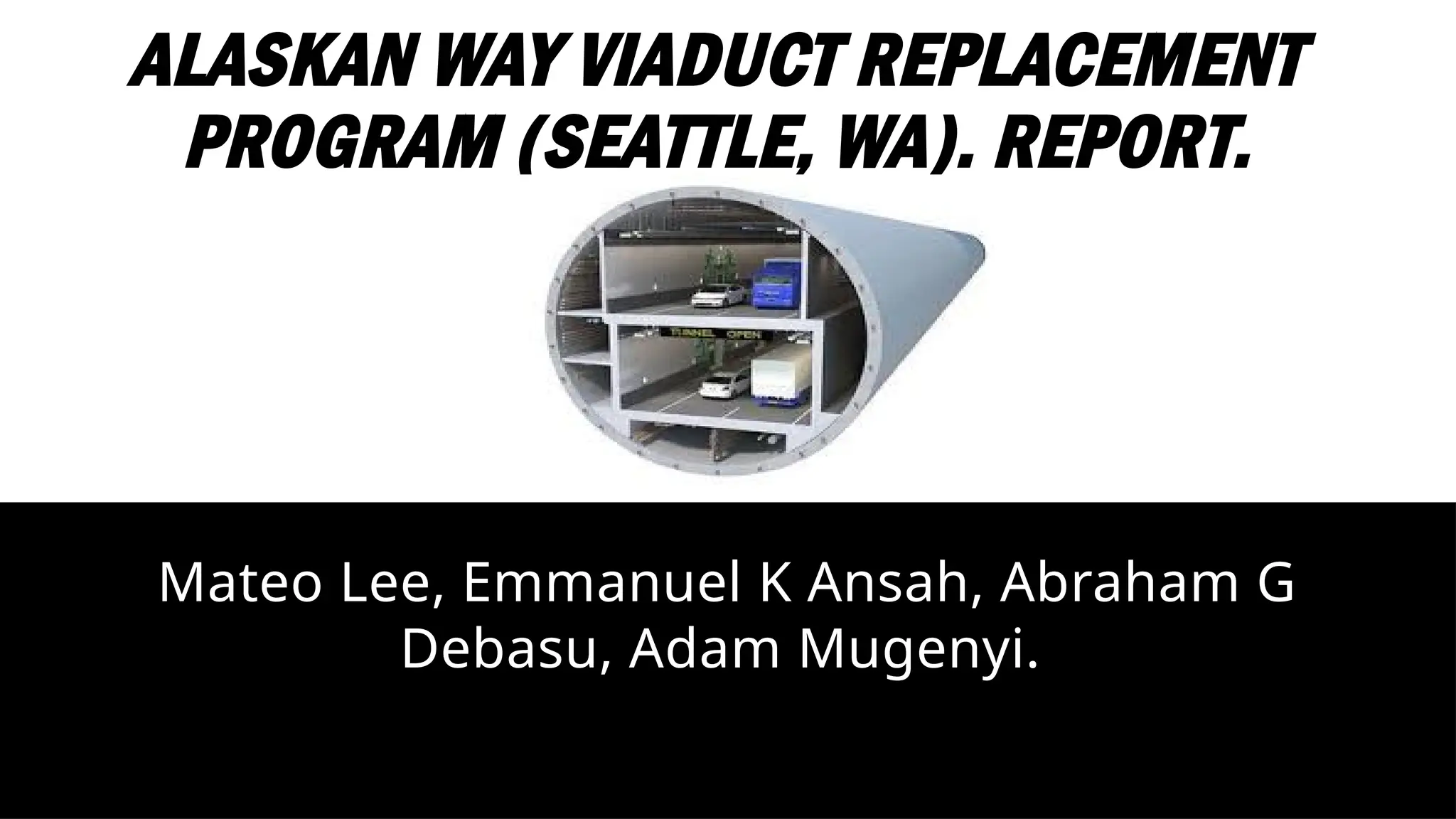
ALASKAN WAY VIADUCT REPLACEMENT
PROGRAM (SEATTLE, WA). REPORT.
Mateo Lee, Emmanuel K Ansah, Abraham G
Debasu, Adam Mugenyi.
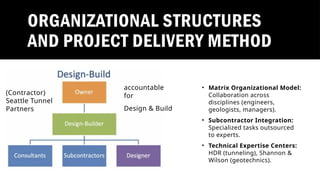
• Matrix Organizational Model:
Collaboration across
disciplines (engineers,
geologists, managers).
• Subcontractor Integration:
Specialized tasks outsourced
to experts.
• Technical Expertise Centers:
HDR (tunneling), Shannon &
Wilson (geotechnics).
ORGANIZATIONAL STRUCTURES
AND PROJECT DELIVERY METHOD
(Contractor)
Seattle Tunnel
Partners
accountable
for
Design & Build
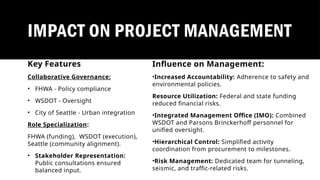
Influence on Management:
•Increased Accountability: Adherence to safety and
environmental policies.
Resource Utilization: Federal and state funding
reduced financial risks.
•Integrated Management Office (IMO): Combined
WSDOT and Parsons Brinckerhoff personnel for
unified oversight.
•Hierarchical Control: Simplified activity
coordination from procurement to milestones.
•Risk Management: Dedicated team for tunneling,
seismic, and traffic-related risks.
IMPACT ON PROJECT MANAGEMENT
Key Features
Collaborative Governance:
• FHWA - Policy compliance
• WSDOT - Oversight
• City of Seattle - Urban integration
Role Specialization:
FHWA (funding), WSDOT (execution),
Seattle (community alignment).
• Stakeholder Representation:
Public consultations ensured
balanced input.
Proactive Risk Mitigation: Early detection of issues like property
acquisitions.
•Smoother Communication: Faster decision-making via joint
offices.
•Improved Efficiency: Streamlined approvals reduced
bureaucratic delays.
Key Takeaways:
• Collaboration among owners, contractors, and management
was pivotal.
• Design-Build method balanced innovation with risk transfer,
despite reduced owner control.
• Matrix and integrated structures enabled efficient resource use
IMPACT ON PROJECT MANAGEMENT
BUDGET
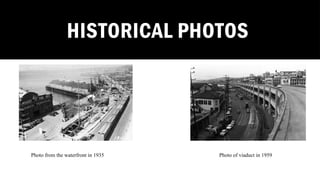
HISTORICAL PHOTOS
Photo from the waterfront in 1935 Photo of viaduct in 1959
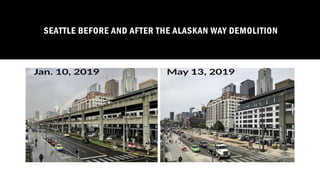
SEATTLE BEFORE AND AFTER THE ALASKAN WAY DEMOLITION
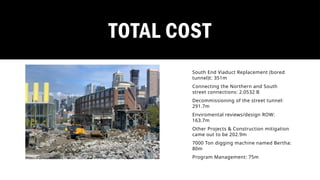
South End Viaduct Replacement (bored
tunnel)t: 351m
Connecting the Northern and South
street connections: 2.0532 B
Decommissioning of the street tunnel:
291.7m
Enviromental reviews/design ROW:
163.7m
Other Projects & Construction mitigation
came out to be 202.9m
7000 Ton digging machine named Bertha:
80m
Program Management: 75m
TOTAL COST
FUNDING
Federal Funding: 787.2m
State Funds: 2.0541 B
2005 gas tax: 1.523 B
2003 gas tax: 326.3m
Other state funds: 4.8
Tolls: 200m
Local funds: 28.4m
Port of Seattle: 267.7m
COST OVERRUNS
2016 Ballot measure to create an
elevated park along the waterfront
223m at the time
2018 cost overruns were 600m
due to tunnel boring
SCHEDULING
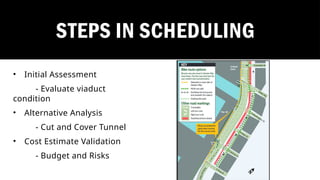
STEPS IN SCHEDULING
• Initial Assessment
- Evaluate viaduct
condition
• Alternative Analysis
- Cut and Cover Tunnel
• Cost Estimate Validation
- Budget and Risks
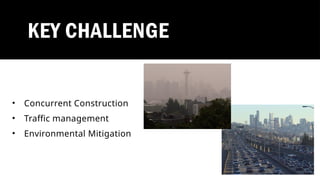
KEY CHALLENGE
• Concurrent Construction
• Traffic management
• Environmental Mitigation
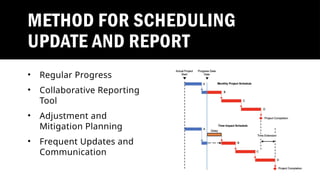
METHOD FOR SCHEDULING
UPDATE AND REPORT
• Regular Progress
• Collaborative Reporting
Tool
• Adjustment and
Mitigation Planning
• Frequent Updates and
Communication
CONTROL
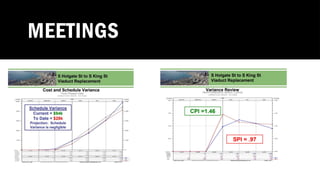
MEETINGS
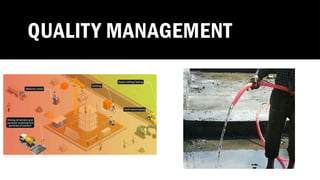
QUALITY MANAGEMENT
RISK MANAGEMENT
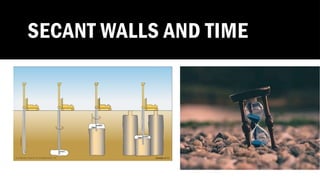
SECANT WALLS AND TIME
CRITIQUE
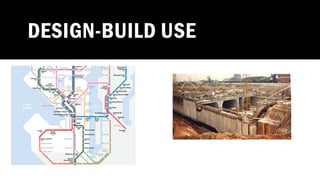
DESIGN-BUILD USE
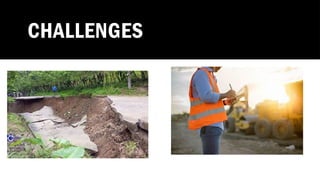
CHALLENGES
REFERENCES:
Alaskan Way Viaduct Replacement Program, Washington State Department of Transportation.
Bodenmüller, Klaus Otto. The Alaskan Way Viaduct. 1981.
Duke, Andrew. Alaskan Way Viaduct: Review of the Transportation Factors Associated with a Surface Roadway . DKS Associates, 2006.
Harn, Robert, et al. “Development of replacement concepts for the Alaskan way seawall, Seattle, Washington.” Ports 2007, 22 Mar. 2007, pp. 1–10,
https://doi.org/10.1061/40834(238)88.
https://en.wikipedia.org/wiki/Alaskan_Way_Viaduct
Parker, Bagley. Alaskan Way Viaduct: Report on Preliminary Plans. The Dept, 1948.
Ševčíková, Hana, et al. “Uncertain benefits: Application of Bayesian melding to the Alaskan way viaduct in Seattle.” Transportation Research Part
A: Policy and Practice, vol. 45, no. 6, July 2011, pp. 540–553, https://doi.org/10.1016/j.tra.2011.03.009.

Alaskan Way Viaduct Replacement Program (Seattle, WA).pptx

  • 1.
    ALASKAN WAY VIADUCTREPLACEMENT PROGRAM (SEATTLE, WA). REPORT. Mateo Lee, Emmanuel K Ansah, Abraham G Debasu, Adam Mugenyi.
  • 2.
    • Matrix OrganizationalModel: Collaboration across disciplines (engineers, geologists, managers). • Subcontractor Integration: Specialized tasks outsourced to experts. • Technical Expertise Centers: HDR (tunneling), Shannon & Wilson (geotechnics). ORGANIZATIONAL STRUCTURES AND PROJECT DELIVERY METHOD (Contractor) Seattle Tunnel Partners accountable for Design & Build
  • 3.
    Influence on Management: •IncreasedAccountability: Adherence to safety and environmental policies. Resource Utilization: Federal and state funding reduced financial risks. •Integrated Management Office (IMO): Combined WSDOT and Parsons Brinckerhoff personnel for unified oversight. •Hierarchical Control: Simplified activity coordination from procurement to milestones. •Risk Management: Dedicated team for tunneling, seismic, and traffic-related risks. IMPACT ON PROJECT MANAGEMENT Key Features Collaborative Governance: • FHWA - Policy compliance • WSDOT - Oversight • City of Seattle - Urban integration Role Specialization: FHWA (funding), WSDOT (execution), Seattle (community alignment). • Stakeholder Representation: Public consultations ensured balanced input.
  • 4.
    Proactive Risk Mitigation:Early detection of issues like property acquisitions. •Smoother Communication: Faster decision-making via joint offices. •Improved Efficiency: Streamlined approvals reduced bureaucratic delays. Key Takeaways: • Collaboration among owners, contractors, and management was pivotal. • Design-Build method balanced innovation with risk transfer, despite reduced owner control. • Matrix and integrated structures enabled efficient resource use IMPACT ON PROJECT MANAGEMENT
  • 5.
  • 6.
    HISTORICAL PHOTOS Photo fromthe waterfront in 1935 Photo of viaduct in 1959
  • 7.
    SEATTLE BEFORE ANDAFTER THE ALASKAN WAY DEMOLITION
  • 8.
    South End ViaductReplacement (bored tunnel)t: 351m Connecting the Northern and South street connections: 2.0532 B Decommissioning of the street tunnel: 291.7m Enviromental reviews/design ROW: 163.7m Other Projects & Construction mitigation came out to be 202.9m 7000 Ton digging machine named Bertha: 80m Program Management: 75m TOTAL COST
  • 9.
    FUNDING Federal Funding: 787.2m StateFunds: 2.0541 B 2005 gas tax: 1.523 B 2003 gas tax: 326.3m Other state funds: 4.8 Tolls: 200m Local funds: 28.4m Port of Seattle: 267.7m
  • 10.
    COST OVERRUNS 2016 Ballotmeasure to create an elevated park along the waterfront 223m at the time 2018 cost overruns were 600m due to tunnel boring
  • 11.
  • 12.
    STEPS IN SCHEDULING •Initial Assessment - Evaluate viaduct condition • Alternative Analysis - Cut and Cover Tunnel • Cost Estimate Validation - Budget and Risks
  • 13.
    KEY CHALLENGE • ConcurrentConstruction • Traffic management • Environmental Mitigation
  • 14.
    METHOD FOR SCHEDULING UPDATEAND REPORT • Regular Progress • Collaborative Reporting Tool • Adjustment and Mitigation Planning • Frequent Updates and Communication
  • 15.
  • 16.
  • 17.
  • 18.
  • 19.
  • 20.
  • 21.
  • 22.
  • 23.
    REFERENCES: Alaskan Way ViaductReplacement Program, Washington State Department of Transportation. Bodenmüller, Klaus Otto. The Alaskan Way Viaduct. 1981. Duke, Andrew. Alaskan Way Viaduct: Review of the Transportation Factors Associated with a Surface Roadway . DKS Associates, 2006. Harn, Robert, et al. “Development of replacement concepts for the Alaskan way seawall, Seattle, Washington.” Ports 2007, 22 Mar. 2007, pp. 1–10, https://doi.org/10.1061/40834(238)88. https://en.wikipedia.org/wiki/Alaskan_Way_Viaduct Parker, Bagley. Alaskan Way Viaduct: Report on Preliminary Plans. The Dept, 1948. Ševčíková, Hana, et al. “Uncertain benefits: Application of Bayesian melding to the Alaskan way viaduct in Seattle.” Transportation Research Part A: Policy and Practice, vol. 45, no. 6, July 2011, pp. 540–553, https://doi.org/10.1016/j.tra.2011.03.009.