AIR INDIA
                 An Analysis of Management Control System in AIR India


   SONIA PURI
   NEHA JAIN
   MOUSAMI DAS
   SAURABH TRIVEDI
   ISHAN BATRA
   VIBHOR SINGHAL
   NEHA PODDAR
                                                    www.airindia.in
TABLE OF CONTENTS

SI NO.                              TITLE OF THE SLIDES
  1      Introduction

  2      Organization Structure

  3      Control Processes in AIR India

  4      Management Style and Culture

  5      Communication & Co-ordination

  6      Investor Relations

  7      Budget and Audit

  8      HR Policies

  9      Recommendations and Conclusion
Introduction to Aviation Industry


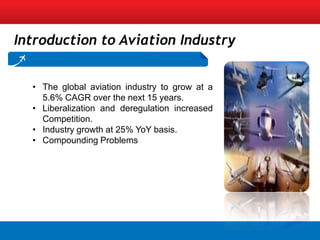
  • The global aviation industry to grow at a
    5.6% CAGR over the next 15 years.
  • Liberalization and deregulation increased
    Competition.
  • Industry growth at 25% YoY basis.
  • Compounding Problems
Introduction to AIR India


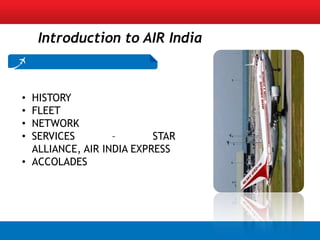
• HISTORY
• FLEET
• NETWORK
• SERVICES        –       STAR
  ALLIANCE, AIR INDIA EXPRESS
• ACCOLADES
ORGANISATION STRUCTURE
Committees In AIR India

•   FINANCE COMMITTEE
•   HR COMMITTEE
•   STRATEGIC COMMITTEE
•   AUDIT COMMITTEE
Control Process in Air India


•   SAP ERP
•   Vigilance Department
•   SITA, to provide new Passenger Services System
•   Integrated Operations Control Centre (IOCC)
•   Norms set for the discharge of functions
•   Scrutiny of policies and activities
•   The budget allocated to each agency
Management Style & Culture
VISION AND MISSION-
• The Main object :to carry on business, in any part of the world as an
   airline and air transport and to provide air transport services and carry
   out all other forms of aerial work, whether on charter terms or
   otherwise, and to carry on any other trade or business or do anything
   which is calculated to facilitate or is auxiliary to or associated with such
   business
Focus –
• Relationships
• Shared goals
• Shared knowledge
•   mutual respect.
Decision making process-
• Power is delegated
•   Discussions among cross section of departments
•   Worker/management committees.

                                                                            8
Cont.…
Attitude towards employees-
•    Employees are treated as valuable assets
• Stable work environment
•    Encourage innovation and creativity.

Credibility & caring-
• Ability to inspire trust
• The ability to inspire in employees the belief that their leaders care deeply about their well-being.

Relational competence-
• The ability to relate effectively with others
• Enhances team work

SAFETY CULTURE-
• “Safety Culture is the set of enduring values and attitudes regarding safety issues, shared by
   every member of every level of an organization.


                                                                                 9
Communication &
  Coordination
Internal Communication

• SITA
• TELEPHONE SYSTEM
• RADIO
  COMMUNICATION
  SYSTEM
External Communication
• 24 hour dedicated call centre
• Rescheduling messages to
  customer’s mobile phone.
• Audit agency for continuous
  image audit, media
  relations, communication
  counsel, advising on regular
  basis for effective channel of
  communication
Investor Relations

•   Media Centre
•   Web Site
•   Right to Information
•   Manuals
•   Annual Statements
AUDIT COMMITTEE
Functions of Audit committee
• Management responses.
• Half yearly and yearly basis
• Recommendations are taken from more than 1 audit firms
• To review the company statement
• To review the internal audit program & ensure co-ordination between
the internal & external auditors.

                       BENCHMARKING
Air India did not reveal any bench marking details in their annual
report. But it uses industry standards which are followed by every other
airline like Flight on time ,Security Measures, Annual Maintenance Plans
and Maharaja Club
BUDGET
The twin budget is prepared in air India which is both annual and five
  year plan

Forecast Highlights
• Traffic
• Yeilds
• Load Factor
• Fuel
Variance analysis
HR POLICIES


Recruitment
Appraisal
Compensation
Reward

                            16
ADVANTAGES & DISADVANTAGES
• Represents brand India
• Job security to employeesomer service
• No proper mechanism to manage salaries of
  employees
• Sales to compensation ratio is decreasing since 2008
• Most employees are 50+ with less energy levels and
  motivation for quality
RECOMMENDATIONS
•   Adopt strict cost control measures
•   Revise wage and implement multi-skill environment
•   Limit government control and policies for AI
•   Increase fleet size and invest in aircraft maintenance
•   Refresh and rebrand the company
•   Timely payment of salaries to employees
THANK YOU

Air India Mcs Group E

  • 1.
    AIR INDIA An Analysis of Management Control System in AIR India  SONIA PURI  NEHA JAIN  MOUSAMI DAS  SAURABH TRIVEDI  ISHAN BATRA  VIBHOR SINGHAL  NEHA PODDAR www.airindia.in
  • 2.
    TABLE OF CONTENTS SINO. TITLE OF THE SLIDES 1 Introduction 2 Organization Structure 3 Control Processes in AIR India 4 Management Style and Culture 5 Communication & Co-ordination 6 Investor Relations 7 Budget and Audit 8 HR Policies 9 Recommendations and Conclusion
  • 3.
    Introduction to AviationIndustry • The global aviation industry to grow at a 5.6% CAGR over the next 15 years. • Liberalization and deregulation increased Competition. • Industry growth at 25% YoY basis. • Compounding Problems
  • 4.
    Introduction to AIRIndia • HISTORY • FLEET • NETWORK • SERVICES – STAR ALLIANCE, AIR INDIA EXPRESS • ACCOLADES
  • 5.
  • 6.
    Committees In AIRIndia • FINANCE COMMITTEE • HR COMMITTEE • STRATEGIC COMMITTEE • AUDIT COMMITTEE
  • 7.
    Control Process inAir India • SAP ERP • Vigilance Department • SITA, to provide new Passenger Services System • Integrated Operations Control Centre (IOCC) • Norms set for the discharge of functions • Scrutiny of policies and activities • The budget allocated to each agency
  • 8.
    Management Style &Culture VISION AND MISSION- • The Main object :to carry on business, in any part of the world as an airline and air transport and to provide air transport services and carry out all other forms of aerial work, whether on charter terms or otherwise, and to carry on any other trade or business or do anything which is calculated to facilitate or is auxiliary to or associated with such business Focus – • Relationships • Shared goals • Shared knowledge • mutual respect. Decision making process- • Power is delegated • Discussions among cross section of departments • Worker/management committees. 8
  • 9.
    Cont.… Attitude towards employees- • Employees are treated as valuable assets • Stable work environment • Encourage innovation and creativity. Credibility & caring- • Ability to inspire trust • The ability to inspire in employees the belief that their leaders care deeply about their well-being. Relational competence- • The ability to relate effectively with others • Enhances team work SAFETY CULTURE- • “Safety Culture is the set of enduring values and attitudes regarding safety issues, shared by every member of every level of an organization. 9
  • 10.
    Communication & Coordination
  • 11.
    Internal Communication • SITA •TELEPHONE SYSTEM • RADIO COMMUNICATION SYSTEM
  • 12.
    External Communication • 24hour dedicated call centre • Rescheduling messages to customer’s mobile phone. • Audit agency for continuous image audit, media relations, communication counsel, advising on regular basis for effective channel of communication
  • 13.
    Investor Relations • Media Centre • Web Site • Right to Information • Manuals • Annual Statements
  • 14.
    AUDIT COMMITTEE Functions ofAudit committee • Management responses. • Half yearly and yearly basis • Recommendations are taken from more than 1 audit firms • To review the company statement • To review the internal audit program & ensure co-ordination between the internal & external auditors. BENCHMARKING Air India did not reveal any bench marking details in their annual report. But it uses industry standards which are followed by every other airline like Flight on time ,Security Measures, Annual Maintenance Plans and Maharaja Club
  • 15.
    BUDGET The twin budgetis prepared in air India which is both annual and five year plan Forecast Highlights • Traffic • Yeilds • Load Factor • Fuel Variance analysis
  • 16.
  • 17.
    ADVANTAGES & DISADVANTAGES •Represents brand India • Job security to employeesomer service • No proper mechanism to manage salaries of employees • Sales to compensation ratio is decreasing since 2008 • Most employees are 50+ with less energy levels and motivation for quality
  • 18.
    RECOMMENDATIONS • Adopt strict cost control measures • Revise wage and implement multi-skill environment • Limit government control and policies for AI • Increase fleet size and invest in aircraft maintenance • Refresh and rebrand the company • Timely payment of salaries to employees
  • 19.