ADJECTIVES
Adjectives
   An adjective is a word that describes a
    noun.
   An adjective can tell what kind or how
    many.
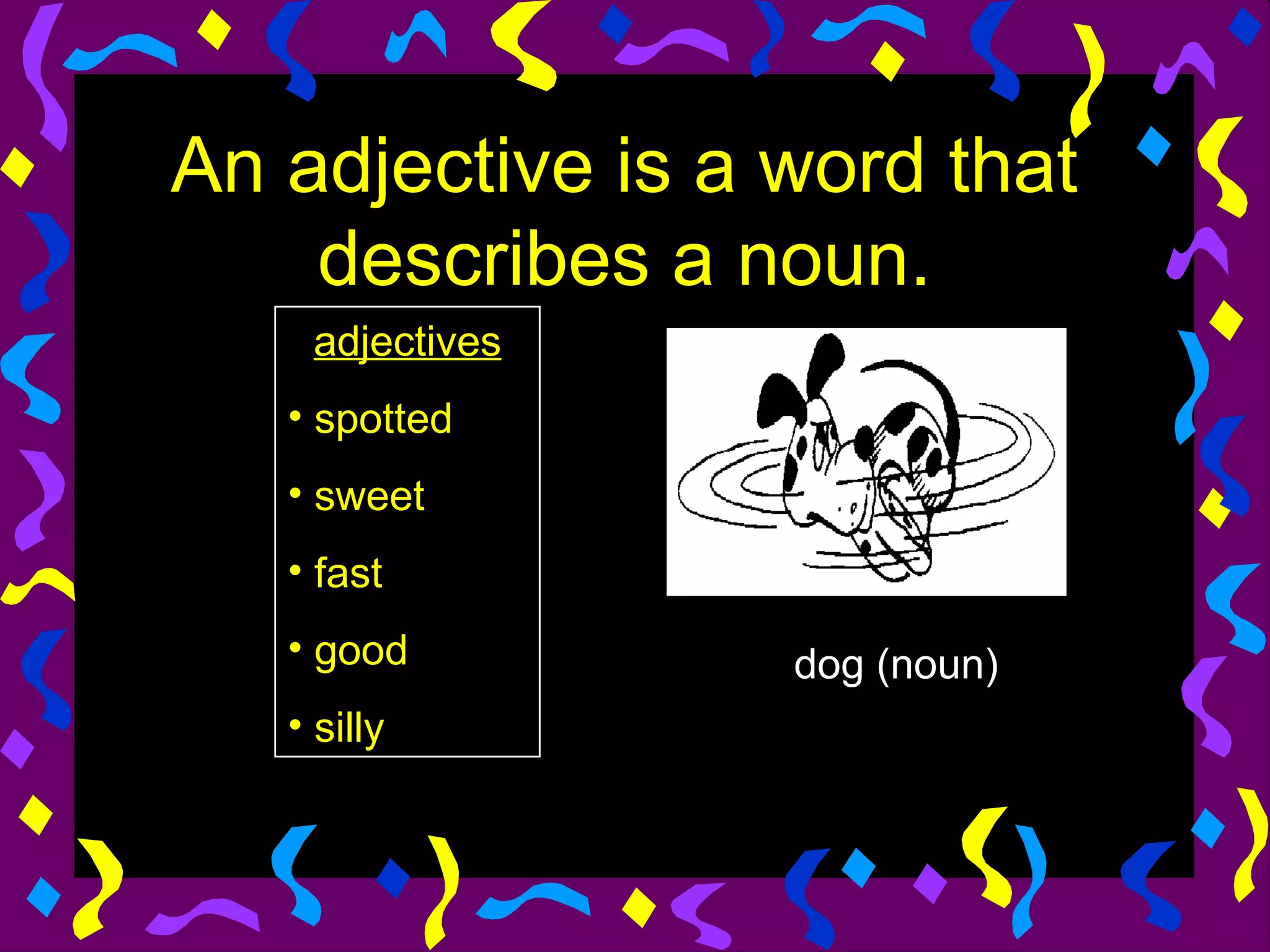
An adjective is a word that
    describes a noun.
    adjectives
   • spotted
   • sweet
   • fast
   • good         dog (noun)
   • silly
An adjective can tell
  what kind or how many.
• big          • one
• hot          • five
• purple       • many
• golden       • few
• nice         • some
• helpful      • several
Adjectives after be.
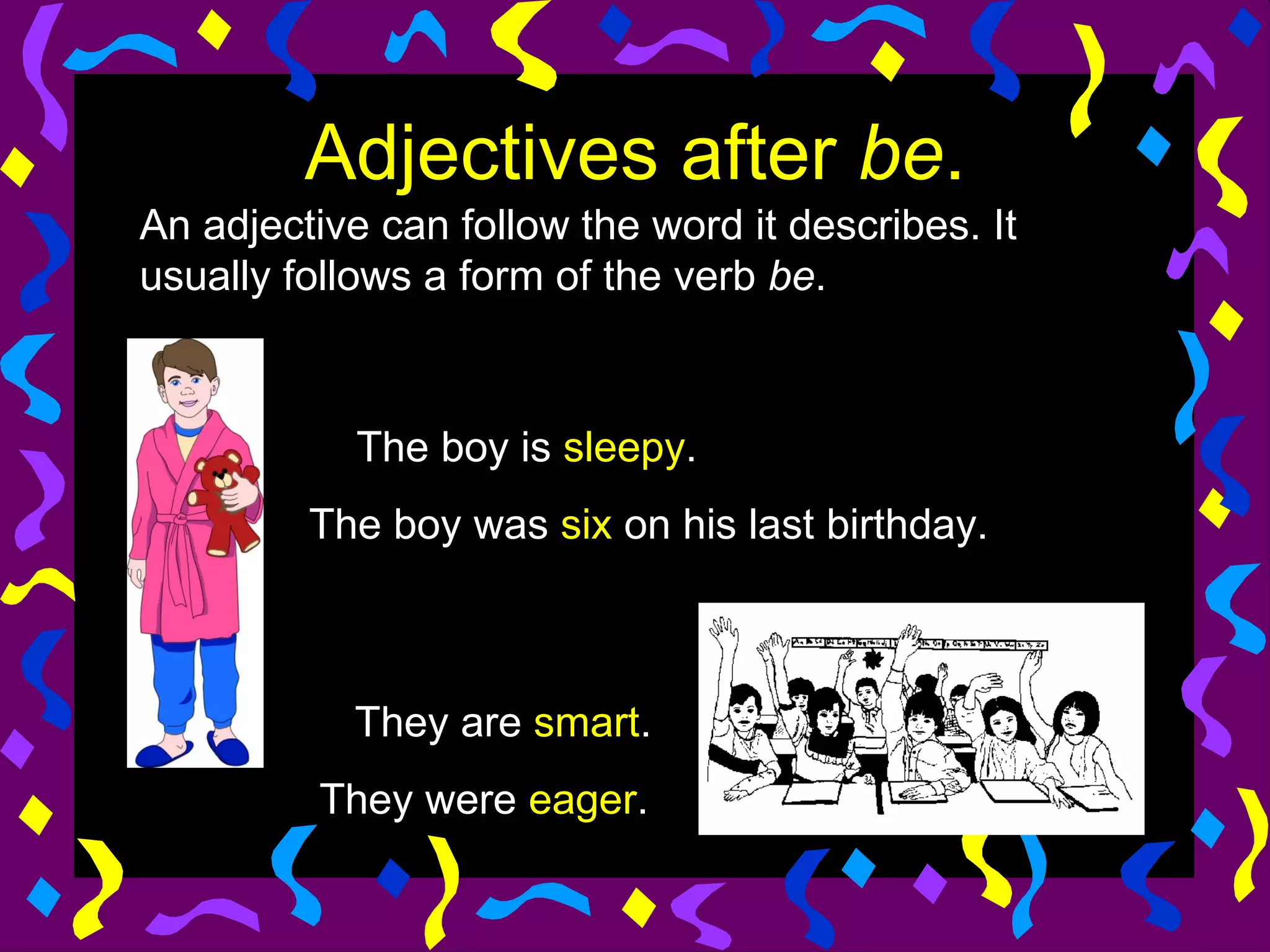
An adjective can follow the word it describes. It
usually follows a form of the verb be.


            The boy is sleepy.
         The boy was six on his last birthday.


            They are smart.
          They were eager.
Using a, an, and the.
• Use a before a singular noun that begins with a
consonant sound.
• Use an before a singular noun that begins with a
vowel sound.
• Use the before all plural nouns.
• Use the before any singular noun.
Using a, an, and the.
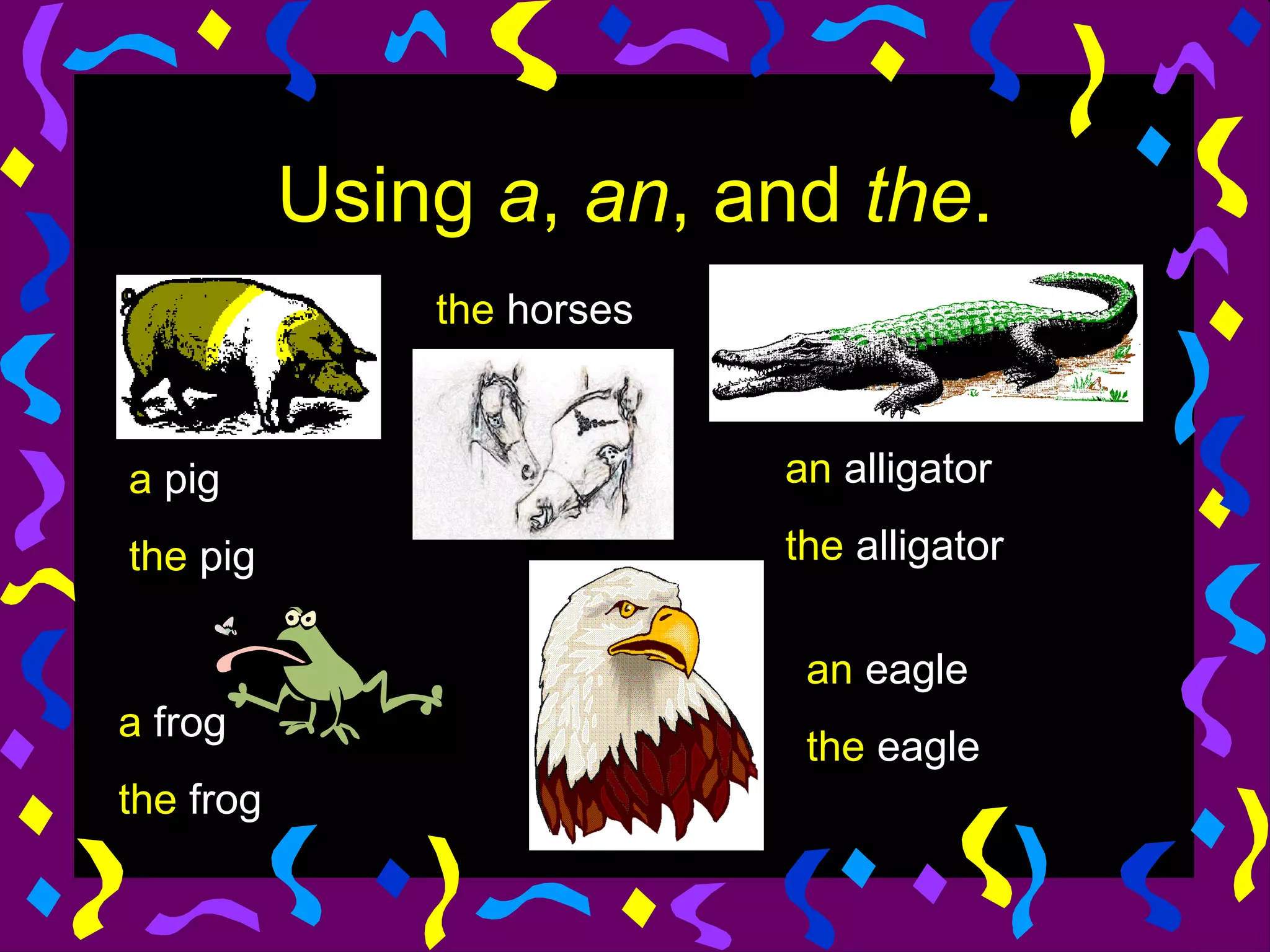
               the horses


a pig                       an alligator

the pig                     the alligator

                             an eagle
a frog
                             the eagle
the frog
Making Comparisons
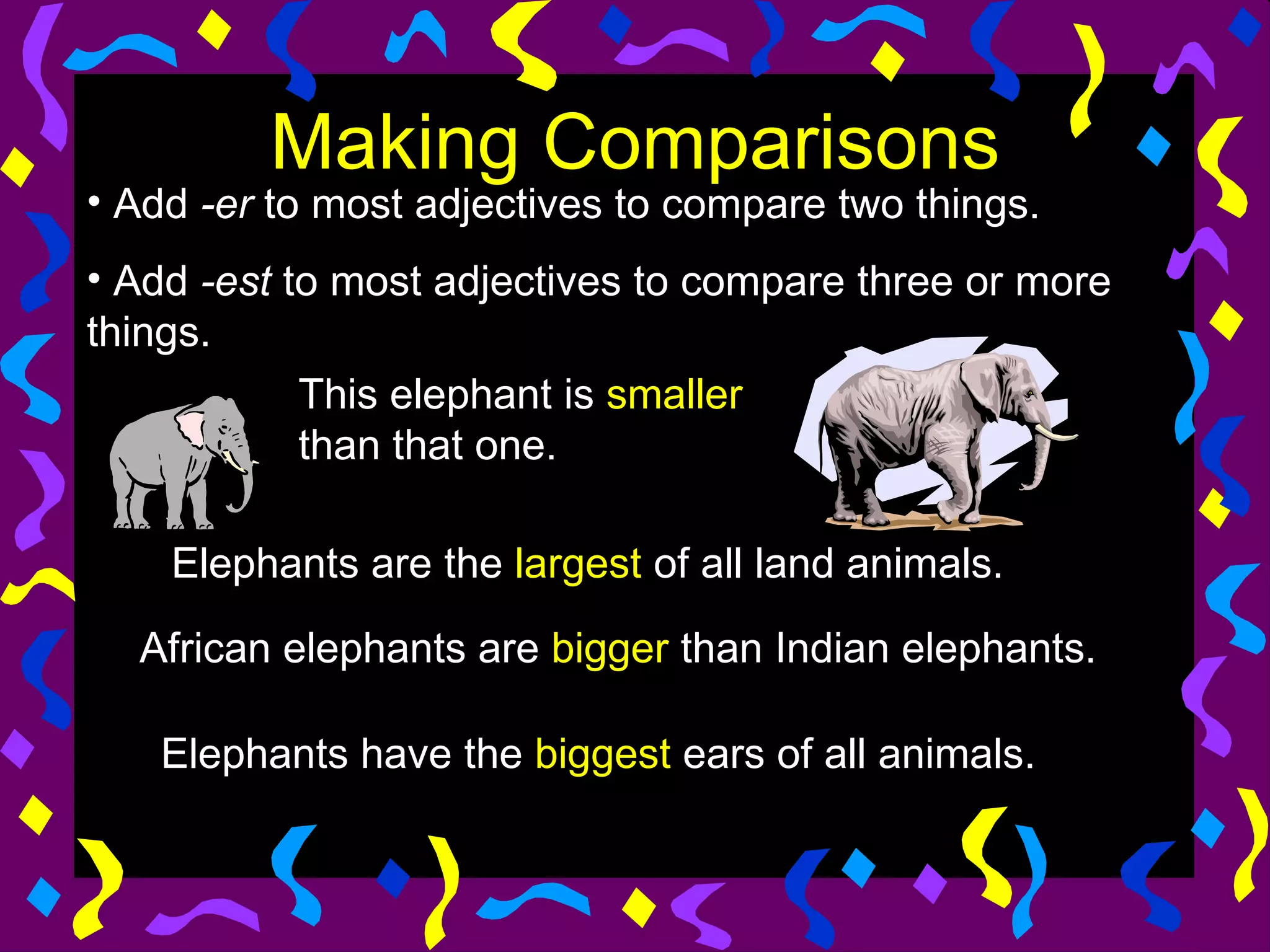
• Add -er to most adjectives to compare two things.
• Add -est to most adjectives to compare three or more
things.
            This elephant is smaller
            than that one.

    Elephants are the largest of all land animals.

  African elephants are bigger than Indian elephants.

   Elephants have the biggest ears of all animals.
Comparing with more and most.

 • Use more and most with adjectives of two or more
 syllables.
 • Use more to compare two things.
 • Use most to compare three or more things.
Comparing with more and most.
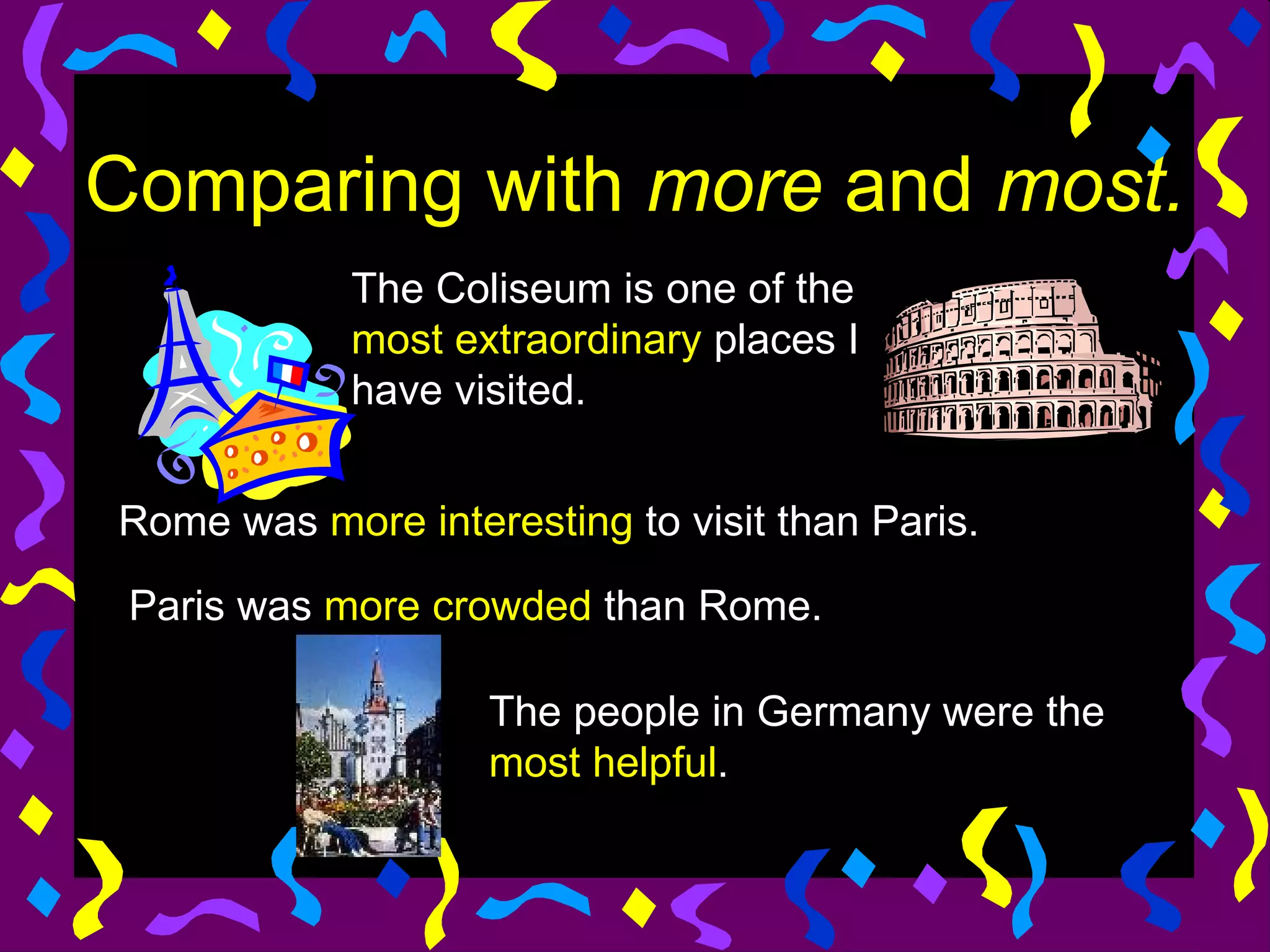
            The Coliseum is one of the
            most extraordinary places I
            have visited.


Rome was more interesting to visit than Paris.

 Paris was more crowded than Rome.

                   The people in Germany were the
                   most helpful.
Comparing with good and bad.
  • When you use the adjectives good and bad
  to compare, you must change their forms.
  • Use better or worse to compare two.
  • Use best or worst to compare three or
  more.
Comparing with good and bad.
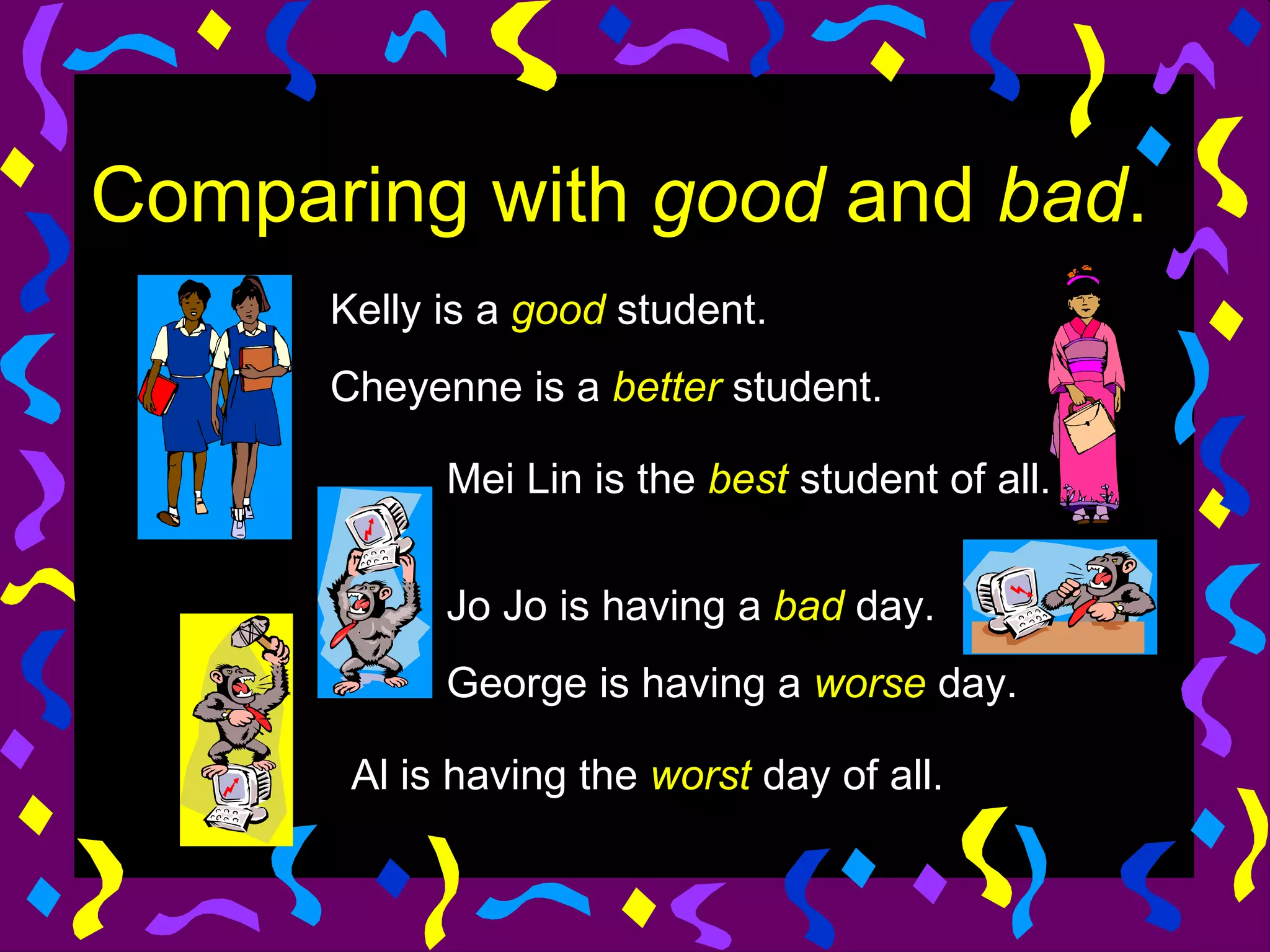
      Kelly is a good student.
      Cheyenne is a better student.

            Mei Lin is the best student of all.


            Jo Jo is having a bad day.
            George is having a worse day.

       Al is having the worst day of all.
Made by D & W's Teacher Resources

Adjectives that Compare Lesson 19

  • 1.
  • 2.
    Adjectives  An adjective is a word that describes a noun.  An adjective can tell what kind or how many.
  • 3.
    An adjective isa word that describes a noun. adjectives • spotted • sweet • fast • good dog (noun) • silly
  • 4.
    An adjective cantell what kind or how many. • big • one • hot • five • purple • many • golden • few • nice • some • helpful • several
  • 5.
    Adjectives after be. Anadjective can follow the word it describes. It usually follows a form of the verb be. The boy is sleepy. The boy was six on his last birthday. They are smart. They were eager.
  • 6.
    Using a, an,and the. • Use a before a singular noun that begins with a consonant sound. • Use an before a singular noun that begins with a vowel sound. • Use the before all plural nouns. • Use the before any singular noun.
  • 7.
    Using a, an,and the. the horses a pig an alligator the pig the alligator an eagle a frog the eagle the frog
  • 8.
    Making Comparisons • Add-er to most adjectives to compare two things. • Add -est to most adjectives to compare three or more things. This elephant is smaller than that one. Elephants are the largest of all land animals. African elephants are bigger than Indian elephants. Elephants have the biggest ears of all animals.
  • 9.
    Comparing with moreand most. • Use more and most with adjectives of two or more syllables. • Use more to compare two things. • Use most to compare three or more things.
  • 10.
    Comparing with moreand most. The Coliseum is one of the most extraordinary places I have visited. Rome was more interesting to visit than Paris. Paris was more crowded than Rome. The people in Germany were the most helpful.
  • 11.
    Comparing with goodand bad. • When you use the adjectives good and bad to compare, you must change their forms. • Use better or worse to compare two. • Use best or worst to compare three or more.
  • 12.
    Comparing with goodand bad. Kelly is a good student. Cheyenne is a better student. Mei Lin is the best student of all. Jo Jo is having a bad day. George is having a worse day. Al is having the worst day of all.
  • 13.
    Made by D& W's Teacher Resources