Privacy in the Cyberspace
By: Mary Margarette A. Napoles
What Is Online/Digital Privacy?
• Online privacy, also known as internet privacy or digital privacy, is
the level of privacy protection an individual has while connected to
the Internet. It covers the amount of online security available for
personal and financial data, communications, and preferences.
What Does Privacy Mean On A Computer?
Internet?
• The complex issue of computer privacy covers the way your
personal information is used, collected, shared, and stored on your
personal devices and while on the Internet. Personal information
about your habits, shopping, and location can be collected from
your phone, GPS, and other devices—and eventually shared with
third parties. Internet and device users have the right to ask how
information will be used and to review online privacy policies.
Types of Digital Privacy
• Information/Data Privacy
• Communication Privacy
• Individual Privacy
Information/Data Privacy
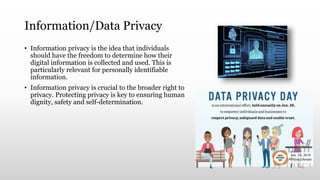
• Information privacy is the idea that individuals
should have the freedom to determine how their
digital information is collected and used. This is
particularly relevant for personally identifiable
information.
• Information privacy is crucial to the broader right to
privacy. Protecting privacy is key to ensuring human
dignity, safety and self-determination.
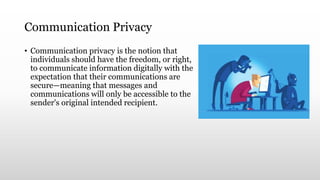
Communication Privacy
• Communication privacy is the notion that
individuals should have the freedom, or right,
to communicate information digitally with the
expectation that their communications are
secure—meaning that messages and
communications will only be accessible to the
sender's original intended recipient.
Individual Privacy
• Individual privacy is the notion that individuals have a
right to exist freely on the internet, in that they can
choose what type of information they are exposed to,
and more importantly, that unwanted information
should not interrupt them. An example of a digital
breach of individual privacy would be an internet user
receiving unwanted ads and emails/spam, or a
computer virus that forces the user to take actions,
which otherwise they would not. In such cases, the
individual does not exist digitally without interruption
from unwanted information; thus their individual
privacy has been infringed upon.
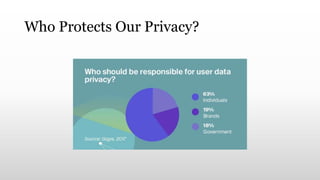
Who Protects Our Privacy?
Individual
• Do some tips from online on ways to protect your privacy.
Government
• The governments pass a comprehensive data protection laws that hold
companies accountable for how they collect and use people's personal
information. They make sure those laws set out clear rights for individuals
to control their personal data, including the rights of access, objection,
rectification, data portability and redress.
• Limit the personal information you share on social
media
• Browse in private mode
• Be careful where you click
• Secure your mobile devices
• Use quality antivirus software
• Use a VPN
Ways To Protect Our Privacy?
References:
• https://www.bitdefender.com/cyberpedia/what-is-online-privacy/
• https://www.winston.com/en/legal-glossary/online-privacy.html
• https://en.wikipedia.org/wiki/Digital_privacy#Information_privacy
• https://www.humanrightscareers.com/issues/reasons-why-privacy-rights-are-important/
• https://staysafeonline.org/blog/7-tips-to-manage-your-identity/

ADET_PrivacyInTheCyberWorld_Napoles.pptx

  • 1.
    Privacy in theCyberspace By: Mary Margarette A. Napoles
  • 2.
    What Is Online/DigitalPrivacy? • Online privacy, also known as internet privacy or digital privacy, is the level of privacy protection an individual has while connected to the Internet. It covers the amount of online security available for personal and financial data, communications, and preferences. What Does Privacy Mean On A Computer? Internet? • The complex issue of computer privacy covers the way your personal information is used, collected, shared, and stored on your personal devices and while on the Internet. Personal information about your habits, shopping, and location can be collected from your phone, GPS, and other devices—and eventually shared with third parties. Internet and device users have the right to ask how information will be used and to review online privacy policies.
  • 3.
    Types of DigitalPrivacy • Information/Data Privacy • Communication Privacy • Individual Privacy
  • 4.
    Information/Data Privacy • Informationprivacy is the idea that individuals should have the freedom to determine how their digital information is collected and used. This is particularly relevant for personally identifiable information. • Information privacy is crucial to the broader right to privacy. Protecting privacy is key to ensuring human dignity, safety and self-determination.
  • 5.
    Communication Privacy • Communicationprivacy is the notion that individuals should have the freedom, or right, to communicate information digitally with the expectation that their communications are secure—meaning that messages and communications will only be accessible to the sender's original intended recipient.
  • 6.
    Individual Privacy • Individualprivacy is the notion that individuals have a right to exist freely on the internet, in that they can choose what type of information they are exposed to, and more importantly, that unwanted information should not interrupt them. An example of a digital breach of individual privacy would be an internet user receiving unwanted ads and emails/spam, or a computer virus that forces the user to take actions, which otherwise they would not. In such cases, the individual does not exist digitally without interruption from unwanted information; thus their individual privacy has been infringed upon.
  • 7.
  • 8.
    Individual • Do sometips from online on ways to protect your privacy. Government • The governments pass a comprehensive data protection laws that hold companies accountable for how they collect and use people's personal information. They make sure those laws set out clear rights for individuals to control their personal data, including the rights of access, objection, rectification, data portability and redress.
  • 9.
    • Limit thepersonal information you share on social media • Browse in private mode • Be careful where you click • Secure your mobile devices • Use quality antivirus software • Use a VPN Ways To Protect Our Privacy?
  • 11.
    References: • https://www.bitdefender.com/cyberpedia/what-is-online-privacy/ • https://www.winston.com/en/legal-glossary/online-privacy.html •https://en.wikipedia.org/wiki/Digital_privacy#Information_privacy • https://www.humanrightscareers.com/issues/reasons-why-privacy-rights-are-important/ • https://staysafeonline.org/blog/7-tips-to-manage-your-identity/