#3 Drug addiction was traditionally defined as using a substance
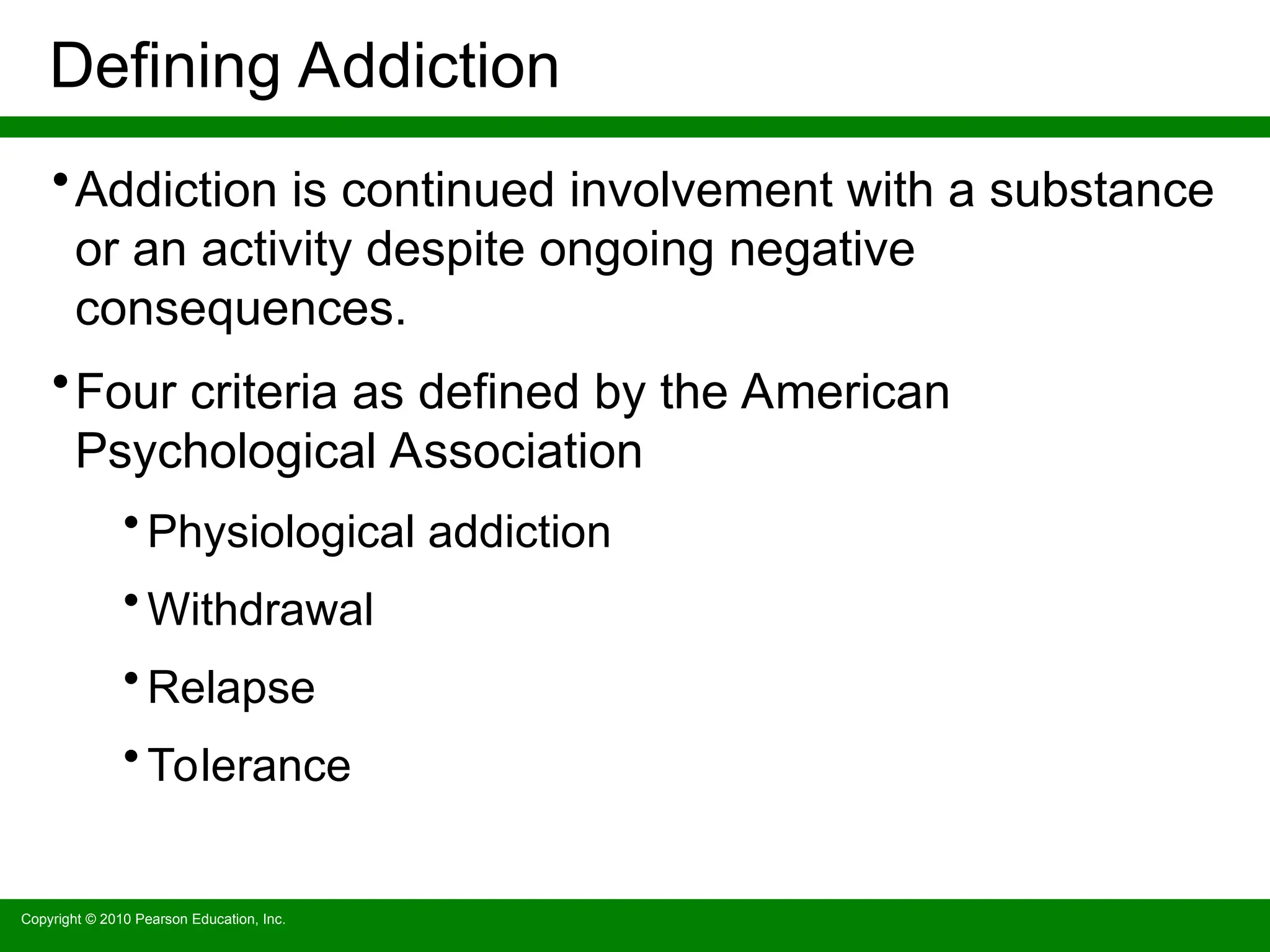
that induces physiological dependence, or the adaptive state that occurs with regular addictive behavior and results in withdrawal syndrome.
to relieve withdrawal symptoms
for which efforts to cut down or cease using it are unsuccessful
whose use leads to tolerance, or an acquired reaction to a drug in which continued intake of the same dose has diminished effects.
#4 Drug addiction was traditionally defined as using a substance
that induces physiological dependence, or the adaptive state that occurs with regular addictive behavior and results in withdrawal syndrome.
to relieve withdrawal symptoms
for which efforts to cut down or cease using it are unsuccessful
whose use leads to tolerance, or an acquired reaction to a drug in which continued intake of the same dose has diminished effects.
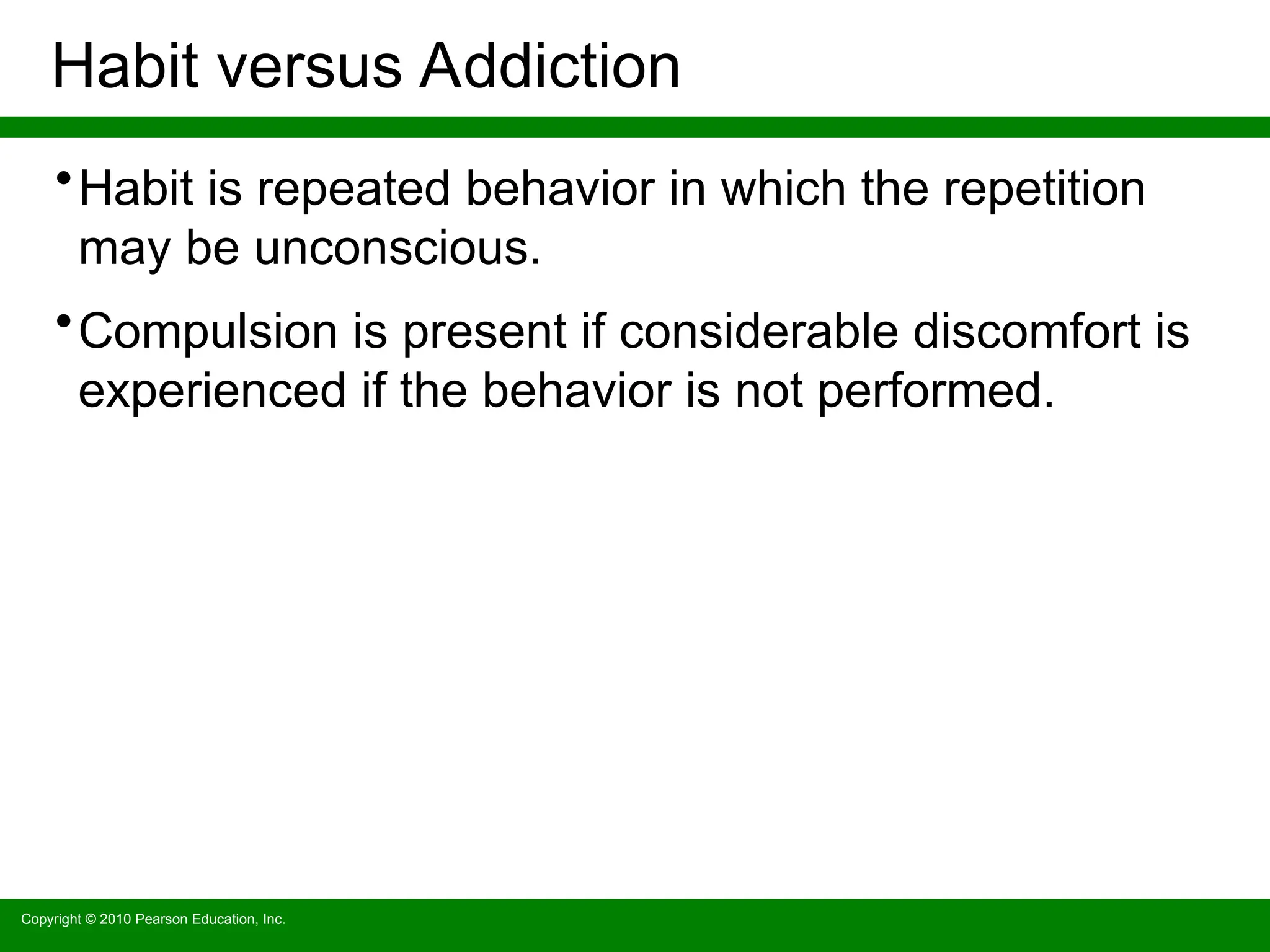
#5 Many people believe addiction is no more than habit; they feel behaviors such as smoking, gambling, and biting your nails are self-selected.
#6 (1) Compulsion is distinguished by obsession, or excessive preoccupation with the behavior and an overwhelming need to perform it.
(2) Loss of control is the inability to reliably predict whether any isolated occurrence of the behavior will be healthy or damaging.
(3) Negative consequences, such as physical damage, legal trouble, financial problems, academic failure, and family dissolution, do not occur with healthy involvement in any behavior.
(4) Denial is the inability to perceive that the behavior is self-destructive.
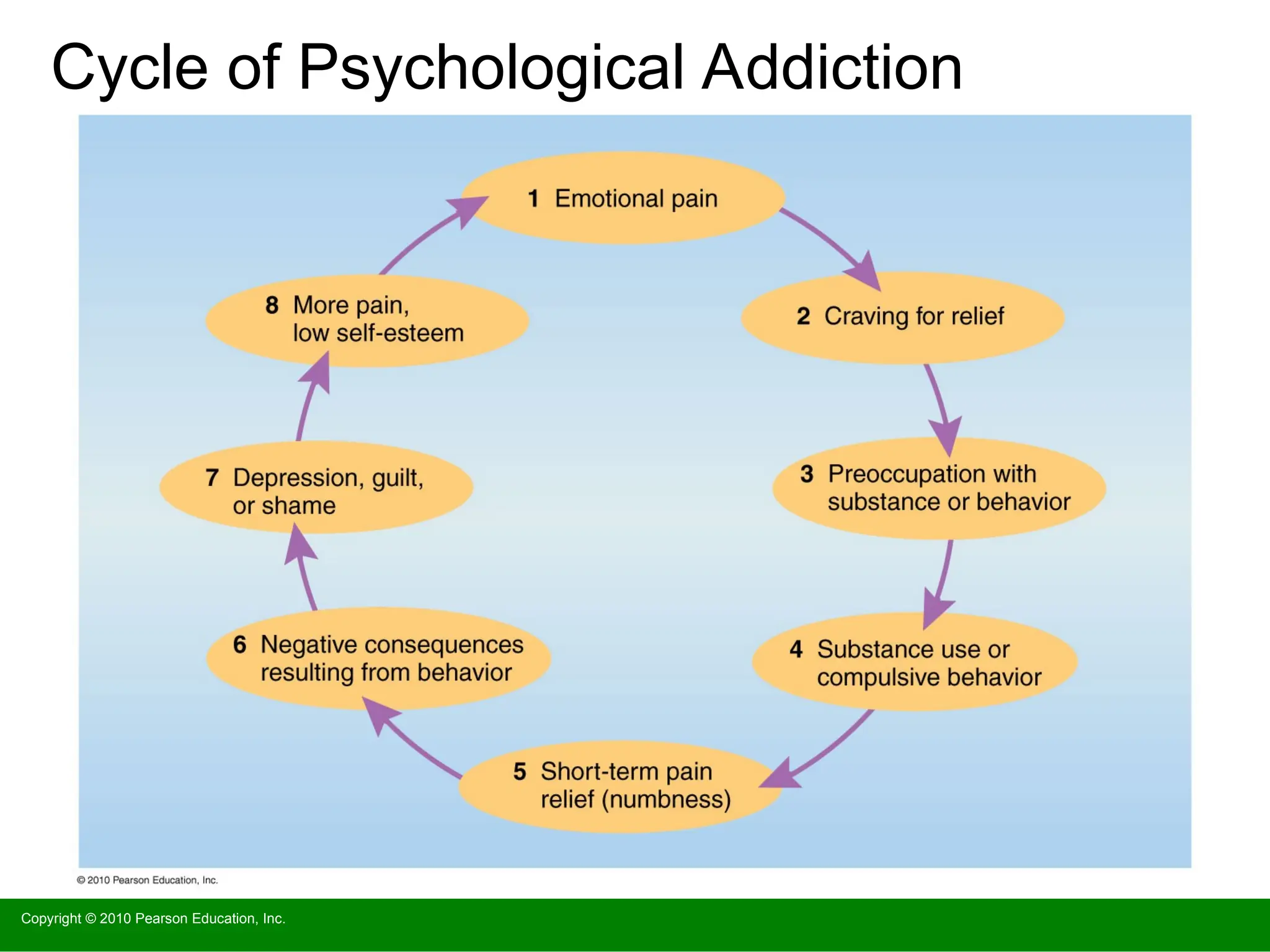
#7 Addiction begins when a person repeatedly seeks the illusion of relief to avoid unpleasant feelings or situations, known as “nurturing through avoidance.”
Biochemical messengers, called neurotransmitters, exert their influence at specific receptor sites on nerve cells. Drug use and chronic stress can alter these receptor sites and cause the production and breakdown of neurotransmitters.
Mood-altering substances and experiences produce tolerance, a phenomenon in which progressively larger doses of a drug or more intense involvement in an experience are needed to obtain the desired effects.
Withdrawal symptoms of chemical dependencies are generally the opposite of the effects of the drugs.
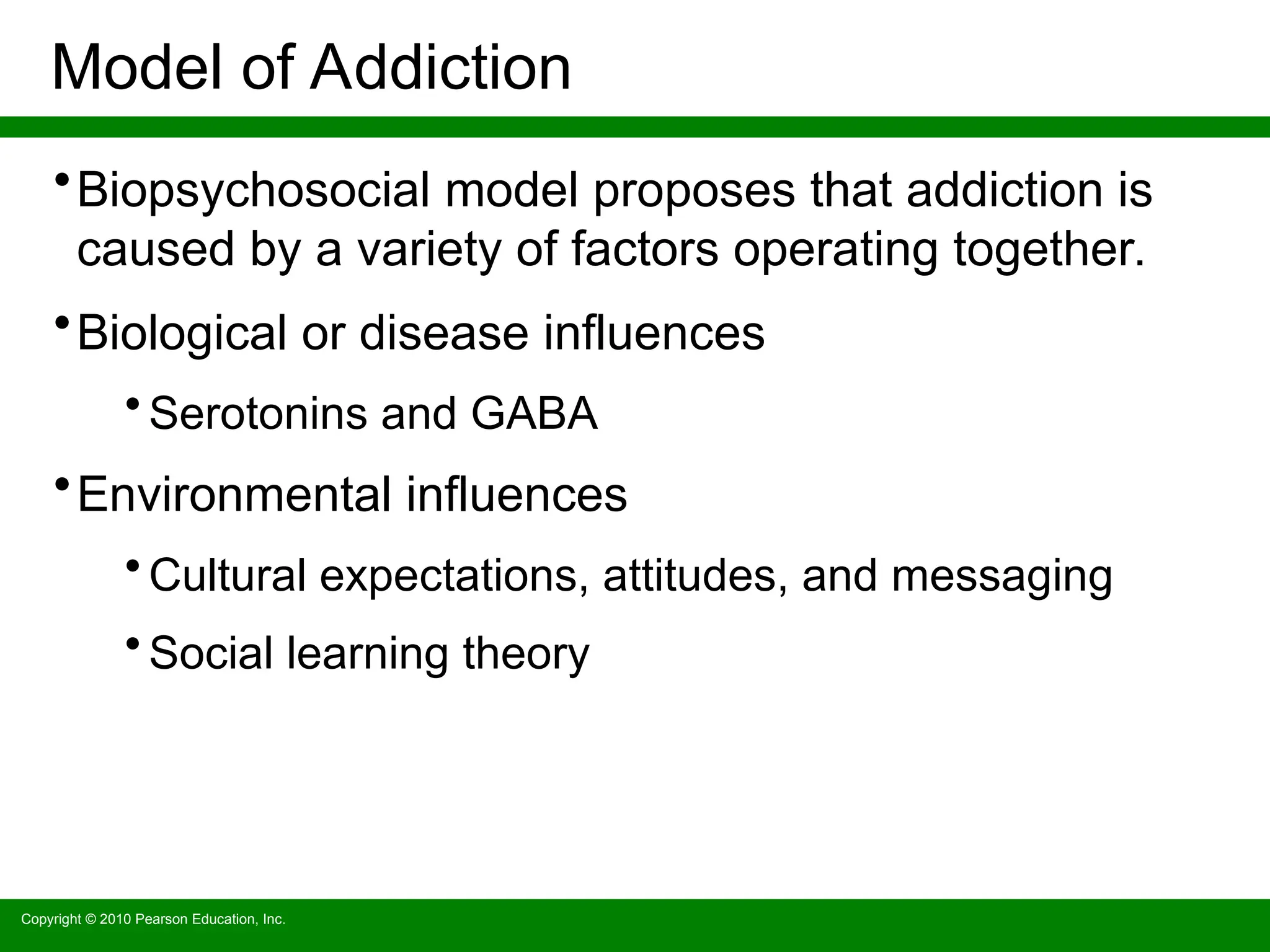
#9 Biological or disease influences: Research suggests that genes affecting the activity of the neurotransmitters serotonin and GABA (gammaaminobutyric acid) are likely involved in the risk for alcoholism.
Environmental influences: Cultural expectations, societal attitudes, and societal messages influence addictive behavior.
Social learning theory proposes that people learn behaviors by watching role models—parents, caregivers, and significant others. From early childhood on, the effects of modeling, imitation, and identification with behavior are well documented. If Dad drank when he was upset or we saw in the movies that the movie star drank when happy, we are subconsciously programmed to perform the same behaviors.
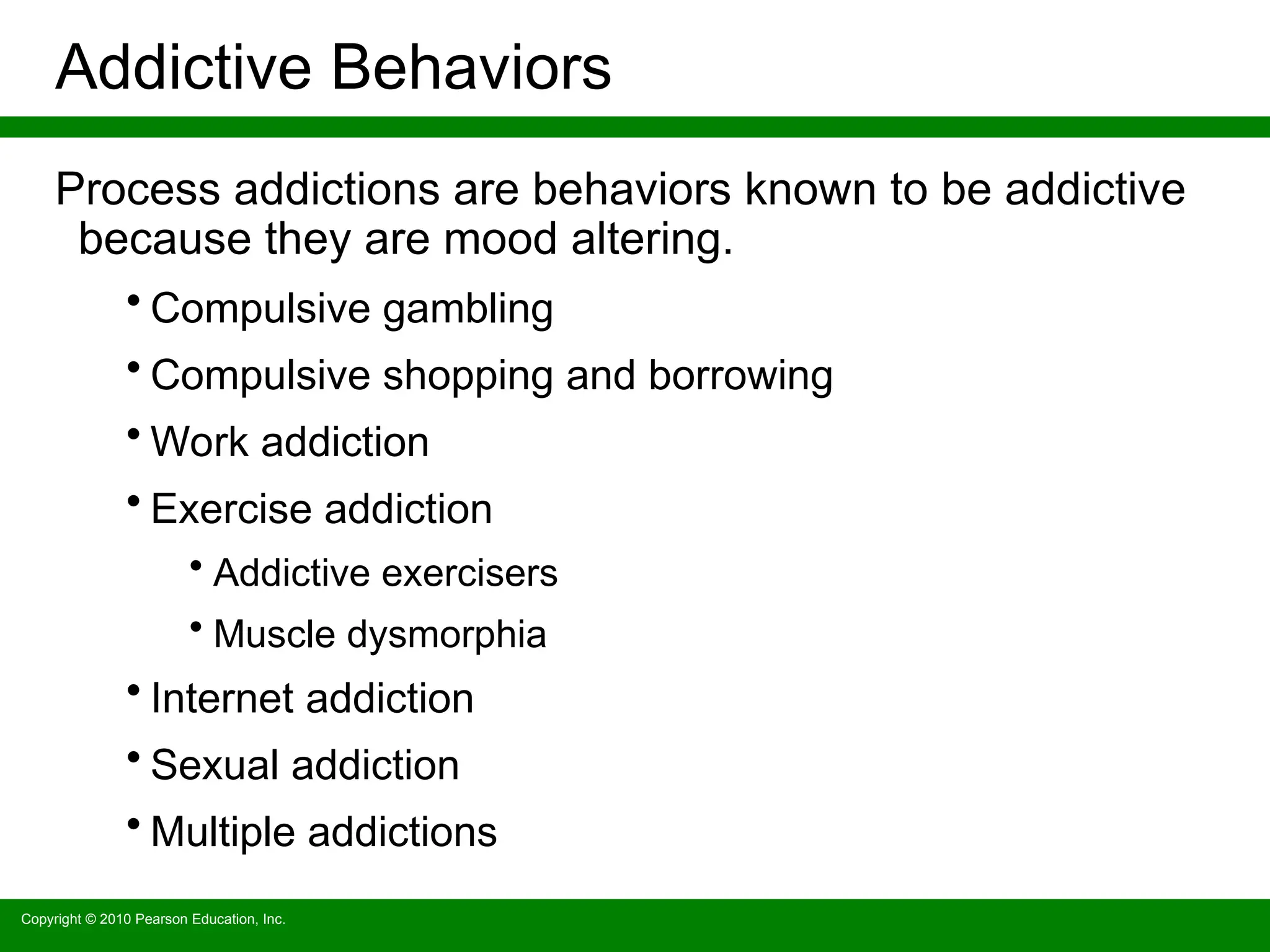
#11 Multiple addictions: Though addicts tend to have a favorite drug or behavior—one that is most effective at meeting their needs—as many as 60 percent of people in treatment have problems with more than one addiction.
#12 The American Psychological Association (APA) recognizes pathological gambling as a mental disorder and lists ten characteristic behaviors, including preoccupation with gambling, unsuccessful efforts to cut back or quit, using gambling to escape problems, and lying to family members to conceal the extent of involvement.
#14 Compulsive shopping or spending can be seasonal, such as shopping during the winter months, to alleviate feelings of anxiety and depression. It can also occur when people feel depressed, lonely, or angry.
#15 A work persona is the image that work addicts wish to project to others.
#17 Muscle dysmorphia, sometimes referred to as “bigarexia,” is a pathological preoccupation with being larger and more muscular.
#18 An estimated 5 to 10 percent of Internet users will likely experience Internet addiction.
Internet addicts have a general disregard for health, are sleep deprived, neglect family and friends, are physically inactive, show euphoria when online, have lower grades in school, and show poor job performance.
#19 Sexual addictions affect men and women of all ages, whether married, single, or homosexual.