AI Certification Program
TABLE OF CONTENTS
Introduction.......................................................................................................................1
Certification Goals and Learning Outcomes...............................................2
The Impact of AI on Modern Business Practices.......................................2
What is Next for AI?....................................................................................................3
How AI Changes Cloud Architect........................................................................4
How AI Address Challenges in Cloud Architect.........................................5
How Industries are Adopting AI in Cloud Architect.................................6
How to Integrate AI in Cloud Architect............................................................7
Module 1: Fundamentals of Neural Networks.............................................8
Module 2: Neural Network Optimization.......................................................8
Module 3: Neural Network Architectures for NLP...................................8
Module 4: Neural Network Architectures for Computer Vision. 9
Module 5: Model Evaluation and Performance Metrics........................9
Module 6: AI Infrastructure and Deployment.............................................10
Module 7: AI Ethics and Responsible AI Design.........................................10
Module 8: Generative AI Models.........................................................................10
Module 9: Research-Based AI Design................................................................11
Module 10: Capstone Project and Course Review.....................................11
How Can AI CERTs Help Build an AI-Ready Culture?................................11
Copyright© 2024. All rights reserved
AI+
Architecture
Introduction
The AI+ Architect Certification is an advanced program tailored for cloud
architects, offering an in-depth exploration of Artificial Intelligence (AI) and its
practical applications. It starts with foundational neural network concepts,
advancing to complex topics such as optimization, hyperparameter tuning, and
regularization techniques. Learners engage with AI architectures like Recurrent
Neural Networks (RNNs), Long Short-Term Memory networks (LSTMs),
Transformers, and Convolutional Neural Networks (CNNs), applying these in
Natural Language Processing (NLP) and computer vision projects.
The program also covers AI infrastructure, deployment, and ethical
considerations, ensuring responsible AI development. A capstone project
allows participants to demonstrate their ability to solve architectural challenges
using AI, preparing them to lead in a technology-driven environment with
enhanced precision, efficiency, and creativity.
It covers the following topics to help you understand the integration of AI with
cloud architecture.
Fundamentals of Neural
Networks Neural Network
Optimization
Neural Network Architectures for NLP
Neural Network Architectures for Computer
Vision Model Evaluation and Performance
Metrics
AI Infrastructure and Deployment
AI Ethics and Responsible AI
Design Generative AI Models
Research-Based AI Design
Capstone Project and Course Review
Certification Prerequisites
Domain Awareness: A foundational knowledge on neural networks,
including their optimization and architecture for applications. AI+ Cloud
certification is mandatory.
Model Evaluation: Ability to evaluate models using various performance
metrics to ensure accuracy and reliability. Strong knowledge
Curiosity for AI: Willingness to know about AI infrastructure and deployment
processes to implement and maintain AI systems effectively.
Who Should Enroll? Copyright© 2024. All rights reserved
AI+
Architecture
Cloud Architects: Enhance skills by integrating AI technologies into cloud
solutions.
AI Specialists: Build expertise in cloud architecture to design and manage
AI- driven solutions in cloud environments.
1
IT Professionals: Specialize in cloud computing with a focus on AI to
support advanced data analytics, ML models, and intelligent cloud-based
applications.
Data Scientists and Analysts: Leverage cloud platforms for scalable AI
deployment and data processing.
Software Developers: Build and deploy AI applications in the cloud, to
optimize performance and scalability.
Tech Managers and Leaders: Develop a comprehensive understanding of
how cloud and AI technologies intersect to drive innovation and strategic
decision- making.
Certification Goals and Learning Outcomes
Acquire a comprehensive understanding of the fundamental principles
behind neural networks and various architectures, including their design
and applications across different domains.
Build a strong mathematical foundation necessary for understanding and
developing neural network models, focusing on key concepts that underpin
network operations and optimizations.
Learn advanced techniques for training neural networks effectively,
including optimization methods, and gain expertise in evaluating model
performance through various metrics.
Master AI deployment and ethical design, ensuring responsible and
effective implementation of AI technologies and use generative AI
models to create innovative and ethical AI solutions.
The Impact of AI on Modern Business Practices
AI, a rapidly evolving force, has significantly contributed to technical and
economic growth over the past decade. By 2030, it is projected to inject a
staggering $1.35 trillion into the global economy, underscoring its
revolutionary potential.
AI has evolved from basic rule-based systems to advanced Machine Learning
(ML) and Deep Learning (DL) models, significantly transforming modern
business. Initially constrained by limited data and computational power, AI
now harnesses vast datasets and powerful algorithms to drive innovation and
efficiency. Businesses leverage AI for data-driven decision-making, automation,
and personalized customer experiences, leading to increased productivity and
competitive advantage. As AI continues to advance, its role in shaping strategic
insights and operational practices will only grow, offering new opportunities
and challenges in the business landscape.
The convergence of cloud and neural networks is revolutionizing the design
Copyright© 2024. All rights reserved
AI+
Architecture
and optimization of cloud-based systems. Neural networks are being used by
cloud architects to improve the performance, efficiency, and scalability of
cloud- based settings. They can predict and manage workloads, automate
complex processes, and optimize resource allocation by utilizing cutting-edge
ML techniques.
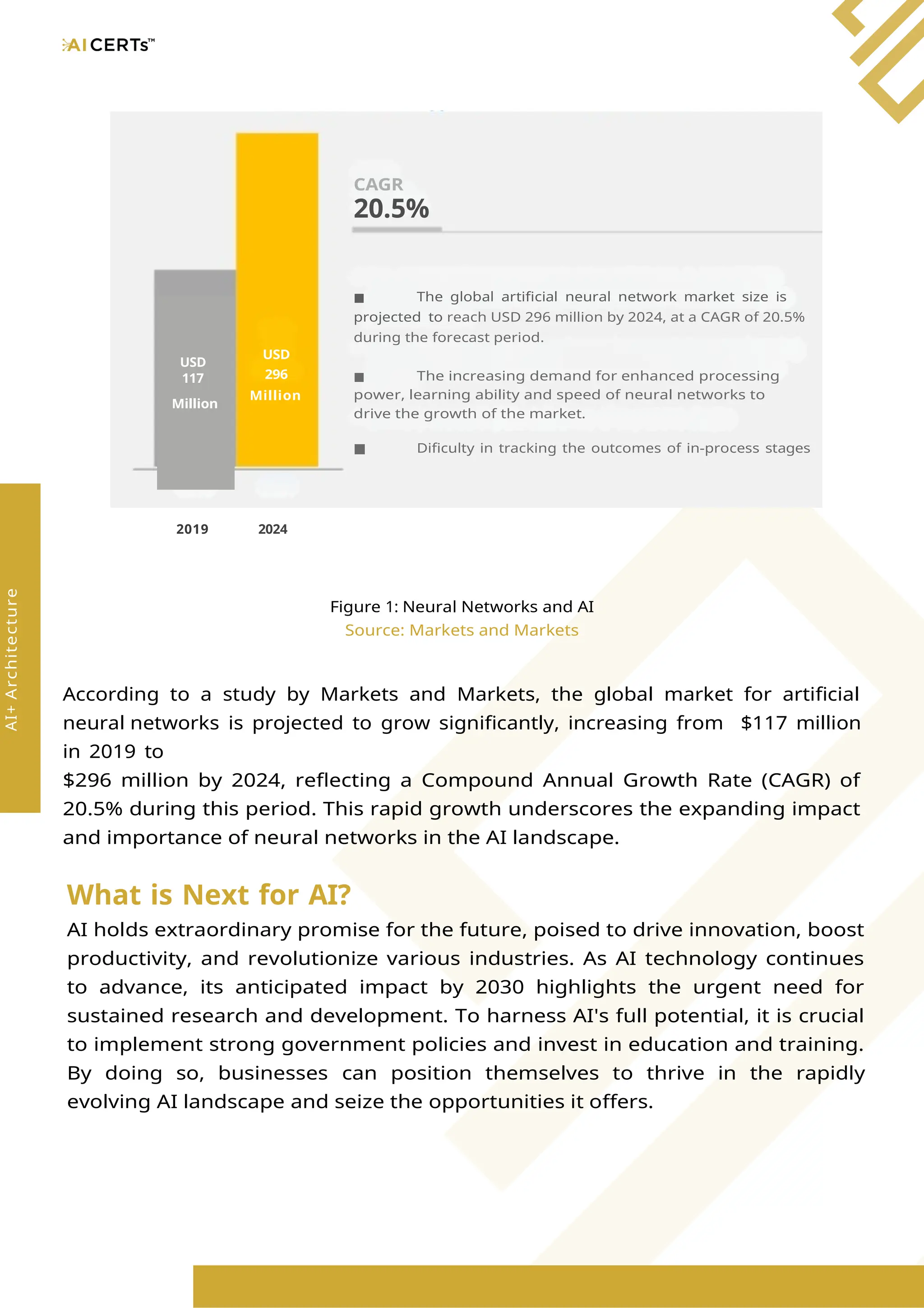
CAGR
20.5%
USD
296
Million
2019 2024
■ The global artificial neural network market size is
projected to reach USD 296 million by 2024, at a CAGR of 20.5%
during the forecast period.
■ The increasing demand for enhanced processing
power, learning ability and speed of neural networks to
drive the growth of the market.
■ Dificulty in tracking the outcomes of in-process stages
Figure 1: Neural Networks and AI
Source: Markets and Markets
According to a study by Markets and Markets, the global market for artificial
neural networks is projected to grow significantly, increasing from $117 million
in 2019 to
$296 million by 2024, reflecting a Compound Annual Growth Rate (CAGR) of
20.5% during this period. This rapid growth underscores the expanding impact
and importance of neural networks in the AI landscape.
What is Next for AI?
AI holds extraordinary promise for the future, poised to drive innovation, boost
productivity, and revolutionize various industries. As AI technology continues
to advance, its anticipated impact by 2030 highlights the urgent need for
sustained research and development. To harness AI's full potential, it is crucial
to implement strong government policies and invest in education and training.
By doing so, businesses can position themselves to thrive in the rapidly
evolving AI landscape and seize the opportunities it offers.
AI+
Architecture
USD
117
Million
Copyright© 2024. All rights reserved
3
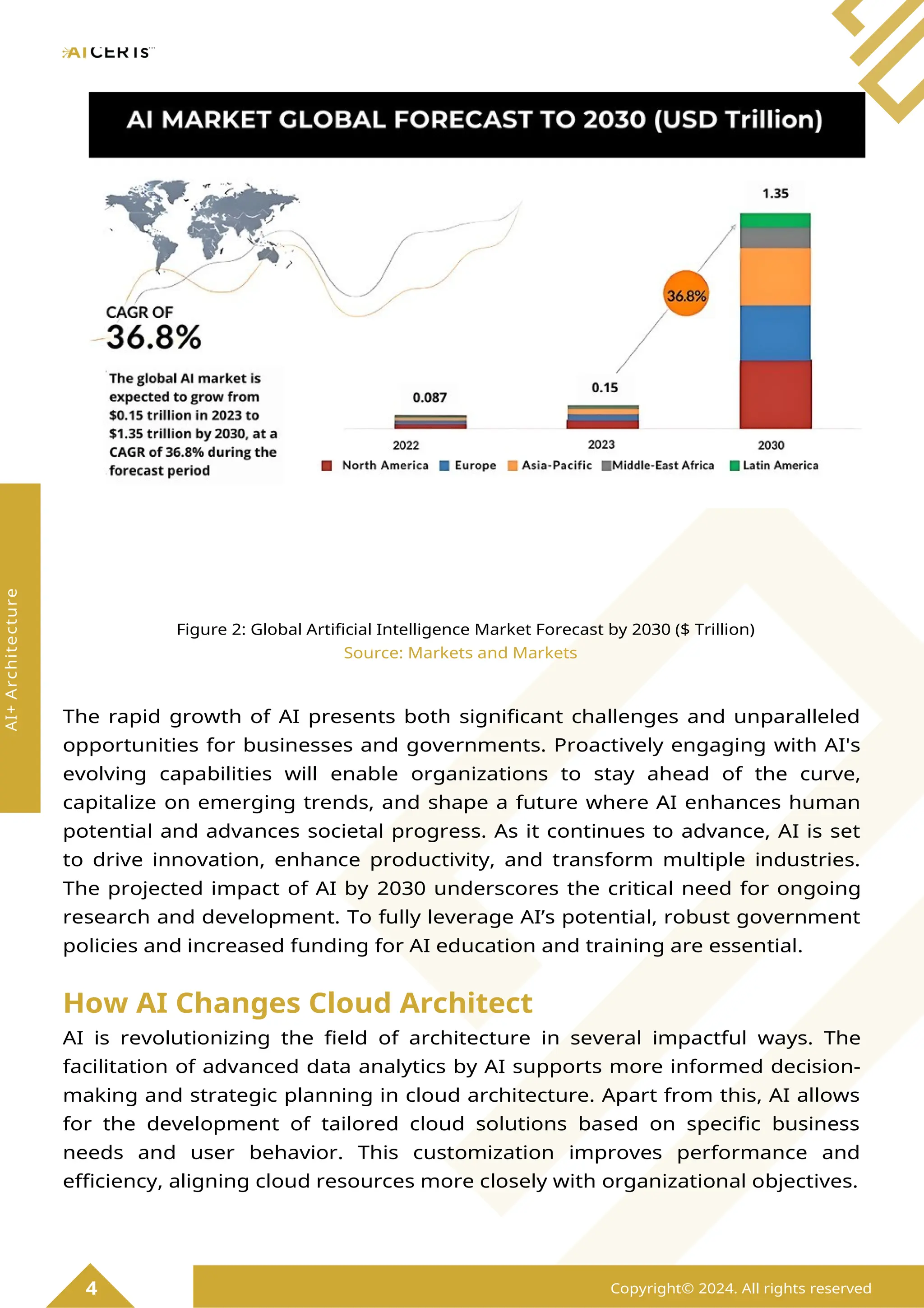
Figure 2: Global Artificial Intelligence Market Forecast by 2030 ($ Trillion)
Source: Markets and Markets
The rapid growth of AI presents both significant challenges and unparalleled
opportunities for businesses and governments. Proactively engaging with AI's
evolving capabilities will enable organizations to stay ahead of the curve,
capitalize on emerging trends, and shape a future where AI enhances human
potential and advances societal progress. As it continues to advance, AI is set
to drive innovation, enhance productivity, and transform multiple industries.
The projected impact of AI by 2030 underscores the critical need for ongoing
research and development. To fully leverage AI’s potential, robust government
policies and increased funding for AI education and training are essential.
How AI Changes Cloud Architect
AI is revolutionizing the field of architecture in several impactful ways. The
facilitation of advanced data analytics by AI supports more informed decision-
making and strategic planning in cloud architecture. Apart from this, AI allows
for the development of tailored cloud solutions based on specific business
needs and user behavior. This customization improves performance and
efficiency, aligning cloud resources more closely with organizational objectives.
4 Copyright© 2024. All rights reserved
AI+
Architecture
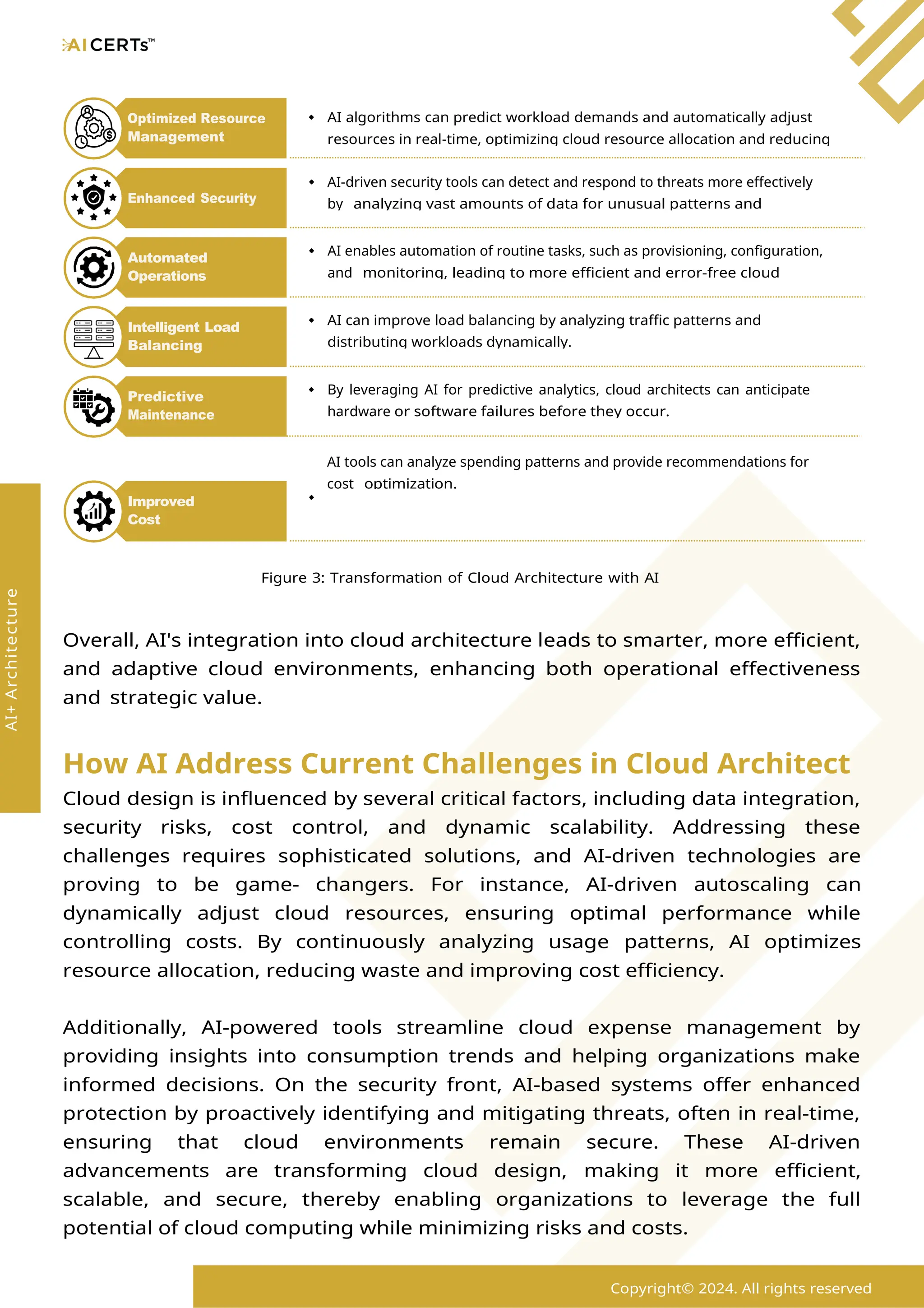
AI tools can analyze spending patterns and provide recommendations for
cost optimization.
Figure 3: Transformation of Cloud Architecture with AI
Overall, AI's integration into cloud architecture leads to smarter, more efficient,
and adaptive cloud environments, enhancing both operational effectiveness
and strategic value.
How AI Address Current Challenges in Cloud Architect
Cloud design is influenced by several critical factors, including data integration,
security risks, cost control, and dynamic scalability. Addressing these
challenges requires sophisticated solutions, and AI-driven technologies are
proving to be game- changers. For instance, AI-driven autoscaling can
dynamically adjust cloud resources, ensuring optimal performance while
controlling costs. By continuously analyzing usage patterns, AI optimizes
resource allocation, reducing waste and improving cost efficiency.
Additionally, AI-powered tools streamline cloud expense management by
providing insights into consumption trends and helping organizations make
informed decisions. On the security front, AI-based systems offer enhanced
protection by proactively identifying and mitigating threats, often in real-time,
ensuring that cloud environments remain secure. These AI-driven
advancements are transforming cloud design, making it more efficient,
scalable, and secure, thereby enabling organizations to leverage the full
potential of cloud computing while minimizing risks and costs.
AI algorithms can predict workload demands and automatically adjust
resources in real-time, optimizing cloud resource allocation and reducing
Optimized Resource
Management
Copyright© 2024. All rights reserved
AI+
Architecture
Improved
Cost
Management
AI-driven security tools can detect and respond to threats more effectively
by analyzing vast amounts of data for unusual patterns and
Enhanced Security
AI enables automation of routine tasks, such as provisioning, configuration,
and monitoring, leading to more efficient and error-free cloud
Automated
Operations
AI can improve load balancing by analyzing traffic patterns and
distributing workloads dynamically.
Intelligent Load
Balancing
By leveraging AI for predictive analytics, cloud architects can anticipate
hardware or software failures before they occur.
Predictive
Maintenance
Difficulty in adjusting cloud resources
dynamically to handle fluctuating
demand.
Managing and controlling cloud
expenses can be complex and
inefficient.
Protecting cloud infrastructure
from evolving and sophisticated
security threats.
Monitoring and maintaining
optimal performance can be
challenging and resource-
intensive.
Integrating and managing large
Scalability Issues
Cost Management
Security Threats
Performance
Monitoring
Data Management and
AI Solution
AI Solution
AI Solution
AI Solution
AI-driven autoscaling adjusts
resources in real-time based on
demand
predictions, optimizing performance
and cost.
AI-powered cost optimization tools
analyze usage patterns to
recommend efficient resource
allocation and
reduce expenses.
AI-based security systems detect and
respond to anomalies and
potential threats in real-time,
enhancing protection.
AI for predictive maintenance and
performance analytics anticipates
issues before they impact services,
ensuring higher reliability.
AI automates data cleansing,
volumes of data across diverse
cloud platforms can be
cumbersome.
Integration
AI Solution migration, and synchronization,
streamlining data management
and integration processes.
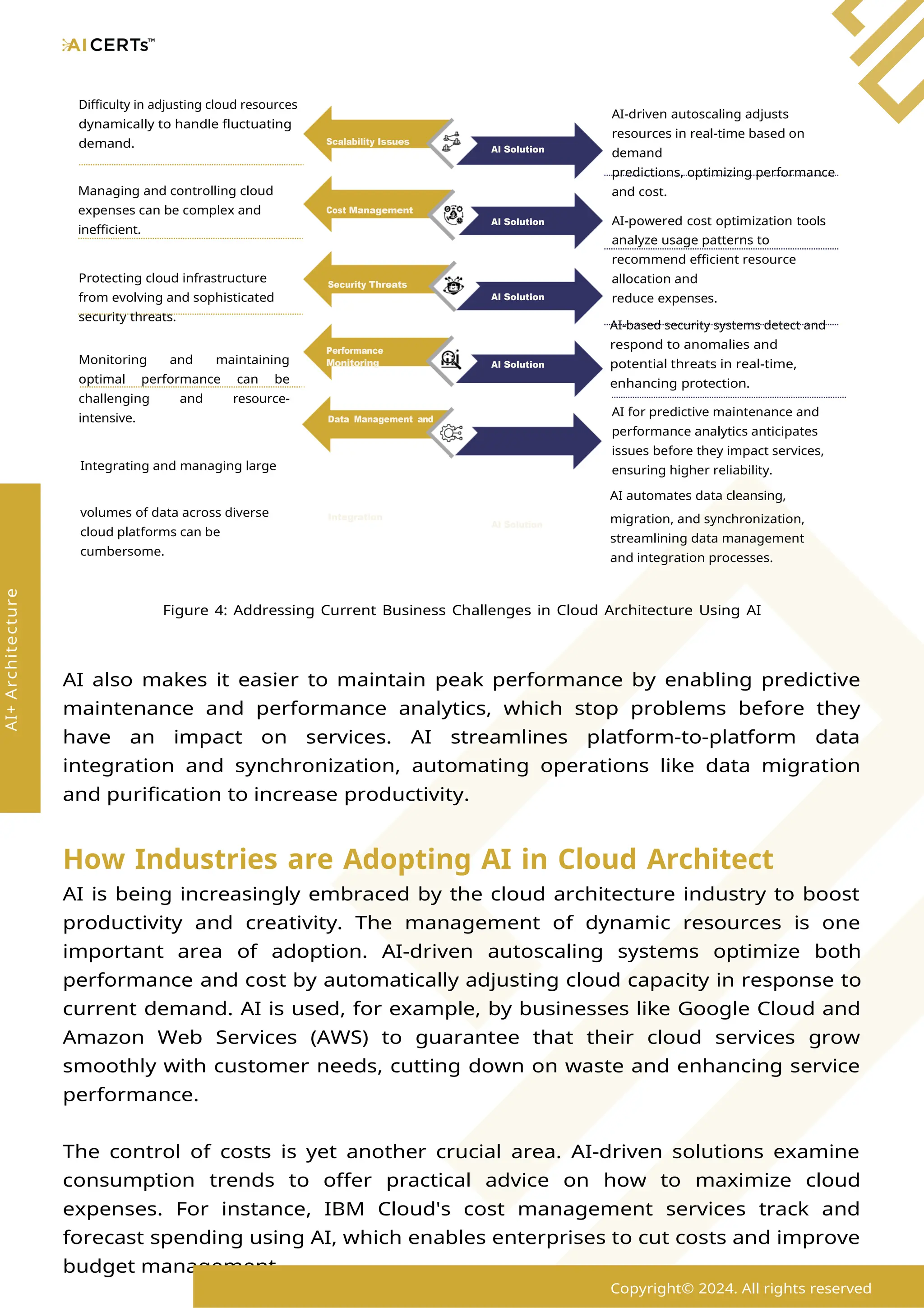
Figure 4: Addressing Current Business Challenges in Cloud Architecture Using AI
AI also makes it easier to maintain peak performance by enabling predictive
maintenance and performance analytics, which stop problems before they
have an impact on services. AI streamlines platform-to-platform data
integration and synchronization, automating operations like data migration
and purification to increase productivity.
How Industries are Adopting AI in Cloud Architect
AI is being increasingly embraced by the cloud architecture industry to boost
productivity and creativity. The management of dynamic resources is one
important area of adoption. AI-driven autoscaling systems optimize both
performance and cost by automatically adjusting cloud capacity in response to
current demand. AI is used, for example, by businesses like Google Cloud and
Amazon Web Services (AWS) to guarantee that their cloud services grow
smoothly with customer needs, cutting down on waste and enhancing service
performance.
The control of costs is yet another crucial area. AI-driven solutions examine
consumption trends to offer practical advice on how to maximize cloud
expenses. For instance, IBM Cloud's cost management services track and
forecast spending using AI, which enables enterprises to cut costs and improve
budget management.
Copyright© 2024. All rights reserved
AI+
Architecture
In cloud architecture, security is a key problem, and AI provides reliable
answers. AI- driven security systems, like those offered by Microsoft Azure,
greatly improve protection against cyberattacks and breaches by instantly
identifying and addressing possible threats.
6
AI also helps performance monitoring by offering analytics and predictive
maintenance to prevent problems before they affect services. Businesses such as
Oracle use AI for these goals, which guarantees increased operational
efficiency and dependability. Finally, AI automates processes like data
synchronization and purification to increase overall efficacy. This simplifies data
administration and integration across platforms.
In summary, the adoption of AI in cloud architecture is reshaping the
industry by enhancing capabilities, improving operational efficiency, and
promoting sustainability. As AI technology continues to evolve, its integration
into architectural practices will likely deepen, offering even more advanced
solutions to the challenges faced by the industry.
How to Integrate AI in Cloud Architecture
AI integration may have a huge impact on your company, but in order to get
the most out of it, you must approach it wisely. Here are several actions that
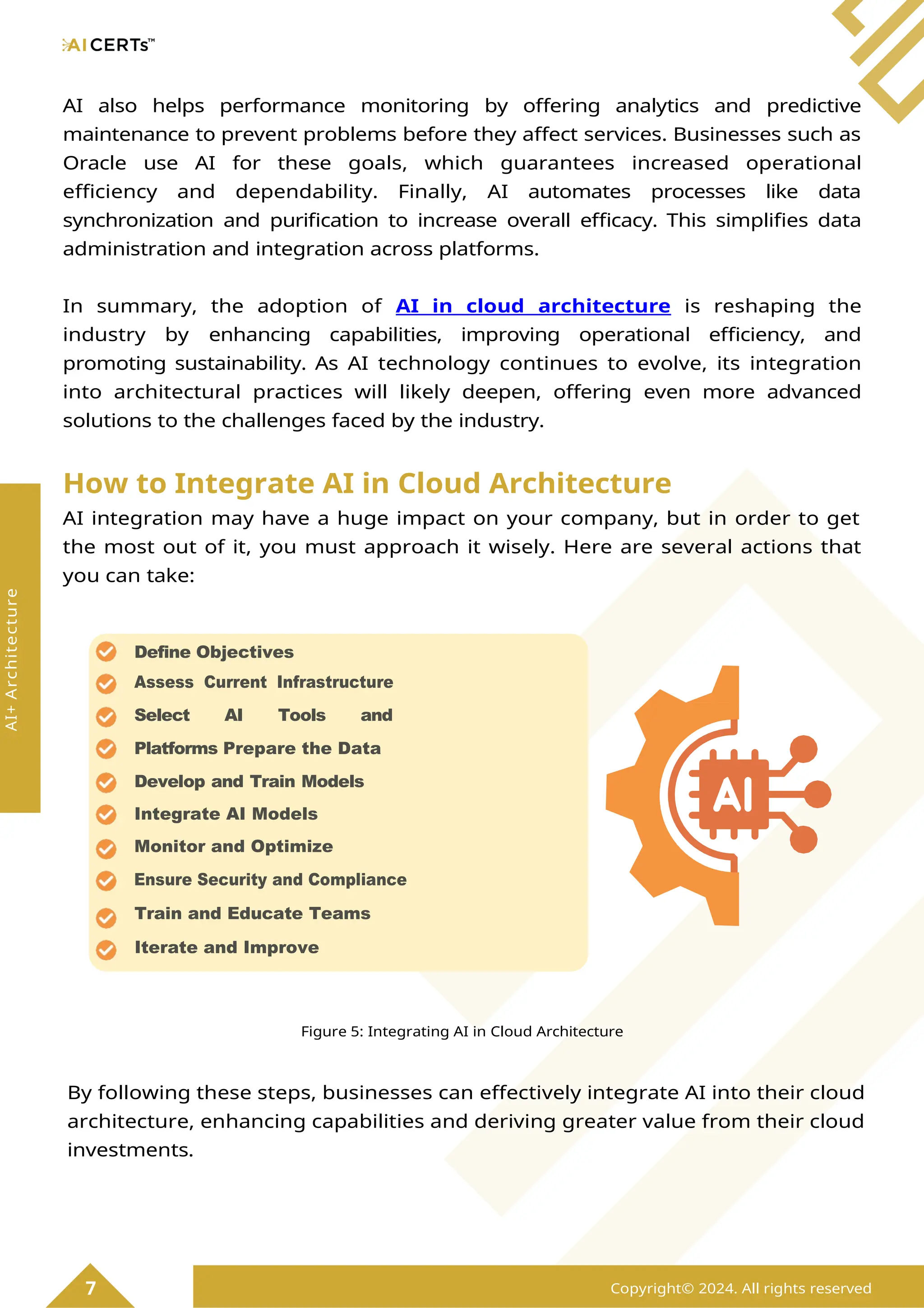
you can take:
Figure 5: Integrating AI in Cloud Architecture
By following these steps, businesses can effectively integrate AI into their cloud
architecture, enhancing capabilities and deriving greater value from their cloud
investments.
7 Copyright© 2024. All rights reserved
AI+
Architecture
Define Objectives
Assess Current Infrastructure
Select AI Tools and
Platforms Prepare the Data
Develop and Train Models
Integrate AI Models
Monitor and Optimize
Ensure Security and Compliance
Train and Educate Teams
Iterate and Improve
A Brief Summary of AI+ Architect Certification
At AI CERTs Store, we empower organizations to unlock the potential of AI
with our industry-leading suite of role-based certifications.
The modules in AI+ Architect equips learners with the skills needed to design,
implement, and manage AI-driven solutions within various organizational
contexts, positioning them for success in the rapidly evolving tech landscape.
Module 1: Fundamentals of Neural Networks
Understanding neural networks is essential for using AI in numerous
applications. Neural networks resemble the brain's information processing
using nodes, layers, and synapses. They require vast datasets and computer
resources to train, and overfitting reduces their generalizability. Neural
networks help in image and audio recognition, NLP, autonomous cars, medical
diagnosis, and financial forecasting.
This module explores the fundamental concepts of neural networks, including
their components such as nodes, layers, and activation functions, and
examines various types like Feedforward Neural Networks (FNNs) and
Convolutional Neural Networks (CNNs). The limitations and applications of
neural networks across different fields will be reviewed. Additionally, the
module covers the essential architectural elements for building neural
networks and discusses common design patterns. Finally, a basic neural
network will be implemented for tasks like image classification or sentiment
analysis, focusing on the practical aspects of setup, training, and evaluation.
Module 2: Neural Network Optimization
In neural network optimization, hyperparameter adjustment improves model
performance. Hyperparameters like learning rate, batch size, layers, and
epochs affect how a neural network learns and generalizes. Neural network
training requires optimization techniques, which have different properties and
trade-offs. Regularization is necessary to avoid overfitting.
This module investigates how to optimize neural networks by focusing on
hyperparameter tuning, including methods such as grid search and Bayesian
optimization, and explores various optimization algorithms like Stochastic
Gradient Descent and Adam. Regularization techniques are also covered, with
applications to improve neural network performance. The impact of different
hyperparameters and optimization strategies on model effectiveness will be
assessed.
8 Copyright© 2024. All rights reserved
AI+
Architecture
Module 3: Neural Network Architectures for NLP
Learning NLP basics is essential for using AI in text categorization, sentiment
analysis, named entity identification, and language translation. NLP techniques
like tokenization and embedding prepare text data for neural network
computation. NLP- specific neural network topologies address sequential data
and context management issues.
This module covers key NLP concepts, including tokenization techniques and
word embeddings like Word2Vec and GloVe. It examines neural network
architectures for NLP, focusing on Recurrent Neural Networks (RNNs), Long
Short-Term Memory (LSTM) networks, and Transformer-based models like
Bidirectional Encoder Representations from Transformers (BERT) and
Generative Pre-trained Transformer (GPT).
Module 4: Neural Network Architectures for Computer
Vision
Neural networks are ideal for these jobs because they can learn complicated
patterns
from visual data. Specialized computer vision architectures handle unique
difficulties and improve performance. Computer vision requires hands-on
practice.
This module highlights essential concepts in computer vision, including image
classification, object detection, and image segmentation. It explores how
neural networks, particularly (CNNs), are utilized to process and understand
visual data. Specialized architectures are examined, and methods for object
detection and image segmentation are discussed.
Module 5: Model Evaluation and Performance Metrics
AI model efficacy and dependability rely on model evaluation and performance
measures. Accuracy, precision, recall, and F1-score are common
measurements. Cross-validation and model selection prevent overfitting and
ensure model resilience. Combining predictions from various models improves
accuracy and resilience by using alternative methodologies.
The module examines essential evaluation techniques for AI models, exploring
cross- validation methods to ensure robustness and prevent overfitting.
Strategies to overcome overfitting and underfitting are addressed, along with
techniques for enhancing model performance through hyperparameter tuning
and optimization. Additionally, hands-on activities focus on evaluating and
Copyright© 2024. All rights reserved
AI+
Architecture
optimizing AI models, applying various metrics and performance improvement
methods to refine accuracy and robustness.
Module 6: AI Infrastructure and Deployment
AI project efficiency and scalability depend on AI development infrastructure.
Cloud- based AI services have transformed AI development by offering
scalable, cost- effective AI model deployment and management. AI-focused
platforms like Google Cloud AI, AWS, and Microsoft Azure offer pre-configured
settings, powerful processing resources, and vast ML and DL libraries.
In this module, the focus is on the infrastructure necessary for AI development,
including hardware requirements such as Graphics Processing Units (GPUs)
and Tensor Processing Units (TPUs). The module explores cloud-based AI services,
various model deployment strategies, and techniques for monitoring and
maintaining deployed models. Practical experience is gained by deploying an
AI model on a cloud-based platform and implementing performance
monitoring.
Module 7: AI Ethics and Responsible AI Design
AI models must be fair, transparent, and accountable to align with ethical
considerations. Fairness, bias, and responsibility are key in this discussion. Bias
can perpetuate inequities by unfairly treating certain populations. Fairness in
AI ensures that the model treats everyone equally, regardless of background.
Accountability means holding AI systems and developers accountable for
model results. Explainability and openness promote trust and allow humans to
understand and examine AI system judgments.
In this module, the emphasis is on ethical considerations in AI, including bias,
fairness, and accountability. Strategies to enhance model explainability and
transparency are explored, alongside best practices for responsible AI design,
addressing privacy and data protection concerns. Frameworks from
organizations such as the Institute of Electrical and Electronics Engineers (IEEE)
are reviewed. Real- world case studies provide insights into managing ethical
issues in AI development. Additionally, an AI model is analyzed to identify
biases and propose solutions for improving fairness and transparency.
Module 8: Generative AI Models
Generative AI models, especially Generative Adversarial Networks (GANs) and
Transformer-based models, are changing AI. Adversarial training of GANs'
generator and discriminator creates realistic synthetic data. Transformer-based
models like GPT do well in NLP. Generative AI models have several industrial uses.
Within this module, generative AI models architecture, including GANs and
Transformer-based models, are explored, focusing on their architectures and
Copyright© 2024. All rights reserved
AI+
Architecture
applications. The module examines how GANs create realistic synthetic data
and covers different types such as CycleGAN and StyleGAN.
The role of Transformer models like GPT in text generation is also investigated.
Practical applications of these models are reviewed, with hands-on activities to
build a basic GAN, generate text with GPT, and apply style transfer techniques.
Module 9: Research-Based AI Design
Cutting-edge Generative AI design necessitates keeping up with industry trends.
According to the Precedence Research report, the global generative AI design
market is estimated to reach $7.75 trillion by 2032, with a progressive CAGR of 34.11%
during the forecast period. Hence, new neural network topologies have enabled
more efficient and powerful models that test AI's limits.
In this module, research methodologies in AI, including experimental studies
and case analyses, are explored, with a focus on interpreting AI research
papers effectively. Recent advancements in AI architecture and optimization
are reviewed, discussing their impact on design and development. Research
findings are applied to practical AI design and development, with hands-on
exercises to analyze and present recent AI research papers, exploring their
implications and applications in real-world projects.
Module 10: Capstone Project and Course Review
This is the last module of this certification, showcasing learner’s AI architecture
design skills at the end of the AI program. Key topics are reviewed, including AI
optimization, computer vision, NLP, generative AI, ethics, and research,
summarizing the critical aspects covered. Emerging trends and future
directions in AI are explored, discussing new advancements and their potential
impacts. Additionally, capstone projects are finalized with practical exercises
and feedback, ensuring learners can effectively demonstrate and refine their
projects.
How Can AI CERTs Help Build an AI-Ready Culture?
Despite the numerous benefits of AI technologies, architects often encounter
significant challenges in adopting them. Skill shortages in AI expertise, the
complexity of managing vast datasets, and difficulties in integrating AI systems
into existing frameworks are common obstacles. These hurdles can slow down
or even derail AI implementation efforts.
At AI Certs, we understand these challenges deeply and have tailored our
certifications to specifically address these issues. Our programs are designed
to equip professionals with the necessary skills and knowledge, ensuring
organizations can effectively overcome these barriers and fully leverage the
Copyright© 2024. All rights reserved
AI+
Architecture
power of AI.
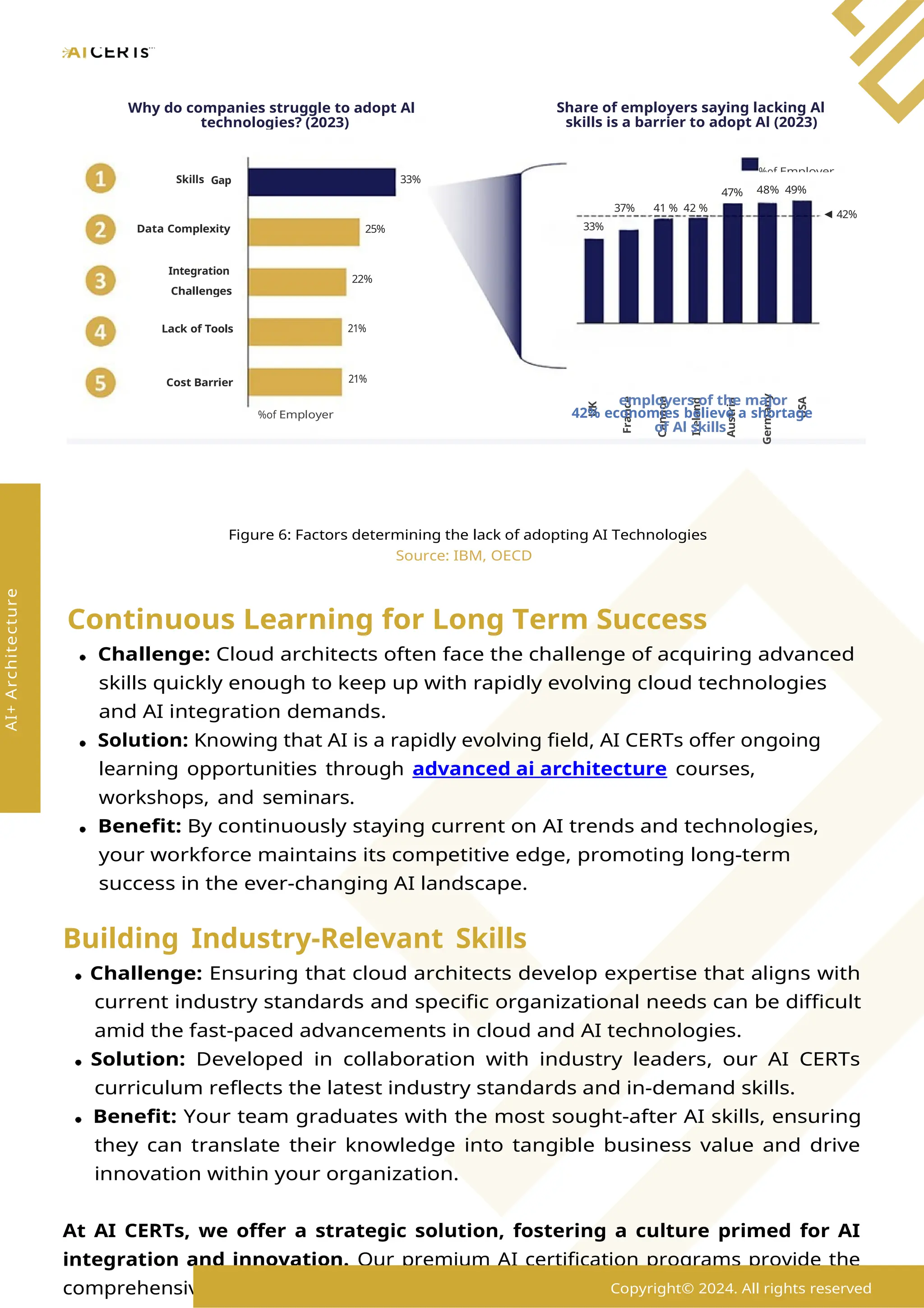
Figure 6: Factors determining the lack of adopting AI Technologies
Source: IBM, OECD
Continuous Learning for Long Term Success
Challenge: Cloud architects often face the challenge of acquiring advanced
skills quickly enough to keep up with rapidly evolving cloud technologies
and AI integration demands.
Solution: Knowing that AI is a rapidly evolving field, AI CERTs offer ongoing
learning opportunities through advanced ai architecture courses,
workshops, and seminars.
Benefit: By continuously staying current on AI trends and technologies,
your workforce maintains its competitive edge, promoting long-term
success in the ever-changing AI landscape.
Building Industry-Relevant Skills
Challenge: Ensuring that cloud architects develop expertise that aligns with
current industry standards and specific organizational needs can be difficult
amid the fast-paced advancements in cloud and AI technologies.
Solution: Developed in collaboration with industry leaders, our AI CERTs
curriculum reflects the latest industry standards and in-demand skills.
Benefit: Your team graduates with the most sought-after AI skills, ensuring
they can translate their knowledge into tangible business value and drive
innovation within your organization.
At AI CERTs, we offer a strategic solution, fostering a culture primed for AI
integration and innovation. Our premium AI certification programs provide the
comprehensive training and industry-recognized credentials needed to
Copyright© 2024. All rights reserved
AI+
Architecture
UK
France
Canada
Ireland
Austria
Germany
USA
employers of the major
42% economies believe a shortage
of Al skills
%of Employer
21%
Cost Barrier
21%
Lack of Tools
22%
Integration
Challenges
33%
25%
Data Complexity
◄ 42%
37% 41 % 42 %
48% 49%
47%
Skills Gap 33%
Share of employers saying lacking Al
skills is a barrier to adopt Al (2023)
%of Employer
Why do companies struggle to adopt Al
technologies? (2023)
empower your workforce and propel your organization towards an AI-driven
future.
AI CERTs Cultivate AI Culture in Several Ways:
Our structured curriculum promotes a deep understanding of AI concepts
and applications, making AI less intimidating and more accessible.
Our commitment to lifelong learning ensures your workforce remains
current on the latest AI trends, maintaining a competitive edge.
By fostering collaboration through teamwork and cross-functional projects,
AI CERTs programs encourage knowledge sharing and break down
departmental silos – critical aspects for successful AI implementation.
AI CERTs: Your Pathway to Becoming AI-Ready
The future of business belongs to those who harness the power of AI.
Tailored for Success: Our programs aren't one-size-fits-all. We offer
specialized training designed by industry experts to equip your workforce with
the specific skills and knowledge needed for critical AI roles.
Actionable Expertise: Forget theory alone. We focus on practical, hands-on
learning through real-world projects and case studies. This ensures your team
graduates with the skills and confidence to implement and utilize AI
technologies effectively, driving innovation and tangible results for your
organization.
Become an AI Leader: Do not just keep pace with the AI revolution, lead it.
Partner with AI CERTs and invest in your workforce's future. Let us build an AI-
inclusive culture together, where your team is equipped to unlock the
transformative potential of AI and propel your organization to the forefront.
13 Copyright© 2024. All rights reserved
AI+
Architecture
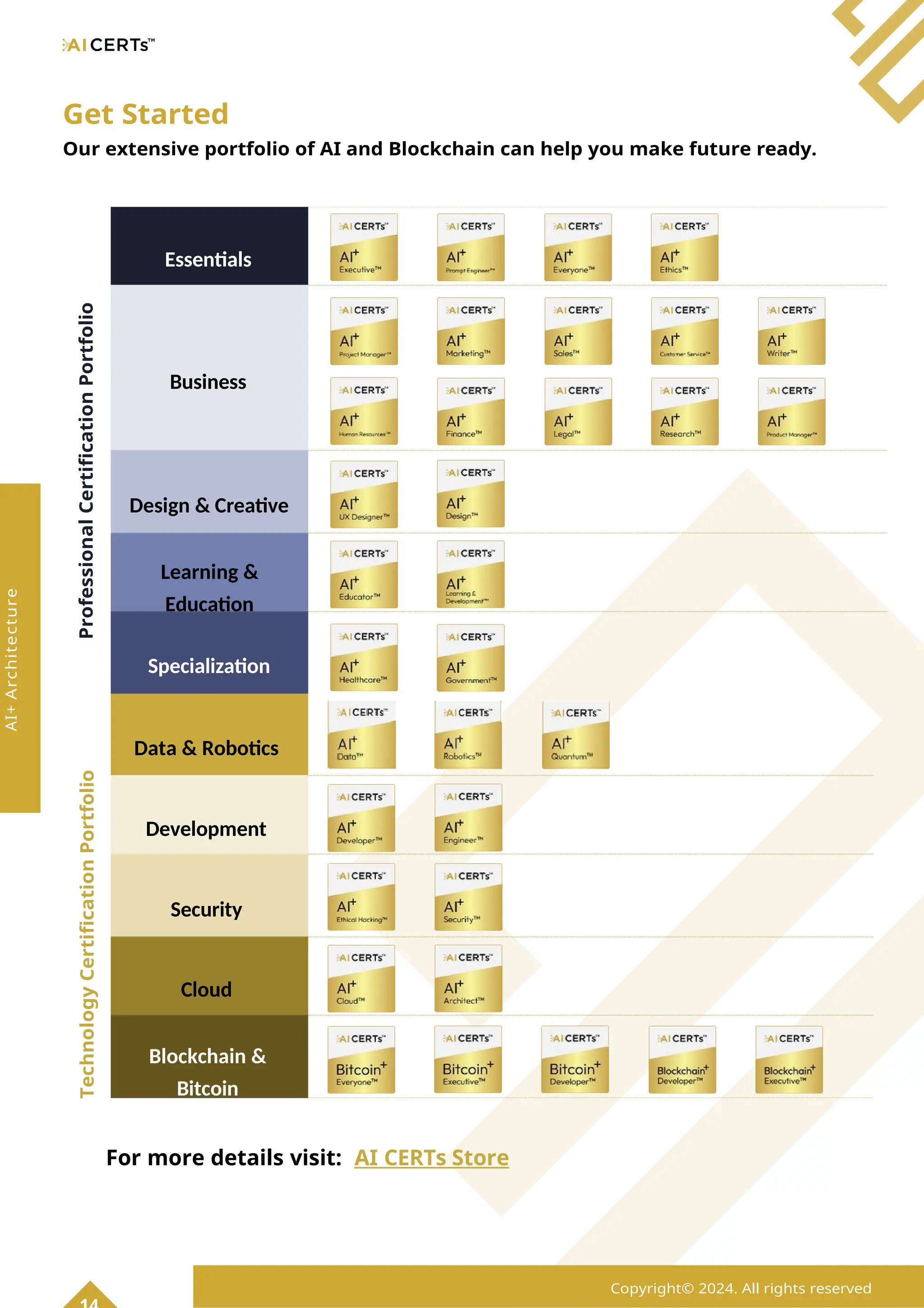
Get Started
Our extensive portfolio of AI and Blockchain can help you make future ready.
Essentials
Business
Design & Creative
Learning &
Education
Specialization
Data & Robotics
Development
Security
Cloud
Blockchain &
Bitcoin
For more details visit: AI CERTs Store
Copyright© 2024. All rights reserved
AI+
Architecture
Professional
Certification
Portfolio
Technology
Certification
Portfolio
www.aicerts.io
Contact
252 West 37th St., Suite 1200W
New York, NY 10018

Accelerate Your Growth with AI Architecture Certification – Shop Now!.

  • 1.
  • 2.
    TABLE OF CONTENTS Introduction.......................................................................................................................1 CertificationGoals and Learning Outcomes...............................................2 The Impact of AI on Modern Business Practices.......................................2 What is Next for AI?....................................................................................................3 How AI Changes Cloud Architect........................................................................4 How AI Address Challenges in Cloud Architect.........................................5 How Industries are Adopting AI in Cloud Architect.................................6 How to Integrate AI in Cloud Architect............................................................7 Module 1: Fundamentals of Neural Networks.............................................8 Module 2: Neural Network Optimization.......................................................8 Module 3: Neural Network Architectures for NLP...................................8 Module 4: Neural Network Architectures for Computer Vision. 9 Module 5: Model Evaluation and Performance Metrics........................9 Module 6: AI Infrastructure and Deployment.............................................10 Module 7: AI Ethics and Responsible AI Design.........................................10 Module 8: Generative AI Models.........................................................................10 Module 9: Research-Based AI Design................................................................11 Module 10: Capstone Project and Course Review.....................................11 How Can AI CERTs Help Build an AI-Ready Culture?................................11 Copyright© 2024. All rights reserved AI+ Architecture
  • 3.
    Introduction The AI+ ArchitectCertification is an advanced program tailored for cloud architects, offering an in-depth exploration of Artificial Intelligence (AI) and its practical applications. It starts with foundational neural network concepts, advancing to complex topics such as optimization, hyperparameter tuning, and regularization techniques. Learners engage with AI architectures like Recurrent Neural Networks (RNNs), Long Short-Term Memory networks (LSTMs), Transformers, and Convolutional Neural Networks (CNNs), applying these in Natural Language Processing (NLP) and computer vision projects. The program also covers AI infrastructure, deployment, and ethical considerations, ensuring responsible AI development. A capstone project allows participants to demonstrate their ability to solve architectural challenges using AI, preparing them to lead in a technology-driven environment with enhanced precision, efficiency, and creativity. It covers the following topics to help you understand the integration of AI with cloud architecture. Fundamentals of Neural Networks Neural Network Optimization Neural Network Architectures for NLP Neural Network Architectures for Computer Vision Model Evaluation and Performance Metrics AI Infrastructure and Deployment AI Ethics and Responsible AI Design Generative AI Models Research-Based AI Design Capstone Project and Course Review Certification Prerequisites Domain Awareness: A foundational knowledge on neural networks, including their optimization and architecture for applications. AI+ Cloud certification is mandatory. Model Evaluation: Ability to evaluate models using various performance metrics to ensure accuracy and reliability. Strong knowledge Curiosity for AI: Willingness to know about AI infrastructure and deployment processes to implement and maintain AI systems effectively. Who Should Enroll? Copyright© 2024. All rights reserved AI+ Architecture
  • 4.
    Cloud Architects: Enhanceskills by integrating AI technologies into cloud solutions. AI Specialists: Build expertise in cloud architecture to design and manage AI- driven solutions in cloud environments. 1
  • 5.
    IT Professionals: Specializein cloud computing with a focus on AI to support advanced data analytics, ML models, and intelligent cloud-based applications. Data Scientists and Analysts: Leverage cloud platforms for scalable AI deployment and data processing. Software Developers: Build and deploy AI applications in the cloud, to optimize performance and scalability. Tech Managers and Leaders: Develop a comprehensive understanding of how cloud and AI technologies intersect to drive innovation and strategic decision- making. Certification Goals and Learning Outcomes Acquire a comprehensive understanding of the fundamental principles behind neural networks and various architectures, including their design and applications across different domains. Build a strong mathematical foundation necessary for understanding and developing neural network models, focusing on key concepts that underpin network operations and optimizations. Learn advanced techniques for training neural networks effectively, including optimization methods, and gain expertise in evaluating model performance through various metrics. Master AI deployment and ethical design, ensuring responsible and effective implementation of AI technologies and use generative AI models to create innovative and ethical AI solutions. The Impact of AI on Modern Business Practices AI, a rapidly evolving force, has significantly contributed to technical and economic growth over the past decade. By 2030, it is projected to inject a staggering $1.35 trillion into the global economy, underscoring its revolutionary potential. AI has evolved from basic rule-based systems to advanced Machine Learning (ML) and Deep Learning (DL) models, significantly transforming modern business. Initially constrained by limited data and computational power, AI now harnesses vast datasets and powerful algorithms to drive innovation and efficiency. Businesses leverage AI for data-driven decision-making, automation, and personalized customer experiences, leading to increased productivity and competitive advantage. As AI continues to advance, its role in shaping strategic insights and operational practices will only grow, offering new opportunities and challenges in the business landscape. The convergence of cloud and neural networks is revolutionizing the design Copyright© 2024. All rights reserved AI+ Architecture
  • 6.
    and optimization ofcloud-based systems. Neural networks are being used by cloud architects to improve the performance, efficiency, and scalability of cloud- based settings. They can predict and manage workloads, automate complex processes, and optimize resource allocation by utilizing cutting-edge ML techniques.
  • 7.
    CAGR 20.5% USD 296 Million 2019 2024 ■ Theglobal artificial neural network market size is projected to reach USD 296 million by 2024, at a CAGR of 20.5% during the forecast period. ■ The increasing demand for enhanced processing power, learning ability and speed of neural networks to drive the growth of the market. ■ Dificulty in tracking the outcomes of in-process stages Figure 1: Neural Networks and AI Source: Markets and Markets According to a study by Markets and Markets, the global market for artificial neural networks is projected to grow significantly, increasing from $117 million in 2019 to $296 million by 2024, reflecting a Compound Annual Growth Rate (CAGR) of 20.5% during this period. This rapid growth underscores the expanding impact and importance of neural networks in the AI landscape. What is Next for AI? AI holds extraordinary promise for the future, poised to drive innovation, boost productivity, and revolutionize various industries. As AI technology continues to advance, its anticipated impact by 2030 highlights the urgent need for sustained research and development. To harness AI's full potential, it is crucial to implement strong government policies and invest in education and training. By doing so, businesses can position themselves to thrive in the rapidly evolving AI landscape and seize the opportunities it offers. AI+ Architecture USD 117 Million
  • 8.
    Copyright© 2024. Allrights reserved 3
  • 9.
    Figure 2: GlobalArtificial Intelligence Market Forecast by 2030 ($ Trillion) Source: Markets and Markets The rapid growth of AI presents both significant challenges and unparalleled opportunities for businesses and governments. Proactively engaging with AI's evolving capabilities will enable organizations to stay ahead of the curve, capitalize on emerging trends, and shape a future where AI enhances human potential and advances societal progress. As it continues to advance, AI is set to drive innovation, enhance productivity, and transform multiple industries. The projected impact of AI by 2030 underscores the critical need for ongoing research and development. To fully leverage AI’s potential, robust government policies and increased funding for AI education and training are essential. How AI Changes Cloud Architect AI is revolutionizing the field of architecture in several impactful ways. The facilitation of advanced data analytics by AI supports more informed decision- making and strategic planning in cloud architecture. Apart from this, AI allows for the development of tailored cloud solutions based on specific business needs and user behavior. This customization improves performance and efficiency, aligning cloud resources more closely with organizational objectives. 4 Copyright© 2024. All rights reserved AI+ Architecture
  • 10.
    AI tools cananalyze spending patterns and provide recommendations for cost optimization. Figure 3: Transformation of Cloud Architecture with AI Overall, AI's integration into cloud architecture leads to smarter, more efficient, and adaptive cloud environments, enhancing both operational effectiveness and strategic value. How AI Address Current Challenges in Cloud Architect Cloud design is influenced by several critical factors, including data integration, security risks, cost control, and dynamic scalability. Addressing these challenges requires sophisticated solutions, and AI-driven technologies are proving to be game- changers. For instance, AI-driven autoscaling can dynamically adjust cloud resources, ensuring optimal performance while controlling costs. By continuously analyzing usage patterns, AI optimizes resource allocation, reducing waste and improving cost efficiency. Additionally, AI-powered tools streamline cloud expense management by providing insights into consumption trends and helping organizations make informed decisions. On the security front, AI-based systems offer enhanced protection by proactively identifying and mitigating threats, often in real-time, ensuring that cloud environments remain secure. These AI-driven advancements are transforming cloud design, making it more efficient, scalable, and secure, thereby enabling organizations to leverage the full potential of cloud computing while minimizing risks and costs. AI algorithms can predict workload demands and automatically adjust resources in real-time, optimizing cloud resource allocation and reducing Optimized Resource Management Copyright© 2024. All rights reserved AI+ Architecture Improved Cost Management AI-driven security tools can detect and respond to threats more effectively by analyzing vast amounts of data for unusual patterns and Enhanced Security AI enables automation of routine tasks, such as provisioning, configuration, and monitoring, leading to more efficient and error-free cloud Automated Operations AI can improve load balancing by analyzing traffic patterns and distributing workloads dynamically. Intelligent Load Balancing By leveraging AI for predictive analytics, cloud architects can anticipate hardware or software failures before they occur. Predictive Maintenance
  • 11.
    Difficulty in adjustingcloud resources dynamically to handle fluctuating demand. Managing and controlling cloud expenses can be complex and inefficient. Protecting cloud infrastructure from evolving and sophisticated security threats. Monitoring and maintaining optimal performance can be challenging and resource- intensive. Integrating and managing large Scalability Issues Cost Management Security Threats Performance Monitoring Data Management and AI Solution AI Solution AI Solution AI Solution AI-driven autoscaling adjusts resources in real-time based on demand predictions, optimizing performance and cost. AI-powered cost optimization tools analyze usage patterns to recommend efficient resource allocation and reduce expenses. AI-based security systems detect and respond to anomalies and potential threats in real-time, enhancing protection. AI for predictive maintenance and performance analytics anticipates issues before they impact services, ensuring higher reliability. AI automates data cleansing, volumes of data across diverse cloud platforms can be cumbersome. Integration AI Solution migration, and synchronization, streamlining data management and integration processes. Figure 4: Addressing Current Business Challenges in Cloud Architecture Using AI AI also makes it easier to maintain peak performance by enabling predictive maintenance and performance analytics, which stop problems before they have an impact on services. AI streamlines platform-to-platform data integration and synchronization, automating operations like data migration and purification to increase productivity. How Industries are Adopting AI in Cloud Architect AI is being increasingly embraced by the cloud architecture industry to boost productivity and creativity. The management of dynamic resources is one important area of adoption. AI-driven autoscaling systems optimize both performance and cost by automatically adjusting cloud capacity in response to current demand. AI is used, for example, by businesses like Google Cloud and Amazon Web Services (AWS) to guarantee that their cloud services grow smoothly with customer needs, cutting down on waste and enhancing service performance. The control of costs is yet another crucial area. AI-driven solutions examine consumption trends to offer practical advice on how to maximize cloud expenses. For instance, IBM Cloud's cost management services track and forecast spending using AI, which enables enterprises to cut costs and improve budget management. Copyright© 2024. All rights reserved AI+ Architecture
  • 12.
    In cloud architecture,security is a key problem, and AI provides reliable answers. AI- driven security systems, like those offered by Microsoft Azure, greatly improve protection against cyberattacks and breaches by instantly identifying and addressing possible threats. 6
  • 13.
    AI also helpsperformance monitoring by offering analytics and predictive maintenance to prevent problems before they affect services. Businesses such as Oracle use AI for these goals, which guarantees increased operational efficiency and dependability. Finally, AI automates processes like data synchronization and purification to increase overall efficacy. This simplifies data administration and integration across platforms. In summary, the adoption of AI in cloud architecture is reshaping the industry by enhancing capabilities, improving operational efficiency, and promoting sustainability. As AI technology continues to evolve, its integration into architectural practices will likely deepen, offering even more advanced solutions to the challenges faced by the industry. How to Integrate AI in Cloud Architecture AI integration may have a huge impact on your company, but in order to get the most out of it, you must approach it wisely. Here are several actions that you can take: Figure 5: Integrating AI in Cloud Architecture By following these steps, businesses can effectively integrate AI into their cloud architecture, enhancing capabilities and deriving greater value from their cloud investments. 7 Copyright© 2024. All rights reserved AI+ Architecture Define Objectives Assess Current Infrastructure Select AI Tools and Platforms Prepare the Data Develop and Train Models Integrate AI Models Monitor and Optimize Ensure Security and Compliance Train and Educate Teams Iterate and Improve
  • 14.
    A Brief Summaryof AI+ Architect Certification At AI CERTs Store, we empower organizations to unlock the potential of AI with our industry-leading suite of role-based certifications. The modules in AI+ Architect equips learners with the skills needed to design, implement, and manage AI-driven solutions within various organizational contexts, positioning them for success in the rapidly evolving tech landscape. Module 1: Fundamentals of Neural Networks Understanding neural networks is essential for using AI in numerous applications. Neural networks resemble the brain's information processing using nodes, layers, and synapses. They require vast datasets and computer resources to train, and overfitting reduces their generalizability. Neural networks help in image and audio recognition, NLP, autonomous cars, medical diagnosis, and financial forecasting. This module explores the fundamental concepts of neural networks, including their components such as nodes, layers, and activation functions, and examines various types like Feedforward Neural Networks (FNNs) and Convolutional Neural Networks (CNNs). The limitations and applications of neural networks across different fields will be reviewed. Additionally, the module covers the essential architectural elements for building neural networks and discusses common design patterns. Finally, a basic neural network will be implemented for tasks like image classification or sentiment analysis, focusing on the practical aspects of setup, training, and evaluation. Module 2: Neural Network Optimization In neural network optimization, hyperparameter adjustment improves model performance. Hyperparameters like learning rate, batch size, layers, and epochs affect how a neural network learns and generalizes. Neural network training requires optimization techniques, which have different properties and trade-offs. Regularization is necessary to avoid overfitting. This module investigates how to optimize neural networks by focusing on hyperparameter tuning, including methods such as grid search and Bayesian optimization, and explores various optimization algorithms like Stochastic Gradient Descent and Adam. Regularization techniques are also covered, with applications to improve neural network performance. The impact of different hyperparameters and optimization strategies on model effectiveness will be assessed. 8 Copyright© 2024. All rights reserved AI+ Architecture
  • 15.
    Module 3: NeuralNetwork Architectures for NLP Learning NLP basics is essential for using AI in text categorization, sentiment analysis, named entity identification, and language translation. NLP techniques like tokenization and embedding prepare text data for neural network computation. NLP- specific neural network topologies address sequential data and context management issues. This module covers key NLP concepts, including tokenization techniques and word embeddings like Word2Vec and GloVe. It examines neural network architectures for NLP, focusing on Recurrent Neural Networks (RNNs), Long Short-Term Memory (LSTM) networks, and Transformer-based models like Bidirectional Encoder Representations from Transformers (BERT) and Generative Pre-trained Transformer (GPT). Module 4: Neural Network Architectures for Computer Vision Neural networks are ideal for these jobs because they can learn complicated patterns from visual data. Specialized computer vision architectures handle unique difficulties and improve performance. Computer vision requires hands-on practice. This module highlights essential concepts in computer vision, including image classification, object detection, and image segmentation. It explores how neural networks, particularly (CNNs), are utilized to process and understand visual data. Specialized architectures are examined, and methods for object detection and image segmentation are discussed. Module 5: Model Evaluation and Performance Metrics AI model efficacy and dependability rely on model evaluation and performance measures. Accuracy, precision, recall, and F1-score are common measurements. Cross-validation and model selection prevent overfitting and ensure model resilience. Combining predictions from various models improves accuracy and resilience by using alternative methodologies. The module examines essential evaluation techniques for AI models, exploring cross- validation methods to ensure robustness and prevent overfitting. Strategies to overcome overfitting and underfitting are addressed, along with techniques for enhancing model performance through hyperparameter tuning and optimization. Additionally, hands-on activities focus on evaluating and Copyright© 2024. All rights reserved AI+ Architecture
  • 16.
    optimizing AI models,applying various metrics and performance improvement methods to refine accuracy and robustness.
  • 17.
    Module 6: AIInfrastructure and Deployment AI project efficiency and scalability depend on AI development infrastructure. Cloud- based AI services have transformed AI development by offering scalable, cost- effective AI model deployment and management. AI-focused platforms like Google Cloud AI, AWS, and Microsoft Azure offer pre-configured settings, powerful processing resources, and vast ML and DL libraries. In this module, the focus is on the infrastructure necessary for AI development, including hardware requirements such as Graphics Processing Units (GPUs) and Tensor Processing Units (TPUs). The module explores cloud-based AI services, various model deployment strategies, and techniques for monitoring and maintaining deployed models. Practical experience is gained by deploying an AI model on a cloud-based platform and implementing performance monitoring. Module 7: AI Ethics and Responsible AI Design AI models must be fair, transparent, and accountable to align with ethical considerations. Fairness, bias, and responsibility are key in this discussion. Bias can perpetuate inequities by unfairly treating certain populations. Fairness in AI ensures that the model treats everyone equally, regardless of background. Accountability means holding AI systems and developers accountable for model results. Explainability and openness promote trust and allow humans to understand and examine AI system judgments. In this module, the emphasis is on ethical considerations in AI, including bias, fairness, and accountability. Strategies to enhance model explainability and transparency are explored, alongside best practices for responsible AI design, addressing privacy and data protection concerns. Frameworks from organizations such as the Institute of Electrical and Electronics Engineers (IEEE) are reviewed. Real- world case studies provide insights into managing ethical issues in AI development. Additionally, an AI model is analyzed to identify biases and propose solutions for improving fairness and transparency. Module 8: Generative AI Models Generative AI models, especially Generative Adversarial Networks (GANs) and Transformer-based models, are changing AI. Adversarial training of GANs' generator and discriminator creates realistic synthetic data. Transformer-based models like GPT do well in NLP. Generative AI models have several industrial uses. Within this module, generative AI models architecture, including GANs and Transformer-based models, are explored, focusing on their architectures and Copyright© 2024. All rights reserved AI+ Architecture
  • 18.
    applications. The moduleexamines how GANs create realistic synthetic data and covers different types such as CycleGAN and StyleGAN.
  • 19.
    The role ofTransformer models like GPT in text generation is also investigated. Practical applications of these models are reviewed, with hands-on activities to build a basic GAN, generate text with GPT, and apply style transfer techniques. Module 9: Research-Based AI Design Cutting-edge Generative AI design necessitates keeping up with industry trends. According to the Precedence Research report, the global generative AI design market is estimated to reach $7.75 trillion by 2032, with a progressive CAGR of 34.11% during the forecast period. Hence, new neural network topologies have enabled more efficient and powerful models that test AI's limits. In this module, research methodologies in AI, including experimental studies and case analyses, are explored, with a focus on interpreting AI research papers effectively. Recent advancements in AI architecture and optimization are reviewed, discussing their impact on design and development. Research findings are applied to practical AI design and development, with hands-on exercises to analyze and present recent AI research papers, exploring their implications and applications in real-world projects. Module 10: Capstone Project and Course Review This is the last module of this certification, showcasing learner’s AI architecture design skills at the end of the AI program. Key topics are reviewed, including AI optimization, computer vision, NLP, generative AI, ethics, and research, summarizing the critical aspects covered. Emerging trends and future directions in AI are explored, discussing new advancements and their potential impacts. Additionally, capstone projects are finalized with practical exercises and feedback, ensuring learners can effectively demonstrate and refine their projects. How Can AI CERTs Help Build an AI-Ready Culture? Despite the numerous benefits of AI technologies, architects often encounter significant challenges in adopting them. Skill shortages in AI expertise, the complexity of managing vast datasets, and difficulties in integrating AI systems into existing frameworks are common obstacles. These hurdles can slow down or even derail AI implementation efforts. At AI Certs, we understand these challenges deeply and have tailored our certifications to specifically address these issues. Our programs are designed to equip professionals with the necessary skills and knowledge, ensuring organizations can effectively overcome these barriers and fully leverage the Copyright© 2024. All rights reserved AI+ Architecture
  • 20.
  • 21.
    Figure 6: Factorsdetermining the lack of adopting AI Technologies Source: IBM, OECD Continuous Learning for Long Term Success Challenge: Cloud architects often face the challenge of acquiring advanced skills quickly enough to keep up with rapidly evolving cloud technologies and AI integration demands. Solution: Knowing that AI is a rapidly evolving field, AI CERTs offer ongoing learning opportunities through advanced ai architecture courses, workshops, and seminars. Benefit: By continuously staying current on AI trends and technologies, your workforce maintains its competitive edge, promoting long-term success in the ever-changing AI landscape. Building Industry-Relevant Skills Challenge: Ensuring that cloud architects develop expertise that aligns with current industry standards and specific organizational needs can be difficult amid the fast-paced advancements in cloud and AI technologies. Solution: Developed in collaboration with industry leaders, our AI CERTs curriculum reflects the latest industry standards and in-demand skills. Benefit: Your team graduates with the most sought-after AI skills, ensuring they can translate their knowledge into tangible business value and drive innovation within your organization. At AI CERTs, we offer a strategic solution, fostering a culture primed for AI integration and innovation. Our premium AI certification programs provide the comprehensive training and industry-recognized credentials needed to Copyright© 2024. All rights reserved AI+ Architecture UK France Canada Ireland Austria Germany USA employers of the major 42% economies believe a shortage of Al skills %of Employer 21% Cost Barrier 21% Lack of Tools 22% Integration Challenges 33% 25% Data Complexity ◄ 42% 37% 41 % 42 % 48% 49% 47% Skills Gap 33% Share of employers saying lacking Al skills is a barrier to adopt Al (2023) %of Employer Why do companies struggle to adopt Al technologies? (2023)
  • 22.
    empower your workforceand propel your organization towards an AI-driven future.
  • 23.
    AI CERTs CultivateAI Culture in Several Ways: Our structured curriculum promotes a deep understanding of AI concepts and applications, making AI less intimidating and more accessible. Our commitment to lifelong learning ensures your workforce remains current on the latest AI trends, maintaining a competitive edge. By fostering collaboration through teamwork and cross-functional projects, AI CERTs programs encourage knowledge sharing and break down departmental silos – critical aspects for successful AI implementation. AI CERTs: Your Pathway to Becoming AI-Ready The future of business belongs to those who harness the power of AI. Tailored for Success: Our programs aren't one-size-fits-all. We offer specialized training designed by industry experts to equip your workforce with the specific skills and knowledge needed for critical AI roles. Actionable Expertise: Forget theory alone. We focus on practical, hands-on learning through real-world projects and case studies. This ensures your team graduates with the skills and confidence to implement and utilize AI technologies effectively, driving innovation and tangible results for your organization. Become an AI Leader: Do not just keep pace with the AI revolution, lead it. Partner with AI CERTs and invest in your workforce's future. Let us build an AI- inclusive culture together, where your team is equipped to unlock the transformative potential of AI and propel your organization to the forefront. 13 Copyright© 2024. All rights reserved AI+ Architecture
  • 24.
    Get Started Our extensiveportfolio of AI and Blockchain can help you make future ready. Essentials Business Design & Creative Learning & Education Specialization Data & Robotics Development Security Cloud Blockchain & Bitcoin For more details visit: AI CERTs Store Copyright© 2024. All rights reserved AI+ Architecture Professional Certification Portfolio Technology Certification Portfolio
  • 25.
    www.aicerts.io Contact 252 West 37thSt., Suite 1200W New York, NY 10018