Abstract On Telegram Bot Using Python
SlideMake.com
Introduction to Telegram Bots
Telegram bots are automated software
applications that interact with users on
the Telegram platform.
They can perform a variety of tasks, such
as sending messages, managing groups,
and providing information.
Python is a popular language for
creating Telegram bots due to its
simplicity and robust libraries.
Why Use Python for Telegram Bots?
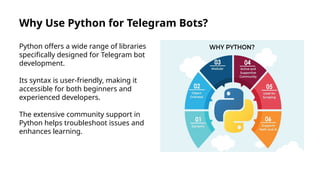
Python offers a wide range of libraries
specifically designed for Telegram bot
development.
Its syntax is user-friendly, making it
accessible for both beginners and
experienced developers.
The extensive community support in
Python helps troubleshoot issues and
enhances learning.
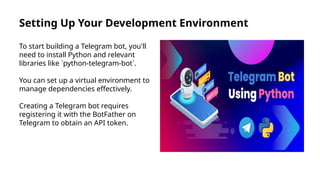
Setting Up Your Development Environment
To start building a Telegram bot, you'll
need to install Python and relevant
libraries like `python-telegram-bot`.
You can set up a virtual environment to
manage dependencies effectively.
Creating a Telegram bot requires
registering it with the BotFather on
Telegram to obtain an API token.
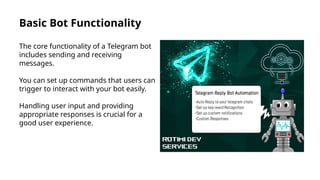
Basic Bot Functionality
The core functionality of a Telegram bot
includes sending and receiving
messages.
You can set up commands that users can
trigger to interact with your bot easily.
Handling user input and providing
appropriate responses is crucial for a
good user experience.
Advanced Features of Telegram Bots
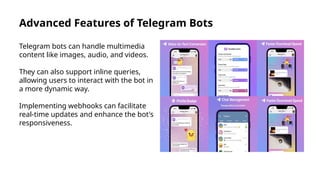
Telegram bots can handle multimedia
content like images, audio, and videos.
They can also support inline queries,
allowing users to interact with the bot in
a more dynamic way.
Implementing webhooks can facilitate
real-time updates and enhance the bot's
responsiveness.
Managing User Interactions
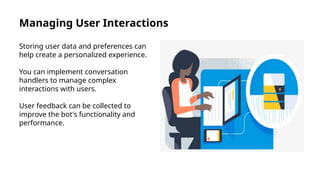
Storing user data and preferences can
help create a personalized experience.
You can implement conversation
handlers to manage complex
interactions with users.
User feedback can be collected to
improve the bot's functionality and
performance.
Security Considerations
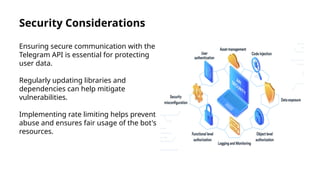
Ensuring secure communication with the
Telegram API is essential for protecting
user data.
Regularly updating libraries and
dependencies can help mitigate
vulnerabilities.
Implementing rate limiting helps prevent
abuse and ensures fair usage of the bot's
resources.
Deployment Options
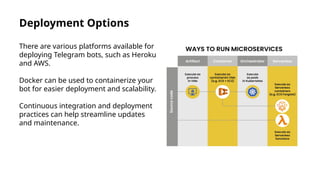
There are various platforms available for
deploying Telegram bots, such as Heroku
and AWS.
Docker can be used to containerize your
bot for easier deployment and scalability.
Continuous integration and deployment
practices can help streamline updates
and maintenance.
Case Studies and Applications
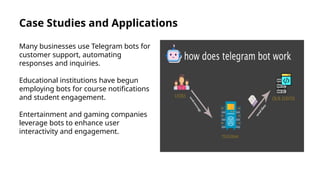
Many businesses use Telegram bots for
customer support, automating
responses and inquiries.
Educational institutions have begun
employing bots for course notifications
and student engagement.
Entertainment and gaming companies
leverage bots to enhance user
interactivity and engagement.
Conclusion and Future Trends
Telegram bots represent a growing trend
in automation and user engagement
across industries.
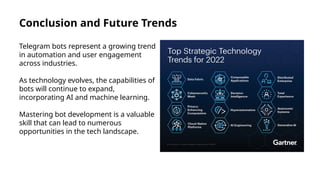
As technology evolves, the capabilities of
bots will continue to expand,
incorporating AI and machine learning.
Mastering bot development is a valuable
skill that can lead to numerous
opportunities in the tech landscape.

Abstract On Telegram Bot Using Python.pptx

  • 1.
    Abstract On TelegramBot Using Python SlideMake.com
  • 2.
    Introduction to TelegramBots Telegram bots are automated software applications that interact with users on the Telegram platform. They can perform a variety of tasks, such as sending messages, managing groups, and providing information. Python is a popular language for creating Telegram bots due to its simplicity and robust libraries.
  • 3.
    Why Use Pythonfor Telegram Bots? Python offers a wide range of libraries specifically designed for Telegram bot development. Its syntax is user-friendly, making it accessible for both beginners and experienced developers. The extensive community support in Python helps troubleshoot issues and enhances learning.
  • 4.
    Setting Up YourDevelopment Environment To start building a Telegram bot, you'll need to install Python and relevant libraries like `python-telegram-bot`. You can set up a virtual environment to manage dependencies effectively. Creating a Telegram bot requires registering it with the BotFather on Telegram to obtain an API token.
  • 5.
    Basic Bot Functionality Thecore functionality of a Telegram bot includes sending and receiving messages. You can set up commands that users can trigger to interact with your bot easily. Handling user input and providing appropriate responses is crucial for a good user experience.
  • 6.
    Advanced Features ofTelegram Bots Telegram bots can handle multimedia content like images, audio, and videos. They can also support inline queries, allowing users to interact with the bot in a more dynamic way. Implementing webhooks can facilitate real-time updates and enhance the bot's responsiveness.
  • 7.
    Managing User Interactions Storinguser data and preferences can help create a personalized experience. You can implement conversation handlers to manage complex interactions with users. User feedback can be collected to improve the bot's functionality and performance.
  • 8.
    Security Considerations Ensuring securecommunication with the Telegram API is essential for protecting user data. Regularly updating libraries and dependencies can help mitigate vulnerabilities. Implementing rate limiting helps prevent abuse and ensures fair usage of the bot's resources.
  • 9.
    Deployment Options There arevarious platforms available for deploying Telegram bots, such as Heroku and AWS. Docker can be used to containerize your bot for easier deployment and scalability. Continuous integration and deployment practices can help streamline updates and maintenance.
  • 10.
    Case Studies andApplications Many businesses use Telegram bots for customer support, automating responses and inquiries. Educational institutions have begun employing bots for course notifications and student engagement. Entertainment and gaming companies leverage bots to enhance user interactivity and engagement.
  • 11.
    Conclusion and FutureTrends Telegram bots represent a growing trend in automation and user engagement across industries. As technology evolves, the capabilities of bots will continue to expand, incorporating AI and machine learning. Mastering bot development is a valuable skill that can lead to numerous opportunities in the tech landscape.

Editor's Notes

  • #2 Image source: https://www.linkedin.com/pulse/understanding-telegram-bots-alan-anand-qitxc
  • #3 Image source: https://www.riset.guru.pubiway.com/what-is-python-programming-why-python-its-purposes/
  • #4 Image source: https://www.youtube.com/watch?v=9oHtZz3pHkg
  • #5 Image source: https://www.fiverr.com/rotimi_dev/host-your-telegram-autoreply-bot-and-set-up-additional-functionality
  • #6 Image source: https://www.droid-life.com/2022/06/20/telegram-launches-premium-tier-with-a-ton-of-features/
  • #7 Image source: https://www.nicepng.com/ourpic/u2e6e6r5u2w7r5w7_managing-and-storing-user-data-using-both-facebook/
  • #8 Image source: https://www.simform.com/blog/api-security-best-practices/
  • #9 Image source: https://successive.cloud/microservices-deployment-options-and-how-to-choose-one/
  • #10 Image source: https://www.youtube.com/watch?v=QRlKjN6ZvRQ
  • #11 Image source: https://harribmadelin.pages.dev/lplecdx-ai-business-trends-2024-images-lheqmhe/