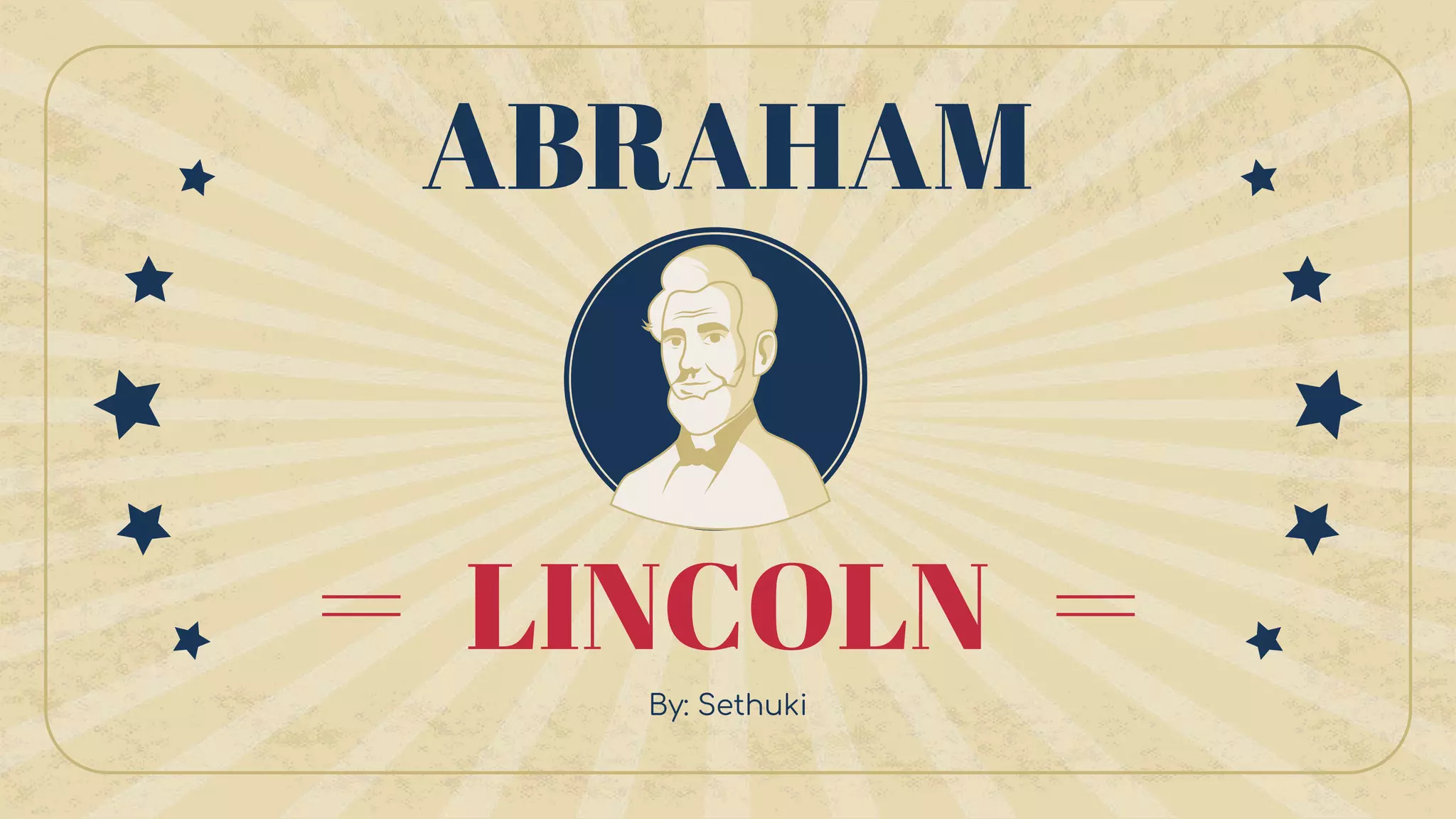
LINCOLN
ABRAHAM
By: Sethuki
Fun Facts
Impact
03
02
04
03
Introduction
01
Story
TABLE OF
CONTENTS
Top 4 fun facts
Impact on Modern America
Who is Abraham Lincoln? His life story
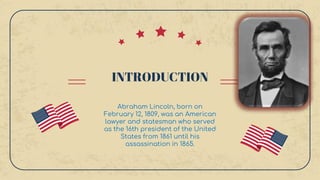
INTRODUCTION
Abraham Lincoln, born on
February 12, 1809, was an American
lawyer and statesman who served
as the 16th president of the United
States from 1861 until his
assassination in 1865.
You can enter a subtitle here if you
need it
STORY OF
LINCOLN
02
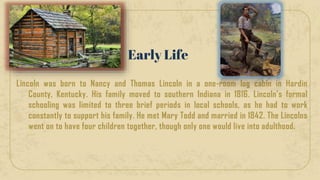
Lincoln was born to Nancy and Thomas Lincoln in a one-room log cabin in Hardin
County, Kentucky. His family moved to southern Indiana in 1816. Lincoln’s formal
schooling was limited to three brief periods in local schools, as he had to work
constantly to support his family. He met Mary Todd and married in 1842. The Lincolns
went on to have four children together, though only one would live into adulthood.
Early Life
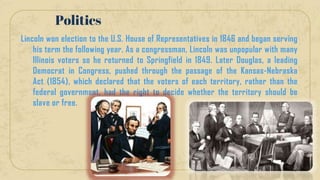
Lincoln won election to the U.S. House of Representatives in 1846 and began serving
his term the following year. As a congressman, Lincoln was unpopular with many
Illinois voters so he returned to Springfield in 1849. Later Douglas, a leading
Democrat in Congress, pushed through the passage of the Kansas-Nebraska
Act (1854), which declared that the voters of each territory, rather than the
federal government, had the right to decide whether the territory should be
slave or free.
Politics
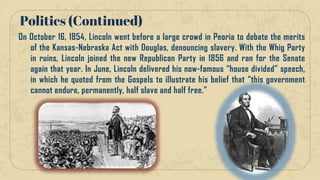
On October 16, 1854, Lincoln went before a large crowd in Peoria to debate the merits
of the Kansas-Nebraska Act with Douglas, denouncing slavery. With the Whig Party
in ruins, Lincoln joined the new Republican Party in 1856 and ran for the Senate
again that year. In June, Lincoln delivered his now-famous “house divided” speech,
in which he quoted from the Gospels to illustrate his belief that “this government
cannot endure, permanently, half slave and half free.”
Politics (Continued)
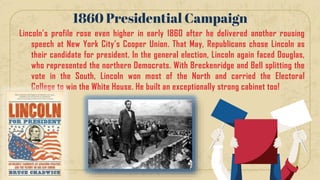
Lincoln’s profile rose even higher in early 1860 after he delivered another rousing
speech at New York City’s Cooper Union. That May, Republicans chose Lincoln as
their candidate for president. In the general election, Lincoln again faced Douglas,
who represented the northern Democrats. With Breckenridge and Bell splitting the
vote in the South, Lincoln won most of the North and carried the Electoral
College to win the White House. He built an exceptionally strong cabinet too!
1860 Presidential Campaign
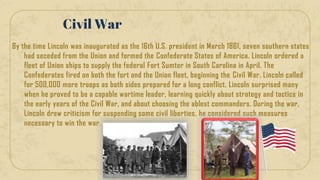
By the time Lincoln was inaugurated as the 16th U.S. president in March 1861, seven southern states
had seceded from the Union and formed the Confederate States of America. Lincoln ordered a
fleet of Union ships to supply the federal Fort Sumter in South Carolina in April. The
Confederates fired on both the fort and the Union fleet, beginning the Civil War. Lincoln called
for 500,000 more troops as both sides prepared for a long conflict. Lincoln surprised many
when he proved to be a capable wartime leader, learning quickly about strategy and tactics in
the early years of the Civil War, and about choosing the ablest commanders. During the war,
Lincoln drew criticism for suspending some civil liberties, he considered such measures
necessary to win the war.
Civil War
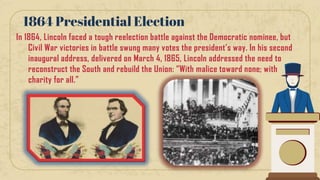
In 1864, Lincoln faced a tough reelection battle against the Democratic nominee, but
Civil War victories in battle swung many votes the president’s way. In his second
inaugural address, delivered on March 4, 1865, Lincoln addressed the need to
reconstruct the South and rebuild the Union: “With malice toward none; with
charity for all.”
1864 Presidential Election
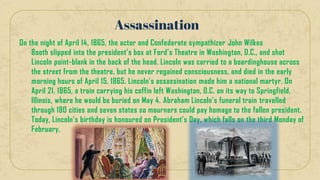
On the night of April 14, 1865, the actor and Confederate sympathizer John Wilkes
Booth slipped into the president’s box at Ford’s Theatre in Washington, D.C., and shot
Lincoln point-blank in the back of the head. Lincoln was carried to a boardinghouse across
the street from the theatre, but he never regained consciousness, and died in the early
morning hours of April 15, 1865. Lincoln’s assassination made him a national martyr. On
April 21, 1865, a train carrying his coffin left Washington, D.C. on its way to Springfield,
Illinois, where he would be buried on May 4. Abraham Lincoln’s funeral train travelled
through 180 cities and seven states so mourners could pay homage to the fallen president.
Today, Lincoln’s birthday is honoured on President’s Day, which falls on the third Monday of
February.
Assassination
03
Impact
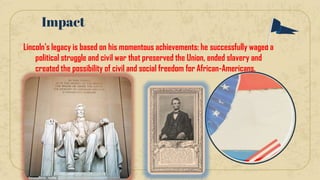
Lincoln's legacy is based on his momentous achievements: he successfully waged a
political struggle and civil war that preserved the Union, ended slavery and
created the possibility of civil and social freedom for African-Americans.
Impact
Fun Facts
Fun Facts
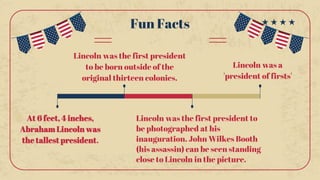
At 6 feet, 4 inches,
Abraham Lincoln was
the tallest president.
Lincoln was a
'president of firsts'
Lincoln was the first president to
be photographed at his
inauguration. John Wilkes Booth
(his assassin) can be seen standing
close to Lincoln in the picture.
Lincoln was the first president
to be born outside of the
original thirteen colonies.
Thank you
very much for
Listening!

Abraham Lincoln - By Sethuki.pptx

  • 1.
  • 2.
    Fun Facts Impact 03 02 04 03 Introduction 01 Story TABLE OF CONTENTS Top4 fun facts Impact on Modern America Who is Abraham Lincoln? His life story
  • 3.
    INTRODUCTION Abraham Lincoln, bornon February 12, 1809, was an American lawyer and statesman who served as the 16th president of the United States from 1861 until his assassination in 1865.
  • 4.
    You can entera subtitle here if you need it STORY OF LINCOLN 02
  • 5.
    Lincoln was bornto Nancy and Thomas Lincoln in a one-room log cabin in Hardin County, Kentucky. His family moved to southern Indiana in 1816. Lincoln’s formal schooling was limited to three brief periods in local schools, as he had to work constantly to support his family. He met Mary Todd and married in 1842. The Lincolns went on to have four children together, though only one would live into adulthood. Early Life
  • 6.
    Lincoln won electionto the U.S. House of Representatives in 1846 and began serving his term the following year. As a congressman, Lincoln was unpopular with many Illinois voters so he returned to Springfield in 1849. Later Douglas, a leading Democrat in Congress, pushed through the passage of the Kansas-Nebraska Act (1854), which declared that the voters of each territory, rather than the federal government, had the right to decide whether the territory should be slave or free. Politics
  • 7.
    On October 16,1854, Lincoln went before a large crowd in Peoria to debate the merits of the Kansas-Nebraska Act with Douglas, denouncing slavery. With the Whig Party in ruins, Lincoln joined the new Republican Party in 1856 and ran for the Senate again that year. In June, Lincoln delivered his now-famous “house divided” speech, in which he quoted from the Gospels to illustrate his belief that “this government cannot endure, permanently, half slave and half free.” Politics (Continued)
  • 8.
    Lincoln’s profile roseeven higher in early 1860 after he delivered another rousing speech at New York City’s Cooper Union. That May, Republicans chose Lincoln as their candidate for president. In the general election, Lincoln again faced Douglas, who represented the northern Democrats. With Breckenridge and Bell splitting the vote in the South, Lincoln won most of the North and carried the Electoral College to win the White House. He built an exceptionally strong cabinet too! 1860 Presidential Campaign
  • 9.
    By the timeLincoln was inaugurated as the 16th U.S. president in March 1861, seven southern states had seceded from the Union and formed the Confederate States of America. Lincoln ordered a fleet of Union ships to supply the federal Fort Sumter in South Carolina in April. The Confederates fired on both the fort and the Union fleet, beginning the Civil War. Lincoln called for 500,000 more troops as both sides prepared for a long conflict. Lincoln surprised many when he proved to be a capable wartime leader, learning quickly about strategy and tactics in the early years of the Civil War, and about choosing the ablest commanders. During the war, Lincoln drew criticism for suspending some civil liberties, he considered such measures necessary to win the war. Civil War
  • 10.
    In 1864, Lincolnfaced a tough reelection battle against the Democratic nominee, but Civil War victories in battle swung many votes the president’s way. In his second inaugural address, delivered on March 4, 1865, Lincoln addressed the need to reconstruct the South and rebuild the Union: “With malice toward none; with charity for all.” 1864 Presidential Election
  • 11.
    On the nightof April 14, 1865, the actor and Confederate sympathizer John Wilkes Booth slipped into the president’s box at Ford’s Theatre in Washington, D.C., and shot Lincoln point-blank in the back of the head. Lincoln was carried to a boardinghouse across the street from the theatre, but he never regained consciousness, and died in the early morning hours of April 15, 1865. Lincoln’s assassination made him a national martyr. On April 21, 1865, a train carrying his coffin left Washington, D.C. on its way to Springfield, Illinois, where he would be buried on May 4. Abraham Lincoln’s funeral train travelled through 180 cities and seven states so mourners could pay homage to the fallen president. Today, Lincoln’s birthday is honoured on President’s Day, which falls on the third Monday of February. Assassination
  • 12.
  • 13.
    Lincoln's legacy isbased on his momentous achievements: he successfully waged a political struggle and civil war that preserved the Union, ended slavery and created the possibility of civil and social freedom for African-Americans. Impact
  • 14.
  • 15.
    Fun Facts At 6feet, 4 inches, Abraham Lincoln was the tallest president. Lincoln was a 'president of firsts' Lincoln was the first president to be photographed at his inauguration. John Wilkes Booth (his assassin) can be seen standing close to Lincoln in the picture. Lincoln was the first president to be born outside of the original thirteen colonies.
  • 16.
    Thank you very muchfor Listening!