A “Talk” with Purpose
Michael D. Becker
McKesson
Manufacturer Networking Evening
Thursday, May 31, 2018
My Unique Perspective…
Wall Street
Biotechnology Industry Executive
Industry Consultant
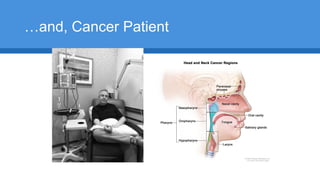
…and, Cancer Patient
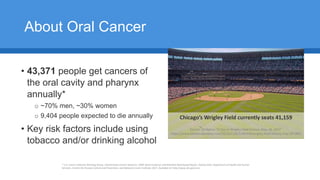
About Oral Cancer
• 43,371 people get cancers of
the oral cavity and pharynx
annually*
o ~70% men, ~30% women
o 9,404 people expected to die annually
• Key risk factors include using
tobacco and/or drinking alcohol
* U.S. Cancer Statistics Working Group. United States Cancer Statistics: 1999–2014 Incidence and Mortality Web-based Report. Atlanta (GA): Department of Health and Human
Services, Centers for Disease Control and Prevention, and National Cancer Institute; 2017. Available at: http://www.cdc.gov/uscs.
Chicago’s Wrigley Field currently seats 41,159
Source: SB Nation “A Day In Wrigley Field History: May 18, 1947”
https://www.bleedcubbieblue.com/2013/12/8/5185458/wrigley-field-history-may-18-1947
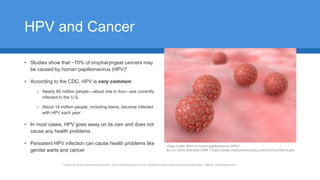
HPV and Cancer
• Studies show that ~70% of oropharyngeal cancers may
be caused by human papillomavirus (HPV)*
• According to the CDC, HPV is very common:
o Nearly 80 million people—about one in four—are currently
infected in the U.S.
o About 14 million people, including teens, become infected
with HPV each year
• In most cases, HPV goes away on its own and does not
cause any health problems
• Persistent HPV infection can cause health problems like
genital warts and cancer
Image credit: What is human papillomavirus (HPV)?
By Lori Smith BSN MSN CRNP | https://www.medicalnewstoday.com/articles/246670.php
* Centers for Disease Control and Prevention - HPV and Oropharyngeal Cancer. Available at: https://www.cdc.gov/cancer/hpv/basic_info/hpv_oropharyngeal.htm
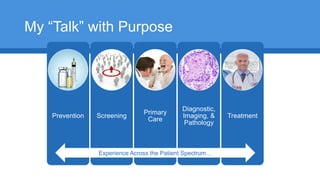
My “Talk” with Purpose
Prevention Screening
Primary
Care
Diagnostic,
Imaging, &
Pathology
Treatment
Experience Across the Patient Spectrum…
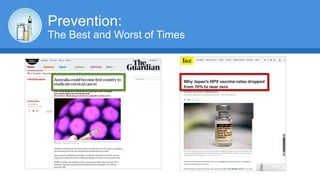
Prevention:
The Best and Worst of Times
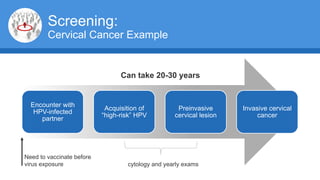
Screening:
Cervical Cancer Example
Encounter with
HPV-infected
partner
Acquisition of
“high-risk” HPV
Preinvasive
cervical lesion
Invasive cervical
cancer
Need to vaccinate before
virus exposure
Can take 20-30 years
cytology and yearly exams
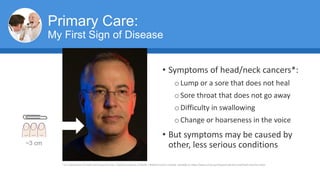
Primary Care:
My First Sign of Disease
• Symptoms of head/neck cancers*:
oLump or a sore that does not heal
oSore throat that does not go away
oDifficulty in swallowing
oChange or hoarseness in the voice
• But symptoms may be caused by
other, less serious conditions
* U.S. Department of Health and Human Services | National Institutes of Health | National Cancer Institute. Available at: https://www.cancer.gov/types/head-and-neck/head-neck-fact-sheet
~3 cm
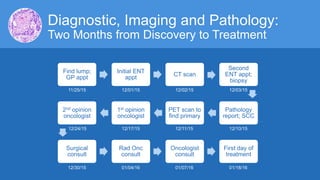
Diagnostic, Imaging and Pathology:
Two Months from Discovery to Treatment
Find lump;
GP appt
Initial ENT
appt
CT scan
Second
ENT appt;
biopsy
Pathology
report; SCC
PET scan to
find primary
1st opinion
oncologist
2nd opinion
oncologist
Surgical
consult
Rad Onc
consult
Oncologist
consult
First day of
treatment
11/25/15 12/01/15 12/02/15 12/03/15
12/10/1512/17/15 12/11/1512/24/15
12/30/15 01/04/16 01/07/16 01/18/16
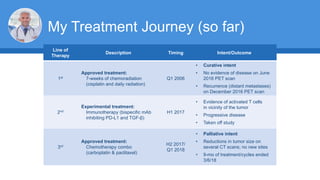
My Treatment Journey (so far)
Line of
Therapy
Description Timing Intent/Outcome
1st
Approved treatment:
7-weeks of chemoradiation
(cisplatin and daily radiation)
Q1 2006
• Curative intent
• No evidence of disease on June
2016 PET scan
• Recurrence (distant metastases)
on December 2016 PET scan
2nd
Experimental treatment:
Immunotherapy (bispecific mAb
inhibiting PD-L1 and TGF-β)
H1 2017
• Evidence of activated T cells
in vicinity of the tumor
• Progressive disease
• Taken off study
3rd
Approved treatment:
Chemotherapy combo
(carboplatin & paclitaxel)
H2 2017/
Q1 2018
• Palliative intent
• Reductions in tumor size on
several CT scans; no new sites
• 9-mo of treatment/cycles ended
3/6/18
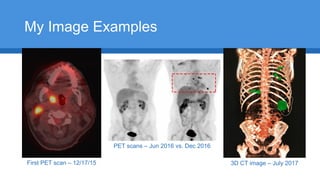
My Image Examples
First PET scan – 12/17/15
PET scans – Jun 2016 vs. Dec 2016
3D CT image – July 2017
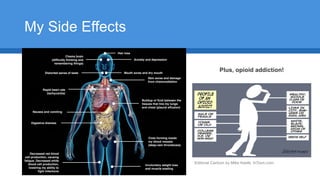
My Side Effects
Editorial Cartoon by Mike Keefe, InToon.com
Plus, opioid addiction!
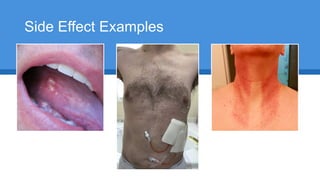
Side Effect Examples
Side Effect Examples (cont’d)
Photo from November 2017
Image source:
http://www.labworld.co.uk/replacement-fetus-model.html
What I’ve Learned
Patients need to know more about We need to improve health literacy**
• Where to go for treatment (community setting, teaching
center, for-profit, etc.) and benefit of seeking a second
opinion
o And where potential conflicts of interest exist…
• What to really expect in terms of side-effects from
treatment
o Balanced so that patient is scared away from pursuing
• Clinical trial options
o Only 3% of adult cancer patients participate in clinical trials*
• FDA’s Expanded Access Program
o FDA receives ~1,000 applications annually for expanded
access to treat patients with investigational drugs
• Only 12% of U.S. adults have proficient health literacy
o Using a table, calculate an employee's share of health
insurance costs for a year
• Only 53% have intermediate health literacy
o Read instructions on a prescription label, and determine
what time a person can take the medication
• Only 21% have basic health literacy
o Read a pamphlet, and give two reasons a person with no
symptoms should be tested for a disease
• 14% have below basic health literacy
o Read a set of short instructions, and identify what is
permissible to drink before a medical test
* Institute of Medicine (US) Forum on Drug Discovery, Development, and Translation. Washington (DC): National Academies Press (US); 2010.
** U.S. Department of Health & Human Services “America's Health Literacy: Why We Need Accessible Health Information.”
Web: https://health.gov/communication/literacy/issuebrief/
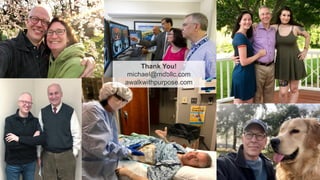
Thank you! Thank You!
michael@mdbllc.com
awalkwithpurpose.com

A "Talk" with Purpose

  • 1.
    A “Talk” withPurpose Michael D. Becker McKesson Manufacturer Networking Evening Thursday, May 31, 2018
  • 2.
    My Unique Perspective… WallStreet Biotechnology Industry Executive Industry Consultant
  • 3.
  • 4.
    About Oral Cancer •43,371 people get cancers of the oral cavity and pharynx annually* o ~70% men, ~30% women o 9,404 people expected to die annually • Key risk factors include using tobacco and/or drinking alcohol * U.S. Cancer Statistics Working Group. United States Cancer Statistics: 1999–2014 Incidence and Mortality Web-based Report. Atlanta (GA): Department of Health and Human Services, Centers for Disease Control and Prevention, and National Cancer Institute; 2017. Available at: http://www.cdc.gov/uscs. Chicago’s Wrigley Field currently seats 41,159 Source: SB Nation “A Day In Wrigley Field History: May 18, 1947” https://www.bleedcubbieblue.com/2013/12/8/5185458/wrigley-field-history-may-18-1947
  • 5.
    HPV and Cancer •Studies show that ~70% of oropharyngeal cancers may be caused by human papillomavirus (HPV)* • According to the CDC, HPV is very common: o Nearly 80 million people—about one in four—are currently infected in the U.S. o About 14 million people, including teens, become infected with HPV each year • In most cases, HPV goes away on its own and does not cause any health problems • Persistent HPV infection can cause health problems like genital warts and cancer Image credit: What is human papillomavirus (HPV)? By Lori Smith BSN MSN CRNP | https://www.medicalnewstoday.com/articles/246670.php * Centers for Disease Control and Prevention - HPV and Oropharyngeal Cancer. Available at: https://www.cdc.gov/cancer/hpv/basic_info/hpv_oropharyngeal.htm
  • 6.
    My “Talk” withPurpose Prevention Screening Primary Care Diagnostic, Imaging, & Pathology Treatment Experience Across the Patient Spectrum…
  • 7.
  • 8.
    Screening: Cervical Cancer Example Encounterwith HPV-infected partner Acquisition of “high-risk” HPV Preinvasive cervical lesion Invasive cervical cancer Need to vaccinate before virus exposure Can take 20-30 years cytology and yearly exams
  • 9.
    Primary Care: My FirstSign of Disease • Symptoms of head/neck cancers*: oLump or a sore that does not heal oSore throat that does not go away oDifficulty in swallowing oChange or hoarseness in the voice • But symptoms may be caused by other, less serious conditions * U.S. Department of Health and Human Services | National Institutes of Health | National Cancer Institute. Available at: https://www.cancer.gov/types/head-and-neck/head-neck-fact-sheet ~3 cm
  • 10.
    Diagnostic, Imaging andPathology: Two Months from Discovery to Treatment Find lump; GP appt Initial ENT appt CT scan Second ENT appt; biopsy Pathology report; SCC PET scan to find primary 1st opinion oncologist 2nd opinion oncologist Surgical consult Rad Onc consult Oncologist consult First day of treatment 11/25/15 12/01/15 12/02/15 12/03/15 12/10/1512/17/15 12/11/1512/24/15 12/30/15 01/04/16 01/07/16 01/18/16
  • 11.
    My Treatment Journey(so far) Line of Therapy Description Timing Intent/Outcome 1st Approved treatment: 7-weeks of chemoradiation (cisplatin and daily radiation) Q1 2006 • Curative intent • No evidence of disease on June 2016 PET scan • Recurrence (distant metastases) on December 2016 PET scan 2nd Experimental treatment: Immunotherapy (bispecific mAb inhibiting PD-L1 and TGF-β) H1 2017 • Evidence of activated T cells in vicinity of the tumor • Progressive disease • Taken off study 3rd Approved treatment: Chemotherapy combo (carboplatin & paclitaxel) H2 2017/ Q1 2018 • Palliative intent • Reductions in tumor size on several CT scans; no new sites • 9-mo of treatment/cycles ended 3/6/18
  • 12.
    My Image Examples FirstPET scan – 12/17/15 PET scans – Jun 2016 vs. Dec 2016 3D CT image – July 2017
  • 13.
    My Side Effects EditorialCartoon by Mike Keefe, InToon.com Plus, opioid addiction!
  • 14.
  • 15.
    Side Effect Examples(cont’d) Photo from November 2017 Image source: http://www.labworld.co.uk/replacement-fetus-model.html
  • 16.
    What I’ve Learned Patientsneed to know more about We need to improve health literacy** • Where to go for treatment (community setting, teaching center, for-profit, etc.) and benefit of seeking a second opinion o And where potential conflicts of interest exist… • What to really expect in terms of side-effects from treatment o Balanced so that patient is scared away from pursuing • Clinical trial options o Only 3% of adult cancer patients participate in clinical trials* • FDA’s Expanded Access Program o FDA receives ~1,000 applications annually for expanded access to treat patients with investigational drugs • Only 12% of U.S. adults have proficient health literacy o Using a table, calculate an employee's share of health insurance costs for a year • Only 53% have intermediate health literacy o Read instructions on a prescription label, and determine what time a person can take the medication • Only 21% have basic health literacy o Read a pamphlet, and give two reasons a person with no symptoms should be tested for a disease • 14% have below basic health literacy o Read a set of short instructions, and identify what is permissible to drink before a medical test * Institute of Medicine (US) Forum on Drug Discovery, Development, and Translation. Washington (DC): National Academies Press (US); 2010. ** U.S. Department of Health & Human Services “America's Health Literacy: Why We Need Accessible Health Information.” Web: https://health.gov/communication/literacy/issuebrief/
  • 17.
    Thank you! ThankYou! michael@mdbllc.com awalkwithpurpose.com