Summer Project
Report Presentation
on IPO Allocation System
Presented By
Name: Aadarsha Upadhyaya
TU Roll: 11632/20
Supervised By
Er. Dhiraj Kumar Jha
Presentation Outline
• Introduction
• Algorithm Details
• Data Processing ( Input , Processing and Output)
• Testing Methodology
2
Introduction
• NIBL Ace Capital Limited
• Wholly owned subsidiary of NIM Bank.
• Provides portfolio management services to busy investors.
• Tedious IPO Application and Allotment process.
• Difficult to analyze the portfolio for individual accounts.
• Time consuming and error-prone due to human intervention
3
Objectives
• To build a secure web application.
• To automate the IPO application and allotment process.
• To manage Demat accounts of multiple users.
• To minimize human-errors and emphasize productivity.
4
Literature Review
• The overall IPO process (allocation and allotment) can be complex and time-consuming,
requiring coordination between various entities such as issuing companies, regulatory
authorities, and investors (Lowry et al., 2017).
• Financial companies have assumed the emerging technologies to enhance operational
efficiency, improving customer-centric services, and favoring information technology
(Lee & Shin, 2018).
• To mitigate the problem of complexity and human errors, automated IPO management
systems have emerged as the solution of the overall IPO process (Sharma, 2013).
5
Literature Review
6
• (Dave & Panchal, 2021) mention that the digitalization of IPO application process needs to adapt
to new regulations imposed by the government as they constantly refine and update their policies to
ensure market stability and investor protection.
• As underscored by (Awad et al., 2019), such systems can be susceptible to several security threats
like: Cross-site Scripting (XSS) or SQL Injection. So, there is a crucial need for the
implementation of robust security measures.
• Finally, the proper selection of appropriate software development model ensures project success
and the incremental model , as described by (Sommerville, 1976), fits the requirements of
this system since it involves dividing the project into smaller, manageable increments and phases.
Algorithm Details
• Authentication (Successful login gives a token)
• Token Management (Using the token to access different API
modules)
• Database Interaction (Store and manage user data for batch
processing)
• Request-response cycle (Iterate over each user for accessing the
system)
• Error Handling (Implementation of retry and error logging functions)
• Security (Encryption and decryption of sensitive information).
7
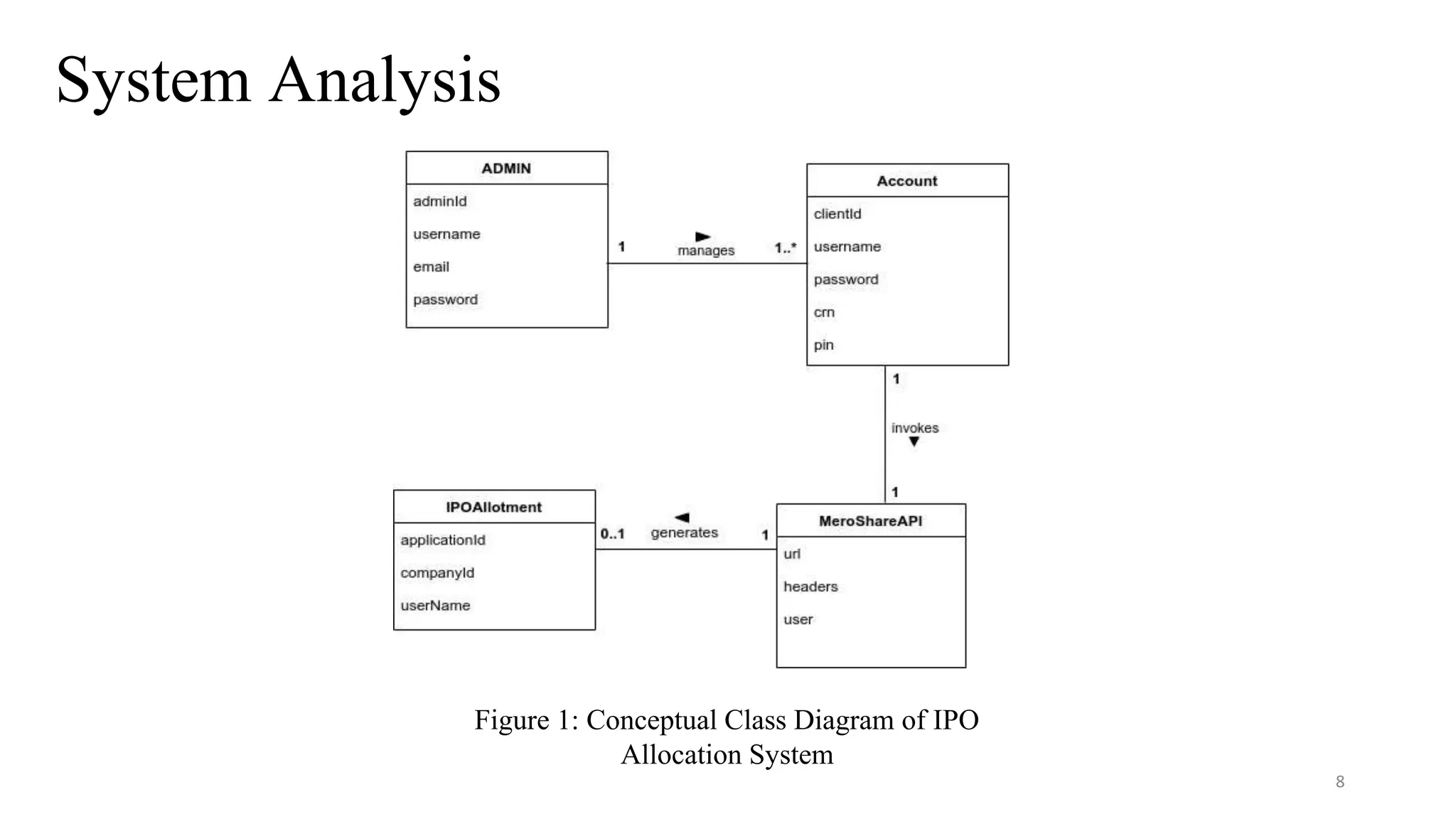
System Analysis
8
Figure 1: Conceptual Class Diagram of IPO
Allocation System
System Analysis
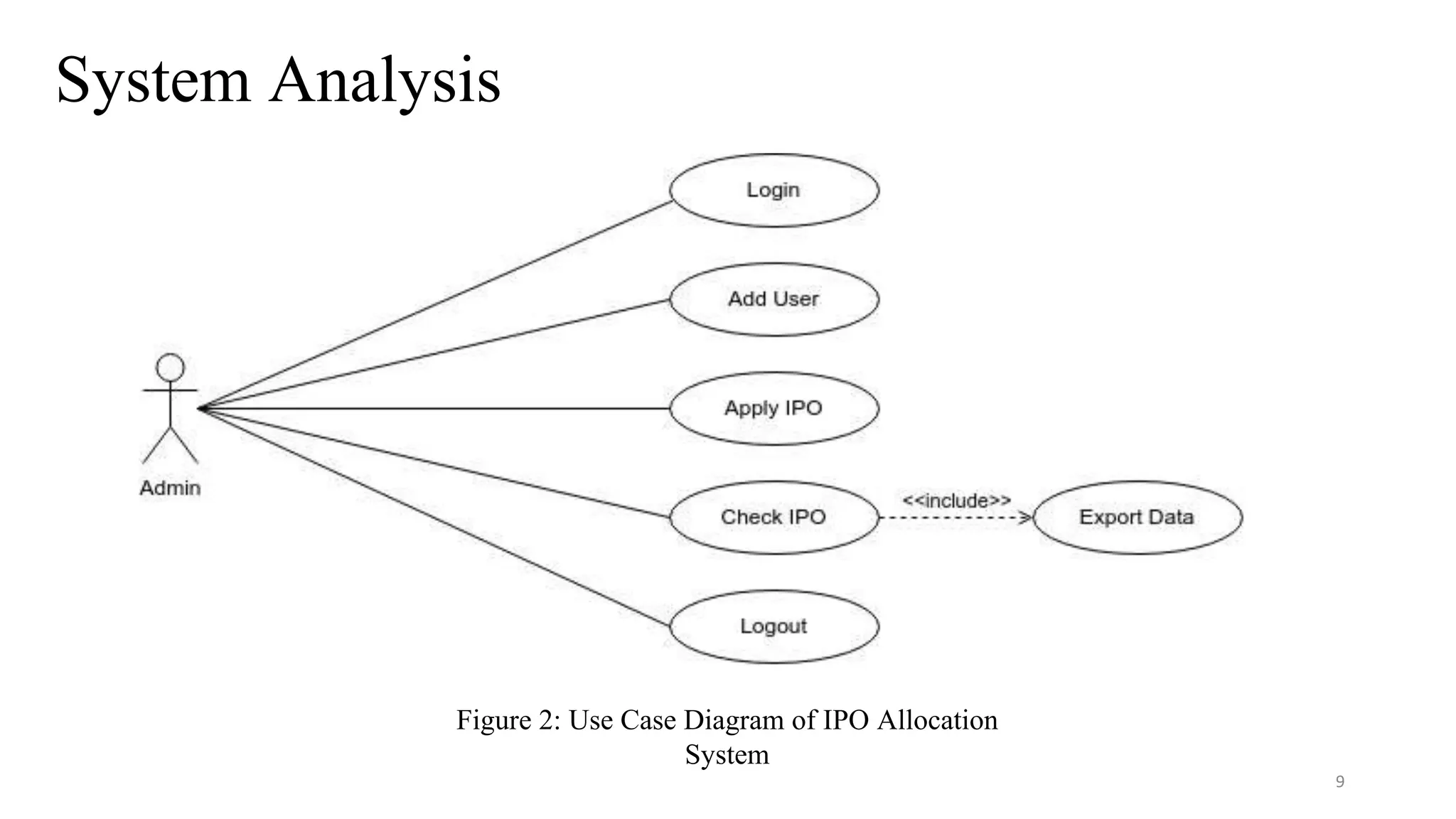
9
Figure 2: Use Case Diagram of IPO Allocation
System
System Design
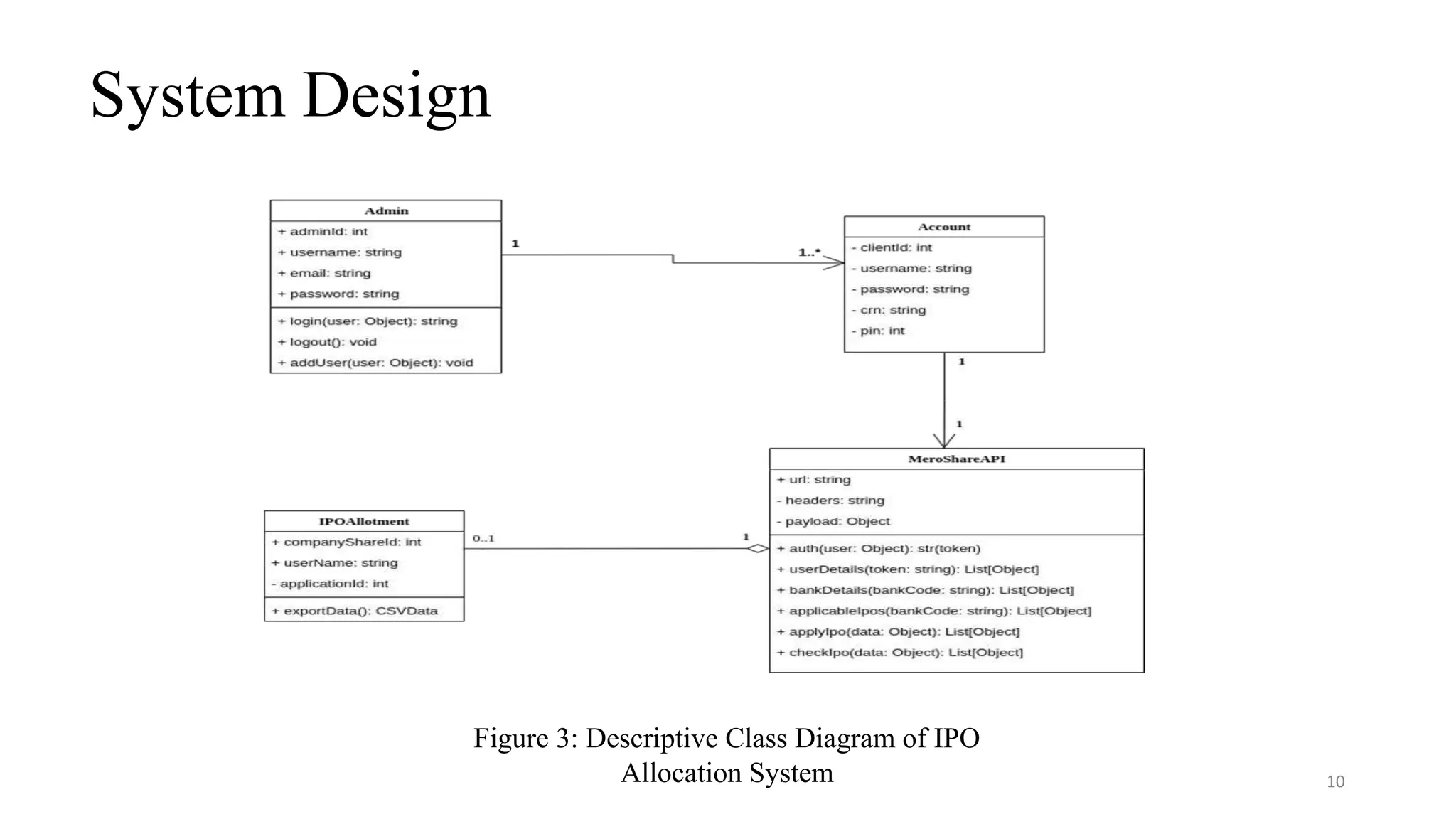
10
Figure 3: Descriptive Class Diagram of IPO
Allocation System
Data Processing
Input:
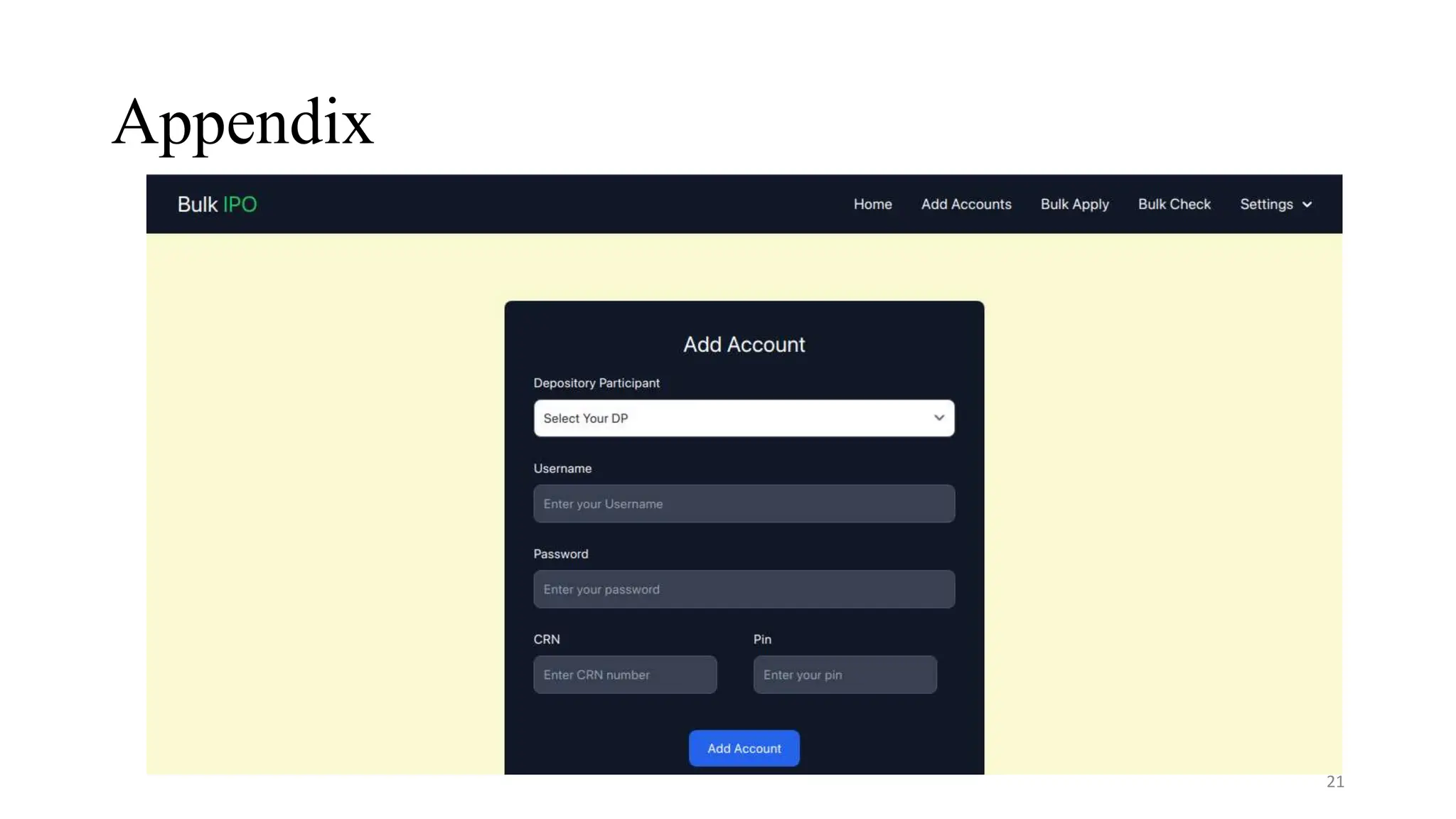
- username, password, and clientId for authentication.
- Successful login generates a token (for a session).
Processing:
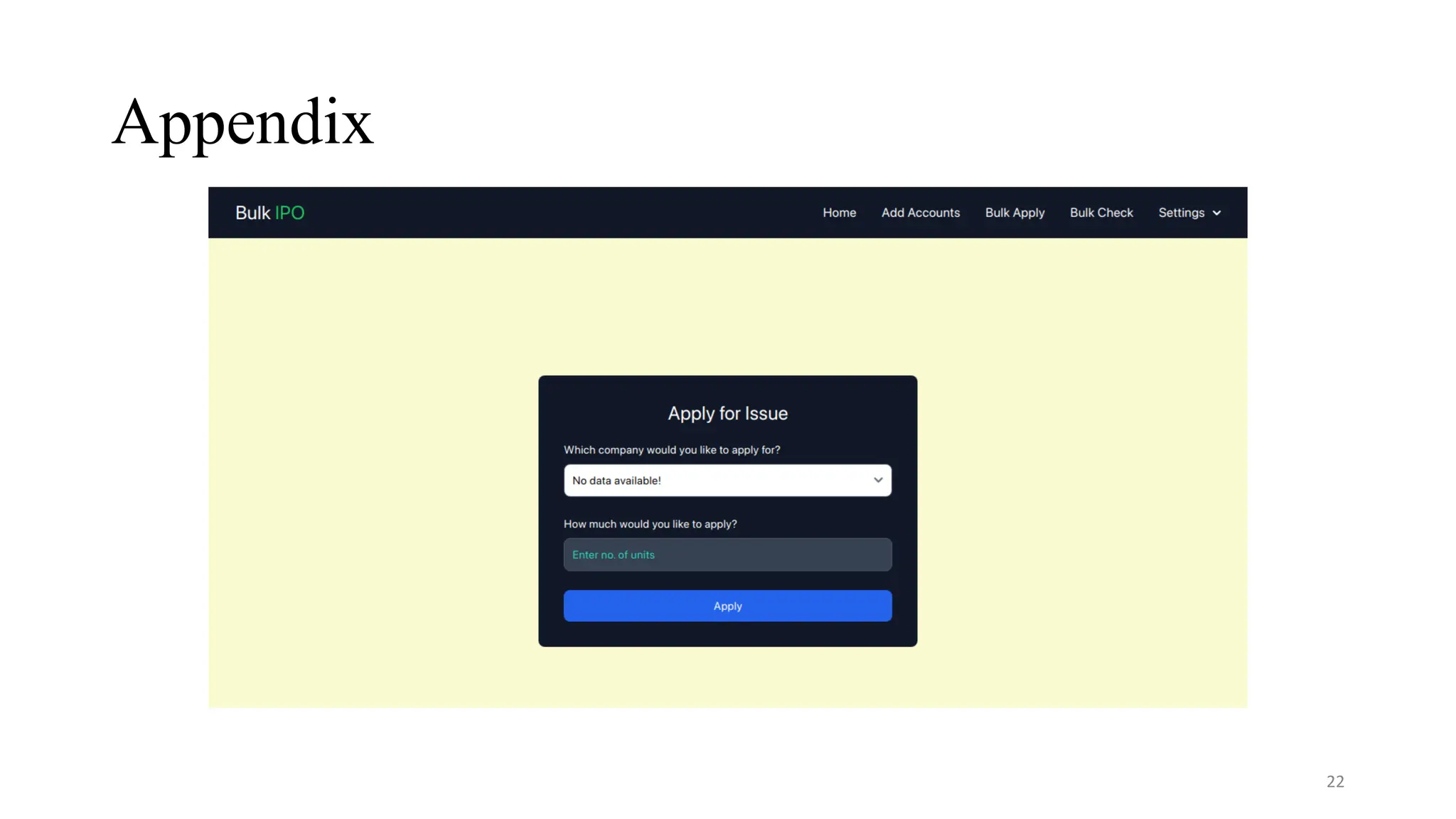
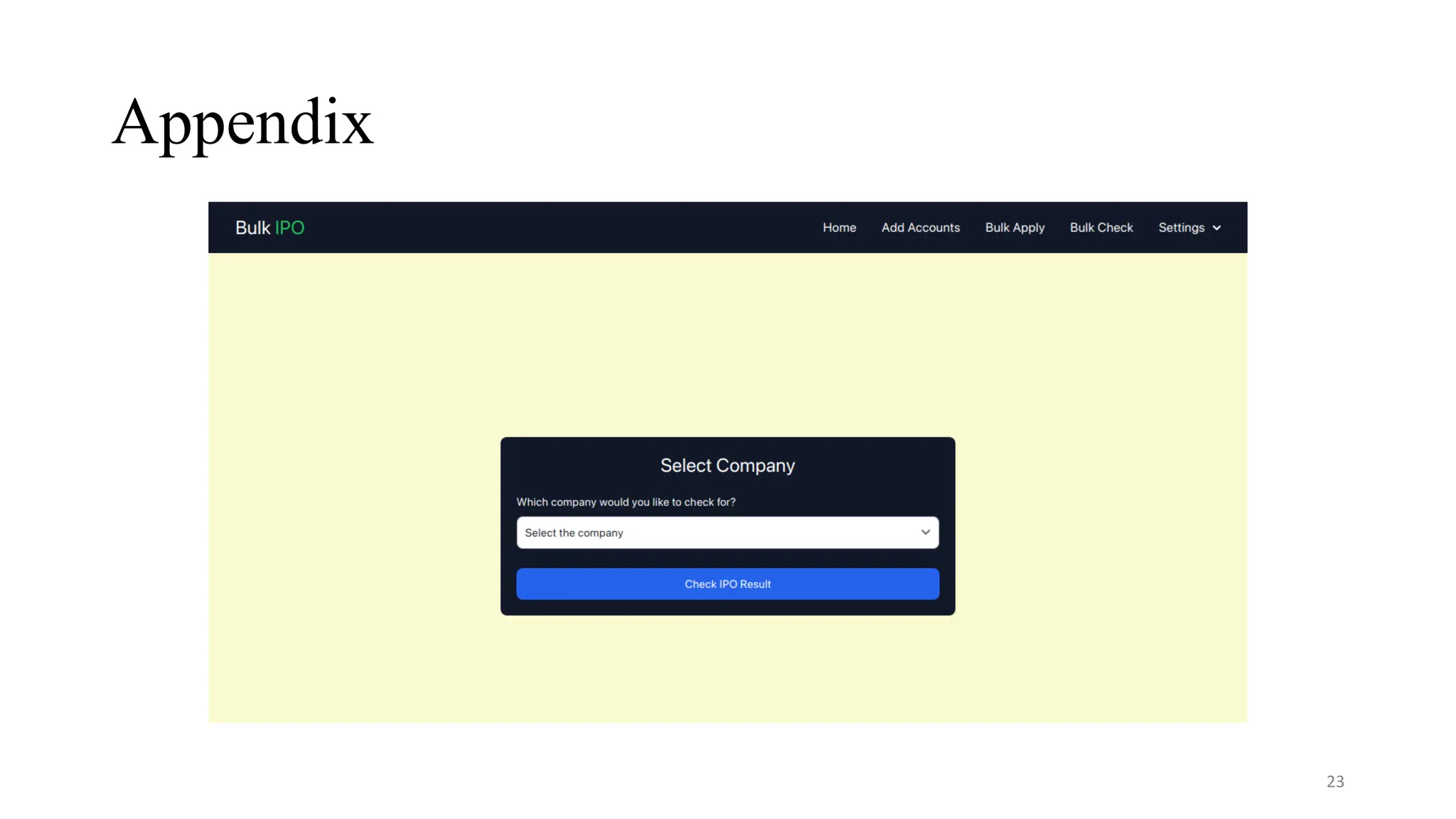
- Token is used to access various modules like Apply IPO and Check
IPO.
- Customer data is manipulated to process the application process.
Output:
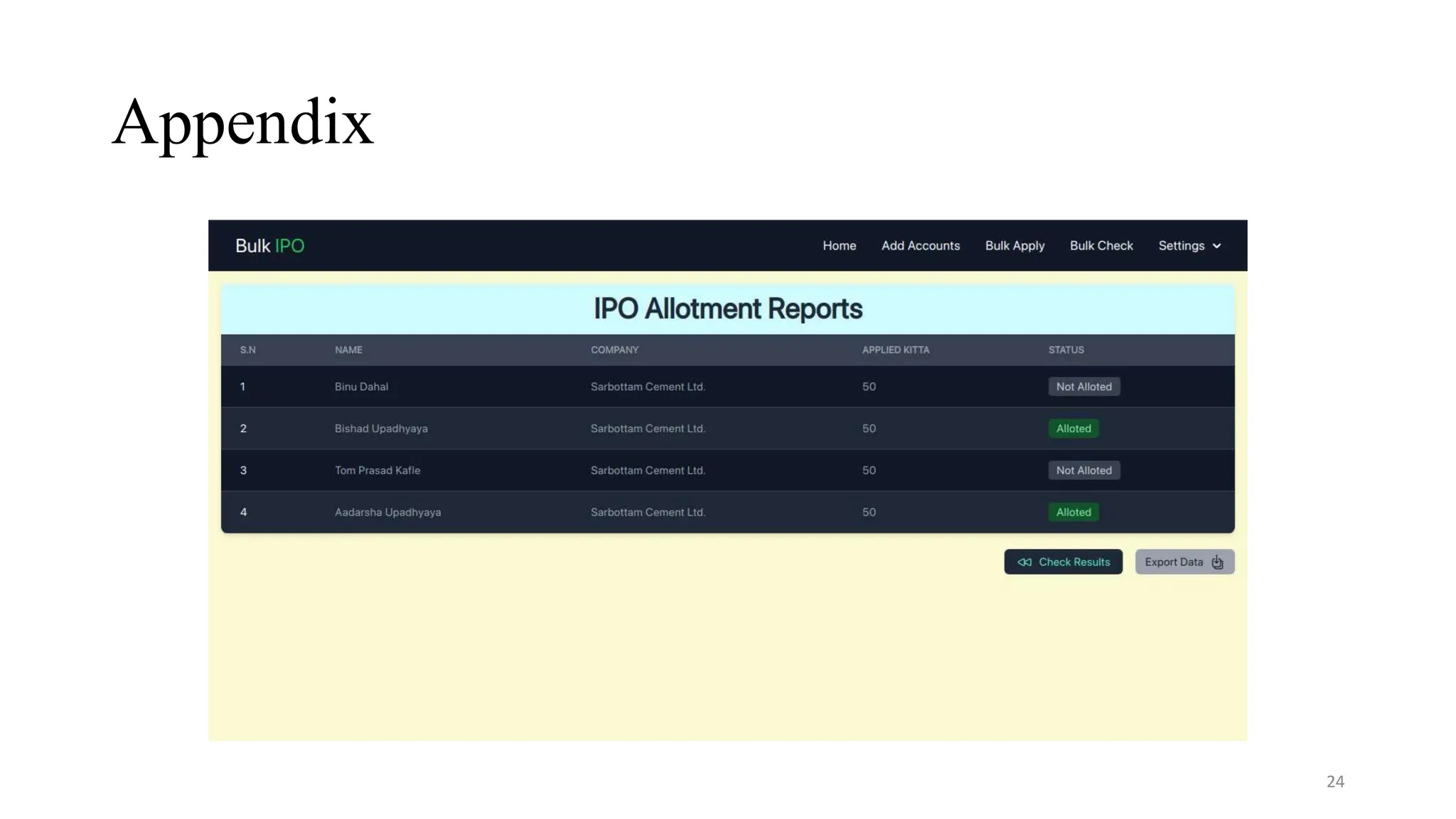
- After IPO is applier or checked, necessary information is displayed
to the user in a clear format.
- The generated data can be exported by the user for further analysis.
11
System Design
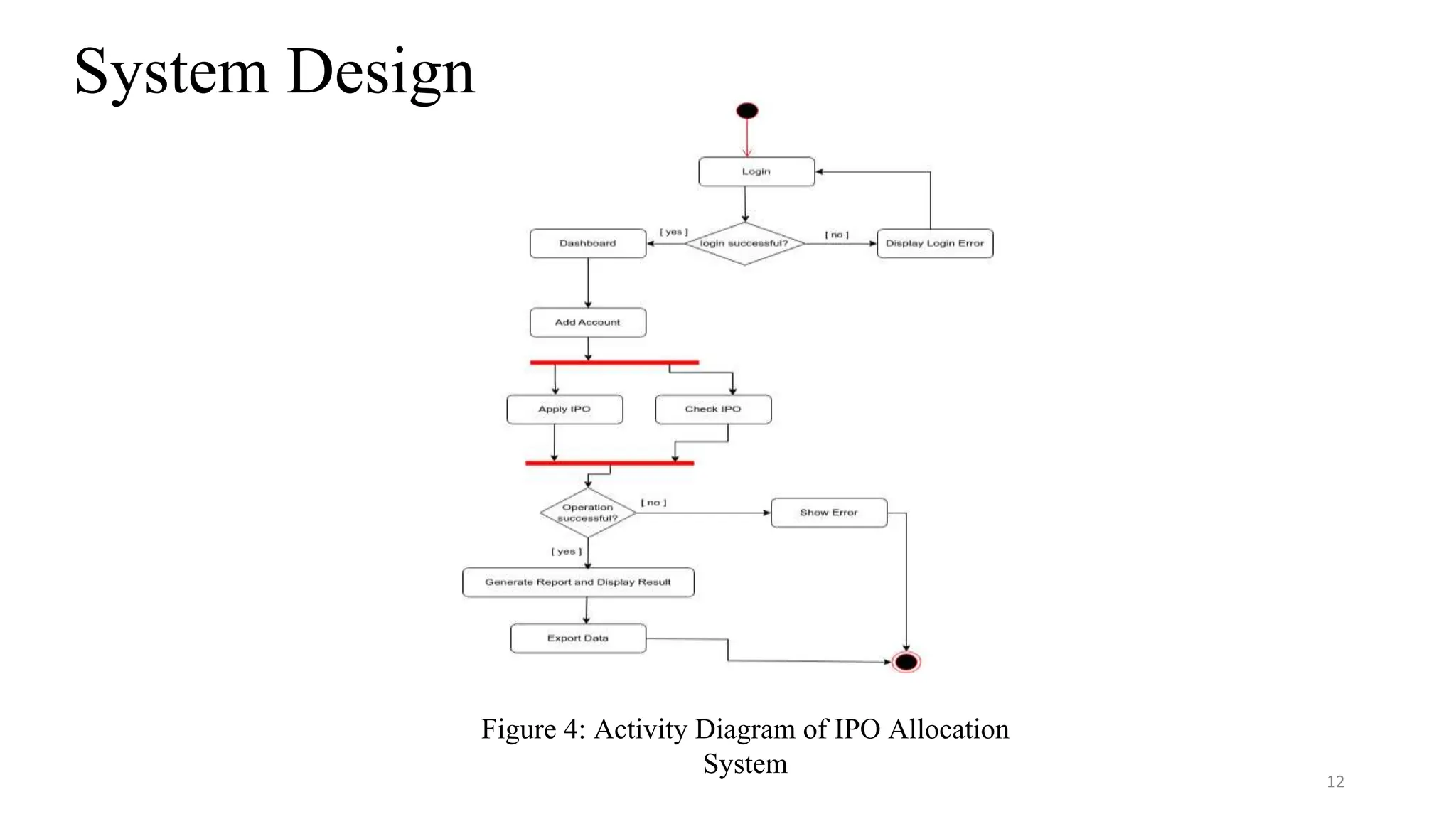
12
Figure 4: Activity Diagram of IPO Allocation
System
System Design
13
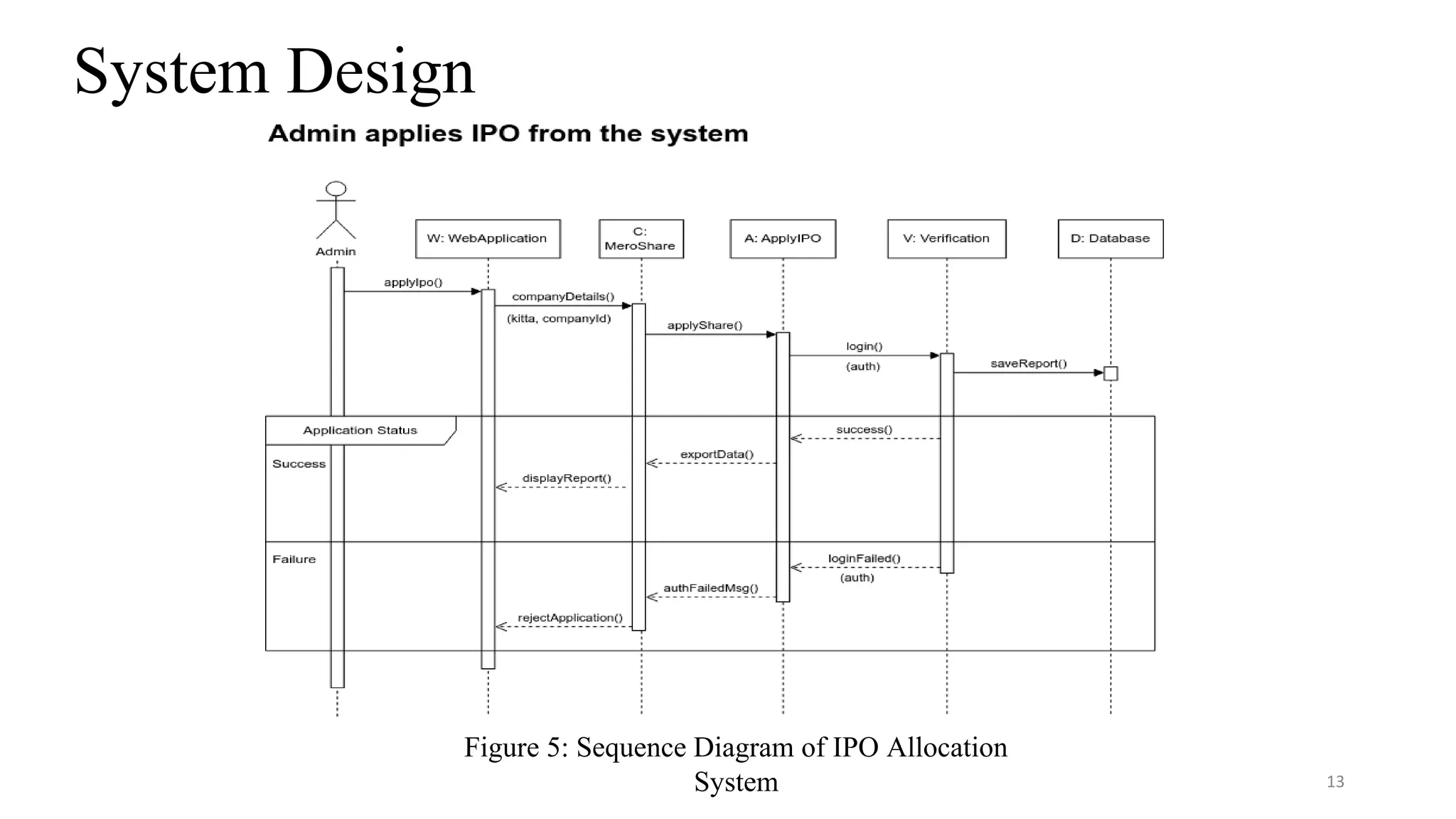
Figure 5: Sequence Diagram of IPO Allocation
System
System Design
14
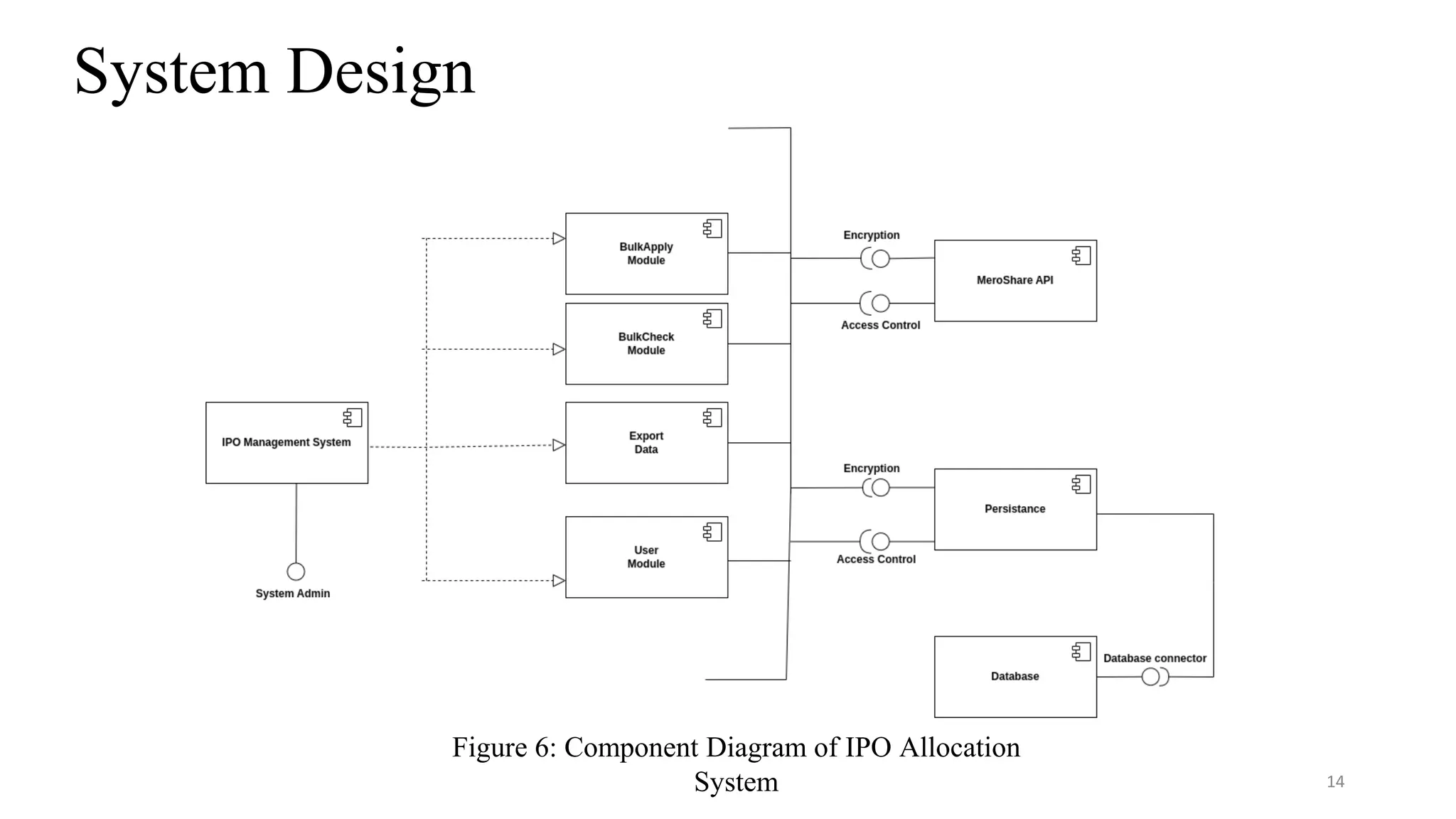
Figure 6: Component Diagram of IPO Allocation
System
System Design
15
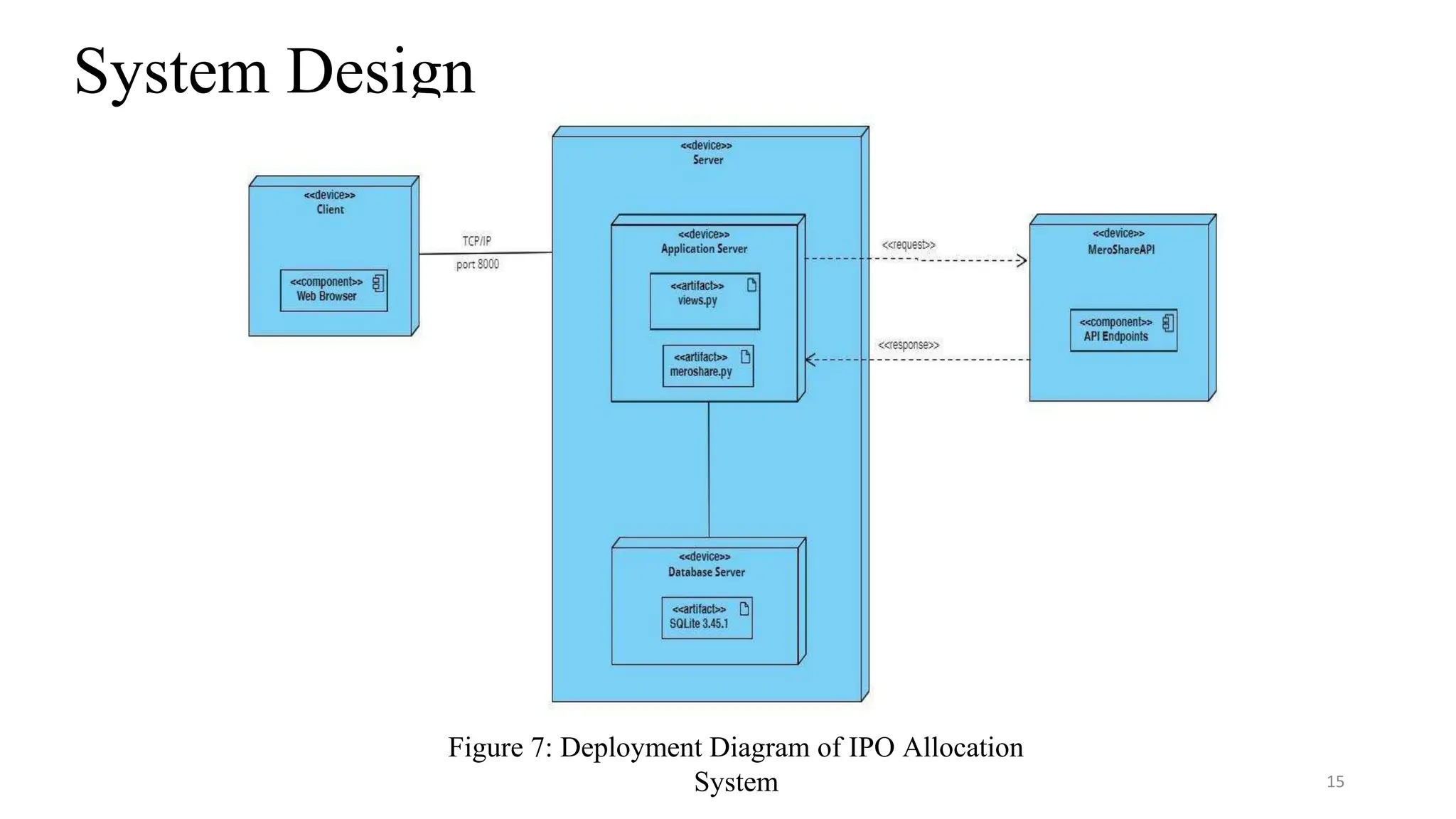
Figure 7: Deployment Diagram of IPO Allocation
System
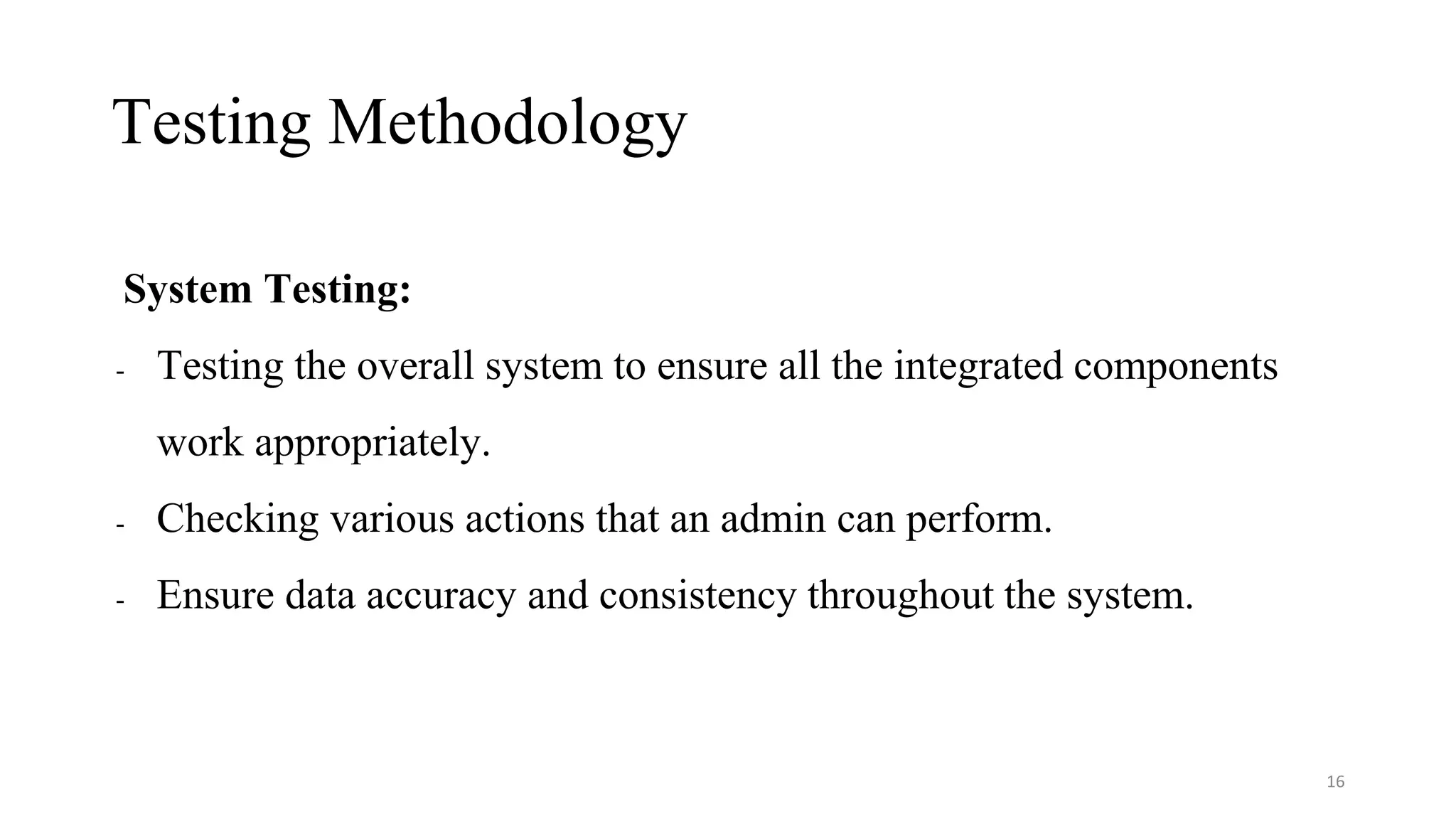
Testing Methodology
System Testing:
- Testing the overall system to ensure all the integrated components
work appropriately.
- Checking various actions that an admin can perform.
- Ensure data accuracy and consistency throughout the system.
16
Testing Methodology
17
User Acceptance Testing:
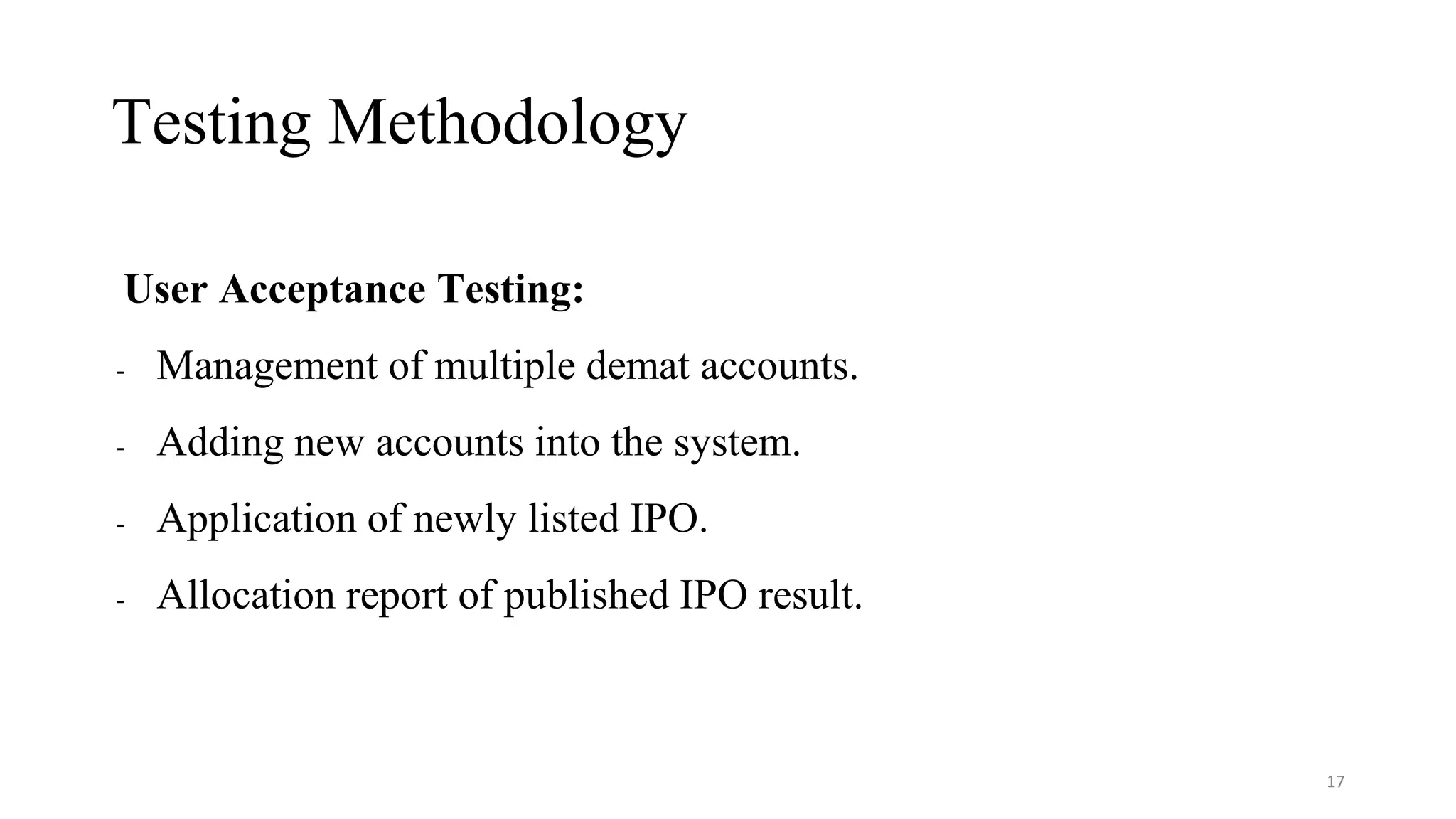
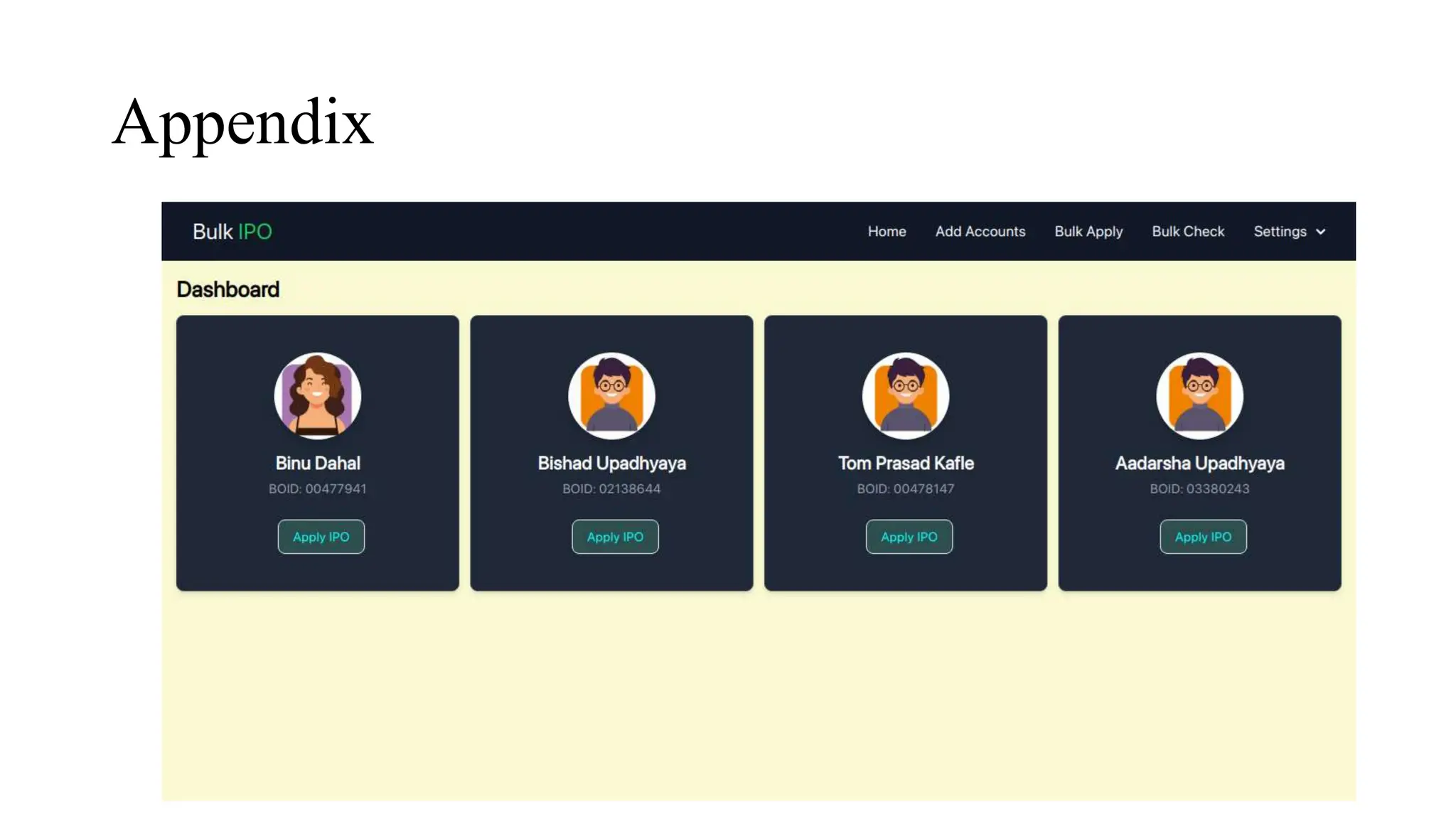
- Management of multiple demat accounts.
- Adding new accounts into the system.
- Application of newly listed IPO.
- Allocation report of published IPO result.
• In summary, the IPO management and allocation system is a major advancement
toward modernizing and simplifying the process of initial public offering.
• Through the resolution of the laborious and manual parts of IPO management, this
system provides a strong solution that improves the productivity, accuracy and
efficiency.
• By automating processes like mass application and result checking, the system
lowers the possibility of human errors and gives the organization more time.
Conclusion
18
References
Awad, M., Ali, M., Takruri, M., & Ismail, S. (2019). Security vunrebalities related to web-based
data.
Dave, D., & Panchal, N. (2021). A Study of on Factors Affecting Digitalization of IPO Application
Process.
Lee, I., & Shin, Y. (2018). Fintech: Ecosystem, business models, investment decisions, and
challenges.
Michelle, L., Michaely, R., & Volkova, E. (2017). Initial Pulbic Offerings: A Synthesis of the
Literature and Directions for Future Research.
Sharma, M. (2013). A Review of Indian IPO Process.
Sommerville, I. (1976). Software Engineering 10th Edition.
19
Appendix
20
Appendix
21
Appendix
22
Appendix
23
Appendix
24
25
Thank you

A Summer Project Report Presentation Adarsh

  • 1.
    Summer Project Report Presentation onIPO Allocation System Presented By Name: Aadarsha Upadhyaya TU Roll: 11632/20 Supervised By Er. Dhiraj Kumar Jha
  • 2.
    Presentation Outline • Introduction •Algorithm Details • Data Processing ( Input , Processing and Output) • Testing Methodology 2
  • 3.
    Introduction • NIBL AceCapital Limited • Wholly owned subsidiary of NIM Bank. • Provides portfolio management services to busy investors. • Tedious IPO Application and Allotment process. • Difficult to analyze the portfolio for individual accounts. • Time consuming and error-prone due to human intervention 3
  • 4.
    Objectives • To builda secure web application. • To automate the IPO application and allotment process. • To manage Demat accounts of multiple users. • To minimize human-errors and emphasize productivity. 4
  • 5.
    Literature Review • Theoverall IPO process (allocation and allotment) can be complex and time-consuming, requiring coordination between various entities such as issuing companies, regulatory authorities, and investors (Lowry et al., 2017). • Financial companies have assumed the emerging technologies to enhance operational efficiency, improving customer-centric services, and favoring information technology (Lee & Shin, 2018). • To mitigate the problem of complexity and human errors, automated IPO management systems have emerged as the solution of the overall IPO process (Sharma, 2013). 5
  • 6.
    Literature Review 6 • (Dave& Panchal, 2021) mention that the digitalization of IPO application process needs to adapt to new regulations imposed by the government as they constantly refine and update their policies to ensure market stability and investor protection. • As underscored by (Awad et al., 2019), such systems can be susceptible to several security threats like: Cross-site Scripting (XSS) or SQL Injection. So, there is a crucial need for the implementation of robust security measures. • Finally, the proper selection of appropriate software development model ensures project success and the incremental model , as described by (Sommerville, 1976), fits the requirements of this system since it involves dividing the project into smaller, manageable increments and phases.
  • 7.
    Algorithm Details • Authentication(Successful login gives a token) • Token Management (Using the token to access different API modules) • Database Interaction (Store and manage user data for batch processing) • Request-response cycle (Iterate over each user for accessing the system) • Error Handling (Implementation of retry and error logging functions) • Security (Encryption and decryption of sensitive information). 7
  • 8.
    System Analysis 8 Figure 1:Conceptual Class Diagram of IPO Allocation System
  • 9.
    System Analysis 9 Figure 2:Use Case Diagram of IPO Allocation System
  • 10.
    System Design 10 Figure 3:Descriptive Class Diagram of IPO Allocation System
  • 11.
    Data Processing Input: - username,password, and clientId for authentication. - Successful login generates a token (for a session). Processing: - Token is used to access various modules like Apply IPO and Check IPO. - Customer data is manipulated to process the application process. Output: - After IPO is applier or checked, necessary information is displayed to the user in a clear format. - The generated data can be exported by the user for further analysis. 11
  • 12.
    System Design 12 Figure 4:Activity Diagram of IPO Allocation System
  • 13.
    System Design 13 Figure 5:Sequence Diagram of IPO Allocation System
  • 14.
    System Design 14 Figure 6:Component Diagram of IPO Allocation System
  • 15.
    System Design 15 Figure 7:Deployment Diagram of IPO Allocation System
  • 16.
    Testing Methodology System Testing: -Testing the overall system to ensure all the integrated components work appropriately. - Checking various actions that an admin can perform. - Ensure data accuracy and consistency throughout the system. 16
  • 17.
    Testing Methodology 17 User AcceptanceTesting: - Management of multiple demat accounts. - Adding new accounts into the system. - Application of newly listed IPO. - Allocation report of published IPO result.
  • 18.
    • In summary,the IPO management and allocation system is a major advancement toward modernizing and simplifying the process of initial public offering. • Through the resolution of the laborious and manual parts of IPO management, this system provides a strong solution that improves the productivity, accuracy and efficiency. • By automating processes like mass application and result checking, the system lowers the possibility of human errors and gives the organization more time. Conclusion 18
  • 19.
    References Awad, M., Ali,M., Takruri, M., & Ismail, S. (2019). Security vunrebalities related to web-based data. Dave, D., & Panchal, N. (2021). A Study of on Factors Affecting Digitalization of IPO Application Process. Lee, I., & Shin, Y. (2018). Fintech: Ecosystem, business models, investment decisions, and challenges. Michelle, L., Michaely, R., & Volkova, E. (2017). Initial Pulbic Offerings: A Synthesis of the Literature and Directions for Future Research. Sharma, M. (2013). A Review of Indian IPO Process. Sommerville, I. (1976). Software Engineering 10th Edition. 19
  • 20.
  • 21.
  • 22.
  • 23.
  • 24.
  • 25.