A STUDY ON ONLINE PAYMENT
SYSTEM -GPAY
Transaction Failures
Security Concerns
Technical Glitches
Customer Support Response Time
Compatibility Issues
STATEMENT OF PROBLEM
Google Pay is a mobile payment and digital wallet
platform developed by Google to facilitate secure
and convenient financial transactions. Launched in
2015, Google Pay has evolved to become a widely
used and trusted application that enables users to
make payments, store payment information, and
manage various financial activities seamlessly
through their mobile devices.
INTRODUCTION
1. Facilitate Convenient Digital Transactions
2. Ensure Secure Financial Transactions
3. Support Financial Inclusion
4. Enable Peer-to-Peer Transactions
5. Enhance User Loyalty and Engagement
6. Simplify Bill Payments
7. Foster Merchant Partnerships
8. Innovate in Digital Wallet Technology
AIMS AND OBJECTIVES
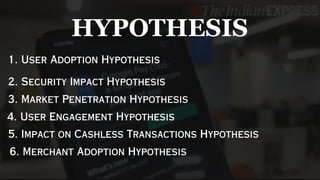
1. User Adoption Hypothesis
2. Security Impact Hypothesis
3. Market Penetration Hypothesis
4. User Engagement Hypothesis
5. Impact on Cashless Transactions Hypothesis
6. Merchant Adoption Hypothesis
HYPOTHESIS
RESEARCH METHODOLOGY
Research Design
Research Type
Sampling Strategy
Data Collection Methods
Data Analysis Techniques
Limitations of the Study
Data Presentation
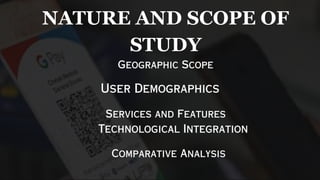
Geographic Scope
User Demographics
Services and Features
Comparative Analysis
Technological Integration
NATURE AND SCOPE OF
STUDY
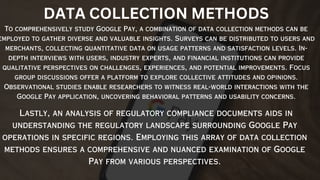
To comprehensively study Google Pay, a combination of data collection methods can be
employed to gather diverse and valuable insights. Surveys can be distributed to users and
merchants, collecting quantitative data on usage patterns and satisfaction levels. In-
depth interviews with users, industry experts, and financial institutions can provide
qualitative perspectives on challenges, experiences, and potential improvements. Focus
group discussions offer a platform to explore collective attitudes and opinions.
Observational studies enable researchers to witness real-world interactions with the
Google Pay application, uncovering behavioral patterns and usability concerns.
Lastly, an analysis of regulatory compliance documents aids in
understanding the regulatory landscape surrounding Google Pay
operations in specific regions. Employing this array of data collection
methods ensures a comprehensive and nuanced examination of Google
Pay from various perspectives.
DATA COLLECTION METHODS
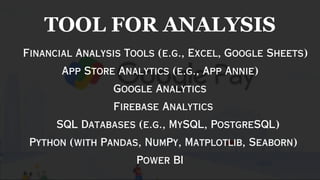
Google Analytics
Firebase Analytics
SQL Databases (e.g., MySQL, PostgreSQL)
Python (with Pandas, NumPy, Matplotlib, Seaborn)
App Store Analytics (e.g., App Annie)
Financial Analysis Tools (e.g., Excel, Google Sheets)
Power BI
TOOL FOR ANALYSIS
1. Introduction
2. Literature Review
3. Research Methodology
4. Security and Trust
5. Financial Analysis
6.Market Trends and Competitor Analysis
7. Conclusion and Recommendations
CHAPTERIZATION
Thank
Thank
Thank
you!
you!
you!

A STUDY ON ONLINE PAYMENT SYSTEM -GPAY (1).pdf

  • 1.
    A STUDY ONONLINE PAYMENT SYSTEM -GPAY
  • 2.
    Transaction Failures Security Concerns TechnicalGlitches Customer Support Response Time Compatibility Issues STATEMENT OF PROBLEM
  • 3.
    Google Pay isa mobile payment and digital wallet platform developed by Google to facilitate secure and convenient financial transactions. Launched in 2015, Google Pay has evolved to become a widely used and trusted application that enables users to make payments, store payment information, and manage various financial activities seamlessly through their mobile devices. INTRODUCTION
  • 4.
    1. Facilitate ConvenientDigital Transactions 2. Ensure Secure Financial Transactions 3. Support Financial Inclusion 4. Enable Peer-to-Peer Transactions 5. Enhance User Loyalty and Engagement 6. Simplify Bill Payments 7. Foster Merchant Partnerships 8. Innovate in Digital Wallet Technology AIMS AND OBJECTIVES
  • 5.
    1. User AdoptionHypothesis 2. Security Impact Hypothesis 3. Market Penetration Hypothesis 4. User Engagement Hypothesis 5. Impact on Cashless Transactions Hypothesis 6. Merchant Adoption Hypothesis HYPOTHESIS
  • 6.
    RESEARCH METHODOLOGY Research Design ResearchType Sampling Strategy Data Collection Methods Data Analysis Techniques Limitations of the Study Data Presentation
  • 7.
    Geographic Scope User Demographics Servicesand Features Comparative Analysis Technological Integration NATURE AND SCOPE OF STUDY
  • 8.
    To comprehensively studyGoogle Pay, a combination of data collection methods can be employed to gather diverse and valuable insights. Surveys can be distributed to users and merchants, collecting quantitative data on usage patterns and satisfaction levels. In- depth interviews with users, industry experts, and financial institutions can provide qualitative perspectives on challenges, experiences, and potential improvements. Focus group discussions offer a platform to explore collective attitudes and opinions. Observational studies enable researchers to witness real-world interactions with the Google Pay application, uncovering behavioral patterns and usability concerns. Lastly, an analysis of regulatory compliance documents aids in understanding the regulatory landscape surrounding Google Pay operations in specific regions. Employing this array of data collection methods ensures a comprehensive and nuanced examination of Google Pay from various perspectives. DATA COLLECTION METHODS
  • 9.
    Google Analytics Firebase Analytics SQLDatabases (e.g., MySQL, PostgreSQL) Python (with Pandas, NumPy, Matplotlib, Seaborn) App Store Analytics (e.g., App Annie) Financial Analysis Tools (e.g., Excel, Google Sheets) Power BI TOOL FOR ANALYSIS
  • 10.
    1. Introduction 2. LiteratureReview 3. Research Methodology 4. Security and Trust 5. Financial Analysis 6.Market Trends and Competitor Analysis 7. Conclusion and Recommendations CHAPTERIZATION
  • 11.