A GATE JUDGE

WHAT YOU NEED TO KNOW.
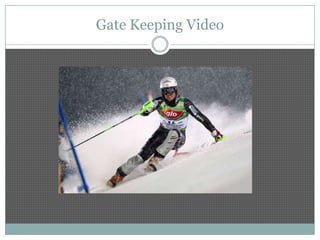
Gate Keeping Video
Preparing for the day:

 Wear clothing for varying and unknown weather
 conditions.

 Bring hand warmers, extra gloves, food, and fluids if
 desired.

 Portable seating is acceptable only if placed far from
 fall zones, and not used while racers are on course.
Gate Judge Meeting:

 Held the morning of the race.


 Includes important information such as schedules, a
 review of the rules, and special circumstances

 Gate Judge supplies and your lift ticket are
 distributed at meeting.
On the Hill

 Meet the chief gate judge at the top of the course.


 As you descend the course, you get your assignment.


 Wear your bib so that competitors and jury members can
  easily identify you.

 Place your equipment out of fall zones.


 You may not leave your position without notifying
  the CGJ or a member of the Jury.
Position yourself so:

 Competitors can pick you out from spectators


 Where you have the best view of your assigned gates.


 Where you can quickly make repairs, remove
 equipment, or inspect tracks.
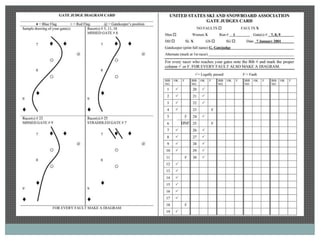
Prepare your gate cards in advance including:

 The header area
 Draw 4 diagrams of your assigned gates.
 The first of these diagrams should include:
   An “@” where you are located in relation to your gates.

   Numbers corresponding to the gates you are watching .

   A line showing the fastest legal passage through these gates

 Do not PRE NUMBER YOUR CARD.
Race Responsibility

 Do not allow spectators or coaches to influence your
  opinion, block your vision, or give commands to a
  competitor.
 Do not discuss your decisions with anyone except the
  CGJ, or members of the Jury.
 Work as a team – ask adjacent Gate Judges for
  missed bib numbers, and help with course
  maintenance or equipment removal from adjacent
  gates if necessary
Communication with Competitors

 Reply promptly to a competitor’s request for
  assistance with either “Go” or “Back”.
 May point to or say the color of the gate that needs to
  be passed. Be loud and clear.
 May add command to “loop around” gates in single
  pole SL.
 The competitor is fully responsible for his action, and
  cannot hold the Gate Judge responsible, but do your
  best to help racers understand what they must do to
  avoid a fault
Interference

 Interference is any outside object that causes the skier to
  change their racing line or affects their speed.
 Competitors who believe they have been interfered with
  must immediately pull off course and request a
  provisional rerun from the nearest gate judge.
 Be alert to faults and interference above and below your
  assigned gates – draw diagrams & make notes of all
  incidents of interference you witness.
 If you witness interference but the competitor does not
  immediately pull out, document what you saw. You
  might be asked to explain what happened.
Hiking

 Hiking or slow competitors must yield to oncoming
 racers. If it appears that a competitor might interfere
 with an oncoming racer, instruct the competitor to
 quickly get out of the racing line, but remind them
 they may continue on course after being passed
Racer Falls

 Competitors who lose a ski may not continue on
 course and are DNF and do not require a drawing.

 Should be noted as “DNF” in the fault column, not as
 a fault.
Legal Pass

 Competitors must pass through every gate. Both feet
 and both tips must cross the imaginary line between
 the bases of the innermost poles of both pairs of
 poles (the gate line).
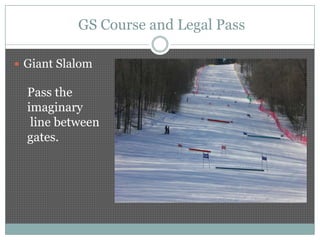
GS Course and Legal Pass

 Giant Slalom

  Pass the
  imaginary
   line between
  gates.
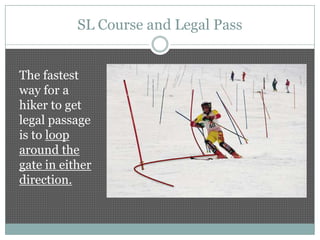
SL Course and Legal Pass


The fastest
way for a
hiker to get
legal passage
is to loop
around the
gate in either
direction.
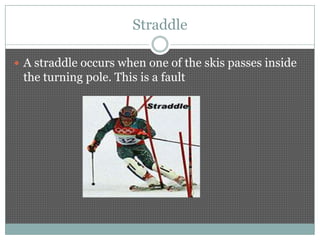
Straddle

 A straddle occurs when one of the skis passes inside
 the turning pole. This is a fault
Legal Pass

 Double pole gates may be entered from either
  direction and in any order as long as both feet and
  both ski tips cross the gate line.
 The decision handed down by the Gate Judge must
  be clear and unbiased. The Gate Judge must declare
  a fault only when he or she is convinced that a fault
  has been committed
Other faults and actions

 Competitor accepts outside assistance in any form.


 Competitors must respect all instructions of
 officials including those for inspection.
 Competitors must observe good sportsmanship
 rules including the use of foul language and visible
 displays of anger.
 Competitors who know they have committed a
 fault must immediately ski off the course.
After EACH run:

 Meet with the Chief Gate Judge (CGJ), in the finish
    area.
   Turn in your gate card even if no faults.
   If you reported or witnessed a fault or incidents
    leading to a request for a rerun you must be available
    to the jury until after a final decision has been
    reached.
   If a protest is filed, the Gate Judge must be available.
   Gate Judges who report or witnesses a faults should
    make themselves available until the report is posted.

A Gate Judge

  • 1.
    A GATE JUDGE WHATYOU NEED TO KNOW.
  • 2.
  • 3.
    Preparing for theday:  Wear clothing for varying and unknown weather conditions.  Bring hand warmers, extra gloves, food, and fluids if desired.  Portable seating is acceptable only if placed far from fall zones, and not used while racers are on course.
  • 4.
    Gate Judge Meeting: Held the morning of the race.  Includes important information such as schedules, a review of the rules, and special circumstances  Gate Judge supplies and your lift ticket are distributed at meeting.
  • 5.
    On the Hill Meet the chief gate judge at the top of the course.  As you descend the course, you get your assignment.  Wear your bib so that competitors and jury members can easily identify you.  Place your equipment out of fall zones.  You may not leave your position without notifying the CGJ or a member of the Jury.
  • 6.
    Position yourself so: Competitors can pick you out from spectators  Where you have the best view of your assigned gates.  Where you can quickly make repairs, remove equipment, or inspect tracks.
  • 7.
    Prepare your gatecards in advance including:  The header area  Draw 4 diagrams of your assigned gates.  The first of these diagrams should include:  An “@” where you are located in relation to your gates.  Numbers corresponding to the gates you are watching .  A line showing the fastest legal passage through these gates  Do not PRE NUMBER YOUR CARD.
  • 9.
    Race Responsibility  Donot allow spectators or coaches to influence your opinion, block your vision, or give commands to a competitor.  Do not discuss your decisions with anyone except the CGJ, or members of the Jury.  Work as a team – ask adjacent Gate Judges for missed bib numbers, and help with course maintenance or equipment removal from adjacent gates if necessary
  • 10.
    Communication with Competitors Reply promptly to a competitor’s request for assistance with either “Go” or “Back”.  May point to or say the color of the gate that needs to be passed. Be loud and clear.  May add command to “loop around” gates in single pole SL.  The competitor is fully responsible for his action, and cannot hold the Gate Judge responsible, but do your best to help racers understand what they must do to avoid a fault
  • 11.
    Interference  Interference isany outside object that causes the skier to change their racing line or affects their speed.  Competitors who believe they have been interfered with must immediately pull off course and request a provisional rerun from the nearest gate judge.  Be alert to faults and interference above and below your assigned gates – draw diagrams & make notes of all incidents of interference you witness.  If you witness interference but the competitor does not immediately pull out, document what you saw. You might be asked to explain what happened.
  • 12.
    Hiking  Hiking orslow competitors must yield to oncoming racers. If it appears that a competitor might interfere with an oncoming racer, instruct the competitor to quickly get out of the racing line, but remind them they may continue on course after being passed
  • 13.
    Racer Falls  Competitorswho lose a ski may not continue on course and are DNF and do not require a drawing.  Should be noted as “DNF” in the fault column, not as a fault.
  • 14.
    Legal Pass  Competitorsmust pass through every gate. Both feet and both tips must cross the imaginary line between the bases of the innermost poles of both pairs of poles (the gate line).
  • 15.
    GS Course andLegal Pass  Giant Slalom Pass the imaginary line between gates.
  • 16.
    SL Course andLegal Pass The fastest way for a hiker to get legal passage is to loop around the gate in either direction.
  • 17.
    Straddle  A straddleoccurs when one of the skis passes inside the turning pole. This is a fault
  • 18.
    Legal Pass  Doublepole gates may be entered from either direction and in any order as long as both feet and both ski tips cross the gate line.  The decision handed down by the Gate Judge must be clear and unbiased. The Gate Judge must declare a fault only when he or she is convinced that a fault has been committed
  • 19.
    Other faults andactions  Competitor accepts outside assistance in any form.  Competitors must respect all instructions of officials including those for inspection.  Competitors must observe good sportsmanship rules including the use of foul language and visible displays of anger.  Competitors who know they have committed a fault must immediately ski off the course.
  • 20.
    After EACH run: Meet with the Chief Gate Judge (CGJ), in the finish area.  Turn in your gate card even if no faults.  If you reported or witnessed a fault or incidents leading to a request for a rerun you must be available to the jury until after a final decision has been reached.  If a protest is filed, the Gate Judge must be available.  Gate Judges who report or witnesses a faults should make themselves available until the report is posted.