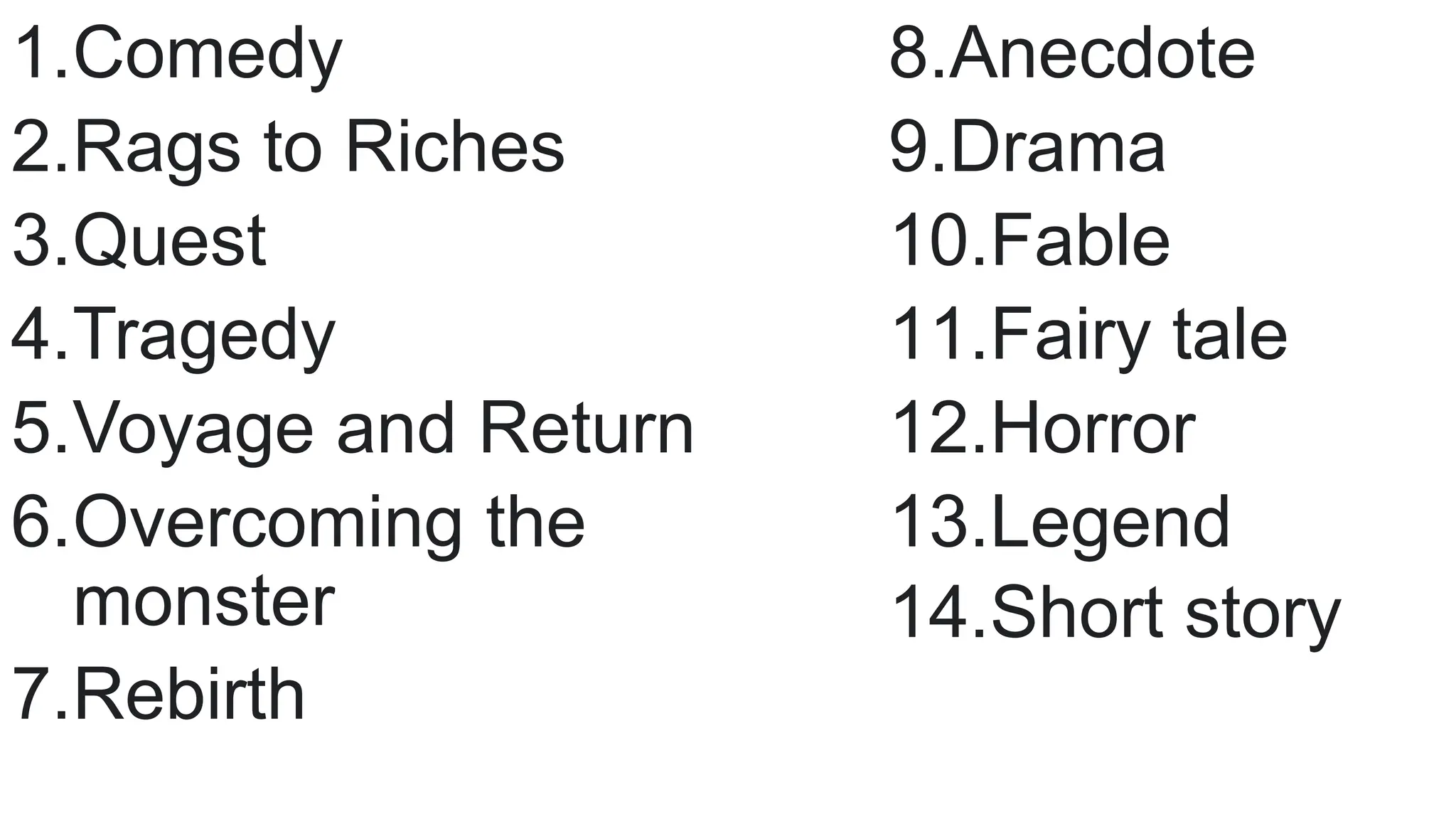
1.Comedy
2.Rags to Riches
3.Quest
4.Tragedy
5.Voyage and Return
6.Overcoming the
monster
7.Rebirth
8.Anecdote
9.Drama
10.Fable
11.Fairy tale
12.Horror
13.Legend
14.Short story
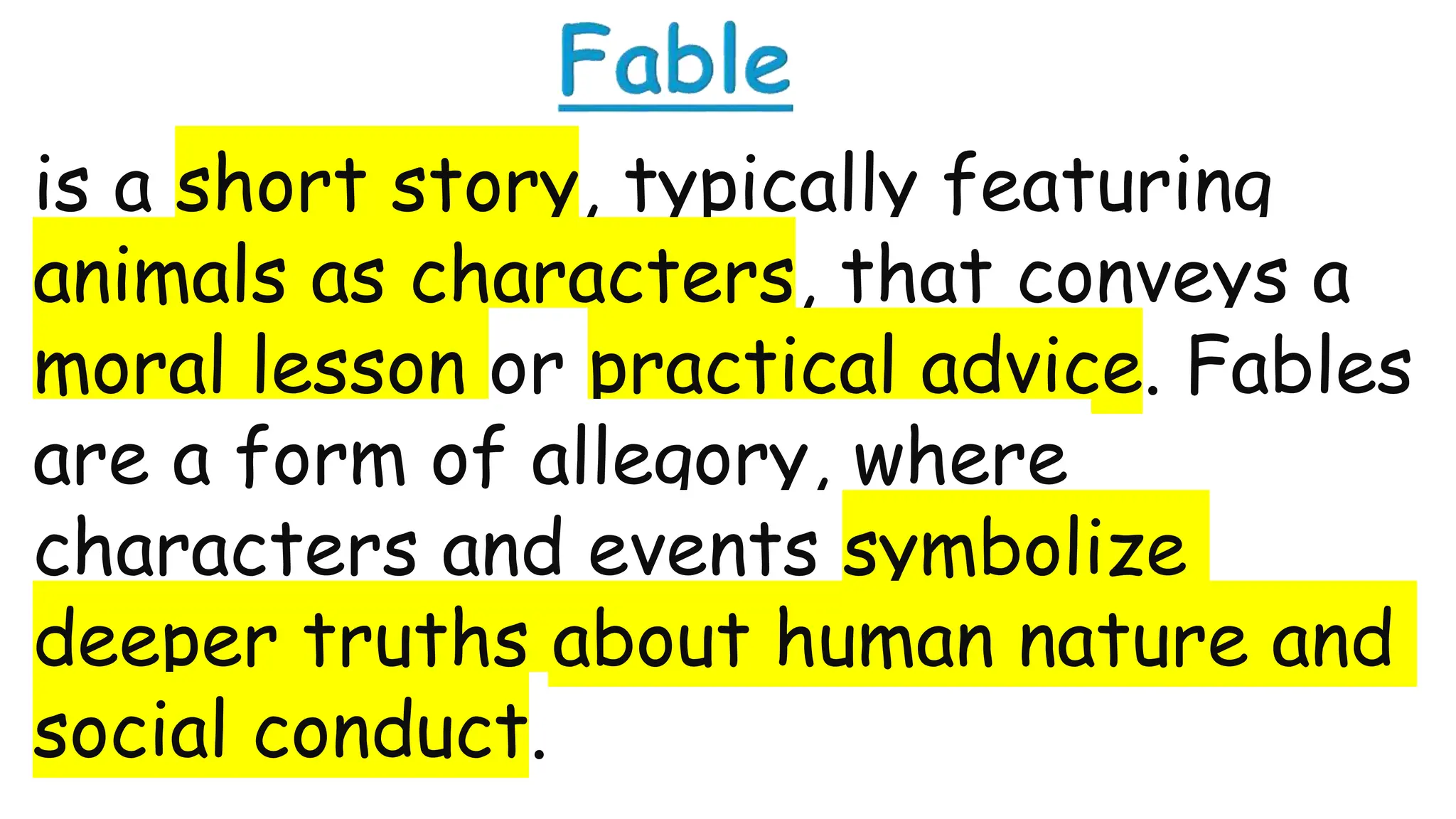
is a short story, typically featuring
animals as characters, that conveys a
moral lesson or practical advice. Fables
are a form of allegory, where
characters and events symbolize
deeper truths about human nature and
social conduct.
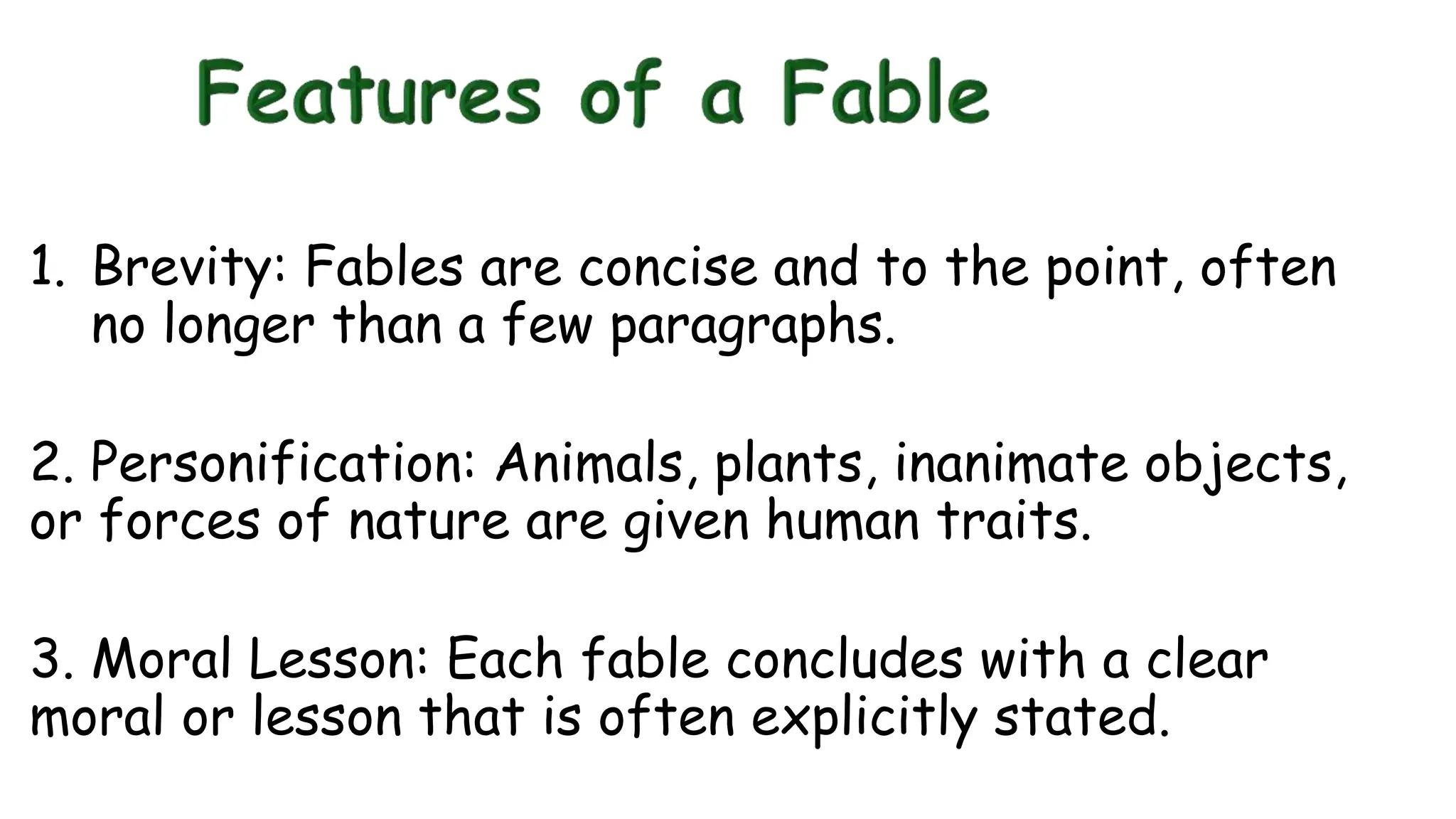
1. Brevity: Fables are concise and to the point, often
no longer than a few paragraphs.
2. Personification: Animals, plants, inanimate objects,
or forces of nature are given human traits.
3. Moral Lesson: Each fable concludes with a clear
moral or lesson that is often explicitly stated.
4. Simple Plot: The storyline is straightforward with
a clear conflict and resolution.
5. Universal Themes: Themes are universal and
relatable, often dealing with human nature, ethics,
and societal norms.
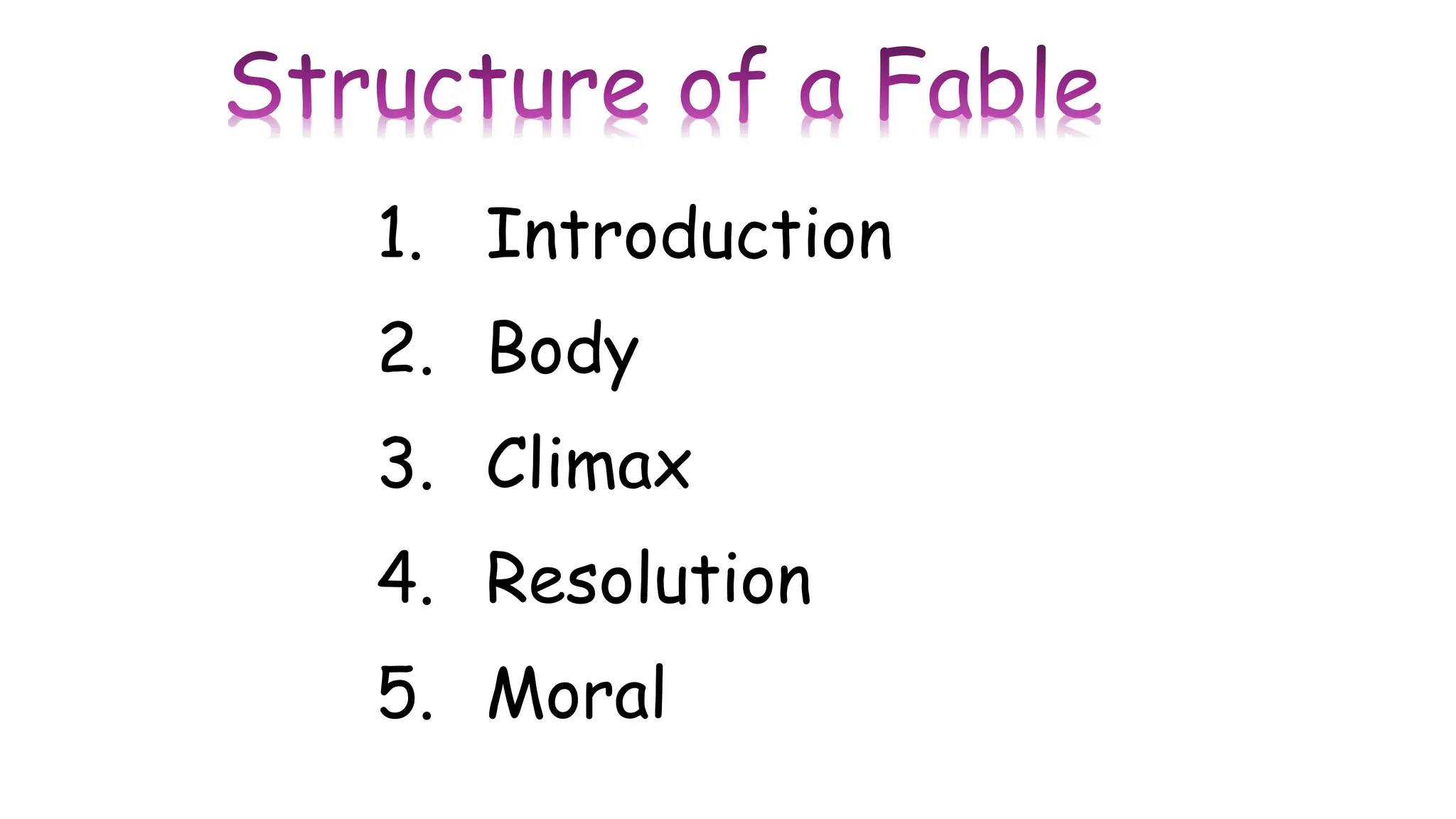
1. Introduction
2. Body
3. Climax
4. Resolution
5. Moral
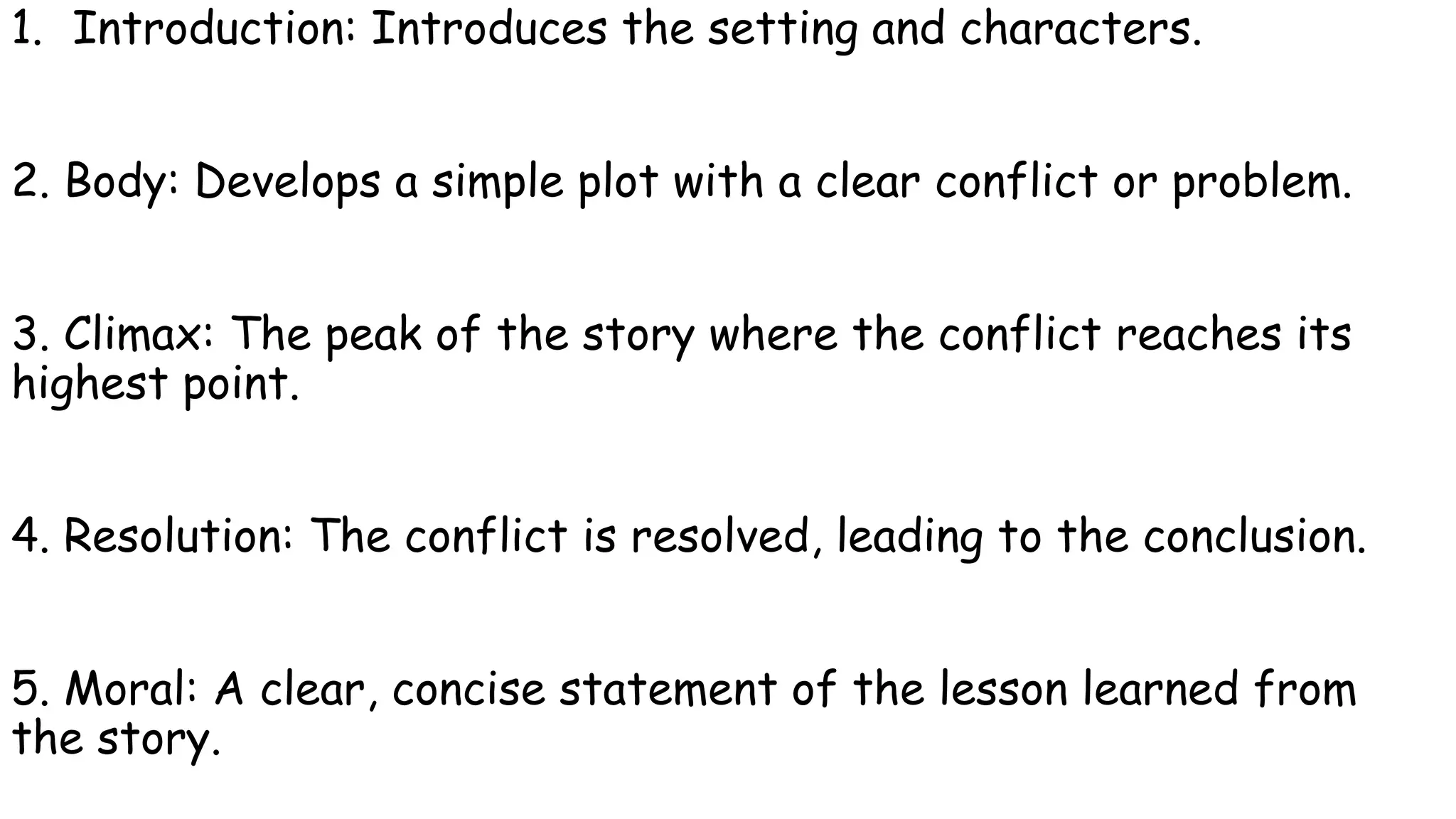
1. Introduction: Introduces the setting and characters.
2. Body: Develops a simple plot with a clear conflict or problem.
3. Climax: The peak of the story where the conflict reaches its
highest point.
4. Resolution: The conflict is resolved, leading to the conclusion.
5. Moral: A clear, concise statement of the lesson learned from
the story.
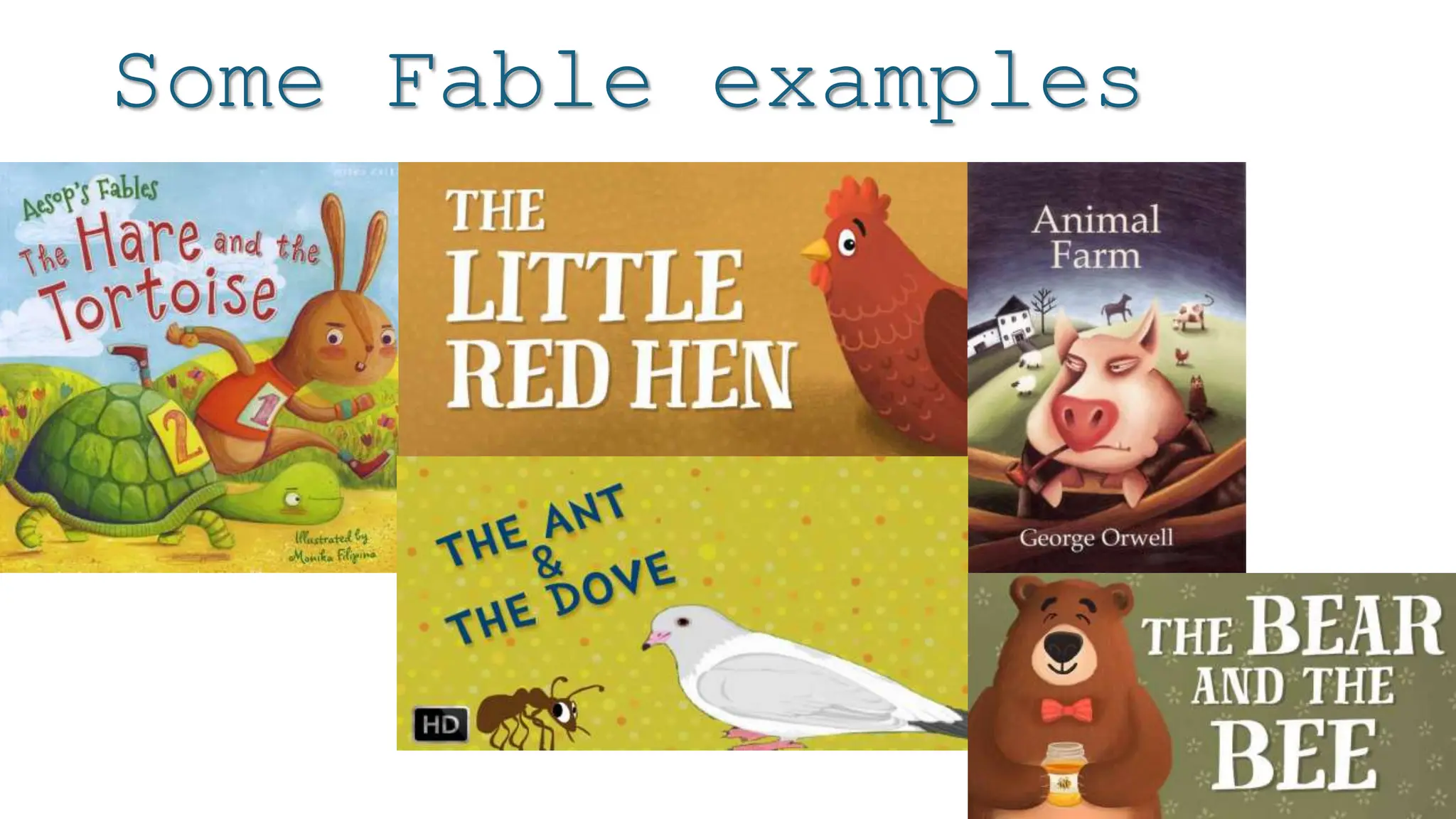
Some Fable examples

a fable meaning ( how to write a fable) definition/ features/ structure / sample

  • 2.
    1.Comedy 2.Rags to Riches 3.Quest 4.Tragedy 5.Voyageand Return 6.Overcoming the monster 7.Rebirth 8.Anecdote 9.Drama 10.Fable 11.Fairy tale 12.Horror 13.Legend 14.Short story
  • 4.
    is a shortstory, typically featuring animals as characters, that conveys a moral lesson or practical advice. Fables are a form of allegory, where characters and events symbolize deeper truths about human nature and social conduct.
  • 5.
    1. Brevity: Fablesare concise and to the point, often no longer than a few paragraphs. 2. Personification: Animals, plants, inanimate objects, or forces of nature are given human traits. 3. Moral Lesson: Each fable concludes with a clear moral or lesson that is often explicitly stated.
  • 6.
    4. Simple Plot:The storyline is straightforward with a clear conflict and resolution. 5. Universal Themes: Themes are universal and relatable, often dealing with human nature, ethics, and societal norms.
  • 7.
    1. Introduction 2. Body 3.Climax 4. Resolution 5. Moral
  • 8.
    1. Introduction: Introducesthe setting and characters. 2. Body: Develops a simple plot with a clear conflict or problem. 3. Climax: The peak of the story where the conflict reaches its highest point. 4. Resolution: The conflict is resolved, leading to the conclusion. 5. Moral: A clear, concise statement of the lesson learned from the story.
  • 9.