ATCT-AIR TRAFFIC
CONTROL TOWER
Fourth Year / Term I
September 2020
GURVINDER SINGH CHOWDHURY 1
INTRODUCTION
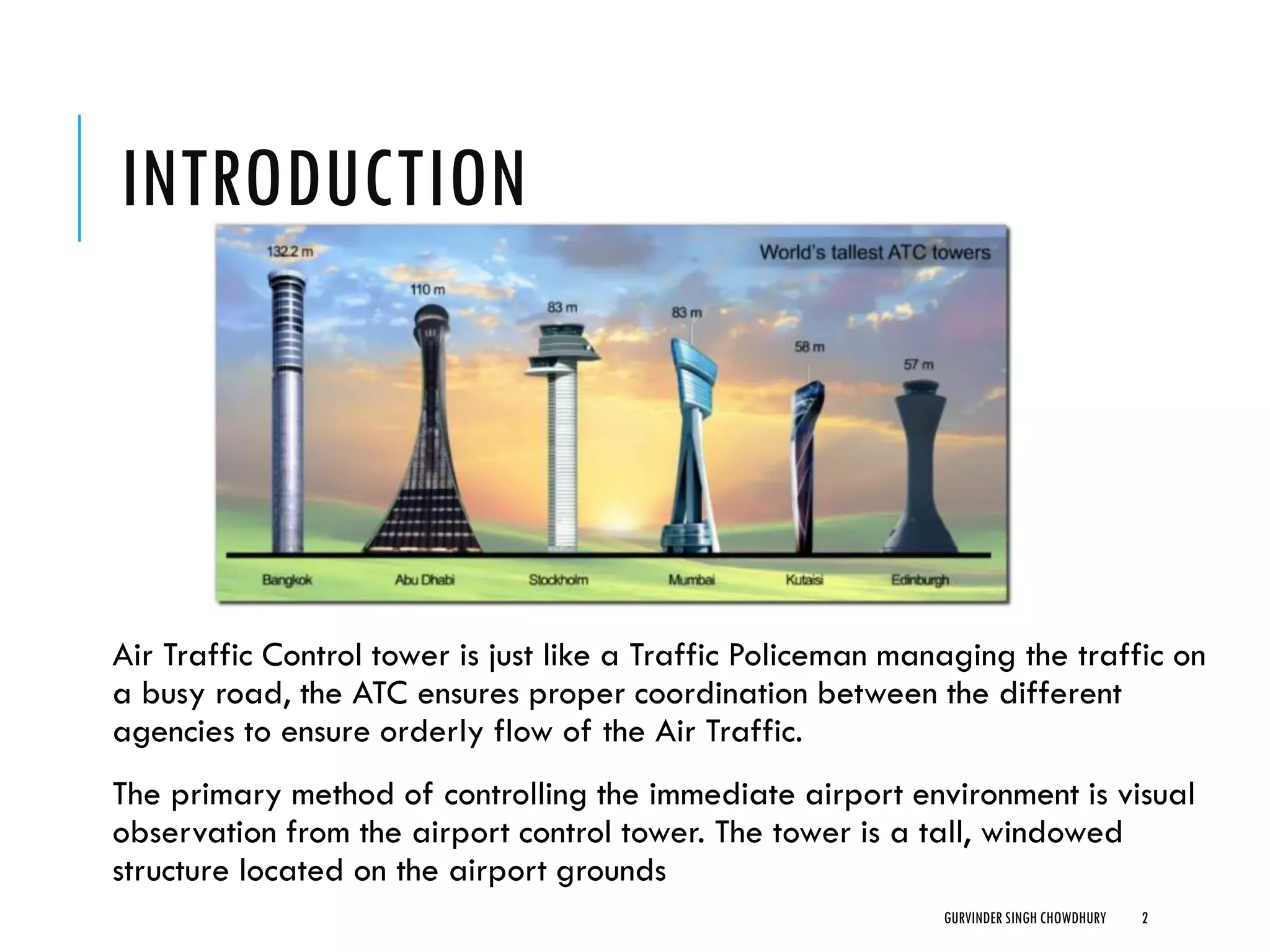
Air Traffic Control tower is just like a Traffic Policeman managing the traffic on
a busy road, the ATC ensures proper coordination between the different
agencies to ensure orderly flow of the Air Traffic.
The primary method of controlling the immediate airport environment is visual
observation from the airport control tower. The tower is a tall, windowed
structure located on the airport grounds
GURVINDER SINGH CHOWDHURY 2
ATCT
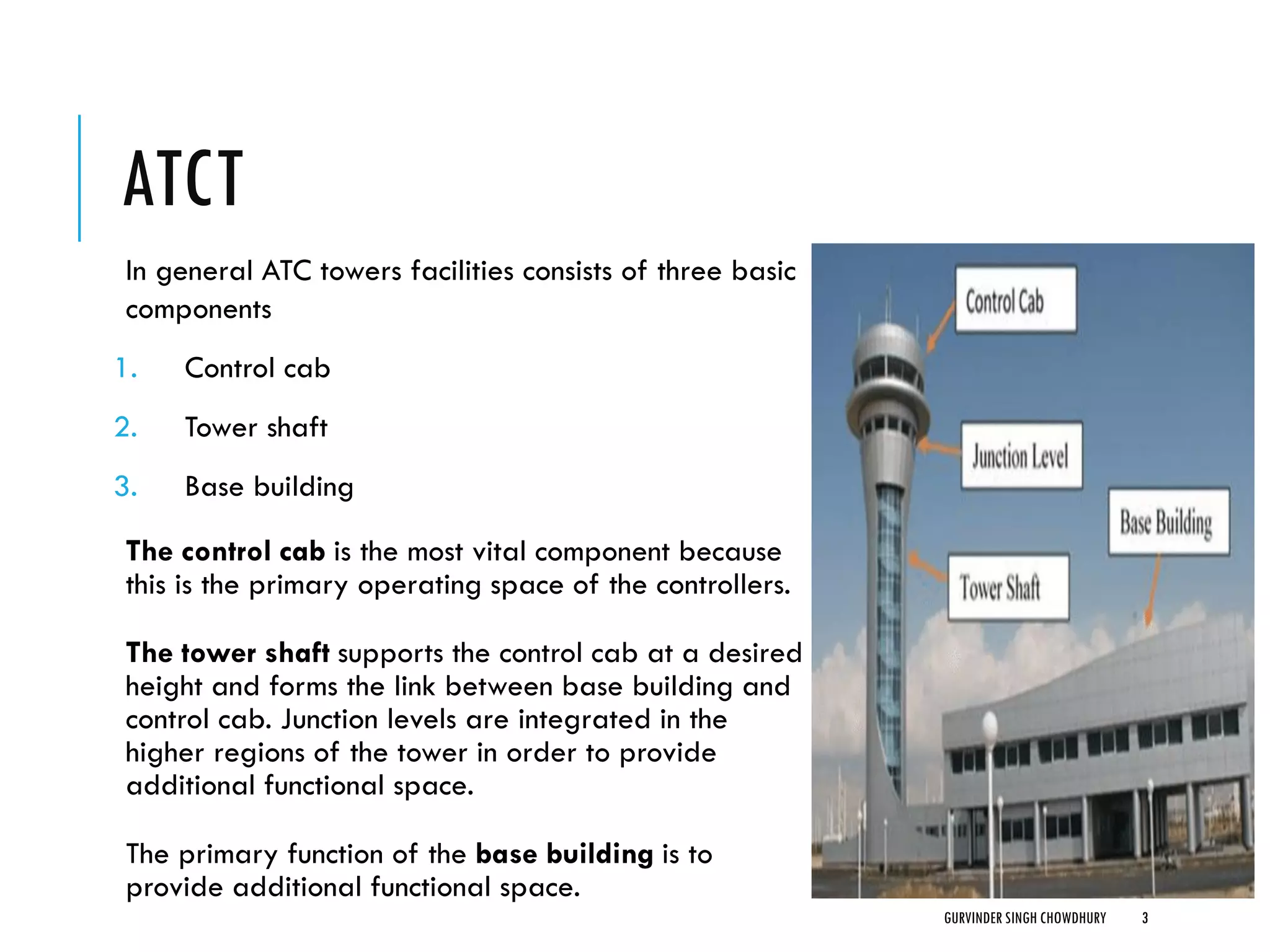
In general ATC towers facilities consists of three basic
components
1. Control cab
2. Tower shaft
3. Base building
The control cab is the most vital component because
this is the primary operating space of the controllers.
The tower shaft supports the control cab at a desired
height and forms the link between base building and
control cab. Junction levels are integrated in the
higher regions of the tower in order to provide
additional functional space.
The primary function of the base building is to
provide additional functional space.
GURVINDER SINGH CHOWDHURY 3
ATCT HEIGHT
The height of the tower is determined by
the height of the operating level in the
cab above ground, including the tower
shaft. It is determined by using the
following rule.
• The line of sight drawn between the
operating level height and the runway
end is minimal 1°
• The operating level has direct visibility
on entire active pavement, including
runways, taxiways and platforms.
• The ATC tower height does not
interfere the approach surface
• The ATC tower does not interfere the
misses approach path
GURVINDER SINGH CHOWDHURY 4
CONTROL CAB SIZE
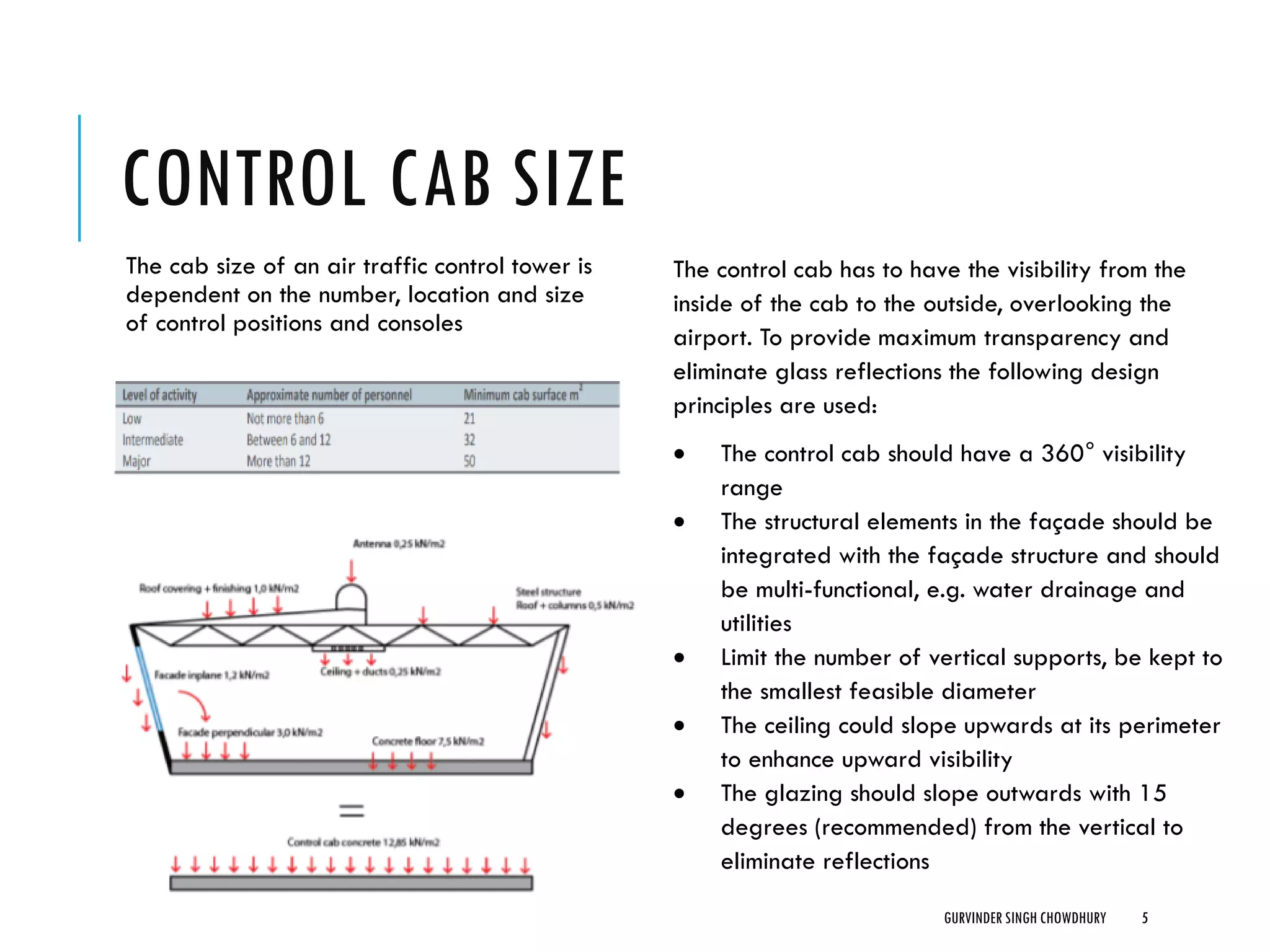
The cab size of an air traffic control tower is
dependent on the number, location and size
of control positions and consoles
GURVINDER SINGH CHOWDHURY 5
The control cab has to have the visibility from the
inside of the cab to the outside, overlooking the
airport. To provide maximum transparency and
eliminate glass reflections the following design
principles are used:
• The control cab should have a 360° visibility
range
• The structural elements in the façade should be
integrated with the façade structure and should
be multi-functional, e.g. water drainage and
utilities
• Limit the number of vertical supports, be kept to
the smallest feasible diameter
• The ceiling could slope upwards at its perimeter
to enhance upward visibility
• The glazing should slope outwards with 15
degrees (recommended) from the vertical to
eliminate reflections
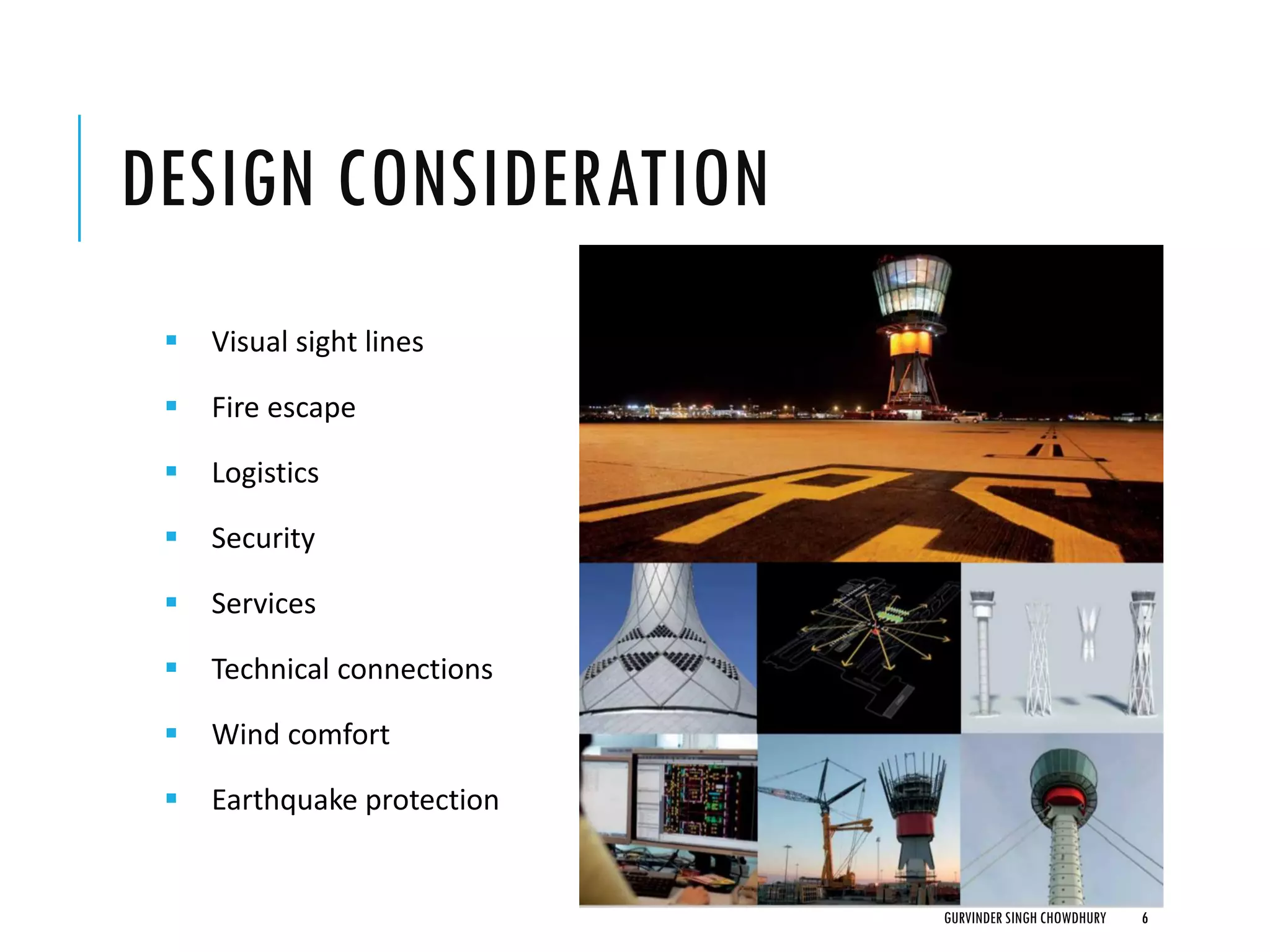
DESIGN CONSIDERATION
▪ Visual sight lines
▪ Fire escape
▪ Logistics
▪ Security
▪ Services
▪ Technical connections
▪ Wind comfort
▪ Earthquake protection
GURVINDER SINGH CHOWDHURY 6
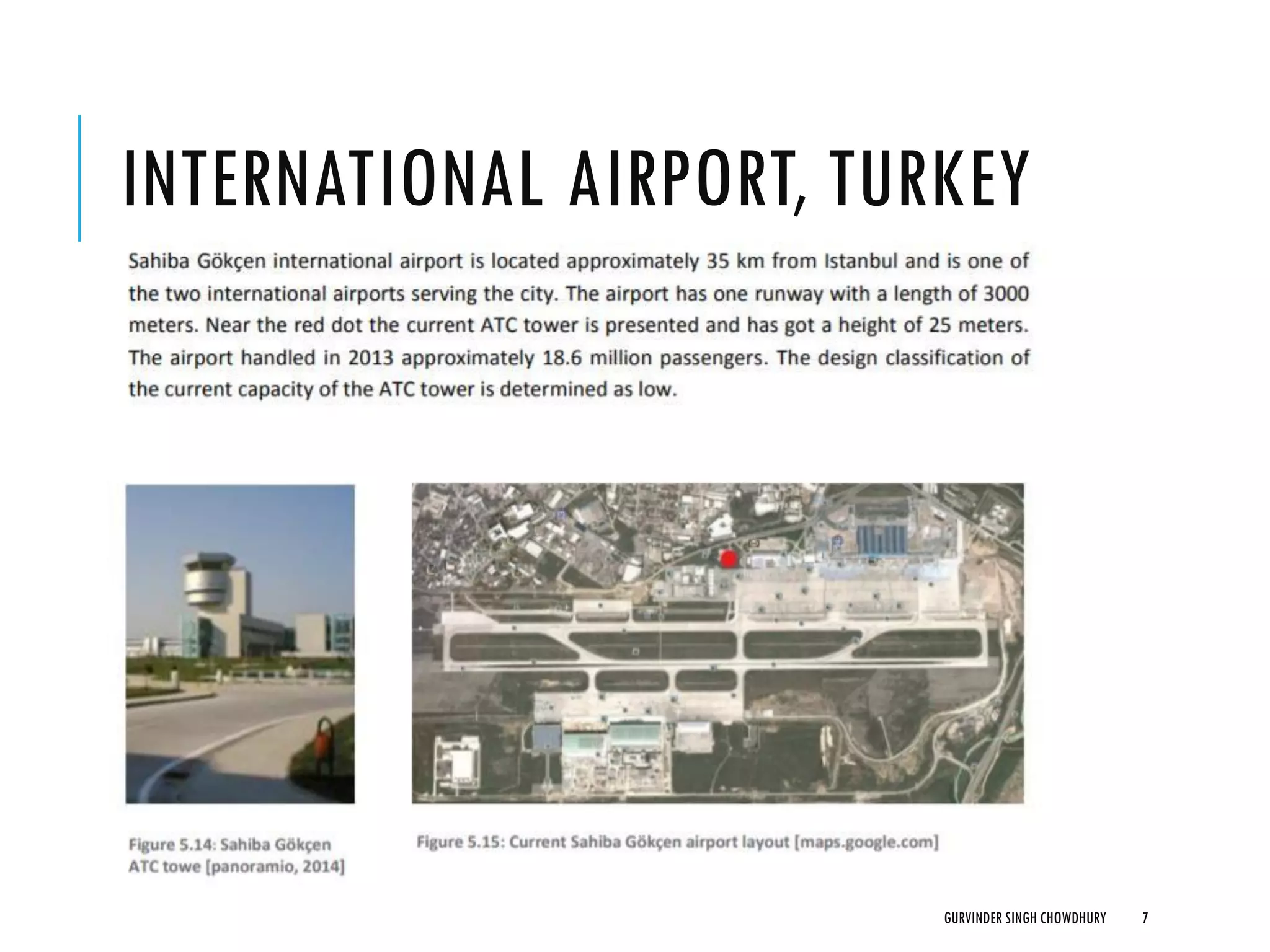
INTERNATIONAL AIRPORT, TURKEY
GURVINDER SINGH CHOWDHURY 7
INTERNATIONAL AIRPORT, TURKEY
GURVINDER SINGH CHOWDHURY 8
HEATHROW ATC
GURVINDER SINGH CHOWDHURY 9
HEATHROW ATC
GURVINDER SINGH CHOWDHURY 10
HEATHROW ATC
GURVINDER SINGH CHOWDHURY 11
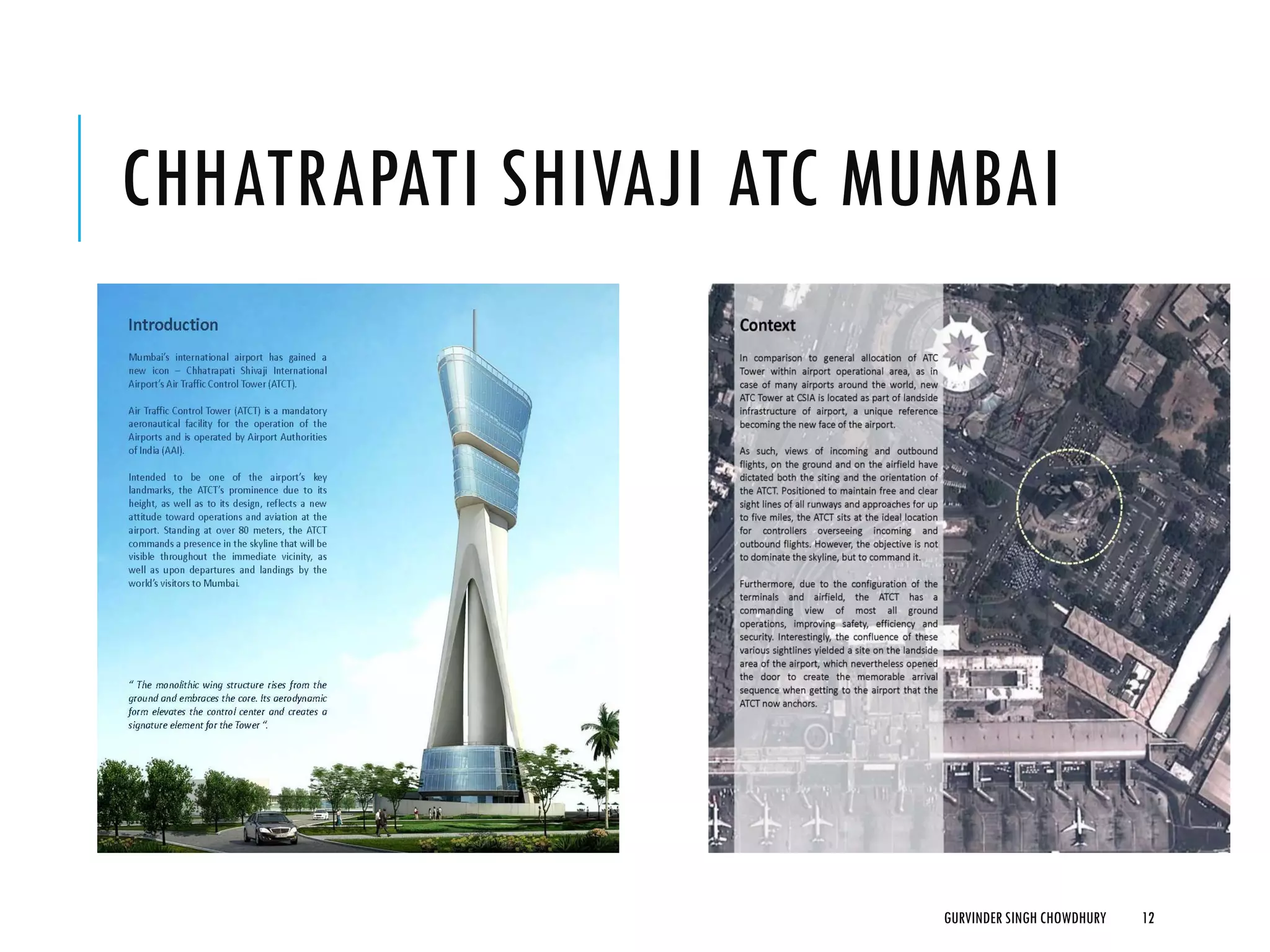
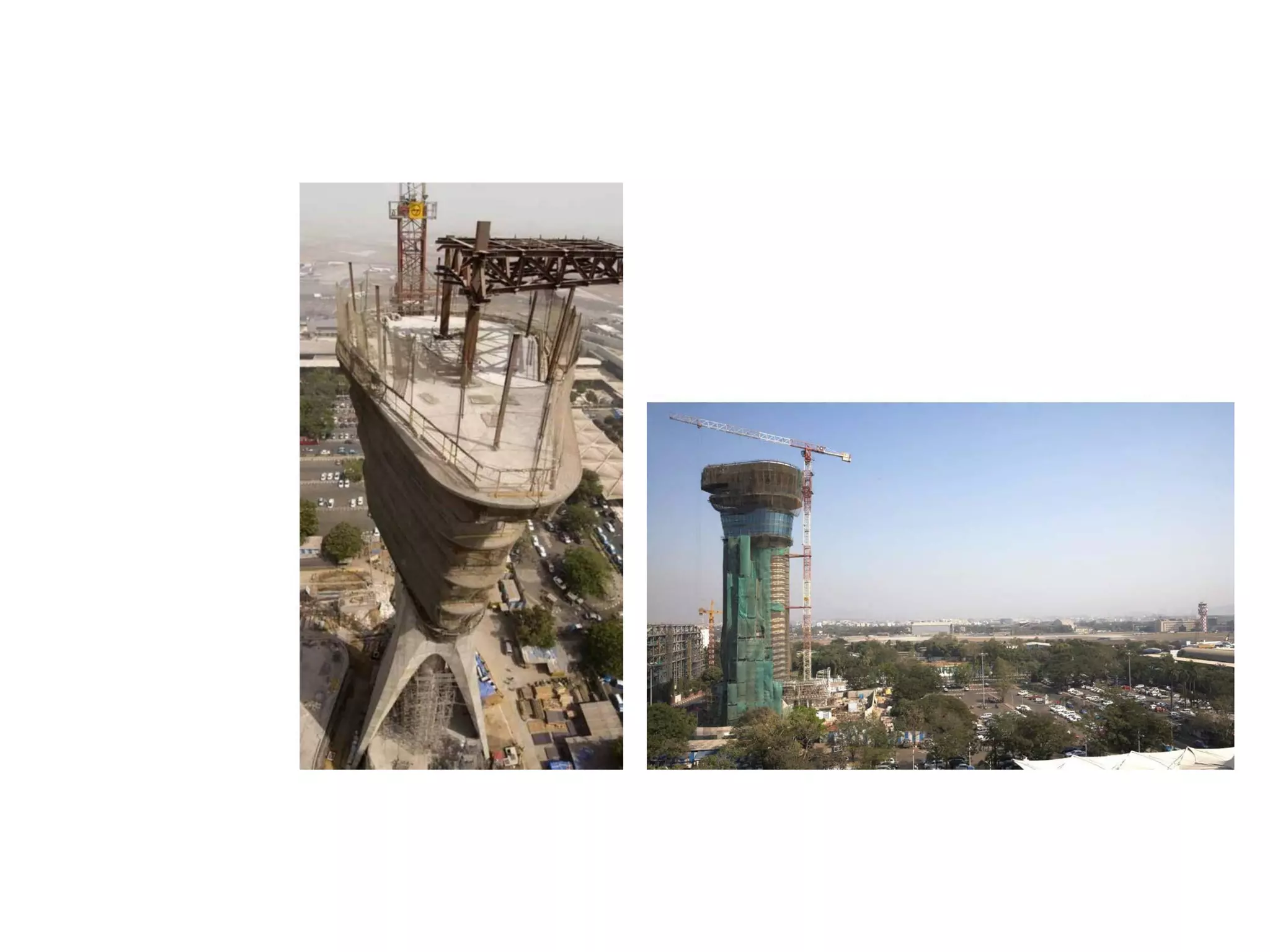
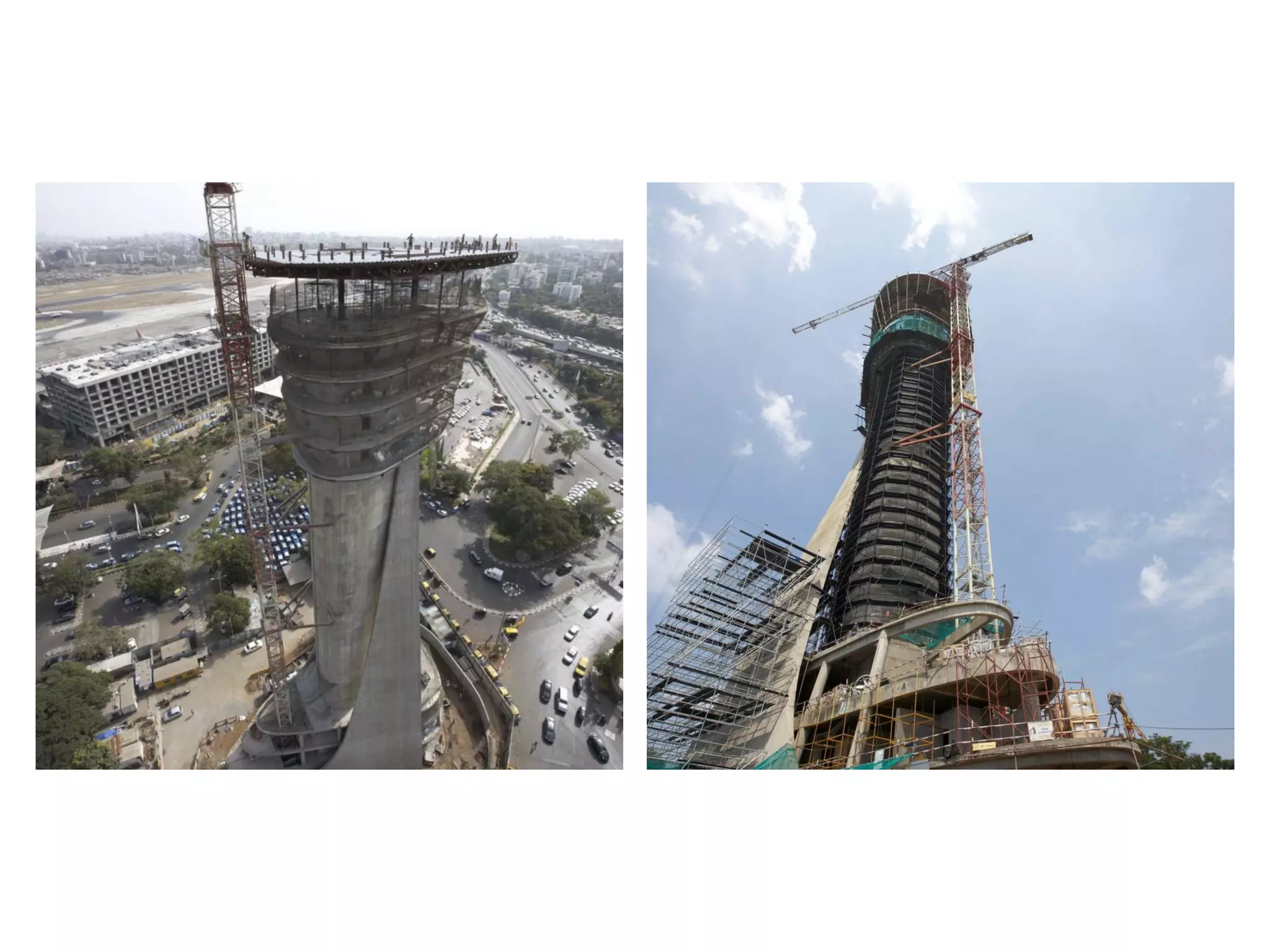
CHHATRAPATI SHIVAJI ATC MUMBAI
GURVINDER SINGH CHOWDHURY 12
THANK YOU
GURVINDER SINGH CHOWDHURY 26

9th sept class atct

  • 1.
    ATCT-AIR TRAFFIC CONTROL TOWER FourthYear / Term I September 2020 GURVINDER SINGH CHOWDHURY 1
  • 2.
    INTRODUCTION Air Traffic Controltower is just like a Traffic Policeman managing the traffic on a busy road, the ATC ensures proper coordination between the different agencies to ensure orderly flow of the Air Traffic. The primary method of controlling the immediate airport environment is visual observation from the airport control tower. The tower is a tall, windowed structure located on the airport grounds GURVINDER SINGH CHOWDHURY 2
  • 3.
    ATCT In general ATCtowers facilities consists of three basic components 1. Control cab 2. Tower shaft 3. Base building The control cab is the most vital component because this is the primary operating space of the controllers. The tower shaft supports the control cab at a desired height and forms the link between base building and control cab. Junction levels are integrated in the higher regions of the tower in order to provide additional functional space. The primary function of the base building is to provide additional functional space. GURVINDER SINGH CHOWDHURY 3
  • 4.
    ATCT HEIGHT The heightof the tower is determined by the height of the operating level in the cab above ground, including the tower shaft. It is determined by using the following rule. • The line of sight drawn between the operating level height and the runway end is minimal 1° • The operating level has direct visibility on entire active pavement, including runways, taxiways and platforms. • The ATC tower height does not interfere the approach surface • The ATC tower does not interfere the misses approach path GURVINDER SINGH CHOWDHURY 4
  • 5.
    CONTROL CAB SIZE Thecab size of an air traffic control tower is dependent on the number, location and size of control positions and consoles GURVINDER SINGH CHOWDHURY 5 The control cab has to have the visibility from the inside of the cab to the outside, overlooking the airport. To provide maximum transparency and eliminate glass reflections the following design principles are used: • The control cab should have a 360° visibility range • The structural elements in the façade should be integrated with the façade structure and should be multi-functional, e.g. water drainage and utilities • Limit the number of vertical supports, be kept to the smallest feasible diameter • The ceiling could slope upwards at its perimeter to enhance upward visibility • The glazing should slope outwards with 15 degrees (recommended) from the vertical to eliminate reflections
  • 6.
    DESIGN CONSIDERATION ▪ Visualsight lines ▪ Fire escape ▪ Logistics ▪ Security ▪ Services ▪ Technical connections ▪ Wind comfort ▪ Earthquake protection GURVINDER SINGH CHOWDHURY 6
  • 7.
  • 8.
  • 9.
  • 10.
  • 11.
  • 12.
    CHHATRAPATI SHIVAJI ATCMUMBAI GURVINDER SINGH CHOWDHURY 12
  • 26.