Hyperinflation
Therapy
IPPB
 Classification
 Flow
 Air-Mix
 Expiratory Time
 Pressure
 Sensitivity
IPPB - Troubleshooting
 Loss of pressure
 Excessive pressure
 Failure to trigger inspiration
 Failure to cycle off
 Pressure does not rise normally
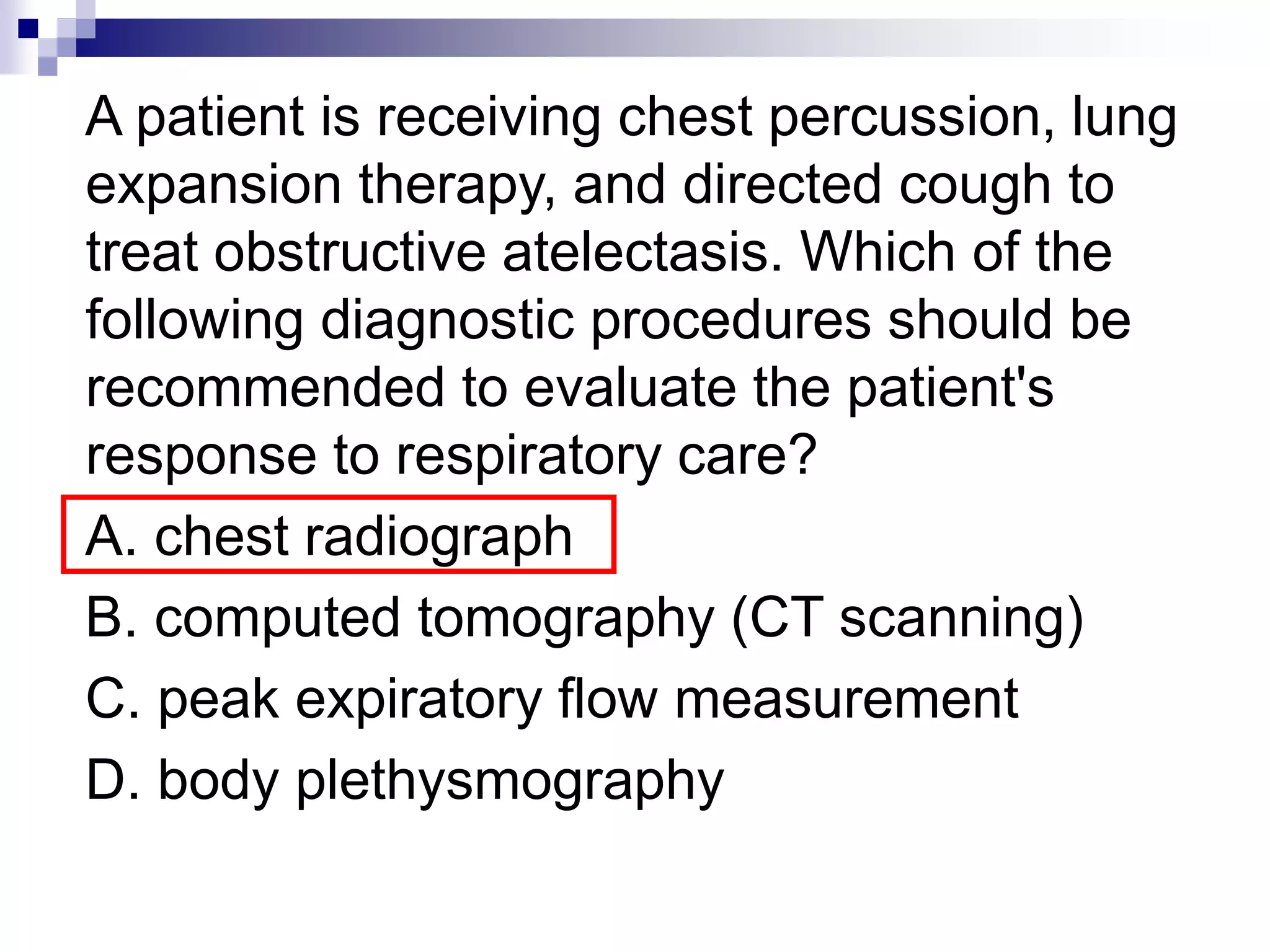
A patient is receiving chest percussion, lung
expansion therapy, and directed cough to
treat obstructive atelectasis. Which of the
following diagnostic procedures should be
recommended to evaluate the patient's
response to respiratory care?
A. chest radiograph
B. computed tomography (CT scanning)
C. peak expiratory flow measurement
D. body plethysmography
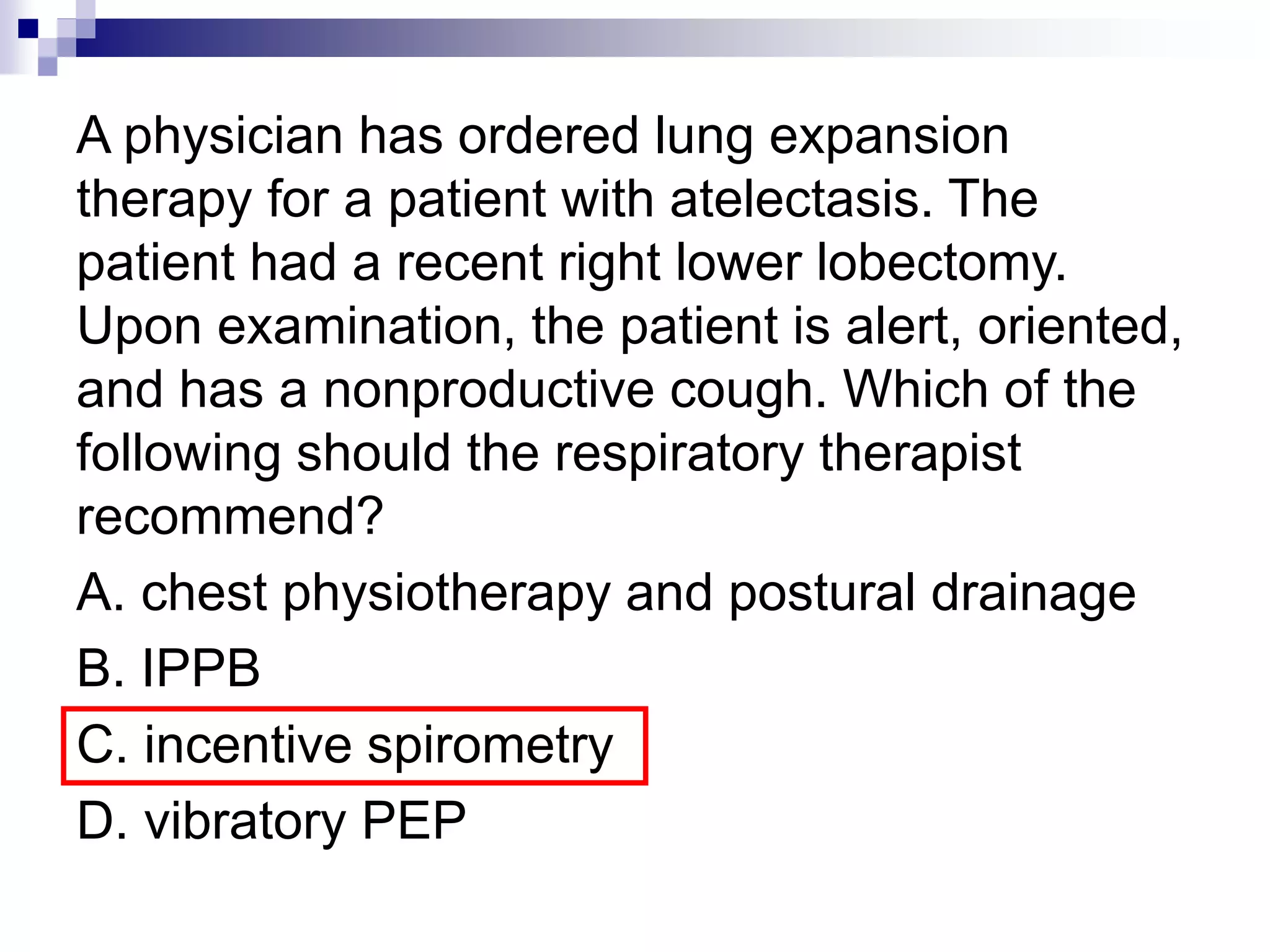
A physician has ordered lung expansion
therapy for a patient with atelectasis. The
patient had a recent right lower lobectomy.
Upon examination, the patient is alert, oriented,
and has a nonproductive cough. Which of the
following should the respiratory therapist
recommend?
A. chest physiotherapy and postural drainage
B. IPPB
C. incentive spirometry
D. vibratory PEP
While administering an IPPB treatment at 20
cmH2O to a patient with pulmonary
emphysema, the respiratory therapist notes
the patient has suddenly become very short
of breath and cyanotic. The therapist's most
appropriate action would be to
A. suction the patient.
B. discontinue the treatment.
C. decrease the peak pressure to 10 cmH2O.
D. stop the treatment for 10 to 20 minutes.
The respiratory therapist is administering an
IPPB treatment by mask to a patient who is
unconscious. The machine cycles to
expiration before the patient receives an
adequate volume. Which of the following
adjustments should the respiratory therapist
make?
A. Increase the cycling pressure.
B. Increase the flow.
C. Decrease the sensitivity.
D. Decrease expiratory time.
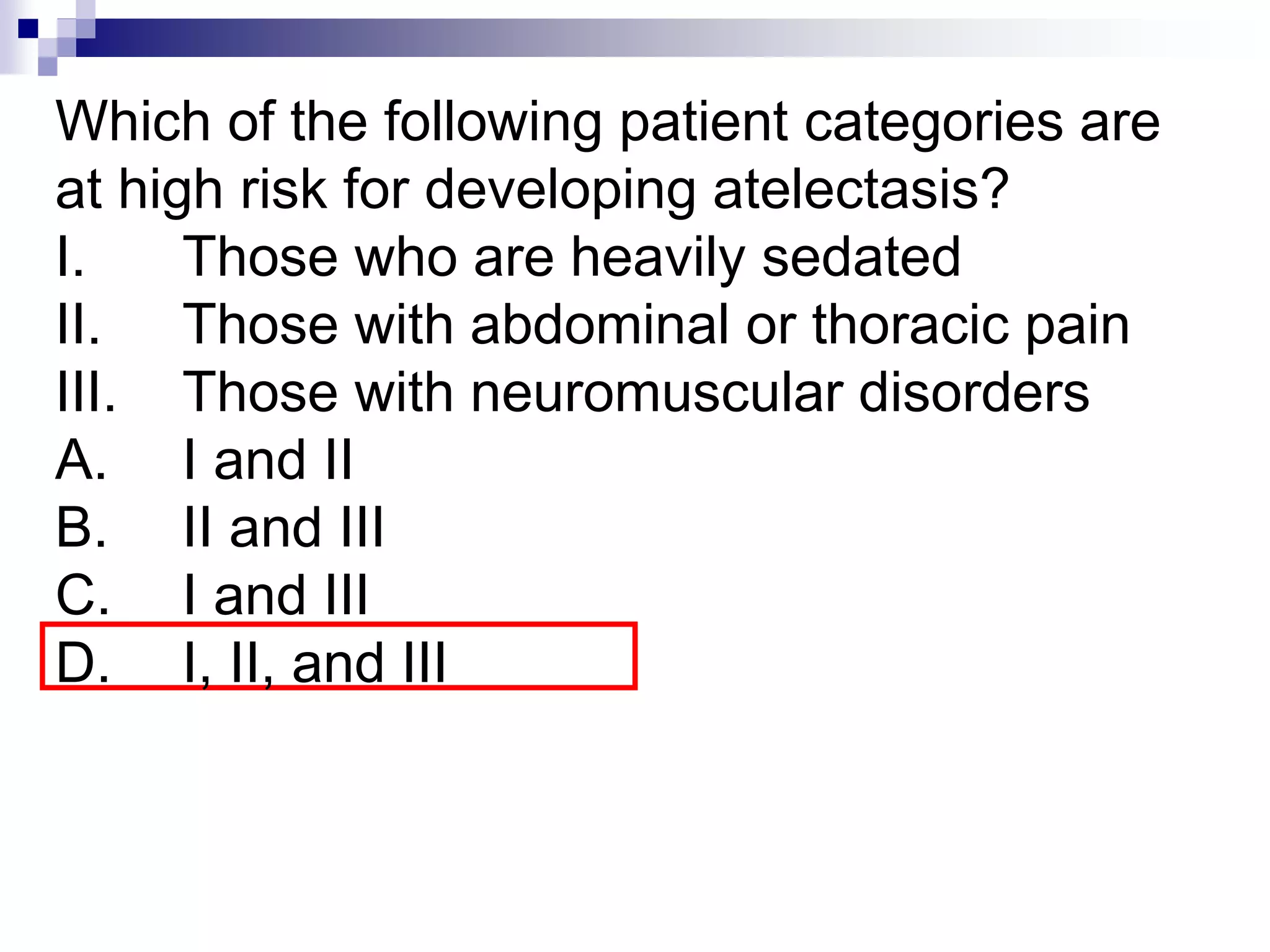
Which of the following patient categories are
at high risk for developing atelectasis?
I. Those who are heavily sedated
II. Those with abdominal or thoracic pain
III. Those with neuromuscular disorders
A. I and II
B. II and III
C. I and III
D. I, II, and III
How do all modes of lung expansion
therapy aid lung expansion?
A.Increasing the transpulmonary
pressure gradient
B. Decreasing the transthoracic
pressure gradient
C.Increasing the pressure in the pleural
space
D.Decreasing the pressure in the alveoli
How can the transpulmonary
pressure gradient be increased?
I. Increasing alveolar pressure
II. Decreasing pleural pressure
III.Decreasing transthoracic pressure
A.I and II
B.II and III
C. I and III
D. I, II, and III
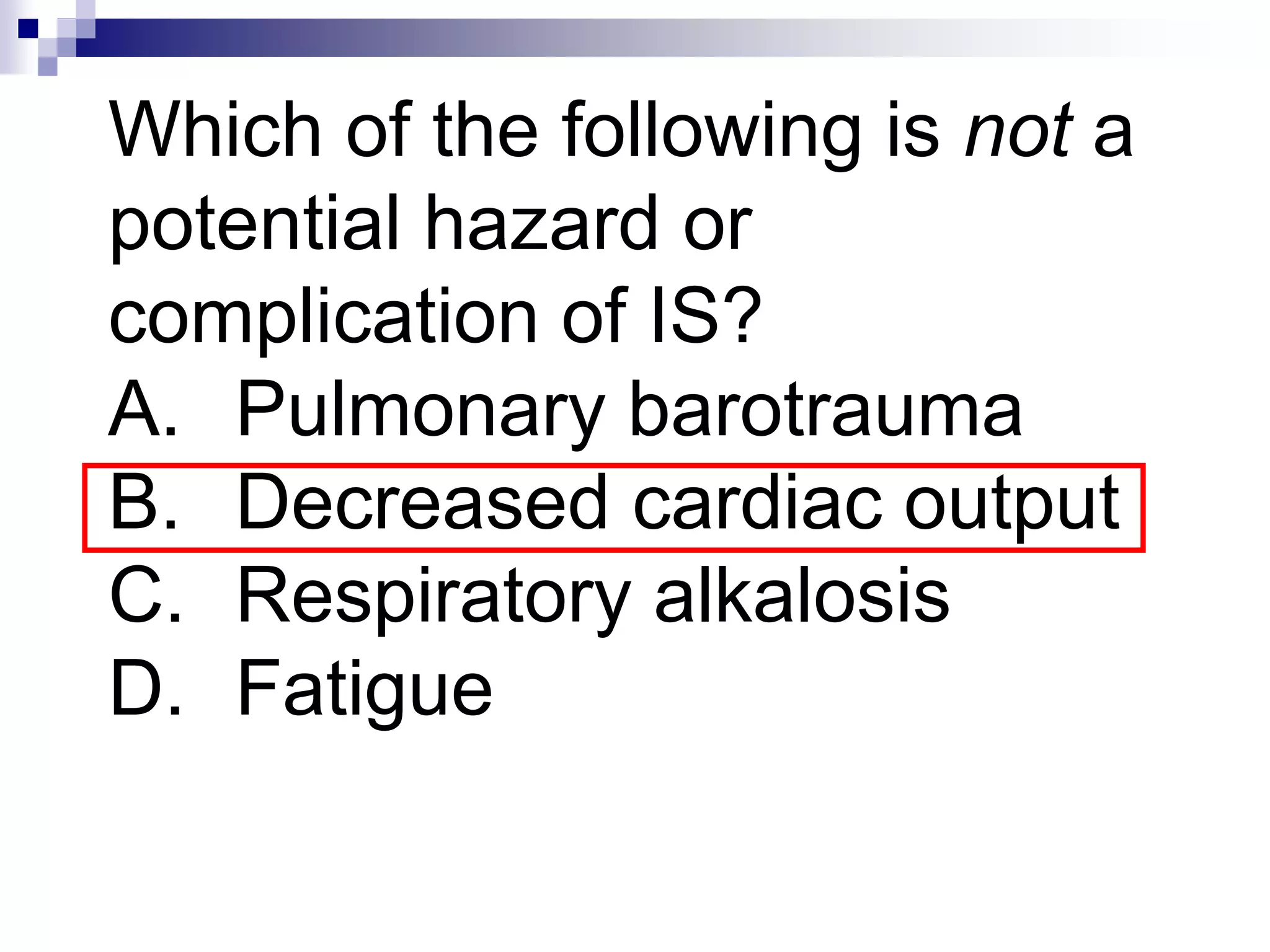
Which of the following is not a
potential hazard or
complication of IS?
A. Pulmonary barotrauma
B. Decreased cardiac output
C. Respiratory alkalosis
D. Fatigue
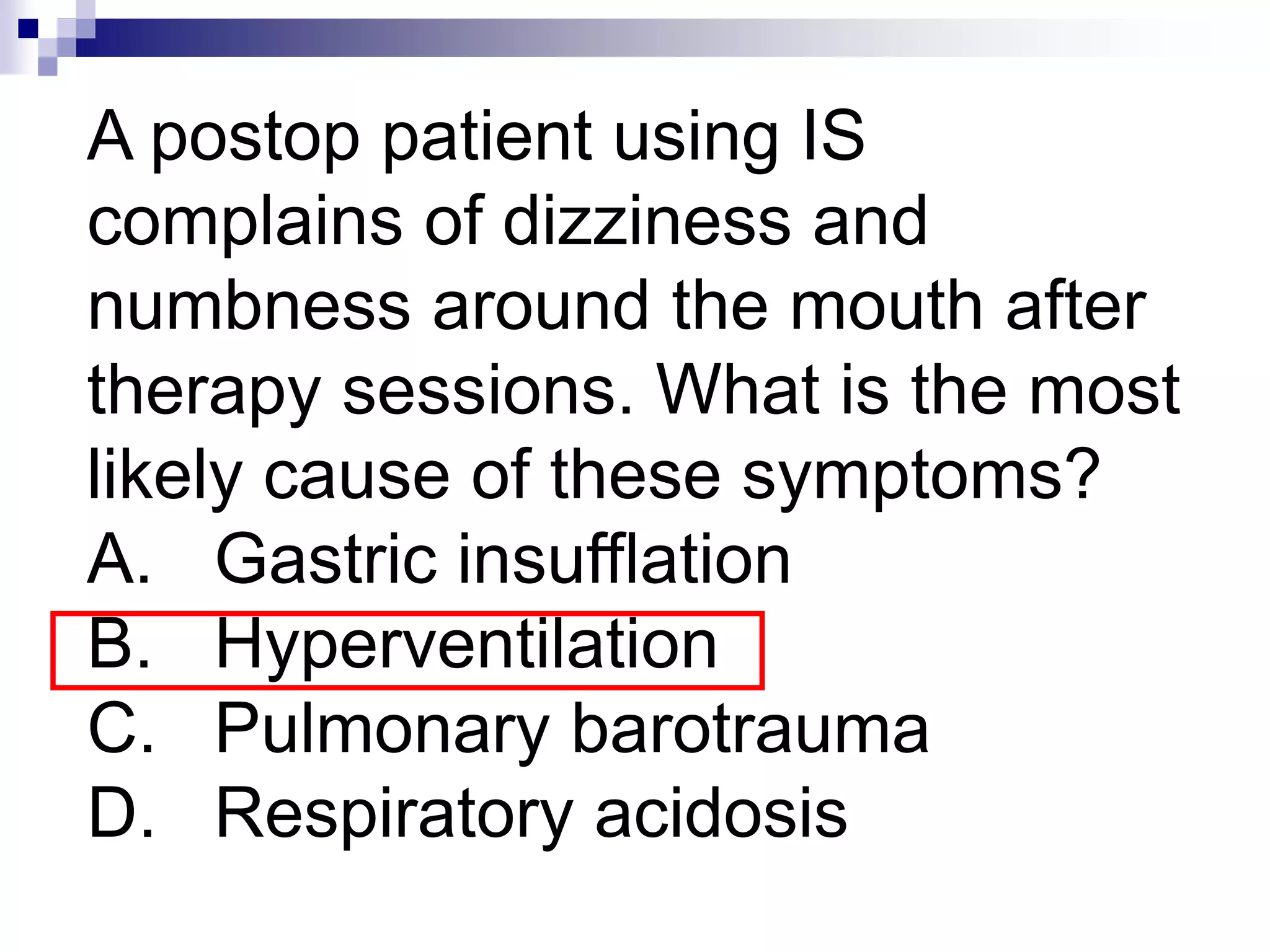
A postop patient using IS
complains of dizziness and
numbness around the mouth after
therapy sessions. What is the most
likely cause of these symptoms?
A. Gastric insufflation
B. Hyperventilation
C. Pulmonary barotrauma
D. Respiratory acidosis
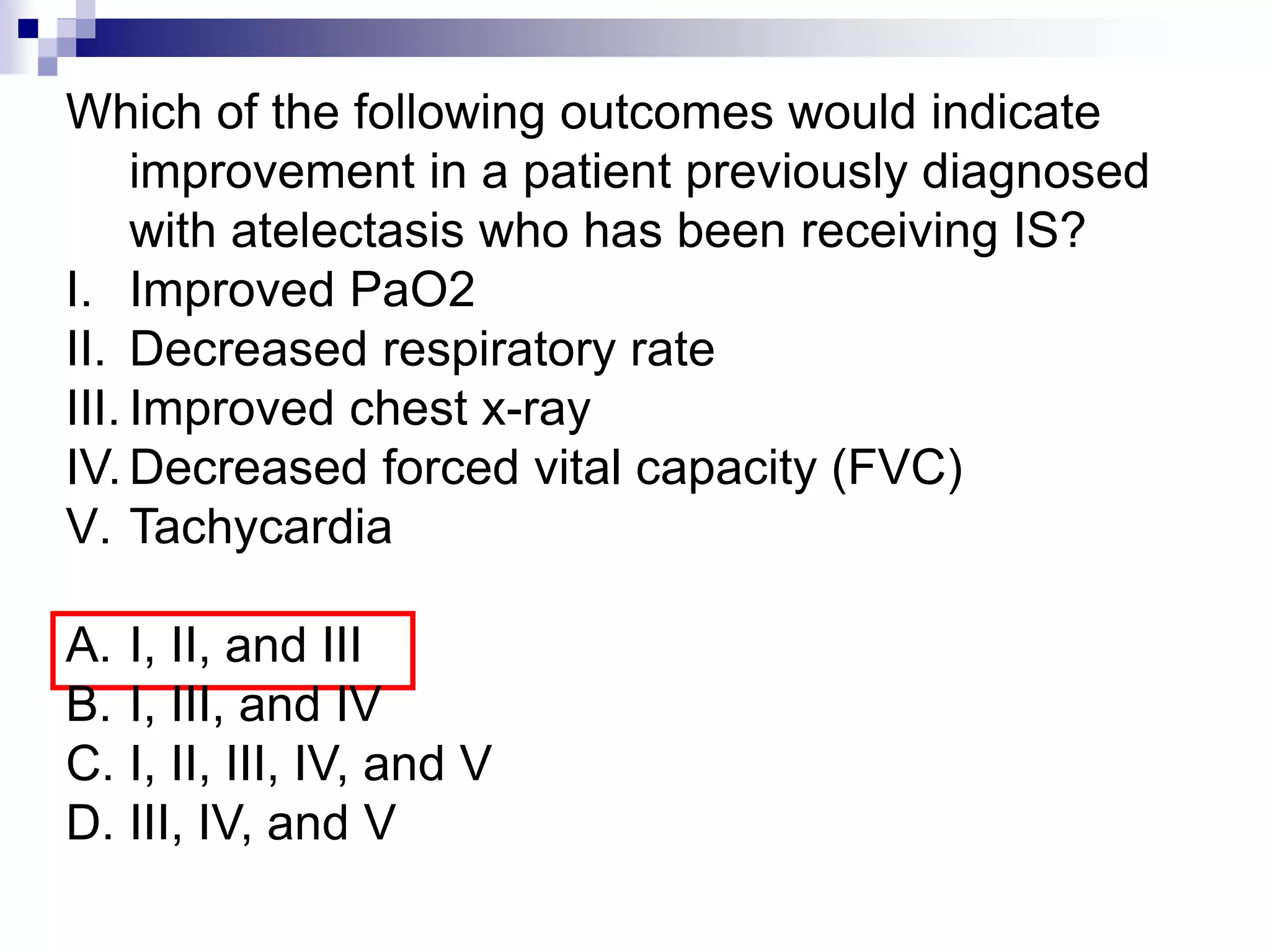
Which of the following outcomes would indicate
improvement in a patient previously diagnosed
with atelectasis who has been receiving IS?
I. Improved PaO2
II. Decreased respiratory rate
III. Improved chest x-ray
IV. Decreased forced vital capacity (FVC)
V. Tachycardia
A. I, II, and III
B. I, III, and IV
C. I, II, III, IV, and V
D. III, IV, and V
Ideally, when should high-risk surgical patients be
oriented to IS?
A.Postoperatively, after full recovery from the
anesthesia
B.Preoperatively, before undergoing the surgical
procedure
C.Postoperatively, while they are still in the recovery
room
D.Postoperatively, but no sooner than 24 hours after
surgery
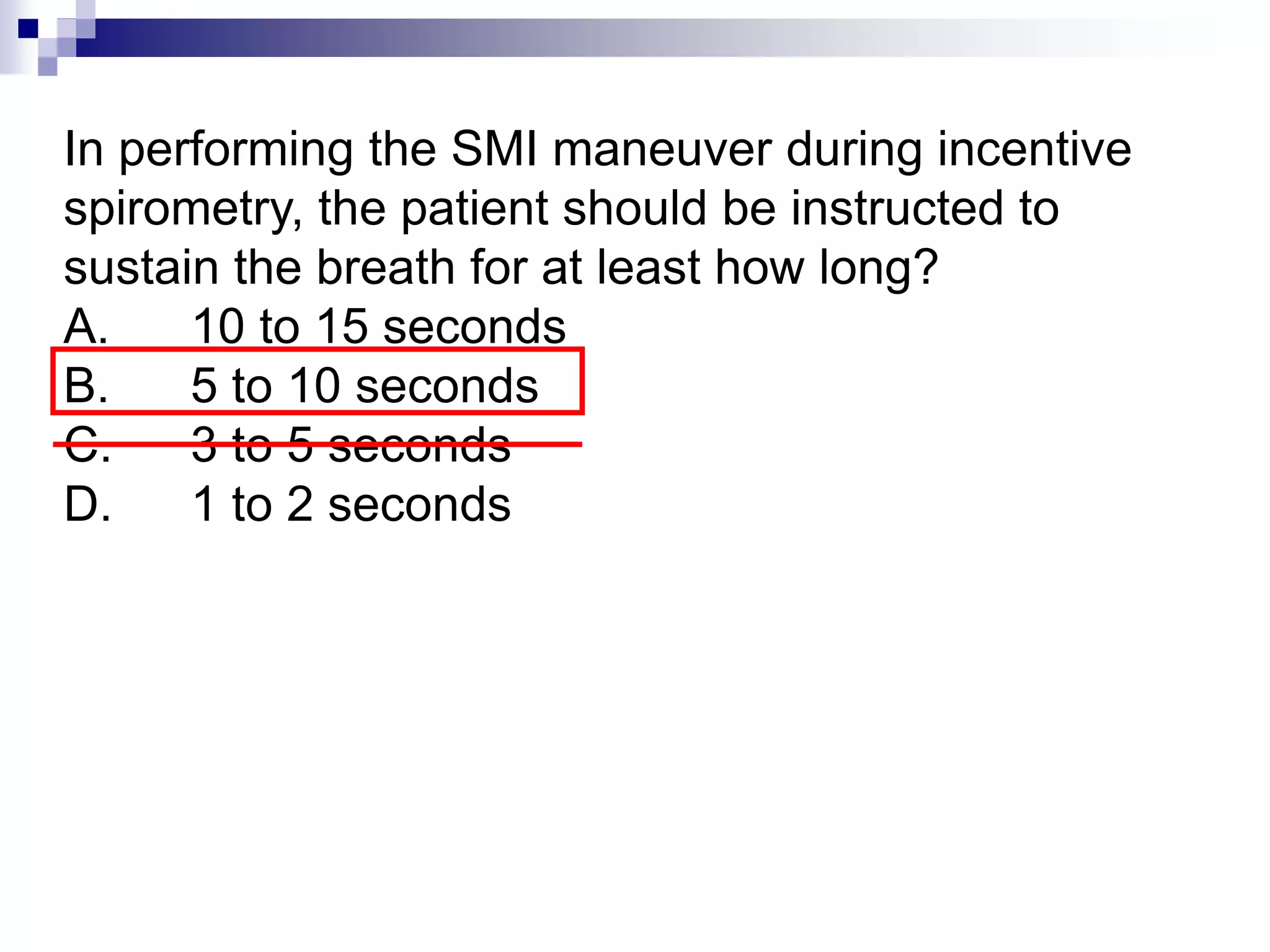
In performing the SMI maneuver during incentive
spirometry, the patient should be instructed to
sustain the breath for at least how long?
A. 10 to 15 seconds
B. 5 to 10 seconds
C. 3 to 5 seconds
D. 1 to 2 seconds
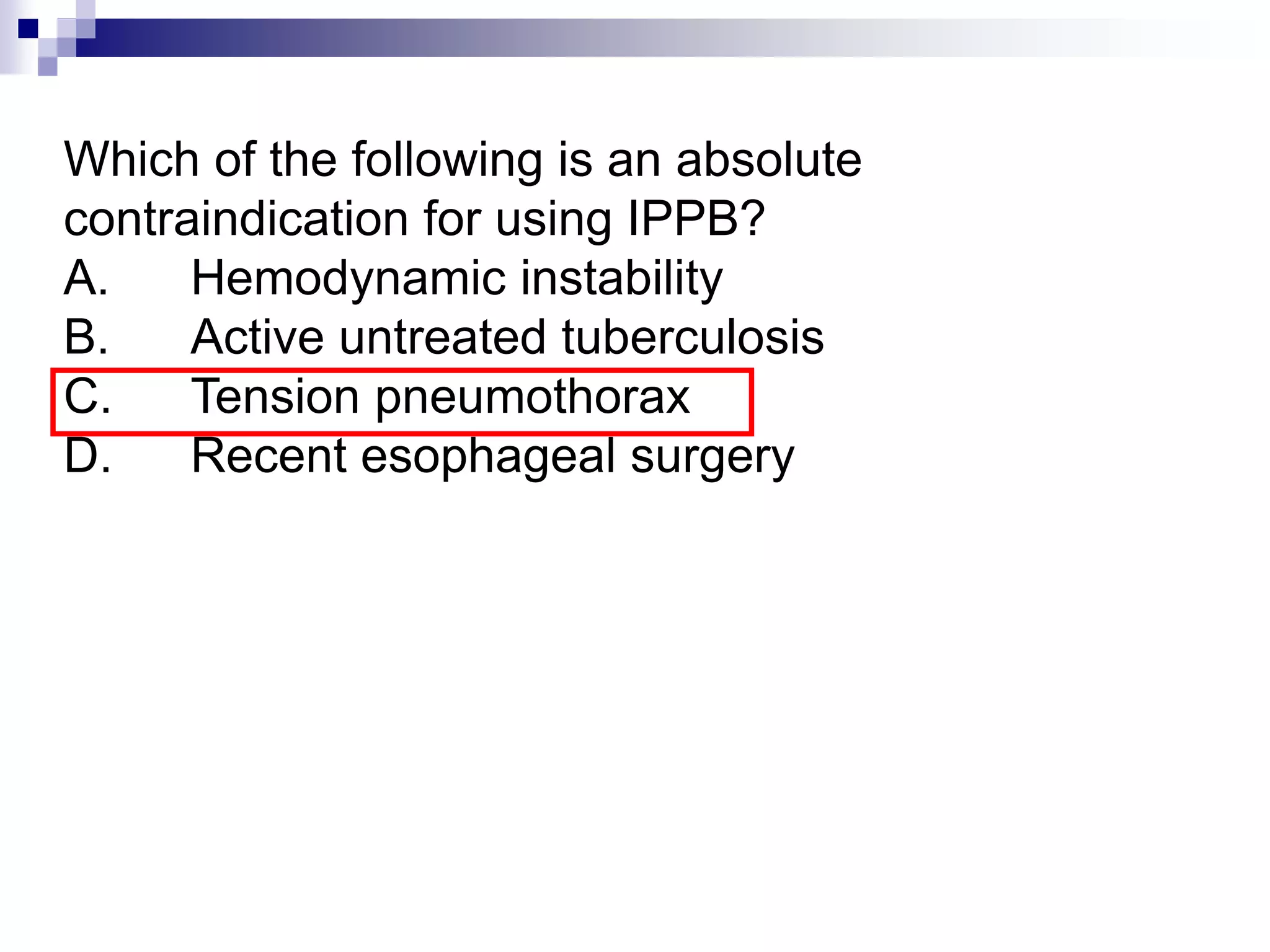
Which of the following is an absolute
contraindication for using IPPB?
A. Hemodynamic instability
B. Active untreated tuberculosis
C. Tension pneumothorax
D. Recent esophageal surgery
What is the minimum airway pressure at which
the esophagus opens, allowing gas to pass
directly into the stomach?
A. 25 to 30 cm H2O
B. 20 to 25 cm H2O
C. 15 to 20 cm H2O
D. 10 to 15 cm H2O
Which of the following are potential desirable
outcomes of IPPB therapy?
I. Improved oxygenation
II. Increased cough and secretion clearance
III. Improved breath sounds
IV.Reduced dyspnea
A. II and IV
B. I, II, and III
C. III and IV
D. I, II, III, and IV
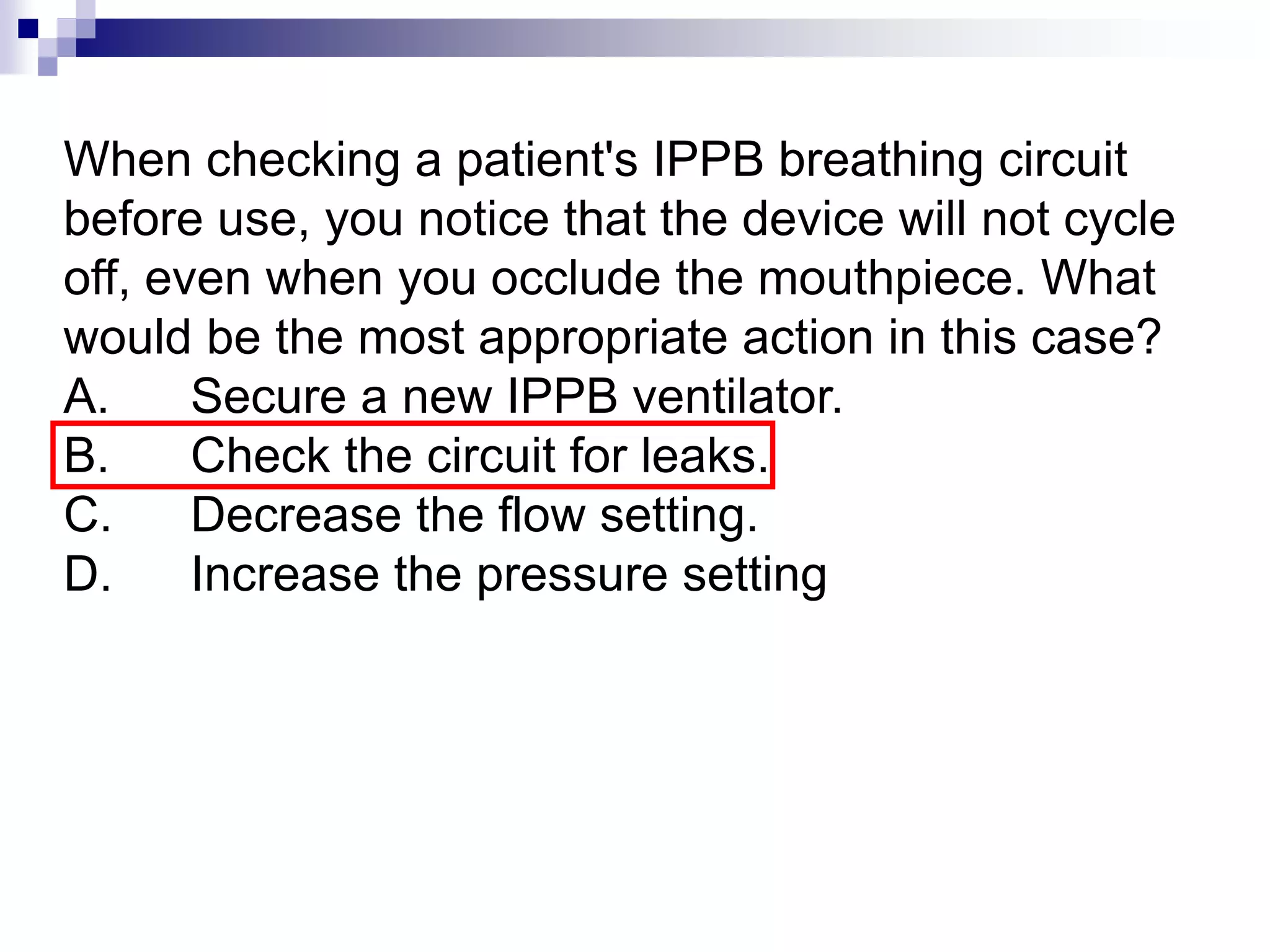
When checking a patient's IPPB breathing circuit
before use, you notice that the device will not cycle
off, even when you occlude the mouthpiece. What
would be the most appropriate action in this case?
A. Secure a new IPPB ventilator.
B. Check the circuit for leaks.
C. Decrease the flow setting.
D. Increase the pressure setting
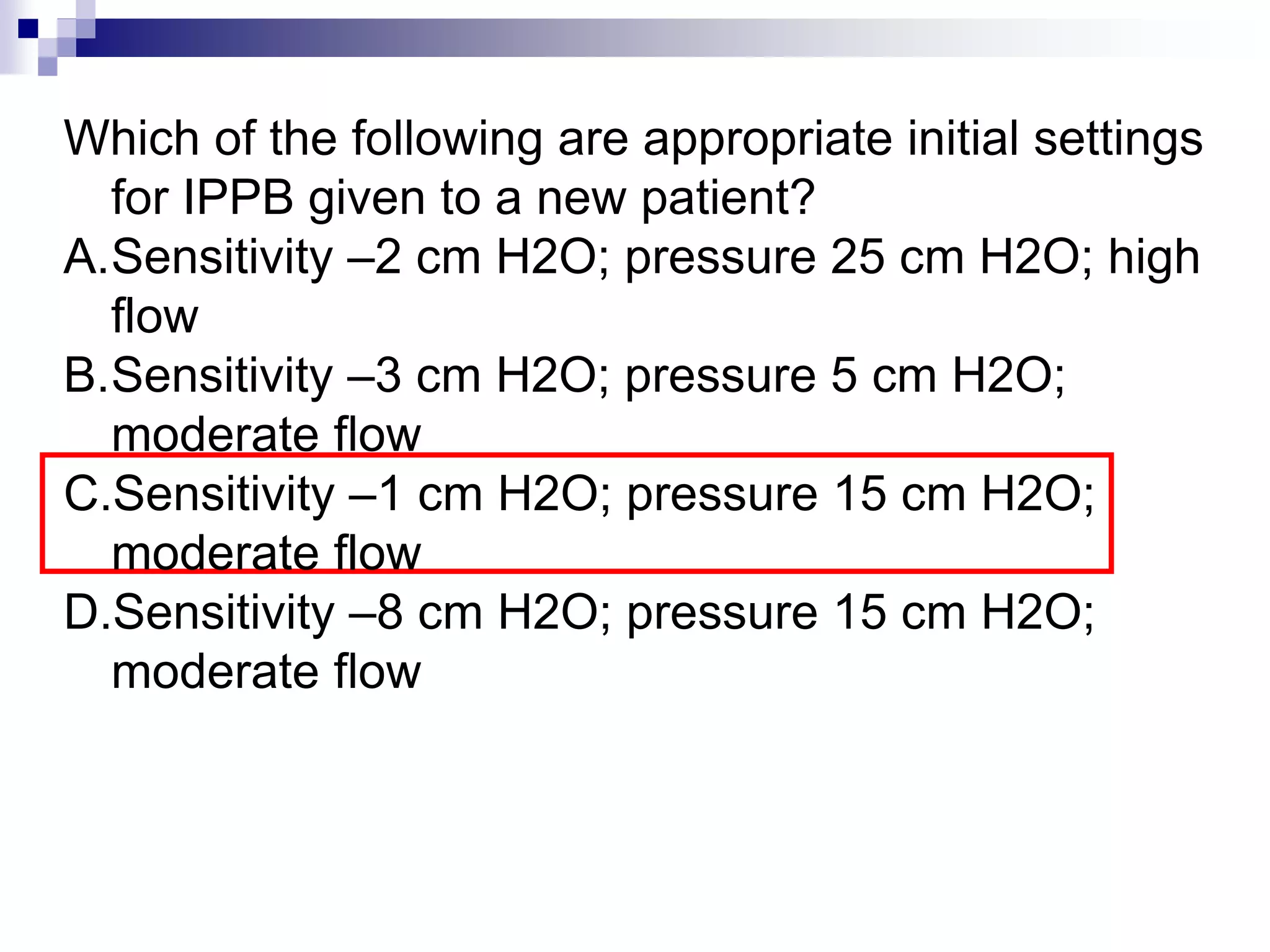
Which of the following are appropriate initial settings
for IPPB given to a new patient?
A.Sensitivity –2 cm H2O; pressure 25 cm H2O; high
flow
B.Sensitivity –3 cm H2O; pressure 5 cm H2O;
moderate flow
C.Sensitivity –1 cm H2O; pressure 15 cm H2O;
moderate flow
D.Sensitivity –8 cm H2O; pressure 15 cm H2O;
moderate flow
The End
 During IPPB therapy, a patient complains of
dizziness and tingling sensations in her
fingers. Which of the following should the
respiratory therapist record in the patient's
chart?
I. medication administered during the treatment
II. the patient's vital signs before and after the
treatment
III. the patient's symptoms
IV. the family's reaction to the patient's complaint
A. I, II, and III only
B. I, II, and IV only
C. I, III, and IV only
D. II, III, and IV only
Persistent breathing at small
tidal volumes (VTs) can result in
which of the following?
A. Reabsorption atelectasis
B. Spontaneous pneumothorax
C. Passive atelectasis
D. Respiratory alkalosis
Which of the following patient groups should be
considered for lung expansion therapy using
IPPB?
I. Patients with clinically diagnosed atelectasis
who are not responsive to other therapies
II. Patients at high risk for atelectasis who cannot
cooperate with other methods
III. All obese patients who have undergone
abdominal surgery
A. I and II
B. II and III
C. I and III
D. I, II, and III
Which of the following is not a potential hazard of
IPPB?
A. Increased cardiac output
B. Respiratory alkalosis
C. Pulmonary barotrauma
D. Gastric distension
During administration of a CPAP flow mask to a
patient with atelectasis, you find it difficult to
maintain the prescribed airway pressure. Which
of the following are most likely the problems?
I. System or mask leaks
II. Outflow obstruction
III. Inadequate system flow
A. I and III
B. I and II
C. II and III
D. I
Which of the following initial flow settings would
you select when setting up a CPAP flow-mask
system for a patient with atelectasis?
A. 2 times the patient's minute ventilation
B. At least 6 to 10 liters per minute
C. 4 times the patient's minute ventilation
D. 10 times the patient's VT
Which of the following mechanisms probably
contribute to the beneficial effects of CPAP in
treating atelectasis?
I. Recruitment of collapsed alveoli
II. Decreased work of breathing
III. Improved distribution of ventilation
IV. Increased efficiency of secretion removal
A. I, II, and IV
B. II and III
C. I and IV
D. I, II, III, and IV
An alert and cooperative 28-year-old woman
with no prior history of lung disease
underwent cesarean section 16 hours ago.
Her x-ray currently is clear. Which of the
following approaches to preventing
atelectasis would you recommend for this
patient?
A. IS
B. PEEP therapy
C. Deep breathing exercises
D. IPPB therapy

6932118.ppt

  • 1.
  • 2.
    IPPB  Classification  Flow Air-Mix  Expiratory Time  Pressure  Sensitivity
  • 3.
    IPPB - Troubleshooting Loss of pressure  Excessive pressure  Failure to trigger inspiration  Failure to cycle off  Pressure does not rise normally
  • 4.
    A patient isreceiving chest percussion, lung expansion therapy, and directed cough to treat obstructive atelectasis. Which of the following diagnostic procedures should be recommended to evaluate the patient's response to respiratory care? A. chest radiograph B. computed tomography (CT scanning) C. peak expiratory flow measurement D. body plethysmography
  • 5.
    A physician hasordered lung expansion therapy for a patient with atelectasis. The patient had a recent right lower lobectomy. Upon examination, the patient is alert, oriented, and has a nonproductive cough. Which of the following should the respiratory therapist recommend? A. chest physiotherapy and postural drainage B. IPPB C. incentive spirometry D. vibratory PEP
  • 6.
    While administering anIPPB treatment at 20 cmH2O to a patient with pulmonary emphysema, the respiratory therapist notes the patient has suddenly become very short of breath and cyanotic. The therapist's most appropriate action would be to A. suction the patient. B. discontinue the treatment. C. decrease the peak pressure to 10 cmH2O. D. stop the treatment for 10 to 20 minutes.
  • 7.
    The respiratory therapistis administering an IPPB treatment by mask to a patient who is unconscious. The machine cycles to expiration before the patient receives an adequate volume. Which of the following adjustments should the respiratory therapist make? A. Increase the cycling pressure. B. Increase the flow. C. Decrease the sensitivity. D. Decrease expiratory time.
  • 8.
    Which of thefollowing patient categories are at high risk for developing atelectasis? I. Those who are heavily sedated II. Those with abdominal or thoracic pain III. Those with neuromuscular disorders A. I and II B. II and III C. I and III D. I, II, and III
  • 9.
    How do allmodes of lung expansion therapy aid lung expansion? A.Increasing the transpulmonary pressure gradient B. Decreasing the transthoracic pressure gradient C.Increasing the pressure in the pleural space D.Decreasing the pressure in the alveoli
  • 10.
    How can thetranspulmonary pressure gradient be increased? I. Increasing alveolar pressure II. Decreasing pleural pressure III.Decreasing transthoracic pressure A.I and II B.II and III C. I and III D. I, II, and III
  • 11.
    Which of thefollowing is not a potential hazard or complication of IS? A. Pulmonary barotrauma B. Decreased cardiac output C. Respiratory alkalosis D. Fatigue
  • 12.
    A postop patientusing IS complains of dizziness and numbness around the mouth after therapy sessions. What is the most likely cause of these symptoms? A. Gastric insufflation B. Hyperventilation C. Pulmonary barotrauma D. Respiratory acidosis
  • 13.
    Which of thefollowing outcomes would indicate improvement in a patient previously diagnosed with atelectasis who has been receiving IS? I. Improved PaO2 II. Decreased respiratory rate III. Improved chest x-ray IV. Decreased forced vital capacity (FVC) V. Tachycardia A. I, II, and III B. I, III, and IV C. I, II, III, IV, and V D. III, IV, and V
  • 14.
    Ideally, when shouldhigh-risk surgical patients be oriented to IS? A.Postoperatively, after full recovery from the anesthesia B.Preoperatively, before undergoing the surgical procedure C.Postoperatively, while they are still in the recovery room D.Postoperatively, but no sooner than 24 hours after surgery
  • 15.
    In performing theSMI maneuver during incentive spirometry, the patient should be instructed to sustain the breath for at least how long? A. 10 to 15 seconds B. 5 to 10 seconds C. 3 to 5 seconds D. 1 to 2 seconds
  • 16.
    Which of thefollowing is an absolute contraindication for using IPPB? A. Hemodynamic instability B. Active untreated tuberculosis C. Tension pneumothorax D. Recent esophageal surgery
  • 17.
    What is theminimum airway pressure at which the esophagus opens, allowing gas to pass directly into the stomach? A. 25 to 30 cm H2O B. 20 to 25 cm H2O C. 15 to 20 cm H2O D. 10 to 15 cm H2O
  • 18.
    Which of thefollowing are potential desirable outcomes of IPPB therapy? I. Improved oxygenation II. Increased cough and secretion clearance III. Improved breath sounds IV.Reduced dyspnea A. II and IV B. I, II, and III C. III and IV D. I, II, III, and IV
  • 19.
    When checking apatient's IPPB breathing circuit before use, you notice that the device will not cycle off, even when you occlude the mouthpiece. What would be the most appropriate action in this case? A. Secure a new IPPB ventilator. B. Check the circuit for leaks. C. Decrease the flow setting. D. Increase the pressure setting
  • 20.
    Which of thefollowing are appropriate initial settings for IPPB given to a new patient? A.Sensitivity –2 cm H2O; pressure 25 cm H2O; high flow B.Sensitivity –3 cm H2O; pressure 5 cm H2O; moderate flow C.Sensitivity –1 cm H2O; pressure 15 cm H2O; moderate flow D.Sensitivity –8 cm H2O; pressure 15 cm H2O; moderate flow
  • 21.
  • 22.
     During IPPBtherapy, a patient complains of dizziness and tingling sensations in her fingers. Which of the following should the respiratory therapist record in the patient's chart? I. medication administered during the treatment II. the patient's vital signs before and after the treatment III. the patient's symptoms IV. the family's reaction to the patient's complaint A. I, II, and III only B. I, II, and IV only C. I, III, and IV only D. II, III, and IV only
  • 23.
    Persistent breathing atsmall tidal volumes (VTs) can result in which of the following? A. Reabsorption atelectasis B. Spontaneous pneumothorax C. Passive atelectasis D. Respiratory alkalosis
  • 24.
    Which of thefollowing patient groups should be considered for lung expansion therapy using IPPB? I. Patients with clinically diagnosed atelectasis who are not responsive to other therapies II. Patients at high risk for atelectasis who cannot cooperate with other methods III. All obese patients who have undergone abdominal surgery A. I and II B. II and III C. I and III D. I, II, and III
  • 25.
    Which of thefollowing is not a potential hazard of IPPB? A. Increased cardiac output B. Respiratory alkalosis C. Pulmonary barotrauma D. Gastric distension
  • 26.
    During administration ofa CPAP flow mask to a patient with atelectasis, you find it difficult to maintain the prescribed airway pressure. Which of the following are most likely the problems? I. System or mask leaks II. Outflow obstruction III. Inadequate system flow A. I and III B. I and II C. II and III D. I
  • 27.
    Which of thefollowing initial flow settings would you select when setting up a CPAP flow-mask system for a patient with atelectasis? A. 2 times the patient's minute ventilation B. At least 6 to 10 liters per minute C. 4 times the patient's minute ventilation D. 10 times the patient's VT
  • 28.
    Which of thefollowing mechanisms probably contribute to the beneficial effects of CPAP in treating atelectasis? I. Recruitment of collapsed alveoli II. Decreased work of breathing III. Improved distribution of ventilation IV. Increased efficiency of secretion removal A. I, II, and IV B. II and III C. I and IV D. I, II, III, and IV
  • 29.
    An alert andcooperative 28-year-old woman with no prior history of lung disease underwent cesarean section 16 hours ago. Her x-ray currently is clear. Which of the following approaches to preventing atelectasis would you recommend for this patient? A. IS B. PEEP therapy C. Deep breathing exercises D. IPPB therapy