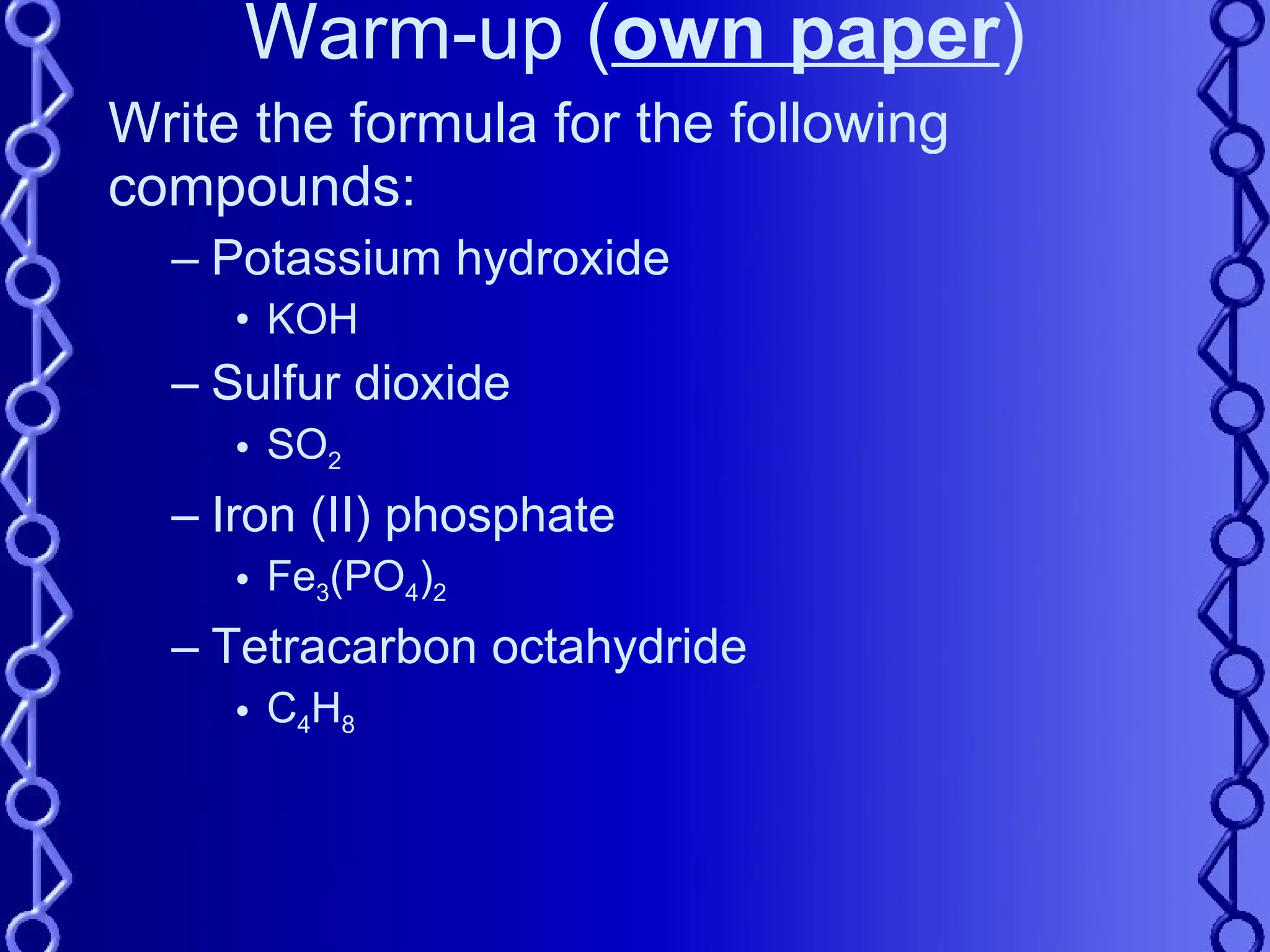
Write the formula for the following compounds: Potassium hydroxide KOH Sulfur dioxide SO 2 Iron (II) phosphate Fe 3 (PO 4 ) 2 Tetracarbon octahydride C 4 H 8 Warm-up ( own paper )
5-5  Types of reactions Objectives Discuss  factors that affect reaction rates. Classify  chemical reactions as synthesis, decomposition, single-replacement, double-replacement, or combustion reactions.
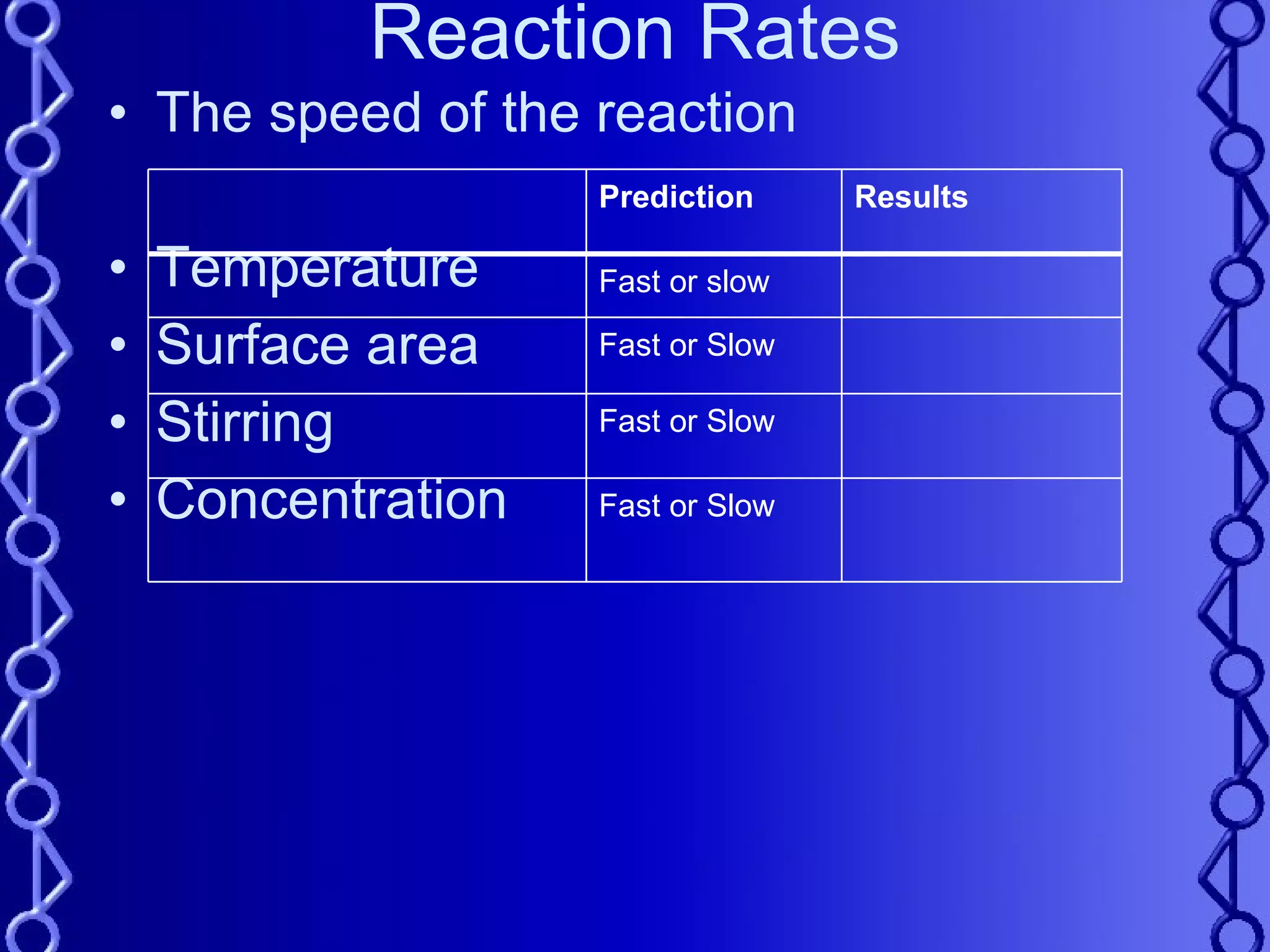
Reaction Rates The speed of the reaction Temperature Surface area Stirring Concentration Prediction Results Fast or slow Fast or Slow Fast or Slow Fast or Slow
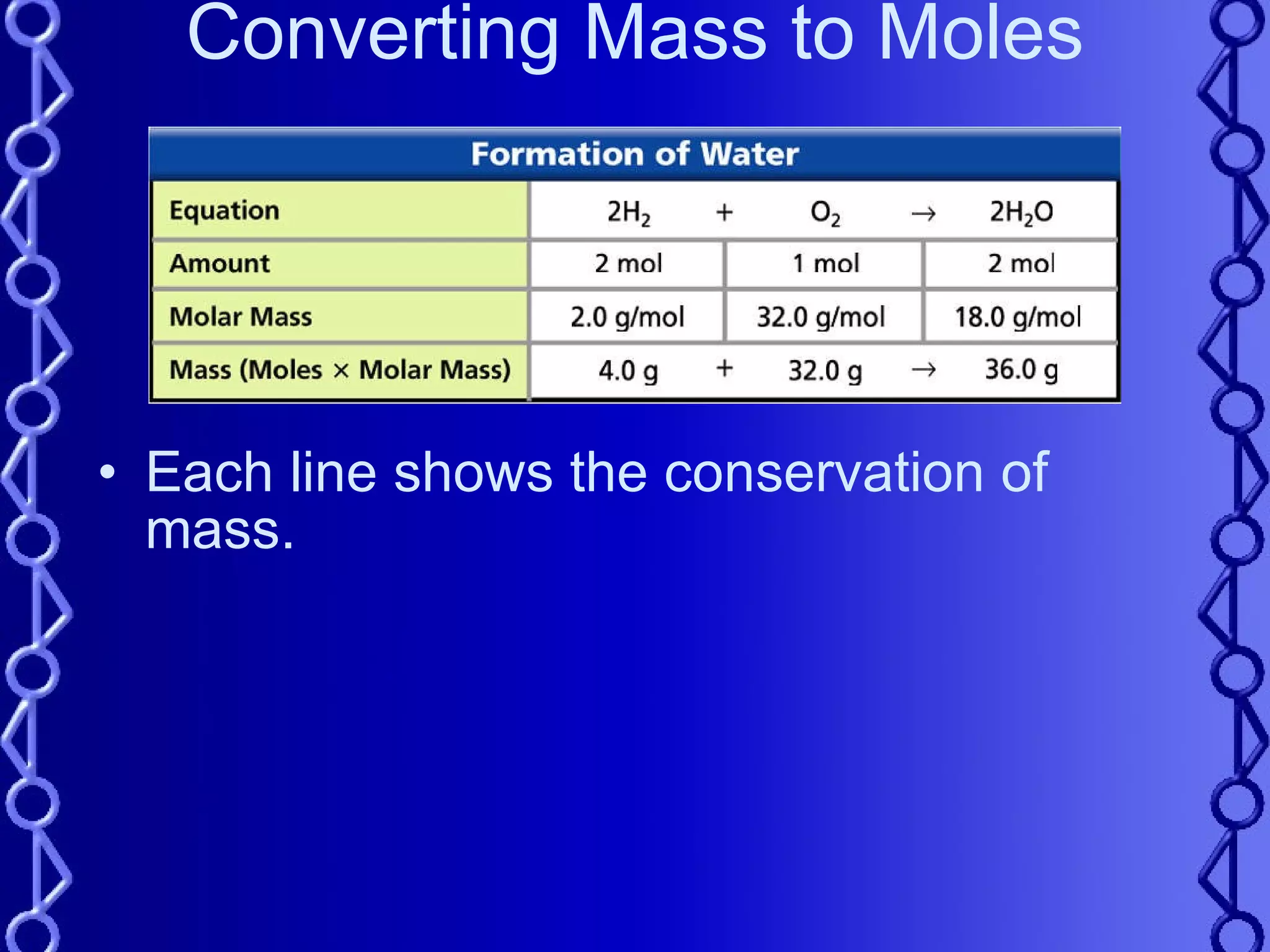
Conservation of Mass Mass can not be created or destroyed. Total number of atoms before reaction must be equal to total number after reaction. Atoms are rearranged in chemical reaction. Mass of reactants must be equal to mass of products.
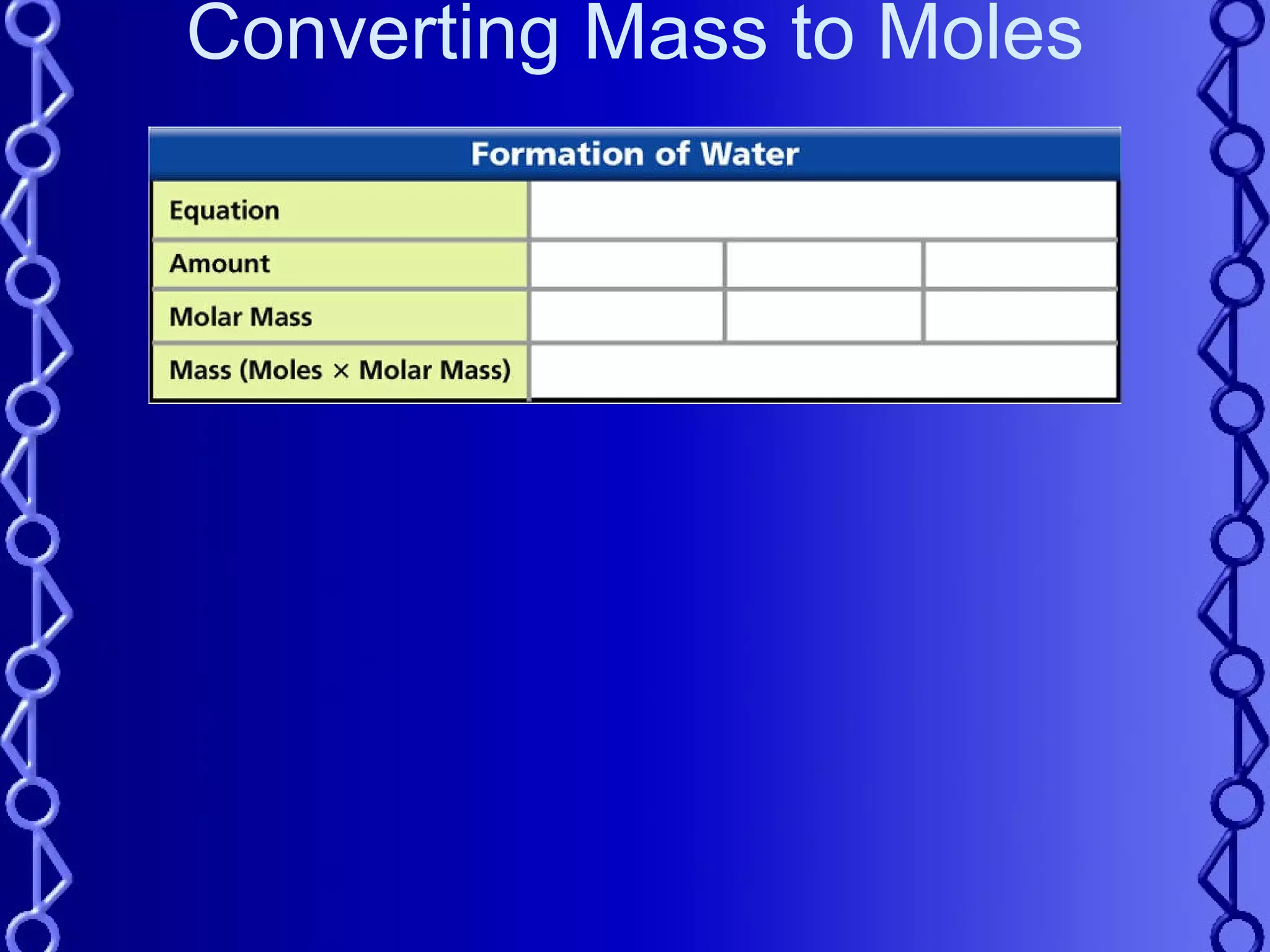
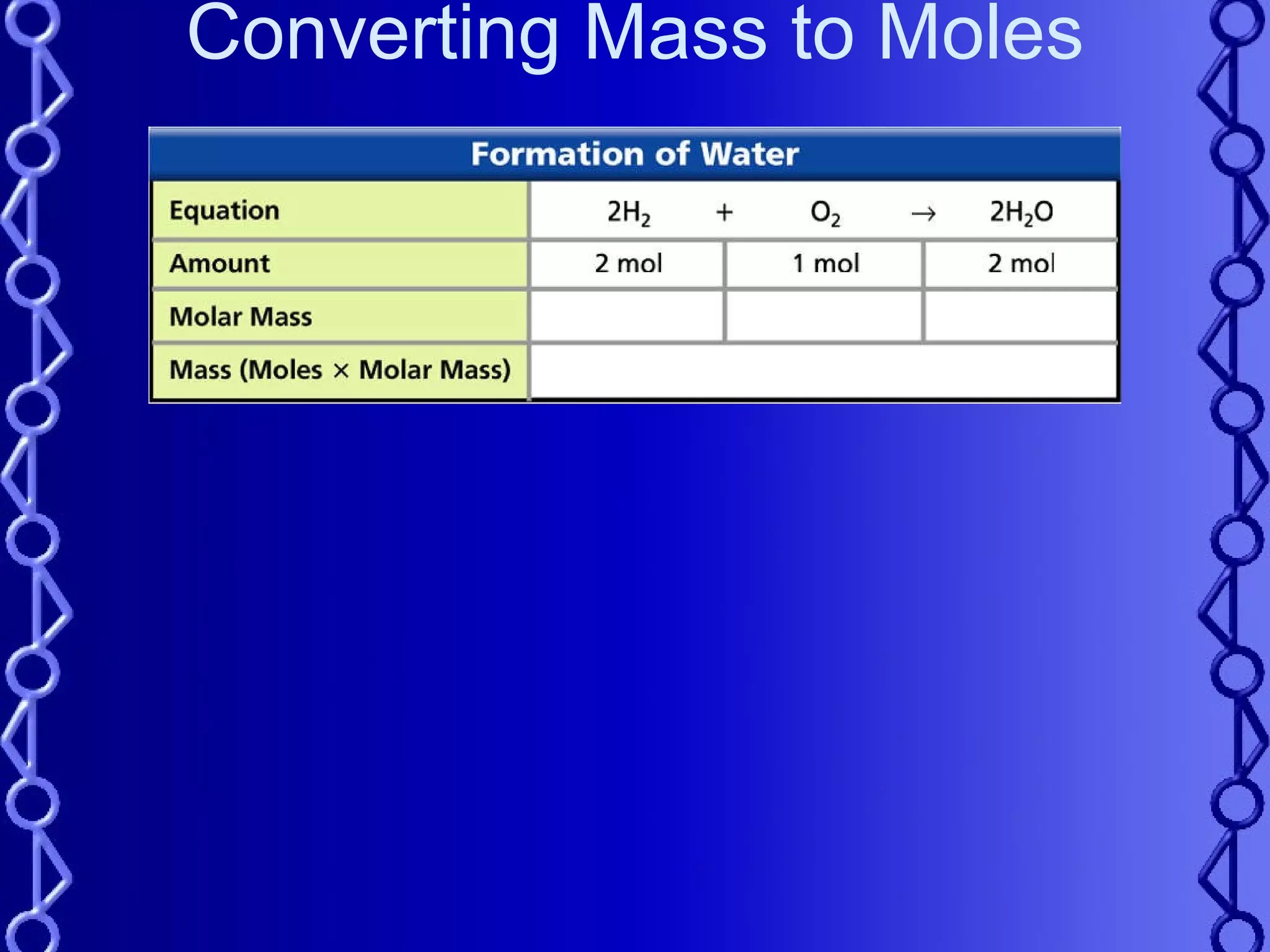
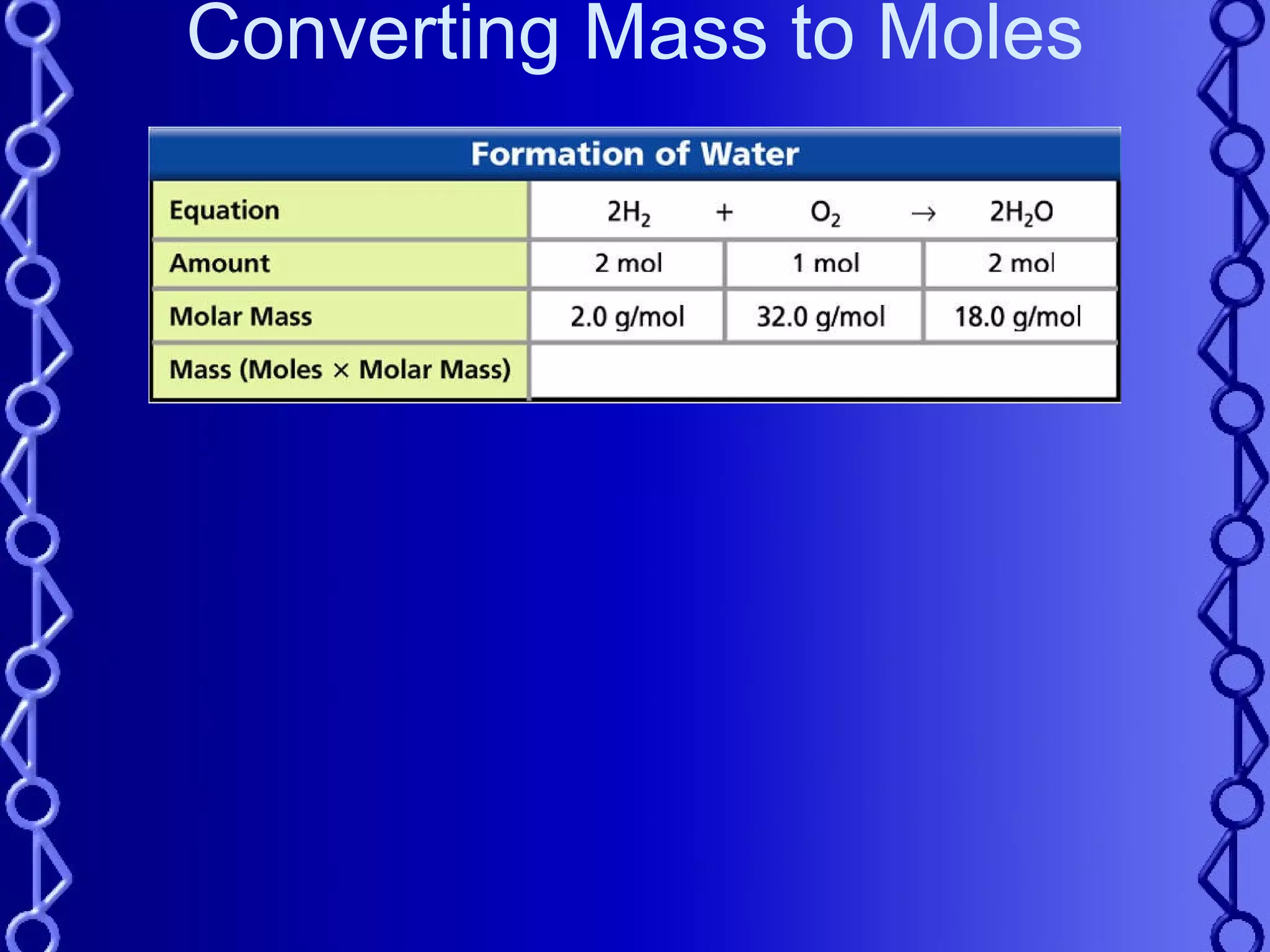
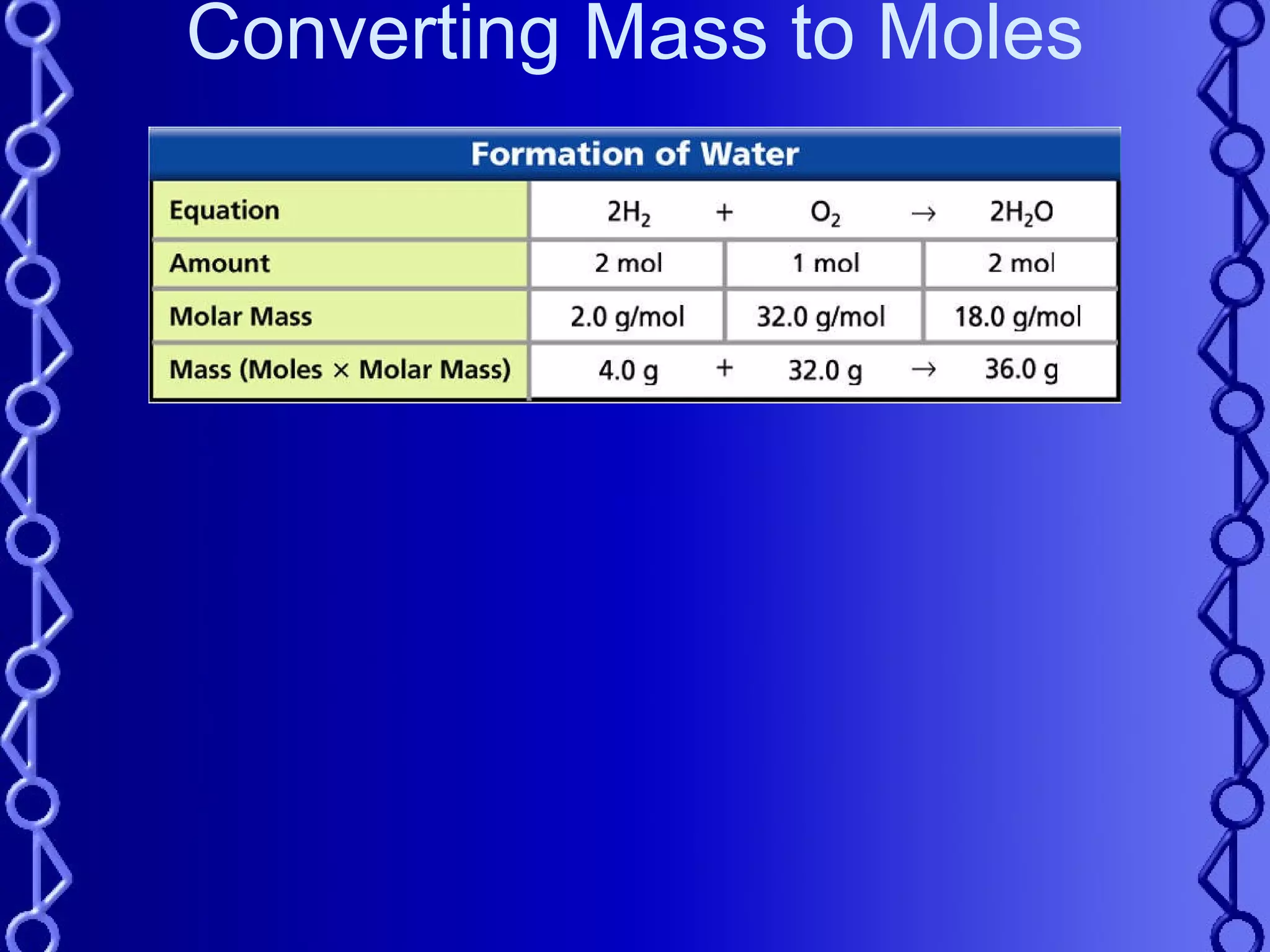
Converting Mass to Moles
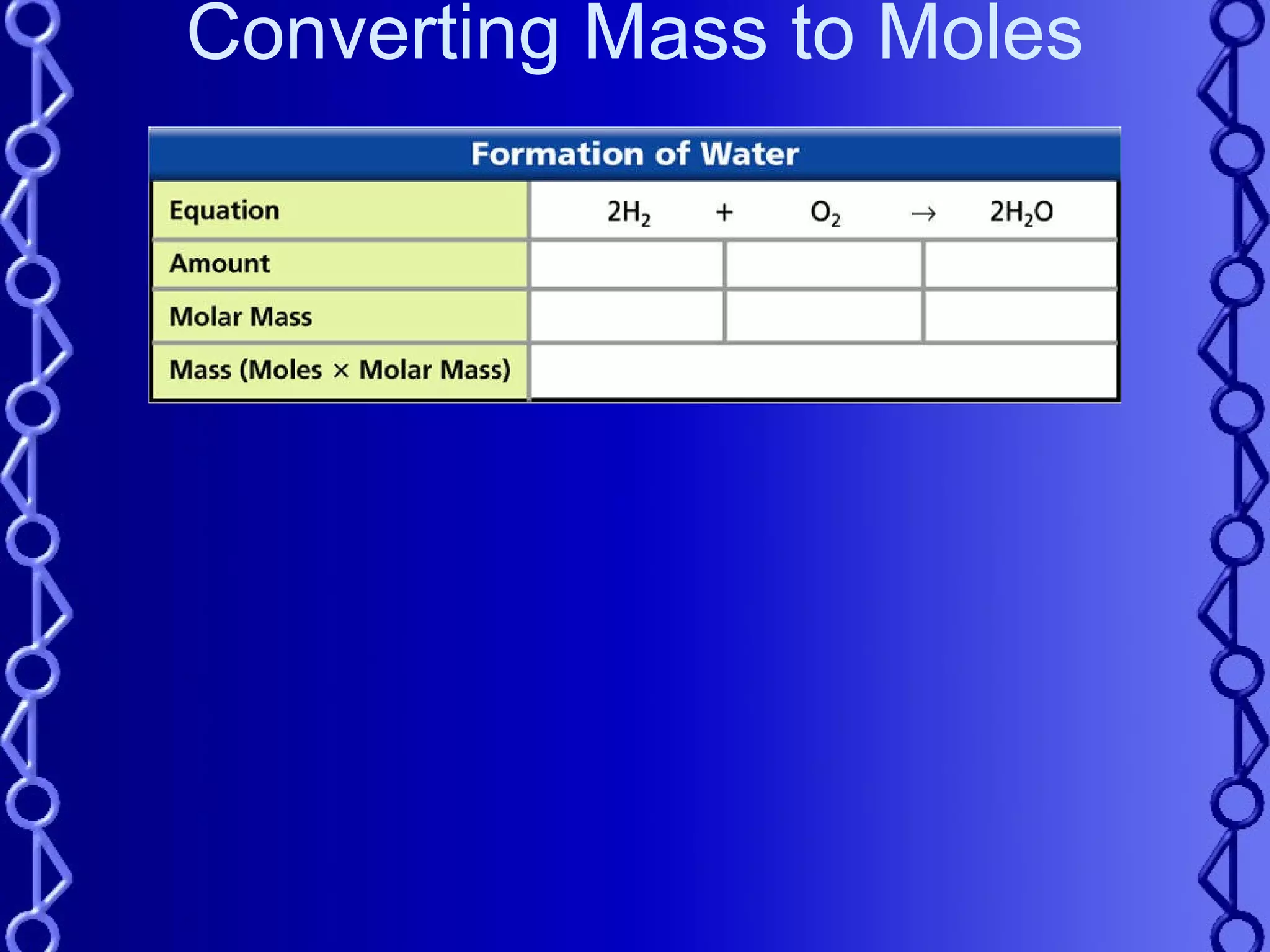
Converting Mass to Moles Each line shows the conservation of mass.
 
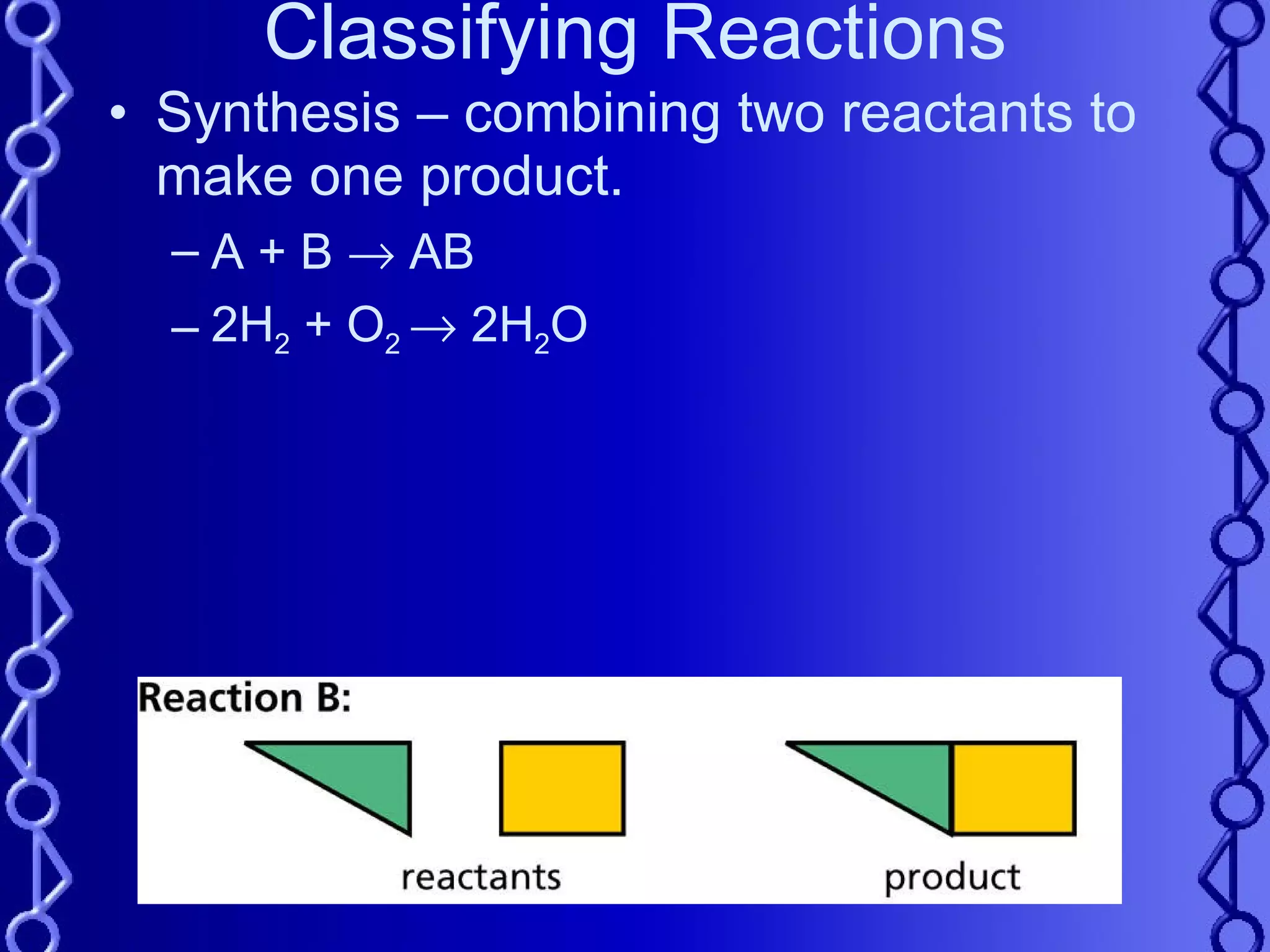
Classifying Reactions Synthesis – combining two reactants to make one product. A + B    AB 2H 2  + O 2    2H 2 O
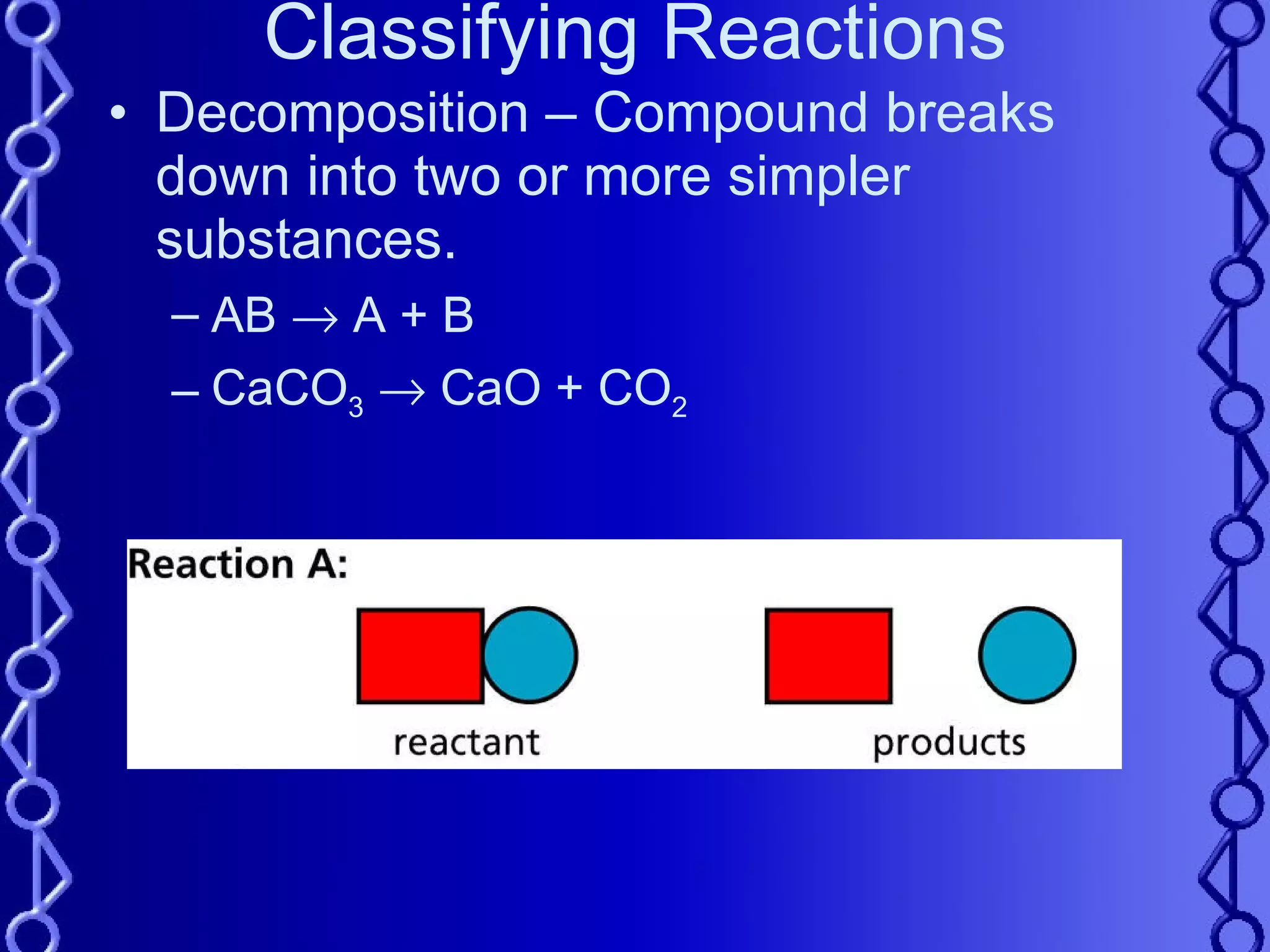
Classifying Reactions Decomposition – Compound breaks down into two or more simpler substances. AB    A + B CaCO 3     CaO + CO 2
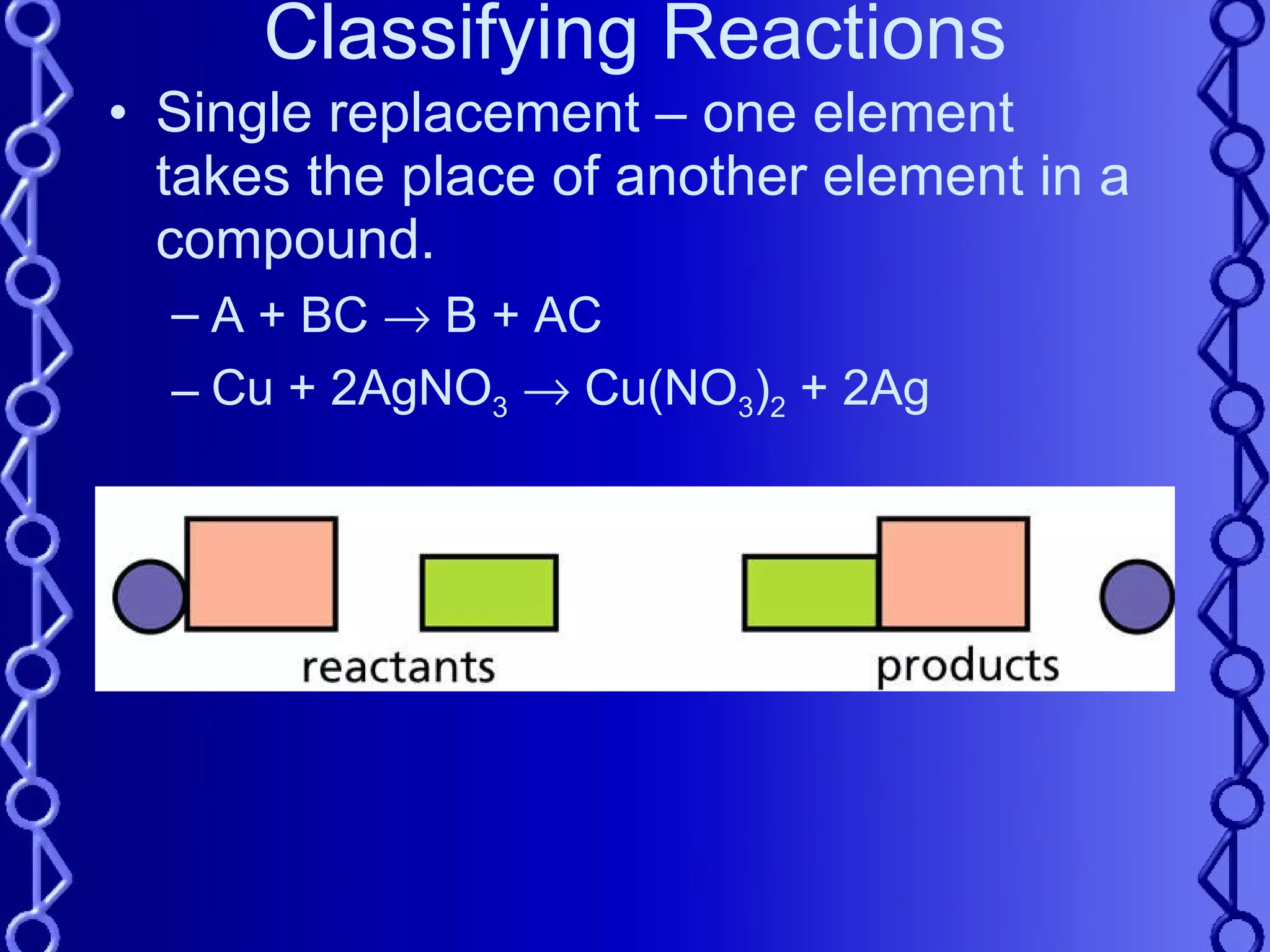
Classifying Reactions Single replacement – one element takes the place of another element in a compound. A + BC    B + AC Cu + 2AgNO 3     Cu(NO 3 ) 2  + 2Ag
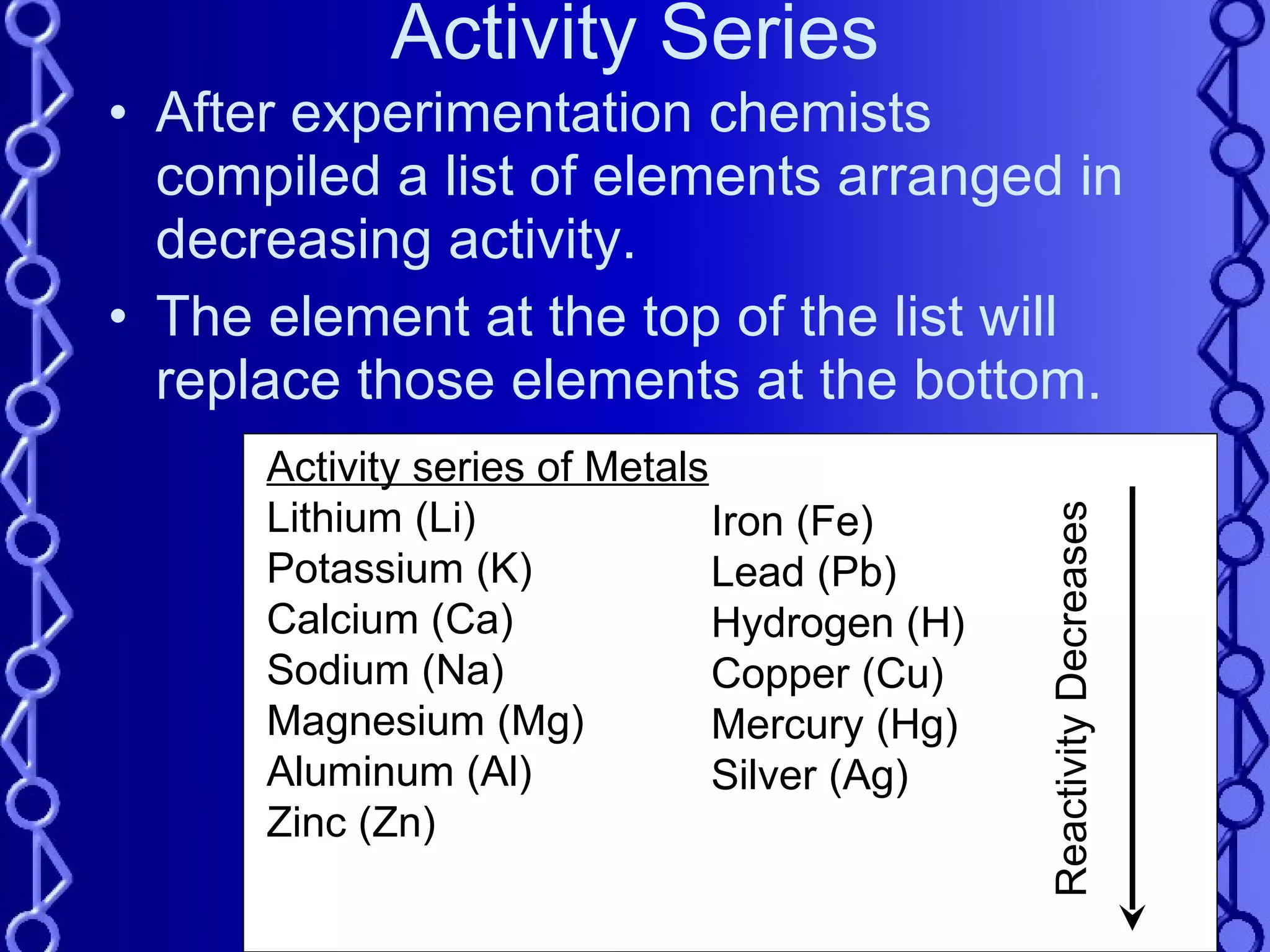
Activity Series After experimentation chemists compiled a list of elements arranged in decreasing activity. The element at the top of the list will replace those elements at the bottom. Activity series of Metals Lithium (Li) Potassium (K) Calcium (Ca) Sodium (Na) Magnesium (Mg) Aluminum (Al) Zinc (Zn) Reactivity Decreases Iron (Fe) Lead (Pb) Hydrogen (H) Copper (Cu) Mercury (Hg) Silver (Ag)
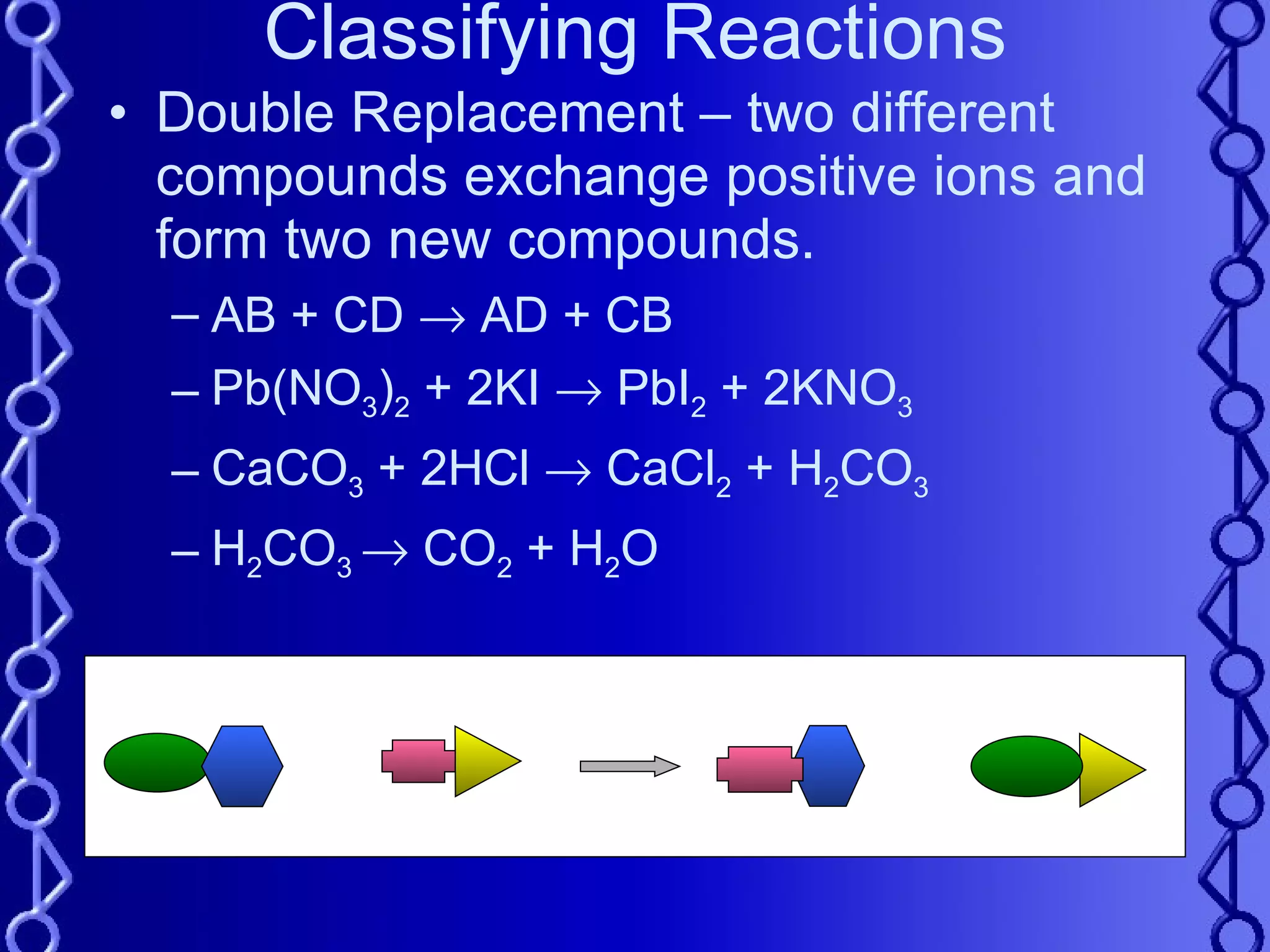
Classifying Reactions Double Replacement – two different compounds exchange positive ions and form two new compounds. AB + CD    AD + CB  Pb(NO 3 ) 2  + 2KI    PbI 2  + 2KNO 3 CaCO 3  + 2HCl    CaCl 2  + H 2 CO 3 H 2 CO 3    CO 2  + H 2 O
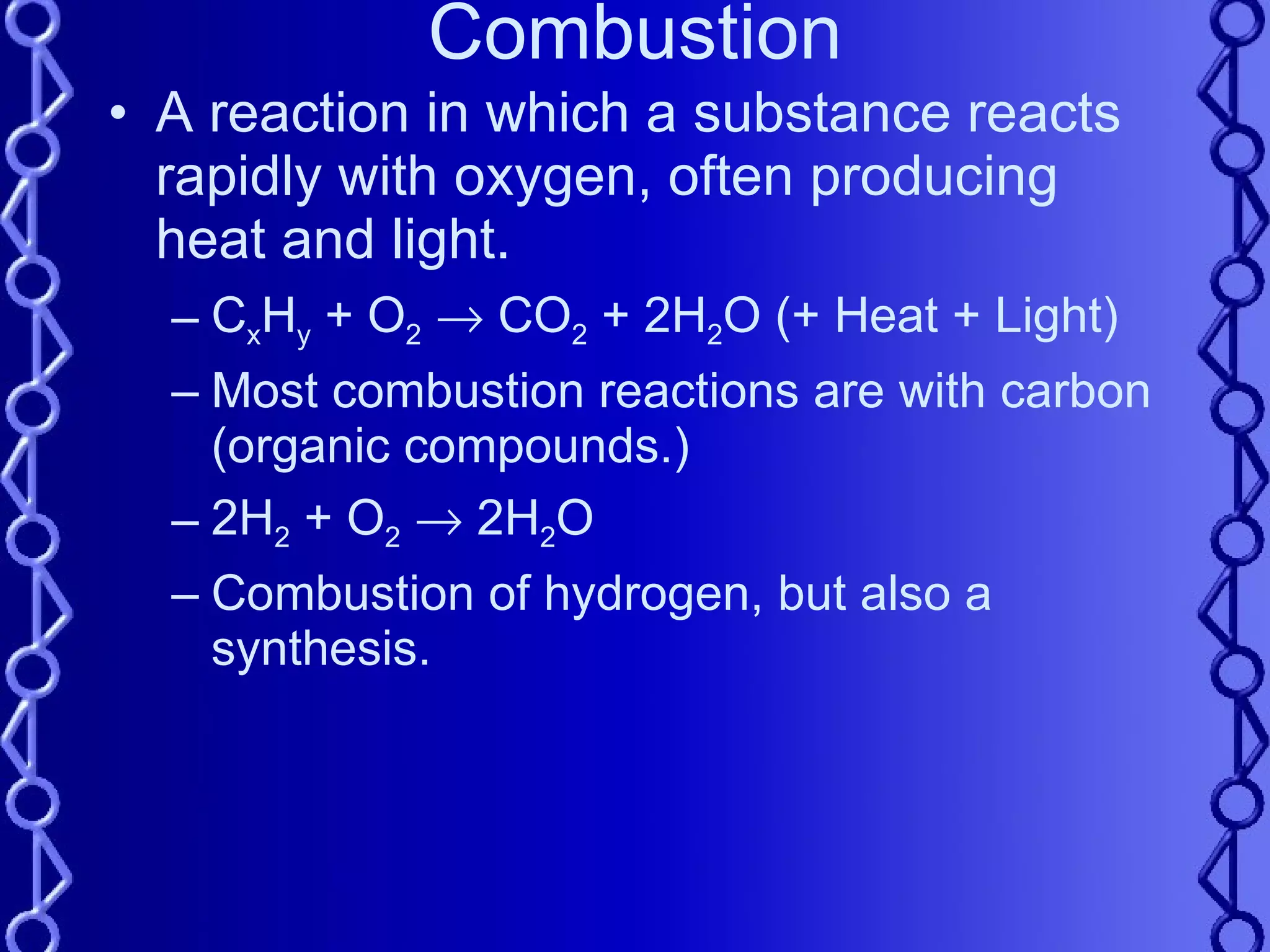
Combustion A reaction in which a substance reacts rapidly with oxygen, often producing heat and light. C x H y  + O 2     CO 2  + 2H 2 O (+ Heat + Light) Most combustion reactions are with carbon (organic compounds.) 2H 2  + O 2     2H 2 O Combustion of hydrogen, but also a synthesis.
 
5-4 Summary What are the five types of reactions? Synthesis Decomposition Single-replacement Double-replacement Combustion

5-4 Classifying Reactions

  • 1.
    Write the formulafor the following compounds: Potassium hydroxide KOH Sulfur dioxide SO 2 Iron (II) phosphate Fe 3 (PO 4 ) 2 Tetracarbon octahydride C 4 H 8 Warm-up ( own paper )
  • 2.
    5-5 Typesof reactions Objectives Discuss factors that affect reaction rates. Classify chemical reactions as synthesis, decomposition, single-replacement, double-replacement, or combustion reactions.
  • 3.
    Reaction Rates Thespeed of the reaction Temperature Surface area Stirring Concentration Prediction Results Fast or slow Fast or Slow Fast or Slow Fast or Slow
  • 4.
    Conservation of MassMass can not be created or destroyed. Total number of atoms before reaction must be equal to total number after reaction. Atoms are rearranged in chemical reaction. Mass of reactants must be equal to mass of products.
  • 5.
  • 6.
  • 7.
  • 8.
  • 9.
  • 10.
    Converting Mass toMoles Each line shows the conservation of mass.
  • 11.
  • 12.
    Classifying Reactions Synthesis– combining two reactants to make one product. A + B  AB 2H 2 + O 2  2H 2 O
  • 13.
    Classifying Reactions Decomposition– Compound breaks down into two or more simpler substances. AB  A + B CaCO 3  CaO + CO 2
  • 14.
    Classifying Reactions Singlereplacement – one element takes the place of another element in a compound. A + BC  B + AC Cu + 2AgNO 3  Cu(NO 3 ) 2 + 2Ag
  • 15.
    Activity Series Afterexperimentation chemists compiled a list of elements arranged in decreasing activity. The element at the top of the list will replace those elements at the bottom. Activity series of Metals Lithium (Li) Potassium (K) Calcium (Ca) Sodium (Na) Magnesium (Mg) Aluminum (Al) Zinc (Zn) Reactivity Decreases Iron (Fe) Lead (Pb) Hydrogen (H) Copper (Cu) Mercury (Hg) Silver (Ag)
  • 16.
    Classifying Reactions DoubleReplacement – two different compounds exchange positive ions and form two new compounds. AB + CD  AD + CB Pb(NO 3 ) 2 + 2KI  PbI 2 + 2KNO 3 CaCO 3 + 2HCl  CaCl 2 + H 2 CO 3 H 2 CO 3  CO 2 + H 2 O
  • 17.
    Combustion A reactionin which a substance reacts rapidly with oxygen, often producing heat and light. C x H y + O 2  CO 2 + 2H 2 O (+ Heat + Light) Most combustion reactions are with carbon (organic compounds.) 2H 2 + O 2  2H 2 O Combustion of hydrogen, but also a synthesis.
  • 18.
  • 19.
    5-4 Summary Whatare the five types of reactions? Synthesis Decomposition Single-replacement Double-replacement Combustion