PRESENTED BY:
DAVE LESTER C. GALANG
Writing Chemical
Formulas
 is a way of expressing information
about the proportions of atoms that
constitute a particular chemical
compound, using a single line
ofchemical element symbols,
numbers, and sometimes also other
symbols, such as parentheses,
dashes, brackets, commas
and plus (+) and minus (−) signs.
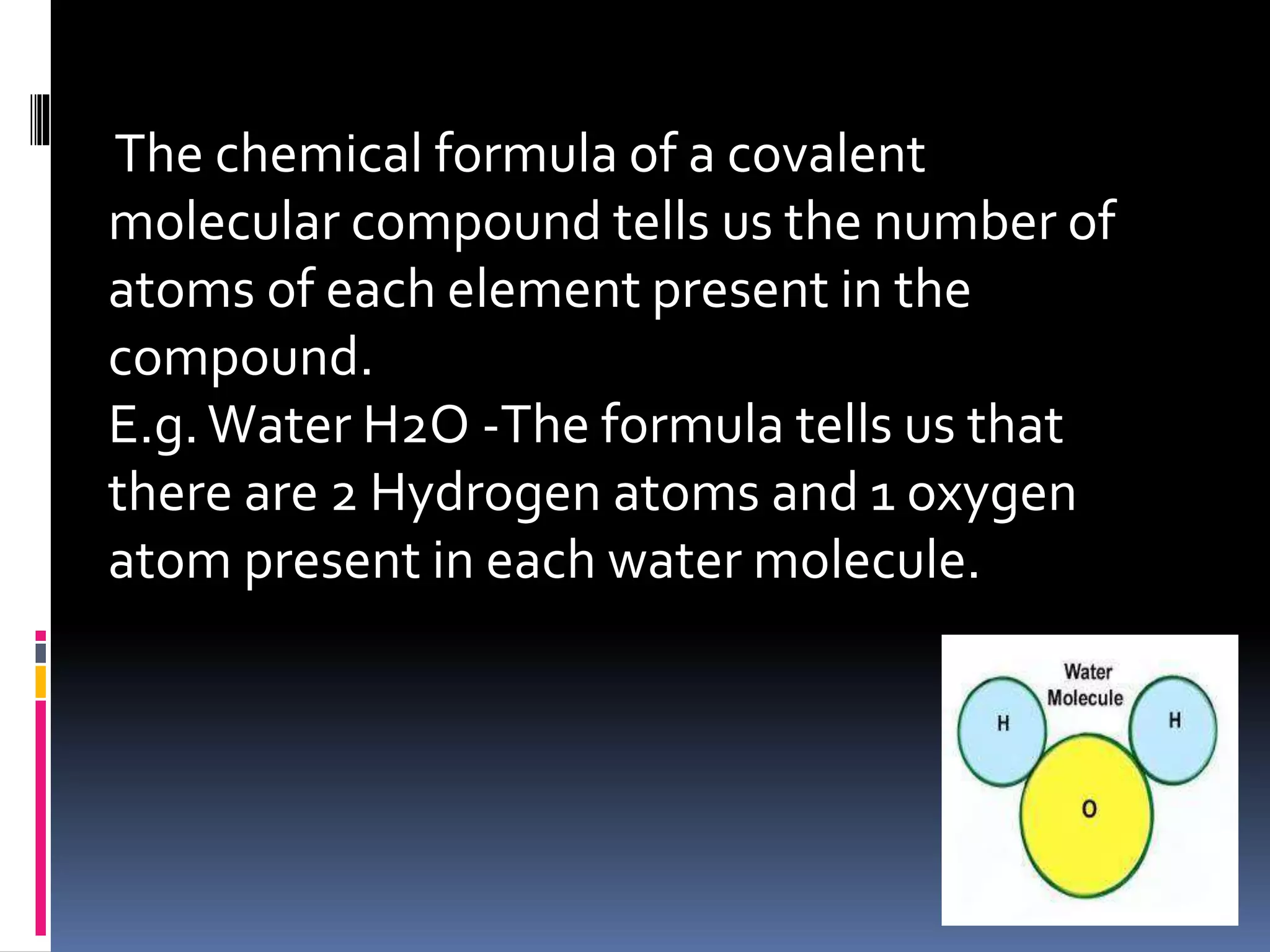
The chemical formula of a covalent
molecular compound tells us the number of
atoms of each element present in the
compound.
E.g.Water H2O -The formula tells us that
there are 2 Hydrogen atoms and 1 oxygen
atom present in each water molecule.
The chemical formula of a covalent
network tells us the ratio of the
elements present.
E.g. Silicon dioxide, SiO2 structure-The
formula tells us there are 2 silicon
atoms present for every 1 oxygen atom.
The chemical formula of an ionic
compound tells us the ratio of the
elements present.
E.g. Sodium chloride, NaCl – The
formula tells us there is one ion
of sodium for every one ion of
chlorine
Chloride ion
Sodium ion
Sodium chloride, NaCl, structure
1. CHEMICAL FORMULA FOR ELEMENTS
 The chemical formula of an element is simply
its’ symbol
 e.g.
 Magnesium Mg
 Iron Fe
 Phosphorus P
 Argon Ar
 Whenever we write the chemical formula of
these elements we put a subscript ‘2’ beside
them
 e.g.
 Iodine I2 I n
 Oxygen O2 O ctober
 Chlorine Cl2 C hildren
 Bromine Br2 B uy
 Nitrogen N2 N asty
 Hydrogen H2 H alloween
 Fluorine F2 F oods
2.USING VALENCY
The valency of an atom or ion is the number of
electrons it shares, loses or gains in a
chemical reaction to become stable i.e. the
number of bonds it forms with other atoms
Table:
 Group number 1 2 3 4 5 6 7 0
 Valency 1 2 3 4 3 2 1 0
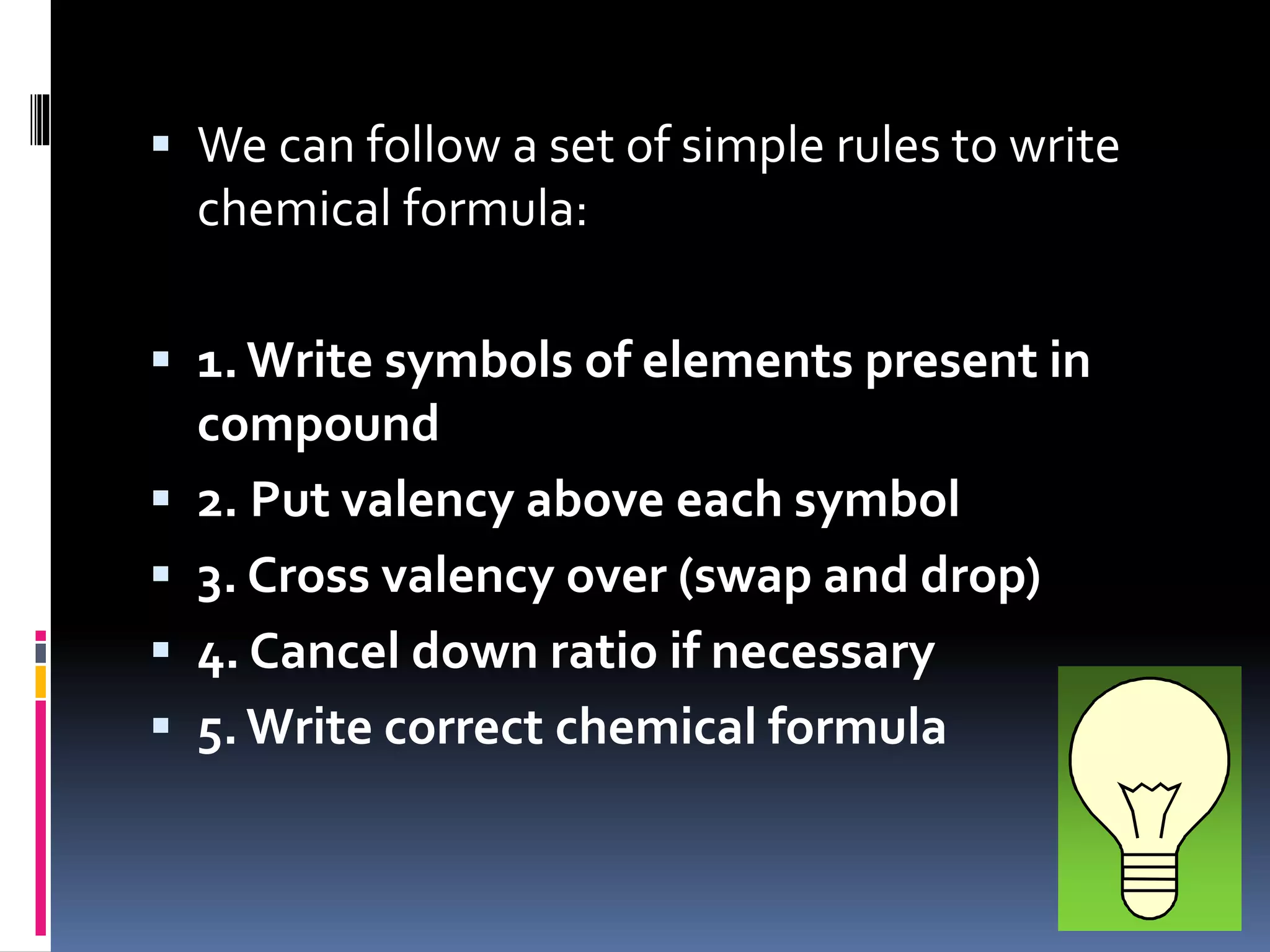
 We can follow a set of simple rules to write
chemical formula:
 1.Write symbols of elements present in
compound
 2. Put valency above each symbol
 3. Cross valency over (swap and drop)
 4. Cancel down ratio if necessary
 5.Write correct chemical formula
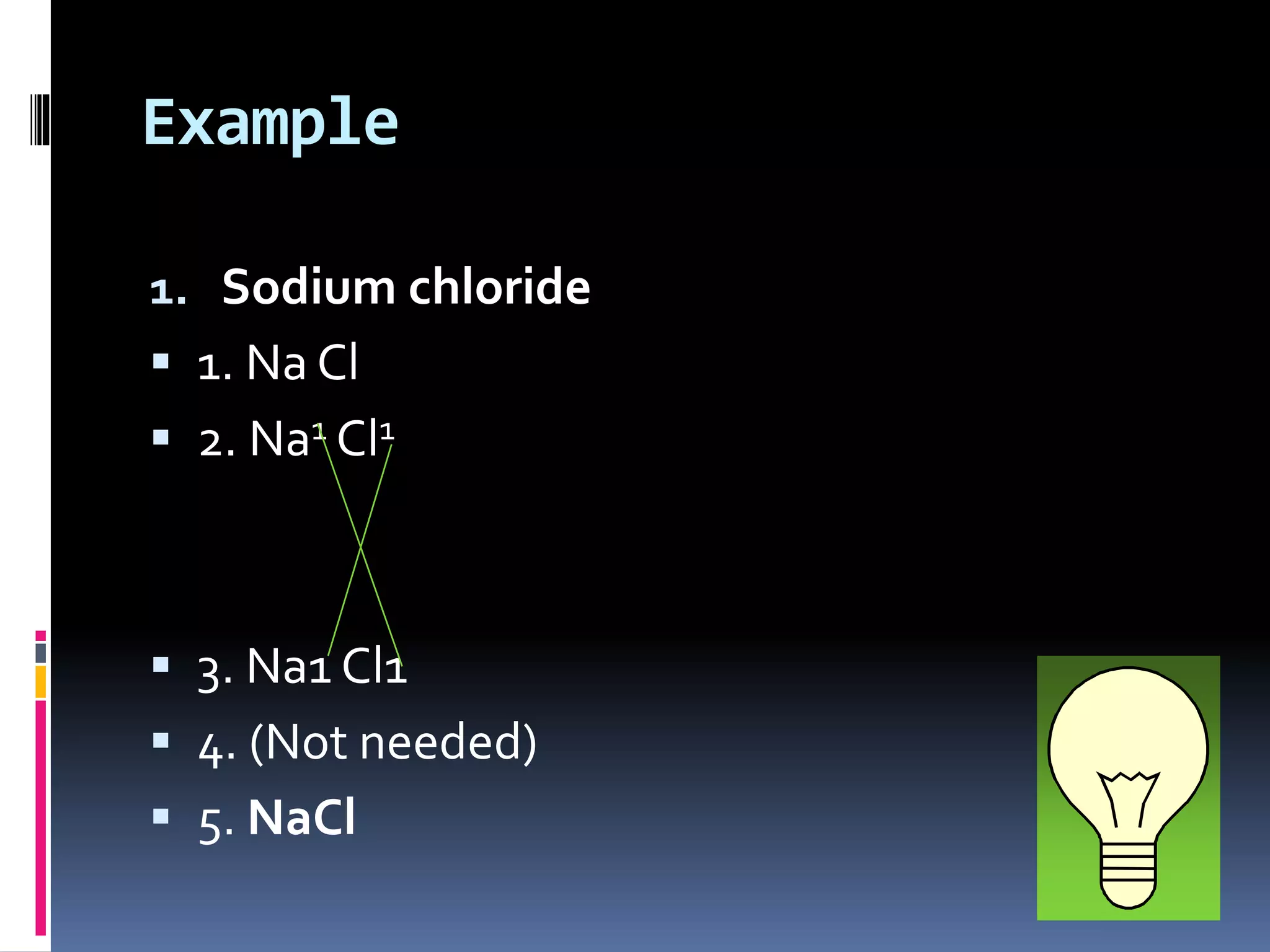
Example
1. Sodium chloride
 1. Na Cl
 2. Na1 Cl1
 3. Na1 Cl1
 4. (Not needed)
 5. NaCl
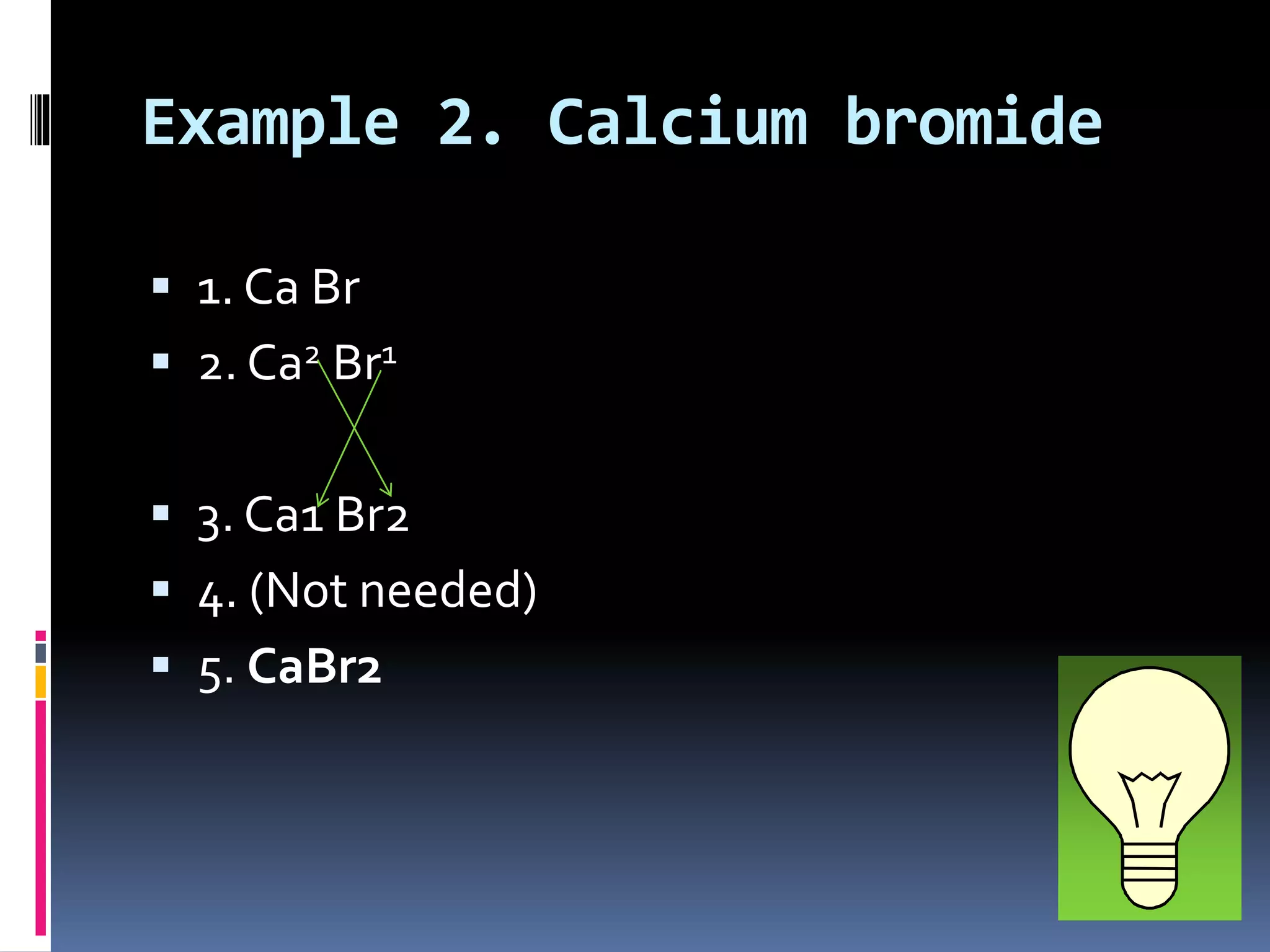
Example 2. Calcium bromide
 1. Ca Br
 2. Ca2 Br1
 3. Ca1 Br2
 4. (Not needed)
 5. CaBr2
3. ROMAN NUMERALS
 Some elements, particularly the transition
metals in the centre block of the periodic
table can have more than one valency.
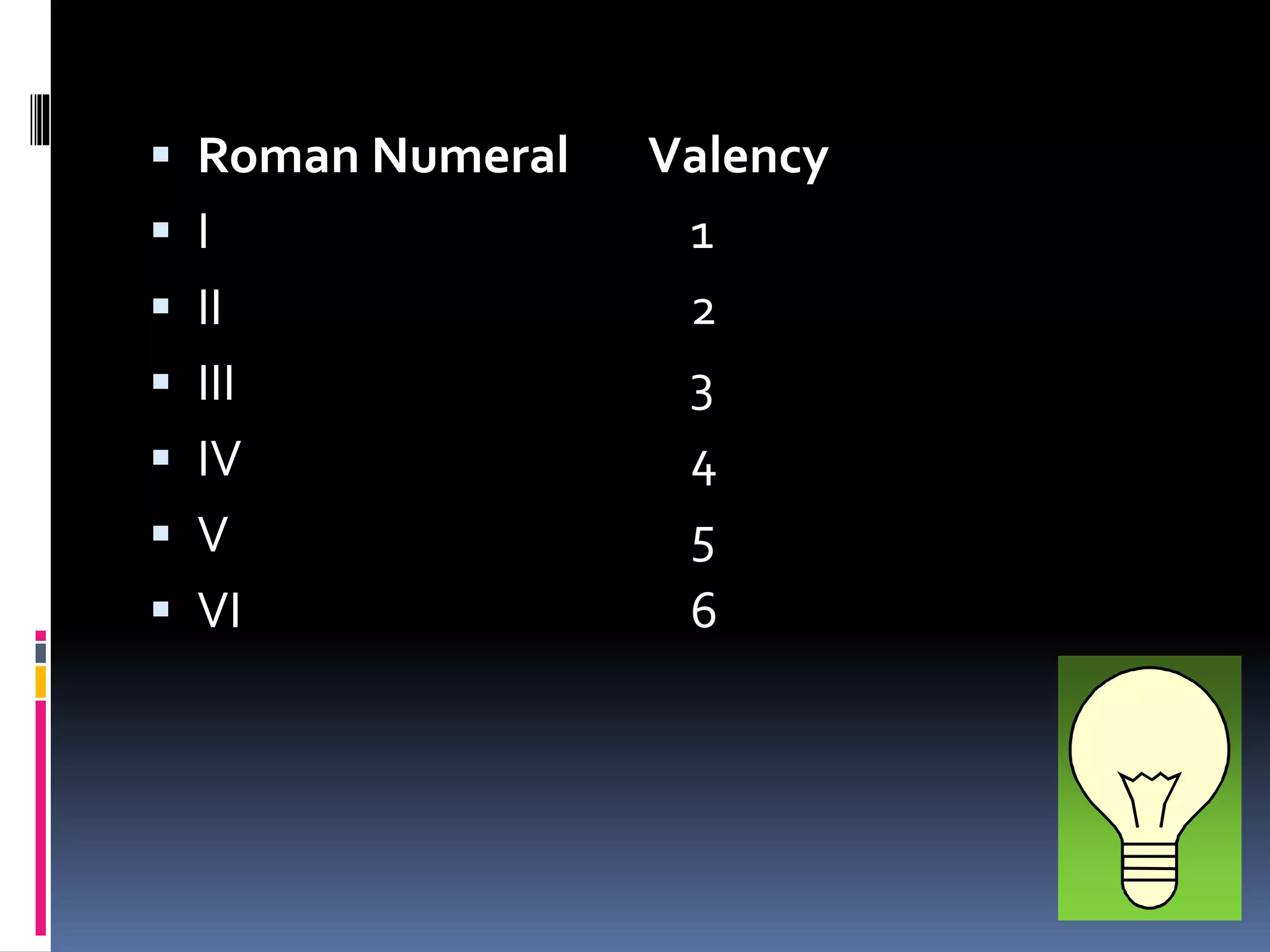
 Roman Numeral Valency
 I 1
 II 2
 III 3
 IV 4
 V 5
 VI 6
Example 1. Copper(II) chloride
 1. Cu Cl
 2. Cu2Cl1
 3. Cu1 Cl2
4. CuCl2
Example 2. Iron(III)fluoride
 1. Fe F
 2. Fe3 F1
 3. Fe1 F3
 4. FeF3
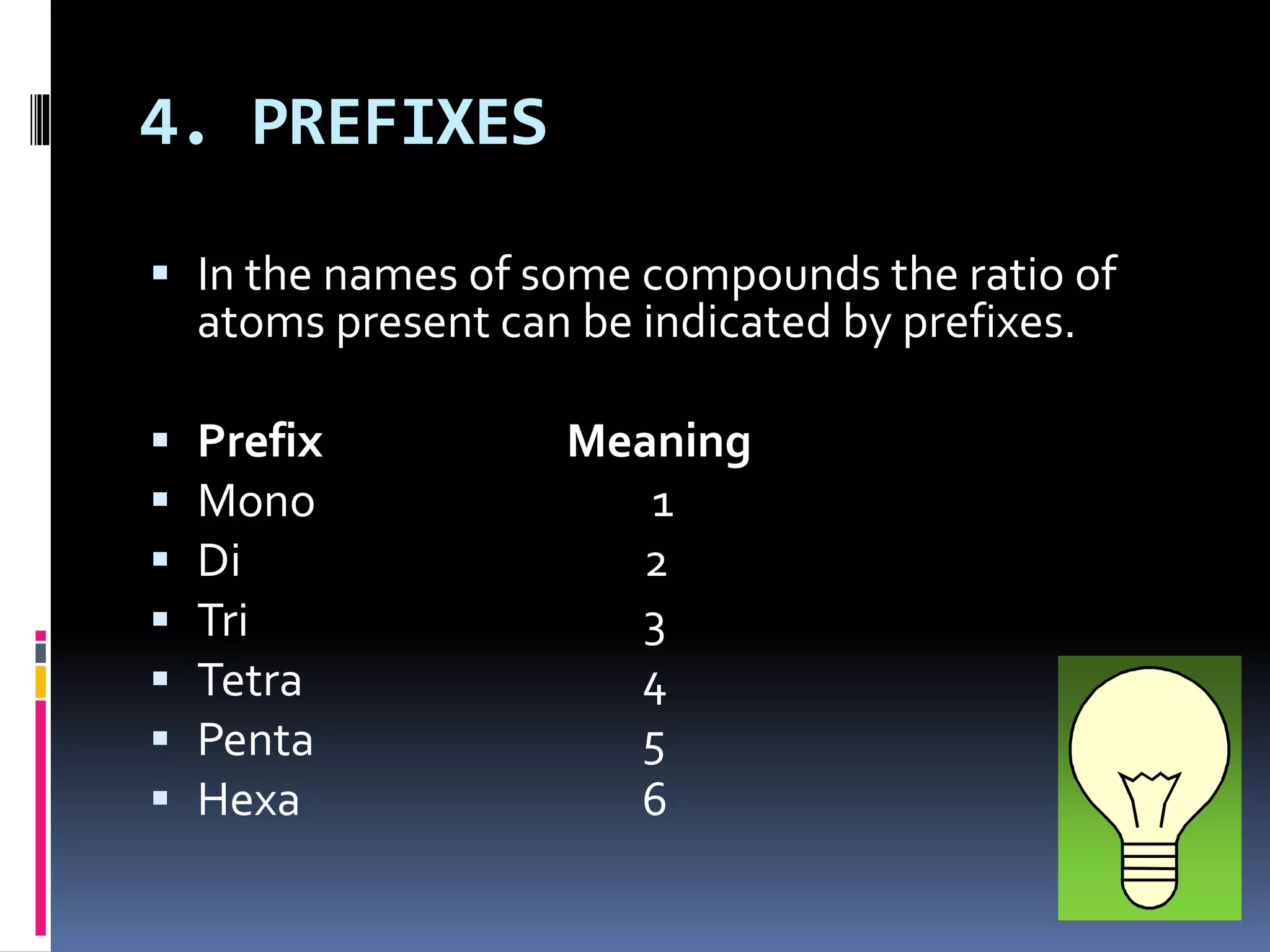
4. PREFIXES
 In the names of some compounds the ratio of
atoms present can be indicated by prefixes.
 Prefix Meaning
 Mono 1
 Di 2
 Tri 3
 Tetra 4
 Penta 5
 Hexa 6
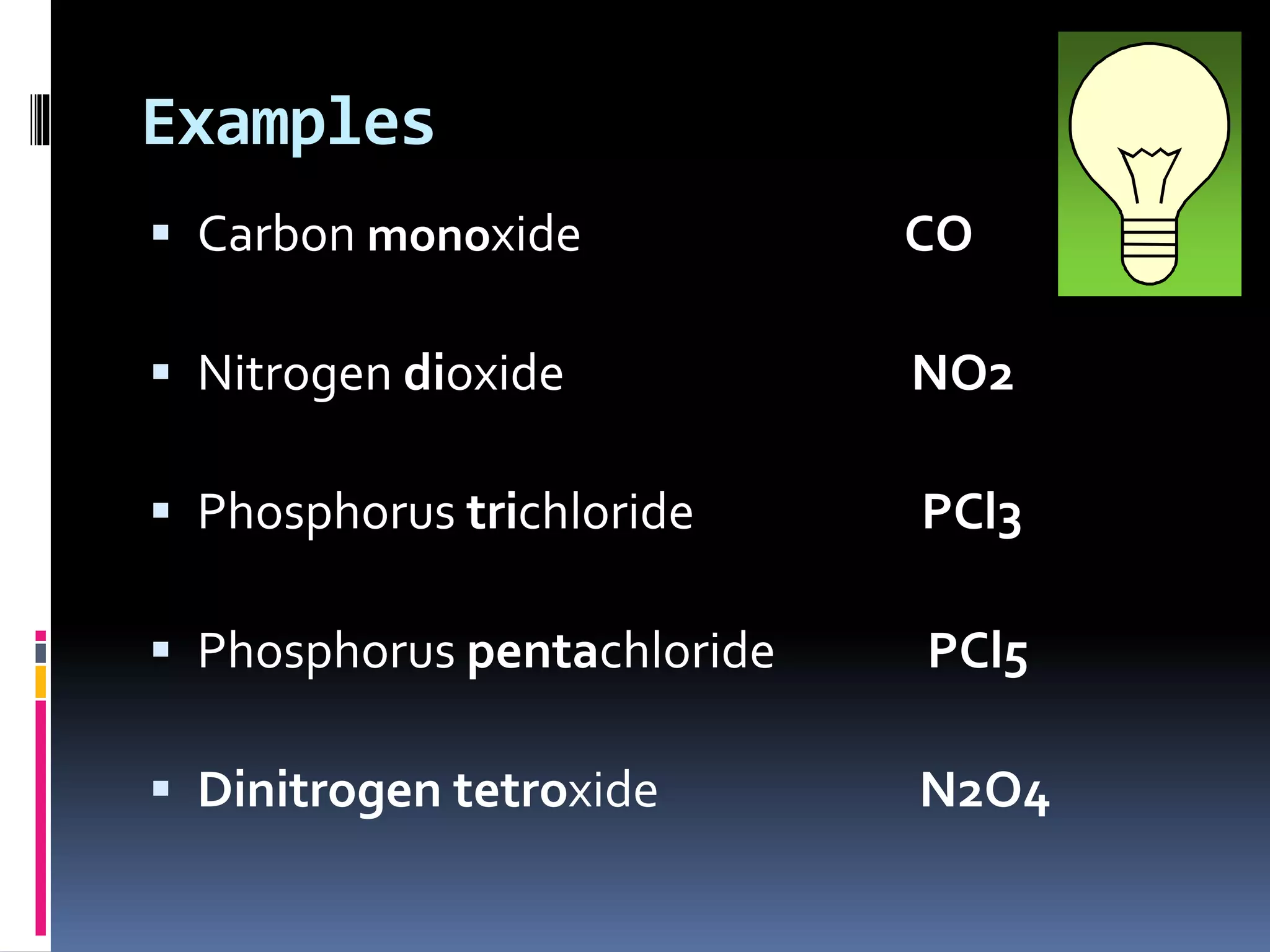
Examples
 Carbon monoxide CO
 Nitrogen dioxide NO2
 Phosphorus trichloride PCl3
 Phosphorus pentachloride PCl5
 Dinitrogen tetroxide N2O4
5.Polyatomic Ions
 Ions formed by more than one type of
element
 Atoms of different elements held together
by covalent bonds
 Atoms always stay together and
collectively have a single charge
 Do not always have “-ide” ending
ex: NH4
1- = ammonium ion
CO3
2- = carbonate
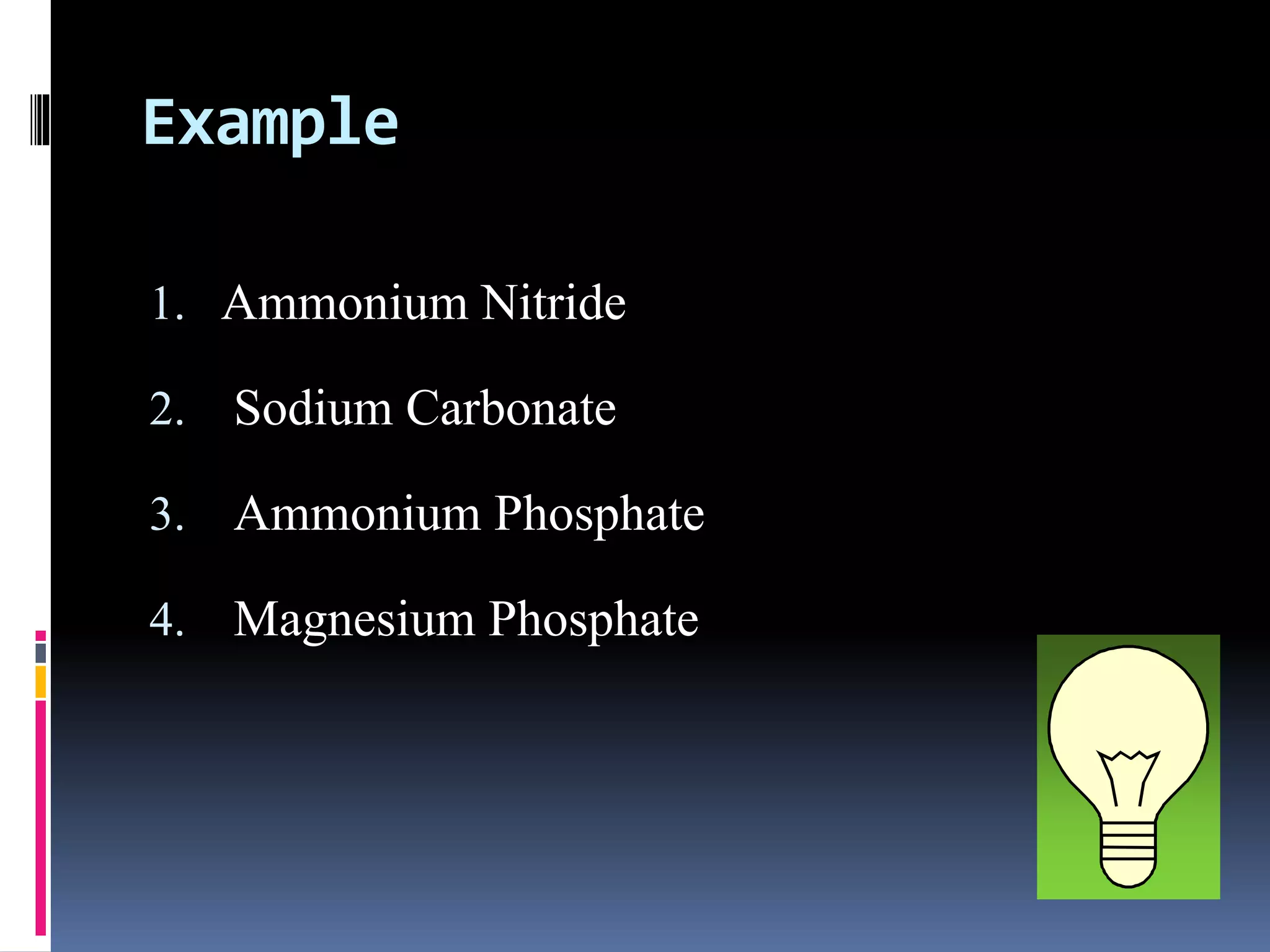
Example
1. Ammonium Nitride
2. Sodium Carbonate
3. Ammonium Phosphate
4. Magnesium Phosphate
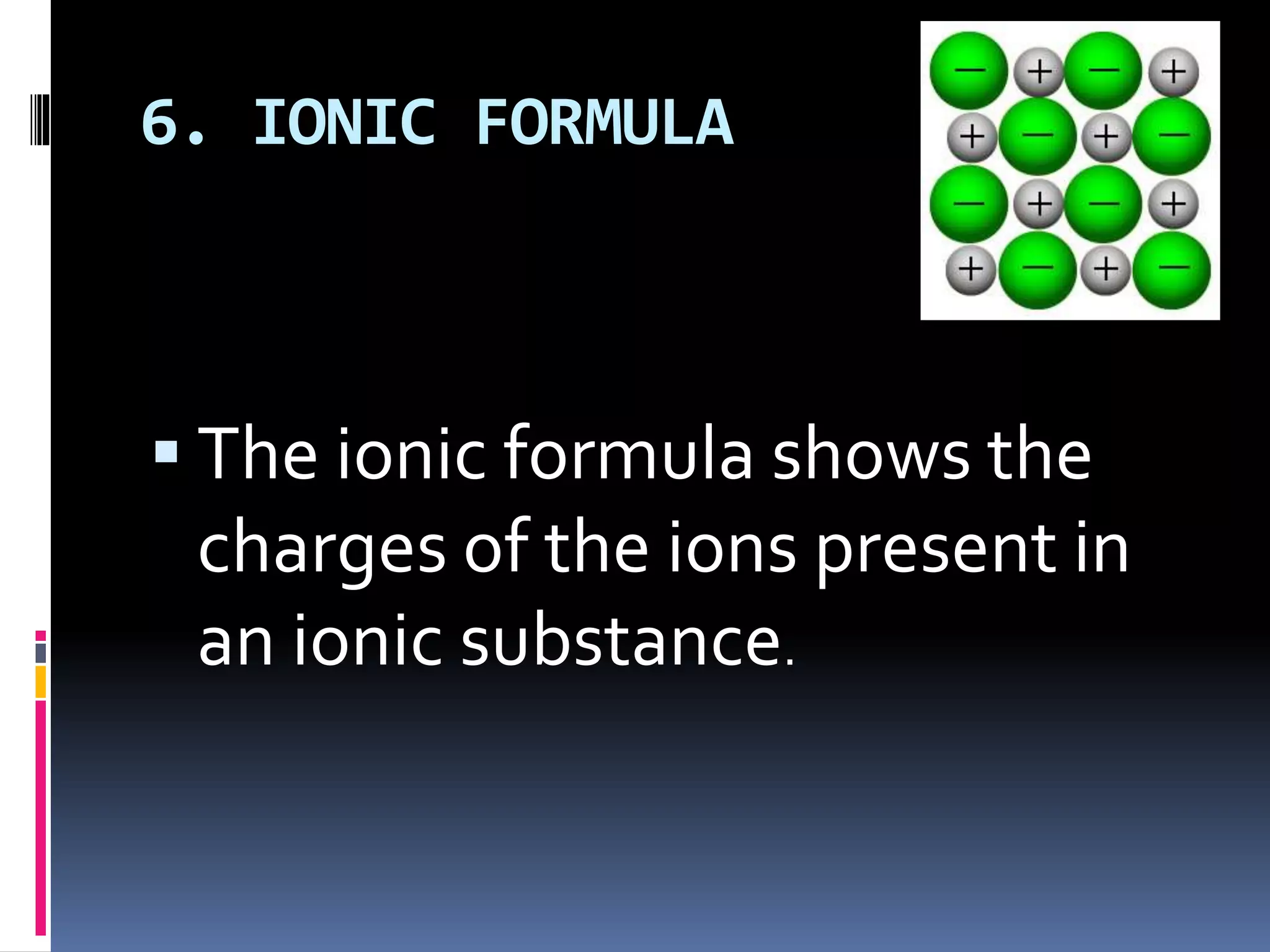
6. IONIC FORMULA
 The ionic formula shows the
charges of the ions present in
an ionic substance.
GROUP NUMBER
1
2
3
4
5
6
7
0
VALENCY
1
2
3
4
3
2
1
0
CHARGE ON ION
1+
2+
3+
4
3-
2-
1-
0
Example
1 Lithium Oxide
2. Potassium Nitride
3. Sodium Chloride
4. Aluminum Oxide
QOUTES FOR TODAY
THE CHEMICALCOMPOSITION
OF YOUR TEARS CHANGE,
DEPENDING ON YOUR
EMOTION
THANKYOU

writing chemical formulas

  • 1.
    PRESENTED BY: DAVE LESTERC. GALANG Writing Chemical Formulas
  • 2.
     is away of expressing information about the proportions of atoms that constitute a particular chemical compound, using a single line ofchemical element symbols, numbers, and sometimes also other symbols, such as parentheses, dashes, brackets, commas and plus (+) and minus (−) signs.
  • 3.
    The chemical formulaof a covalent molecular compound tells us the number of atoms of each element present in the compound. E.g.Water H2O -The formula tells us that there are 2 Hydrogen atoms and 1 oxygen atom present in each water molecule.
  • 4.
    The chemical formulaof a covalent network tells us the ratio of the elements present. E.g. Silicon dioxide, SiO2 structure-The formula tells us there are 2 silicon atoms present for every 1 oxygen atom.
  • 5.
    The chemical formulaof an ionic compound tells us the ratio of the elements present. E.g. Sodium chloride, NaCl – The formula tells us there is one ion of sodium for every one ion of chlorine Chloride ion Sodium ion Sodium chloride, NaCl, structure
  • 6.
    1. CHEMICAL FORMULAFOR ELEMENTS  The chemical formula of an element is simply its’ symbol  e.g.  Magnesium Mg  Iron Fe  Phosphorus P  Argon Ar
  • 7.
     Whenever wewrite the chemical formula of these elements we put a subscript ‘2’ beside them  e.g.  Iodine I2 I n  Oxygen O2 O ctober  Chlorine Cl2 C hildren  Bromine Br2 B uy  Nitrogen N2 N asty  Hydrogen H2 H alloween  Fluorine F2 F oods
  • 8.
    2.USING VALENCY The valencyof an atom or ion is the number of electrons it shares, loses or gains in a chemical reaction to become stable i.e. the number of bonds it forms with other atoms Table:  Group number 1 2 3 4 5 6 7 0  Valency 1 2 3 4 3 2 1 0
  • 9.
     We canfollow a set of simple rules to write chemical formula:  1.Write symbols of elements present in compound  2. Put valency above each symbol  3. Cross valency over (swap and drop)  4. Cancel down ratio if necessary  5.Write correct chemical formula
  • 10.
    Example 1. Sodium chloride 1. Na Cl  2. Na1 Cl1  3. Na1 Cl1  4. (Not needed)  5. NaCl
  • 11.
    Example 2. Calciumbromide  1. Ca Br  2. Ca2 Br1  3. Ca1 Br2  4. (Not needed)  5. CaBr2
  • 12.
    3. ROMAN NUMERALS Some elements, particularly the transition metals in the centre block of the periodic table can have more than one valency.
  • 13.
     Roman NumeralValency  I 1  II 2  III 3  IV 4  V 5  VI 6
  • 14.
    Example 1. Copper(II)chloride  1. Cu Cl  2. Cu2Cl1  3. Cu1 Cl2 4. CuCl2
  • 15.
    Example 2. Iron(III)fluoride 1. Fe F  2. Fe3 F1  3. Fe1 F3  4. FeF3
  • 16.
    4. PREFIXES  Inthe names of some compounds the ratio of atoms present can be indicated by prefixes.  Prefix Meaning  Mono 1  Di 2  Tri 3  Tetra 4  Penta 5  Hexa 6
  • 17.
    Examples  Carbon monoxideCO  Nitrogen dioxide NO2  Phosphorus trichloride PCl3  Phosphorus pentachloride PCl5  Dinitrogen tetroxide N2O4
  • 18.
    5.Polyatomic Ions  Ionsformed by more than one type of element  Atoms of different elements held together by covalent bonds  Atoms always stay together and collectively have a single charge  Do not always have “-ide” ending ex: NH4 1- = ammonium ion CO3 2- = carbonate
  • 19.
    Example 1. Ammonium Nitride 2.Sodium Carbonate 3. Ammonium Phosphate 4. Magnesium Phosphate
  • 20.
    6. IONIC FORMULA The ionic formula shows the charges of the ions present in an ionic substance.
  • 21.
  • 22.
    Example 1 Lithium Oxide 2.Potassium Nitride 3. Sodium Chloride 4. Aluminum Oxide
  • 23.
    QOUTES FOR TODAY THECHEMICALCOMPOSITION OF YOUR TEARS CHANGE, DEPENDING ON YOUR EMOTION
  • 24.