Research and Development ♥ BBC MMXIII
A Linked Data Context Strategy
for the BBC
Michael Smethurst,
BBC Internet Research and Future Services
With thanks to
Yves Raimond, Tristan Ferne, Olivier Thereaux, Paul Rissen
Why Linked Data?
1. Content needs context to be useful
2. The BBC has data on its output but not on the
subjects of its output
3. Commercial data is usually modelled at the wrong
level (saleable items)
4. Commercial data doesn’t give you the freedom to
make your own APIs on top
5. Using inference minimises workload
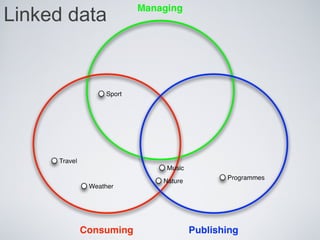
Linked data
1. Consuming linked data
2. Managing linked data
3. Publishing linked data
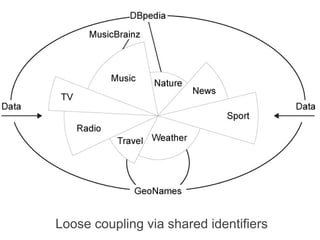
Loose coupling via shared identifiers
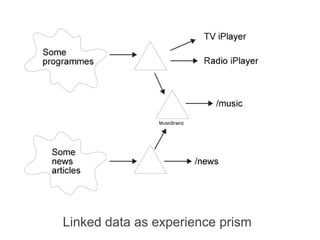
Linked data as experience prism
Principle #1:
The web is our CMS
1. Consuming linked data
2. Managing linked data
3. Publishing linked data
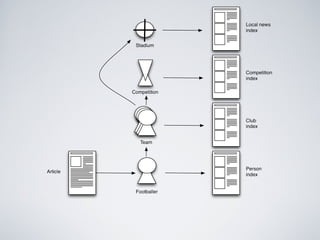
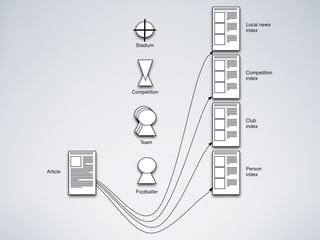
Annotate once, infer
and re-use
1. Consuming linked data
2. Managing linked data
3. Publishing linked data
Principle #2:
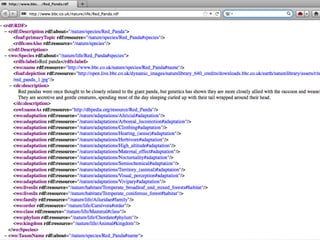
Our web site is our API
Thank you.
Questions to
michael.smethurst@bbc.co.uk
@fantasticlife

OpenDataWeek Marseille 2013 : Michael Smethurst -- A Linked Data Context Strategy for the BBC

Editor's Notes

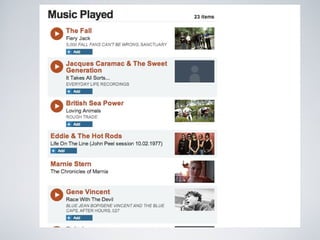
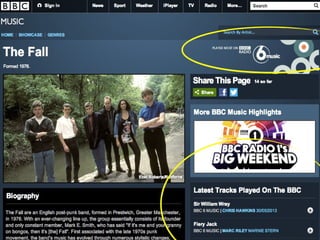
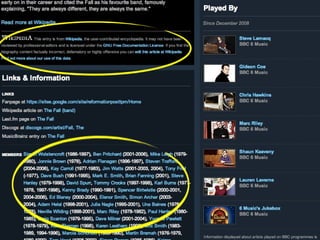
  • #10 The BBC Music Website has a content-rich offering. Not surprising when you have 10 major national radio stations, many more local stations, and a lot of music programmes in your TV schedule. But it doesn't mean you have to manage everything from bios to discography from scratch
  • #11 The BBC Music Website has a content-rich offering. Not surprising when you have 10 major national radio stations, many more local stations, and a lot of music programmes in your TV schedule. But it doesn't mean you have to manage everything from bios to discography from scratch
  • #12 The BBC Music Website has a content-rich offering. Not surprising when you have 10 major national radio stations, many more local stations, and a lot of music programmes in your TV schedule. But it doesn't mean you have to manage everything from bios to discography from scratch
  • #20 Data is a first-class citizen
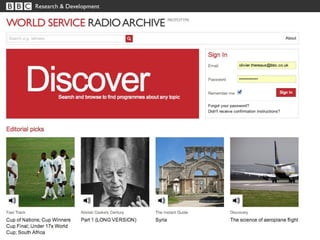
  • #21 Working on the World Service audio archive three years of continuous audio